We may earn a commission from links on this page, at no extra cost to you.
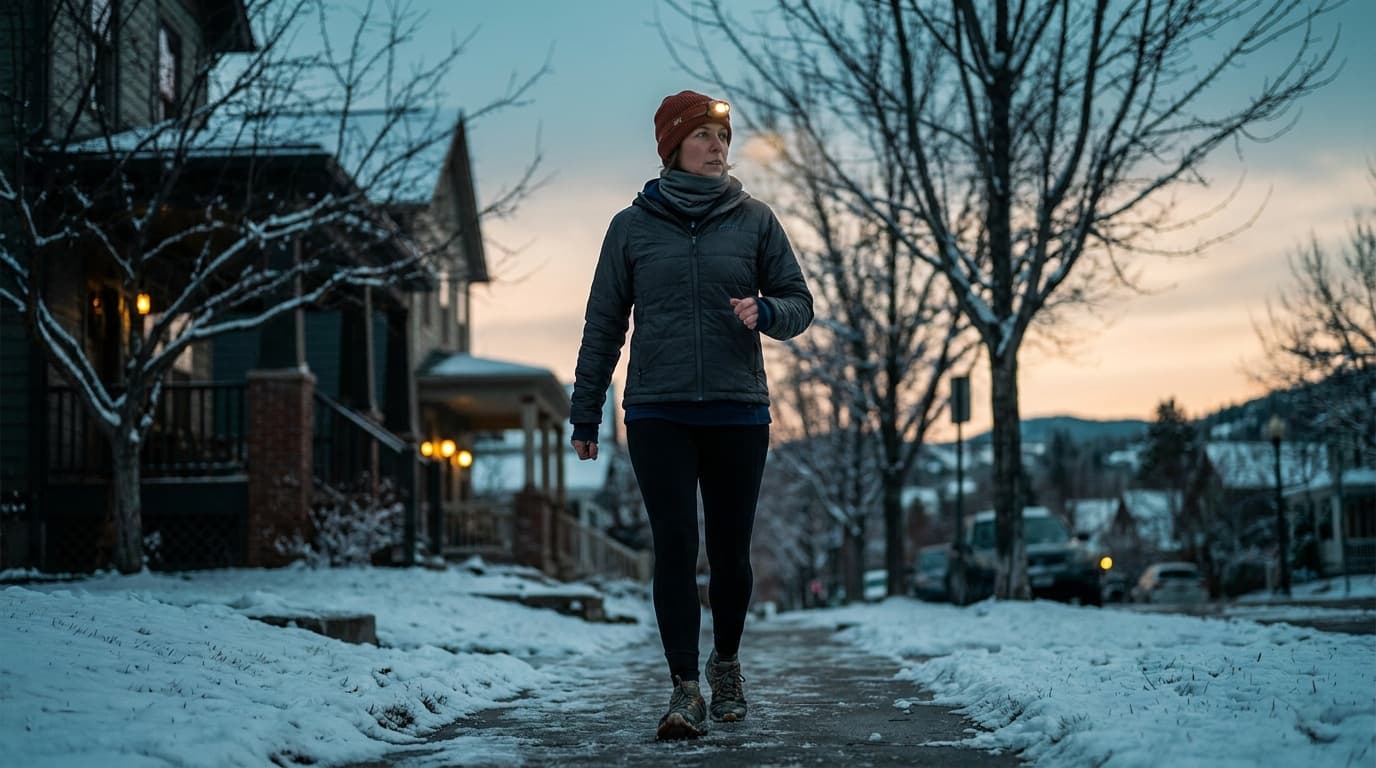
For a winter walk, wear thin layers you can open or take off: a moisture-wicking base layer (not cotton), an insulating layer such as fleece, and a wind- and water-resistant outer layer, plus a hat, gloves or mittens, and something over your neck and face. That is the same system the CDC and the Texas Heart Institute describe for cold weather. Dress so you feel a little cool for the first few minutes, because a brisk walk warms you fast, and check the wind chill: on the National Weather Service chart, 0°F air with a 15 mph wind feels like -19°F, and exposed skin can freeze in about 30 minutes.
What to wear, by temperature
These bands are Kit Authority's planning guide for a brisk fitness walk in light wind. They follow the same logic as our layering advisor: moderate effort feels about 10°F warmer than the forecast, and wind takes warmth away. If you run cold, walk slowly, or face a strong wind, use the next colder row.
| Forecast | Top | Legs | Hands and head | Notes |
|---|---|---|---|---|
| 45 to 55°F | Lightweight long-sleeve base layer; light vest or wind jacket to start | Regular walking pants or leggings | Optional light gloves | Most people shed the outer layer within 10 minutes |
| 35 to 45°F | Base layer plus a light fleece or wind jacket | Leggings or pants | Light gloves, headband or thin beanie | Wind makes this band feel much colder |
| 25 to 35°F | Midweight base plus fleece or light insulated jacket; shell if windy | Lined tights or pants | Liner gloves, beanie, neck gaiter | Wool or synthetic socks |
| 10 to 25°F | Midweight base, insulated jacket, windproof shell | Base layer bottoms under pants | Liner under insulated gloves or mittens, beanie, gaiter over chin | Shorten the loop so you are never far from home |
| Below 10°F, or wind chill below 0°F | Everything above, with all skin covered | Full base plus shell pants | Mittens over liners, face covered | Consider walking indoors instead |
The three layers, explained
Base layer: move sweat off your skin. The Texas Heart Institute's advice is to avoid cotton, which absorbs sweat and stays wet, and to wear a moisture-wicking fabric next to the skin. Merino wool and synthetics both work. Merino stays comfortable across a wider temperature range and resists odor; synthetics dry faster and cost less.
MERINO BASE LAYER
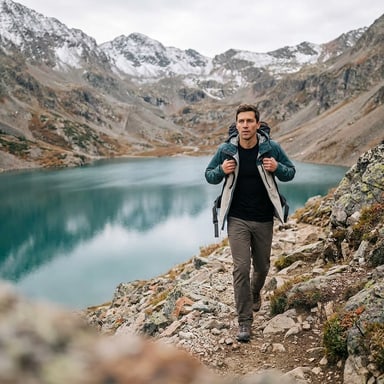
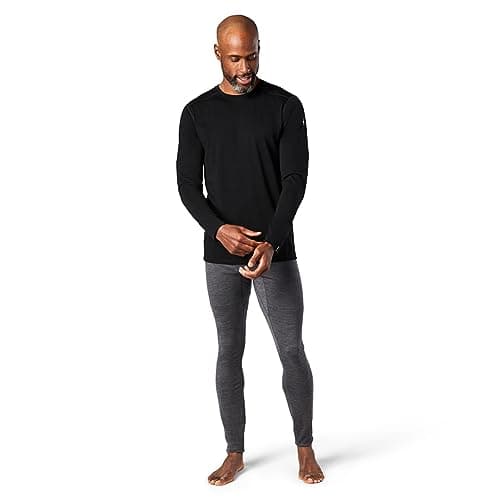
Smartwool Classic All-Season Merino Long Sleeve Base Layer
Kit Score 8.1/10 · Check current price
Buy on AmazonBest for: Hikers who want one base layer that covers three seasons without babying it the way pure merino requires.
- Merino-nylon blend resists abrasion and pilling far better than 100% merino at this price point
- Excellent four-season versatility: breathes on summer shoulder hikes and layers under a shell in shoulder-season cold
- No thumb loops, so sleeves ride up under a shell or gloves
The Smartwool Classic All-Season is a lightweight merino long sleeve; its Amazon listing gives 88% merino wool and 12% nylon, and Smartwool makes men's and women's cuts. It suits the 25 to 55°F bands on its own and works under a fleece below that. Our best base layers guide compares it with heavier 200 and 250 g/m² merino options for the coldest days.
Middle layer: trap warm air. A fleece or a light insulated jacket. Two thin middle layers are more flexible than one thick one, because you can take one off when you warm up.
Outer layer: stop wind and wet. A thin wind shell or a waterproof, breathable rain jacket. On a dry, calm day you can skip it. On a windy day it does more for warmth than an extra fleece. The how to layer for cold-weather hiking guide explains the system in more depth.
Hands, head, and neck
Hands, ears, and face get cold first because they have the most exposed surface. The CDC lists a hat, mittens or gloves, and a scarf or knit mask over the face and mouth as core cold-weather clothing.
LINER GLOVE
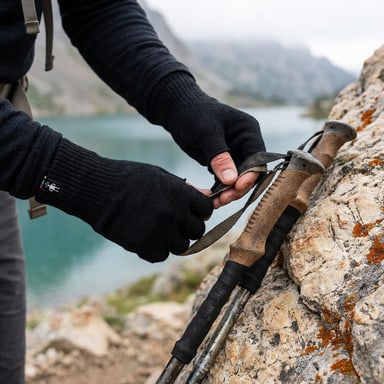
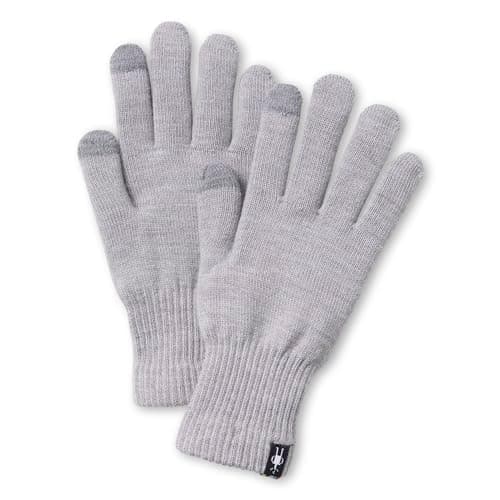
Smartwool Men's Liner Glove
Kit Score 7.7/10 · Check current price
Buy on AmazonBest for: Hikers building a layering system who need a lightweight, packable base layer that works alone on shoulder-season days and pairs with a waterproof shell glove when the weather turns serious.
- Merino blend manages moisture effectively: wicks sweat and dries faster than full-wool alternatives during aerobic hiking
- At 1.5 oz, it disappears in a hip-belt pocket and doubles as a camp glove or emergency layer
- No grip pads: the smooth knit surface is slippery on poles and ice axe handles, which owners repeatedly flag
A thin liner glove is the most flexible piece of winter walking gear: wear it alone on mild days and under an insulated glove or mitten when it drops below about 25°F. The Smartwool Liner Glove's Amazon listing describes a lightweight, ribbed-cuff knit of 48% merino wool and 48% recycled polyester, sold as a unisex glove. The Texas Heart Institute also suggests a thin pair of gloves under a heavier pair. For the full liner-plus-shell approach, see how to layer gloves for the cold, and for insulated options, the best hiking gloves.
NECK GAITER
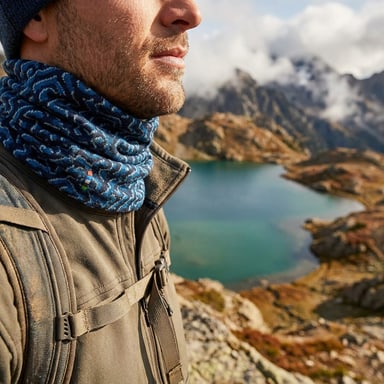
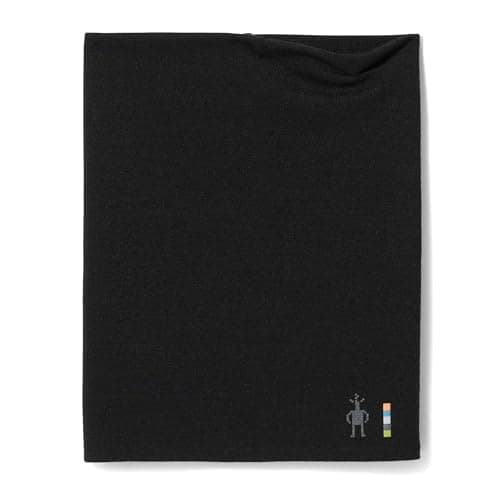
Smartwool Thermal Merino Reversible Neck Gaiter
Kit Score 8.6/10 · Check current price
Buy on AmazonBest for: Hikers tackling fall and winter trails, or anyone who runs cold and wants a single neck layer that handles cold mornings, windy ridgelines, and light aerobic effort without overheating.
- Natural merino thermoregulation handles cold morning hikes and warm afternoon miles without swapping layers
- Double-layer 250 g/m sq interlock construction delivers real insulation in sub-freezing conditions, confirmed by owner reports in single-digit temperatures
- No meaningful UPF rating; not the right pick for pure sun-protection duty on summer desert or alpine trails
A neck gaiter does the job of a scarf without flapping, and you can pull it over your nose and mouth when the wind picks up. The Smartwool Thermal Merino Reversible gaiter is 100% merino wool, double layered, and 10.25 inches long, per its Amazon listing. Our best neck gaiters guide includes fleece options for the coldest days.
Add a beanie or ear-covering headband. It is the easiest layer to pull off and stuff in a pocket when you warm up.
Feet and footing: shoes, socks, and ice
Warm, dry feet come from socks as much as shoes. Wool-blend or synthetic hiking socks hold warmth when damp; cotton socks do not. The best hiking socks guide covers midweight options that fit in walking shoes.
For shoes, grip matters more than cushion once there is snow or ice. Your regular walking shoes are fine on dry, cleared sidewalks. On packed snow or ice, add traction. Slip-on ice cleats fit over walking shoes and suit sidewalks and flat paths; microspikes suit hilly trails. Our ice cleats vs microspikes vs crampons guide explains the difference, and the winter traction chooser matches traction to your surface in a few clicks.
On slick surfaces, change how you walk. The Thunder Bay District Health Unit's "walk like a penguin" advice is simple: feet wide, knees bent, arms out for balance, shorter steps, and go slow. Keep your hands out of your pockets so you can catch yourself.
Dark mornings and evenings: be seen
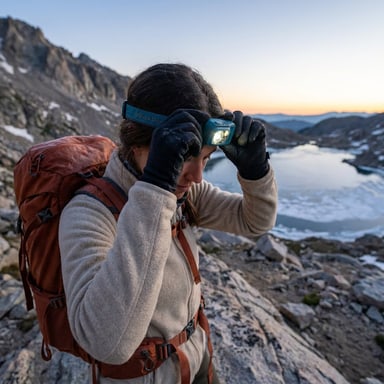
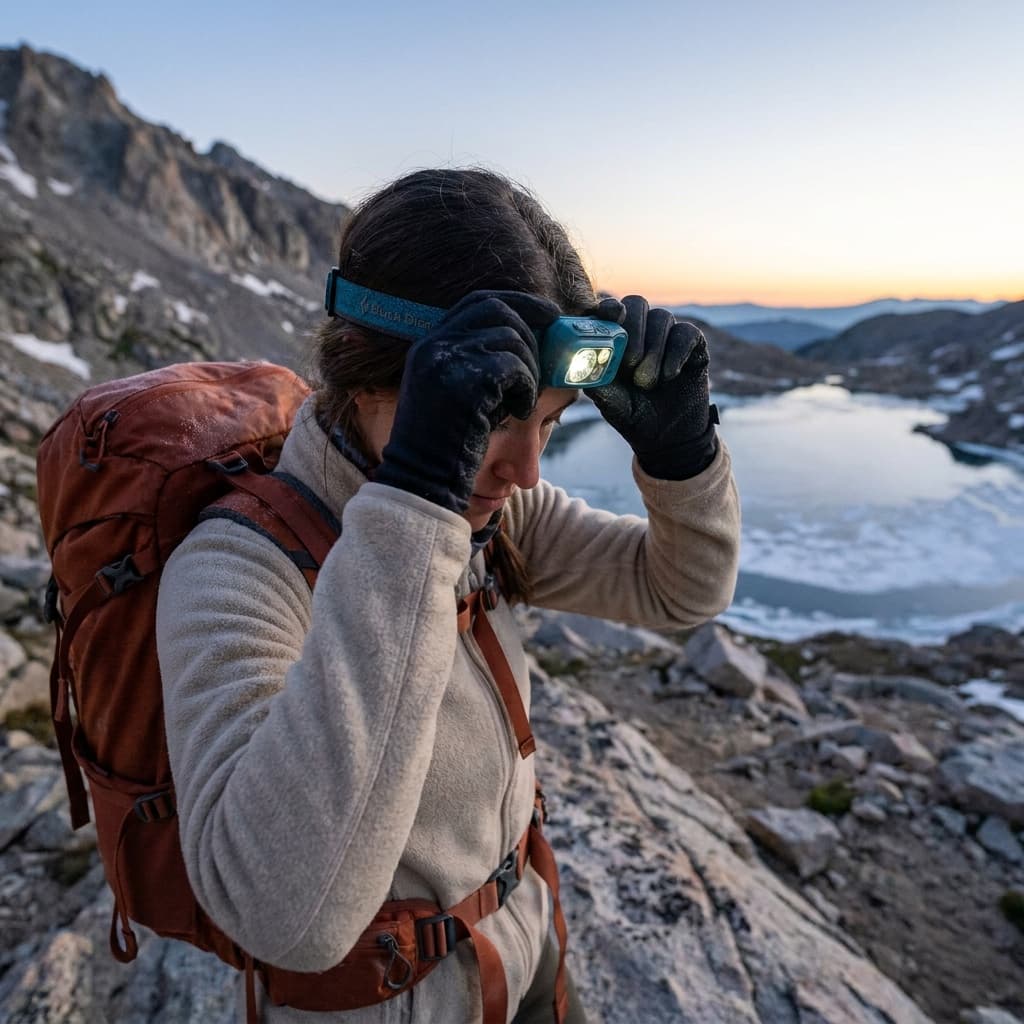
Winter walks often happen in the dark. The CDC's advice for walking in low light is to wear bright and reflective clothing and use lights. Where there is no sidewalk, walk facing traffic so you can see what is coming.
LIGHT FOR DARK WALKS
Black Diamond Spot 400-R Rechargeable Headlamp
Kit Score 8.5/10 · Check current price
Buy on AmazonBest for: All-purpose hikers and campers who want a dependable, waterproof rechargeable headlamp without overcomplicating the decision.
- IP67 submersible rating exceeds most competitors at this price, handling full submersion to 1 m
- PowerTap instant-max feature and intuitive dual-button UI make it easy to operate with cold gloves
- Micro-USB charging port is outdated when rivals have moved to USB-C
A headlamp keeps your hands free and lights the ground for ice and curbs. The Black Diamond Spot 400-R's Amazon listing gives up to 400 lumens, a 1,500 mAh rechargeable battery, an IP67 rating, and full power, dimming, strobe, red, and lock modes. Use the strobe or a clip-on light on your back if you walk on roads. The best headlamps guide compares lighter and brighter options.
When to walk indoors instead
Cold-weather walking is safe for most healthy adults who dress for it, but some days are better spent inside.
- Wind chill near or below 0°F. On the NWS chart, 0°F air with a 15 mph wind gives a wind chill of -19°F and a frostbite risk in 30 minutes. Colder or windier conditions shorten that time to 10 minutes or less.
- Ice you cannot get traction on. A fall costs more walking days than one skipped walk.
- Heart conditions. The Texas Heart Institute notes that people with coronary artery disease are more likely to have angina in cold weather, and warns against sudden hard exertion like heavy snow shoveling. If you have a heart or lung condition, ask your clinician about cold-weather exercise before you start.
Know the warning signs. The CDC lists redness or pain in the skin as a possible first sign of frostbite, followed by white or grayish-yellow skin, skin that feels unusually firm or waxy, and numbness. Signs of hypothermia include shivering, exhaustion, confusion, fumbling hands, memory loss, slurred speech, and drowsiness. If a person's temperature is below 95°F, CDC says to get medical attention immediately.
On the days you stay in, our guide to getting 10,000 steps at home covers indoor walking with and without equipment, and the walking pad workouts give you structured sessions on a pad.
A 30-second check before you head out
Look at the wind chill
Check the feels-like temperature and the wind, not just the forecast high.
Dress one layer light
You should feel slightly cool on the doorstep.
Cover the ends
Hat, gloves, and a gaiter you can pull up.
Check the ground
Ice on the driveway means traction on your shoes.
Light up
Headlamp or reflective layer if it is before sunrise or after sunset.
Tell someone
Share your route on very cold days, and keep your phone warm in an inside pocket.
Where these numbers come from
| Claim | Source | Checked |
|---|---|---|
| Wear a hat, mittens or gloves, a scarf or knit mask over face and mouth, a water-resistant coat and boots, and several layers of loose-fitting clothing; frostbite and hypothermia signs; get medical attention below 95°F | CDC, preventing cold-related illness | Sep 2026 |
| Layer so you can remove and replace layers; avoid cotton; wicking base, fleece, waterproof breathable outer; thin gloves under heavier gloves; reflective clothing in the dark; angina risk in cold for coronary artery disease; avoid sudden exertion like heavy shoveling | Texas Heart Institute, cold-weather exercise | Sep 2026 |
| Wind chill at 0°F and 15 mph is -19°F; frostbite time bands of 30, 10, and 5 minutes | National Weather Service, wind chill chart (PDF) and NWS wind chill safety | Sep 2026 |
| Wear bright and reflective clothing, use lights when dark, walk facing traffic where there is no sidewalk | CDC, making walking and rolling safer | Sep 2026 |
| Penguin walk: feet wide, knees bent, arms out, shorter steps, go slow | Thunder Bay District Health Unit, walk like a penguin | Sep 2026 |
| Moderate effort adds about 10°F of perceived warmth | Kit Authority layering advisor planning model (an editorial estimate, not a study figure) | Sep 2026 |
| Smartwool Classic All-Season: 88% merino wool, 12% nylon | Amazon listing, ASIN B0BKWYG178, read through the Amazon Creators API | Sep 2026 |
| Smartwool Liner Glove: 48% merino wool, 48% recycled polyester, ribbed cuff, men's and women's | Amazon listing, ASIN B0998Z9X22, read through the Amazon Creators API | Sep 2026 |
| Smartwool Thermal Merino Reversible Neck Gaiter: 100% merino, double layer, reversible, 10.25 in | Amazon listing, ASIN B0BXVJPWML, read through the Amazon Creators API | Sep 2026 |
| Black Diamond Spot 400-R: 400 lumens, 1,500 mAh rechargeable battery, IP67, dimming, strobe, red, and lock modes | Amazon listing, ASIN B0H1R4B694, read through the Amazon Creators API | Sep 2026 |
The temperature bands are Kit Authority's planning guidance, not a safety standard. We have not worn these products on winter walks ourselves; product details are from the listings above.
Frequently asked questions
What should I wear walking in 30 degree weather?
For a brisk walk at around 30°F in light wind: a midweight base layer, a fleece or light insulated jacket, lined tights or pants, liner gloves, a beanie, and a neck gaiter. Add a wind shell if it is breezy. You should feel slightly cool when you step out.
Is it OK to walk outside in cold weather?
For most healthy adults, yes, if you dress in layers and cover your head, hands, and face. Take extra care when the wind chill is near or below 0°F or the ground is icy, and talk with your clinician first if you have a heart or lung condition, since cold can make angina more likely.
Should I wear gloves or mittens for winter walks?
Mittens keep your fingers together and are usually warmer; gloves give you more dexterity for a phone or a leash. A thin liner glove under a mitten gives you both: pull the mitten off for a quick task without exposing bare skin.
Why shouldn't I wear cotton for winter walking?
Cotton absorbs sweat and stays wet, and wet fabric against your skin pulls heat away once you slow down or stop. Wool and synthetic base layers move moisture away from your skin and stay warmer when damp.
Do I need special shoes for walking in winter?
On dry, cleared sidewalks, your regular walking shoes with warm socks are fine. On snow or ice, grip matters more than cushion, so add slip-on ice cleats or choose shoes with a lugged rubber outsole. See the winter traction chooser to match traction to the surface.
Next steps: build the rest of your routine with the walking workout plan for beginners, plan a layer recipe for any forecast with the layering advisor, or read how to start walking for fitness. Our research approach explains how we source the numbers on this page.
Keep going
Related buying guideBest fitness trackers for walking: 3 picks by phone and GPSRelated guides
 Complete fitness loadoutWeighted-vest starter kitBuild the complete kit
Our recommendations draw on manufacturer documentation, retailer listings, owner feedback, and comparisons with alternatives.
As an Amazon Associate I earn from qualifying purchases. We may earn a commission from links here, at no extra cost to you. How we research →
Top picks
Related buying guide
Best fitness trackers for walking: 3 picks by phone and GPS