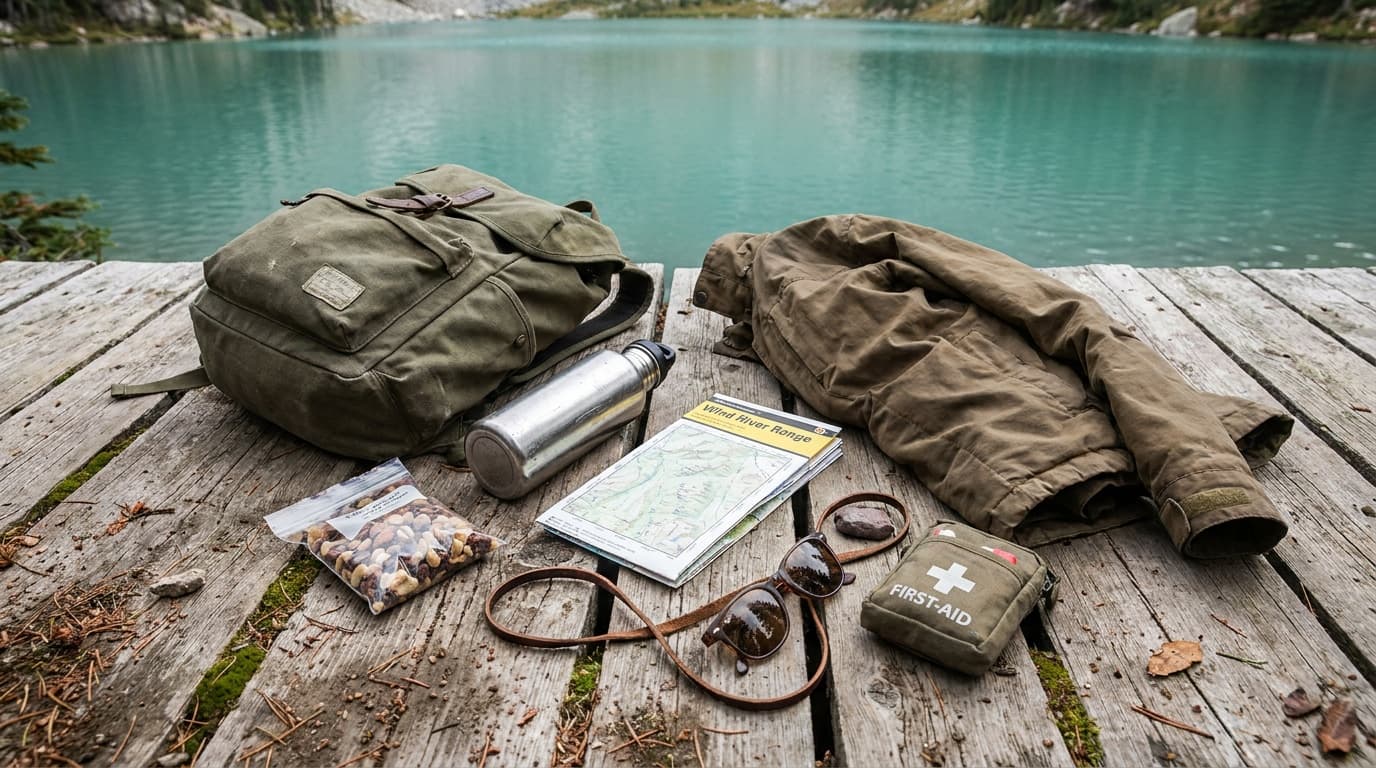
Most day hikers either carry too much and hate the weight by mile three, or carry too little and scramble when the weather turns. The ten essentials framework, combined with honest trip-length scaling, fixes both problems.
The 10 Essentials: what they are and why they survive every gear debate
The 10 Essentials framework was first published by The Mountaineers in 1974 and has been updated twice since, most recently to a systems-based framework. If you have seen "the 10 Essentials for day hiking" referenced on a trailhead sign or a ranger checklist, this is that list. The categories haven't changed because the failure modes haven't changed.
The ten systems, briefly:
- Navigation Map plus compass as the baseline; a GPS device or downloaded offline topo as a backup, not a replacement.
- Sun protection Sunscreen SPF 30 or higher, sunglasses rated UV400, a sun hat. Sun damage accumulates on every hike, not just summer ones.
- Insulation A wind-shell and a midlayer even if the forecast looks clear. Temperature drops 3–5°F per 1,000 feet of elevation gain.
- Illumination A headlamp like the Black Diamond Spot 400-R with fresh or spare batteries. Your phone flashlight is not a headlamp.
- First-aid supplies A compact kit covering blister care, wound closure, pain relief, and any personal medications.
- Fire Waterproof matches or a lighter plus a small firestarter. Carry even if you never plan to build a fire.
- Repair tools and knife A multitool or knife, duct tape, and a few feet of cordage handle most trail emergencies.
- Nutrition Extra food beyond your planned meals: enough calories for an unplanned night out if conditions change.
- Hydration Water plus a purification method, filter or tablets, for any trail without a guaranteed tap.
- Emergency shelter A lightweight bivy or emergency blanket. Under four ounces; no excuse to skip it.
Category-by-category packing list
Pack
For a half-day trail, a 15–20L daypack handles everything. For a full day in variable conditions, step up to 25–30L. Look for a hipbelt that transfers load to your hips, a back panel with airflow channels, and shoulder straps that sit flush without digging. A poor fit causes more suffering than heavy gear. Browse best hiking daypacks for fit-based picks across pack sizes.
Water and hydration
The standard guideline is 0.5L per hour of moderate hiking, more in heat or at altitude. For a 6-hour hike: carry at least 2L and know your refill sources. A squeeze filter like the Sawyer Squeeze adds 3 oz and turns any stream into safe drinking water. Electrolyte tabs matter on hot days when you are sweating heavily. If you want your water to stay cold through a long afternoon, one of the best insulated water bottles holds ice for hours longer than a plain bottle.
Navigation
Download your trail map offline before you leave cell range. AllTrails Pro and Gaia GPS both cache topo layers. Carry a paper map of any unfamiliar area as backup. A baseplate compass is 1–2 oz and takes 30 minutes to learn the basics. If you want navigation on your wrist with onboard topo maps and breadcrumb tracking, see our picks for the best GPS watches.
Layers and insulation
The layering system: a moisture-wicking base, an insulating midlayer (fleece or light down), and a waterproof-breathable shell. For a warm summer day hike below treeline, you can drop the midlayer. Never drop the shell. Check best hiking rain jackets for packable shell options that compress to fist size.
Footwear
Trail runners work for most maintained trails with moderate terrain. Hiking boots with ankle support matter for off-trail, loose scree, or heavy pack loads. Whatever you choose, break it in before a long day. Wool or synthetic hiking socks, never cotton, prevent blisters by managing moisture. See best hiking boots for terrain-matched picks. On longer outings, a packable pair of the best camp shoes lets your feet recover once the hiking is done.
First aid
A compact kit for day hiking should include: moleskin or blister bandages, a few adhesive bandages, gauze, medical tape, antiseptic wipes, pain relief tablets, and any personal prescription items. Pre-assembled kits like the Adventure Medical Kits Ultralight/Watertight .7 work well; customize them rather than building from scratch each time.
Sun protection
SPF 30 minimum, reapplied every 2 hours. Sunglasses rated UV400 for anything above treeline where glare off rock and snow compounds exposure. A lightweight sun hat adds coverage for your face and neck with almost no pack weight.
Food and nutrition
Plan for your intended calories plus a 20% buffer. Good day-hike food is calorie-dense, requires no cooking, and survives pack compression: trail mix, jerky, nut butter packets, bars with real food ingredients, and a sandwich or wrap for longer days.
How the list scales by trip length and conditions
Scaling your kit by trip type
Short trail walk (under 3 hrs, maintained path)
15–20L pack, 1.5L water, snacks, sunscreen, headlamp, phone with offline map, basic first aid
Half-day hike (3–5 hrs, variable terrain)
20–25L pack, 2L water plus filter, full meal, shell layer, sunglasses, ten essentials complete
Full day hike (6–10 hrs, elevation gain)
25–30L pack, 2.5–3L water plus filter, two meals plus snacks, midlayer plus shell, poles if terrain is steep, complete ten essentials
Alpine or exposed ridge (any length)
All full-day items plus: extra insulation, gaiters, sunscreen reapplication schedule, stronger navigation tools, emergency bivy
The ten essentials aren't about carrying everything; they're about closing every gap that turns a missed turn into an overnight emergency.
What beginners most often overpack
Overpacking is a real tax. Each extra pound costs roughly 6–8 watts of additional energy per mile, a cost ruckers pay on purpose for the training effect (the benefits of rucking make the case), but on a day hike it is just drag. Common beginner overpack culprits:
- Multiple full changes of clothing. One moisture-wicking base, one insulating layer, one shell. That is your system.
- Heavy camp-style cookware on a day hike. Cold or no-cook food handles any day hike; a stove and fuel add 1–2 lbs for no functional reason on a same-day return.
- Oversized first-aid kits. A full wilderness medicine kit is for multi-day trips. A 6–8 oz compact kit is the right tool for a day hike.
- Too much food for the distance. Caloric need for a 4-hour moderate hike is roughly 600–900 kcal beyond breakfast. Two solid snacks and a lunch covers it.
The inverse mistake, underpacking, almost always means skipping water capacity, navigation tools, or the emergency shelter. Those are the three items beginners drop most and regret most.
Frequently asked questions
What are the 10 Essentials for day hiking?
The 10 Essentials, as maintained by The Mountaineers, are ten survival-category systems: navigation, sun protection, insulation, illumination, first-aid supplies, fire, repair tools and knife, nutrition, hydration, and emergency shelter. The modern framework treats each as a system rather than a single item: "navigation" means a map plus compass plus an offline GPS backup, not just one gadget. Every item in your day pack should map to one of the ten categories; anything that maps to none is a candidate to leave home.
What should I pack for a day hike?
The short pack list for a typical half-day hike: a 20–25L daypack, 2L of water plus a 3 oz squeeze filter, lunch plus two snacks, a rain shell, a midlayer if you gain elevation, sun protection (SPF 30, UV400 sunglasses, hat), a headlamp, a compact first-aid kit, a knife or multitool with duct tape, a lighter, an emergency blanket, and your phone with the trail map downloaded offline. That full list weighs roughly 8–12 lbs including water and covers all ten essential categories. Scale up water and food for full-day routes; the trip-length table above gives exact quantities per trip type.
How much water should I bring on a day hike?
The standard planning number is 0.5L per hour of moderate hiking in mild weather, rising to 0.75–1L per hour in heat above 85°F or at high altitude. On a 6-hour hike, that means at least 3L in hot conditions. Carrying a lightweight filter and knowing your water sources lets you start with less weight and refill safely along the route.
Do I really need a paper map if I have a GPS app?
Yes, for any hike where cell service is unreliable. GPS apps work offline if you download maps before you leave, but phones fail: batteries die, screens crack, moisture gets in. A paper topo map and a baseplate compass are a 2-oz backup that works in any condition. Think of the phone app as the primary tool and the map-plus-compass as the failsafe.
What should I leave at home to lighten my pack?
Cut heavy cotton clothing first, it holds moisture and adds weight. Leave the full camp chair, the Bluetooth speaker, the oversized camp pillow, and any tools you can't name a specific use for on a day hike. Evaluate every item with one question: what does this protect against? If the answer is unclear, it stays home.
For pack selection specifically, the best hiking daypacks roundup walks through fit, volume, and feature trade-offs across price points. For more trail guides, gear breakdowns, and condition-specific advice, explore the full hike hub. To understand how we research and evaluate gear, see how we research.
Recommended gear
Our current top picks from the Best daypacks for hiking: top picks for 15–30 L guide, if you are ready to buy.

Best for: Hikers who want a proven all-around daypack with solid load support, plenty of adjustment, and a warranty they can actually use.
- Adjustable torso fit covers a wide range of body sizes
- At 2 lb 1 oz it runs heavier than ultralight rivals for the same volume
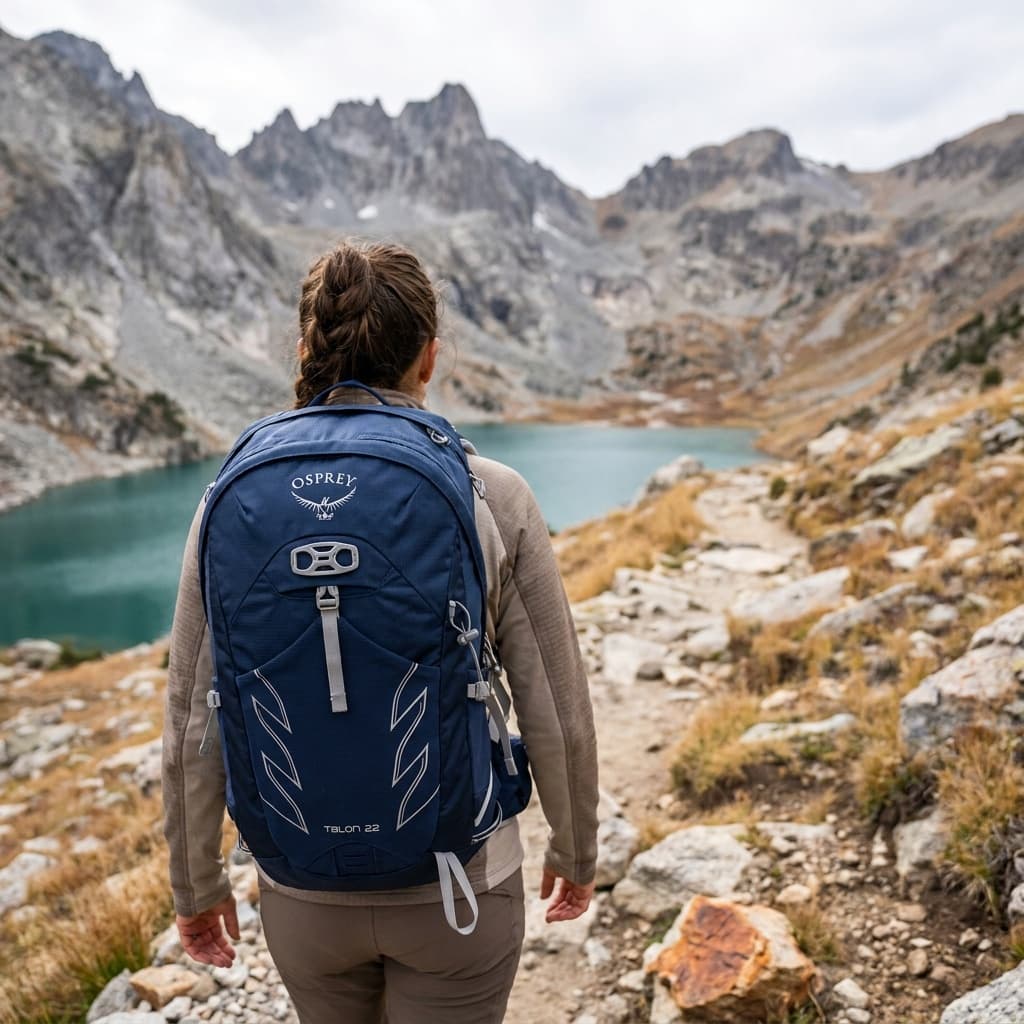
- Volume
- 22 L
- Weight
- 2 lb 1 oz (945 g)
- Back Panel
- AirScape foam with ventilation channels
- Hipbelt Pockets
- 2 zippered
- Hydration
- Compatible up to 3 L reservoir (sold separately)
- Warranty
- All Mighty Guarantee (lifetime repair or replace)
About this pick
The Talon 22 is the daypack you see on the trail more than any other for good reason: it packs in a padded hipbelt, adjustable torso harness, and dual hipbelt pockets into a 22-liter package that handles loads up to 20 lb without complaint. Owners across hundreds of Amazon ratings consistently cite its adjustability and durability as standouts.
Strengths
- Adjustable torso fit covers a wide range of body sizes
- Padded hipbelt and dual hipbelt pockets at this size are rare
- Osprey lifetime warranty backs years of hard use
Weaknesses
- At 2 lb 1 oz it runs heavier than ultralight rivals for the same volume
- AirScape back panel ventilation is functional but not class-leading compared to suspended-mesh designs
Kit Score breakdown
Best for: Hikers in warm or humid climates who prioritize back ventilation and do not mind carrying a few extra ounces for the airflow benefit.
- AirSpeed suspended mesh back panel keeps your back noticeably cooler than foam-panel designs
- Heaviest pack in this roundup at 2 lb 12 oz
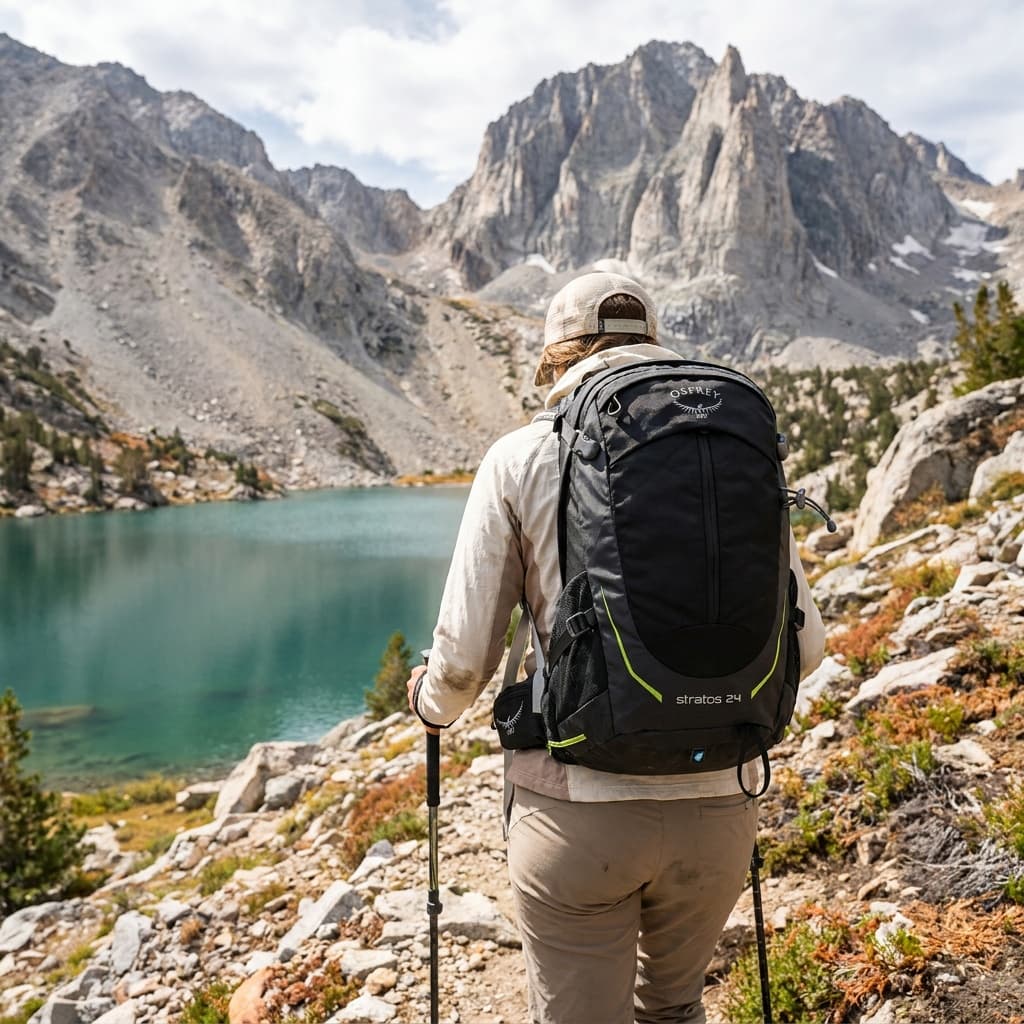
- Volume
- 24 L
- Weight
- 2 lb 12 oz (1.25 kg)
- Back Panel
- AirSpeed tensioned mesh (approx. 2 in. air gap)
- Hipbelt Pockets
- 2 zippered
- Hydration
- Compatible up to 3 L reservoir (sold separately)
- Rain Cover
- Integrated and removable
About this pick
The Stratos 24 runs a suspended mesh AirSpeed back panel that puts roughly two inches of airspace between your back and the pack, making it the go-to pick for hot-weather hiking where a clammy back is the main complaint. It holds strong ratings across multiple retailer platforms and includes an integrated rain cover, earning its premium price for hikers who log long summer days.
Strengths
- AirSpeed suspended mesh back panel keeps your back noticeably cooler than foam-panel designs
- Integrated rain cover included at this price is a genuine extra
- Plush hipbelt transfers load well on all-day efforts
Weaknesses
- Heaviest pack in this roundup at 2 lb 12 oz
- The stand-off suspension adds bulk that prevents the pack from compressing small
Kit Score breakdown
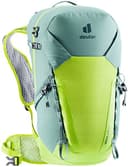
Best for: Weight-conscious day hikers who want real hipbelt support and a full-size 25 L compartment without paying the premium for a brand-name flagship pack.
- Half a pound lighter than most framed 22-25 L daypacks
- Fixed back length: important to check torso fit before buying
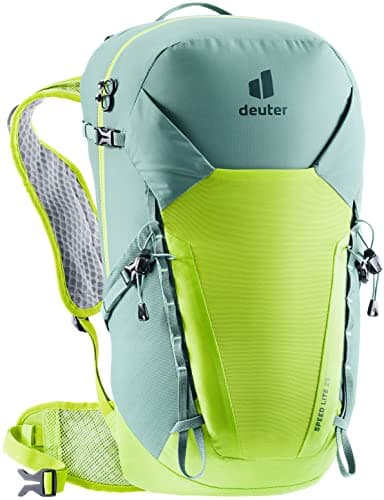
- Volume
- 25 L
- Weight
- 1 lb 9 oz (710 g)
- Back System
- Delrin U-frame with breathable contact back panel
- Hipbelt
- Padded fins with removable waist strap
- Hydration
- Compatible up to 3 L reservoir (sold separately)
- Body Fabric
- 100% recycled nylon; bluesign certified
About this pick
The Speed Lite 25 delivers genuine hiking support at a price well under $120: a Delrin U-frame keeps loads stable up to around 20 lb, breathable hip fins reduce hotspots, and the 25 L volume covers a full-day kit. At 1 lb 9 oz it is roughly a half-pound lighter than either Osprey option, and owner reviews on Amazon and Zappos rate it highly for the price.
Strengths
- Half a pound lighter than most framed 22-25 L daypacks
- Padded hipbelt and shoulder strap phone pockets included at this price
- 100% recycled body fabric with bluesign certification
Weaknesses
- Fixed back length: important to check torso fit before buying
- No rain cover included; main compartment has minimal internal dividers
Kit Score breakdown
See all picks in Best daypacks for hiking: top picks for 15–30 L
Keep going
Complete loadoutDay hike kitSeven slots for a full trail day, from the pack and water system to light and weather protection.Free tool: Hiking Water Calculator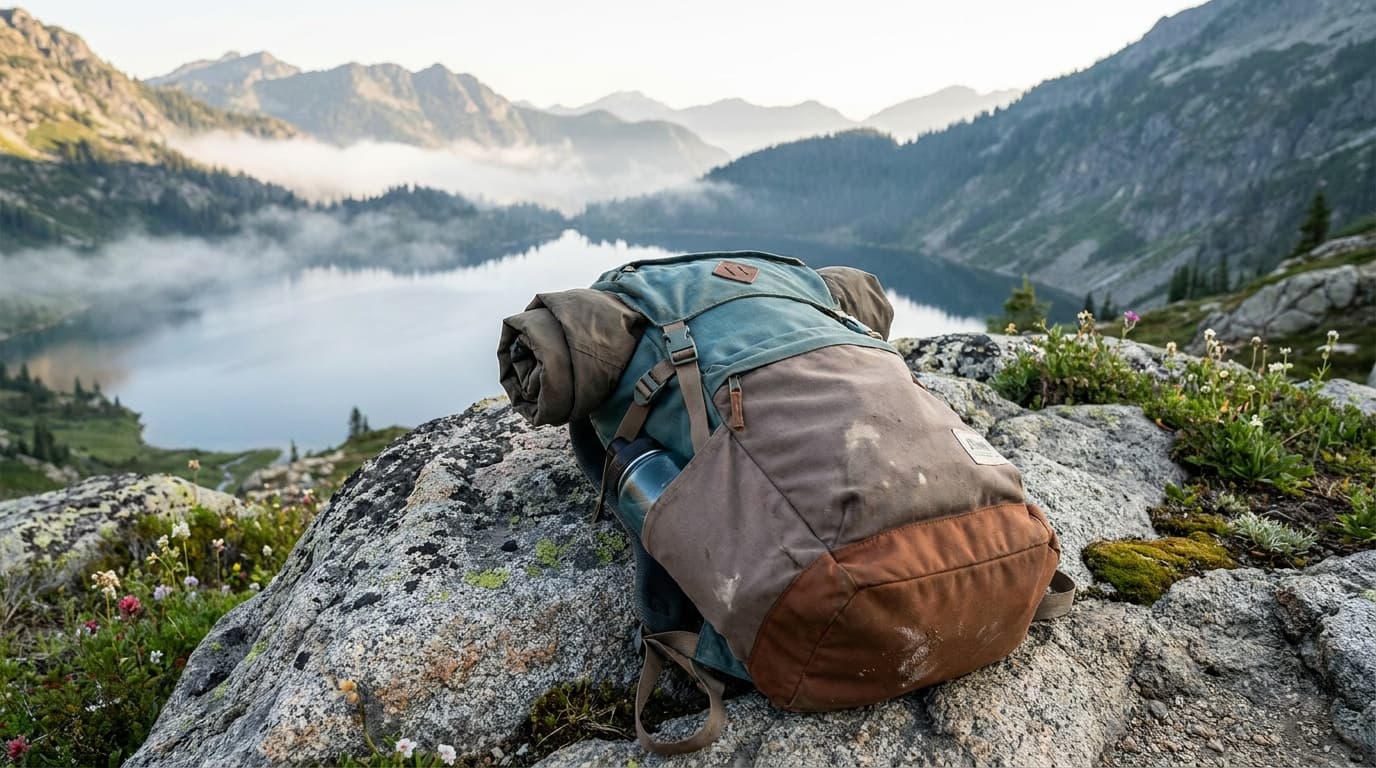
Researched, not hands-on tested
Updated Jul 7, 2026Our recommendations draw on manufacturer documentation, retailer listings, owner feedback, and comparisons with alternatives.
As an Amazon Associate I earn from qualifying purchases. We may earn a commission from links here, at no extra cost to you. How we research →