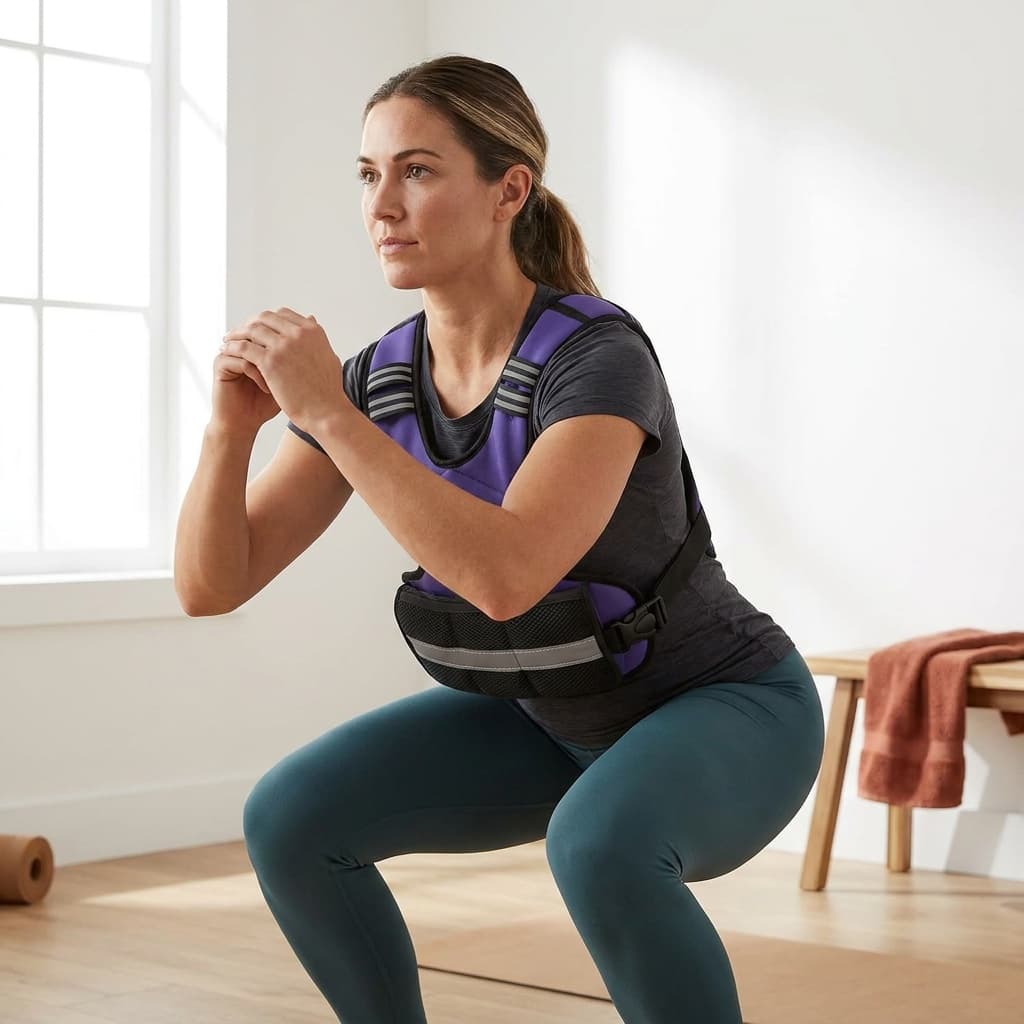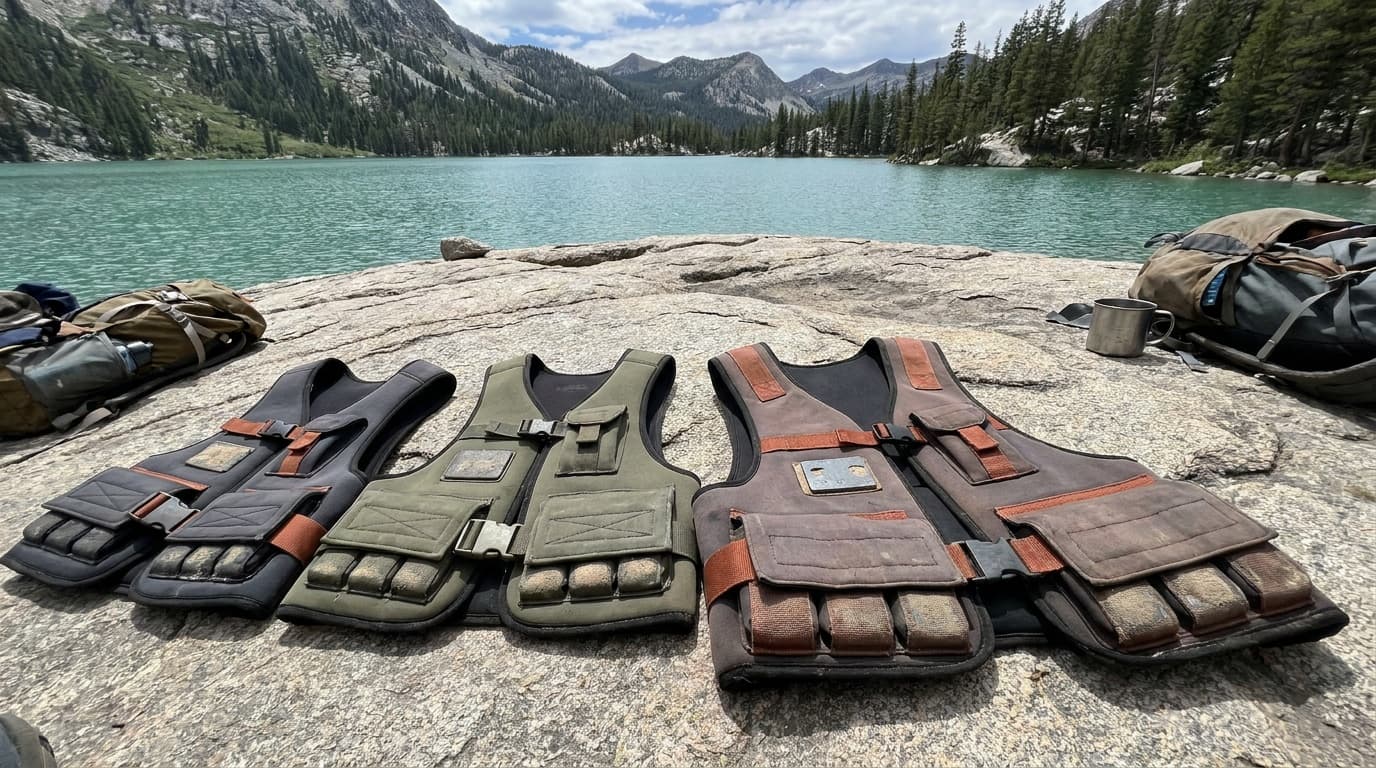
You do not need to spend $100 to find out whether weighted walking or home workouts are for you. The budget tier of weighted vests has gotten meaningfully better, and under $60 you can find vests that fit well, hold their fill, and survive daily use. These four picks are where the value-to-quality ratio is genuinely good.
Our quick picks



Compare the picks
| Product | Kit Score | Price | Best for |
|---|---|---|---|
| APEXUP Weighted Vest | 7.7 | $49.99 Price checked Oct 25, 3:41 PM CDT | Best for: Budget-focused fitness walkers, beginners, and ruckers who want a well-rated neoprene vest under $40 and are comfortable selecting a fixed weight upfront. Why it stands out: Strong value at under $40, with 5,600+ Amazon ratings averaging 4.5 stars confirming consistent quality at this price Tradeoff: Fixed-weight design means you choose one weight at purchase rather than adding or removing individual plates as fitness progresses |
| Henkelion Weighted Vest | 8.4 | $11.36 Price checked Oct 25, 3:41 PM CDT | Best for: Walkers and beginners who prioritize comfort and simplicity above everything else and want a well-validated option at a low entry price. Why it stands out: 4.5-star rating from 8,800-plus Amazon owners is among the strongest in the budget category, pointing to consistently positive real-world experience Tradeoff: Minimal adjustment beyond the chest strap; the vest cannot be sized up or down meaningfully, and fit can feel loose on smaller frames |
| Prodigen Weighted Vest 16 lb | 7.4 | $29.99 Price checked Oct 25, 3:41 PM CDT | Best for: Walkers and beginner ruckers who want a low-cost fixed-weight vest for daily cardio without the complexity of a plate-loading system. Why it stands out: Genuine budget value: 16 lb of fixed resistance for under $30 Tradeoff: Fixed weight only: adding resistance means buying a new vest rather than inserting plates |
| Aduro Sport Adjustable Weighted Vest | 7.3 | $26.99 Price checked Oct 25, 3:41 PM CDT | Best for: Beginners who want the convenience of a snap-on neoprene vest with warranty backup and plan to use it primarily for walking and bodyweight circuits. Why it stands out: Quick-release buckle closure is the fastest on/off mechanism in the budget category, a practical advantage for circuit-style workouts Tradeoff: A subset of owners report strap and buckle failures after moderate use, particularly at the attachment point where the strap meets the vest body |
APEXUP Weighted Vest
- Best for
- Budget-focused fitness walkers, beginners, and ruckers who want a well-rated neoprene vest under $40 and are comfortable selecting a fixed weight upfront.
- Why it stands out
- Strong value at under $40, with 5,600+ Amazon ratings averaging 4.5 stars confirming consistent quality at this price
- Tradeoff
- Fixed-weight design means you choose one weight at purchase rather than adding or removing individual plates as fitness progresses
Henkelion Weighted Vest
- Best for
- Walkers and beginners who prioritize comfort and simplicity above everything else and want a well-validated option at a low entry price.
- Why it stands out
- 4.5-star rating from 8,800-plus Amazon owners is among the strongest in the budget category, pointing to consistently positive real-world experience
- Tradeoff
- Minimal adjustment beyond the chest strap; the vest cannot be sized up or down meaningfully, and fit can feel loose on smaller frames
Prodigen Weighted Vest 16 lb
- Best for
- Walkers and beginner ruckers who want a low-cost fixed-weight vest for daily cardio without the complexity of a plate-loading system.
- Why it stands out
- Genuine budget value: 16 lb of fixed resistance for under $30
- Tradeoff
- Fixed weight only: adding resistance means buying a new vest rather than inserting plates
Aduro Sport Adjustable Weighted Vest
- Best for
- Beginners who want the convenience of a snap-on neoprene vest with warranty backup and plan to use it primarily for walking and bodyweight circuits.
- Why it stands out
- Quick-release buckle closure is the fastest on/off mechanism in the budget category, a practical advantage for circuit-style workouts
- Tradeoff
- A subset of owners report strap and buckle failures after moderate use, particularly at the attachment point where the strap meets the vest body
How we picked
Every vest here was evaluated using our Kit Score: comfort and fit against the body, fill type and weight distribution, durability signals from verified owner reviews, adjustability, and overall value at the price. We draw from manufacturer specs, verified buyer reviews, and independent sourcing. We research and synthesize rather than run our own product trials.
If you want a broader look at the category including premium and mid-range options, see our guide to the best weighted vests.
The numbers worth knowing before you buy
These are the figures that matter most when shopping this price tier.
The picks
APEXUP Weighted Vest: best overall
The APEXUP earns the top spot in this roundup because it gets the basics right at a price that makes it a low-risk first purchase. The neoprene shell sits close to the body, the stitching holds up to daily use, and the fit is stable enough that the vest does not bounce on a brisk walk.
At under $40, the APEXUP comes in a range of fixed weights. The construction is straightforward: iron sand fill distributed in sewn channels, neoprene exterior, adjustable velcro closures at the chest and sides. The weight distribution is even rather than pooled at the front or back, which matters more than most buyers expect on a two-mile walk.
Owner reviews consistently flag comfort and durability as the vest's strengths, with fit snugness cited as the reason it works for both walking and bodyweight workouts. The neoprene runs slightly warm in hot weather, which is a real trade-off to know going in.
Because it is fixed-weight, pick a number close to 5% of your bodyweight. If you are unsure, start lower and buy a second vest later rather than overshooting and stalling your joints.
BEST OVERALL
APEXUP Weighted Vest
Best for: Budget-focused fitness walkers, beginners, and ruckers who want a well-rated neoprene vest under $40 and are comfortable selecting a fixed weight upfront.
- Strong value at under $40, with 5,600+ Amazon ratings averaging 4.5 stars confirming consistent quality at this price
- Fixed-weight design means you choose one weight at purchase rather than adding or removing individual plates as fitness progresses
Kit Score 7.7/10 · $49.99 Price checked Oct 25, 3:41 PM CDT · how we score gear
Buy on AmazonProduct details
The APEXUP Weighted Vest is a neoprene fixed-weight vest available in six sizes from 5 to 30 lb, built for walking, running, hiking, and strength training. The ironsand fill distributes weight evenly across the torso, and the padded shoulder straps and buckle waist belt keep the vest snug without pinching. Reflective strips on the front and back add visibility for low-light workouts, and a small mesh pocket handles a key or card. With over 5,600 Amazon ratings averaging 4.5 stars and a #8 rank in the Strength Training Weight Vests category, it has a strong track record for its price point. Because weight is fixed at purchase rather than internally adjustable, you simply choose the lb option that fits your training needs.
- Weight options
- 5, 10, 15, 20, 25, 30 lb fixed
- Material
- Neoprene outer with ironsand fill
- Closure
- Buckle clip system
- Safety
- Reflective strips front and back
- Storage
- Mesh pocket for small items
- Fit
- Padded shoulder straps and waist belt, unisex
More strengths
- Ironsand fill and padded shoulder straps distribute load evenly for walking, rucking, and cardio
- Reflective strips add low-light visibility, a useful safety detail often absent from vests in this price range
Other tradeoffs
- Some buyers note an initial neoprene odor that may take a few days of airing out to dissipate
Henkelion Weighted Vest: best value
The Henkelion is the simplest vest in this roundup and the cheapest credible option for walkers who want to try weighted walking without much financial commitment. It does not have adjustable weight or complex construction. What it has is a comfortable neoprene fit, an even weight distribution, and a price that starts around $13.
The construction follows the same iron-sand-channel approach as the APEXUP, and the fit is similar: close to the body, minimal bounce. The Henkelion has slightly softer neoprene reported by reviewers, which some walkers prefer for longer sessions in cooler weather.
This is not a vest to grow with. If you buy the 8 lb version and decide you want 16 lb in six months, you are buying again. That is a real consideration. But if your goal is to add light resistance to daily walks and see whether you like it, the Henkelion is the right amount of vest at the right price.
BEST VALUE
Henkelion Weighted Vest
Best for: Walkers and beginners who prioritize comfort and simplicity above everything else and want a well-validated option at a low entry price.
- 4.5-star rating from 8,800-plus Amazon owners is among the strongest in the budget category, pointing to consistently positive real-world experience
- Minimal adjustment beyond the chest strap; the vest cannot be sized up or down meaningfully, and fit can feel loose on smaller frames
Kit Score 8.4/10 · $11.36 Price checked Oct 25, 3:41 PM CDT · how we score gear
Buy on AmazonProduct details
One of the best-reviewed budget vests on Amazon at 4.5 stars from over 8,800 ratings. Soft iron pellets in a neoprene sleeve give it a low-profile feel that conforms well to the shoulders, and the simple chest-strap closure makes it easy to put on and take off between walks.
- Weight options
- 4, 6, 8, 12, 16, 20, 25 lb
- Fill type
- Iron pellets with neoprene cover
- Closure
- Single chest strap
- Colors
- Black, grey, pink, blue, purple
- Safety
- Reflective strips on shoulders and back
- Storage
- Rear mesh pocket
More strengths
- Extremely comfortable for light cardio: the soft neoprene and evenly spread pellets feel more like a snug layer than a bulky weight
- Available in multiple colors and seven weight options, so beginners can start at 4 lb and buy a heavier unit later without spending much
Other tradeoffs
- Some owners report slight bounce during faster movement because the single strap does not cinch the vest tightly
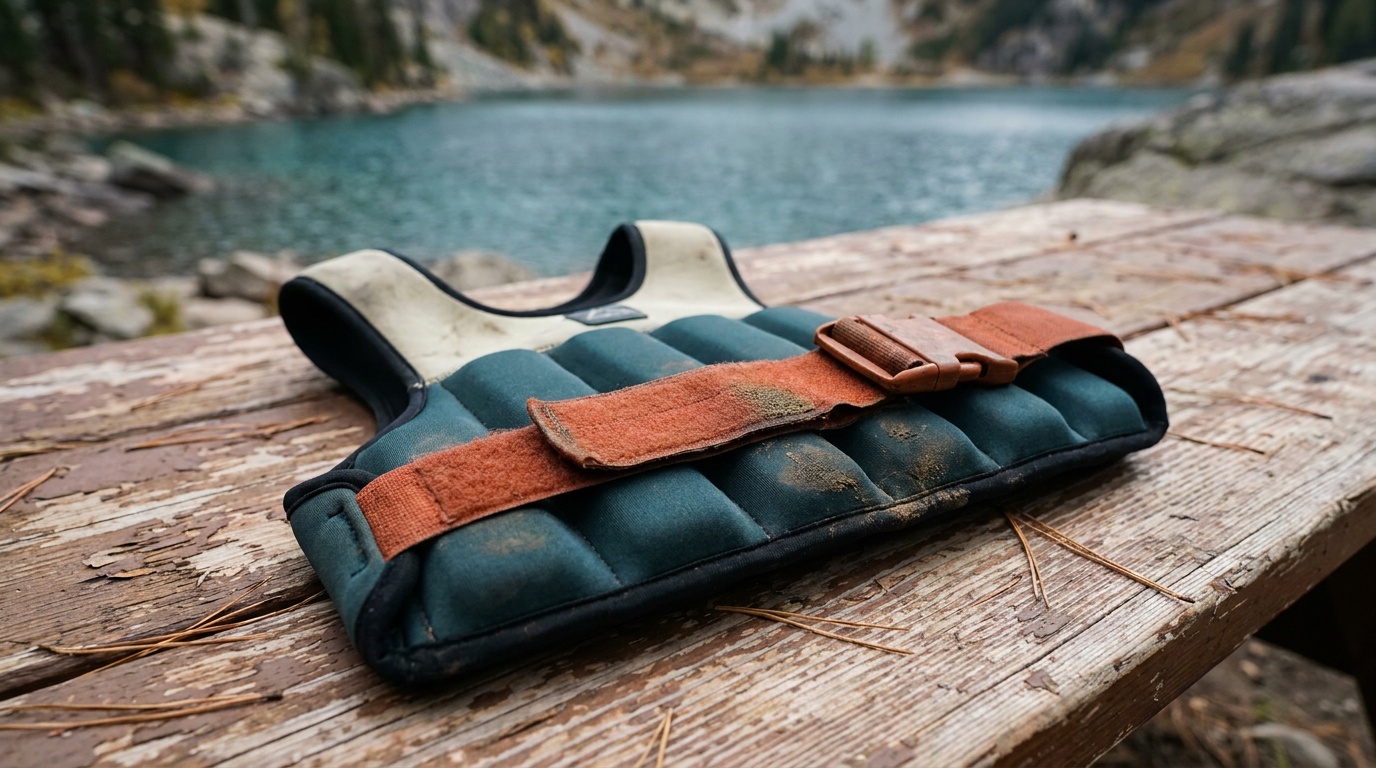
At the budget price tier, neoprene construction and even fill distribution matter more than any single feature. A vest that shifts or bunches adds friction to every step.
Prodigen Weighted Vest 16 lb: editor's choice
The Prodigen earns the Editor's Choice for one clear reason: it delivers 16 lb of fixed resistance at a price that consistently lands under $35, which is a better weight-to-dollar ratio than most of this tier. For daily cardio use, including walking, light jogging, and bodyweight work, the value case is straightforward.
The neoprene shell is slightly thicker than the Henkelion, and the fit system uses dual side adjustments that let you dial in the snugness without extra bulk. At 16 lb, this is a vest for someone who has already built up some base or knows their target load is in that range. If you are a true beginner, the Prodigen also comes in lighter fixed weights.
The vest's construction holds up well over time in owner reviews, with fill integrity (no leaking sand, no shifting channels) cited as a consistent positive. It is not an adjustable vest, so you are committing to a weight. That simplicity is also part of why it works: no small weight plates to lose, no straps to re-thread.
For walkers and beginner ruckers (if rucking is your lane, Ruck Authority's budget rucking starter kit is the dedicated version of this page) who want a reliable daily-use vest and are not interested in the complexity of a plate-loading system, the Prodigen is the most efficient buy in this roundup.
EDITOR'S CHOICE
Prodigen Weighted Vest 16 lb
Best for: Walkers and beginner ruckers who want a low-cost fixed-weight vest for daily cardio without the complexity of a plate-loading system.
- Genuine budget value: 16 lb of fixed resistance for under $30
- Fixed weight only: adding resistance means buying a new vest rather than inserting plates
Kit Score 7.4/10 · $29.99 Price checked Oct 25, 3:41 PM CDT · how we score gear
Buy on AmazonProduct details
The Prodigen 16 lb vest is a neoprene wraparound design stuffed with chemical-free iron sand. It closes with two independent adjustable buckle straps and fits a 35–45 inch chest. Reflective strips on both sides add low-light visibility for outdoor walks and runs. The thickened shoulder panels are intended to distribute load evenly, and double stitching at the seams reduces the risk of sand leakage over time. At $29.99 for a fixed 16 lb load, it is one of the most affordable per-pound options in the budget category. The vest ranks in the top 25 of Amazon's Strength Training Weight Vests category and carries a 4.5-star rating across more than 4,300 reviews.
- Weight
- 16 lb (fixed; family also available in 8 lb and 12 lb)
- Material
- Neoprene (chloroprene rubber) outer; iron sand fill
- Closure
- Double adjustable buckle straps
- Fit range
- 35–45 inch bust
- Visibility
- Reflective strips on both sides
- Stitching
- Double-stitched seams to prevent sand leakage
More strengths
- High review volume (4,300 plus ratings) signals consistent build quality for the price
- Reflective side strips make it usable for early-morning or evening outdoor sessions
Other tradeoffs
- Neoprene traps heat, which can become uncomfortable during high-intensity or warm-weather workouts
Aduro Sport Adjustable Weighted Vest: best adjustable
The Aduro Sport is the only adjustable vest in this roundup and the pick for anyone who wants to add weight gradually without buying a new vest every few months. It uses removable weight pouches rather than iron-sand channels, which means you can start light and add resistance in increments as your body adapts.
At $30–$45, it is the most expensive pick here, and the trade-off for adjustability is slightly more hardware: the pouches need to be seated correctly to avoid uneven distribution, and the vest requires a bit more setup than a fixed-weight option. For most beginners, that is a worthwhile trade.
The neoprene base is comfortable and the fit is adjustable via side straps. It runs in the 12–20 lb usable range depending on which version you buy. The recurring owner theme is adjustability: it is the feature that keeps people using the vest as their fitness improves, which is exactly the right reason to pay a few dollars more.
If you are starting a walking or home-workout routine and want one vest that can grow with you for the next year, the Aduro Sport is the pick.
BEST ADJUSTABLE
Aduro Sport Adjustable Weighted Vest
Best for: Beginners who want the convenience of a snap-on neoprene vest with warranty backup and plan to use it primarily for walking and bodyweight circuits.
- Quick-release buckle closure is the fastest on/off mechanism in the budget category, a practical advantage for circuit-style workouts
- A subset of owners report strap and buckle failures after moderate use, particularly at the attachment point where the strap meets the vest body
Kit Score 7.3/10 · $26.99 Price checked Oct 25, 3:41 PM CDT · how we score gear
Buy on AmazonProduct details
A neoprene fixed-weight vest with a single-buckle closure that snaps on in seconds. The 4 lb and 12 lb versions regularly sell for under $35. Backed by a lifetime limited warranty with US customer service, which is unusual at this price point and provides meaningful purchase protection. Over 10,300 ratings at 4.4 stars on Amazon.
- Weight options
- 4, 6, 12, 16, 20, 25, 30 lb
- Fill type
- Iron sand, fixed per unit
- Shell material
- Soft neoprene
- Closure
- Single quick-release front buckle strap
- Storage
- Rear mesh pocket
- Warranty
- Lifetime limited, US-based support
More strengths
- Lifetime limited warranty with US-based support adds real value at this price, covering defects that other budget brands ignore
- Even weight distribution and non-slip neoprene body keep the vest stable through walking, pull-ups, and push-ups
Other tradeoffs
- Fixed weight per unit means no in-vest progression; sizing up requires a new purchase
Fixed vs. adjustable: how to choose
The single most common question in this price tier is whether to buy fixed or adjustable. The honest answer depends on where you are in the process.
Choosing between fixed and adjustable weight
You are testing the concept
A fixed-weight vest is fine. Pick one near 5% of your bodyweight and walk your normal distance. If you stick with it for a month, then consider adjustable.
You are committing long-term
An adjustable vest pays for itself over time. You will progress past your starting weight, and buying a new fixed-weight vest every few months costs more than the upfront premium on an adjustable.
You want to share with a partner
Adjustable wins. Fixed-weight vests are sized to a load, not a person. An adjustable vest can serve two people at different starting weights.
You want zero complexity
Fixed-weight wins. Put it on, walk. No pouches to seat, no plates to account for, nothing to re-balance.
Frequently asked questions
Are cheap weighted vests worth buying?
Yes, for most beginners. Budget neoprene vests in the $25–$50 range are well-suited to walking and light home workouts. The main limitations are fixed weight (no adjustability on cheaper models) and heat retention from neoprene. If you are doing longer outdoor walks in warm weather, budget for a vest with ventilation, or plan for early-morning use. For indoor use and cooler-weather walking, the budget tier is genuinely good.
How heavy should a budget weighted vest be for a beginner?
Start around 5% of your bodyweight. For a 150 lb person, that is about 8 lb. For a 180 lb person, around 9 lb. Most budget fixed-weight vests come in 8, 10, 12, or 16 lb options, so you can usually find something close to your target. Do not round up significantly on your first purchase: joints and connective tissue adapt more slowly than cardiovascular fitness, and overshooting the load early is the most common cause of hip and knee strain.
What is the difference between iron sand and plate-loaded weighted vests?
Iron-sand vests (the kind in this roundup) distribute weight via sewn channels filled with a dense sand mixture. They are lower cost, have a lower profile, and are more comfortable against the body on long walks. Plate-loaded vests accept removable steel or iron plates, which offer finer weight increments and scale to much higher loads. For beginners doing cardio and walking, iron-sand construction at this price tier is the right call. Plate-loaded vests become relevant when you are working above 20–25 lb or doing serious strength training.
Ready to go deeper? See more fitness gear and home workout guides, or read about how we research and rate gear.
Keep going
Free toolWhich Vest? QuizAnswer three questions, get matched to the right vest.Related guides
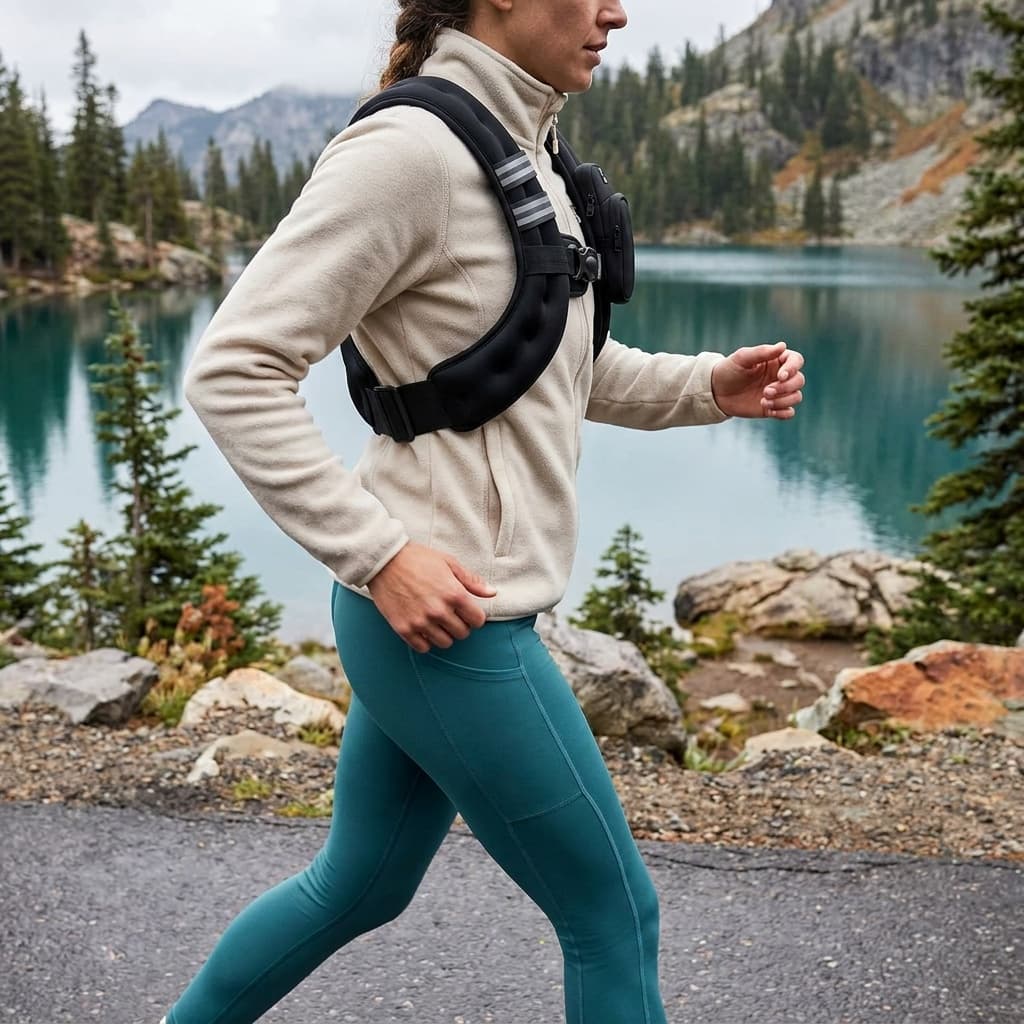


 Complete fitness loadoutWeighted-vest starter kitBuild the complete kit
Our recommendations draw on manufacturer documentation, retailer listings, owner feedback, and comparisons with alternatives.
As an Amazon Associate I earn from qualifying purchases. We may earn a commission from links here, at no extra cost to you. How we research →