The best weighted vest for most people is the miR Air Flow: its removable solid iron weights are 3 lb each and the vest holds up to 60 lb, according to miR's own listing. Whatever you buy, start light: UCLA Health's sports medicine guidance is a vest of about 5% of your body weight, or about 7.5 lb for a 150 lb walker. A weighted vest is one of the simplest ways to add progressive overload to walking, bodyweight training, and conditioning without changing your movement pattern. The difference between a vest that works and one that chafes, bounces, or falls apart after two months comes down to fit, fill type, and how the weight is distributed. If your goal is specifically walking, our guide to the best weighted vests for walking goes deeper on lighter loads and all-day comfort. If you want to dial the load up and down session to session, see our picks for the best adjustable weighted vests, and if you are shopping under a tight budget, the best budget weighted vests cover what holds up at the entry price. Women who struggle with bulky, boxy fits should start with the best weighted vests for women, which prioritize a chest-friendly cut.
Our quick picks
Our picks
Best overall
BEST OVERALL
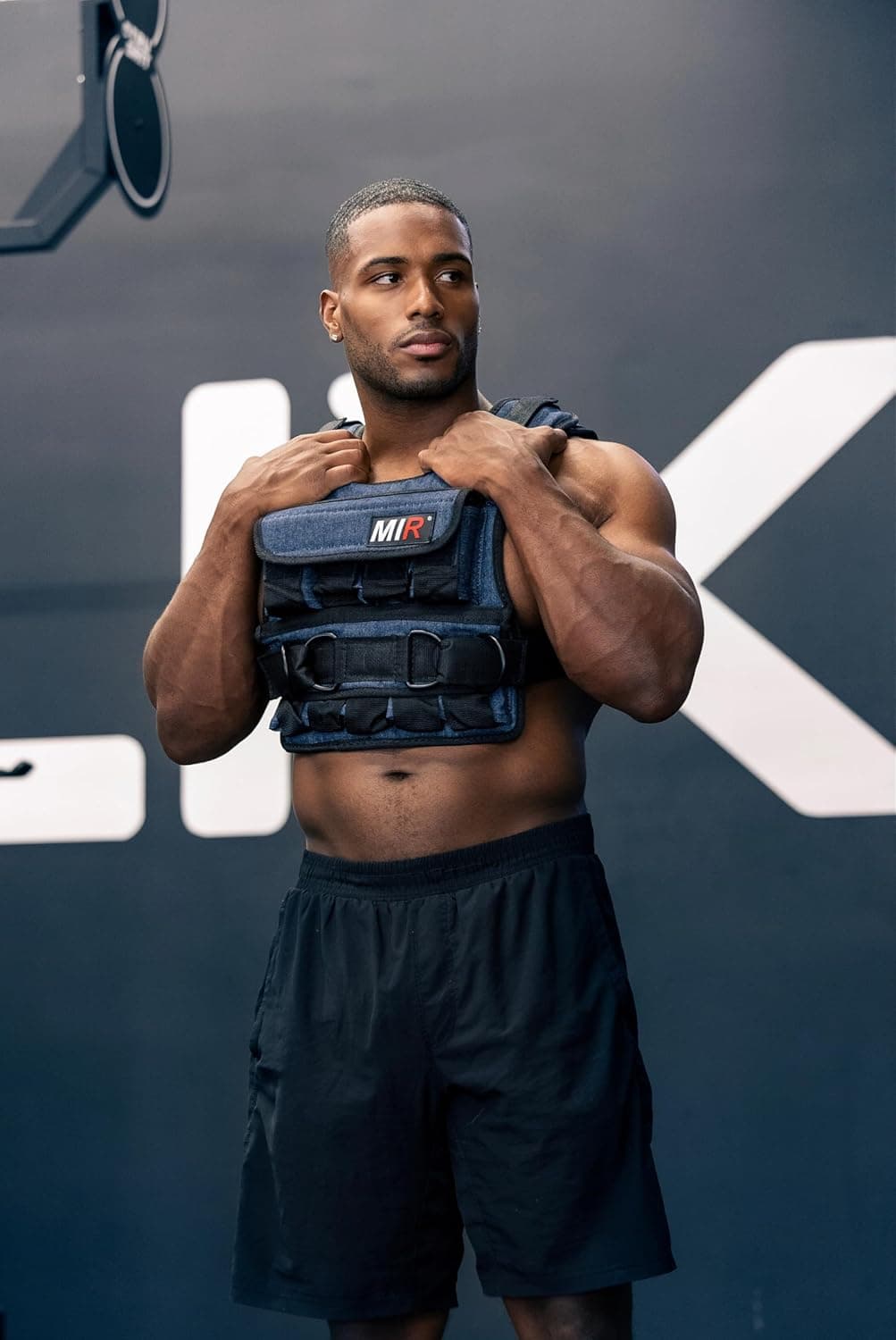
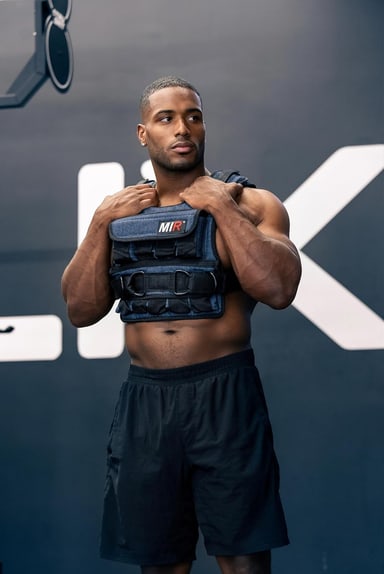
miR Air Flow Adjustable Weighted Vest
Best for: Walkers and conditioning athletes who want easy in-session weight changes, lasting build quality, and a vest that stays put without shoulder padding on long efforts.
- Short vest profile rides high and tight, preventing the downward shift and shoulder dig common in longer designs during calisthenics and loaded walks
- Bulkier silhouette than compression-style or ultra-thin vests, which can limit range of motion in overhead pressing movements
Kit Score 8.8/10 · $130.46 Price checked Oct 25, 3:41 PM CDT · how we score gear
Buy on AmazonProduct details
The miR Air Flow uses a compact, torso-hugging cut and removable 3 lb solid iron weights to keep load close to center of gravity, which is the core reason it earns the top slot. miR describes the shell as a hybrid material meant to keep you cooler than the hard, scratchy fabric on many vests, which helps on long walks and outdoor conditioning sets.
- Weight range
- Sold at 20, 30, 40, 50, or 60 lb, or vest only; 60 lb max
- Fill type
- Removable 3 lb solid iron weights
- Design
- Small, compact cut built for cardio, per miR
- Adjustability
- Adjustable belt and shoulder strap
- Washability
- Machine washable (remove weights first)
- Warranty
- Lifetime
More strengths
- Removable 3 lb bars allow repeatable load changes without replacing the vest
- Machine-washable construction and a lifetime warranty give long-term owners real confidence in the buy
Other tradeoffs
- Lightest loaded configuration is 20 lb, so beginners should remove weights to start near 5% of body weight
The miR Air Flow is the pick most walkers and conditioning athletes should start with. The vest holds solid iron weights in individual pockets across the front and back panels, which keeps weight evenly distributed, and miR says each weight can be removed or added within seconds. Verified owners consistently note that the shoulder and torso fit holds tight across a wide range of body types, and miR describes the shell as a hybrid material chosen to keep you cooler than the hard, scratchy fabric on many vests.
On the specs people most often search for: the manufacturer's Air Flow listing says each removable solid-iron weight is 3 lb, so the load changes in 3 lb steps, not the 2.5 lb increments shown by some listings. miR sells it loaded at 20, 30, 40, 50, or 60 lb (or as a vest only), the vest is rated to a 60 lb maximum, and the shell is machine washable once you remove the weights. The Amazon listing linked on this page is the 20 lb version, so choose a heavier load there only if you need it.
If you take the vest on and off between sets, miR also lists a separate Speed Release Air Flow model in its catalog. miR backs the Air Flow with a lifetime guarantee that covers damage from workouts, and long-term owner reviews point to lasting stitching even at higher loads. At 20 to 60 lb depending on the configuration you order, it covers most training and walking use cases in a single purchase.
Best for: Walkers and conditioning athletes who want easy in-session weight changes, lasting build quality, and a vest that stays put without shoulder padding on long efforts. For the full breakdown, read our miR Air Flow review.
Best value
BEST VALUE
ZELUS Weighted Vest with Reflective Stripe
Best for: Walkers, hikers, and home-gym users who want a no-fuss, comfortable vest at a low entry price and do not need to change weight during a session.
- Iron-sand panels keep weight flush against the body rather than in pockets, so the load stays predictably still during walking, jogging, and bodyweight circuits
- Fixed weight per unit means adding load requires buying a heavier vest rather than inserting weights, which raises long-term cost for progressive training
Kit Score 8.7/10 · $26.49 Price checked Oct 25, 3:41 PM CDT · how we score gear
Buy on AmazonProduct details
The ZELUS iron-sand vest earns a strong owner rating from thousands of verified Amazon buyers by doing the core job well: evenly distributed weight, a soft spandex shell, and adjustable buckle straps that hold the vest flat against the torso. The fixed-weight format keeps the price low and keeps the weight from shifting.
- Available weights
- 6 lb, 8 lb, 12 lb, 16 lb, 20 lb, 25 lb, 30 lb (fixed per unit)
- Fill type
- Iron-sand sewn into vest panels
- Shell material
- Soft, wear-resistant spandex
- Chest fit range
- 31.5 in. to 45 in. (Amazon listing)
- Visibility
- Reflective strips
- Storage
- Armband pouch and rear mesh pocket
More strengths
- Reflective strips add meaningful safety for dawn or dusk walking without adding bulk
- Strong owner-sentiment scores across thousands of reviews, with consistent praise for fit stability and comfort
Other tradeoffs
- Solid fabric panels breathe less than open mesh shells, and owner feedback flags warmth during high-intensity work or hot weather
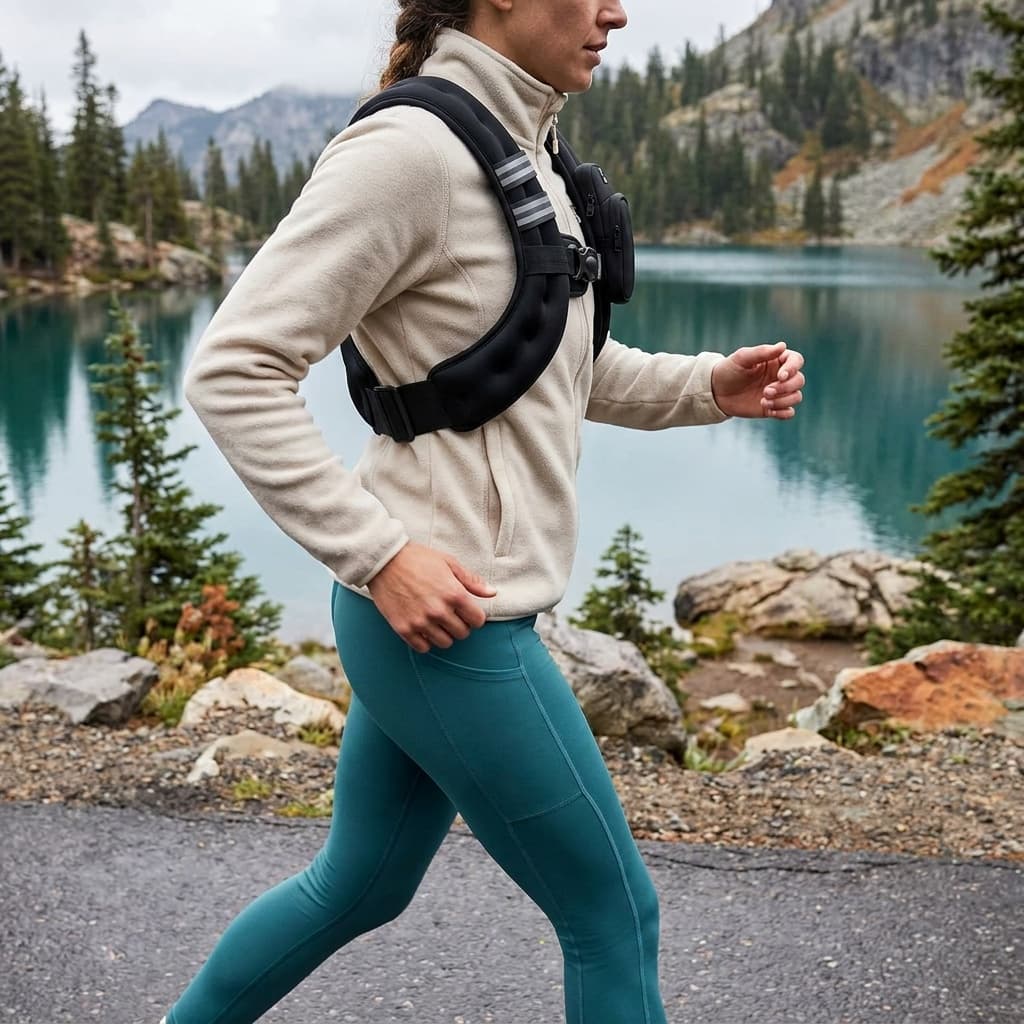
The ZELUS vest uses an iron sand fill rather than removable bars or plates, which gives it a softer, more conforming feel against the torso but means weight is fixed at purchase. ZELUS sells it in 6, 8, 12, 16, 20, 25, and 30 lb versions, and the Amazon listing says the buckle straps fit chests from 31.5 to 45 in. Reflective strips make it a practical choice for early-morning or low-light walking routes, and an armband pouch plus a rear mesh pocket hold keys and a phone. Fit feedback from owners is consistently positive for the vest's snugness relative to its price.
It is one of the lowest-cost vests we rate. The trade-off is flexibility: you cannot change the load without buying a different vest. For walkers or hikers who have identified a target weight and want a simple, dependable vest to carry it, the ZELUS delivers without complication.
Best for: Walkers, hikers, and home-gym users who want a no-fuss, comfortable vest at a low entry price and do not need to change weight during a session. See the details in our ZELUS weighted vest review.
Best premium
BEST PREMIUM
Hyperwear Hyper Vest PRO Adjustable Weighted Vest
Best for: Serious walkers, runners, and calisthenics athletes who prioritize a low-profile, no-bounce fit over everything else and will wear it often enough to justify the price.
- Ultra-thin micro-weight distribution across the full torso eliminates shoulder hot spots and prevents the lopsided loading common in pocket-based designs
- Adding or removing individual micro-weights to reach a precise target weight requires counting and time; the adjustment system rewards patience
Kit Score 8.9/10 · $199.95 Price checked Oct 25, 3:41 PM CDT · how we score gear
Buy on AmazonProduct details
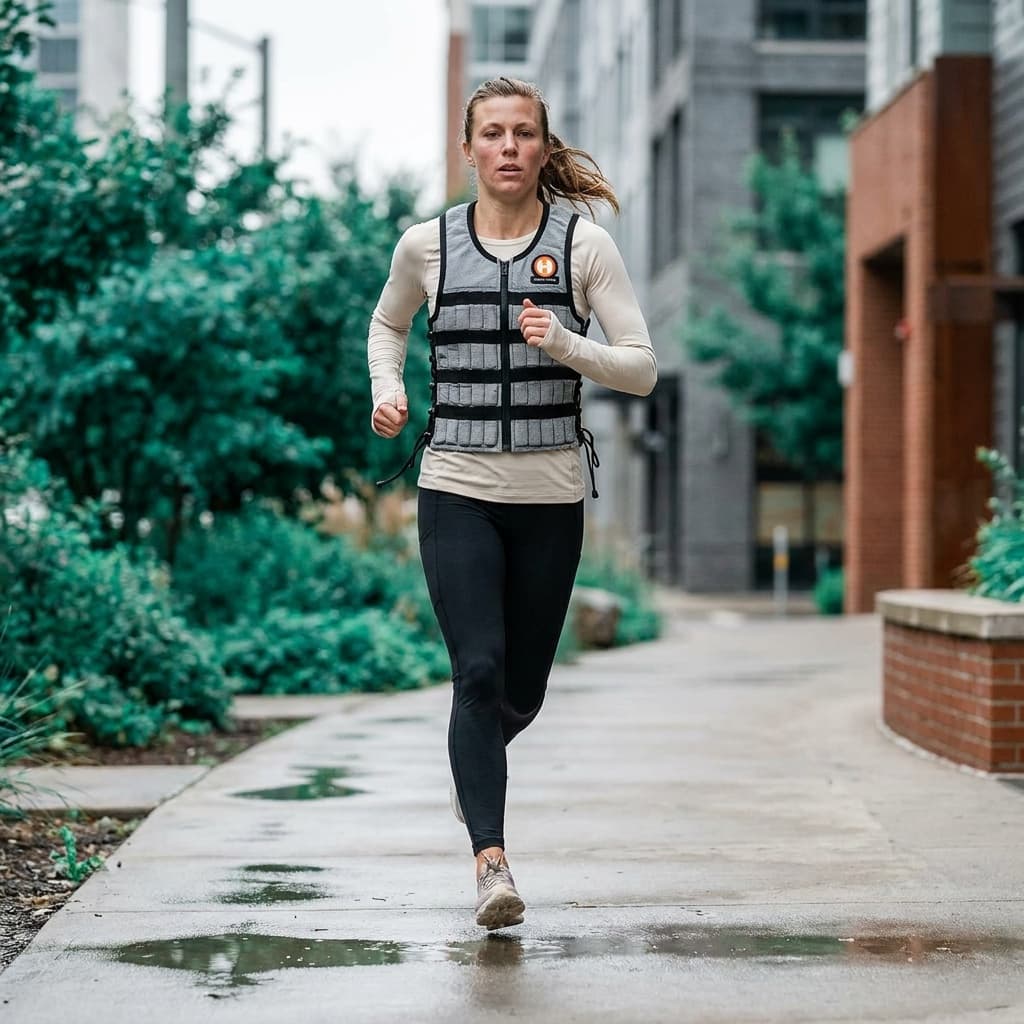
The Hyper Vest PRO distributes load through dozens of removable 2.25 oz steel weights spread across the torso, which spreads force so evenly that most wearers describe the sensation as simply feeling heavier rather than wearing a vest. The patented stretch compression fabric (sold as Xyflex) compresses to the body's contours, which is why bounce is effectively zero and range of motion is uncompromised.
- Weight range
- Up to 20 lb (S), 25 lb (M), 30 lb (L), 40 lb (XL)
- Fill type
- Removable 2.25 oz galvanized steel micro-weights
- Shell material
- Xyflex stretch compression fabric
- Closure
- YKK front zipper, adjustable side lacing
- Sizing
- Small, Medium, Large, X-Large (unisex, 31 to 46 in chest)
- Washability
- Remove weights; hand wash or machine wash gentle/cold, hang dry
More strengths
- Side lace-up system provides a body-specific compression fit that eliminates bounce even during running, pull-ups, and plyometrics
- 2.25 oz weights, two per pocket, allow fine-grained load changes
Other tradeoffs
- Premium price is a significant step up from mid-range options and hard to justify for users whose training stays below 10 lb
The Hyper Vest PRO is built around one priority: staying out of your way. It spreads 2.25 oz galvanized steel weights (two fit in each pocket) through a stretch compression shell that closes with a front zipper and side lacing, so the load sits flat against the torso instead of swaying like a conventional pocket vest. Hyperwear says the Small ships with 10 lb of weights and holds up to 20 lb, and the larger sizes top out at 25, 30, and 40 lb. The result is a vest that serious runners and calisthenics athletes can wear through pull-ups, push-ups, and loaded carries without the weight shifting position.
Hyperwear says the steel weights are only 0.25 in thick, which is why the vest carries less bulk than a conventional plate-style vest. That close profile is the reason to pay the premium; it is not evidence that the vest prevents osteoporosis or makes running safer. Bone-health studies use specific supervised protocols and have produced mixed results, including a 2025 randomized trial that found daily vest use did not prevent hip bone loss during weight reduction. The price is significant, and it is the right spend only if fit and profile matter more than capacity per dollar.
Best for: Serious walkers, runners, and calisthenics athletes who prioritize a low-profile, no-bounce fit over everything else and will wear it often enough to justify the price. Read our full Hyperwear Hyper Vest PRO review, or see how it stacks up head to head in miR Air Flow vs Hyperwear Hyper Vest PRO.
Best budget
BEST BUDGET
CAP 20 LB Adjustable Weighted Vest
Best for: Beginners and walkers who want an affordable, incrementally adjustable vest for daily walking and cardio without committing to a mid-range or premium price.
- Small removable weight packets of about 1 lb allow precise, gradual load progression, which is ideal for new users following a percent-of-bodyweight build protocol
- Small weight packets can be fiddly to load and reposition, and the pockets are described by some owners as thinner than those on more expensive options
Kit Score 7.2/10 · $39.97 Price checked Oct 25, 3:41 PM CDT · how we score gear
Buy on AmazonProduct details
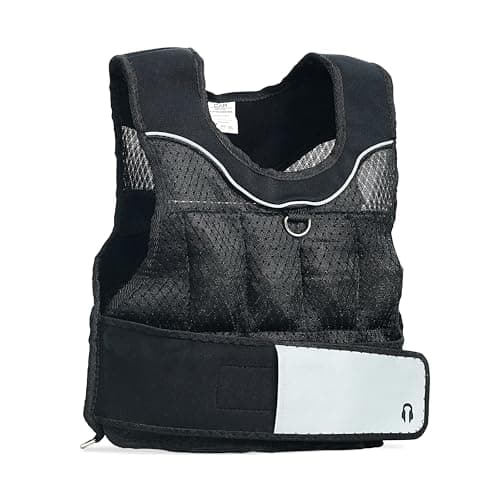
The CAP 20 LB vest brings roughly 1 lb weight steps and a breathable mesh shell to a price point that is hard to beat for someone starting out with weighted walking or cardio. Reviewers cite consistent use for daily dog walks and general conditioning, with the reflective strips adding real utility for outdoor use.
- Weight range
- Up to 20 lb in removable weight packets
- Fill type
- Packets of about 1 lb (iron ore fines per Amazon; about 0.75 lb steel shot per CAP)
- Shell material
- Breathable mesh with neoprene padding
- Fit
- Adjustable clips and waist belt; one size fits most
- Visibility
- Reflective safety stripes
- Storage
- Integrated pocket for phone or MP3 player
More strengths
- Breathable mesh shell keeps the vest cooler than solid neoprene options, which owners flag as a meaningful comfort advantage during aerobic work
- Reflective stripes and an integrated phone pocket add practical features at a price that leaves room in budget for other gear
Other tradeoffs
- At higher loads, owners note some bounce and weight shift during dynamic movements; performs best at moderate loads for walking and steady-state cardio
The CAP 20 LB vest holds its load in small removable weight packets, letting beginners start light and work up in roughly 1 lb steps toward the 20 lb max. The Amazon listing describes 1 lb packets of iron ore fines; CAP's own product page describes steel-shot packets of about 0.75 lb, so expect steps of around a pound either way. It is the lowest entry point among the adjustable vests we rate: most cheaper options are fixed-weight, which removes a key benefit for people still finding their training load. CAP lists a breathable mesh body, neoprene padding, reflective strips, and a phone pocket.
Fit is serviceable for low-intensity walking and bodyweight work. Owners note it can shift slightly on more dynamic movements at higher loads, which places it firmly in the walking and daily-cardio category rather than conditioning circuits. For beginners establishing a habit and testing whether weighted walking works for them before committing to a midrange vest, it is an honest starting point.
Best for: Beginners and walkers who want an affordable, incrementally adjustable vest for daily walking and cardio without committing to a mid-range or premium price. Get the full picture in our CAP weighted vest review.
Compare the picks
| Product | Kit Score | Price | Best for |
|---|---|---|---|
| miR Air Flow Adjustable Weighted Vest | 8.8 | $130.46 Price checked Oct 25, 3:41 PM CDT | Best for: Walkers and conditioning athletes who want easy in-session weight changes, lasting build quality, and a vest that stays put without shoulder padding on long efforts. Why it stands out: Short vest profile rides high and tight, preventing the downward shift and shoulder dig common in longer designs during calisthenics and loaded walks Tradeoff: Bulkier silhouette than compression-style or ultra-thin vests, which can limit range of motion in overhead pressing movements |
| ZELUS Weighted Vest with Reflective Stripe | 8.7 | $26.49 Price checked Oct 25, 3:41 PM CDT | Best for: Walkers, hikers, and home-gym users who want a no-fuss, comfortable vest at a low entry price and do not need to change weight during a session. Why it stands out: Iron-sand panels keep weight flush against the body rather than in pockets, so the load stays predictably still during walking, jogging, and bodyweight circuits Tradeoff: Fixed weight per unit means adding load requires buying a heavier vest rather than inserting weights, which raises long-term cost for progressive training |
| Hyperwear Hyper Vest PRO Adjustable Weighted Vest | 8.9 | $199.95 Price checked Oct 25, 3:41 PM CDT | Best for: Serious walkers, runners, and calisthenics athletes who prioritize a low-profile, no-bounce fit over everything else and will wear it often enough to justify the price. Why it stands out: Ultra-thin micro-weight distribution across the full torso eliminates shoulder hot spots and prevents the lopsided loading common in pocket-based designs Tradeoff: Adding or removing individual micro-weights to reach a precise target weight requires counting and time; the adjustment system rewards patience |
miR Air Flow Adjustable Weighted Vest
- Best for
- Walkers and conditioning athletes who want easy in-session weight changes, lasting build quality, and a vest that stays put without shoulder padding on long efforts.
- Why it stands out
- Short vest profile rides high and tight, preventing the downward shift and shoulder dig common in longer designs during calisthenics and loaded walks
- Tradeoff
- Bulkier silhouette than compression-style or ultra-thin vests, which can limit range of motion in overhead pressing movements
ZELUS Weighted Vest with Reflective Stripe
- Best for
- Walkers, hikers, and home-gym users who want a no-fuss, comfortable vest at a low entry price and do not need to change weight during a session.
- Why it stands out
- Iron-sand panels keep weight flush against the body rather than in pockets, so the load stays predictably still during walking, jogging, and bodyweight circuits
- Tradeoff
- Fixed weight per unit means adding load requires buying a heavier vest rather than inserting weights, which raises long-term cost for progressive training
Hyperwear Hyper Vest PRO Adjustable Weighted Vest
- Best for
- Serious walkers, runners, and calisthenics athletes who prioritize a low-profile, no-bounce fit over everything else and will wear it often enough to justify the price.
- Why it stands out
- Ultra-thin micro-weight distribution across the full torso eliminates shoulder hot spots and prevents the lopsided loading common in pocket-based designs
- Tradeoff
- Adding or removing individual micro-weights to reach a precise target weight requires counting and time; the adjustment system rewards patience
How we picked
Every recommendation on this page is built from aggregated owner reviews, manufacturer specifications, and independent fitness-equipment sources rated through our Kit Score. We prioritize snug, bounce-free fit, adjustability, breathability, and long-term durability across real-world walking and training use.

How to choose the right weighted vest
How to choose a weighted vest
Decide how you will use it
Fixed-weight vests are simpler; adjustable vests make more sense when you need to change load between sessions or as your plan progresses.
Match starting weight to your current fitness
Around 5% of bodyweight is the conservative starting point used here and by UCLA Health, not a proven safe dose. A 20-lb maximum capacity gives many walkers room to progress without buying a heavy platform they may never need.
Check fill type before buying
Iron-bar and plate fills are adjustable and durable; iron sand fills are fixed and conforming. Neither is universally better, but they suit different use patterns.
Prioritize fit over features
A vest that bounces, rides up, or chafes will get left on the shelf. Look for owner reviews that mention fit across your body type, not just aggregate star ratings.
Factor in breathability for long sessions
Neoprene tends to hold heat. Mesh panels and stretch knit fabrics make a real difference on walks lasting 45 minutes or more, especially in warmer conditions.
The most effective weighted vest is the one that fits tight enough to stay put for the full session without requiring a second thought about adjustment.
Frequently asked questions
What weight should I start with in a weighted vest?
Kit Authority uses about 5% of bodyweight as a conservative starting estimate for walking, the same figure UCLA Health gives. For a 150-lb person, that is about 7.5 lb. Five percent is not a clinically validated safe dose, and 10% is an editorial ceiling rather than a universal rule. Use the weighted-vest calculator to make the assumptions visible before you shop.
Is a weighted vest safe for daily walking?
Research does not establish a universally safe daily load or schedule. A cautious beginner plan uses unweighted or rest days, preserves normal gait and posture, and changes one variable at a time. Anyone with osteoporosis, joint replacements, a history of stress fractures, or a relevant heart condition should get individualized clinical guidance before adding load.
What is the difference between iron sand fill and removable plate or bar fill?
Iron sand fill distributes weight diffusely through the vest body, creating a softer, more conforming feel but locking you into one total weight. Removable plates or bars let you add and remove weight to match your session, which is useful for progressive overload or for sharing the vest across users of different fitness levels. Sand fill vests tend to be simpler and often less expensive; bar and plate vests trade some softness for flexibility.
Does the MiR Air Flow weighted vest adjust in 2.5 lb increments?
No. The MiR Air Flow uses solid iron bars that weigh 3 lb each, so you adjust the load in 3 lb steps by adding or removing bars, not 2.5 lb. It is sold in 20, 30, 40, 50, and 60 lb maximum configurations, and miR says each weight comes out or goes in within seconds. If you want smaller jumps than 3 lb, the CAP (packets of about 1 lb) or the Hyperwear PRO (2.25 oz weights) gives you finer steps.
Where these numbers come from
| Claim | Source | Checked |
|---|---|---|
| miR Air Flow: solid iron weights of 3 lb each, sold at 20 to 60 lb or vest only, 60 lb max, machine washable, lifetime guarantee | miR Air Flow listing on miR's store | Oct 2026 |
| miR Air Flow linked listing is the 20 lb version; 3 lb weights | miR listing on Amazon, ASIN B016NI0ZL6 | Oct 2026 |
| ZELUS: iron sand, fixed 6 to 30 lb versions, buckle straps fit 31.5 to 45 in chests, reflective strips, armband pouch and rear mesh pocket | ZELUS listing on Amazon, ASIN B07518RBH2 | Oct 2026 |
| Hyperwear Hyper Vest PRO: 2.25 oz steel weights, two per pocket, 0.25 in thick; Small ships with 10 lb and holds 20 lb; size maximums 20, 25, 30, 40 lb; front zipper and side lacing | Hyperwear, Hyper Vest PRO and Hyperwear listing on Amazon, ASIN B002O4VOQY | Oct 2026 |
| CAP vest: up to 20 lb in removable packets (1 lb iron ore fines per Amazon; about 0.75 lb steel shot per CAP), mesh body, neoprene padding, reflective strips, phone pocket | CAP 20 lb adjustable weighted vest and CAP listing on Amazon, ASIN B017O7Q4UG | Oct 2026 |
| Start with a vest of about 5% of body weight and build up in small increments | UCLA Health, should you walk with a weighted vest? | Oct 2026 |
| 2025 randomized trial of 150 older adults losing weight: daily vest use did not prevent hip bone loss | JAMA Network Open, Beavers et al. 2025 | Oct 2026 |
The 5% starting load and 10% walking ceiling are planning defaults, not clinical thresholds. Prices change often, so the product cards link to current prices instead of listing them.
Related weighted-vest guides
Go deeper on the topics behind these picks:
- Weighted vest benefits: what the research actually shows
- Weighted vest research index: studies, results, and limits
- How much should a weighted vest weigh?
- Are weighted vests safe? Mistakes to avoid
- Weighted vest vs rucking: which is better for you?
- Weighted vest vs ankle weights: which is safer and better?
- Best weighted vests for seniors
- Best weighted vests for walking
A weighted vest is a straightforward tool when you match it to how you actually train. For more gear that supports walking, conditioning, and fitness-focused movement, browse the fitness hub or read more about how we research and rate every product on this site.
Keep going
Complete loadoutWeighted-vest starter kitA beginner setup that pairs an adjustable vest with shoes, socks, and tracking for a repeatable walking routine.Free tool: Which Vest? Quiz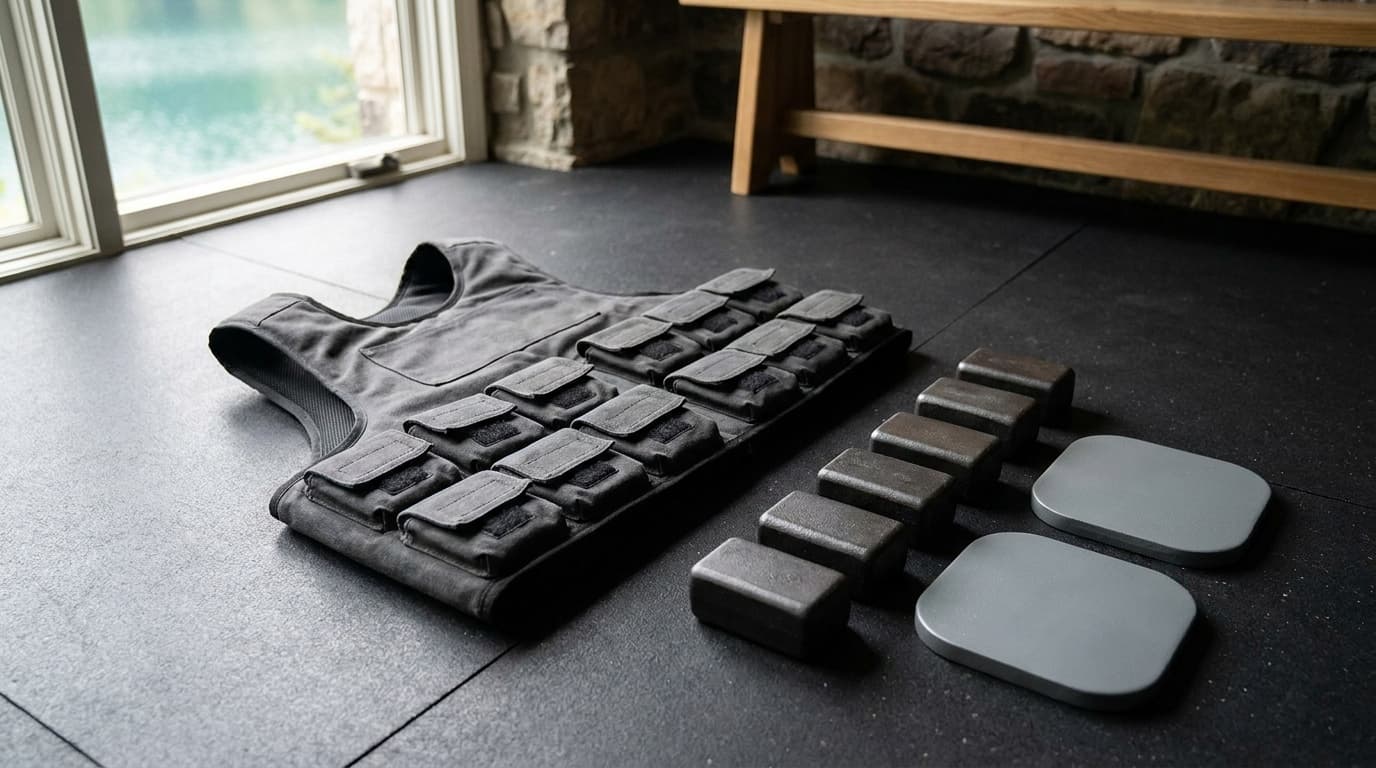
Our recommendations draw on manufacturer documentation, retailer listings, owner feedback, and comparisons with alternatives.
As an Amazon Associate I earn from qualifying purchases. We may earn a commission from links here, at no extra cost to you. How we research →