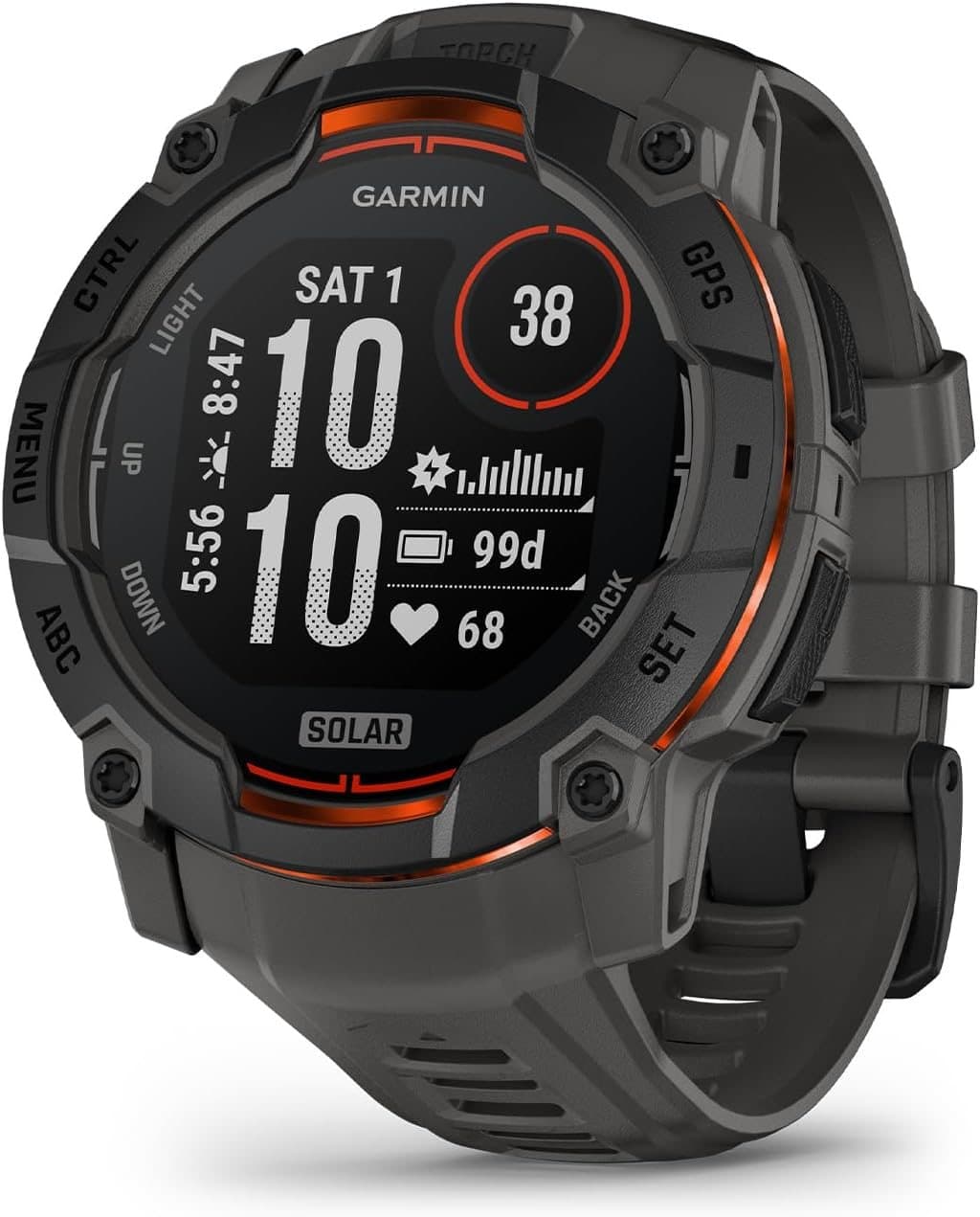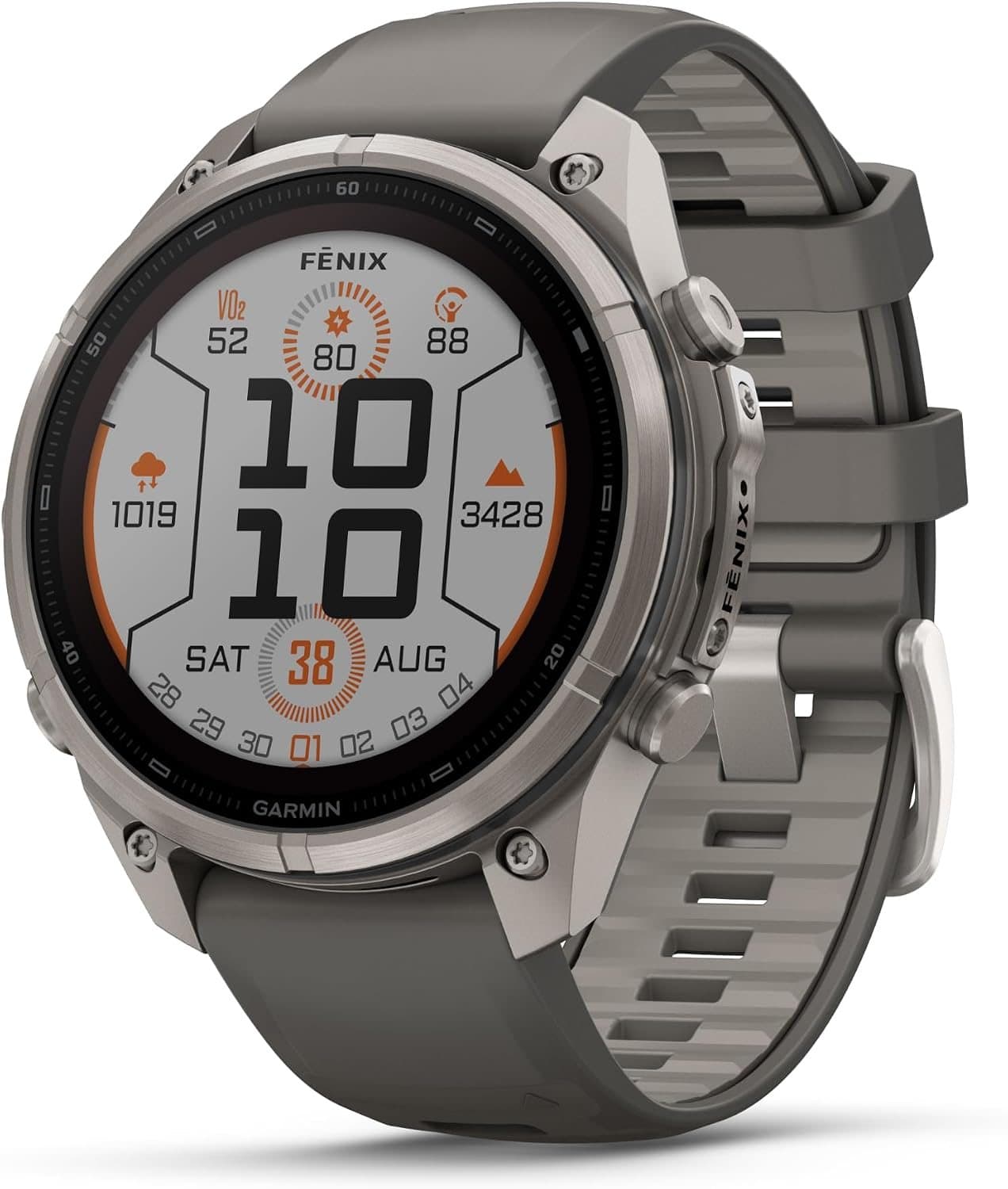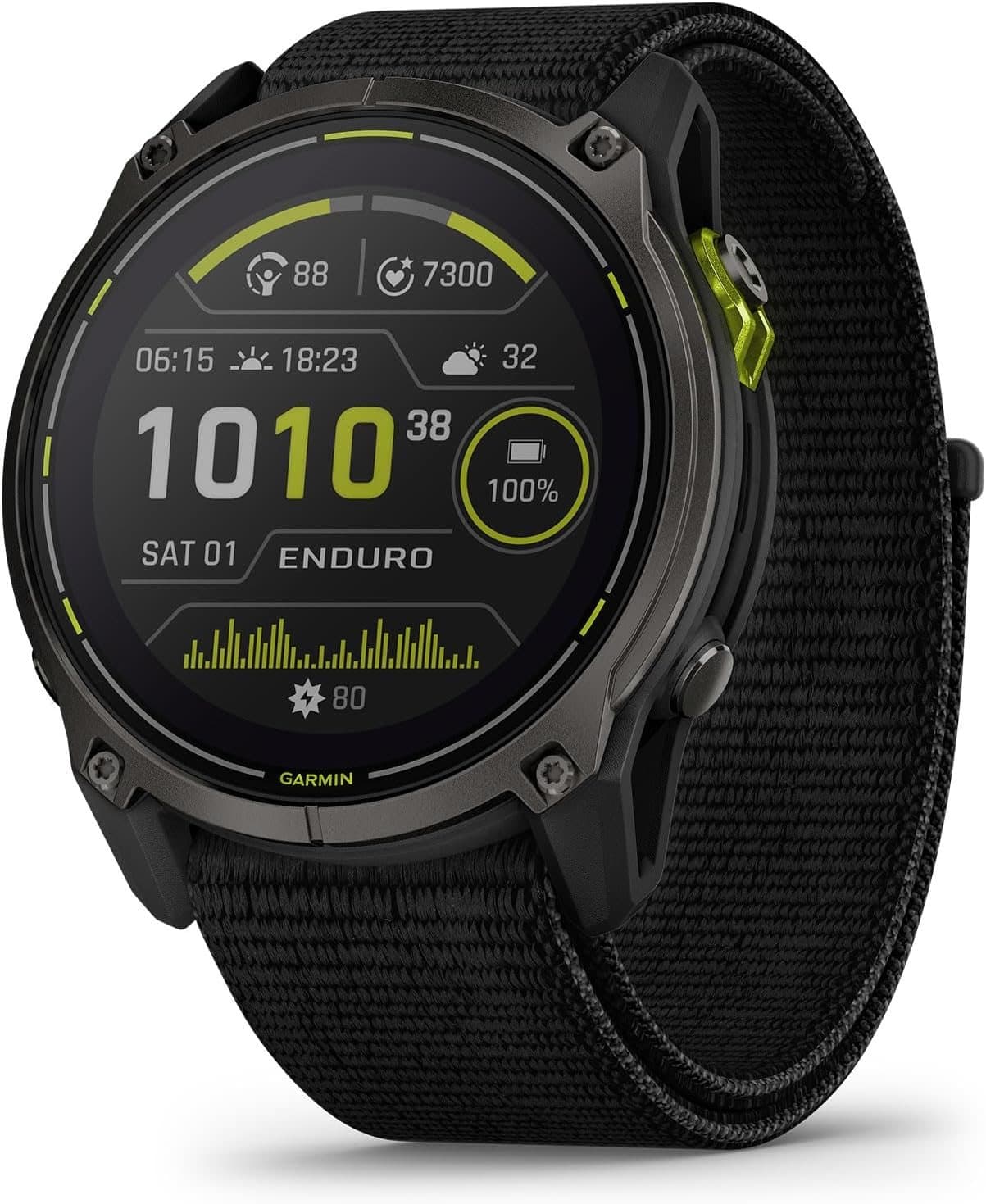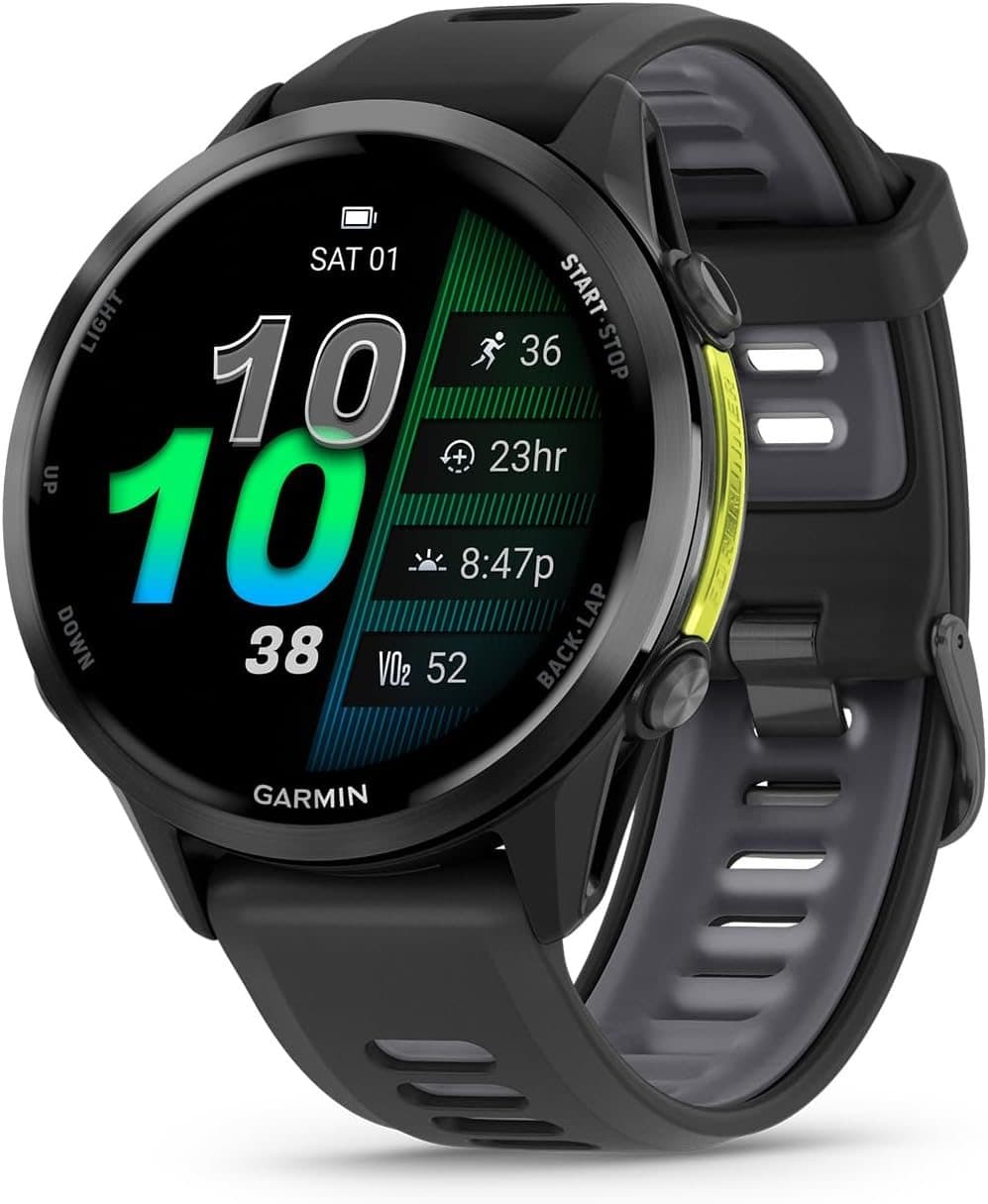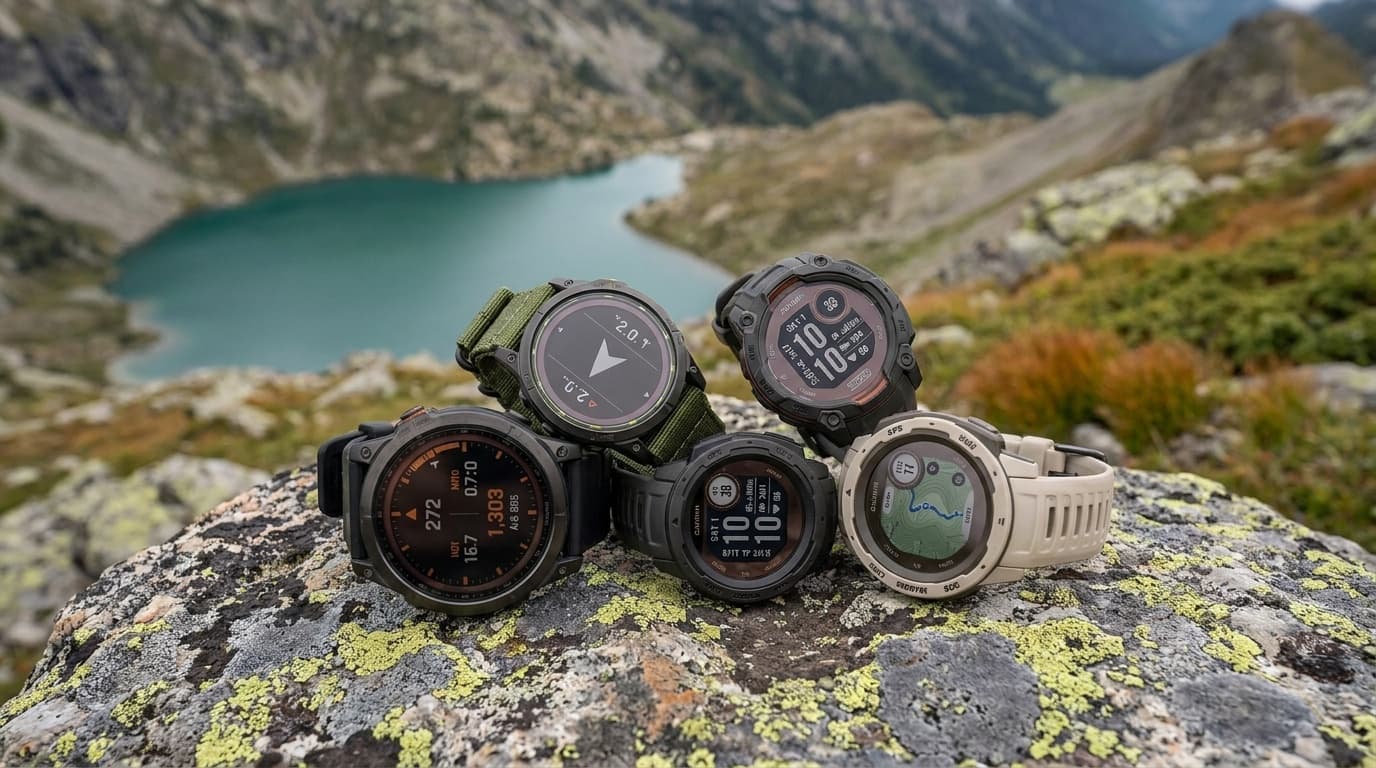
The Garmin Instinct 3 Solar is the best GPS watch for most hikers: Switchback Travel and Treeline Review both put it first, and Garmin rates the 50mm model at 60 hours of GPS, or 260 with solar, with multi-band accuracy, a barometric altimeter, and a flashlight. It does not show topo maps. If you want maps on your wrist, the fenix 9 Pro Solar is Garmin's new flagship, and the Enduro 3 is the pick for thru-hikers who need the longest battery.
Our quick picks
How we picked
Every watch is scored with our Kit Score: GPS accuracy (multi-band support), battery life in the modes hikers use, navigation (maps or breadcrumbs), barometric altimeter and compass, screen readability, durability, and price. We started from the 2026 picks of Outdoor Gear Lab, Switchback Travel, and Treeline Review, updated them for models Garmin and Apple released since, checked every spec on the maker's own spec page or owner's manual, and confirmed each watch is in stock on Amazon from Amazon.com or the brand's store. We did not test these watches ourselves.
The picks
Best overall: Garmin Instinct 3 Solar
BEST OVERALL
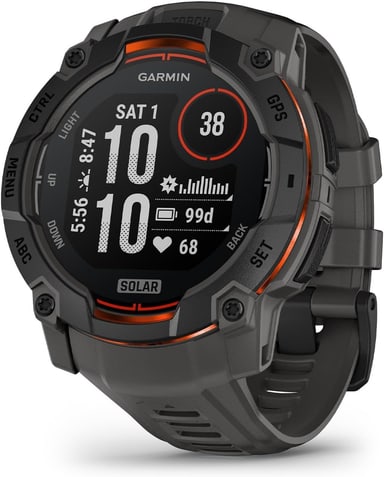
Garmin Instinct 3 Solar (50mm)
Best for: Day hikers and backpackers who plan routes at home and want long battery life and Garmin accuracy without paying for maps.
- Up to 60 hours GPS-only, 260 with solar, in the 50mm
- No onboard topo maps; navigation is breadcrumb and waypoint based
Kit Score 8.7/10 · $396.69 Price checked Oct 25, 3:41 PM CDT · how we score gear
Buy on AmazonProduct details
The Instinct 3 Solar is a rugged, sunlight-readable Garmin with multi-band GPS, a barometric altimeter, compass, and an LED flashlight. The 50mm version is rated for 60 hours in GPS-only mode, or 260 hours with solar, and 40 days as a smartwatch. It follows routes as a breadcrumb line rather than showing topo maps.
- Battery (GPS)
- 60 hr GPS-only (260 with solar); 34 hr all systems + multi-band (60 with solar)
- Max battery
- 150 hr max-battery GPS; 40-day smartwatch mode, unlimited with solar
- Display
- Monochrome MIP, two-window 1.1 x 1.1 in, 176 x 176
- Navigation
- Multi-band GPS, barometric altimeter, compass; breadcrumb routes, no topo maps
- Build
- 50 x 50 x 14.4 mm, 58 g, 10 ATM, LED flashlight
- Sizes
- 45mm and 50mm Solar; this listing is the 50mm
More strengths
- Multi-band GPS, altimeter, compass, and flashlight on a tough 10 ATM case
- Named best overall by Switchback Travel and best for most by Treeline Review
Other tradeoffs
- Monochrome screen is basic next to AMOLED watches
The Instinct 3 Solar is the hiking watch that does the essentials well for years. Switchback Travel names it the best GPS watch overall and Treeline Review calls it the best for most hikers. It has a multi-band GPS receiver, a barometric altimeter and compass, an LED flashlight, and a monochrome, sunlight-readable screen in a 10 ATM case rated from -4 to 140 F.
Battery is the headline. Garmin rates the 50mm at 60 hours GPS-only (260 with solar), 34 hours with all systems and multi-band (60 with solar), 150 hours in max-battery GPS mode, and 40 days as a smartwatch, unlimited in enough sun. Garmin's solar figures assume 50,000 lux, which is direct sun, so treat them as a sunny-day bonus. It weighs 58 g. For a smaller wrist, the 45mm Solar weighs 52 g and is rated at 40 hours GPS-only (130 with solar).
What it leaves out is topo maps. You follow a breadcrumb line and waypoints that you plan at home, which is enough for most marked-trail hiking. Our Instinct 3 Solar review covers that navigation boundary in detail.
GPS battery: 60 hr (260 solar) | Multi-band: Yes | Maps: No | Weight: 58 g | Water: 10 ATM
Best with maps: Garmin fenix 9 Pro Solar (47mm)
BEST WITH MAPS
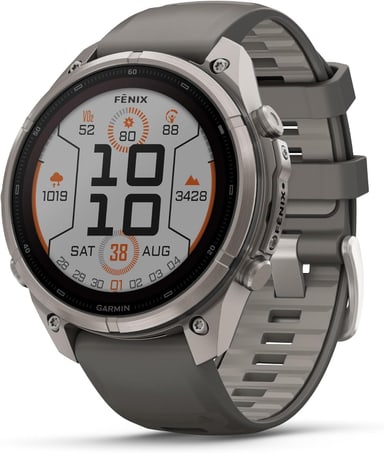
Garmin fenix 9 Pro Solar (47mm)
Best for: Hikers who want topo maps, solar, and every Garmin feature in one premium watch.
- Full topo maps and multi-band GPS on the wrist
- The most expensive pick here
Kit Score 8.4/10 · $1,099.99 Price checked Oct 25, 3:41 PM CDT · how we score gear
Buy on AmazonProduct details
The fenix 9 Pro Solar, launched in August 2026, replaces the fenix 8 Solar as Garmin's flagship mapping watch with a solar-charged display. The 47mm model carries TopoActive maps, multi-band GPS, an LED flashlight, and a speaker and microphone in a titanium case, and Garmin rates it at 54 hours in Normal power mode, or 81 with solar.
- Battery (GPS)
- 54 hr Normal (81 with solar); 38 hr Max Accuracy (49 with solar)
- Max battery
- 132 hr Max Battery mode (740 with solar); 21-day smartwatch (34 with solar)
- Display
- 1.3 in solar MIP color display, 260 x 260, sapphire lens
- Navigation
- TopoActive maps, multi-band GPS, barometric altimeter, compass; 64 GB
- Build
- 47 mm titanium case, 84 g (63 g case only), 10 ATM, LED flashlight, speaker and mic
- Operating temp
- -4 to 113 F
More strengths
- Solar display stretches GPS time to 81 hours in Normal mode
- Titanium case, sapphire lens, flashlight, speaker, and mic
Other tradeoffs
- Shorter battery than the Enduro 3, which also has maps
Garmin announced the fenix 9 series in August 2026, and the fenix 9 Pro Solar is the successor to the fenix 8 Solar that led this guide before. It is the first fenix with a titanium case. The 47mm Solar carries preloaded TopoActive maps on 64 GB of storage, multi-band GPS, a barometric altimeter and compass, an LED flashlight, and a speaker and microphone, behind a sapphire lens and a 1.3-inch solar-charging display.
Garmin now rates battery by power mode: 54 hours in Normal (81 with solar), 38 hours in Max Accuracy (49 with solar), and 132 hours in Max Battery (740 with solar), with 21 days as a smartwatch (34 with solar). It weighs 84 g with the band, is rated 10 ATM, and operates from -4 to 113 F. Garmin also sells an inReach version with satellite messaging. The fenix 8 Solar is still on sale; our fenix 8 Solar review explains what you give up by saving on the older model.
GPS battery: 54 hr Normal (81 solar) | Multi-band: Yes | Maps: Yes | Weight: 84 g | Water: 10 ATM
Best for thru-hiking: Garmin Enduro 3
BEST FOR THRU-HIKING
Garmin Enduro 3
Best for: Thru-hikers, multi-week backpackers, and ultra-endurance athletes who need full topo mapping and can live without a speaker or microphone in exchange for the longest GPS battery on the market.
- 320-hour solar GPS battery is unmatched among mapping watches, making it the only watch that survives a thru-hike segment without a resupply charge
- Only one case size (51mm), which runs large; owners with wrists under approximately 165 mm circumference should try it before buying
Kit Score 9.1/10 · $779.95 Price checked Oct 25, 3:41 PM CDT · how we score gear
Buy on AmazonProduct details
The Enduro 3 carries essentially the same feature set as the Fenix 8 Solar but strips out the microphone, speaker, and dive modes to shed weight and push battery life to an industry-best 320 hours with solar. At 63 g it is lighter than the Fenix 8 Solar despite the same 51mm footprint, and long-term owners report charging roughly once every three weeks during regular weekly use.
- Battery (GPS mode)
- 120 hours standard; up to 320 hours with solar
- GPS system
- Multi-band GNSS with SatIQ (GPS, GLONASS, Galileo, BeiDou, QZSS)
- Maps
- Preloaded TopoActive topo maps with turn-by-turn routing and ClimbPro
- Display
- 1.4 in MIP color always-on, 280 x 280 px, 51mm case, titanium bezel, sapphire lens
- Weight
- 63 g (case plus UltraFit nylon strap)
- Water resistance
- 100 m (10 ATM)
More strengths
- Preloaded topo maps, barometric altimeter, barometer, and compass match the Fenix 8 feature-for-feature at a lower price
- At 63 g with the included nylon strap, the lightest watch in its class with full mapping capability
Other tradeoffs
- MIP display is always-on and readable in sunlight but looks washed out compared to AMOLED competitors
Three testers agree on this one: Outdoor Gear Lab makes the Enduro 3 its pick for expeditions, Switchback Travel its pick for dedicated backcountry use, and Treeline Review its pick for thru-hiking. It keeps full TopoActive maps and multi-band GPS and turns the rest of its design into battery.
Garmin rates it at 120 hours GPS-only (320 with solar), 60 hours with all systems and multi-band (90 with solar), 210 hours in max-battery GPS mode (unlimited with solar), and 36 days as a smartwatch (90 with solar). It weighs 63 g with its nylon band, has a flashlight, and is rated 10 ATM and -4 to 113 F. The catch is that it comes only in a 51mm case. The Enduro 3 review and fenix 8 vs Enduro 3 cover the trade-offs.
GPS battery: 120 hr (320 solar) | Multi-band: Yes | Maps: Yes | Weight: 63 g | Water: 10 ATM
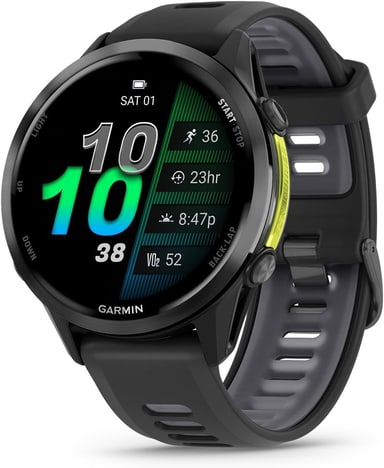
Best for trail runners: Garmin Forerunner 970
BEST FOR TRAIL RUNNERS
Garmin Forerunner 970
Best for: Runners and trail runners who also hike and want maps without a heavy outdoor watch.
- Maps, multi-band GPS, and a flashlight at 56 g
- 21 to 26 hours of GPS is short for multi-day trips
Kit Score 8.1/10 · $749.99 Price checked Oct 25, 3:41 PM CDT · how we score gear
Buy on AmazonProduct details
The Forerunner 970 is Garmin's top running watch, and Outdoor Gear Lab names it the best GPS watch overall. It adds maps, multi-band GPS, a barometric altimeter, and an LED flashlight to a light 56 g case with a bright AMOLED screen. Battery life is the trade-off: Garmin rates it at 26 hours GPS-only and 21 hours with multi-band.
- Battery (GPS)
- 26 hr GPS-only; 21 hr all systems + multi-band
- Smartwatch
- Up to 15 days
- Display
- 1.4 in AMOLED touchscreen, 454 x 454
- Navigation
- Built-in mapping, multi-band GPS, barometric altimeter, compass
- Build
- 47 x 47 x 12.9 mm, 56 g, 5 ATM, LED flashlight, speaker and mic
- Operating temp
- -4 to 140 F; charges at 32 to 113 F
More strengths
- Bright AMOLED touchscreen and deep training features
- Outdoor Gear Lab's top overall pick
Other tradeoffs
- 5 ATM water rating, lower than the 10 ATM outdoor watches
Outdoor Gear Lab names the Forerunner 970 its best GPS watch overall, mostly for its accuracy, light weight, and training features. For hikers it brings maps, multi-band GPS, a barometric altimeter, and an LED flashlight to a 56 g case with a bright 1.4-inch AMOLED touchscreen.
The trade-off is battery. Garmin rates it at 26 hours GPS-only and 21 hours with all systems and multi-band, with 15 days as a smartwatch, which covers long day hikes but means charging on multi-day trips. It is rated 5 ATM rather than 10 ATM.
GPS battery: 26 hr | Multi-band: Yes | Maps: Yes | Weight: 56 g | Water: 5 ATM
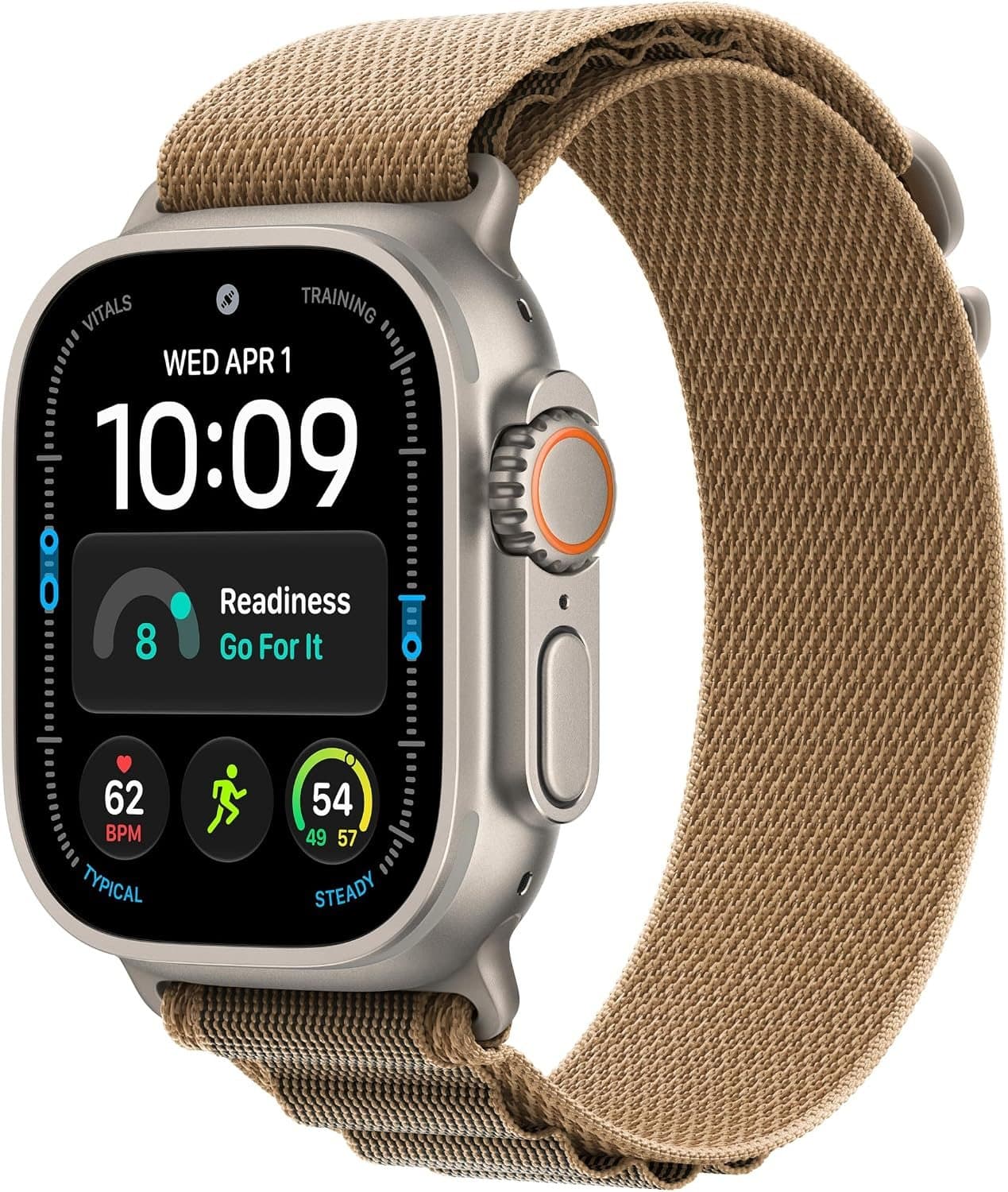
Best for iPhone: Apple Watch Ultra 4
BEST FOR IPHONE
Apple Watch Ultra 4 (GPS + Cellular, 49mm)
Best for: iPhone users who want one watch for daily life and day hikes, with satellite SOS as a backup.
- Satellite SOS and messaging built into the watch
- Works only with an iPhone
Kit Score 8.3/10 · $774.00 Price checked Oct 25, 3:41 PM CDT · how we score gear
Buy on AmazonProduct details
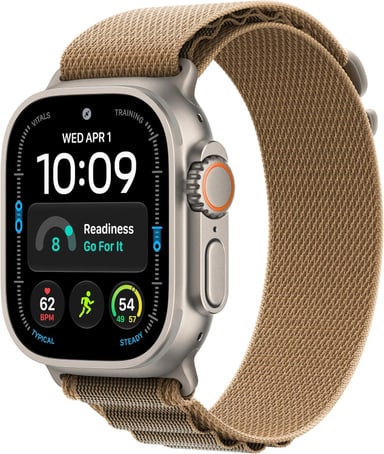
The Apple Watch Ultra 4, released in September 2026, is the hiking watch for iPhone owners. It has dual-frequency GPS, offline maps with custom routes, an always-on altimeter, a flashlight, and Emergency SOS, Messages, and Find My over satellite, which Apple includes free for two years. Apple rates it at up to 45 hours in Max Extended Workout mode.
- Battery
- 50 hr normal use; 18 hr workout; 25 hr extended workout; 45 hr max extended workout
- Satellite
- Emergency SOS, Messages, and Find My via satellite (free for two years after activation)
- Display
- Always-on OLED, up to 3,000 nits
- Navigation
- Dual-frequency GPS (GPS, Galileo, QZSS, BeiDou), offline maps with custom routes, altimeter
- Build
- 49 mm grade 5 titanium, 63.0 g, 100 m water resistance, flashlight
- Operating temp
- 32 to 95 F operating; -4 to 130 F on wrist
More strengths
- Offline maps, dual-frequency GPS, and a bright 3,000-nit display
- Full smartwatch and app ecosystem for iPhone users
Other tradeoffs
- 45 hours at best in workout mode, far below the Garmin outdoor watches
Apple released the Ultra 4 in September 2026; Outdoor Gear Lab gave the Ultra 3 it replaces an Editors' Choice award. It has dual-frequency GPS, offline maps with custom route creation, an always-on altimeter, a flashlight, and a 3,000-nit display. It also sends Emergency SOS, Messages, and Find My location over satellite, which Apple includes free for two years after activation.
Apple rates it at 50 hours of normal use, 18 hours of workout tracking, 25 hours in Extended Workout mode, and 45 hours in Max Extended Workout mode, well short of the Garmin outdoor watches. It weighs 63.0 g in natural titanium, is water resistant to 100 m, and needs an iPhone. Apple lists an operating range of 32 to 95 F, so in winter keep it under a sleeve.
GPS battery: 25 hr Extended Workout (45 max) | Multi-band: Yes | Maps: Yes | Weight: 63.0 g | Water: 100 m
Best value with maps: COROS APEX 4 (46mm)
BEST VALUE WITH MAPS
COROS APEX 4 (46mm)
Best for: Hikers and trail runners who want real maps and long battery life without paying Garmin flagship prices.
- Topo maps and 65 hours of all-systems GPS
- 5 ATM water rating
Kit Score 8.2/10 · $479.00 Price checked Oct 25, 3:41 PM CDT · how we score gear
Buy on AmazonProduct details
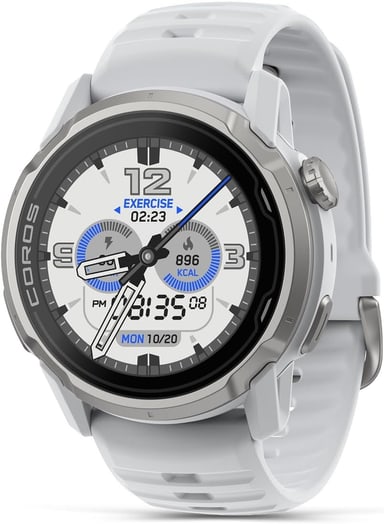
The APEX 4 brings COROS's downloadable topo maps, dual-frequency GPS, and a barometric altimeter to a titanium and sapphire case. COROS rates the 46mm model at 65 hours of all-systems GPS and 41 hours in dual-frequency mode, with 24 days of daily use. Outdoor Gear Lab gives it a Best Buy award.
- Battery (GPS)
- 65 hr all systems (Endurance), 53 hr (High); 41 hr dual-frequency
- Smartwatch
- Up to 24 days daily use
- Display
- 1.3 in third-generation MIP touchscreen
- Navigation
- Downloadable global topo and landscape maps, dual-frequency GPS, barometric altimeter
- Build
- 64 g with silicone band (51 g with nylon), 5 ATM
- Operating temp
- -4 to 122 F
More strengths
- Titanium and sapphire build at a mid-range price
- Outdoor Gear Lab Best Buy and Treeline Review trail running pick
Other tradeoffs
- COROS app and third-party ecosystem are smaller than Garmin's
The APEX 4 is the cheapest way here to get real maps with long battery life. Outdoor Gear Lab gives it a Best Buy award and Treeline Review names it the best watch for trail running. COROS puts downloadable topo maps, dual-frequency GPS, and a barometric altimeter in a titanium and sapphire case.
COROS rates the 46mm at 65 hours with all satellite systems in Endurance mode, 41 hours in dual-frequency mode, and 24 days of daily use. It weighs 64 g with the silicone band (51 g with nylon), is rated 5 ATM, and operates from -4 to 122 F. The COROS app is simpler and its third-party ecosystem smaller than Garmin's.
GPS battery: 65 hr all systems | Multi-band: Yes | Maps: Yes | Weight: 64 g | Water: 5 ATM
Best budget: Amazfit T-Rex 3
BEST BUDGET
Amazfit T-Rex 3
Best for: Budget-conscious hikers who want offline topo maps and dual-band GPS without crossing into $400-plus territory, and who can tolerate a less polished software experience in exchange for premium hardware specs at a low price.
- Offline topo maps with turn-by-turn navigation at a price most competitors reserve for breadcrumb-only watches
- Heart rate sensor accuracy is inconsistent during high-intensity efforts, and syncing with third-party platforms (Strava, Komoot) can be slow and unreliable
Kit Score 8.2/10 · Check current price · how we score gear
Buy on AmazonProduct details
The T-Rex 3 punches well above its price by including offline topo maps with turn-by-turn navigation, dual-band GPS across six satellite systems, a barometric altimeter, compass, and a 1.5-inch AMOLED display at a sub-$280 street price. Reviewers at multiple outlets confirmed solid GPS accuracy in demanding environments, while the 27-day smartwatch battery and 100-meter water resistance make it trail-capable out of the box.
- Battery (GPS mode)
- 42 hours accurate GPS; up to 72 hours in power-saving GPS mode; up to 180 hours in max-battery GPS mode
- GPS system
- Dual-band GNSS (6 satellite systems including GPS, GLONASS, Galileo, BeiDou, QZSS, NavIC)
- Maps
- Offline topo maps with turn-by-turn navigation and off-route alerts
- Display
- 1.5 in AMOLED touchscreen, 480 x 480 px, 2,000 nits peak brightness
- Weight
- 68 g (without strap)
- Water resistance
- 10 ATM (100 m), freediving to 45 m (EN13319 / ISO 6425 / GB/T 18828). Amazfit's US and AU pages say 'military-grade' with test report H202406062670-01EN rather than naming MIL-STD-810H on the page
More strengths
- Dual-band GPS, barometric altimeter, barometer, and compass cover the core sensor suite hikers rely on
- 1.5-inch AMOLED at 2,000 nits is the most readable display in the budget tier and maps are clear in direct sunlight
Other tradeoffs
- Companion app is prone to crashes; the 48mm case is bulky and heavy for smaller wrists
The T-Rex 3 is the budget watch that still shows a map. Amazfit lists downloadable offline maps, dual-band GNSS across six satellite systems, up to 42 hours in accurate GPS mode (72 in power-saving, 180 in max battery), a 1.5-inch 480 by 480 AMOLED display rated at 2,000 nits, and a 10 ATM case rated for freediving to 45 m. Amazfit quotes 27 days of typical smartwatch use and lists the watch at 68.3 g without the strap.
The Amazfit app is less polished than Garmin Connect and route planning tools are thinner. The T-Rex 3 review explains the pre-trip map workflow, and Instinct 3 vs T-Rex 3 compares it with our top pick.
GPS battery: 42 hr accurate GPS | Multi-band: Yes | Maps: Yes | Weight: 68.3 g without strap | Water: 10 ATM
Best everyday smartwatch: Garmin vivoactive 6
BEST EVERYDAY SMARTWATCH
Garmin vivoactive 6
Best for: People who want one everyday fitness smartwatch that can also record day hikes, not a navigation tool.
- Light at 36 g with band and comfortable for all-day wear
- No barometric altimeter, multi-band GPS, or maps
Kit Score 7.2/10 · $299.99 Price checked Oct 25, 3:41 PM CDT · how we score gear
Buy on AmazonProduct details
The vivoactive 6 replaced the vivoactive 5 in April 2025, adding hiking and mountaineering activity profiles, BeiDou and QZSS satellites, and double the storage at the same 11-day smartwatch battery. It is a light, comfortable everyday watch, but it has no barometric altimeter, multi-band GPS, or maps, so elevation comes from GPS alone.
- Battery (GPS)
- 21 hr GPS-only; 17 hr all systems
- Smartwatch
- Up to 11 days
- Display
- 1.2 in AMOLED touchscreen
- Navigation
- GPS, hiking and mountaineering profiles; no barometric altimeter, multi-band, or maps
- Build
- 23 g case (36 g with band), 5 ATM
- Operating temp
- -4 to 140 F
More strengths
- Bright AMOLED screen, music storage, and contactless payments
- 21 hours of GPS-only tracking covers long day hikes
Other tradeoffs
- 5 ATM rating and a smaller battery than any outdoor watch here
The vivoactive 6 is for people who want one light, comfortable smartwatch that also records day hikes, and Outdoor Gear Lab gives it a Best Buy award. Garmin released it in April 2025 to replace the vivoactive 5, adding hiking and mountaineering activity profiles, BeiDou and QZSS satellites, and 8 GB of storage (up from 4 GB) at the same battery ratings: 11 days as a smartwatch, 21 hours GPS-only, and 17 hours with all systems.
Know its limits before you buy it for the trail. It has no barometric altimeter, no multi-band GPS, and no maps, and it is rated 5 ATM. It weighs 36 g with the band. If you hike most weekends, the Instinct 3 Solar costs little more and does far more outdoors.
GPS battery: 21 hr | Multi-band: No | Maps: No | Weight: 36 g with band | Water: 5 ATM
Multi-band GPS costs battery. Know which mode you need before you leave the trailhead, and set it there, not halfway up the mountain.
Compare the picks
| Spec | Instinct 3 Solar 50mm | fenix 9 Pro Solar 47mm | Enduro 3 | Forerunner 970 | Apple Watch Ultra 4 | COROS APEX 4 46mm | Amazfit T-Rex 3 | vivoactive 6 |
|---|---|---|---|---|---|---|---|---|
| Kit Score | 8.7/10 | 8.4/10 | 9.1/10 | 8.1/10 | 8.3/10 | 8.2/10 | 8.2/10 | 7.2/10 |
| Price | $396.69 Price checked Oct 25, 3:41 PM CDT | $1,099.99 Price checked Oct 25, 3:41 PM CDT | $779.95 Price checked Oct 25, 3:41 PM CDT | $749.99 Price checked Oct 25, 3:41 PM CDT | $774.00 Price checked Oct 25, 3:41 PM CDT | $479.00 Price checked Oct 25, 3:41 PM CDT | Check current price | $299.99 Price checked Oct 25, 3:41 PM CDT |
| Best for | Day hikers and backpackers who plan routes at home and want long battery life and Garmin accuracy without paying for maps. | Hikers who want topo maps, solar, and every Garmin feature in one premium watch. | Thru-hikers, multi-week backpackers, and ultra-endurance athletes who need full topo mapping and can live without a speaker or microphone in exchange for the longest GPS battery on the market. | Runners and trail runners who also hike and want maps without a heavy outdoor watch. | iPhone users who want one watch for daily life and day hikes, with satellite SOS as a backup. | Hikers and trail runners who want real maps and long battery life without paying Garmin flagship prices. | Budget-conscious hikers who want offline topo maps and dual-band GPS without crossing into $400-plus territory, and who can tolerate a less polished software experience in exchange for premium hardware specs at a low price. | People who want one everyday fitness smartwatch that can also record day hikes, not a navigation tool. |
| Why it stands out | Up to 60 hours GPS-only, 260 with solar, in the 50mm | Full topo maps and multi-band GPS on the wrist | 320-hour solar GPS battery is unmatched among mapping watches, making it the only watch that survives a thru-hike segment without a resupply charge | Maps, multi-band GPS, and a flashlight at 56 g | Satellite SOS and messaging built into the watch | Topo maps and 65 hours of all-systems GPS | Offline topo maps with turn-by-turn navigation at a price most competitors reserve for breadcrumb-only watches | Light at 36 g with band and comfortable for all-day wear |
| Tradeoff | No onboard topo maps; navigation is breadcrumb and waypoint based | The most expensive pick here | Only one case size (51mm), which runs large; owners with wrists under approximately 165 mm circumference should try it before buying | 21 to 26 hours of GPS is short for multi-day trips | Works only with an iPhone | 5 ATM water rating | Heart rate sensor accuracy is inconsistent during high-intensity efforts, and syncing with third-party platforms (Strava, Komoot) can be slow and unreliable | No barometric altimeter, multi-band GPS, or maps |
| Rated GPS battery | 60 hr GPS-only (260 solar) | 54 hr Normal (81 solar) | 120 hr GPS-only (320 solar) | 26 hr GPS-only | 25 hr Extended Workout (45 max) | 65 hr all systems | 42 hr accurate GPS | 21 hr GPS-only |
| Multi-band GPS | Yes | Yes | Yes | Yes | Dual-frequency | Dual-frequency | Dual-band | No |
| Topo maps | No | Yes | Yes | Yes | Offline maps | Yes | Yes | No |
| Barometric altimeter | Yes | Yes | Yes | Yes | Always-on altimeter | Yes | Yes | No |
| Flashlight | Yes | Yes | Yes | Yes | Yes | Not listed | Not listed | Screen only |
| Display | Monochrome MIP | Solar MIP color | MIP | AMOLED | OLED | MIP | AMOLED | AMOLED |
| Weight | 58 g | 84 g | 63 g | 56 g | 63.0 g | 64 g | 68.3 g without strap | 36 g |
| Water rating | 10 ATM | 10 ATM | 10 ATM | 5 ATM | 100 m | 5 ATM | 10 ATM | 5 ATM |
| Satellite SOS | No | inReach version only | No | No | Yes | No | No | No |
How to choose a GPS watch for hiking
The numbers that matter
Battery in the mode you will use
Compare the GPS-only or Normal figure first, then the multi-band figure if you hike under trees or in canyons. Solar numbers assume 50,000 lux, which is direct sun; under tree cover, plan from the non-solar number.
Maps or breadcrumbs
If you follow marked trails and plan at home, breadcrumb navigation (Instinct 3 Solar) is enough. If you improvise routes or travel off trail, choose a watch with topo maps: fenix 9 Pro Solar, Enduro 3, Forerunner 970, APEX 4, Ultra 4, or T-Rex 3.
Barometric altimeter
A barometric sensor tracks elevation change better than GPS alone. Every pick has one except the vivoactive 6. Recalibrate it at a known elevation each morning on multi-day trips.
Durability and cold
The Garmin outdoor watches and T-Rex 3 are rated 10 ATM; the Forerunner 970, APEX 4, and vivoactive 6 are 5 ATM. Check the operating range for winter hikes: Apple lists 32 to 95 F for the Ultra 4, while Garmin lists -4 F at the low end.
Safety
Only the Apple Watch Ultra 4 and the fenix 9 Pro inReach models can send an SOS by satellite from your wrist. For remote routes with any other watch, carry a satellite messenger; see our [best handheld GPS](/hike/best-handheld-gps) picks, including the inReach Mini 3 Plus.
GPS watch vs handheld GPS
A handheld GPS has a bigger screen, buttons that work with gloves, longer battery in most cases, and on some models built-in satellite messaging. A watch is always on your wrist and always tracking, with no second device to dig out of a pocket. The fenix 9 Pro Solar, Enduro 3, and APEX 4 close much of the navigation gap with full topo maps. For technical routes in remote terrain, many hikers carry a watch plus a satellite messenger; for everything else, a watch on this list is enough.
Frequently asked questions
What is the best GPS watch for hiking in 2026?
The Garmin Instinct 3 Solar is the best for most hikers. Switchback Travel and Treeline Review both rank it first, and Garmin rates the 50mm at 60 hours of GPS (260 with solar) with multi-band accuracy and a barometric altimeter. If you want topo maps, choose the fenix 9 Pro Solar; for the longest battery with maps, the Enduro 3.
Is the Garmin fenix 8 still worth buying?
Garmin launched the fenix 9 series in August 2026, and the fenix 9 Pro Solar 47mm is the direct successor to the fenix 8 Solar 47mm. The fenix 8 Solar is still sold and still has maps, multi-band GPS, and solar charging, so it is worth buying if you find it well below the fenix 9's price. Otherwise, the newer model is the better buy.
What is multi-band GPS and do I need it for hiking?
Multi-band (also called dual-frequency) GPS listens on two satellite frequencies, which helps the watch reject signals that bounce off cliffs, canyon walls, and dense trees. It costs battery: Garmin rates the Enduro 3 at 120 hours GPS-only but 60 hours with all systems and multi-band. Use it for the sections where accuracy matters and a standard mode elsewhere.
Which GPS watch has the longest battery life for hiking?
The Garmin Enduro 3, which Garmin rates at 120 hours in GPS-only mode, up to 320 with solar, and 210 hours in max-battery GPS mode. The Instinct 3 Solar 50mm is next at 60 hours GPS-only (260 with solar), without maps.
Is the Apple Watch Ultra 4 good for hiking?
Yes, for day hikes and iPhone owners. It has dual-frequency GPS, offline maps, an altimeter, a flashlight, and satellite Emergency SOS and Messages. Its limits are battery (up to 45 hours in Max Extended Workout mode, versus 120 for the Enduro 3) and cold: Apple lists an operating range of 32 to 95 F.
Where these numbers come from
| Claim | Source | Checked |
|---|---|---|
| Instinct 3 Solar 50mm: 60 hr GPS-only (260 solar), 40 hr all systems (80 solar), 34 hr multi-band (60 solar), 150 hr max-battery (unlimited solar), 40-day smartwatch, 58 g, 50 x 50 x 14.4 mm, 10 ATM, LED flashlight, multi-band, barometric altimeter; 45mm Solar 52 g; solar assumes 50,000 lux | Garmin Instinct 3 | 2026-10-03 |
| Instinct 3 Solar 45mm: 40 hr GPS-only (130 solar); operating range -20 to 60 C | Garmin Instinct 3 Solar Series owner's manual, Battery Life Information and Specifications | 2026-10-03 |
| fenix 9 Pro Solar 47mm: 54 hr Normal (81 solar), 38 hr Max Accuracy (49 solar), 132 hr Max Battery (740 solar), 21-day smartwatch (34 solar), 84 g (63 g case), 1.3 in display, 64 GB, speaker and mic, multi-band, barometric altimeter, sapphire lens, titanium case, 10 ATM | Garmin fenix 9 Pro Solar 47mm and fenix 9 Series owner's manual, Battery Information | 2026-10-03 |
| fenix 9 series: -20 to 45 C operating range, LED flashlight, TopoActive maps | fenix 9 Series owner's manual (PDF) | 2026-10-03 |
| fenix 9 and fenix 9 Pro announced August 25, 2026; Pro is the first fenix with a titanium case | Garmin press release | 2026-10-03 |
| Enduro 3: 120 hr GPS-only (320 solar), 80 hr all systems (144 solar), 60 hr multi-band (90 solar), 210 hr max-battery (unlimited solar), 36-day smartwatch (90 solar), 63 g (57 g case), 51 x 51 x 15.7 mm, MIP display, LED flashlight, 10 ATM | Garmin Enduro 3 and Enduro 3 owner's manual, Battery Information | 2026-10-03 |
| Enduro 3: -20 to 45 C | Enduro 3 owner's manual, Specifications | 2026-10-03 |
| Forerunner 970: 26 hr GPS-only, 23 hr SatIQ, 21 hr all systems + multi-band, 15-day smartwatch, 56 g, 47 x 47 x 12.9 mm, 1.4 in AMOLED 454 x 454, built-in mapping, LED flashlight, barometric altimeter | Garmin Forerunner 970 | 2026-10-03 |
| Forerunner 970: 5 ATM, -20 to 60 C operating, 0 to 45 C charging | Forerunner 970 owner's manual, Specifications | 2026-10-03 |
| Apple Watch Ultra 4: 63.0 g natural titanium, 3,000-nit OLED, 50 hr normal, 84 hr Low Power, 18 hr workout, 25 hr Extended Workout, 45 hr Max Extended Workout, dual-frequency GPS, offline maps, altimeter, flashlight, satellite SOS, Messages, Find My, 100 m water resistance, 40 m dive, 0 to 35 C operating | Apple Watch Ultra 4 specs | 2026-10-03 |
| Ultra 4 announced September 9, 2026, from $799; satellite features free for two years after activation | Apple Newsroom | 2026-10-03 |
| COROS APEX 4 46mm: 64 g silicone (51 g nylon), 1.3 in MIP touchscreen, 24 days daily use, 65 hr all systems Endurance (53 hr High), 41 hr dual-frequency, downloadable topo maps, barometric altimeter, 5 ATM, -20 to 50 C, from $429 | COROS APEX 4 specs | 2026-10-03 |
| Amazfit T-Rex 3: 42 hr accurate GPS, 72 hr power-saving, 180 hr max battery, 27 days typical, dual-band with six systems, 1.5 in 480 x 480 AMOLED at 2,000 nits, 10 ATM and freediving to 45 m, 68.3 g without strap, offline maps | Amazfit T-Rex 3 | 2026-10-03 |
| vivoactive 6: 11-day smartwatch, 21 hr GPS-only, 17 hr all systems, 23 g (36 g with band), 1.2 in AMOLED, 8 GB, BeiDou and QZSS, hiking and mountaineering profiles; vivoactive 5 has 4 GB and neither | Garmin vivoactive 6 and vivoactive 5 | 2026-10-03 |
| vivoactive 6 announced April 1, 2025 at $299.99 | Garmin press release | 2026-10-03 |
| vivoactive 6: 5 ATM, -20 to 60 C | vivoactive 6 owner's manual (PDF) | 2026-10-03 |
| Awards: Outdoor Gear Lab (Forerunner 970 and Apple Watch Ultra 3 Editors' Choice, Enduro 3 Top Pick for expeditions, COROS APEX 4 and vivoactive 6 Best Buy); Switchback Travel (Instinct 3 Solar best overall, Enduro 3 best for dedicated backcountry use); Treeline Review (Instinct 3 Solar best for most, Enduro 3 best for thru-hiking, APEX 4 best for trail running) | Outdoor Gear Lab, Switchback Travel, Treeline Review | 2026-10-03 |
| Seller and stock: in stock on Amazon, sold by Amazon.com (Garmin and Apple picks, Amazfit) or COROS's own store (APEX 4) | Amazon listings B0DSC47H9Z, B0HGFXJZX1, B0DD5N9G17, B0F8QZ7233, B0HJ9Y6XQH, B0FR8CK45N, B0DCZ9PRCP, B0FQ5XDGZ8 | 2026-10-03 |
We did not test these watches ourselves. Battery figures are the makers' rated numbers in the modes they specify; solar figures assume full sun, and tree cover, cold, and multi-band tracking cut every one of them.
Still deciding within a price tier? Compare fenix 8 vs Enduro 3 or Instinct 3 vs T-Rex 3. Then browse the full hiking gear hub or read how we research and rate every pick.
Keep going
Related guides
 Complete hike loadoutDay hike kitBuild the complete kit
Our recommendations draw on manufacturer documentation, retailer listings, owner feedback, and comparisons with alternatives.
As an Amazon Associate I earn from qualifying purchases. We may earn a commission from links here, at no extra cost to you. How we research →