The right sock is the cheapest blister insurance you can buy. Most foot problems on trail trace back to friction, moisture, or a sock that moves against the skin instead of with it, and a quality pair solves all three at once. These four cover every common hiker type, from the day tripper in trail runners to the boot-and-pack backpacker.
Our quick picks
How we picked
Our ratings pull from manufacturer specs, verified-owner reviews across retailers, and gear-media test coverage into a single Kit Score. We weight blister resistance, moisture management, and long-term durability most heavily, because a sock that falls apart after six months is not a good deal at any price.
What actually matters in a hiking sock
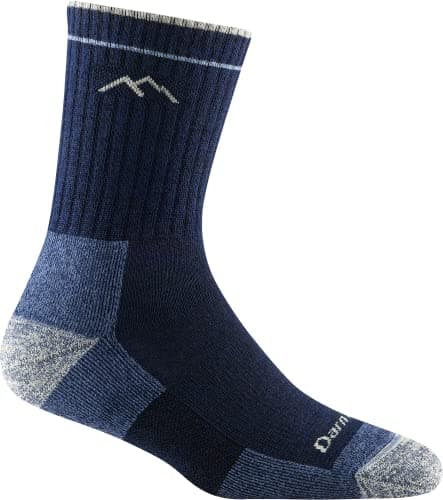
Best overall: Darn Tough Hiker Micro Crew Midweight with Cushion
BEST OVERALL
Darn Tough Hiker Micro Crew Midweight with Cushion
Best for: Hikers who want one sock that handles everything from summer day hikes to week-long backpacking trips and expect it to last for years.
- Goldilocks cushion level works for day hikes and multi-week backpacking without sizing up footwear
- Some owners note the fit runs slightly large and recommend sizing down
Kit Score 8.9/10 · $25.80 Price checked Oct 25, 3:41 PM CDT · how we score gear
Buy on AmazonProduct details
The 1466 earns its reputation across tens of thousands of thru-hiker miles: a tight merino knit with just enough midweight cushion to absorb trail impact without adding volume in a snug boot. The unconditional lifetime warranty removes the durability question entirely.
- Material
- 61% merino wool, 36% nylon, 3% Lycra spandex
- Cushion
- Midweight (terry loops underfoot, targeted Achilles zone)
- Height
- Micro crew (approx. 8.5 in. from heel to cuff)
- Warranty
- Lifetime, no-questions replacement
- Sizing
- Men's XS–XXL (shoe 2.5–17); Women's Style 1903 S–L
- Origin
- Knit in Vermont, USA
More strengths
- Lifetime warranty with a real no-hassle replacement policy makes the per-wear cost competitive over time
- Merino blend controls odor across multiple days without washing, confirmed by owner reviews
Other tradeoffs
- Premium price per pair is a barrier if you need to stock up at once
Darn Tough backs every sock with an unconditional lifetime guarantee, and owner reviews suggest the company honors it without friction. The Hiker Micro Crew is the workhorse of the lineup: midweight cushioning that is plush enough for rocky trails but not so thick it crams a wide foot into a boot. The merino blend regulates temperature from summer day hikes into cool-weather trips, manages odor better than synthetic over multi-day use, and the tight Vermont-knit construction holds its shape through hundreds of washes.
Sizing covers men's and women's in numbered sizes (not just S/M/L), which is the single biggest reason fit complaints are rare in the review corpus. The micro crew height hits just above the ankle collar of most hiking boots, protecting against boot-bite without adding significant warmth in summer.
Best for: hikers who want one sock that handles everything from summer day hikes to week-long backpacking trips and expect it to last for years.
Best value: Balega Blister Resist Quarter
BEST VALUE
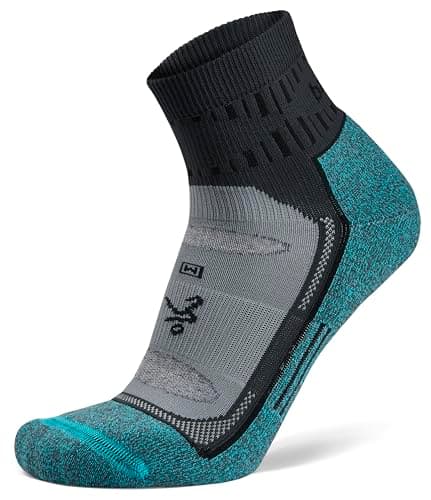
Balega Blister Resist Quarter
Best for: Blister-prone hikers using low-cut trail shoes or trail runners who need maximum cushion and a seamless fit at a sub-$25 price.
- Mohair-plus-merino blend is exceptionally soft against sensitive skin and regulates temperature across seasons
- Quarter height leaves the ankle exposed, less suited to boot hiking where debris entry is a concern
Kit Score 8.0/10 · $20.99 Price checked Oct 25, 3:41 PM CDT · how we score gear
Buy on AmazonProduct details
Balega combines mohair and merino with synthetic Drynamix fibers to target blister prevention directly: seamless toe, deep heel pocket, ventilation panels, and high-volume cushion work together to reduce friction at every pressure point. Quarter height keeps the profile low for trail runners and hikers using low-cut shoes.
- Material
- Mohair, merino wool, Drynamix polyester, acrylic, nylon, elastane blend
- Cushion
- High-volume cushioning throughout footbed
- Height
- Quarter (ankle coverage, debris-resistant rib top)
- Toe construction
- Hand-linked seamless toe, eliminates top-of-foot abrasion
- Heel fit
- Extra-deep heel pocket for a locked, second-skin fit
- Sizing
- SM, MD, LG, XL (unisex; women's and men's shoe size ranges listed)
More strengths
- Seamless toe and deep heel pocket address the two most common blister origin points confirmed by owner reviews
- High-volume cushion at a lower price point than most merino-dominant competitors
Other tradeoffs
- Currently showing as unavailable on Amazon; check Balega's site or other retailers for stock
- A subset of Amazon reviewers reports durability issues with stitching after heavy rotation
Balega's Blister Resist line is built on a single engineering priority: eliminate the friction seams and bunching that cause hotspots. The seamless toe closure and a high-density mohair blend in the blister-zone areas (heel, ball, toe) create a sock that stays put inside a shoe rather than migrating with each stride. Blister-prone reviewers, especially runners who have switched to hiking, consistently call it out as the fix that finally worked.
The quarter height suits trail runners and low-cut hikers, keeping the calf free and reducing heat in warm weather. The cushion level reads plush for a low-profile sock, closer to a midweight cushion in practice. At $18–$24 it is the most accessible pick here. Women's specific fit is available.
Best for: blister-prone hikers using low-cut trail shoes or trail runners who need maximum cushion and a seamless fit at a sub-$25 price.
A $22 pair of the right sock prevents more blisters than a $200 pair of boots paired with the wrong one.
Best for toe blisters: Injinji Trail Midweight Crew
BEST FOR TOE BLISTERS
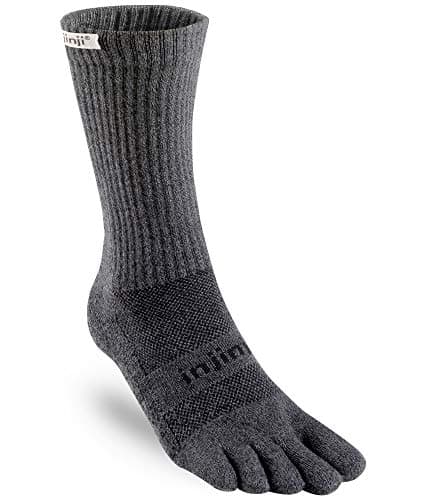
Injinji Trail Midweight Crew
Best for: High-mileage hikers and trail runners who get toe blisters and prefer a synthetic moisture-wicking sock over wool for hot or humid conditions.
- Individual toe sleeves are the most direct solution for interdigital blisters, the type that sideline hikers on long days
- Takes longer to put on correctly, especially with cold or damp hands at a trailhead
Kit Score 8.2/10 · Check current price · how we score gear
Buy on AmazonProduct details
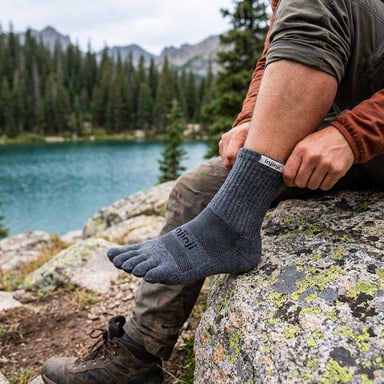
The only toe sock on this list, the Trail Midweight Crew addresses the leading cause of trail blisters (skin rubbing against skin between toes) by wrapping each toe individually. Coolmax fibers prioritize moisture wicking for high-output hikers, and the crew height keeps grit out.
- Material
- 58% nylon, 39% Coolmax EcoMade recycled polyester, 3% Lycra spandex
- Cushion
- Midweight with protective footbed cushioning
- Height
- Crew (rides high to seal out trail debris)
- Toe design
- Five individual toe sleeves eliminate interdigital friction
- Mesh top
- Open mesh keeps the top of the foot cool and ventilated
- Sizing
- Unisex S, M, L, XL; Women's-specific XS/S and M/L also available
More strengths
- Coolmax EcoMade construction wicks sweat faster than merino alternatives, a clear advantage in hot or high-exertion conditions
- Dedicated toe-sock users report strong trail-running and hiking crossover performance across hundreds of miles
Other tradeoffs
- Synthetic construction retains odor more readily than merino over multiple days without washing
- Currently showing as temporarily out of stock on Amazon; price has risen to around $28
Injinji's toe-sock design is a niche solution for a specific and frustrating problem: blisters between toes. By wrapping each toe individually, the sock eliminates toe-on-toe friction entirely, which is the source of inter-digit blisters that no conventional sock can address. The polyester-dominant blend wicks faster than merino in sustained heat and is the better call for desert hiking, humid summer days, or any hiker who runs warm.
The midweight cushion sits under the heel and ball, and the crew height fits in most hiking boots. Sizing runs in the standard S/M/L/XL range, available in both men's and women's versions. It takes one or two wears to adapt to the toe sleeve feel, but reviewers who have blisters in that zone almost universally report the problem disappears, and the design holds up under pack weight too, per Ruck Authority's Injinji toe-sock review for rucking.
Best for: high-mileage hikers and trail runners who get toe blisters and prefer a synthetic moisture-wicking sock over wool for hot or humid conditions.
How they compare
| Product | Kit Score | Price | Best for |
|---|---|---|---|
| Darn Tough Hiker Micro Crew Midweight with Cushion | 8.9 | $25.80 Price checked Oct 25, 3:41 PM CDT | Best for: Hikers who want one sock that handles everything from summer day hikes to week-long backpacking trips and expect it to last for years. Why it stands out: Goldilocks cushion level works for day hikes and multi-week backpacking without sizing up footwear Tradeoff: Some owners note the fit runs slightly large and recommend sizing down |
| Balega Blister Resist Quarter | 8.0 | $20.99 Price checked Oct 25, 3:41 PM CDT | Best for: Blister-prone hikers using low-cut trail shoes or trail runners who need maximum cushion and a seamless fit at a sub-$25 price. Why it stands out: Mohair-plus-merino blend is exceptionally soft against sensitive skin and regulates temperature across seasons Tradeoff: Quarter height leaves the ankle exposed, less suited to boot hiking where debris entry is a concern |
| Injinji Trail Midweight Crew | 8.2 | Check current price | Best for: High-mileage hikers and trail runners who get toe blisters and prefer a synthetic moisture-wicking sock over wool for hot or humid conditions. Why it stands out: Individual toe sleeves are the most direct solution for interdigital blisters, the type that sideline hikers on long days Tradeoff: Takes longer to put on correctly, especially with cold or damp hands at a trailhead |
Darn Tough Hiker Micro Crew Midweight with Cushion
- Best for
- Hikers who want one sock that handles everything from summer day hikes to week-long backpacking trips and expect it to last for years.
- Why it stands out
- Goldilocks cushion level works for day hikes and multi-week backpacking without sizing up footwear
- Tradeoff
- Some owners note the fit runs slightly large and recommend sizing down
Balega Blister Resist Quarter
- Best for
- Blister-prone hikers using low-cut trail shoes or trail runners who need maximum cushion and a seamless fit at a sub-$25 price.
- Why it stands out
- Mohair-plus-merino blend is exceptionally soft against sensitive skin and regulates temperature across seasons
- Tradeoff
- Quarter height leaves the ankle exposed, less suited to boot hiking where debris entry is a concern
Injinji Trail Midweight Crew
- Best for
- High-mileage hikers and trail runners who get toe blisters and prefer a synthetic moisture-wicking sock over wool for hot or humid conditions.
- Why it stands out
- Individual toe sleeves are the most direct solution for interdigital blisters, the type that sideline hikers on long days
- Tradeoff
- Takes longer to put on correctly, especially with cold or damp hands at a trailhead
How to choose the right hiking sock
Material: merino wool vs. synthetic
Merino wool regulates temperature across a wider range, manages odor over multi-day wear, and feels soft against bare skin at fine micron counts. It is the default choice for backpacking and three-season hiking. Synthetic (polyester, nylon) wicks moisture faster in sustained heat, dries quicker when wet, and tends to last longer in raw wash-count terms. It is the call for trail running, hot-weather hiking, and hikers who run warm.
Cotton is not on this list. It retains moisture, stays wet, and causes blisters and cold feet. Leave it for the gym.
Cushion level
Match cushion to the trail
No cushion (liner)
For trail runners with a cushioned midsole who want precise feel, or as a blister-prevention layer under a thicker sock on high-mileage days.
Light cushion
For warm-weather hiking or well-maintained trails where breathability matters more than padding.
Midweight cushion
The most versatile level. Handles day hikes and backpacking across three seasons. The Darn Tough Hiker is the archetype.
Full cushion
For heavy packs, hard terrain, and stiff boots where impact absorption is the priority. The Darn Tough Midweight with Cushion is the pick here.
Sock height
Quarter and no-show heights suit trail runners and low-cut hikers where calf coverage is not needed. Micro crew and crew heights protect the ankle collar from boot-bite and are the standard for mid and full-height hiking boots. Over-the-calf height is a cold-weather and mountaineering choice.
Sizing: numbered vs. S/M/L
Socks sized by numbered shoe size (Darn Tough does this) fit more accurately than S/M/L because there is less variation in how much extra fabric sits in the toe box. Excess fabric is a direct blister cause. If you are between sizes, size down.
Both the Darn Tough and Smartwool lines offer men's and women's fits with contoured construction for narrower heels, higher arches, and different foot volumes typical of women's sizing. The Balega and Injinji run unisex but in enough size breaks to fit accurately.
FAQ
What is the best hiking sock material?
Merino wool is the best all-around hiking sock material for most conditions: it regulates temperature, resists odor over multi-day wear, and is comfortable against bare skin. Synthetic is faster-wicking and more durable in sustained heat or high-mileage trail running. The right call depends on your climate and how hard you push the sock between washes.
Do expensive hiking socks actually prevent blisters better?
Yes, to a point. The features that prevent blisters, seamless toe construction, accurate fit by numbered size, and cushion that stays put rather than bunching, cost more to engineer. The Darn Tough Hiker and Balega Blister Resist are both under $27 and outperform generic socks in owner blister-rate reports. Above roughly $30, gains are mainly in durability and materials, not blister prevention.
Can I use the same hiking socks for men and women?
Most quality hiking sock brands offer separate men's and women's fits rather than unisex sizing, and it makes a difference. Women's versions typically contour for a narrower heel, slightly shorter toe box, and different arch placement. If fit accuracy matters to you (and it does, because a loose heel causes blisters), pick a sock that offers a gender-specific fit like the Darn Tough or Smartwool lines.
The right sock makes a long day shorter. See more hiking gear and picks, or read how we research and rate.
Keep going
Related guides
 Complete hike loadoutDay hike kitBuild the complete kit
Our recommendations draw on manufacturer documentation, retailer listings, owner feedback, and comparisons with alternatives.
As an Amazon Associate I earn from qualifying purchases. We may earn a commission from links here, at no extra cost to you. How we research →