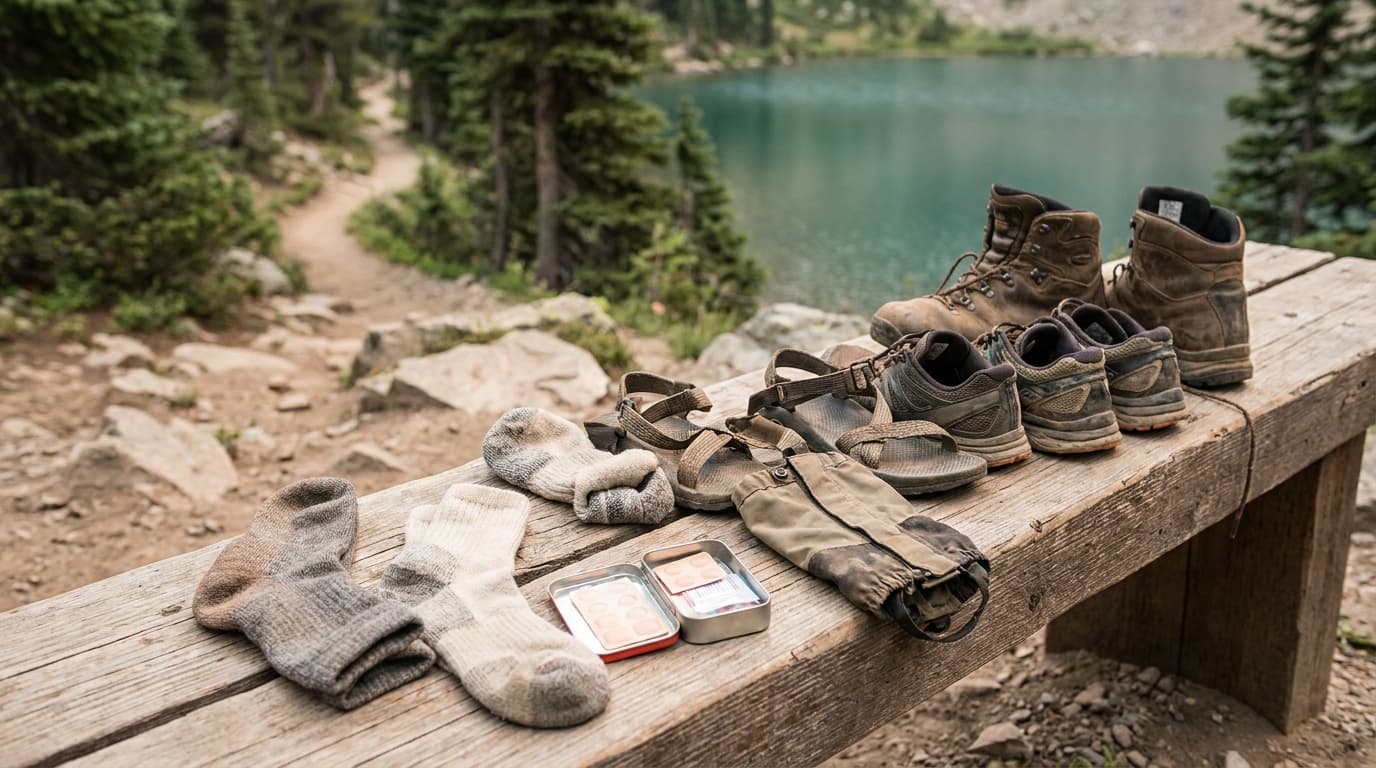
Socks are the last piece of the footwear system most hikers think about, and the one that does the most damage when it goes wrong. Getting this right is a straightforward process once you know the four decisions that actually matter.
Merino vs synthetic: what the fiber actually does
The fiber debate is real, but it is secondary to fit and height. That said, it is worth understanding what each material does well before choosing.
Merino transports sweat as vapor; synthetic moves it as liquid. In practice, merino feels drier during temperature swings and stays tolerable through two or three days of wear without washing. A merino fiber can absorb up to 35% of its own weight in water before feeling wet to the touch, which is why merino maintains comfort during sustained sweating when synthetic socks have already started to feel clammy.
Pure merino wears through faster, though. Pure synthetic holds odor by day two. The practical answer is a merino-nylon blend, which is what every serious hiking sock brand has landed on. Premium options today run roughly 55-65% merino; the workhorse Darn Tough Hiker Micro Crew is 61% merino / 36% nylon / 3% Lycra, and Smartwool's standard hiker runs 57% merino / 40% nylon / 3% elastane. The blend captures merino's moisture-vapor management and odor resistance while nylon carries the abrasion load.
For single-day hikes, the merino premium narrows considerably. For anything overnight, the multiday odor resistance means fewer socks in the pack, which is where the price justification actually lives.
Cushion level: match it to activity and boot
Cushion is the spec that changes the most depending on what you are doing.
Cushion level by activity
Light cushion
Warm-weather day hikes and trail runners where breathability matters most. Thinner profile keeps heat down; pairs well with low-cut shoes on fast, dry routes.
Medium cushion
Three-season backpacking and most day hikes. This is the all-purpose default. Enough padding for long miles and varied terrain without adding significant bulk or heat retention. It is also the standard choice for walking under pack weight, as Ruck Authority's [rucking sock guide](https://ruckauthority.com/gear/best-rucking-socks-blister-prevention?utm_source=kitauthority&utm_medium=referral&utm_campaign=sister-site&utm_content=how-to-choose-hiking-socks) lays out.
Heavy cushion
Cold mountaineering, winter routes, or filling volume in stiff leather boots. Adds insulation and protection on technical terrain. Avoid heavy cushion in warm weather; it accelerates sweating and raises blister risk.
Heavy cushion in summer is one of the more common gear mistakes. The extra bulk raises skin temperature and increases moisture, which is the opposite of what you need.
Sock height: the rule is simple
The sock cuff must sit above the boot cuff. Every exposed centimeter of skin at that interface is a reliable hot spot over distance.
This is the single rule that eliminates most cuff-area blisters. Exposed skin at the boot-to-cuff interface is a primary blister source on long miles, especially with ankle-height boots and trail runners.
The practical matching:
- No-show socks: not appropriate for hiking. The uncovered heel is a blister trap, and debris enters more easily, altering gait and creating secondary friction zones.
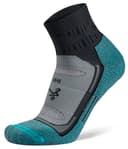
- Quarter or micro-crew: the practical minimum for low trail runners with a cuff. Quarter height, like the Balega Blister Resist Quarter, covers the ankle bone and sits just above most low-cut uppers.
- Micro-crew or boot-height: correct for mid-cut hikers. Covers the full ankle and clears the boot collar.
- Boot or over-the-calf: required for full-shank mountaineering boots and tall leather hikers. The sock needs to extend well above the rigid cuff to prevent direct boot-to-skin contact.
If you are running on trails with brush, loose dirt, or scree, a micro-crew adds ankle debris protection without meaningful weight.
Fit and blister prevention
Cushion and fiber only work if the sock fits. A sock that feels slightly loose when cold will bunch when your foot warms and swells, and bunching fabric at the toe box or heel pocket is where blisters start.
When skin stays wet for extended periods, friction at the skin-sock interface nearly doubles compared to dry conditions. Wet cotton increases friction by roughly 130%. A well-fitted merino blend that stays drier longer is the practical answer, but fit is the prerequisite.
Checklist for a well-fitted hiking sock:
- No bunching at the toe seam or under the ball of the foot
- Heel pocket sits centered on your heel, not pulling down toward the arch
- Snug across the instep without compression on the Achilles
- The sock does not shift position over a short test walk in the store
Liner socks: when they help and when they do not
Liner socks work by shifting shear forces to the sock-on-sock interface rather than skin. That is the theory, and research on the mechanism is real. The practical results, though, are mixed.
Liners help most in two situations: known-bad-fit boots where a thin liner fills volume and reduces internal movement, and sustained wet conditions where the outer sock is saturated and you need to manage the friction load differently. They are not a substitute for a properly fitted outer sock.
For most hikers on most trips, a well-fitted merino blend outer sock is enough. Consider liners if you have a boot fit problem you cannot solve any other way, or if you are heading into a wet climate where the outer sock will be wet for days at a time.
How many pairs to pack
Two pairs is the minimum for any overnight trip: one on your foot, one drying at camp or clean for the next day. The standard trail rhythm with merino blends is to wash the worn pair each evening and air-dry overnight. Merino blends dry faster than pure wool and resist odor long enough that one rotation handles most trips.
Expert backpacker Andrew Skurka recommends packing one extra pair per 5-7 days of trail time, adjusted upward for expected wet weather. That translates to:
- One night to three days: two pairs
- Four to seven days: three pairs
- Week-plus or wet climate: three to four pairs, with washing discipline
Packing more socks than this is one of the easier pack weight mistakes to avoid. Two quality merino pairs, washed nightly, outlast four cheap synthetic pairs on a week-long trip.
FAQ
Is merino wool worth the higher price for hiking socks?
For multiday trips, yes. Merino blends stay tolerable through two or three days of wear without washing, which synthetic socks cannot match. For single-day hikes, the gap narrows considerably. The real cost argument for merino is fewer socks needed in the pack, not performance on any single day.
Do I need liner socks to prevent blisters?
Not usually. Liner socks move shear forces to the sock-on-sock interface, which can help in poorly fitted boots or sustained wet conditions. A well-fitted outer sock with the right cushion for your boot handles most blister risk. If you do use liners, your boots need to be a half size up to avoid compression, and the liner needs replacing once it starts to pill.
What sock height should I buy for trail runners?
Quarter-height is the practical minimum. No-show socks leave the heel exposed at the cuff, which becomes a hot spot over any meaningful distance. If you run on trails with brush, loose dirt, or scree, a micro-crew keeps debris out and adds ankle protection without adding meaningful weight.
For specific sock picks across cushion weights and budgets, see our guide to the best hiking socks. Browse all hike gear or read how we research and rate to understand the methodology behind our recommendations.
Recommended gear
Our current top picks from the The best hiking socks for blister-free miles guide, if you are ready to buy.
DARN TOUGH
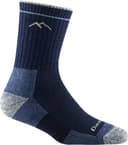
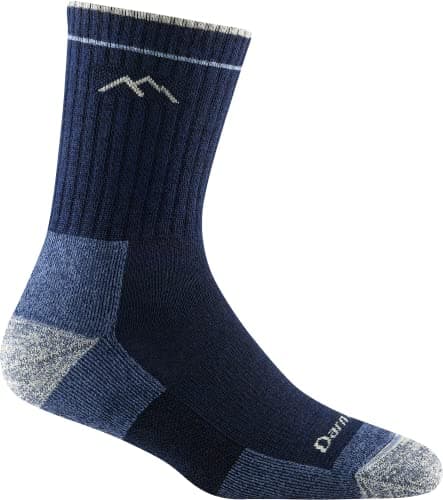
Darn Tough Hiker Micro Crew Midweight with Cushion
Best Overall
Kit Score 8.9/10
$25.80 Price checked Oct 23, 6:22 AM CDT
Best for: Hikers who want one sock that handles everything from summer day hikes to week-long backpacking trips and expect it to last for years.
- Goldilocks cushion level works for day hikes and multi-week backpacking without sizing up footwear
- Some owners note the fit runs slightly large and recommend sizing down
- Material
- 61% merino wool, 36% nylon, 3% Lycra spandex
- Cushion
- Midweight (terry loops underfoot, targeted Achilles zone)
- Height
- Micro crew (approx. 8.5 in. from heel to cuff)
- Warranty
- Lifetime, no-questions replacement
- Sizing
- Men's XS–XXL (shoe 2.5–17); Women's Style 1903 S–L
- Origin
- Knit in Vermont, USA
About this pick
The 1466 earns its reputation across tens of thousands of thru-hiker miles: a tight merino knit with just enough midweight cushion to absorb trail impact without adding volume in a snug boot. The unconditional lifetime warranty removes the durability question entirely.
Strengths
- Goldilocks cushion level works for day hikes and multi-week backpacking without sizing up footwear
- Lifetime warranty with a real no-hassle replacement policy makes the per-wear cost competitive over time
- Merino blend controls odor across multiple days without washing, confirmed by owner reviews
Weaknesses
- Some owners note the fit runs slightly large and recommend sizing down
- Premium price per pair is a barrier if you need to stock up at once
Kit Score breakdown
BALEGA
Balega Blister Resist Quarter
Best Value
Kit Score 8.0/10
$20.99 Price checked Oct 23, 6:22 AM CDT
Best for: Blister-prone hikers using low-cut trail shoes or trail runners who need maximum cushion and a seamless fit at a sub-$25 price.
- Mohair-plus-merino blend is exceptionally soft against sensitive skin and regulates temperature across seasons
- Quarter height leaves the ankle exposed, less suited to boot hiking where debris entry is a concern
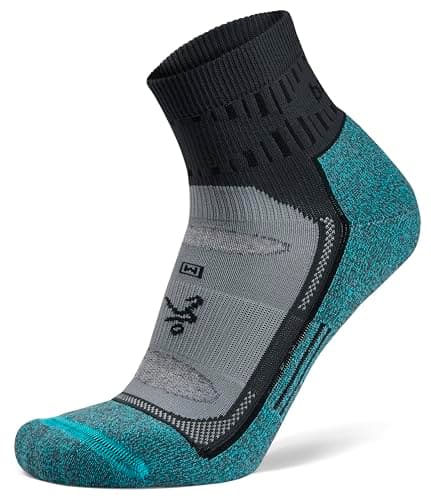
- Material
- Mohair, merino wool, Drynamix polyester, acrylic, nylon, elastane blend
- Cushion
- High-volume cushioning throughout footbed
- Height
- Quarter (ankle coverage, debris-resistant rib top)
- Toe construction
- Hand-linked seamless toe, eliminates top-of-foot abrasion
- Heel fit
- Extra-deep heel pocket for a locked, second-skin fit
- Sizing
- SM, MD, LG, XL (unisex; women's and men's shoe size ranges listed)
About this pick
Balega combines mohair and merino with synthetic Drynamix fibers to target blister prevention directly: seamless toe, deep heel pocket, ventilation panels, and high-volume cushion work together to reduce friction at every pressure point. Quarter height keeps the profile low for trail runners and hikers using low-cut shoes.
Strengths
- Mohair-plus-merino blend is exceptionally soft against sensitive skin and regulates temperature across seasons
- Seamless toe and deep heel pocket address the two most common blister origin points confirmed by owner reviews
- High-volume cushion at a lower price point than most merino-dominant competitors
Weaknesses
- Quarter height leaves the ankle exposed, less suited to boot hiking where debris entry is a concern
- Currently showing as unavailable on Amazon; check Balega's site or other retailers for stock
- A subset of Amazon reviewers reports durability issues with stitching after heavy rotation
Kit Score breakdown
Best for: High-mileage hikers and trail runners who get toe blisters and prefer a synthetic moisture-wicking sock over wool for hot or humid conditions.
- Individual toe sleeves are the most direct solution for interdigital blisters, the type that sideline hikers on long days
- Takes longer to put on correctly, especially with cold or damp hands at a trailhead
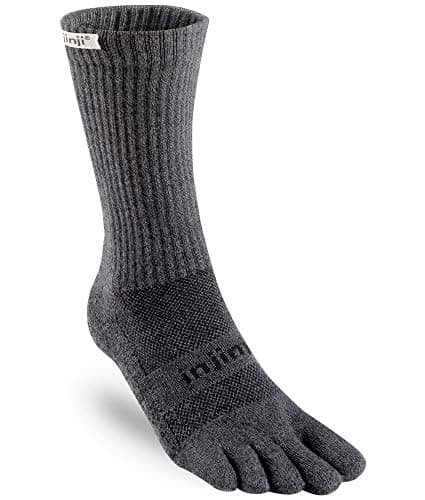
- Material
- 58% nylon, 39% Coolmax EcoMade recycled polyester, 3% Lycra spandex
- Cushion
- Midweight with protective footbed cushioning
- Height
- Crew (rides high to seal out trail debris)
- Toe design
- Five individual toe sleeves eliminate interdigital friction
- Mesh top
- Open mesh keeps the top of the foot cool and ventilated
- Sizing
- Unisex S, M, L, XL; Women's-specific XS/S and M/L also available
About this pick
The only toe sock on this list, the Trail Midweight Crew addresses the leading cause of trail blisters (skin rubbing against skin between toes) by wrapping each toe individually. Coolmax fibers prioritize moisture wicking for high-output hikers, and the crew height keeps grit out.
Strengths
- Individual toe sleeves are the most direct solution for interdigital blisters, the type that sideline hikers on long days
- Coolmax EcoMade construction wicks sweat faster than merino alternatives, a clear advantage in hot or high-exertion conditions
- Dedicated toe-sock users report strong trail-running and hiking crossover performance across hundreds of miles
Weaknesses
- Takes longer to put on correctly, especially with cold or damp hands at a trailhead
- Synthetic construction retains odor more readily than merino over multiple days without washing
- Currently showing as temporarily out of stock on Amazon; price has risen to around $28
Kit Score breakdown
See all picks in The best hiking socks for blister-free miles
Keep going
Related guides
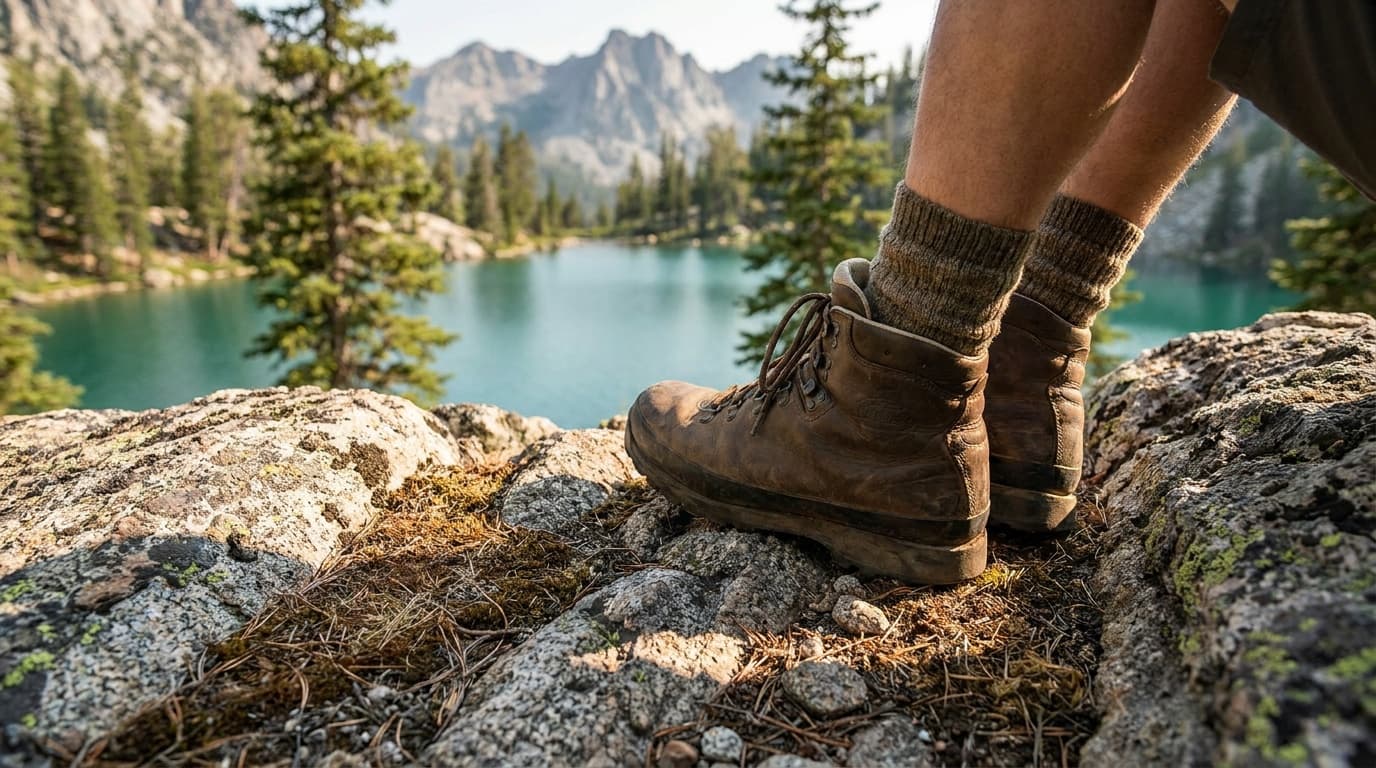
 Complete hike loadoutDay hike kitBuild the complete kit
Researched, not hands-on tested
Updated Jun 3, 2026Our recommendations draw on manufacturer documentation, retailer listings, owner feedback, and comparisons with alternatives.
As an Amazon Associate I earn from qualifying purchases. We may earn a commission from links here, at no extra cost to you. How we research →