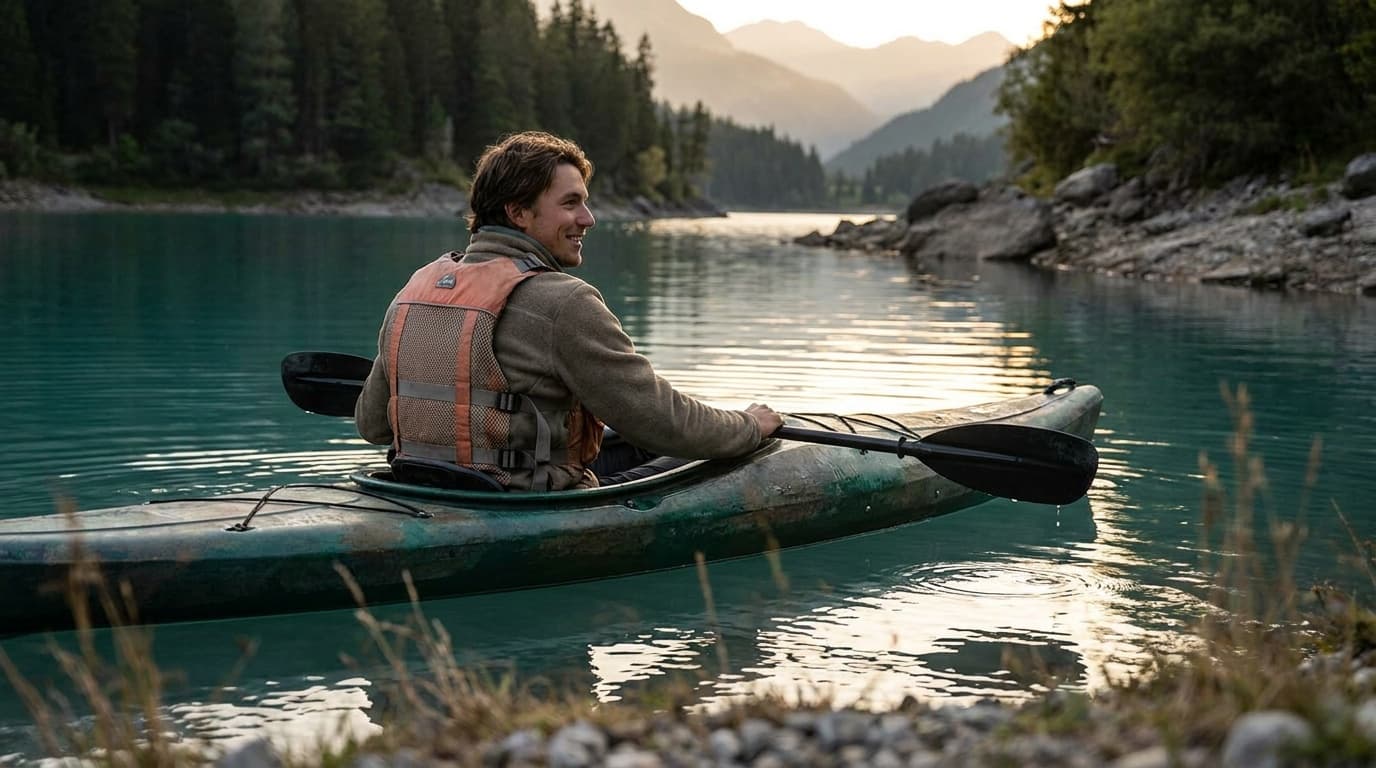
The best life jacket is the one that is still on your body an hour into a hot afternoon. That is the whole category in a sentence: buoyancy is regulated and roughly equal across USCG Type III vests, so the real differences are ventilation, how the cut clears a paddle stroke, and whether the back panel fights your kayak seat. These four cover every paddler and budget.
Our quick picks
The picks
Best overall
BEST OVERALL
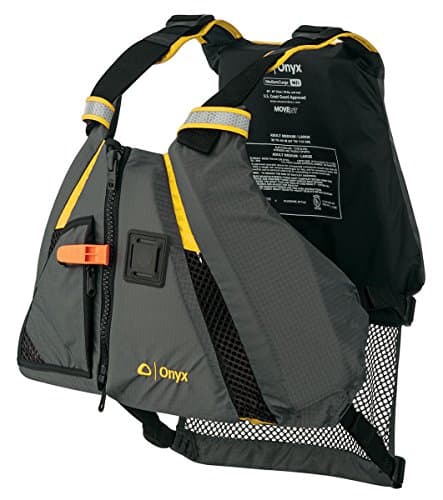
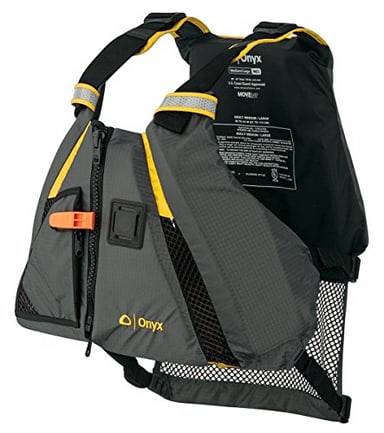
Onyx MoveVent Dynamic
Best for: Kayakers and paddleboarders who want the vest they will actually keep on, at a family-friendly price.
- Mesh lower back works with kayak seats and SUP kneeling instead of riding up
- Sizing runs athletic; broad-chested paddlers should size up
Kit Score 8.2/10 · $66.32 Price checked Oct 17, 5:28 AM CDT · how we score gear
Buy on AmazonProduct details
The MoveVent Dynamic is the vest that solved the real PFD problem: people own one and leave it in the car. The mesh lower back sits above a kayak or SUP seat, the arm cuts clear a full paddle stroke, and the venting keeps it tolerable in July. A life jacket only works if you wear it, and this is the one people wear.
- Approval
- USCG Type III
- Back
- Mesh lower back, sits above kayak seats
- Ventilation
- Vented chest and shoulder channels
- Pockets
- Zippered front pocket, lash tab
- Sizing
- XS/S through XL/2XL, women's cut available
More strengths
- Ventilated panels keep it wearable through a hot afternoon
- USCG Type III approval at a price that outfits a whole family without pain
Other tradeoffs
- Single front pocket is tight for a large phone in a pouch
The MoveVent Dynamic became the default paddling PFD by solving the reasons people take theirs off. The mesh lower back sits above a kayak seat back or SUP kneeling position instead of shoving the vest up under your chin. The arm openings are cut for a full stroke, not for standing on a boat deck. And the vented channels move enough air that keeping it zipped through a July afternoon is a habit instead of a sacrifice.
At about $75 it is also cheap enough to outfit a family without ceremony. The sizing runs athletic, so broad-chested paddlers should size up, and the single pocket is modest. Neither changes the verdict: this is the vest people actually wear.
Best for: kayakers and paddleboarders who want the comfortable, affordable vest that ends the excuses.
Best premium
BEST PREMIUM
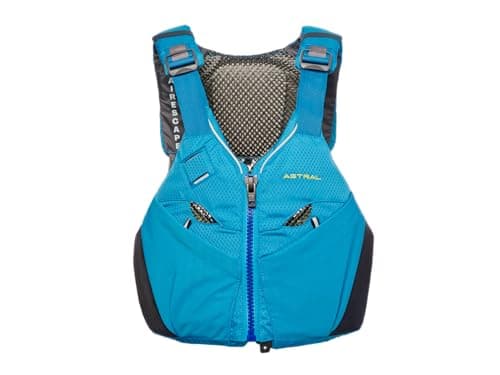
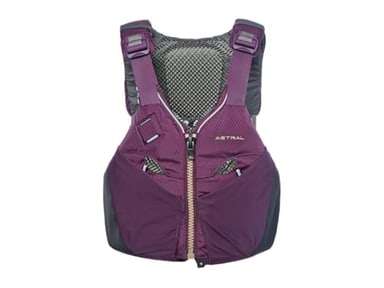
Astral V-Eight 4.0
Best for: Frequent warm-weather paddlers who want the most comfortable vest money buys.
- Best-in-class ventilation; the difference is obvious the first hot afternoon
- Premium price for the same Type III buoyancy as vests half the cost
Kit Score 8.6/10 · $155.00 Price checked Oct 17, 5:28 AM CDT · how we score gear
Buy on AmazonProduct details
The V-Eight is what happens when a company obsesses over the number one reason people take their PFD off: heat. The open-sided design moves air across your torso while the contoured foam stays out of your paddle stroke. It costs twice what a good budget vest does, and on a 95 degree lake day it feels worth every dollar.
- Approval
- USCG Type III
- Ventilation
- Open-sided AirEscape design
- Foam
- Contoured PVC-free foam panels
- Pockets
- Zippered front pocket
- Best use
- Kayak touring, SUP, hot-weather paddling
More strengths
- Contoured cut disappears during an aggressive paddle stroke
- Premium materials and stitching built for daily use, not occasional weekends
Other tradeoffs
- Minimal storage; anglers should look at a dedicated fishing vest instead
The V-Eight is what you buy when heat is the enemy. Astral's open-sided design moves air across your entire torso, and the difference on a 95 degree lake day is not subtle: it is the difference between a vest you tolerate and one you forget. The contoured foam stays clear of an aggressive stroke, and the materials are the standard the rest of the category gets measured against.
You pay roughly twice the Onyx price for the same regulated buoyancy, and the minimal storage will not suit anglers. For frequent warm-weather paddlers, the comfort per dollar is real. Anglers who want flotation built for cold water and all-day wear should look at our sister site Sportsman Authority's float suits.
Best for: frequent hot-weather paddlers who want the most breathable full-foam vest made.
Best for fishing
BEST FOR FISHING
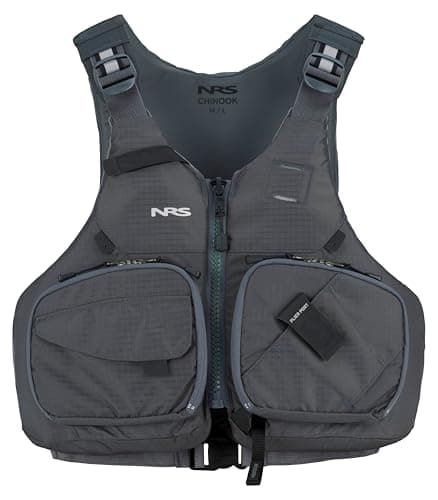
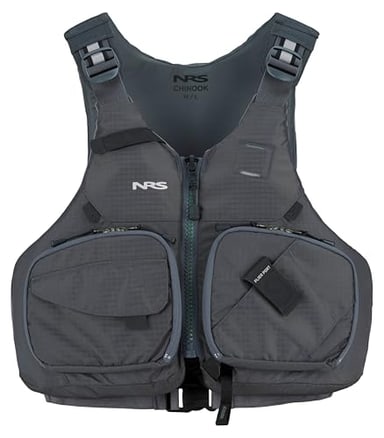
NRS Chinook Fishing PFD
Best for: Kayak anglers who want their essential tackle wearable and their hands free.
- Seven-pocket layout keeps pliers, tippet, and a fly box on your chest, not behind you
- Overkill weight and bulk for paddlers who do not fish
Kit Score 8.4/10 · $179.95 Price checked Oct 17, 5:28 AM CDT · how we score gear
Buy on AmazonProduct details
The Chinook turns a life jacket into a tackle bag you cannot leave behind: seven pockets, tool docks, and a cut that clears a high-back fishing seat. For kayak anglers it replaces a chest pack entirely. If you do not fish, buy the lighter Onyx or the cooler Astral instead; if you do, this is the one.
- Approval
- USCG Type III
- Pockets
- 7 pockets including rod-holder loop and tool docks
- Back
- Mesh lower back for high-back kayak seats
- Adjustment
- 8 adjustment points
- Best use
- Kayak fishing, rafting
More strengths
- Mesh lower back pairs with high-back fishing kayak seats
- River-grade NRS construction survives hooks, sun, and seasons
Other tradeoffs
- Loaded pockets can crowd a low paddle stroke
The Chinook is a tackle system you cannot leave on the bank: seven pockets, tool docks, and a rod-holder loop arranged across your chest, with a mesh lower back that pairs with high-back fishing kayak seats. For kayak anglers it replaces a chest pack outright, which is exactly why it has been the default fishing PFD for years.
If you do not fish, skip it: the pocket architecture is weight and bulk you will not use, and loaded pockets can crowd a low stroke. If you do fish, nothing else here comes close.
Best for: kayak anglers who want pliers, tippet, and a fly box wearable and their hands free.
Best low-profile
BEST LOW-PROFILE
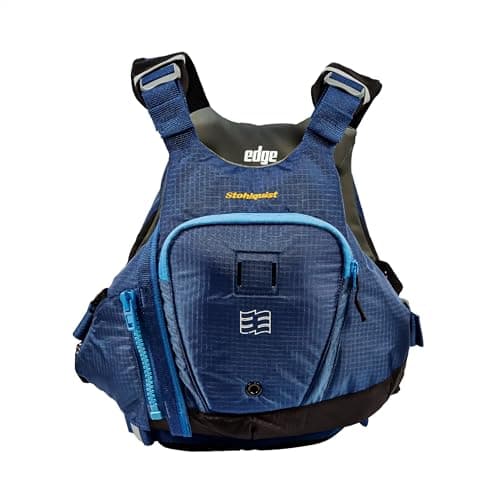
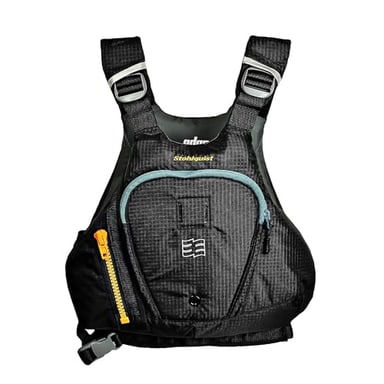
Stohlquist Edge
Best for: Fitness paddlers and tourers who want a vest that moves with an aggressive stroke.
- Lowest-profile fit in this group; barely noticeable during hard paddling
- Sizes drift in and out of stock more than the other picks
Kit Score 7.8/10 · $159.99 Price checked Oct 17, 5:28 AM CDT · how we score gear
Buy on AmazonProduct details
The Edge is built around one idea: a PFD should move with your torso, not sit on it. The sculpted foam and cross-chest cinch lock the vest to your body so it rotates with every stroke instead of riding up. Owners love the fit; the catch is a size run that goes in and out of stock.
- Approval
- USCG Type III
- Fit
- Sculpted low-profile front, cross-chest cinch harness
- Foam
- Ultra-soft contoured buoyancy foam
- Ventilation
- Ventilated back panel
- Best use
- Touring, SUP, performance flatwater
More strengths
- Cross-chest cinch harness eliminates ride-up without crushing the chest
- Soft contoured foam is comfortable against bare skin on hot days
Other tradeoffs
- Minimal pocket space for anything beyond lip balm and keys
The Edge is built around torso rotation. Stohlquist's sculpted foam and cross-chest cinch harness lock the vest to your body, so it turns with every stroke instead of riding up, and the front profile is slim enough to disappear during hard, fitness-style paddling. Owners who paddle for exercise tend to describe it the same way: you stop noticing it.
The tradeoffs are minimal pocket space and a size run that drifts in and out of stock more than the other picks. When your size is available, it is the best-moving vest in this group.
Best for: fitness paddlers and tourers with an aggressive stroke who want the vest to vanish.
How we picked
Every pick is scored with our Kit Score. Because USCG Type III buoyancy is effectively standardized, we weight the things that decide whether a vest gets worn: ventilation, paddle-stroke clearance, back-panel compatibility with kayak and SUP seating, and owner sentiment specifically from paddlers rather than boaters. Inflatable belt-pack PFDs are deliberately absent: they require conscious activation, and for the casual paddlers this guide serves, an inherently buoyant vest is the safer default.
| Product | Kit Score | Price | Best for |
|---|---|---|---|
| Onyx MoveVent Dynamic | 8.2 | $66.32 Price checked Oct 17, 5:28 AM CDT | Best for: Kayakers and paddleboarders who want the vest they will actually keep on, at a family-friendly price. Why it stands out: Mesh lower back works with kayak seats and SUP kneeling instead of riding up Tradeoff: Sizing runs athletic; broad-chested paddlers should size up |
| Astral V-Eight 4.0 | 8.6 | $155.00 Price checked Oct 17, 5:28 AM CDT | Best for: Frequent warm-weather paddlers who want the most comfortable vest money buys. Why it stands out: Best-in-class ventilation; the difference is obvious the first hot afternoon Tradeoff: Premium price for the same Type III buoyancy as vests half the cost |
| NRS Chinook Fishing PFD | 8.4 | $179.95 Price checked Oct 17, 5:28 AM CDT | Best for: Kayak anglers who want their essential tackle wearable and their hands free. Why it stands out: Seven-pocket layout keeps pliers, tippet, and a fly box on your chest, not behind you Tradeoff: Overkill weight and bulk for paddlers who do not fish |
| Stohlquist Edge | 7.8 | $159.99 Price checked Oct 17, 5:28 AM CDT | Best for: Fitness paddlers and tourers who want a vest that moves with an aggressive stroke. Why it stands out: Lowest-profile fit in this group; barely noticeable during hard paddling Tradeoff: Sizes drift in and out of stock more than the other picks |
Onyx MoveVent Dynamic
- Best for
- Kayakers and paddleboarders who want the vest they will actually keep on, at a family-friendly price.
- Why it stands out
- Mesh lower back works with kayak seats and SUP kneeling instead of riding up
- Tradeoff
- Sizing runs athletic; broad-chested paddlers should size up
Astral V-Eight 4.0
- Best for
- Frequent warm-weather paddlers who want the most comfortable vest money buys.
- Why it stands out
- Best-in-class ventilation; the difference is obvious the first hot afternoon
- Tradeoff
- Premium price for the same Type III buoyancy as vests half the cost
NRS Chinook Fishing PFD
- Best for
- Kayak anglers who want their essential tackle wearable and their hands free.
- Why it stands out
- Seven-pocket layout keeps pliers, tippet, and a fly box on your chest, not behind you
- Tradeoff
- Overkill weight and bulk for paddlers who do not fish
Stohlquist Edge
- Best for
- Fitness paddlers and tourers who want a vest that moves with an aggressive stroke.
- Why it stands out
- Lowest-profile fit in this group; barely noticeable during hard paddling
- Tradeoff
- Sizes drift in and out of stock more than the other picks
Fit it like it matters, because it does
Buy by chest, not weight
Adult PFD sizing is chest circumference. Measure at the widest point and use each brand's chart before ordering.
Cinch bottom to top
Loosen everything, put it on, then tighten from the waist up so the foam settles low on the torso.
Do the lift test
Have someone pull up hard on the shoulders. If the vest rises past your ears, tighten it or size down.
Sit in your actual boat
A vest that fits standing can ride up against a kayak seat. Check it seated before the season starts.
Frequently asked questions
Do I legally need a life jacket on a kayak or paddleboard?
On most US waters, yes. The Coast Guard classifies kayaks and paddleboards operating beyond swimming areas as vessels, which requires a wearable USCG-approved PFD aboard for each person, and children, generally under 13 while underway, must wear theirs in most states. Many states go further and require everyone to wear one in cold-water months. The practical answer is simpler: modern paddling vests are comfortable enough that wearing it always is the easy default.
What type of PFD is best for paddling?
A USCG Type III vest cut for paddling, like every pick here. Type III provides the buoyancy a conscious swimmer needs while allowing a full range of arm motion, and paddling-specific cuts add the two features that matter: a mesh or sculpted lower back that clears kayak seats, and large arm openings that clear a stroke. Type II boating vests are cheaper but ride up and chafe when you paddle, which is how they end up stowed instead of worn.
Are inflatable belt-pack PFDs good for paddleboarding?
They are legal in most states for adults on paddleboards, and experienced flat-water paddlers like them for the zero-bulk feel. We still recommend a foam vest for most people: a belt pack only works if you consciously pull the cord after you fall, and falls are exactly the moment surprise, cold water, or a hit to the head interferes. A ventilated foam vest like the Onyx or Astral works unconscious, every time, with no rearming kits to maintain.
How tight should a paddling life jacket fit?
Snug enough that it cannot ride up past your ears when someone pulls hard on the shoulder straps, loose enough to breathe and rotate fully. Fit it in order: loosen all straps, zip it, then cinch from the waist upward so the foam sits low on your torso, and check the fit seated in your boat. If you are between sizes, remember foam adds no warmth to the fit calculus: size for the chest measurement and let the straps do the fine tuning.
A good vest is the cheapest piece of gear that can save your life, and the picks here remove the comfort excuse at every budget. Put one on, grab a board from the best inflatable paddleboards or a boat from the best inflatable kayaks, and pack the rest of the day with the lakefront day-trip list.
Keep going
Complete loadoutComplete lake-day kitEight slots covering the float, safety, inflation, dry storage, food, water, phone protection, and sun cover.Related guides


Our recommendations draw on manufacturer documentation, retailer listings, owner feedback, and comparisons with alternatives.
As an Amazon Associate I earn from qualifying purchases. We may earn a commission from links here, at no extra cost to you. How we research →