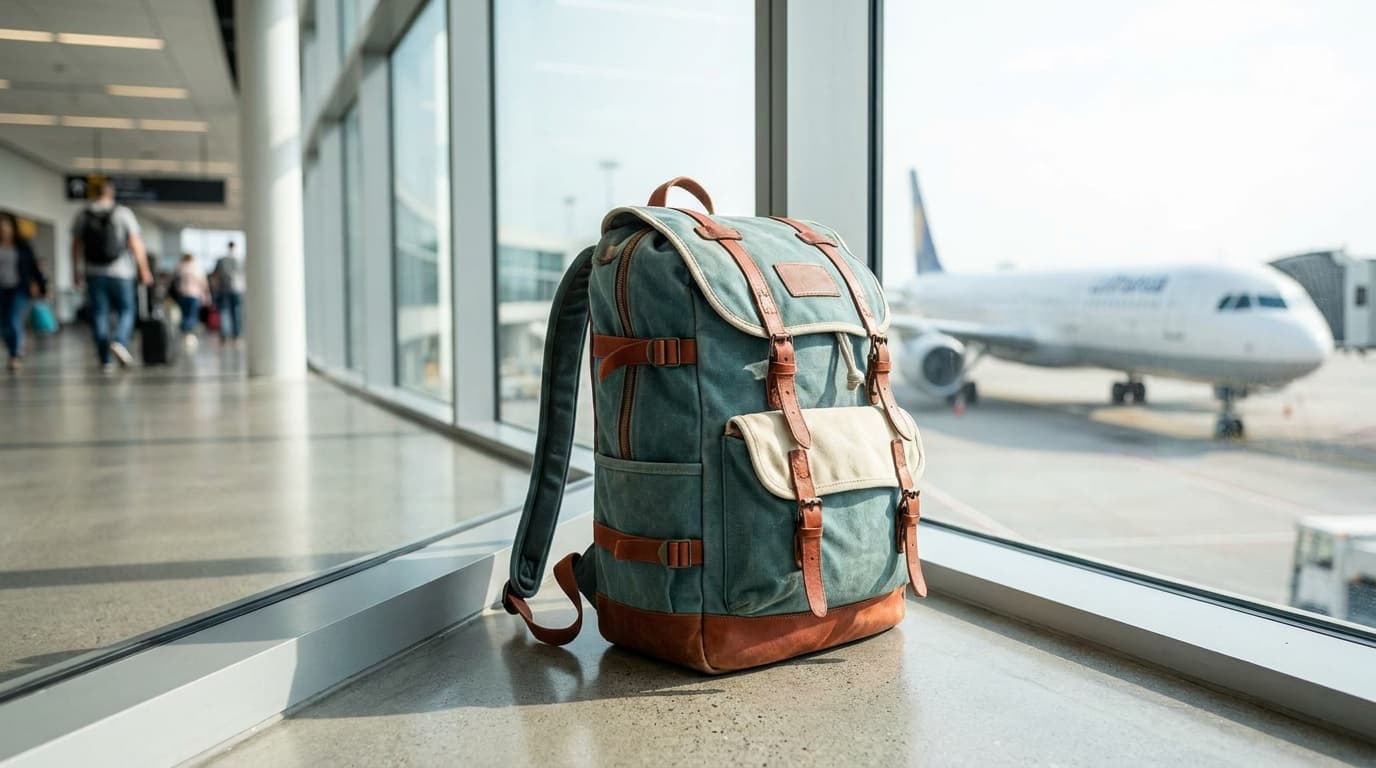
The Cotopaxi Allpa 35L is the best travel backpack for most carry-on trips: it is the best overall travel pack at Outdoor Gear Lab and CleverHiker and a top pick at Wirecutter, and it opens like a suitcase with mesh compartments built in. If you walk a lot with your bag, the Osprey Farpoint 40 (or the women's Fairview 40) carries best. If your bag has to fit a strict 22 x 14 x 9 inch sizer, the Aer Travel Pack 4 and the Tortuga Pro are the two picks listed inside it.
Our quick picks
How we picked
Every pack is scored with the Kit Score: organization and access, carry comfort, fit against airline size limits, build, and value. We started from the 2026 travel backpack picks at Wirecutter, Outdoor Gear Lab, Switchback Travel, Pack Hacker, and CleverHiker, checked dimensions, weights, and laptop sleeves against the maker's page, and confirmed where each one is sold. The Osprey, Cotopaxi, and Peak Design packs are sold on Amazon by Amazon or the brand; Aer, Tortuga, and REI sell their packs directly. We have not traveled with these packs; the sources table at the end shows where each number comes from.
If the GORUCK GR1 or GR2 is on your short list, use Ruck Authority's GORUCK guide to compare the two against the training-focused Rucker before paying the premium. The GR1 is the work-and-travel option; the GR2 adds a second full compartment for multi-day carry.
The picks
Best overall: Cotopaxi Allpa 35L
BEST OVERALL
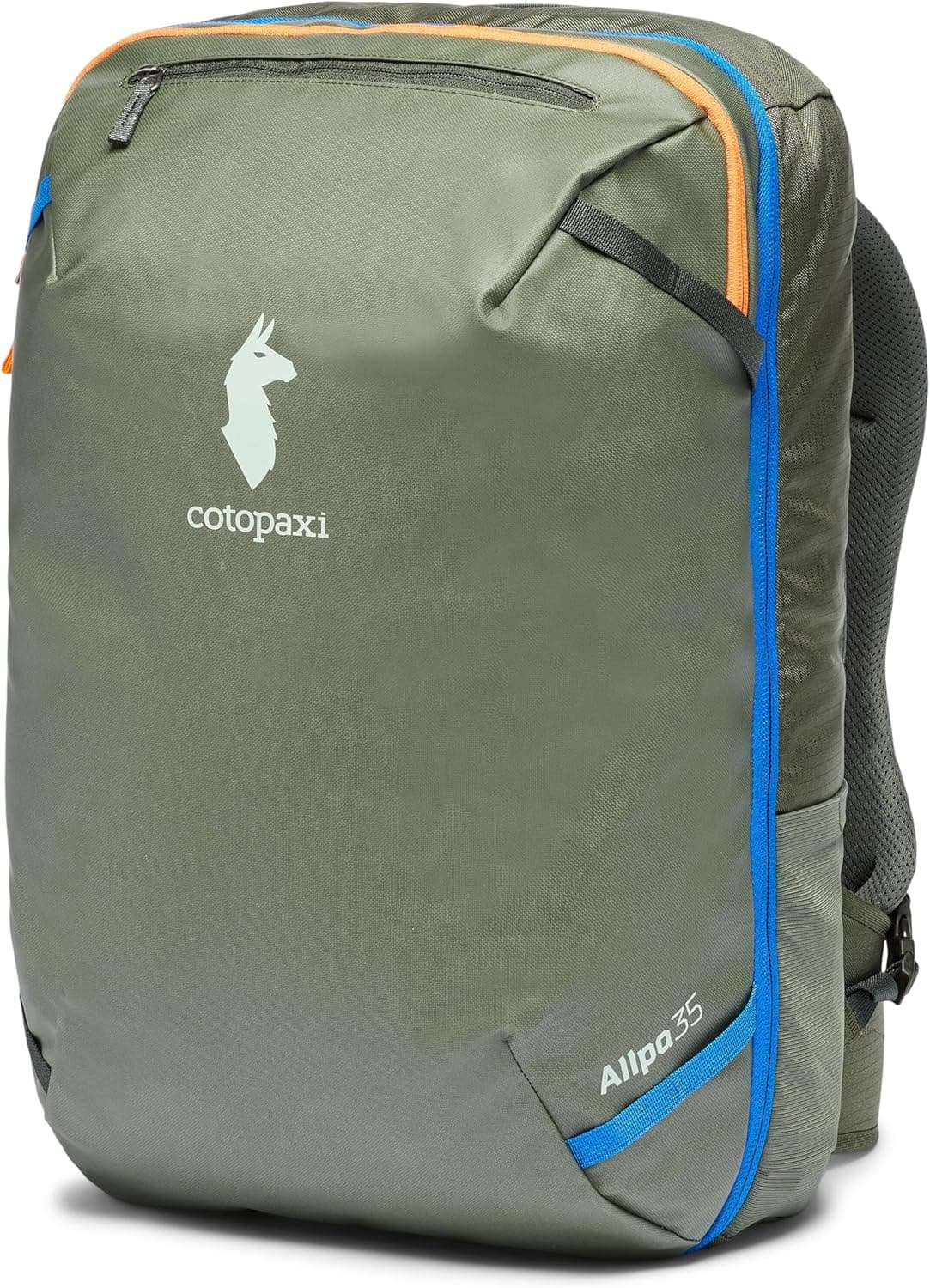
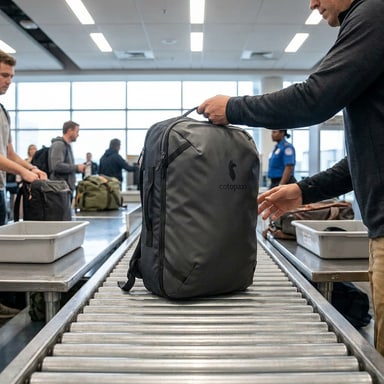
Cotopaxi Allpa 35L Travel Pack
Best for: Organized travelers who want everything in a defined spot and can work within a 35L limit, particularly for trips of three to seven days.
- Best overall travel pack at Outdoor Gear Lab and CleverHiker
- 15-inch laptop sleeve; check a 16-inch machine before buying
Kit Score 8.4/10 · $229.95 Price checked Oct 23, 6:22 AM CDT · how we score gear
Buy on AmazonProduct details
The Allpa 35L is the best overall travel pack at Outdoor Gear Lab and CleverHiker and a Wirecutter top pick. It opens like a suitcase, with mesh compartments on both sides so most people can skip packing cubes, and its TPU-coated 840D shell sheds rain better than plain fabric.
- Capacity
- 35 L
- Weight
- 2 lb 15 oz (1.33 kg)
- Dimensions
- 22 x 12 x 10 in (56 x 30 x 25 cm)
- Material
- 840D recycled nylon, TPU coating; 840D ballistic ripstop
- Laptop sleeve
- 15 in, padded and fleece-lined
- Harness
- Tuckable shoulder straps and hip belt
- Warranty
- Guaranteed for Good (repair, replace, or resale credit)
More strengths
- Suitcase-style opening with built-in mesh compartments
- Tuckable shoulder straps and hip belt at 2 lb 15 oz
Other tradeoffs
- 10 in deep, an inch over the 9 in carry-on line when fully packed
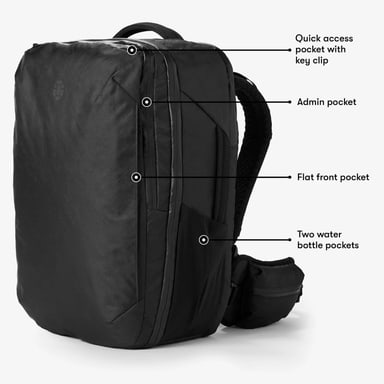
The Allpa 35L is the pack the testers agree on. Outdoor Gear Lab and CleverHiker name it the best overall travel backpack, Wirecutter makes it its top small carry-on, and Pack Hacker picks it for built-in organization. A full suitcase-style zip opens the main compartment flat, and mesh compartments on both sides do the work of packing cubes. A front pocket holds pens, cards, and a key clip, and a 15-inch padded laptop sleeve sits against your back.
Cotopaxi lists it at 22 x 12 x 10 inches and 2 lb 15 oz. That 10-inch depth is an inch over the common 9-inch limit when the pack is stuffed, so keep it lean on strict airlines. The shell is TPU-coated 840D recycled nylon, the shoulder straps and hip belt tuck away, and Cotopaxi's Guaranteed for Good program covers repair or replacement. The limit is volume: 35 liters suits three to seven days with disciplined packing.
Size: 22 x 12 x 10 in | Weight: 2 lb 15 oz | Capacity: 35 L | Laptop: 15 in
Most comfortable: Osprey Farpoint 40
MOST COMFORTABLE
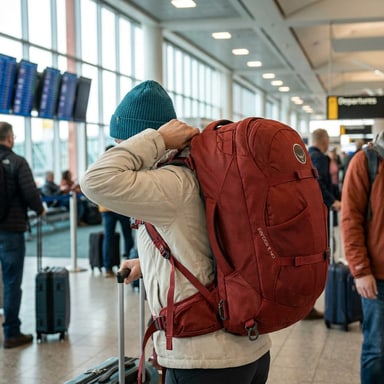
Osprey Farpoint 40 Travel Pack
Best for: Budget-conscious travelers who prioritize carry comfort on full days of transit and are willing to rely on packing cubes for organization.
- The most comfortable carry in Outdoor Gear Lab's travel pack test
- 9.1 in deep, right at the 9 in line, so do not overstuff the front panel
Kit Score 8.5/10 · $198.13 Price checked Oct 23, 6:22 AM CDT · how we score gear
Buy on AmazonProduct details
The Farpoint 40 carries the comfort of Osprey's hiking packs into a carry-on travel pack: a load-lifting frame, an adjustable torso, and a padded hip belt that all zip away behind a panel. Outdoor Gear Lab gave it the only perfect comfort score among the travel packs it tested, and Osprey lists it at 21.7 x 13.8 x 9.1 inches and 3.27 lb.
- Capacity
- 40 L
- Weight
- 3.27 lb
- Dimensions
- 21.7 x 13.8 x 9.1 in (55 x 35 x 23 cm)
- Torso fit
- Adjustable; Farpoint Travel Pack fits 18 to 22 in torsos
- Laptop sleeve
- Fits up to 16 in
- Warranty
- Osprey All Mighty Guarantee
More strengths
- Harness and hip belt stow away for overhead bins and checked bags
- Fits up to a 16-inch laptop and is covered by Osprey's All Mighty Guarantee
Other tradeoffs
- Minimal internal organization; suited to packing-cube users
The Farpoint 40 is the pack to carry for hours. Outdoor Gear Lab gave it the only perfect comfort score among the travel packs it tested, Wirecutter picks it for long journeys on foot, and Pack Hacker names it the best budget travel pack. A load-lifting frame, an adjustable torso, and a padded hip belt move weight to your hips, and the whole harness zips away behind a panel for the overhead bin or a checked bag.
Osprey lists it at 21.7 x 13.8 x 9.1 inches and 3.27 lb, right at the 9-inch depth line, with a sleeve for up to a 16-inch laptop. Organization is basic, so plan on packing cubes. Osprey's All Mighty Guarantee repairs damage or defects for the life of the pack. Read our full Osprey Farpoint 40 review.
Size: 21.7 x 13.8 x 9.1 in | Weight: 3.27 lb | Capacity: 40 L | Laptop: 16 in
Best women's fit: Osprey Fairview 40
BEST WOMEN'S FIT
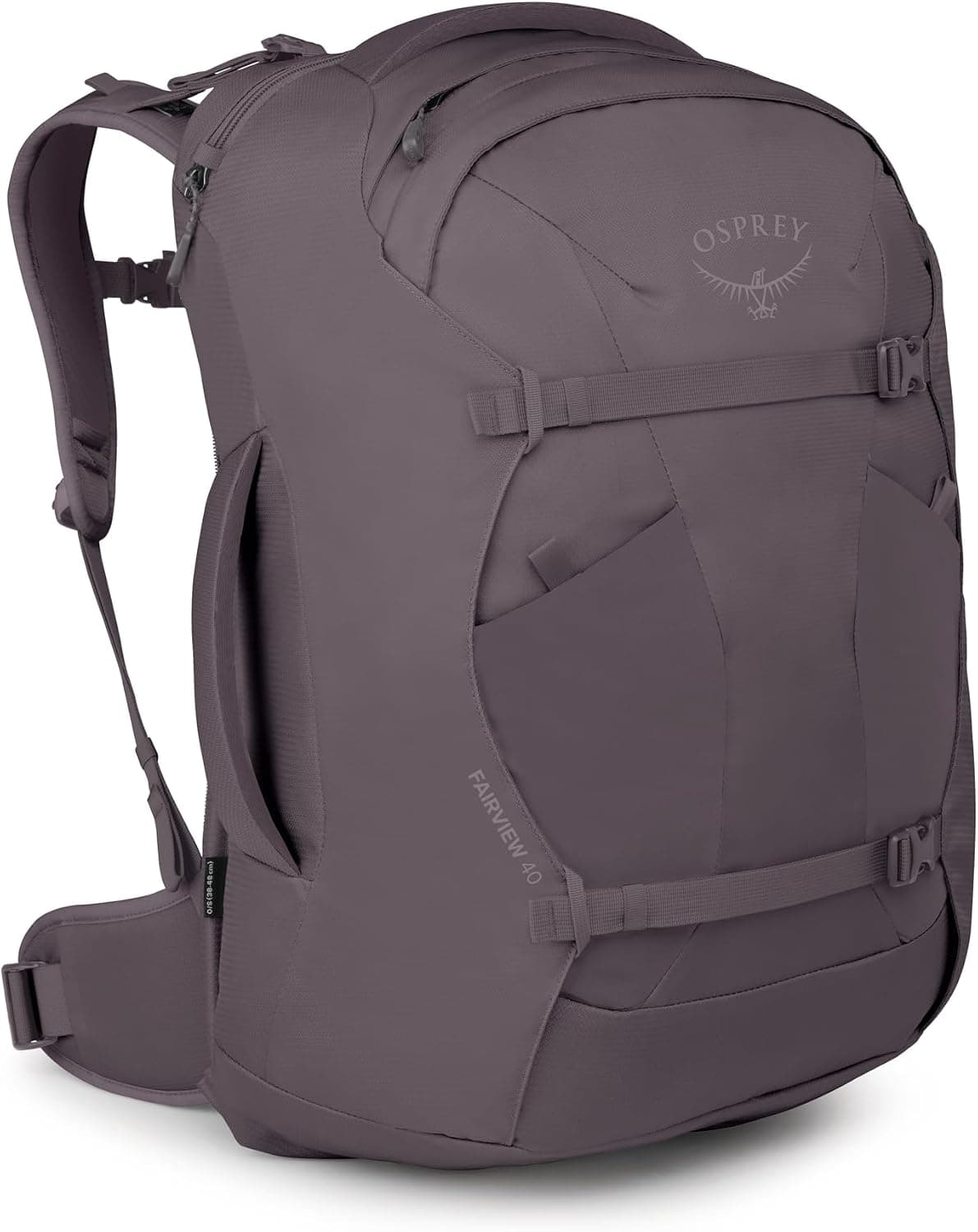
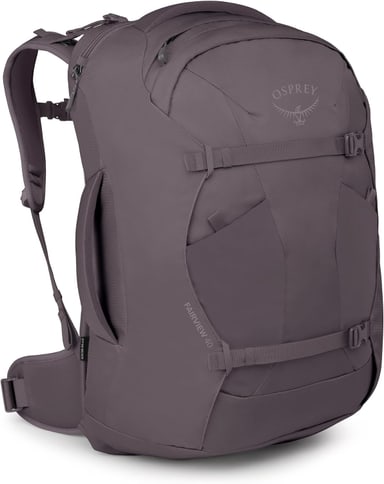
Osprey Fairview 40 Women's Travel Pack
Best for: Women and shorter-torso travelers who want a carry-on pack that carries like a hiking pack on long walks between stations.
- Harness and hip belt sized for shorter torsos, so the load sits on the hips
- 9.1 in deep, right at the 9 in line, so do not overstuff the front panel
Kit Score 8.5/10 · $200.00 Price checked Oct 23, 6:22 AM CDT · how we score gear
Buy on AmazonProduct details
The Fairview 40 is the women's-fit version of the Farpoint 40, with the same 21.7 x 13.8 x 9.1 inch shape and 40 liters on a harness sized for 15 to 19 inch torsos. The harness and hip belt zip away behind a panel for checking or overhead bins, and a direct-zip sleeve takes up to a 16-inch laptop.
- Capacity
- 40 L
- Weight
- 3.23 lb
- Dimensions
- 21.7 x 13.8 x 9.1 in (Osprey)
- Torso fit
- 15 to 19 in, women's-specific harness
- Laptop sleeve
- Fits up to 16 in
- Warranty
- Osprey All Mighty Guarantee
More strengths
- Stowaway harness for overhead bins and checked bags
- Sleeve fits up to a 16-inch laptop
Other tradeoffs
- Minimal built-in organization; plan on packing cubes
The Fairview 40 is the Farpoint on a women's-specific harness, and Wirecutter picks it for long journeys with smaller torsos. Osprey's size chart fits the Fairview Travel Pack to 15- to 19-inch torsos, against 18 to 22 inches for the Farpoint, so if you fall below the Farpoint's range this is the pack to buy rather than a smaller bag.
Everything else matches: 21.7 x 13.8 x 9.1 inches, 40 liters, a 16-inch laptop sleeve, a stowaway harness and hip belt, and the All Mighty Guarantee. Osprey lists it at 3.23 lb.
Size: 21.7 x 13.8 x 9.1 in | Weight: 3.23 lb | Capacity: 40 L | Torso: 15 to 19 in
Best large carry-on: Peak Design Travel Backpack 45L
BEST LARGE CARRY-ON
Peak Design Travel Backpack 45L
Best for: Urban and air travelers with a camera rig or gear-heavy kit who want one bag that handles a weekend trip compressed and a two-week trip expanded.
- Expandable 35-45L design covers both short-haul and extended trips without switching bags, backed by reviewers reporting zero durability issues after four-plus years of use
- At 4.5 lb it is the heaviest pack here by nearly a full pound; owners carrying 15-plus lb of gear note the hip belt and shoulder straps fall short of the support the weight demands
Kit Score 7.9/10 · $299.95 Price checked Oct 23, 6:22 AM CDT · how we score gear
Buy on AmazonProduct details
The Peak Design Travel Backpack expands from 35L to 45L via a side zip and opens from the top, rear, and front for access at any angle. Its 400D nylon canvas shell is weatherproof, it hides the harness behind a clean panel, and the accessory ecosystem (packing cubes, camera inserts) is unmatched in the travel-pack category.
- Capacity
- 35 L (compressed) to 45 L (expanded)
- Weight
- 4.5 lb (2.1 kg)
- Dimensions
- 22 x 13 x 9.5 in; expands to 11 in depth
- Material
- 400D / 900D nylon canvas, weatherproof zippers
- Laptop sleeve
- Fits up to 16 in
- Access points
- Top, rear clamshell, side zip expansion
More strengths
- Multiple access points (top, rear, side) let you reach any item without unpacking; reviewers with camera gear cite the accessory ecosystem as genuinely unique
- Weatherproof shell and zippers offer the strongest rain protection in this group
Other tradeoffs
- Price is the highest in the category and the sternum strap detaches too easily, a persistent complaint across multiple long-term reviews
The Peak Design 45L is Wirecutter's top large carry-on, an Outdoor Gear Lab Top Pick for carrying camera gear, and Switchback Travel's close second overall. It carries 35 liters in its standard form and expands to 45, and REI lists it at 22 x 13 x 9.5 inches standard and 11 inches deep expanded. REI says the 35-liter form meets most carry-on limits; expanded, it is too deep for many.
Access is the reason to buy it: the main compartment opens from the back, side zips reach in without fully opening it, and Peak Design's packing and camera cubes (sold separately) turn the inside into a system. It is also heavy at 4 lb 8 oz, so weight-limited travelers should look at the Allpa or Fairview.
Size: 22 x 13 x 9.5 in standard | Weight: 4 lb 8 oz | Capacity: 35 to 45 L | Laptop: 16 in
Carry comfort matters most on travel days: the bag that sits well for six hours of transit earns its price before you reach the destination.
Most organized: Aer Travel Pack 4 35L
MOST ORGANIZED
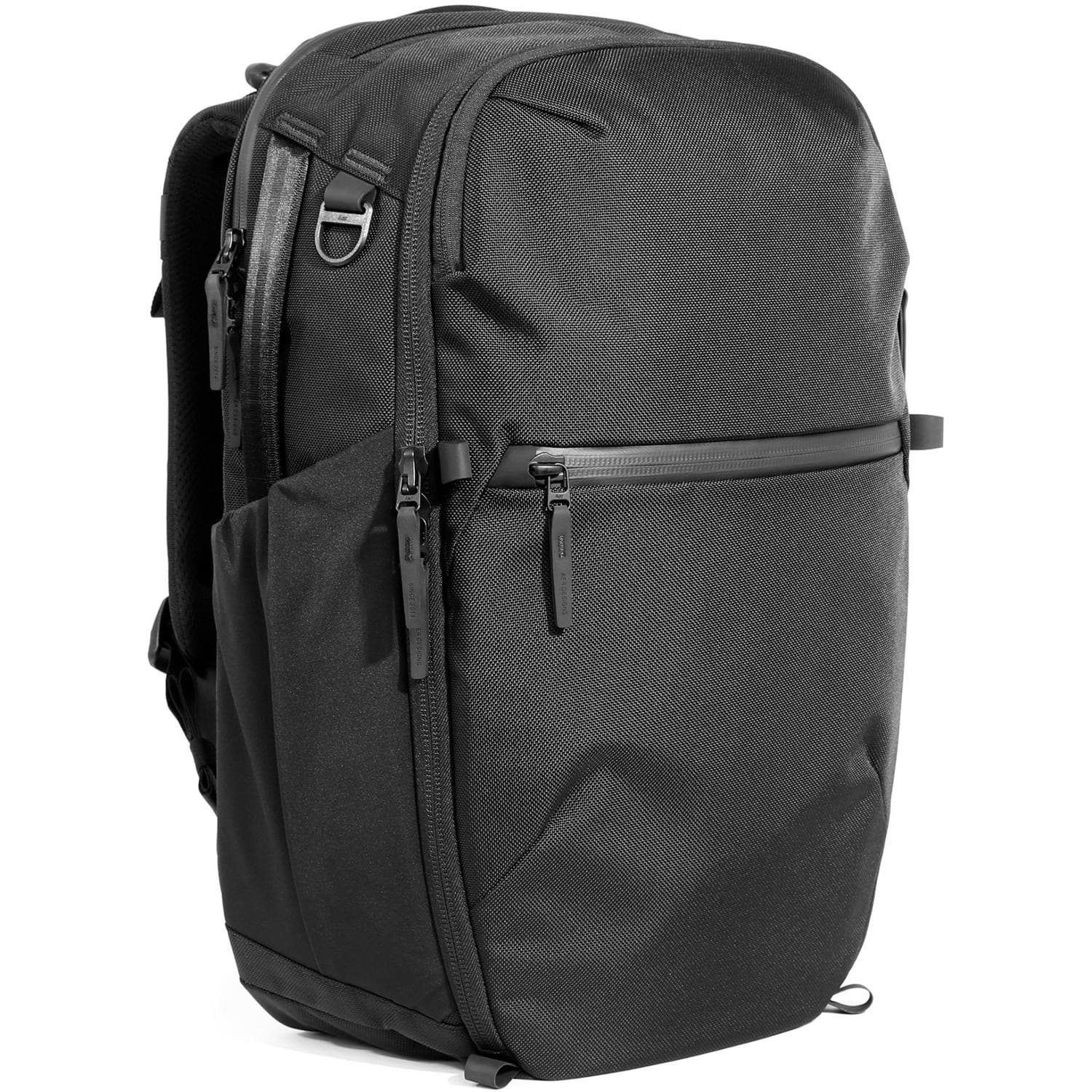
Aer Travel Pack 4 35L
Best for: Work travelers and one-bag packers who want a carry-on pack with a place for every cable and a sleeve for a 16-inch laptop.
- Inside 22 x 14 x 9 inches as published
- Hip belt is an extra purchase
Kit Score 8.7/10 · Check current price · how we score gear
Buy at AerProduct details
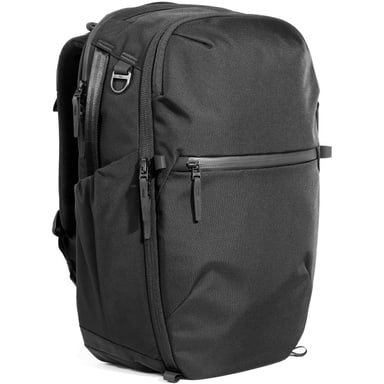
The Travel Pack 4 replaced the Travel Pack 3, which Outdoor Gear Lab named its Editors' Choice for organization, and Pack Hacker rates the new 35L its best value travel backpack. Aer lists it at 21.5 x 13.5 x 9 inches, inside the common US carry-on limit, with a lay-flat main compartment and a suspended sleeve for up to a 16-inch laptop.
- Capacity
- 35 L
- Weight
- 3.90 lb
- Dimensions
- 21.5 x 13.5 x 9 in (Aer)
- Laptop sleeve
- Suspended, fits up to 16 in
- Opening
- Lay-flat main compartment
- Hip belt
- Sold separately
- Warranty
- Lifetime, manufacturing defects
More strengths
- Lay-flat main compartment plus dedicated organization pockets
- Suspended laptop sleeve keeps a 16-inch machine off the floor of the bag
Other tradeoffs
- 3.90 lb, heavier than the Allpa or Fairview
Pack Hacker rates the Travel Pack 4 35L its best value travel backpack at 9.3 out of 10, and its predecessor, the Travel Pack 3, was Outdoor Gear Lab's Editors' Choice for organization. Aer lists the new pack at 21.5 x 13.5 x 9 inches, inside the 22 x 14 x 9 inch limit, with a lay-flat main compartment, dedicated organization pockets, and a suspended sleeve for up to a 16-inch laptop.
It weighs 3.90 lb, and the hip belt is sold separately. Aer covers manufacturing defects for life. Buy it from Aer or REI.
Size: 21.5 x 13.5 x 9 in | Weight: 3.90 lb | Capacity: 35 L | Laptop: 16 in
Best for work travel: Tortuga Pro Backpack 40L
BEST FOR WORK TRAVEL
Tortuga Pro Backpack 40L
Best for: Remote workers and long-trip one-bag travelers who need a laptop office and a suitcase-style main compartment in one carry-on.
- Inside 22 x 14 x 8 inches as published, with a full 40 L
- 4.4 lb empty and the highest price here; Switchback Travel dropped it for both
Kit Score 8.0/10 · Check current price · how we score gear
Buy at TortugaProduct details
Tortuga's Pro Backpack 40L is built for people who live out of one bag for weeks and work from it. It measures 22 x 14 x 8 inches, inside the common US carry-on limit, opens like a suitcase, and carries a 16-inch laptop and a tablet in their own sleeves, with a height-adjustable harness and an included hip belt.
- Capacity
- 40 L
- Weight
- 4.4 lb (2 kg)
- Dimensions
- 22 x 14 x 8 in (Tortuga)
- Laptop sleeve
- 16 in laptop plus 12.9 in tablet
- Opening
- Front-loading clamshell
- Harness
- Height-adjustable, load lifters, removable hip belt included
More strengths
- Separate sleeves for a 16-inch laptop and a tablet
- Height-adjustable harness and included hip belt
Other tradeoffs
- Shoulder straps do not tuck away when you check it
Tortuga's Pro Backpack 40L is Wirecutter's pick for dedicated one-bag travelers and Outdoor Gear Lab's Top Pick for work travel. Tortuga lists it at 22 x 14 x 8 inches, inside the common carry-on limit with a full 40 liters, plus a front-loading clamshell, a sleeve for a 16-inch laptop and another for a tablet, a height-adjustable harness with load lifters, and an included hip belt.
Switchback Travel cut it for its price and weight, and those are the trade-offs: it costs the most here and weighs 4.4 lb, and the shoulder straps do not tuck away. Buy it direct from Tortuga.
Size: 22 x 14 x 8 in | Weight: 4.4 lb | Capacity: 40 L | Laptop: 16 in plus tablet
Best budget: REI Co-op Ruckpack 40
BEST BUDGET
REI Co-op Ruckpack 40 Pack
Best for: Budget travelers who walk a lot with their bag, such as hostel-hopping or hut trips, and fly airlines that rarely size-check backpacks.
- Lowest price and lightest 40 L pack here
- 23 x 15 x 9.5 in, over the common carry-on limit when full
Kit Score 8.0/10 · Check current price · how we score gear
Buy at REIProduct details
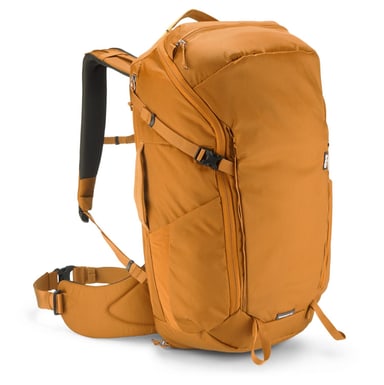
The Ruckpack 40 is a hiking-style travel pack at a budget price. REI lists 40 liters at 2 lb 13 oz, the lightest 40-liter pack here, with a spring-steel perimeter frame, a padded hip belt, a 15-inch laptop sleeve, and an included rain cover. At 23 x 15 x 9.5 inches it runs over the 22 x 14 x 9 inch limit when packed full.
- Capacity
- 40 L
- Weight
- 2 lb 13 oz
- Dimensions
- 23 x 15 x 9.5 in (REI)
- Torso fit
- 18 to 20 in (men's); a women's version is also sold
- Laptop sleeve
- Fits up to 15 in
- Frame
- Spring-steel perimeter frame, hip belt, rain cover included
More strengths
- Real hip belt and frame for long walks with a full load
- Rain cover included
Other tradeoffs
- Harness does not stow away, and sold only through REI
The Ruckpack 40 is CleverHiker's best budget travel backpack and Switchback Travel's pick for comfortable carry on gear-heavy trips. REI lists 40 liters at 2 lb 13 oz, the lightest 40-liter pack here, with a spring-steel perimeter frame, a padded hip belt, a 15-inch laptop sleeve, and a rain cover. A women's version is sold too.
It is a hiking-style pack, and it is the biggest on paper at 23 x 15 x 9.5 inches, so a full Ruckpack is over the 22 x 14 x 9 limit and the harness does not stow away. For hostel-hopping and walking trips on airlines that rarely size-check backpacks, it is the most pack for the money.
Size: 23 x 15 x 9.5 in | Weight: 2 lb 13 oz | Capacity: 40 L | Torso: 18 to 20 in (men's)
Compare the picks
| Spec | Allpa 35L | Farpoint 40 | Fairview 40 | Peak Design 45L | Aer TP4 35L | Tortuga Pro 40L | Ruckpack 40 |
|---|---|---|---|---|---|---|---|
| Kit Score | 8.4/10 | 8.5/10 | 8.5/10 | 7.9/10 | 8.7/10 | 8.0/10 | 8.0/10 |
| Price | $229.95 Price checked Oct 23, 6:22 AM CDT | $198.13 Price checked Oct 23, 6:22 AM CDT | $200.00 Price checked Oct 23, 6:22 AM CDT | $299.95 Price checked Oct 23, 6:22 AM CDT | Check current price | Check current price | Check current price |
| Best for | Organized travelers who want everything in a defined spot and can work within a 35L limit, particularly for trips of three to seven days. | Budget-conscious travelers who prioritize carry comfort on full days of transit and are willing to rely on packing cubes for organization. | Women and shorter-torso travelers who want a carry-on pack that carries like a hiking pack on long walks between stations. | Urban and air travelers with a camera rig or gear-heavy kit who want one bag that handles a weekend trip compressed and a two-week trip expanded. | Work travelers and one-bag packers who want a carry-on pack with a place for every cable and a sleeve for a 16-inch laptop. | Remote workers and long-trip one-bag travelers who need a laptop office and a suitcase-style main compartment in one carry-on. | Budget travelers who walk a lot with their bag, such as hostel-hopping or hut trips, and fly airlines that rarely size-check backpacks. |
| Why it stands out | Best overall travel pack at Outdoor Gear Lab and CleverHiker | The most comfortable carry in Outdoor Gear Lab's travel pack test | Harness and hip belt sized for shorter torsos, so the load sits on the hips | Expandable 35-45L design covers both short-haul and extended trips without switching bags, backed by reviewers reporting zero durability issues after four-plus years of use | Inside 22 x 14 x 9 inches as published | Inside 22 x 14 x 8 inches as published, with a full 40 L | Lowest price and lightest 40 L pack here |
| Tradeoff | 15-inch laptop sleeve; check a 16-inch machine before buying | 9.1 in deep, right at the 9 in line, so do not overstuff the front panel | 9.1 in deep, right at the 9 in line, so do not overstuff the front panel | At 4.5 lb it is the heaviest pack here by nearly a full pound; owners carrying 15-plus lb of gear note the hip belt and shoulder straps fall short of the support the weight demands | Hip belt is an extra purchase | 4.4 lb empty and the highest price here; Switchback Travel dropped it for both | 23 x 15 x 9.5 in, over the common carry-on limit when full |
| Size (in) | 22 x 12 x 10 | 21.7 x 13.8 x 9.1 | 21.7 x 13.8 x 9.1 | 22 x 13 x 9.5 (standard) | 21.5 x 13.5 x 9 | 22 x 14 x 8 | 23 x 15 x 9.5 |
| Inside 22 x 14 x 9? | 1 in deep | Just over | Just over | 0.5 in deep | Yes | Yes | No |
| Weight | 2 lb 15 oz | 3.27 lb | 3.23 lb | 4 lb 8 oz | 3.90 lb | 4.4 lb | 2 lb 13 oz |
| Capacity | 35 L | 40 L | 40 L | 35 to 45 L | 35 L | 40 L | 40 L |
| Laptop | 15 in | 16 in | 16 in | 16 in | 16 in | 16 in plus tablet | 15 in |
| Hip belt | Tucks away | Stows away | Stows away | Stows under a flap | Sold separately | Included, removable | Yes |
| Where to buy | Amazon | Amazon, Osprey | Amazon, Osprey | Amazon | Aer, REI | Tortuga | REI |
Check these before you buy
A travel pack that fits the bin but not your back, or your laptop, goes back in the box. Three checks catch most of it.
Measure your torso, not your height. Tip your chin down, find the bony bump at the base of your neck (C7), and measure down your spine to the top of your hip bones. Osprey's size chart lists the Farpoint Travel Pack for 18- to 22-inch torsos and the Fairview Travel Pack for 15 to 19 inches; REI lists the men's Ruckpack 40 for 18 to 20 inches.
Check the laptop sleeve against your machine. The Farpoint, Fairview, Peak Design, Aer, and Tortuga take up to a 16-inch laptop. The Allpa and Ruckpack sleeves are 15 inches, so measure a 16-inch machine before ordering either.
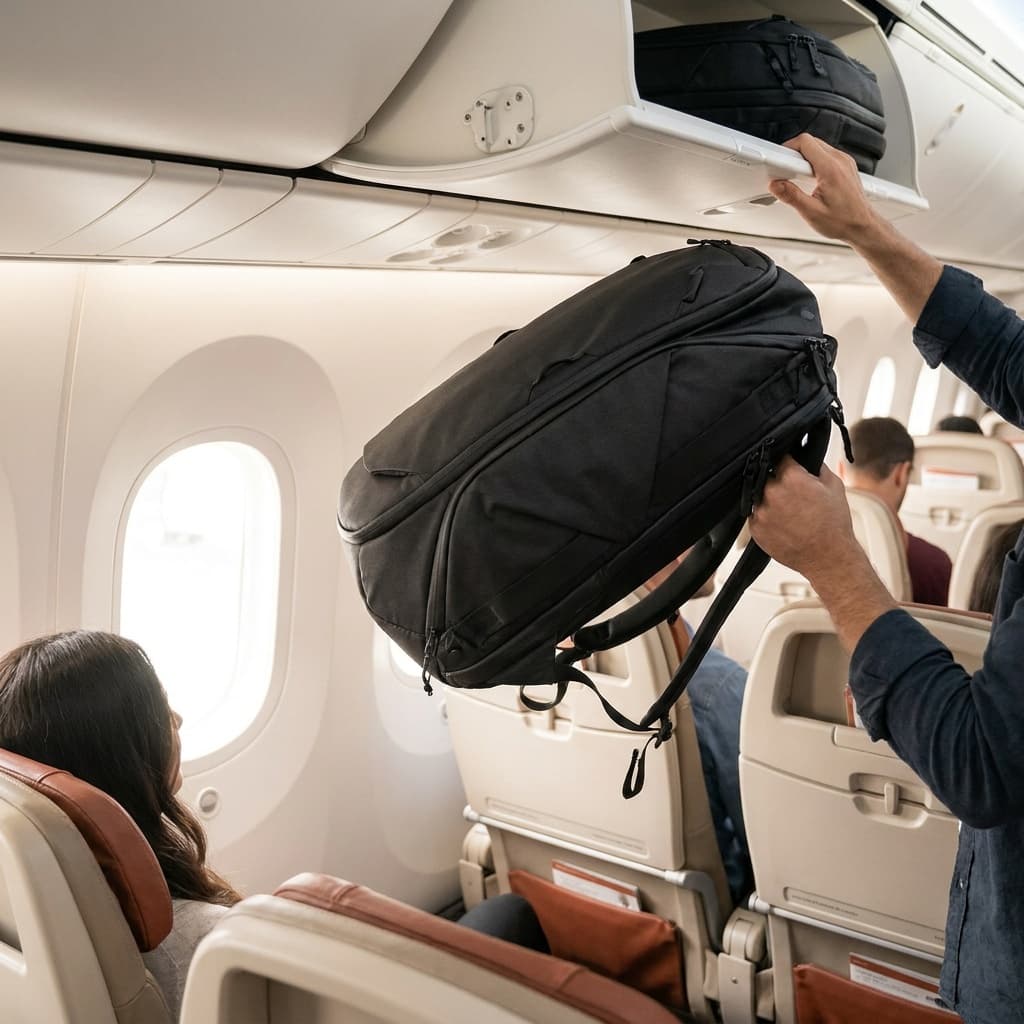
Match the outside size to your airline, not the liters. American, Delta, United, and JetBlue publish 22 x 14 x 9 inches with wheels and handles counted, while Southwest and Frontier's paid carry-on allow 24 x 16 x 10. Only the Aer and Tortuga are listed inside 22 x 14 x 9; the Farpoint and Fairview sit a tenth of an inch over, and the Allpa and Peak Design run half an inch to an inch deep when stuffed. None of these is a personal item on a fare that allows only an underseat bag: United's is 17 x 10 x 9 inches, so see the best underseat luggage instead.
How to choose the right size
Four questions before you buy
How long is your longest trip?
35 liters covers three to seven days for most people who pack efficiently. 40 to 45 liters gives room for ten-plus days, cold-weather layers, or a camera kit. Our [travel backpack buying guide](/travel/how-to-choose-a-travel-backpack) goes deeper.
Which airlines do you fly?
Major US airlines use 22 x 14 x 9 inches; Southwest and Frontier's paid carry-on allow [24 x 16 x 10 inches](https://www.flyfrontier.com/travel/travel-info/bag-options/). If you fly strict airlines, the Aer or Tortuga is the safe choice.
How do you pack?
If you hate packing cubes, the Allpa's built-in mesh compartments or the Aer's pockets save time. If you already pack by cube, the Farpoint's open cavity works well; our [packing cube fit checker](/tools/packing-cube-fit) shows which sets fit these packs.
How far will you walk with it?
For long walks between stations and hostels, a real hip belt and frame (Farpoint, Fairview, Ruckpack) matter more than pockets. For airport-to-taxi trips, organization wins.
FAQ
What is the best carry-on travel backpack size?
35 to 40 liters covers most travelers on trips of three to ten days. Go to 45 liters for longer trips or gear-heavy kits, and use its compressed size in the cabin. Check the outside dimensions, not the liters: two 40-liter packs here measure 22 x 14 x 8 and 23 x 15 x 9.5 inches.
Which travel backpacks fit the 22 x 14 x 9 inch carry-on limit?
Of these picks, the Aer Travel Pack 4 35L (21.5 x 13.5 x 9 inches) and the Tortuga Pro Backpack 40L (22 x 14 x 8 inches) are listed inside it. The Osprey Farpoint and Fairview are a tenth of an inch over on depth, and the Allpa, Peak Design, and Ruckpack run deeper when fully packed.
Is the Osprey Farpoint 40 carry-on compliant?
It is close. Osprey lists the Farpoint 40 at 21.7 x 13.8 x 9.1 inches, right at the 9-inch line, so it works as a carry-on on most US airlines if you do not overstuff the front panel. On Frontier it is a paid carry-on, not the smaller 18 x 14 x 8 personal item.
What is the best travel backpack for women?
The Osprey Fairview 40, the women's version of the Farpoint 40. Osprey fits it to 15- to 19-inch torsos with a women's-specific harness, and Wirecutter picks it for long journeys with smaller torsos. REI also sells a women's Ruckpack 40.
How do I pack a 35L bag for a week?
Use two or three packing cubes for clothing (roll rather than fold), one pouch for electronics and cables, toiletries in a quart bag in the top pocket, and shoes at the bottom in a bag. Most people fit a week of clothes into one large and one small cube, leaving room for everything else.
Where these numbers come from
| Claim | Source | Checked |
|---|---|---|
| Allpa 35L top small carry-on; Peak Design 45L top large carry-on; Farpoint and Fairview for long journeys; Tortuga Pro for one-bag travel | Wirecutter, best carry-on travel backpacks | 2026-10-03 |
| Allpa 35L best overall; Aer Travel Pack 3 Editors' Choice for organization; Tortuga Pro Top Pick for work travel; Peak Design Top Pick for camera gear; Farpoint the only perfect comfort score | Outdoor Gear Lab, best travel backpack | 2026-10-03 |
| Aer Travel Pack 4 35L best value (9.3); Farpoint 40 best budget; Allpa best built-in organization | Pack Hacker, best travel backpack | 2026-10-03 |
| Peak Design 45L close second; Ruckpack 40 comfort pick; Tortuga Pro cut for price and weight | Switchback Travel, best travel backpacks | 2026-10-03 |
| Allpa 35L best overall; Ruckpack 40 best budget; Farpoint and Fairview 40 top pick | CleverHiker, best travel backpacks | 2026-10-03 |
| Cotopaxi Allpa 35L: 22 x 12 x 10 in, 2 lb 15 oz, 15 in laptop sleeve | Cotopaxi, Allpa 35L | 2026-10-03 |
| Osprey Farpoint 40: 21.7 x 13.8 x 9.1 in, 3.27 lb, laptop up to 16 in | Osprey, Farpoint 40 | 2026-10-03 |
| Osprey Fairview 40: 21.7 x 13.8 x 9.1 in, 3.23 lb, laptop up to 16 in | Osprey, Fairview 40 | 2026-10-03 |
| Torso measurement method; Farpoint Travel Pack 18 to 22 in torsos, Fairview 15 to 19 in | Osprey, size and fit guide | 2026-09-25 |
| Peak Design 45L: 22 x 13 x 9.5 in standard, 11 in deep expanded, 4 lb 8 oz, 16 in laptop; 35 L form meets most carry-on limits | REI, Peak Design Travel Pack 45L | 2026-10-03 |
| Aer Travel Pack 4 35L: 21.5 x 13.5 x 9 in, 3.90 lb, 16 in laptop, hip belt sold separately | Aer, Travel Pack 4 35L | 2026-10-03 |
| Tortuga Pro Backpack 40L: 22 x 14 x 8 in, 4.4 lb, 16 in laptop plus tablet, hip belt included | Tortuga, Pro Backpack 40L | 2026-10-03 |
| REI Co-op Ruckpack 40: 23 x 15 x 9.5 in, 2 lb 13 oz, 15 in laptop, 18 to 20 in torso, rain cover | REI, Ruckpack 40 (men's) | 2026-10-03 |
| American, Delta, United, JetBlue carry-on 22 x 14 x 9 in; United personal item 17 x 10 x 9 in | Delta, United, JetBlue, American (American read through a fetch service) | 2026-10-03 |
| Southwest carry-on 24 x 16 x 10 in | Southwest, carry-on policy | 2026-10-03 |
| Frontier carry-on 24 x 16 x 10 in including handles, wheels, and straps | Frontier, bag options | 2026-10-03 |
We have not traveled with these packs. Dimensions and weights are the makers' or REI's published figures; airline limits are as published on the date above.
More travel gear worth knowing about: browse the full travel hub, or see how we research and rate gear.
Keep going
Complete loadoutOne-bag travel kitBackpack-only travel with a capsule wardrobe, packing cubes, toiletries, tech, and a repeatable laundry plan.Free tool: Carry-On Checker
Our recommendations draw on manufacturer documentation, retailer listings, owner feedback, and comparisons with alternatives.
As an Amazon Associate I earn from qualifying purchases. We may earn a commission from links here, at no extra cost to you. How we research →