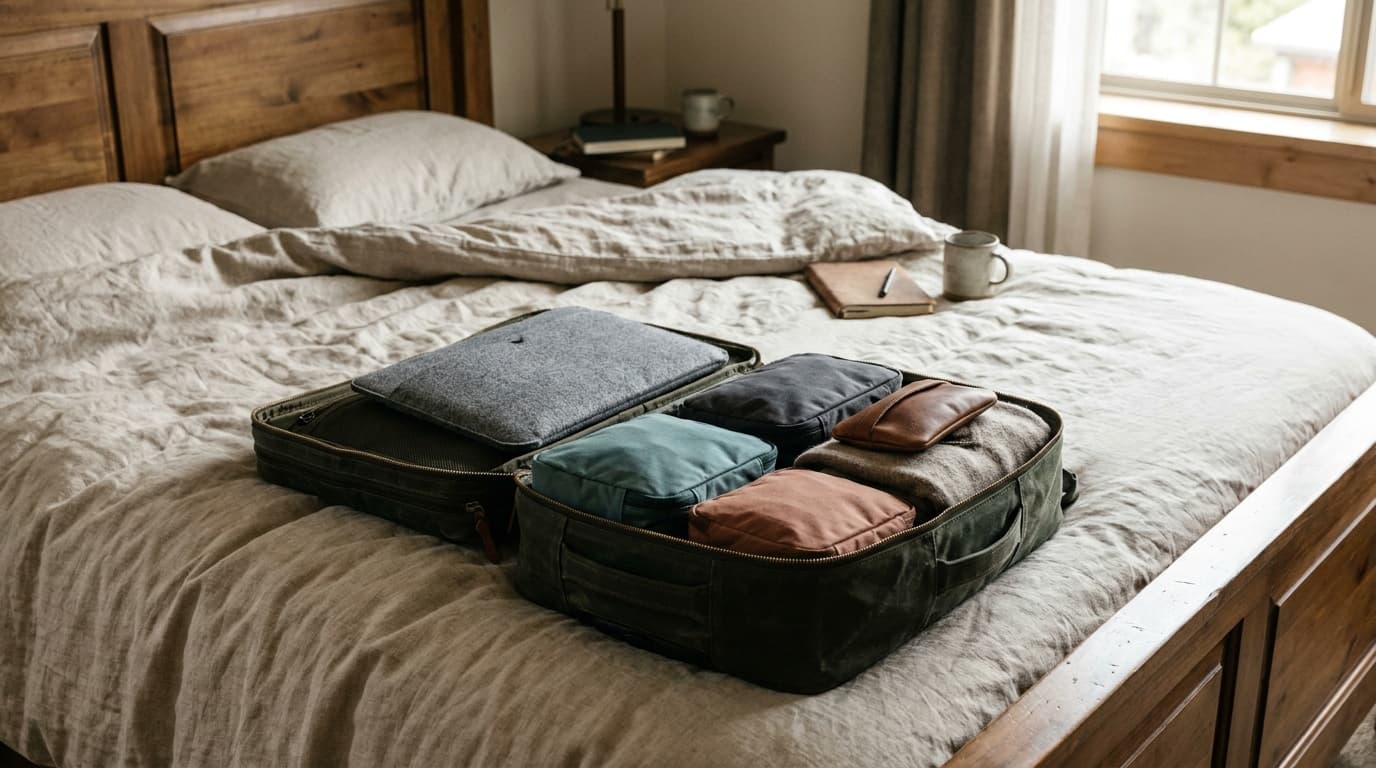
The right travel backpack disappears on your back and clears every overhead bin. The wrong one costs you a gate-check fee or a sore shoulder by noon. Here is how to get the decision right.
Carry-on sizing: the numbers that matter
The standard overhead-bin limit across most major US carriers (American, Delta, United, JetBlue, Alaska) is 22 x 14 x 9 inches (56 x 36 x 23 cm). That envelope holds roughly 40 liters of total volume, though usable space after accounting for bag structure is typically 35–40 L.
International and European carriers routinely add a weight cap of 15–22 lbs (7–10 kg) that US domestic carriers rarely enforce. Budget carriers (Ryanair, EasyJet, Frontier) are the most restrictive and sometimes charge separately for overhead bin access.
One change worth knowing: United Airlines deployed automated bag sizers at 35 airports in late 2025 and plans to expand to 80-plus locations by the end of 2026. The scanners measure bags before boarding and flag oversized carry-ons for gate checking. Sizing matters more in 2026 than it did a few years ago.
Practical rule: 40 L or under for any trip that includes international or budget legs; the Osprey Farpoint 40 sits exactly at that line. If you only fly major US domestic routes and avoid ultra-low-cost carriers like Frontier, you can push to 45 L. Always check your specific airline before you pack.
Capacity: how many liters do you actually need
A 30–40 L backpack like the Cotopaxi Allpa 35L is the practical sweet spot for one-bag travel, covering a long weekend to several weeks when you pack deliberately. Go below 35 L and the bag fits under the seat on most US carriers, which means it qualifies as a personal item on routes that charge for overhead bin space.
Only push past 45 L if you are checking the bag or heading into terrain where you need bulky outdoor gear. More volume rarely makes packing easier; it usually just allows more to be forgotten at the bottom.
Clamshell vs top-loading
Pick the right opening style
Clamshell (panel-loading)
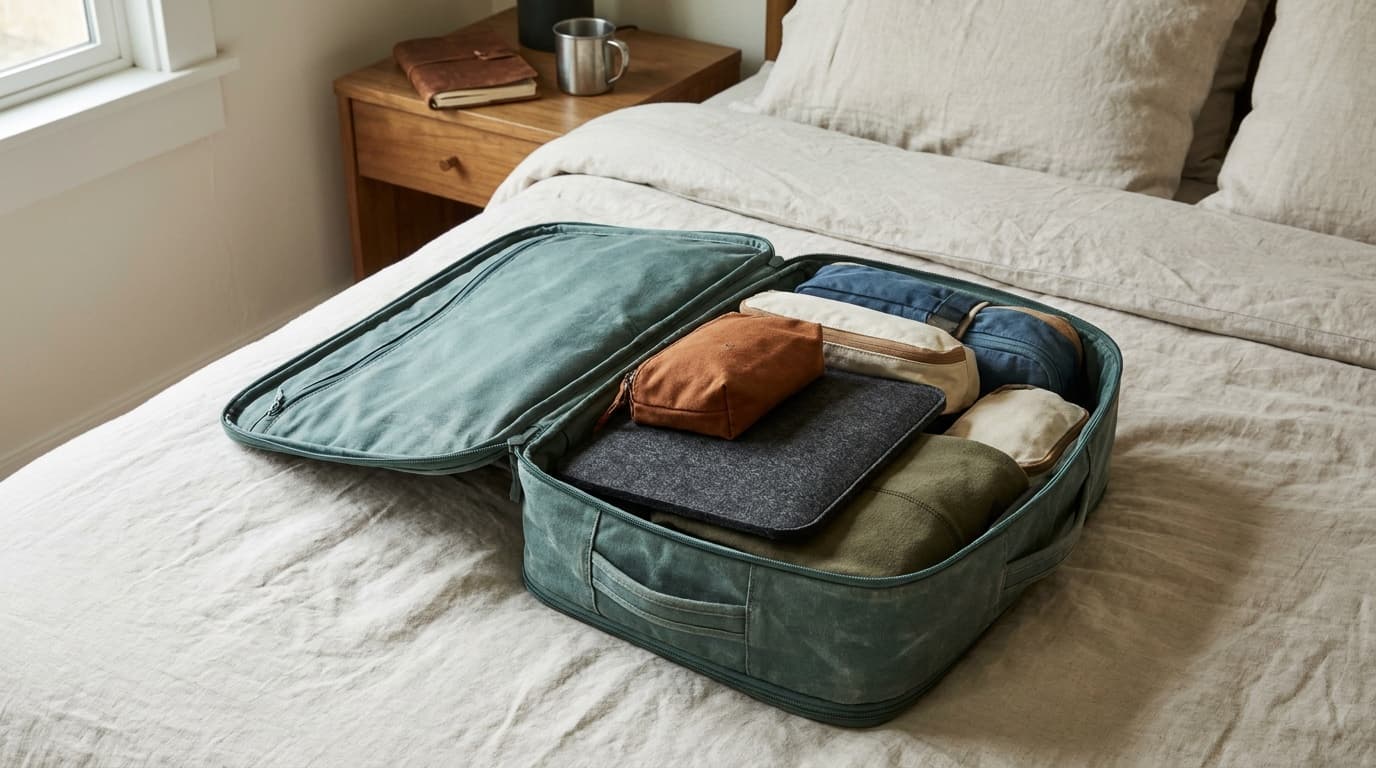
Opens flat like a suitcase, giving full visibility of the main compartment. Right for urban travel, business trips, and anyone who repacks frequently. Pairs naturally with lockable zippers for security. Most purpose-built travel packs, like the [Peak Design Travel Backpack 45L](/api/go?product=peak-design-travel-backpack-45l&retailer=amazon&article=how-to-choose-a-travel-backpack), use this design.
Top-loading
Opens from the top via a drawcord and lid. More weather-resistant, typically lighter, and better suited to odd-shaped or bulky loads. The trade-off: accessing anything packed at the bottom requires removing everything above it. Better for hiking-heavy itineraries than city-hopping.
Hybrid clamshell
Some packs add a small top access point alongside a full clamshell panel. Useful if you want quick access to a layer or rain cover without opening the entire bag.
For most travelers, clamshell wins. The ability to see and reach everything in one motion is worth more than marginal weight savings on a travel day.
Harness fit: measure your torso, not your height
A misfit harness causes back pain on a long travel day even with a modest load. The key measurement is torso length, not your overall height.
How to measure: tilt your head slightly forward and find the C7 vertebra, the bony bump at the base of your neck. Measure down to the top of your hip bones (the iliac crest). Most adults measure 15–19 inches. Match that number to the manufacturer's stated torso range for each pack size.
How to check harness fit before you commit
Shoulder straps
The anchor points should sit 1–2 inches below the tops of your shoulder blades. Straps that start too high push the load away from your back.
Load lifter straps
The short straps running from the top of the shoulder strap to the pack frame should angle back at roughly 45 degrees when the pack is loaded. A flat angle means the pack is sitting too low or the torso size is too large.
Hip belt
The padded sections should wrap the iliac crest. With the belt snug, there should be roughly 3–6 inches of gap between the pad tips at the front. The belt does the structural work on heavier loads; on loads under 20 lbs it is optional.
Sternum strap
Position it across the chest, not the throat. It should reduce shoulder strap splay without restricting breathing.
Many clamshell travel packs offer a removable or hideaway hip belt to slim down for day use. Worth having if your pack regularly runs heavier than 20 lbs or if you face long airport days.
Organization and laptop sleeve
Look for these three things in any travel pack you are seriously considering:
Suspended laptop sleeve. A sleeve that hangs from the top of the compartment rather than resting on the base keeps the laptop off the ground if the bag is dropped. Most quality packs support devices up to 15–17 inches. Confirm the exact dimension before buying if you carry a larger machine.
Front admin panel. A zippered panel at the front of the pack, separate from the main compartment, organizes documents, chargers, cables, and small tech without requiring you to open the main bag. Useful at security and check-in desks.
Quick-access exterior pocket. At minimum one exterior pocket sized for a water bottle, a transit card, or a phone. Smaller zipped pockets on the shoulder strap are a useful addition on longer travel days.
Lockable zippers
TSA-approved combination locks thread through zipper pulls and deter opportunistic theft in crowded transit and hotel lobbies. They do not stop a determined thief, but visible locks consistently redirect attention to easier targets.
Look for the red diamond Travel Sentry logo on any lock you buy. Locks carrying that mark allow airport security to open and re-lock the bag without cutting or damaging it.
Fabric and build quality
Higher-end travel packs use ballistic nylon or CORDURA for exterior panels and shoulder strap webbing. These materials resist abrasion and minor cuts better than standard polyester. Worth the extra cost if your travel regularly takes you through busy transit hubs, markets, or anywhere bags get tossed onto rough surfaces.
Water-resistant zippers and a DWR coating on the exterior fabric will handle light rain and wet overhead bins. For serious weather, pack a separate rain cover or use a pack that includes one.
What is the largest backpack I can carry on most flights without risking gate check?
40 liters is the practical safe ceiling for international and budget carriers. On most major US domestic carriers (American, Delta, United), a bag that fits within 22 x 14 x 9 inches (about 40 L total volume, 35–40 L usable) will pass overhead bin rules. If you only fly US domestic routes and avoid Frontier and similar budget carriers, you can push to 45 L. Always verify with your specific airline before you pack, and factor in that automated bag sizers are appearing at more airports in 2026.
Should I choose a clamshell or top-loading travel backpack?
For city travel, business trips, and anyone flying frequently, clamshell wins. It opens flat like a suitcase so you can see and access everything without unpacking. It also pairs well with lockable zippers for security. Top-loading makes sense if you are hiking between destinations, carrying bulky or oddly shaped gear, or need maximum weather resistance. The trade-off is that accessing something packed at the bottom requires removing everything above it.
How do I know if a backpack harness will actually fit me comfortably?
Measure your torso length, not your height. Find the C7 vertebra (the bony bump at the base of your neck when you tilt your head forward) and measure down to the top of your hip bones (iliac crest). Most adults measure 15–19 inches. Match that number to the manufacturer's torso range for each pack size. When you try it on, the shoulder strap anchor points should sit 1–2 inches below the tops of your shoulder blades, the load lifter straps should angle back at roughly 45 degrees, and the hip belt should wrap the iliac crest with about 3–6 inches of gap between the pad tips when snug.
Once you know your size, opening style, and fit requirements, the shortlist gets short fast. See our guide to the best travel backpacks for picks across the key capacity and budget ranges.
Browse all travel gear or learn more about how we research and rate the packs and gear we cover.
Recommended gear
Our current top picks from the The best travel backpacks for carry-on trips (30 to 45L) guide, if you are ready to buy.
COTOPAXI
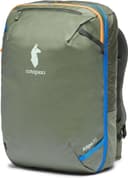
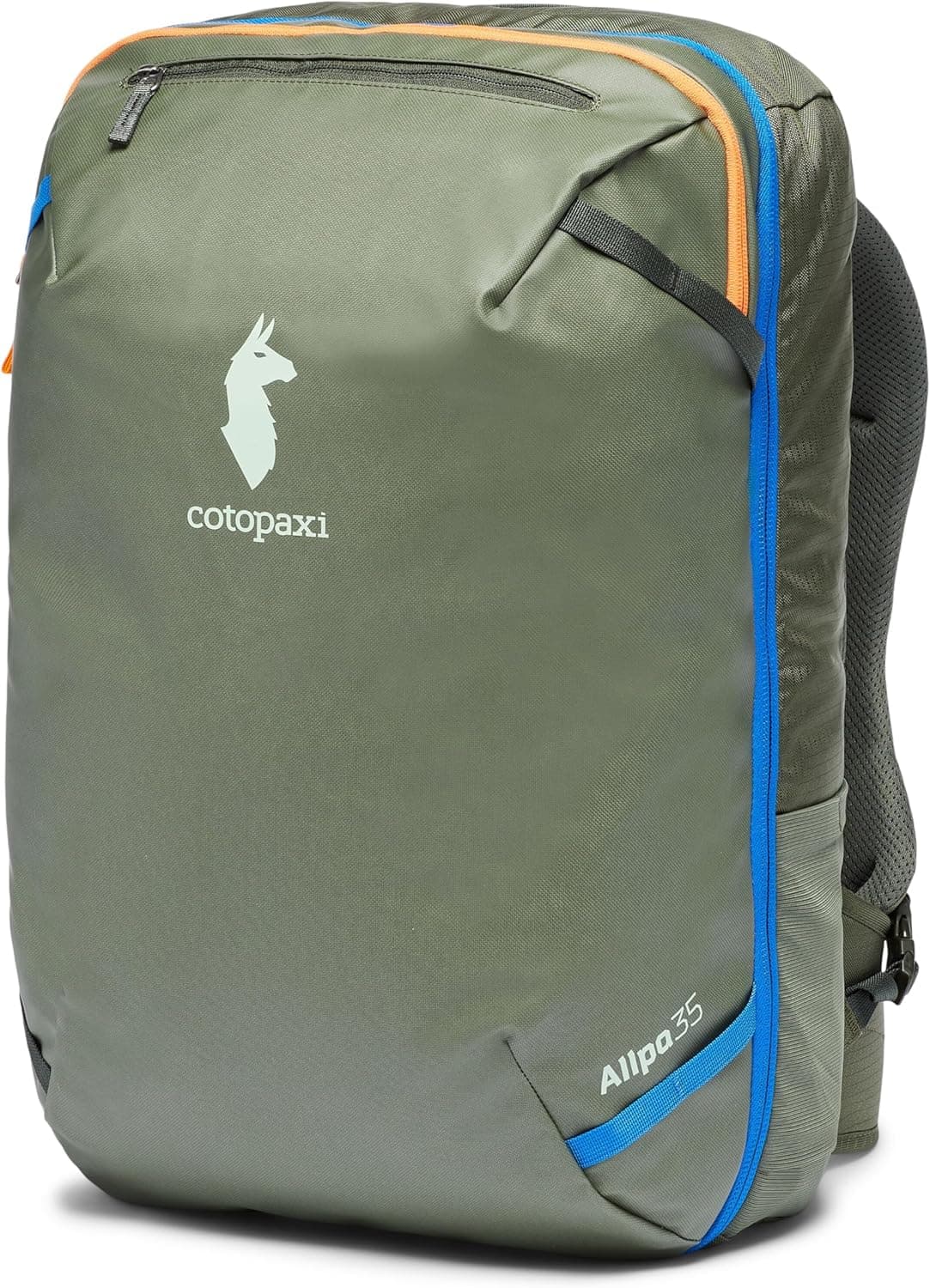
Cotopaxi Allpa 35L Travel Pack
Best Overall
Kit Score 8.4/10
$229.95 Price checked Oct 23, 4:16 PM CDT
Best for: Organized travelers who want everything in a defined spot and can work within a 35L limit, particularly for trips of three to seven days.
- Best overall travel pack at Outdoor Gear Lab and CleverHiker
- 15-inch laptop sleeve; check a 16-inch machine before buying
- Capacity
- 35 L
- Weight
- 2 lb 15 oz (1.33 kg)
- Dimensions
- 22 x 12 x 10 in (56 x 30 x 25 cm)
- Material
- 840D recycled nylon, TPU coating; 840D ballistic ripstop
- Laptop sleeve
- 15 in, padded and fleece-lined
- Harness
- Tuckable shoulder straps and hip belt
About this pick
The Allpa 35L is the best overall travel pack at Outdoor Gear Lab and CleverHiker and a Wirecutter top pick. It opens like a suitcase, with mesh compartments on both sides so most people can skip packing cubes, and its TPU-coated 840D shell sheds rain better than plain fabric.
More specifications
- Warranty
- Guaranteed for Good (repair, replace, or resale credit)
Strengths
- Best overall travel pack at Outdoor Gear Lab and CleverHiker
- Suitcase-style opening with built-in mesh compartments
- Tuckable shoulder straps and hip belt at 2 lb 15 oz
Weaknesses
- 15-inch laptop sleeve; check a 16-inch machine before buying
- 10 in deep, an inch over the 9 in carry-on line when fully packed
Kit Score breakdown
OSPREY
Osprey Farpoint 40 Travel Pack
Most Comfortable
Kit Score 8.5/10
$196.30 Price checked Oct 23, 4:16 PM CDT
Best for: Budget-conscious travelers who prioritize carry comfort on full days of transit and are willing to rely on packing cubes for organization.
- The most comfortable carry in Outdoor Gear Lab's travel pack test
- 9.1 in deep, right at the 9 in line, so do not overstuff the front panel
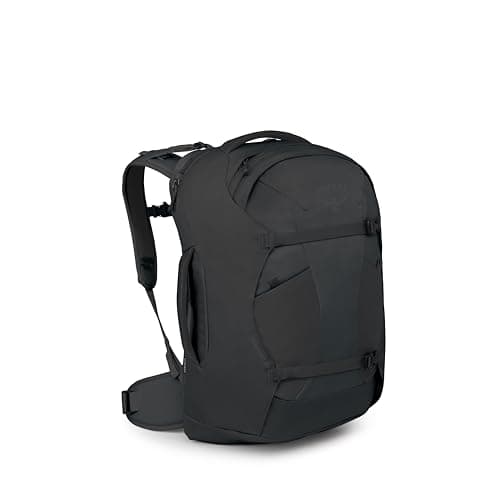
- Capacity
- 40 L
- Weight
- 3.27 lb
- Dimensions
- 21.7 x 13.8 x 9.1 in (55 x 35 x 23 cm)
- Torso fit
- Adjustable; Farpoint Travel Pack fits 18 to 22 in torsos
- Laptop sleeve
- Fits up to 16 in
- Warranty
- Osprey All Mighty Guarantee
About this pick
The Farpoint 40 carries the comfort of Osprey's hiking packs into a carry-on travel pack: a load-lifting frame, an adjustable torso, and a padded hip belt that all zip away behind a panel. Outdoor Gear Lab gave it the only perfect comfort score among the travel packs it tested, and Osprey lists it at 21.7 x 13.8 x 9.1 inches and 3.27 lb.
Strengths
- The most comfortable carry in Outdoor Gear Lab's travel pack test
- Harness and hip belt stow away for overhead bins and checked bags
- Fits up to a 16-inch laptop and is covered by Osprey's All Mighty Guarantee
Weaknesses
- 9.1 in deep, right at the 9 in line, so do not overstuff the front panel
- Minimal internal organization; suited to packing-cube users
Kit Score breakdown
OSPREY
Osprey Fairview 40 Women's Travel Pack
BEST WOMEN'S FIT
Kit Score 8.5/10
$200.00 Price checked Oct 23, 4:16 PM CDT
Best for: Women and shorter-torso travelers who want a carry-on pack that carries like a hiking pack on long walks between stations.
- Harness and hip belt sized for shorter torsos, so the load sits on the hips
- 9.1 in deep, right at the 9 in line, so do not overstuff the front panel
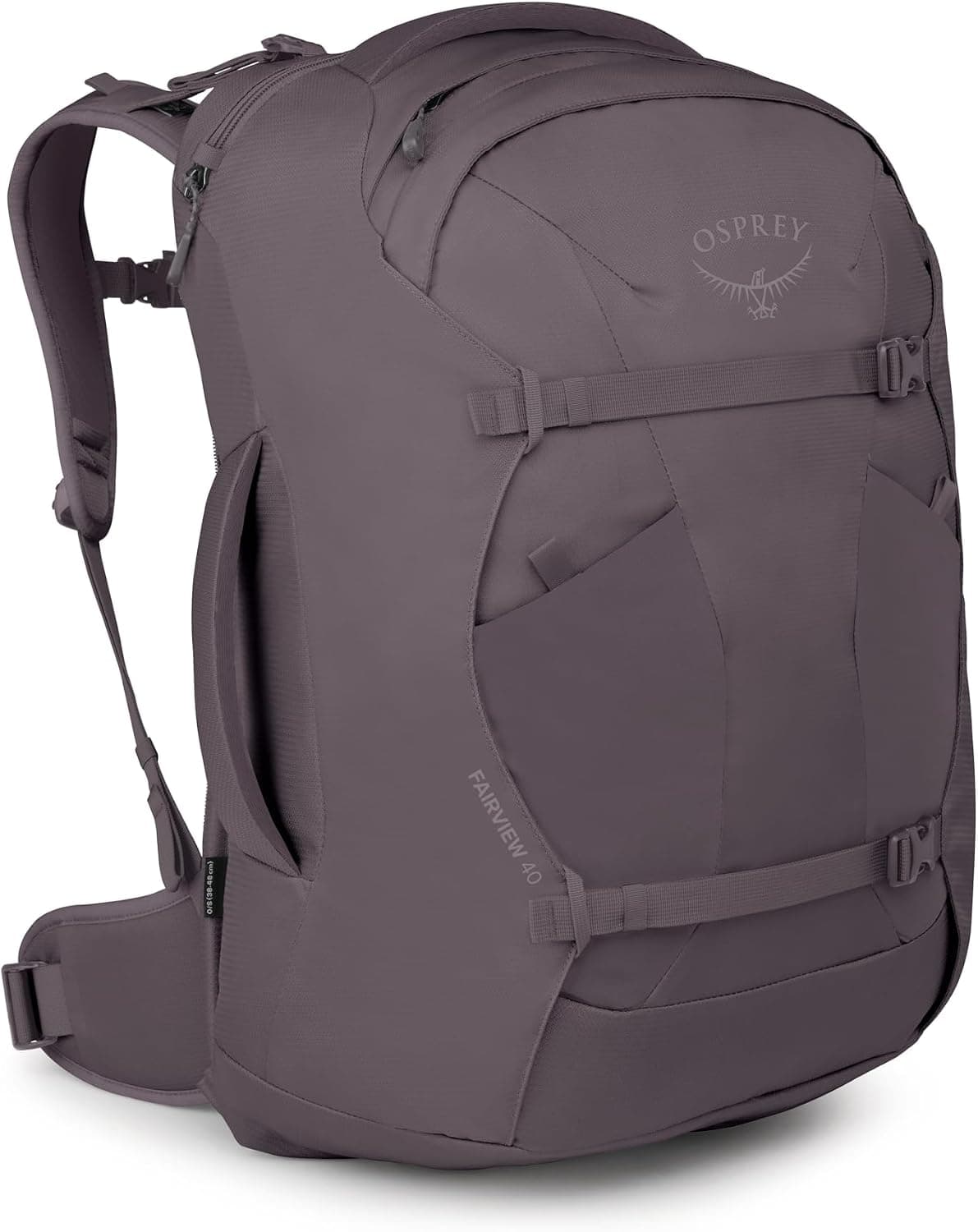
- Capacity
- 40 L
- Weight
- 3.23 lb
- Dimensions
- 21.7 x 13.8 x 9.1 in (Osprey)
- Torso fit
- 15 to 19 in, women's-specific harness
- Laptop sleeve
- Fits up to 16 in
- Warranty
- Osprey All Mighty Guarantee
About this pick
The Fairview 40 is the women's-fit version of the Farpoint 40, with the same 21.7 x 13.8 x 9.1 inch shape and 40 liters on a harness sized for 15 to 19 inch torsos. The harness and hip belt zip away behind a panel for checking or overhead bins, and a direct-zip sleeve takes up to a 16-inch laptop.
Strengths
- Harness and hip belt sized for shorter torsos, so the load sits on the hips
- Stowaway harness for overhead bins and checked bags
- Sleeve fits up to a 16-inch laptop
Weaknesses
- 9.1 in deep, right at the 9 in line, so do not overstuff the front panel
- Minimal built-in organization; plan on packing cubes
Kit Score breakdown
See all picks in The best travel backpacks for carry-on trips (30 to 45L)
Keep going
Complete loadoutOne-bag travel kitBackpack-only travel with a capsule wardrobe, packing cubes, toiletries, tech, and a repeatable laundry plan.Free tool: Carry-On Checker
Researched, not hands-on tested
Updated Jun 4, 2026Our recommendations draw on manufacturer documentation, retailer listings, owner feedback, and comparisons with alternatives.
As an Amazon Associate I earn from qualifying purchases. We may earn a commission from links here, at no extra cost to you. How we research →