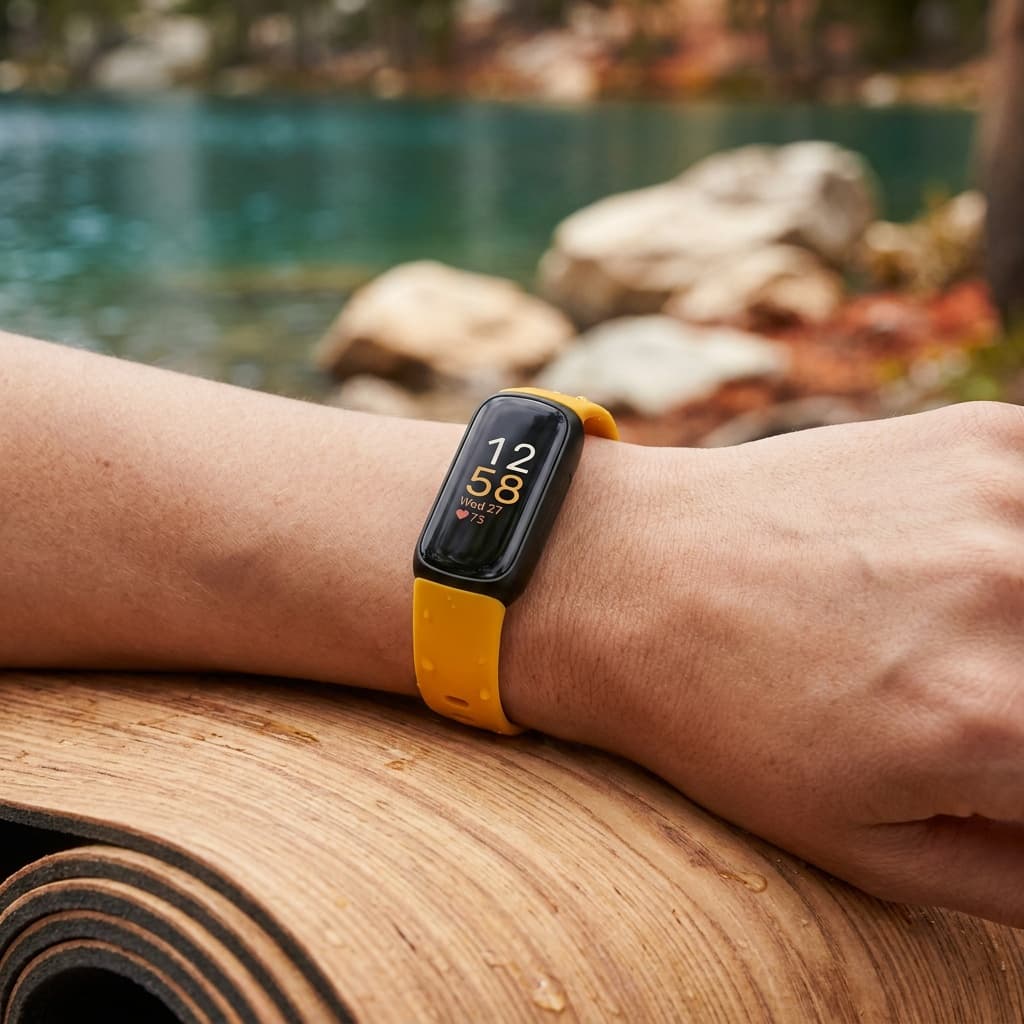
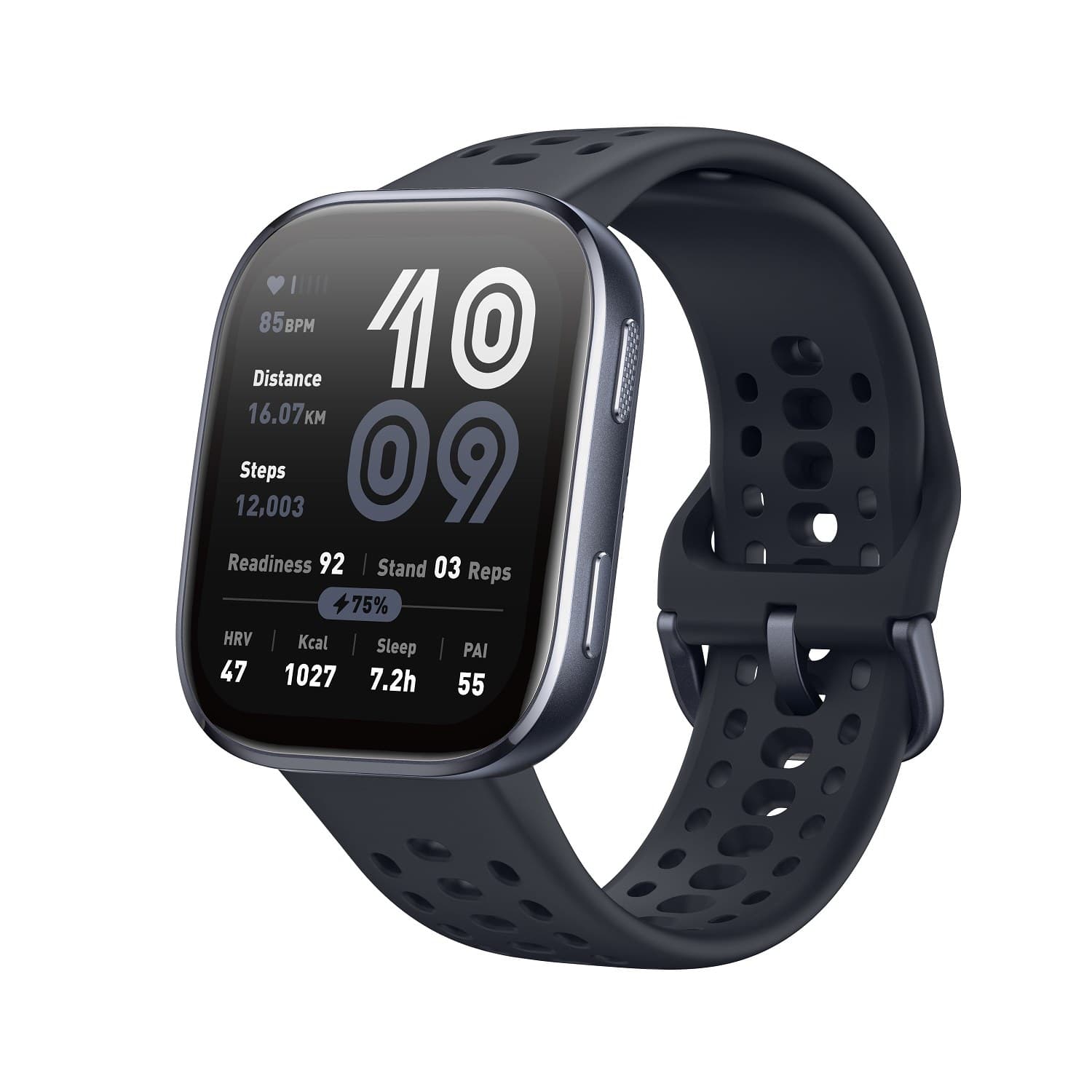
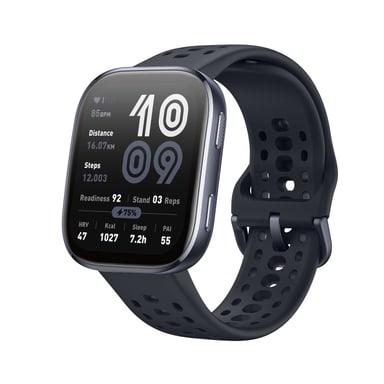
The Garmin Vivoactive 5 is the best fitness tracker for walking overall because it combines reliable step and distance tracking with built-in GPS and a readable AMOLED display. For much less, the Fitbit Inspire 3 covers the core walking metrics if you usually carry a phone, and the Amazfit Bip 6 adds built-in GPS and a big screen.
Our quick picks
How we picked
Every pick below was evaluated against our Kit Score: a weighted rubric that pulls from verified-owner reviews, independent lab accuracy data, and manufacturer specs. These are researched picks, not personally tested. We aggregate and verify so you spend less time second-guessing.
Best overall
BEST OVERALL
Garmin Vivoactive 5
Best for: Walkers who want a true GPS route map, long battery, and a proven data platform without paying flagship watch prices.
- Step counts within about 2% in a published hand-counted walk, plus built-in GPS
- No barometric altimeter, so stair-climb counts are not tracked
Kit Score 8.4/10 · $198.00 Price checked Oct 25, 3:41 PM CDT · how we score gear
Buy on AmazonProduct details
A full GPS smartwatch with a bright AMOLED display and up to 11 days of battery, the Vivoactive 5 posted close step counts in published independent walks (5,100 on a hand-counted 5,000) and is comfortable for all-day wear. It tracks walks, routes, and health metrics without demanding frequent charging.
- Display
- 1.2" AMOLED, 390x390, Gorilla Glass 3
- Battery life
- Up to 11 days (smartwatch mode)
- GPS
- Built-in GPS, GLONASS, Galileo
- Water resistance
- 5 ATM
- Sports modes
- 30+ built-in apps
- Weight
- 1.31 oz (about 37 g) with band
More strengths
- 11-day battery handles a full week-plus without thinking about charging
- Light, compact design that disappears on the wrist
Other tradeoffs
- GPS distance is good rather than exact (2.99 miles on a 3.1-mile 5K in one published test)
The Vivoactive 5 is a GPS smartwatch, not a band, and that gap matters on walks. Built-in GPS records your route without a phone, Garmin's Body Battery energy score tracks recovery, and Garmin rates the battery at up to 11 days as a smartwatch or up to 21 hours of GPS-only recording. It does not show maps: navigation is limited to saved locations and a back-to-start route, per Garmin's manual.
Where it earns its price: accurate GPS distance without carrying a phone, which slim bands cannot match. Route data syncs to Garmin Connect, Strava, and Apple Health without friction. The watch profiles include a dedicated "Walk" activity with cadence and pace overlays that most competitor apps bury under a "Workout" label.
Where it falls short: it is heavier than a slim band (about 36 g, or 1.3 oz, with the band), and a watch-level price is a real ask if you want nothing more than a step count. For walkers who also hike, cycle, or track sleep seriously, the price-per-feature ratio is hard to beat in this range. Garmin has since released the Vivoactive 6, but still sells the 5. Read our full Garmin Vivoactive 5 review.
Best value
BEST VALUE
Fitbit Inspire 3
Best for: Daily walkers who want a slim, accurate, set-and-forget band and already carry a phone on most walks.
- Excellent step accuracy relative to price
- No onboard GPS: route maps require carrying a phone
Kit Score 8.0/10 · $92.49 Price checked Oct 25, 3:41 PM CDT · how we score gear
Buy on AmazonProduct details
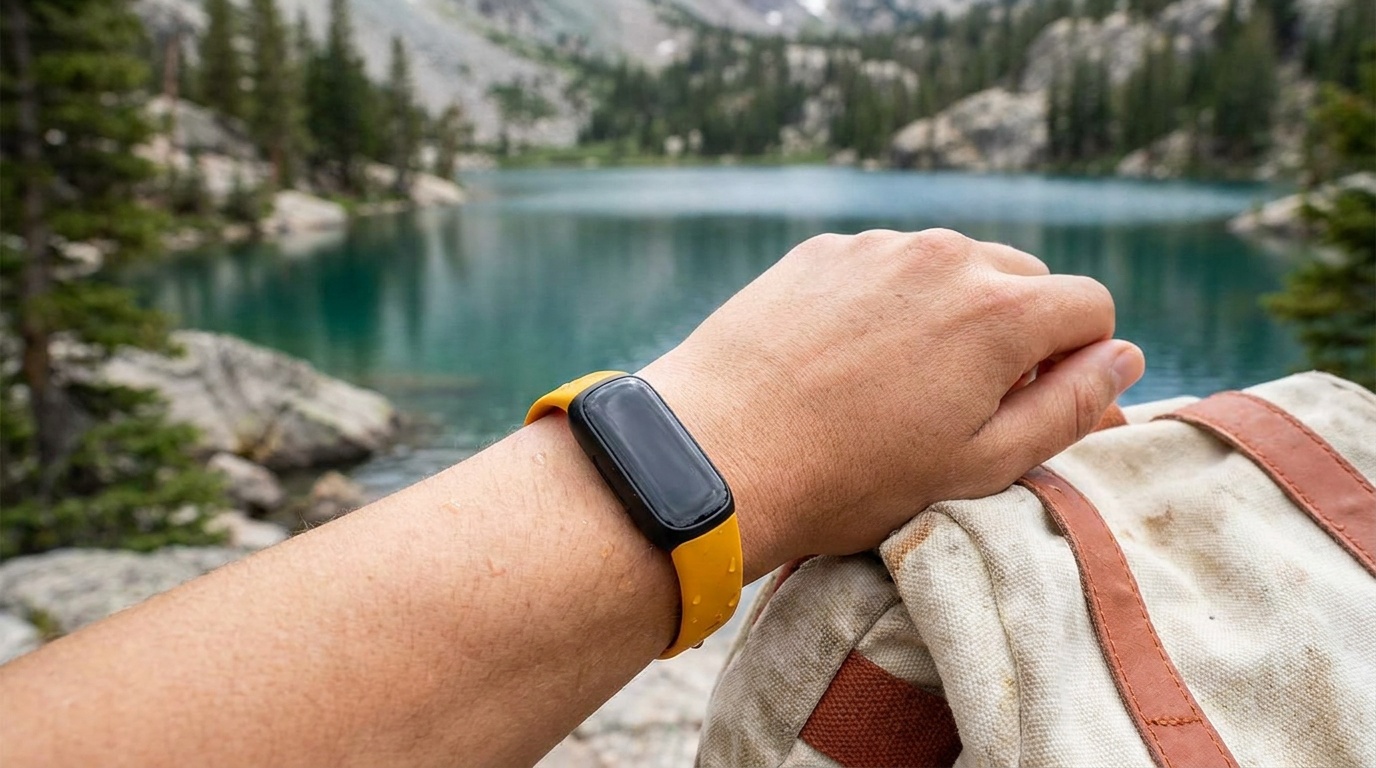
The Inspire 3 is the lightest, most wrist-friendly tracker in this group and came within 41 steps of a hand-tallied 7,000 in a published Tom's Guide walk. Its 10-day battery and Fitbit app ecosystem make it the practical pick for everyday walkers who do not need onboard GPS.
- Display
- Color AMOLED touchscreen, Gorilla Glass 3
- Battery life
- Up to 10 days
- GPS
- Connected GPS (phone required)
- Water resistance
- 5 ATM (50 m)
- Weight
- 17.69 g (tracker, per Google)
- Exercise modes
- 40+ with SmartTrack auto-detection
More strengths
- Among the lightest trackers in its class at 17.69 g
- Clean Fitbit app with easy-to-read daily summaries
Other tradeoffs
- Advanced coaching and insights locked behind Google Health Premium ($9.99/month or $99.99/year)
The Inspire 3 is the easiest tracker to recommend to someone who has never worn one. Google lists it at 0.73 inches wide and 17.69 g, and most owners report forgetting it is on their wrist within a week. That is the entire point.
The Inspire 3 has no GPS of its own. It counts steps from its accelerometer and can borrow your phone's GPS for route and distance, so solo walks without a phone lose some distance accuracy, which is the honest caveat. Google rates the battery at up to 10 days.
The companion app (now branded Google Health) keeps a clean walking dashboard: daily step trend, active zone minutes, and a sleep score. Read our full Fitbit Inspire 3 review.
Editor's choice
EDITOR'S CHOICE
Amazfit Bip 6
Best for: Walkers who want built-in GPS and a big, bright screen at a slim-band price, on iPhone or Android.
- Built-in GPS with downloadable maps, so walks record without a phone
- GPS tracks can drift and sleep tracking was inconsistent in Android Authority's review
Kit Score 8.0/10 · $79.00 Price checked Oct 25, 3:41 PM CDT · how we score gear
Buy on AmazonProduct details
The Bip 6 is Amazfit's budget smartwatch: a 1.97-inch AMOLED screen, built-in GPS with free downloadable maps and turn-by-turn directions, and a battery rated at up to 14 days in typical use. It works with both iPhone and Android through the Zepp app, which makes it the low-cost way to track a walk without carrying a phone.
- Display
- 1.97" AMOLED, 390x450, up to 2,000 nits
- Battery life
- Up to 14 days typical, 6 days heavy use, 32 hr GPS
- GPS
- Built-in, 5 satellite systems, downloadable maps
- Water resistance
- 5 ATM
- Weight
- 27.9 g (without strap)
- Compatibility
- iPhone (iOS 14+) and Android (7.0+) via Zepp
More strengths
- Largest screen in this lineup, bright enough to read in sun
- Up to 14 days of typical battery life
Other tradeoffs
- Thin third-party app store, and iPhone owners cannot reply to texts from the watch
The Bip 6 is a budget smartwatch that does the one thing slim bands cannot: it records your route with its own GPS, so you can leave the phone at home. Amazfit lists a 1.97-inch AMOLED screen, the largest in this lineup, up to 14 days of battery in typical use (6 days under heavy use, or up to 32 hours of continuous GPS), and 5 ATM water resistance. It pairs with both iPhone and Android through the Zepp app, and it supports free downloadable maps with turn-by-turn directions, which the Vivoactive 5 does not offer.
Android Authority found its run distances nearly identical to an Apple Watch across several runs, though the track sometimes drifted to the wrong side of the road, and its heart rate stayed within about five beats of the pricier watch. That is plenty of accuracy for walks.
The caveats: sleep tracking was inconsistent in the same review, the third-party app store is thin, and T3 notes that iPhone owners cannot reply to texts from the watch. Pick it over the Inspire 3 if you walk without your phone or want a bigger screen, and over the Vivoactive 5 if built-in GPS matters more than Garmin's training depth.
The best tracker for walking is the one you actually wear every day, not the one with the longest spec sheet.
How to choose
| Product | Kit Score | Price | Best for |
|---|---|---|---|
| Garmin Vivoactive 5 | 8.4 | $198.00 Price checked Oct 25, 3:41 PM CDT | Best for: Walkers who want a true GPS route map, long battery, and a proven data platform without paying flagship watch prices. Why it stands out: Step counts within about 2% in a published hand-counted walk, plus built-in GPS Tradeoff: No barometric altimeter, so stair-climb counts are not tracked |
| Fitbit Inspire 3 | 8.0 | $92.49 Price checked Oct 25, 3:41 PM CDT | Best for: Daily walkers who want a slim, accurate, set-and-forget band and already carry a phone on most walks. Why it stands out: Excellent step accuracy relative to price Tradeoff: No onboard GPS: route maps require carrying a phone |
| Amazfit Bip 6 | 8.0 | $79.00 Price checked Oct 25, 3:41 PM CDT | Best for: Walkers who want built-in GPS and a big, bright screen at a slim-band price, on iPhone or Android. Why it stands out: Built-in GPS with downloadable maps, so walks record without a phone Tradeoff: GPS tracks can drift and sleep tracking was inconsistent in Android Authority's review |
Garmin Vivoactive 5
- Best for
- Walkers who want a true GPS route map, long battery, and a proven data platform without paying flagship watch prices.
- Why it stands out
- Step counts within about 2% in a published hand-counted walk, plus built-in GPS
- Tradeoff
- No barometric altimeter, so stair-climb counts are not tracked
Fitbit Inspire 3
- Best for
- Daily walkers who want a slim, accurate, set-and-forget band and already carry a phone on most walks.
- Why it stands out
- Excellent step accuracy relative to price
- Tradeoff
- No onboard GPS: route maps require carrying a phone
Amazfit Bip 6
- Best for
- Walkers who want built-in GPS and a big, bright screen at a slim-band price, on iPhone or Android.
- Why it stands out
- Built-in GPS with downloadable maps, so walks record without a phone
- Tradeoff
- GPS tracks can drift and sleep tracking was inconsistent in Android Authority's review
What to prioritize when buying a walking tracker
GPS built-in vs. connected
Built-in GPS (Garmin Vivoactive 5, Amazfit Bip 6) records route and distance without your phone. Connected GPS (Inspire 3) piggybacks on your phone's GPS: accurate when you carry your phone, less so when you do not. If you walk trails or log precise distance, built-in GPS is worth the premium.
Battery life
A tracker you have to charge every two days is one you will leave on the nightstand. The Inspire 3 and the Bip 6 both comfortably clear a week under normal use, while the Garmin trades some longevity for its richer training features.
Step accuracy
In a 2020 review of validation studies, 45 percent of lab measurements fell within 3 percent of true steps, but only 42 percent of real-world measurements landed within 10 percent. Apple and Samsung devices showed the tightest ranges; Fitbit and Garmin varied by model. Wrist placement matters more than the device: wear the band a finger's width above your wrist bone and keep it snug enough not to slide.
Comfort for all-day wear
A tracker that rubs or feels heavy gets taken off. Slim silicone bands like the Inspire 3 are the easiest to forget. The larger cases of the Garmin Vivoactive 5 and Amazfit Bip 6 are noticeable but not burdensome for most wrists.
App and ecosystem
Already in the Fitbit or Garmin ecosystem? Stay there. Switching costs are real: your historical data does not migrate cleanly. New to tracking? Fitbit's onboarding is the gentlest. Amazfit's Zepp app covers the basics but offers few third-party apps.
Frequently asked questions
Do I need GPS in a fitness tracker just for walking?
Not necessarily. Connected GPS (using your phone's signal) gives accurate distance when you carry your phone, which covers most daily walkers. Built-in GPS adds meaningful value if you walk trails without a phone or track routes that vary a lot; the same logic drives the picks in Ruck Authority's best GPS watches for rucking. The Garmin Vivoactive 5 and the Amazfit Bip 6 have built-in GPS; the Fitbit relies on a paired phone for route accuracy.
How accurate are wrist-based step counters?
Accurate enough for habit tracking, less exact in daily life. A 2020 systematic review found 45 percent of lab measurements within 3 percent of true steps, but only 42 percent of real-world measurements within 10 percent. Accuracy depends on walking speed and drops on very slow walks, and on activities that move the arms without steps (pushing a cart, for example). Placement matters: wear the band snug, just above the wrist bone, not loose at the palm.
Where these numbers come from
| Claim | Source | Checked |
|---|---|---|
| Vivoactive 5 battery: up to 11 days smartwatch, up to 21 hr GPS-only | Garmin, vivoactive 5 owner's manual: battery | Sep 2026 |
| Vivoactive 5 navigation: saved locations and back to start, no maps | Garmin, vivoactive 5 owner's manual: navigation | Sep 2026 |
| Vivoactive 5 weighs 36 g | Android Authority, Garmin Vivoactive 5 review | Sep 2026 |
| Vivoactive 6 announced as the successor | Android Authority, Vivoactive 6 launch | Sep 2026 |
| Inspire 3: 17.69 g, 0.73 in wide, up to 10 days, water resistant to 50 m | Google Store, Fitbit Inspire 3 specs | Sep 2026 |
| Bip 6: 1.97 in AMOLED, 27.9 g without strap, up to 14 days typical, 6 days heavy use, 32 hr GPS, 5 ATM, built-in GPS with downloadable maps, iOS 14+ and Android 7.0+ | Amazfit, Bip 6 specs | Sep 2026 |
| Bip 6: run distances nearly identical to an Apple Watch with some route drift, heart rate within about five beats, inconsistent sleep tracking, limited third-party apps | Android Authority, Amazfit Bip 6 review | Sep 2026 |
| Bip 6: iPhone owners cannot reply to texts from the watch | T3, Amazfit Bip 6 review | Sep 2026 |
| Step accuracy: 45% of lab measurements within 3%, 42% of free-living measurements within 10%; accuracy depends on walking speed | Fuller et al., JMIR mHealth and uHealth 2020 | Sep 2026 |
Specs are the makers' ratings; nothing here is a Kit Authority measurement.
For more gear built around walking and active fitness, browse the full fitness hub. Questions about how we evaluate every product: how we research and rate gear.
Keep going

Our recommendations draw on manufacturer documentation, retailer listings, owner feedback, and comparisons with alternatives.
As an Amazon Associate I earn from qualifying purchases. We may earn a commission from links here, at no extra cost to you. How we research →