
Fitness trackers are useful tools, but the step count on your wrist is not a laboratory measurement. How accurate it is depends almost entirely on how fast you walk and what your hands are doing.
The accuracy picture at different speeds
Speed is the single biggest predictor of wrist-tracker accuracy. At a brisk pace, most mainstream devices do well. At a slow shuffle, the error climbs fast.
A 2024 meta-analysis put slow-walking mean absolute percent error at 23.9% versus 3.0% for brisk walking. That gap is not a firmware bug. It is a physics problem: at slow speeds, each step produces a smaller wrist-acceleration signal, and the device has a harder time separating steps from general arm movement.
Why pushing a cart breaks wrist trackers
The wrist accelerometer logs steps by detecting the rhythmic acceleration of arm swing. When your hands grip a shopping cart, stroller, or wheelchair, that swing stops. Your legs keep moving. Your wrist does not.
Research comparing wrist and hip monitor performance found that wrist-worn trackers underestimate steps during cart-pushing by 35% to 95%. That is not a rounding error. A 10,000-step shopping trip could log anywhere from 500 to 6,500 steps on your watch.
The same problem appears with assistive devices. A study on Fitbit accuracy with walkers and rollators found wrist-position error of 31.2% on average compared to 1.5% error for hip and ankle positions with the same device.
The practical fix: for any activity where your hands grip something stationary, clip the tracker to your waistband or slide it into a pants pocket. That one change eliminates most of the error.
Hip placement is the gold standard
The research on placement is consistent across studies. A comparison of wrist-worn and hip-worn Actigraph GT3X devices in free-living conditions found the wrist version recorded approximately 39% more steps per day than the hip version (11,203 vs 6,866 steps on average), with the gap widening in older adults to nearly a 2:1 ratio.
That 39% overcounting at the wrist happens because the wrist picks up non-step arm movements and logs them as steps. A hip clip sits close to your center of mass and measures the actual vertical and horizontal movement of your body with far less noise.
The wrist picks up arm movements that are not steps and misses steps when the arm stays still. Hip placement eliminates most of that noise with no change to your device.
For people who walk slowly, use assistive devices, or push a cart regularly, a dedicated hip-clip pedometer is worth considering alongside a wrist tracker. The wrist device wins on convenience and features; the hip clip wins on step-count accuracy.
What "accurate enough" actually means
At normal walking speeds with free arm swing, the error on a mainstream wrist tracker like the Fitbit Inspire 3 is small enough that your goals and trends remain meaningful. A 3% to 10% error at a 10,000-step target means your tracker might read 9,000 to 11,000 real steps. That margin does not change whether your trend is up or down week over week.
The 10,000-step target stays useful for motivation and relative comparison even if the absolute count is off. What matters is whether the number is consistently off in the same direction. A tracker that always undercounts by 8% still shows whether you walked more this week than last.
Accuracy matters more when you are recovering from injury, monitoring activity for a health condition, or comparing your numbers directly against a clinical study's step targets. In those cases, hip placement and calibration are worth the effort.
How to calibrate for better results
Four steps to improve your tracker's accuracy
Do the outdoor calibration walk
Apple Watch improves step-derived metrics like distance and pace when you walk or run outdoors for 20 minutes at your normal pace. The device continues refining its model with each subsequent outdoor session. Check your device's support page for its equivalent procedure.
Set your stride length manually
Most apps, including those paired with GPS watches like the [Garmin Vivoactive 5](/api/go?product=garmin-vivoactive-5&retailer=amazon&article=are-fitness-tracker-step-counts-accurate), let you enter a measured stride length. Walk a known distance (a track works well), count your steps, divide distance by steps. Entering this number improves distance and calorie accuracy even if raw step counts are close.
Move to hip placement for problem activities
For shopping, pushing a stroller, or using a walker, clip the tracker to your waistband or pocket. This is the highest-impact single change for anyone whose step count seems low.
Wear it consistently on the same wrist
Dominant versus non-dominant wrist affects accuracy in some devices. Pick one and leave it there so any systematic bias is at least consistent across your data.
FAQ
Why does my tracker show fewer steps when I push a grocery cart?
Wrist-worn trackers detect steps by sensing wrist acceleration. When your hands grip a cart, your wrists stay relatively still while your body keeps moving. Research shows wrist trackers miss 35% to 95% of steps in this scenario. Clipping the tracker to your waistband or pants pocket is the practical fix for shopping trips.
How accurate is a fitness tracker at the 10,000-steps goal?
At normal walking speeds, mainstream wrist trackers are within roughly 3% to 10% of actual steps, meaning a 10,000-step goal might read anywhere from 9,000 to 11,000 real steps. That margin is small enough that the 10,000-step target remains useful for motivation and trending. Accuracy drops noticeably if your day includes a lot of slow walking, stair climbing with a railing, or pushing a cart.
Will calibrating my tracker actually improve step accuracy?
For distance and calorie calculations, calibration makes a real difference, especially if you have a shorter or longer stride than average. For raw step counting, the bigger gain comes from placement: moving the tracker to your hip eliminates most of the wrist-motion noise. If you stay on the wrist, setting your correct stride length in the app and running an outdoor calibration walk brings step-derived metrics like distance and pace much closer to reality.
If you are choosing a device for walking fitness, see our guide to the best fitness trackers for walking for picks across price points and use cases. Browse more fitness gear or read how we research and rate.
Recommended gear
Our current top picks from the Best fitness trackers for walking: 3 picks by phone and GPS guide, if you are ready to buy.
Best for: Walkers who want a true GPS route map, long battery, and a proven data platform without paying flagship watch prices.
- Step counts within about 2% in a published hand-counted walk, plus built-in GPS
- No barometric altimeter, so stair-climb counts are not tracked
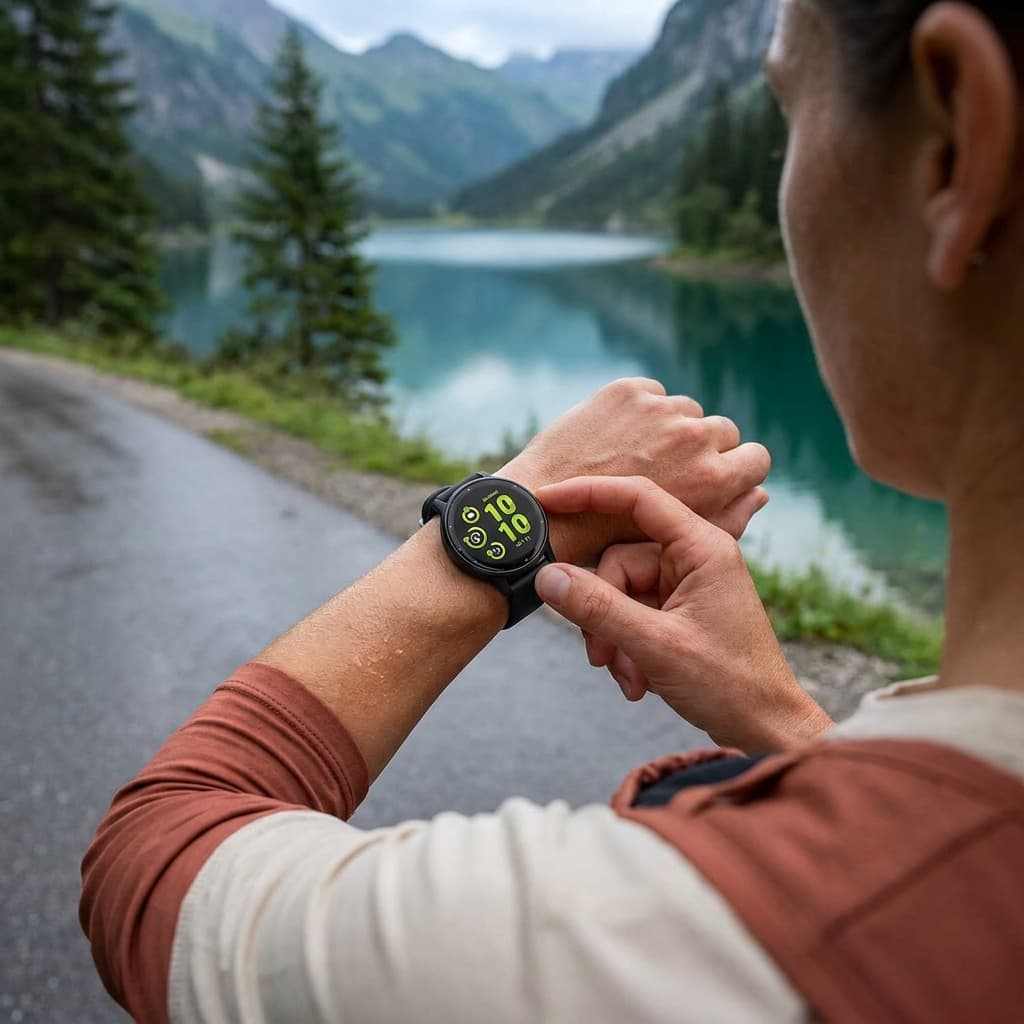
- Display
- 1.2" AMOLED, 390x390, Gorilla Glass 3
- Battery life
- Up to 11 days (smartwatch mode)
- GPS
- Built-in GPS, GLONASS, Galileo
- Water resistance
- 5 ATM
- Sports modes
- 30+ built-in apps
- Weight
- 1.31 oz (about 37 g) with band
About this pick
A full GPS smartwatch with a bright AMOLED display and up to 11 days of battery, the Vivoactive 5 posted close step counts in published independent walks (5,100 on a hand-counted 5,000) and is comfortable for all-day wear. It tracks walks, routes, and health metrics without demanding frequent charging.
Strengths
- Step counts within about 2% in a published hand-counted walk, plus built-in GPS
- 11-day battery handles a full week-plus without thinking about charging
- Light, compact design that disappears on the wrist
Weaknesses
- No barometric altimeter, so stair-climb counts are not tracked
- GPS distance is good rather than exact (2.99 miles on a 3.1-mile 5K in one published test)
Kit Score breakdown
Best for: Daily walkers who want a slim, accurate, set-and-forget band and already carry a phone on most walks.
- Excellent step accuracy relative to price
- No onboard GPS: route maps require carrying a phone
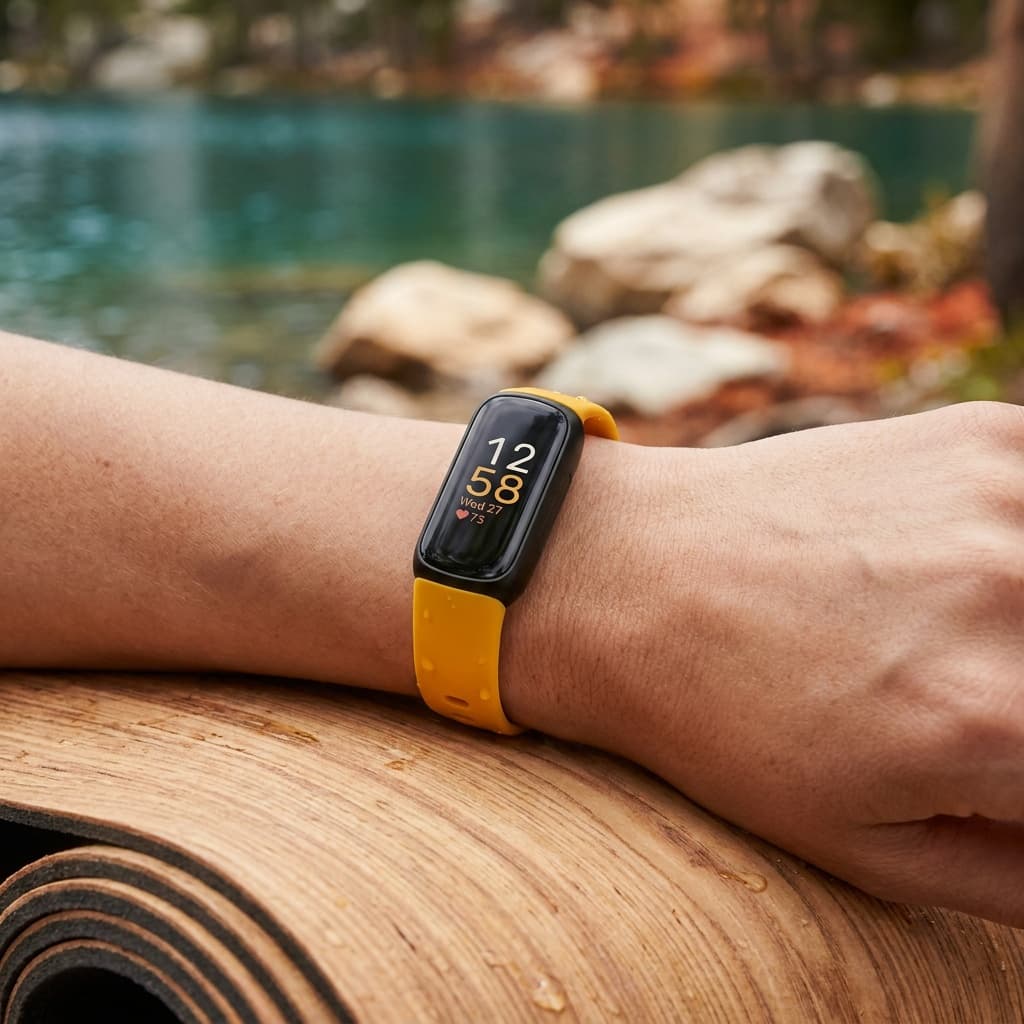
- Display
- Color AMOLED touchscreen, Gorilla Glass 3
- Battery life
- Up to 10 days
- GPS
- Connected GPS (phone required)
- Water resistance
- 5 ATM (50 m)
- Weight
- 17.69 g (tracker, per Google)
- Exercise modes
- 40+ with SmartTrack auto-detection
About this pick
The Inspire 3 is the lightest, most wrist-friendly tracker in this group and came within 41 steps of a hand-tallied 7,000 in a published Tom's Guide walk. Its 10-day battery and Fitbit app ecosystem make it the practical pick for everyday walkers who do not need onboard GPS.
Strengths
- Excellent step accuracy relative to price
- Among the lightest trackers in its class at 17.69 g
- Clean Fitbit app with easy-to-read daily summaries
Weaknesses
- No onboard GPS: route maps require carrying a phone
- Advanced coaching and insights locked behind Google Health Premium ($9.99/month or $99.99/year)
Kit Score breakdown
Best for: Walkers who want built-in GPS and a big, bright screen at a slim-band price, on iPhone or Android.
- Built-in GPS with downloadable maps, so walks record without a phone
- GPS tracks can drift and sleep tracking was inconsistent in Android Authority's review
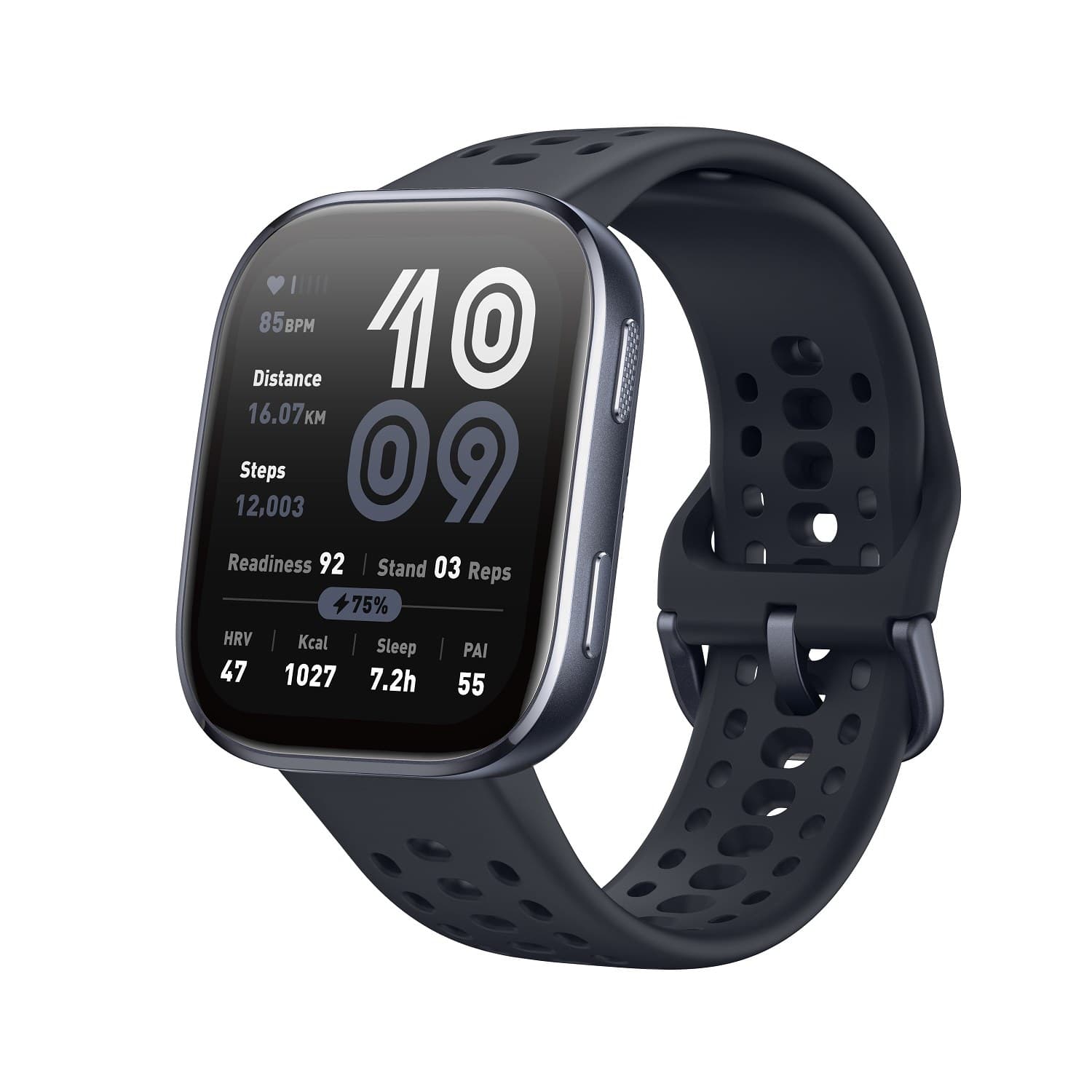
- Display
- 1.97" AMOLED, 390x450, up to 2,000 nits
- Battery life
- Up to 14 days typical, 6 days heavy use, 32 hr GPS
- GPS
- Built-in, 5 satellite systems, downloadable maps
- Water resistance
- 5 ATM
- Weight
- 27.9 g (without strap)
- Compatibility
- iPhone (iOS 14+) and Android (7.0+) via Zepp
About this pick
The Bip 6 is Amazfit's budget smartwatch: a 1.97-inch AMOLED screen, built-in GPS with free downloadable maps and turn-by-turn directions, and a battery rated at up to 14 days in typical use. It works with both iPhone and Android through the Zepp app, which makes it the low-cost way to track a walk without carrying a phone.
Strengths
- Built-in GPS with downloadable maps, so walks record without a phone
- Largest screen in this lineup, bright enough to read in sun
- Up to 14 days of typical battery life
Weaknesses
- GPS tracks can drift and sleep tracking was inconsistent in Android Authority's review
- Thin third-party app store, and iPhone owners cannot reply to texts from the watch
Kit Score breakdown
See all picks in Best fitness trackers for walking: 3 picks by phone and GPS
Keep going

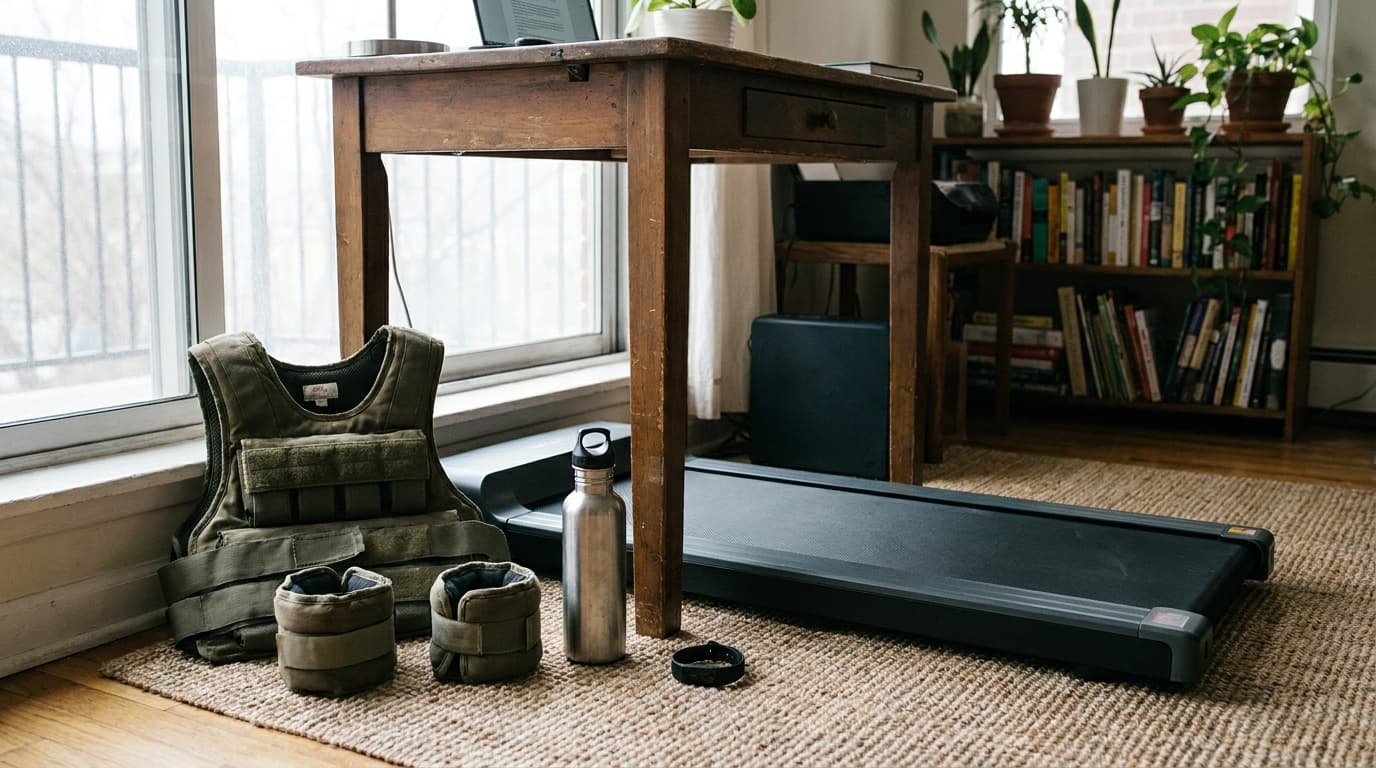
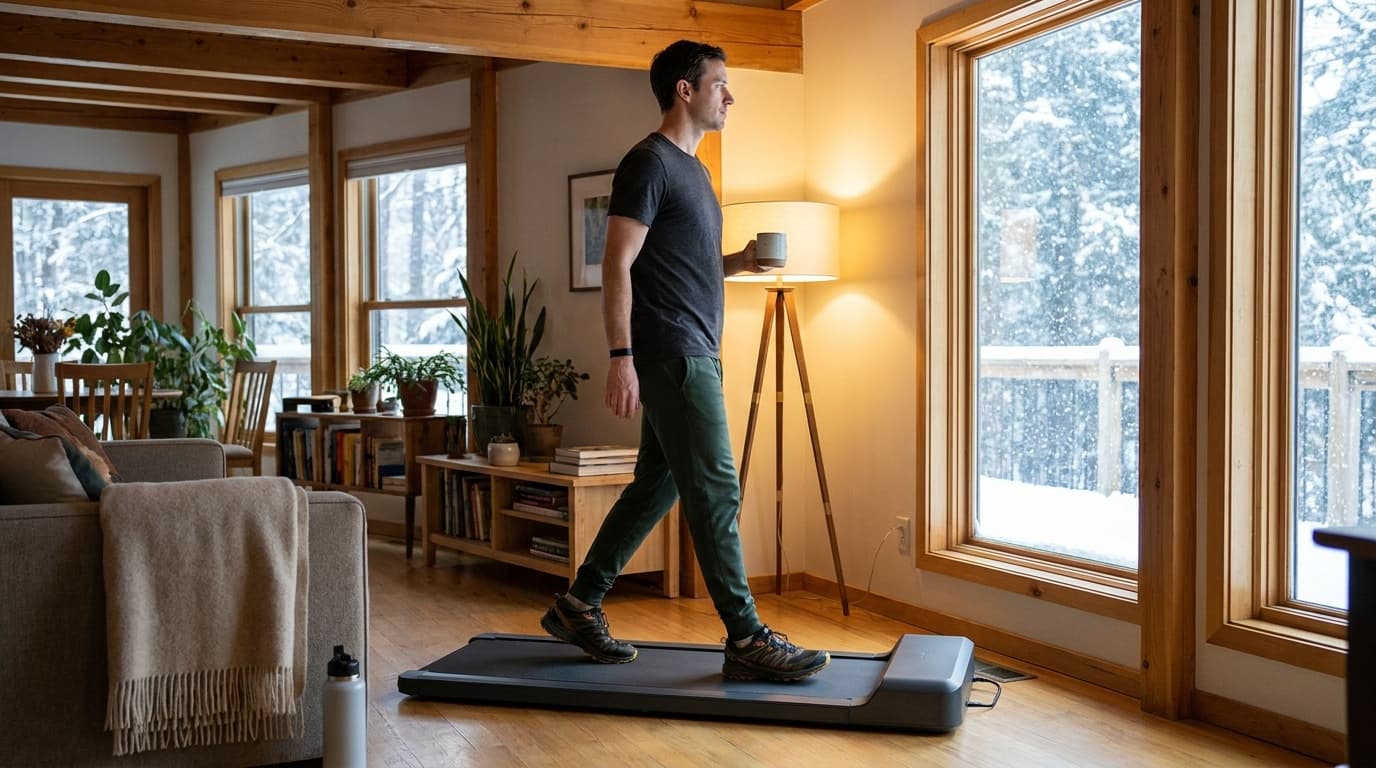
Researched, not hands-on tested
Updated Jun 3, 2026Our recommendations draw on manufacturer documentation, retailer listings, owner feedback, and comparisons with alternatives.
As an Amazon Associate I earn from qualifying purchases. We may earn a commission from links here, at no extra cost to you. How we research →