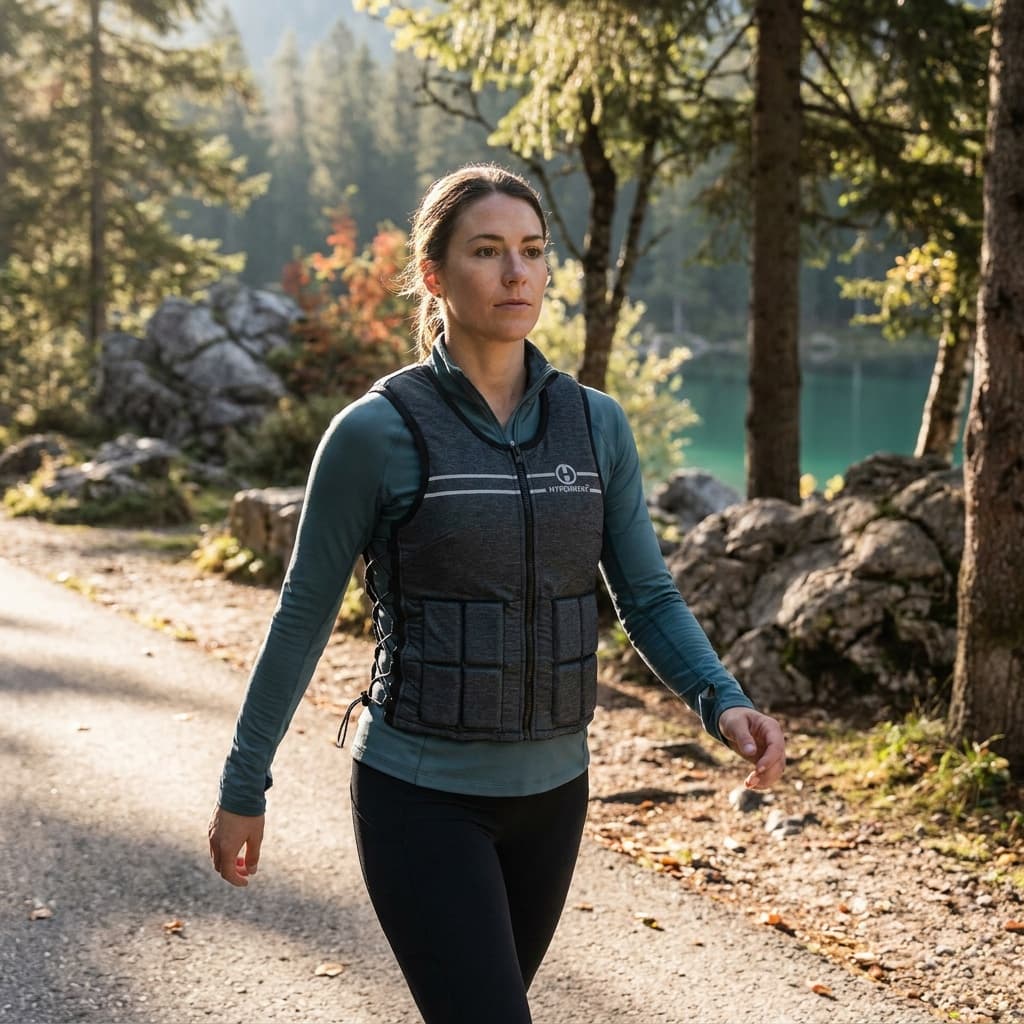
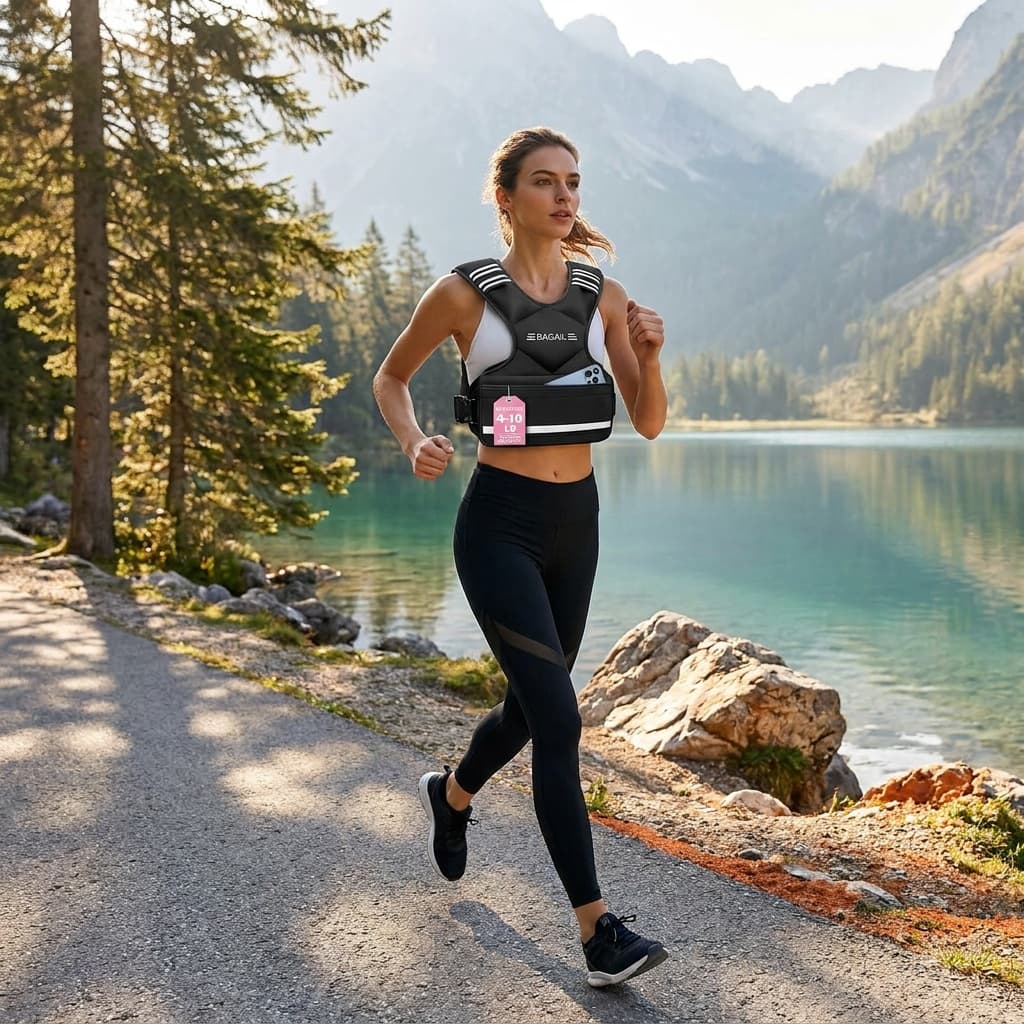
The Hyperwear Hyper Vest FIT is the best weighted vest for most women. Hyperwear designed it with no weight over the bust, it adjusts in half-pound steps from 0.5 to 10 lb, and it comes in three sizes matched to bust and body weight, so it fits a wider range of women than a shrunken unisex vest. The other three picks cover what the FIT cannot: a lower price, loads past 10 lb, and a 10 to 50 lb range for strength work. Getting the size and starting load right the first time matters as much as the vest, so a sizing and fit section follows the four picks.
Our quick picks
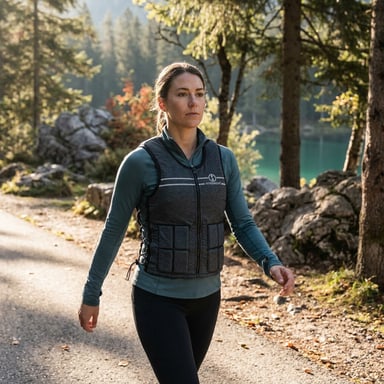
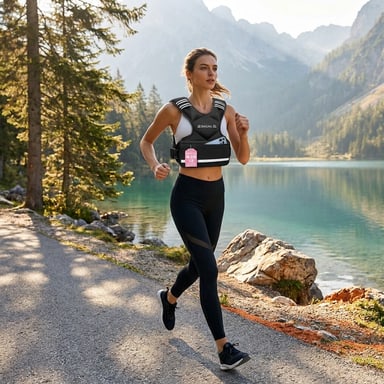
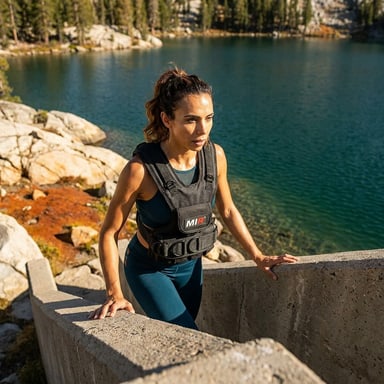
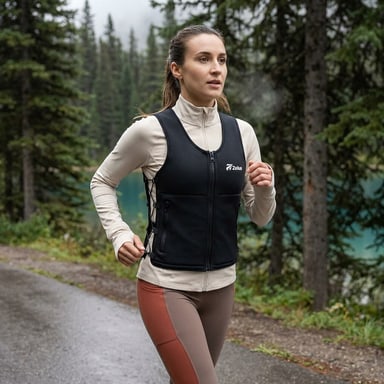
Best overall: Hyperwear Hyper Vest FIT
BEST OVERALL
Hyperwear Hyper Vest FIT Weighted Vest for Women
Best for: Women who want a vest they can wear daily for walking, rucking, or bone-density work without any chest discomfort.
- No weight over the chest, a genuine design decision that solves the single biggest complaint women have with unisex vests
- Premium price and 10 lb ceiling means it will not serve users who want to progress beyond moderate loading
Kit Score 8.6/10 · $94.95 Price checked Oct 25, 3:41 PM CDT · how we score gear
Buy on AmazonProduct details
The Hyper Vest FIT is engineered specifically for women's anatomy, with zero weight placed over the chest area so bust size never affects comfort or fit. Side elastic lacing cinches to your torso length, making it one of the few vests that works reliably on petite and short-torso frames.
- Weight capacity
- 0.5 to 10 lb, adjustable in 0.5 lb increments
- Sizes
- Small (30–34" bust, 90–120 lb), Medium (34–38" bust, 120–150 lb), Large (38–43" bust, 150–180 lb)
- Weight type
- Recycled USA steel micro-weights, no iron sand
- Material
- CORDURA fabric with satin lining; Hyperwear says hand wash and air dry (the Amazon listing says machine washable)
- Closure
- Front zipper with elastic side lacing
- Notable
- Named Best for Walking and Running by Consumer Reports (October 2025)
More strengths
- Steel micro-weights stay put and never develop the iron-sand odor problem common to neoprene vests
- Machine washable CORDURA shell holds shape through repeated use
Other tradeoffs
- Weight must be purchased separately if ordering the bare shell, adding to cost
The Hyper Vest FIT is Hyperwear's weighted vest for women, and it gets the two things that matter most right: where the weight sits and how finely you can load it. Hyperwear places no weights over the bust, and the vest's CORDURA shell with a satin lining uses elastic side lacing, a front zipper, and shoulder and waist straps to cinch to your torso rather than pressing against your chest.
The weights are half-pound containers of recycled USA steel, so you can start as light as 0.5 lb and add load half a pound at a time up to 10 lb. That fine control is the reason it suits beginners, women returning to exercise, and women over 50 building up slowly. The three sizes run from a 30 inch bust (Small) to 43 inches (Large), each tied to a height and body-weight band in the size chart above.
The limits: 10 lb is the ceiling, so it will not carry heavier strength work, and the size chart stops at 180 lb. On care, the Amazon listing calls it machine washable, while Hyperwear's own product page says hand wash and air dry; follow the maker.
Best for: Women who want a vest they can wear for daily walks without chest discomfort, starting very light.
Best value: Empower Weighted Vest for Women
BEST VALUE
Empower Weighted Walking Vest for Women, Adjustable 10–16 lb
Best for: Returning exercisers who are already comfortable carrying 10 lb and want an adjustable vest with a genuine women's fit for walking and home workouts.
- Women-specific contoured X-shape with no chest compression, confirmed by multiple owner reviews noting comfort around the bust
- Neoprene with iron sand will eventually develop odor with regular use and is spot-clean only
Kit Score 8.0/10 · Check current price · how we score gear
Buy on AmazonProduct details
Empower built this vest specifically around women's bodies: the X-shape wraps away from the chest, and iron sand is distributed evenly along the torso so weight does not concentrate on the shoulders. The 4-in-1 pouch system covers 10 to 16 lb, so you can add load over months without buying a second vest.
- Weight range
- 10 lb, 12 lb, 14 lb, or 16 lb (four-in-one removable pouches)
- Fit
- Adjustable side straps, 24"–48" waist range
- Material
- Soft neoprene with iron sand filling
- Design
- X-shape contour built for women's curves, no chest flattening
- Extras
- Phone pocket, reflective strips front and back
- Weight increments
- Removable weight pouches; 4-in-1 system included
More strengths
- Four progressive weight settings from 10 to 16 lb in one vest, a strong value proposition for anyone building up load over several months
- Side straps cover a wide range of waist sizes, helpful for both petite and larger frames
Other tradeoffs
- Starts at 10 lb and tops out at 16 lb, so it is not a fit for absolute beginners who need a lighter entry point, or for experienced users who need heavier loading
The Empower vest covers the range that suits many intermediate walkers: 10 lb at the low end and 16 lb at the top, set by removable weights at 10, 12, 14, or 16 lb. Empower describes a contoured X-shape built to keep an enhanced bust fit, with wide padded shoulder straps and adjustable waist straps that fit waist sizes from 24 to 48 inches, the broadest stated fit range in this group.
It is the most affordable vest here, which makes it the one to recommend to someone who already carries 10 lb comfortably and wants a gradual walking progression without paying for a premium shell. The trade-off is the 10 lb floor: if your starting load is under 10 lb, this is not your first vest.
Best for: Returning exercisers already comfortable at 10 lb who want an affordable, adjustable vest with a women's fit.
Most range: MiR Women's Adjustable Weighted Vest
MOST RANGE
MiR Women's Adjustable Weighted Vest
Best for: Intermediate to advanced women who want one vest that covers both walking and home strength training and expect to progress well beyond 15 lb.
- Wide load range (10–50 lb) makes this a vest that grows with you for years, not a beginner-only purchase
- Very petite or narrow-shouldered users report the strap width can feel wide initially and may require careful positioning
Kit Score 8.5/10 · $83.66 Price checked Oct 25, 3:41 PM CDT · how we score gear
Buy on AmazonProduct details
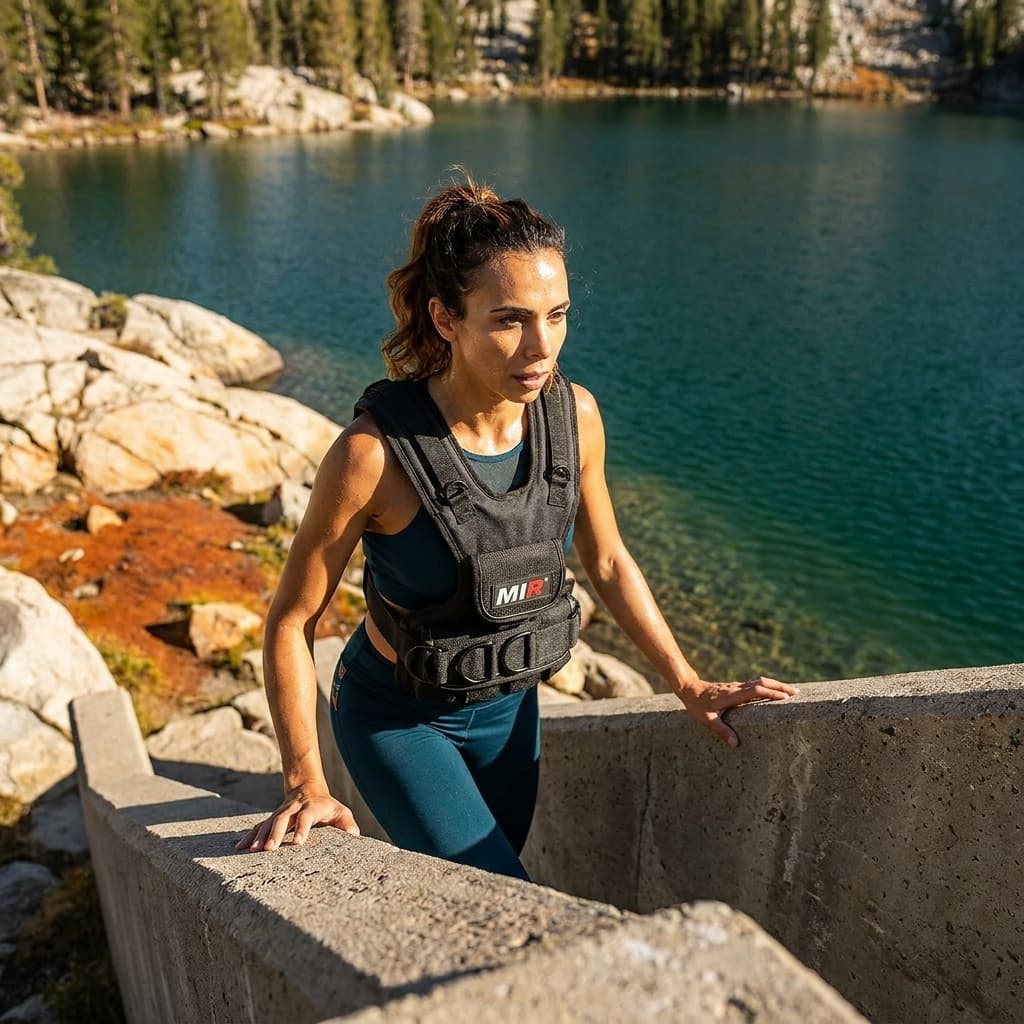
MiR's women's vest is a serious training tool that covers the full load range from beginner walks at 10 lb up to strength-focused workouts at 50 lb, with a contoured chest panel and velcro shoulder straps designed to avoid the bounce and chest-crush problems of unisex plate-carrier styles. Iron bars in 3 lb increments give finer progression control than most vests in this price range.
- Weight range
- 10–50 lb, removable iron bars in 3 lb increments
- Pockets
- 5 front and 5 back for balanced bilateral loading
- Material
- 1200D nylon with reinforced stitching
- Closure
- Adjustable velcro shoulder and waist straps
- Fit range
- Designed for 5'2"–5'8" and up, one size fits most XS–XL
- Design note
- Contoured chest area prevents compression; iron bar weights do not rust or leak
More strengths
- Iron bar weights are stable and do not shift during movement; 5-front and 5-back pocket layout keeps the load balanced
- Women-specific contoured chest panel and velcro straps rated highly by owners across a range of frame sizes
Other tradeoffs
- Heavier and bulkier than neoprene vests; not the right choice if you want something slim for daily errands
The MiR Women's Vest covers the widest progression of any vest on this list, 10 to 50 lb, using solid iron bars that adjust in 3 lb increments. Five pockets on the front and five on the back keep the load balanced, and velcro shoulder and waist straps pull it snug. The shell is heavy-duty 1200D nylon with reinforced stitching.
The chest is contoured, with the front weights sitting between the breasts rather than across them, and MiR describes the fit as covering women from 5'2" to 5'8" and taller in one size. The trade-off against the Hyperwear is feel: the MiR is more structured and bulkier, which suits strength circuits better than all-day walking, and some narrow-shouldered owners find the straps need careful positioning.
Best for: Intermediate to advanced women who want one vest for walking and home strength training and expect to progress well beyond 16 lb.
Best slim vest to 15 lb: ZELUS Z-Fit
BEST SLIM VEST TO 15 LB
ZELUS Weighted Vest Woman, Adjustable 1–15 lb
Best for: Women who want a slim, washable vest cut for a female frame that starts light and builds to 15 lb, and who are buying it for the fit rather than the price.
- Z-Fit soft iron weights come out so the shell can be machine washed, avoiding the odor problem common to iron-sand neoprene vests
- Priced above the better-built Hyperwear FIT on the linked 15 lb listing, so it is not a money-saving pick
Kit Score 7.2/10 · $135.99 Price checked Oct 25, 3:41 PM CDT · how we score gear
Buy on AmazonProduct details
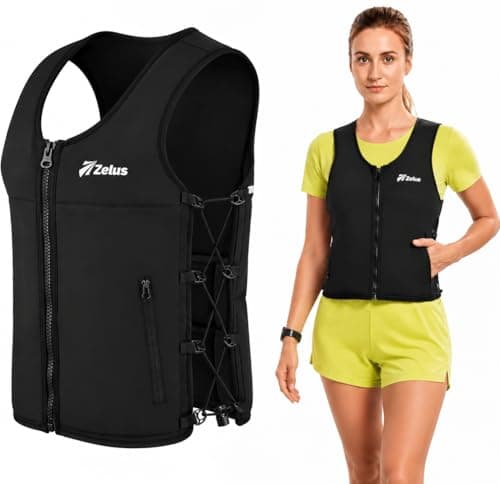
The ZELUS Z-Fit is a slim, zip-front vest cut for women's frames, with side lacing for a snug fit and 16 flat soft iron weights instead of iron sand, so the shell machine-washes once the weights are out. The listing suggests starting at 2 to 4 lb and building to 15 lb, which makes it practical for beginners or anyone returning from a break.
- Weight range
- Up to 15 lb with 16 removable soft iron weights; listing suggests starting at 2–4 lb (a 10 lb version is also sold)
- Material
- Soft spandex outer, Z-Fit flat soft iron panels (not iron sand)
- Closure
- Front zipper with side lacing
- Sizes
- Medium and Large; slim cut the maker says puts no bulky pressure on the chest
- Washable
- Machine washable with the weights removed (per the Amazon listing)
- Extras
- Reflective strips, integrated pocket design
More strengths
- Light starting load (the listing suggests 2 to 4 lb) with room to build to 15 lb, useful for beginners who need to build tolerance gradually
- Slim cut with front zipper and side lacing, designed to avoid chest pressure and thin enough to wear under a hoodie
Other tradeoffs
- 15 lb maximum limits progression; users who advance beyond light-to-moderate loading will outgrow it
- Newer listing with fewer long-term owner reviews than established models; durability over multi-year use is less documented
The ZELUS Z-Fit picks up where the Hyperwear stops. It ships with 16 soft-iron weights for balanced front and back loading, and the listing suggests starting at 2 to 4 lb and building to 15 lb, so one vest carries you from a gentle start past the 10 lb mark. A front zipper and side lacing keep it snug, and the cut is slim enough to wear under a hoodie.
ZELUS says the vest is machine washable once the weights are out, a real advantage for daily walkers over iron-sand neoprene vests that hold odor. It is sold in Medium and Large, so check the seller's size chart before ordering. Prices on this listing have moved a lot, and lately it has cost more than the Hyperwear FIT, so buy it for the slim cut, the 15 lb ceiling, and the washable shell rather than to save money. Compare the two on the day you buy.
Best for: Women who want a slim, washable vest that starts light and keeps progressing to 15 lb.
Compare the picks
| Product | Kit Score | Price | Best for |
|---|---|---|---|
| Hyperwear Hyper Vest FIT Weighted Vest for Women | 8.6 | $94.95 Price checked Oct 25, 3:41 PM CDT | Best for: Women who want a vest they can wear daily for walking, rucking, or bone-density work without any chest discomfort. Why it stands out: No weight over the chest, a genuine design decision that solves the single biggest complaint women have with unisex vests Tradeoff: Premium price and 10 lb ceiling means it will not serve users who want to progress beyond moderate loading |
| Empower Weighted Walking Vest for Women, Adjustable 10–16 lb | 8.0 | Check current price | Best for: Returning exercisers who are already comfortable carrying 10 lb and want an adjustable vest with a genuine women's fit for walking and home workouts. Why it stands out: Women-specific contoured X-shape with no chest compression, confirmed by multiple owner reviews noting comfort around the bust Tradeoff: Neoprene with iron sand will eventually develop odor with regular use and is spot-clean only |
| MiR Women's Adjustable Weighted Vest | 8.5 | $83.66 Price checked Oct 25, 3:41 PM CDT | Best for: Intermediate to advanced women who want one vest that covers both walking and home strength training and expect to progress well beyond 15 lb. Why it stands out: Wide load range (10–50 lb) makes this a vest that grows with you for years, not a beginner-only purchase Tradeoff: Very petite or narrow-shouldered users report the strap width can feel wide initially and may require careful positioning |
| ZELUS Weighted Vest Woman, Adjustable 1–15 lb | 7.2 | $135.99 Price checked Oct 25, 3:41 PM CDT | Best for: Women who want a slim, washable vest cut for a female frame that starts light and builds to 15 lb, and who are buying it for the fit rather than the price. Why it stands out: Z-Fit soft iron weights come out so the shell can be machine washed, avoiding the odor problem common to iron-sand neoprene vests Tradeoff: Priced above the better-built Hyperwear FIT on the linked 15 lb listing, so it is not a money-saving pick |
Hyperwear Hyper Vest FIT Weighted Vest for Women
- Best for
- Women who want a vest they can wear daily for walking, rucking, or bone-density work without any chest discomfort.
- Why it stands out
- No weight over the chest, a genuine design decision that solves the single biggest complaint women have with unisex vests
- Tradeoff
- Premium price and 10 lb ceiling means it will not serve users who want to progress beyond moderate loading
Empower Weighted Walking Vest for Women, Adjustable 10–16 lb
- Best for
- Returning exercisers who are already comfortable carrying 10 lb and want an adjustable vest with a genuine women's fit for walking and home workouts.
- Why it stands out
- Women-specific contoured X-shape with no chest compression, confirmed by multiple owner reviews noting comfort around the bust
- Tradeoff
- Neoprene with iron sand will eventually develop odor with regular use and is spot-clean only
MiR Women's Adjustable Weighted Vest
- Best for
- Intermediate to advanced women who want one vest that covers both walking and home strength training and expect to progress well beyond 15 lb.
- Why it stands out
- Wide load range (10–50 lb) makes this a vest that grows with you for years, not a beginner-only purchase
- Tradeoff
- Very petite or narrow-shouldered users report the strap width can feel wide initially and may require careful positioning
ZELUS Weighted Vest Woman, Adjustable 1–15 lb
- Best for
- Women who want a slim, washable vest cut for a female frame that starts light and builds to 15 lb, and who are buying it for the fit rather than the price.
- Why it stands out
- Z-Fit soft iron weights come out so the shell can be machine washed, avoiding the odor problem common to iron-sand neoprene vests
- Tradeoff
- Priced above the better-built Hyperwear FIT on the linked 15 lb listing, so it is not a money-saving pick
Also worth a look: GORUCK Spy Ruck
The GORUCK Spy Ruck is a women's fixed-weight vest sold in 8, 12, and 16 lb versions for $79. It uses odorless coated steel pellets in a low-profile shell, with padded shoulder straps, a dual sliding sternum strap, reflective stripes, and GORUCK's SCARS lifetime guarantee. It carries weight on the front and back with no backpack storage, so it suits weighted walks and vest workouts rather than carrying gear. Because the weight is fixed, pick the version closest to your starting load from the guidance below.
It is not one of our scored picks yet. Our sister site, Ruck Authority, covers GORUCK gear in depth, including the Spy Ruck on its GORUCK guide. Ruck Authority is a GORUCK affiliate and received a Spy Ruck from GORUCK.
Sizing and fit: get it right before you order
A vest that fits badly gets returned, or worse, gets worn with the load riding on your neck and chest. Four checks catch most fit problems before you buy.
Use the weighted-vest calculator first. The right vest is one whose lightest setting reaches your starting load and whose size chart matches your bust and body weight. If a vest cannot sit snugly at its lightest setting, its maximum capacity is irrelevant: choose the model you can use correctly now, not the biggest number on the listing.
1. Match the size chart to your bust and body weight
Measure around the fullest part of your bust and weigh yourself, then compare with each maker's published fit range.
| Vest | Sizes and fit range | Adjustment |
|---|---|---|
| Hyperwear Hyper Vest FIT | Small: 30–34 in bust, 4'8" to 5'3", 90–120 lb. Medium: 34–38 in bust, 5'3" to 5'6", 120–150 lb. Large: 38–43 in bust, 5'6" to 6', 150–180 lb | Front zipper, elastic side lacing, shoulder and waist straps |
| Empower 10 to 16 lb | One size, fits waist sizes from 24 to 48 in | Wide padded shoulder straps, adjustable waist straps |
| MiR Women's Adjustable | One size fits most, described for women from 5'2" to 5'8" and taller | Velcro shoulder and waist straps |
| ZELUS Z-Fit 1 to 15 lb | Sold in Medium and Large; check the seller's chart on the listing | Front zipper, side lacing |
If you fall between Hyperwear sizes, the bust measurement is the one to follow, because the side lacing handles more of the torso difference than the bust panel can. If your bust is over 43 inches or you weigh over 180 lb, the FIT's chart does not cover you; the Empower's 24 to 48 inch waist range and the MiR's one-size straps are the better starting points.
2. Check where the weight sits around your bust
This is the most common reason women return a vest. Look for a maker's explicit statement, not a "women's" label on a smaller unisex cut:
- Hyperwear FIT: no weights over the bust area, by design.
- Empower: a contoured X-shape that the maker says keeps an enhanced bust fit.
- MiR Women's: a contoured chest with front weight pockets that sit between the breasts rather than across them, per product descriptions.
- ZELUS Z-Fit: a slim cut the maker describes as putting no bulky pressure on the chest.
3. Check torso length against your hip bones
Stand tall and put the vest on at its lightest setting. The hem should finish above your hip bones. If it sits on them, it will ride up every time you lift a knee on stairs or hills, and the load will shift onto your shoulders. Short-torso and petite women usually do best in the shorter, lace-adjusted designs (Hyperwear FIT, ZELUS).
4. Pick a starting load by body weight and goal
UCLA Health suggests starting with a vest at about 5% of your body weight and adding load gradually as fitness improves. For walking, we treat about 10% as a soft ceiling, explained in our guide to how much a weighted vest should weigh.
| Body weight | Start (about 5%) | Walking ceiling (about 10%) | Vests whose lightest setting reaches the start |
|---|---|---|---|
| 120 lb | 6 lb | 12 lb | Hyperwear FIT, ZELUS |
| 140 lb | 7 lb | 14 lb | Hyperwear FIT, ZELUS |
| 160 lb | 8 lb | 16 lb | Hyperwear FIT, ZELUS |
| 180 lb | 9 lb | 18 lb | Hyperwear FIT, ZELUS |
| 200 lb | 10 lb | 20 lb | Empower, MiR (both start at 10 lb), ZELUS; the Hyperwear FIT's size chart stops at 180 lb |
Adjust for your goal:
- Walking and general fitness: start near 5%, add distance before load, and build toward about 10%.
- Bone health: the load alone is not the whole answer. The research below points to pairing the vest with impact or strength moves rather than simply wearing it.
- Returning from injury, a prior fracture, or diagnosed osteoporosis: talk to your clinician or physical therapist first and start lighter than 5%.
Weighted vests for women over 50: what the bone research says
Bone is the main reason many women in their 50s and 60s buy a vest, and the evidence is more specific than the marketing.
- Vest plus jumping preserved hip bone. In a five-year study of postmenopausal women published in The Journals of Gerontology, nine women did weighted-vest plus jumping exercise three times a week for 32 weeks of each year. Their total hip bone density changed by −0.82% while the comparison group lost 3.80% (Snow et al., 2000). It was a small study, and the benefit came from loaded jumping, not from wearing the vest.
- Wearing a vest during weight loss did not protect hip bone. In the 12-month INVEST in Bone Health trial of 150 older adults with obesity (average age 66.4), people who wore a vest about 7.1 hours a day, replacing roughly 78% of the weight they lost, saw hip bone density fall at a similar rate to those who only dieted (Wake Forest University School of Medicine, reporting the JAMA Network Open results, 2025).
- Fast walking counts, high impact needs care. The Bone Health and Osteoporosis Foundation lists fast walking as a low-impact weight-bearing exercise and notes that people who have broken a bone from osteoporosis, or are at risk of one, may need to avoid high-impact exercise and should check with a healthcare provider (BHOF).
Put together: for women over 50, a vest is a good way to make daily walks harder and to add load to strength and balance work, and it appears to help bone when the plan includes impact or resistance movement your body can tolerate. It is not a bone treatment on its own. The Hyperwear FIT is our pick for this group because its half-pound steps let you start very light and progress slowly, and its front zipper makes it easy to get on and off. For more options chosen around balance and ease of use, see our weighted vests for seniors guide, and for the full evidence review, weighted vest benefits.
How we picked
Every pick here is scored against the Kit Score: fit-for-purpose design, verified owner feedback, build quality, and value, for walking and home workouts specifically. Fit claims come from the makers' size charts and product pages and the live Amazon listings; we did not wear these vests ourselves. No vest was selected on marketing claims alone.
How to choose the right weighted vest
Choosing your weighted vest
Measure bust and body weight first
Compare both with the maker's size chart. Hyperwear publishes three sizes by bust (30 to 43 inches) and body weight (90 to 180 lb); Empower states a 24 to 48 inch waist range.
Pick your starting weight, not your target weight
Start near 5% of body weight and confirm the vest's lightest setting reaches it. A 40 lb capacity is only useful if the vest also fits snugly at your starting load.
Check where the weight sits
Look for a maker's explicit statement about the bust: no weight over the bust, a contoured X-shape, or weights placed between rather than across the breasts.
Test the fit at home before the return window closes
Load it to your starting weight, walk stairs for five minutes, and do ten walking lunges. If it rides up, gaps at the chest, or digs at the shoulders, return it while you still can.
The most common fit complaint from women is not the weight, it is a rigid chest panel that compresses without accommodating.
Frequently asked questions
What is the best weighted vest for women?
For most women, the Hyperwear Hyper Vest FIT. It places no weight over the bust, adjusts in 0.5 lb steps up to 10 lb, and comes in three sizes covering a 30 to 43 inch bust. If you need more than 10 lb, the ZELUS Z-Fit goes to 15 lb in a similar slim style, the Empower covers 10 to 16 lb at a lower price, and the MiR Women's vest runs 10 to 50 lb.
What is the best weighted vest for women over 50?
The Hyperwear Hyper Vest FIT, because its half-pound steps let you start very light and build slowly, and its front zipper makes it easy to put on. Start near 5% of your body weight or lower. For bone health, research points to pairing the vest with impact or strength moves: a five-year study found vest-plus-jumping exercise preserved hip bone density in postmenopausal women, while a 2025 trial found that simply wearing a vest during weight loss did not. If you have osteoporosis or a prior fracture, check with your clinician first.
Is the Hyperwear weighted vest good for women?
Yes. The Hyper Vest FIT is Hyperwear's women-specific design: no weights over the bust, a CORDURA shell with elastic side lacing, and half-pound steel weights adjustable up to 10 lb. Its size chart runs from Small (30 to 34 inch bust, 90 to 120 lb) to Large (38 to 43 inch bust, 150 to 180 lb), so check your measurements before ordering.
What size weighted vest should a woman get?
Size by bust and body weight, not by clothing size. For the Hyperwear FIT: Small for a 30 to 34 inch bust and 90 to 120 lb, Medium for 34 to 38 inches and 120 to 150 lb, Large for 38 to 43 inches and 150 to 180 lb. Outside that range, one-size vests with wide strap adjustment, like the Empower (24 to 48 inch waist) or the MiR Women's, are the better starting point.
What weight should a woman start with in a weighted vest?
About 5% of your body weight, the starting point UCLA Health suggests. For a 140 lb woman that is about 7 lb. Add distance before load, and build toward about 10% for walking. If you are returning from injury or have bone density concerns, start lighter and ask your physical therapist. The Hyperwear FIT (from 0.5 lb) and ZELUS Z-Fit (from a few pounds) suit a light start; the Empower begins at 10 lb.
Can you machine wash a women's weighted vest?
It depends on the vest, and always with the weights removed. ZELUS says the Z-Fit is machine washable. For the Hyperwear FIT, the Amazon listing says machine washable but Hyperwear's own page says hand wash and air dry, so follow the maker. Check the care label on any iron-sand or neoprene vest before washing.
Can you wear a weighted vest all day?
Short to medium sessions of 30 to 60 minutes are the most common use for walking. Wearing a vest for long periods without building up to it can overload the spine, hips, and knees, and in the INVEST trial, wearing one about seven hours a day did not protect hip bone during weight loss. Treat it like a training session rather than all-day wear.
Are weighted vests safe for women with osteoporosis?
Clear it with your physician or physical therapist first. The concerns are compressive load on the spine and fall risk, since a vest shifts your center of gravity. The Bone Health and Osteoporosis Foundation notes that people who have broken a bone from osteoporosis, or are at risk of one, may need to avoid high-impact exercise. Starting with a very light load on flat ground, with good posture and footwear, is the conservative approach.
Where these numbers come from
| Claim | Source | Checked |
|---|---|---|
| Hyperwear FIT: 0.5 to 10 lb in 0.5 lb recycled-steel weights, no weights over the bust, CORDURA with satin lining, elastic side cords, front zipper, S/M/L size chart by bust, height, and weight, hand wash and air dry | Hyperwear, Hyper Vest FIT for women | Sep 25, 2026 |
| Hyperwear FIT: machine washable, three sizes, adjusts 0.5 lb at a time to 10 lb | Amazon listing, ASIN B08SNXGZY2, read through the Amazon Creators API | Sep 25, 2026 |
| Empower: 10, 12, 14, or 16 lb, contoured X-shape, wide padded shoulder straps, waist sizes 24 to 48 in | Amazon listing, ASIN B07P5VSKPP, read through the Amazon Creators API | Sep 25, 2026 |
| MiR Women's: 10 to 50 lb | Amazon listing, ASIN B002SCWD7Q (title), read through the Amazon Creators API | Sep 25, 2026 |
| MiR Women's: 3 lb increments, 5 front and 5 back pockets, velcro shoulder and waist straps, heavy-duty nylon, 5'2" to 5'8" and beyond, contoured chest with weight between the breasts | Calisthenics.com, MiR Weighted Vest for Women | Sep 25, 2026 |
| ZELUS Z-Fit: 16 soft-iron weights, start at 2 to 4 lb up to 15 lb, front zipper and side lacing, machine washable with weights removed, sizes M and L | Amazon listing, ASIN B0F93ZKH13, read through the Amazon Creators API and the live product page | Sep 25, 2026 |
| Start with a vest at about 5% of body weight; ensure even weight distribution and a fit that does not shift | UCLA Health, Should you walk with a weighted vest? | Sep 25, 2026 |
| Five-year vest-plus-jumping study: total hip −0.82% in exercisers vs −3.80% in controls | Snow et al., The Journals of Gerontology: Series A, 2000 | Sep 25, 2026 |
| INVEST trial: 150 older adults, mean age 66.4, 12 months, vest about 7.1 h a day replacing about 78% of lost weight, similar hip bone loss across groups | Wake Forest University School of Medicine news release on the JAMA Network Open results | Sep 25, 2026 |
| Fast walking is low-impact weight-bearing exercise; people at fracture risk may need to avoid high impact | Bone Health and Osteoporosis Foundation, weight-bearing exercise | Sep 25, 2026 |
The right vest comes down to one question before any other: does it fit your bust, torso, and starting load right now? Start light, progress steadily, and let the vest make the walks you already take a little harder.
Browse more gear research in the fitness hub or learn how every pick on this site is scored at how we research and rate.
Keep going
Free toolWhich Vest? QuizAnswer three questions, get matched to the right vest.Related guides

 Complete fitness loadoutWeighted-vest starter kitBuild the complete kit
Our recommendations draw on manufacturer documentation, retailer listings, owner feedback, and comparisons with alternatives.
As an Amazon Associate I earn from qualifying purchases. We may earn a commission from links here, at no extra cost to you. How we research →