We may earn a commission from links on this page, at no extra cost to you.
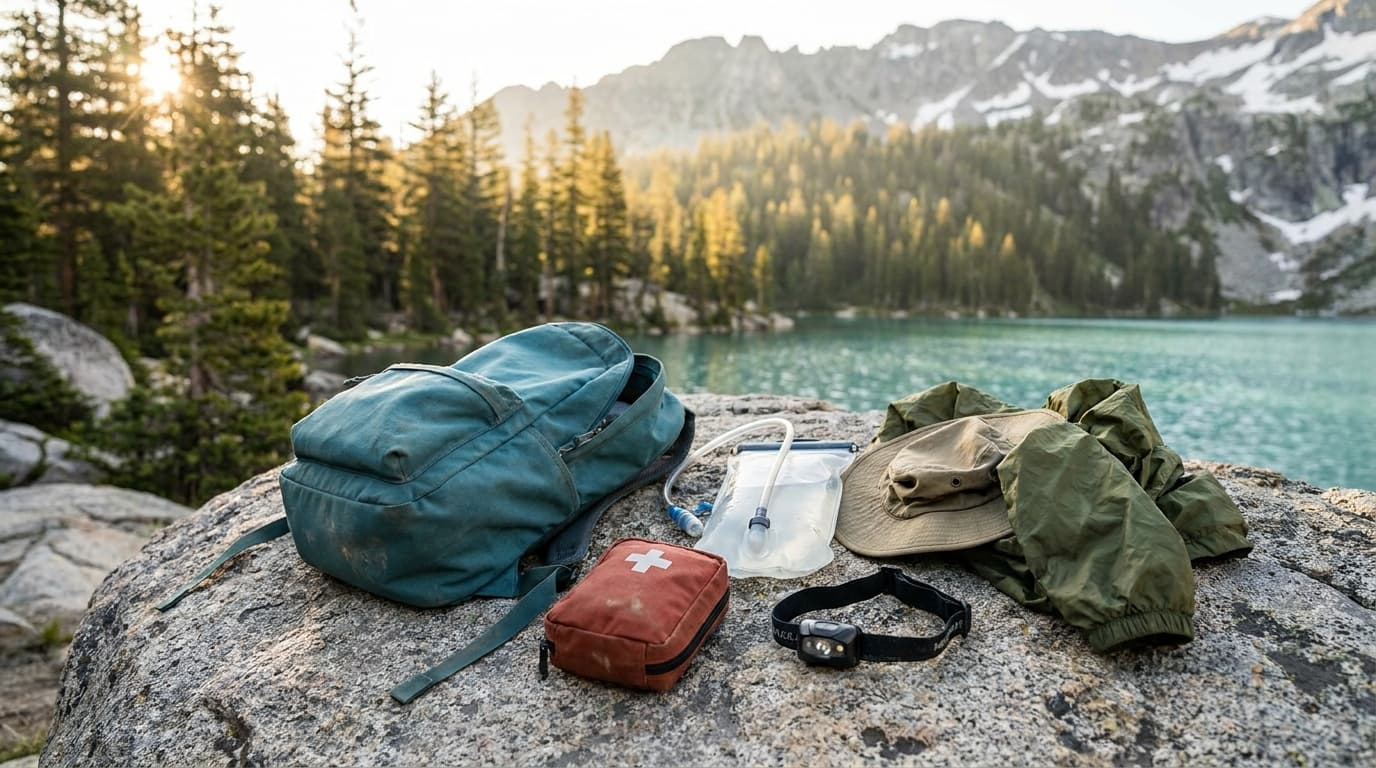
A full day on trail needs seven categories of gear, and all of it fits in a 22-liter pack. This is the complete loadout: what fills each slot, why, and where the money matters.
Build the complete kit
Your day-hike loadout
Seven systems cover a full day on trail. Use the gear you already trust, then go straight to the researched pick for any gap.
Gear links open current retailer listings. Price bands are planning ranges; prep steps stay on this page.
Pack
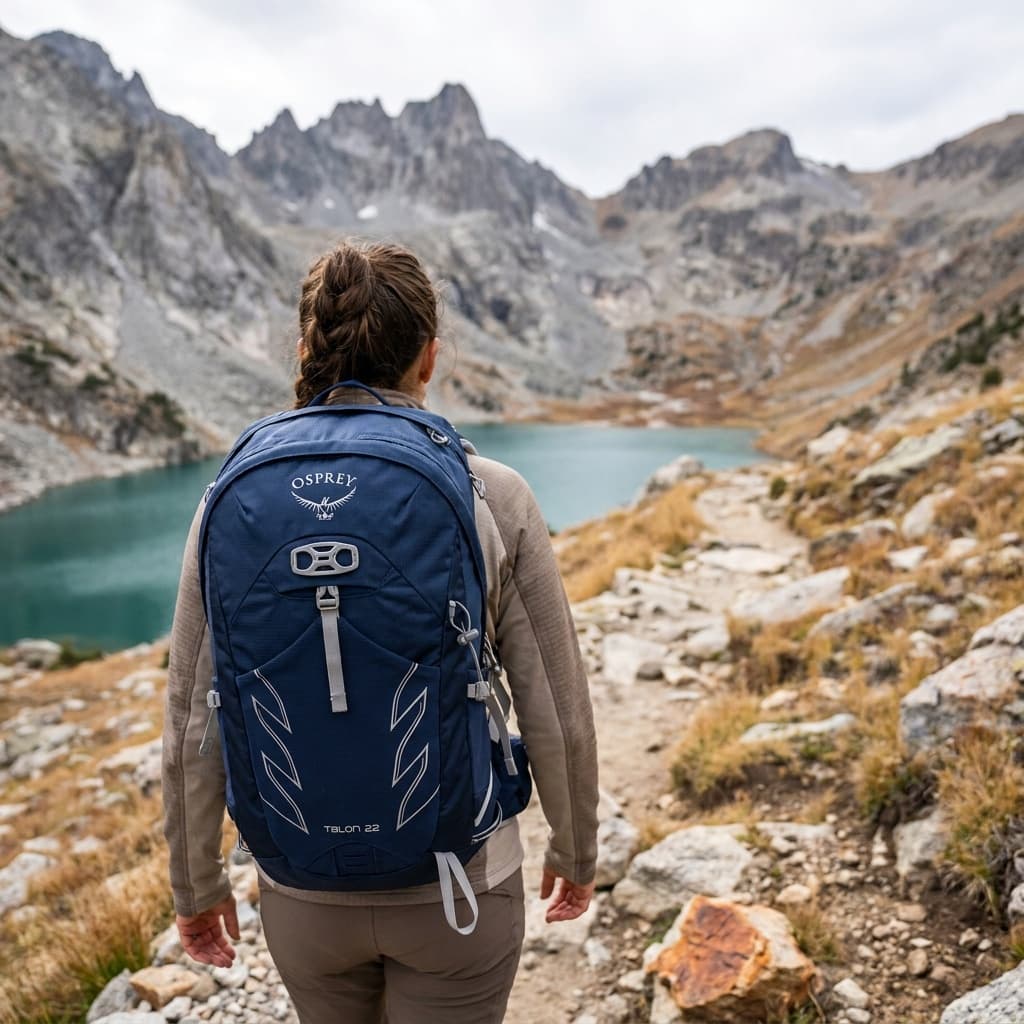
Osprey Talon 22
A 20 to 25 liter daypack with a supportive harness and room for weather layers.
Kit Score 8.6/10 · Check current price
Water
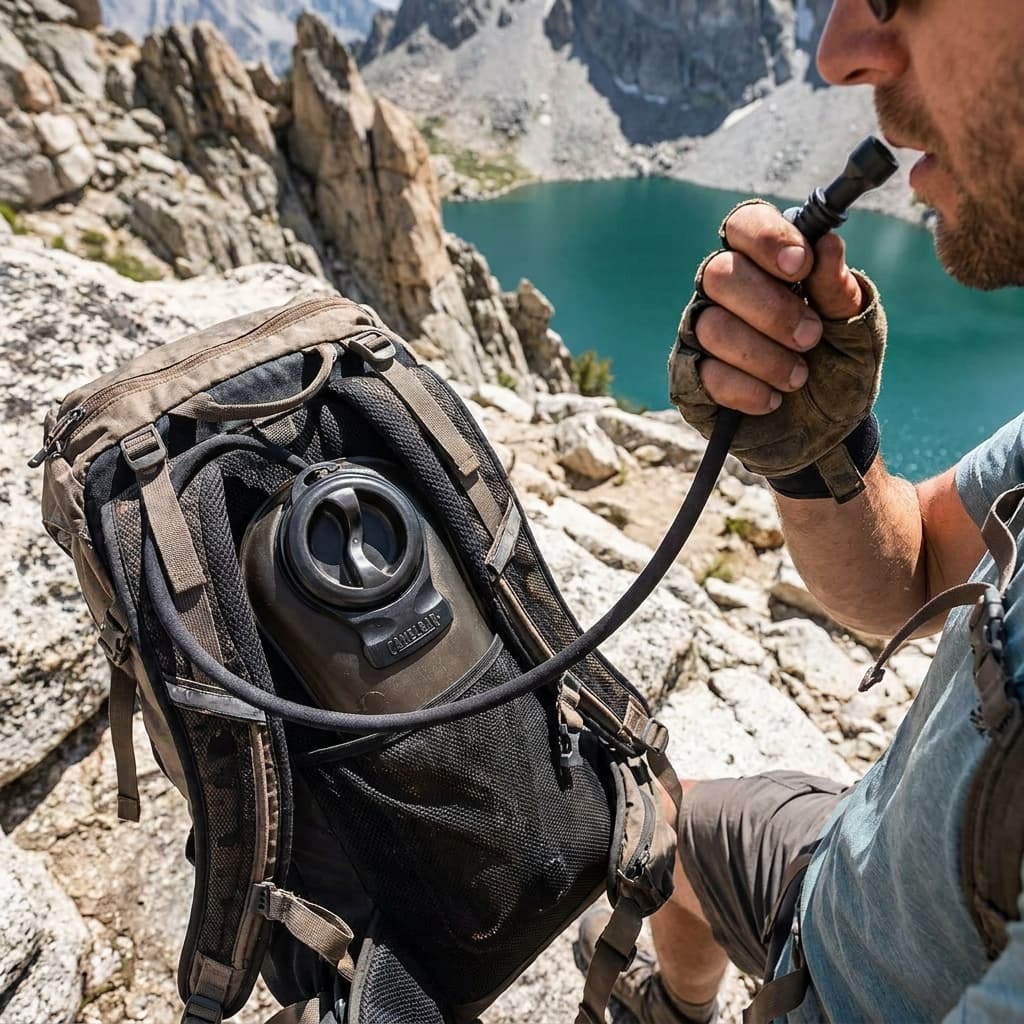
CamelBak Crux 3L Water Reservoir
A three-liter reservoir that keeps water accessible while you move.
Kit Score 8.2/10 · Check current price
First aid
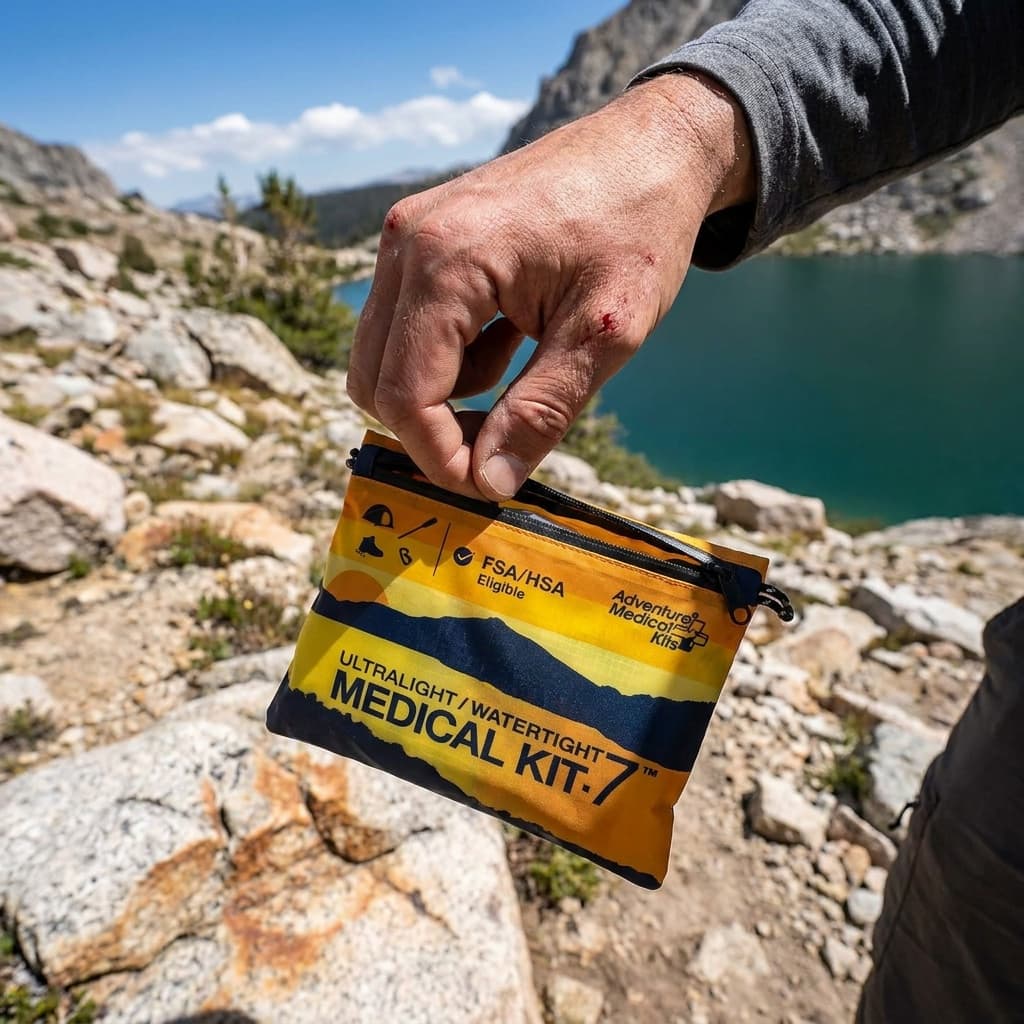
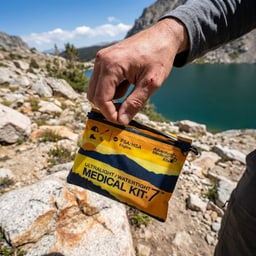
Adventure Medical Kits Ultralight/Watertight Medical Kit .7
A compact base kit customized with your medications and trip-specific supplies.
Kit Score 7.8/10 · Check current price
Light
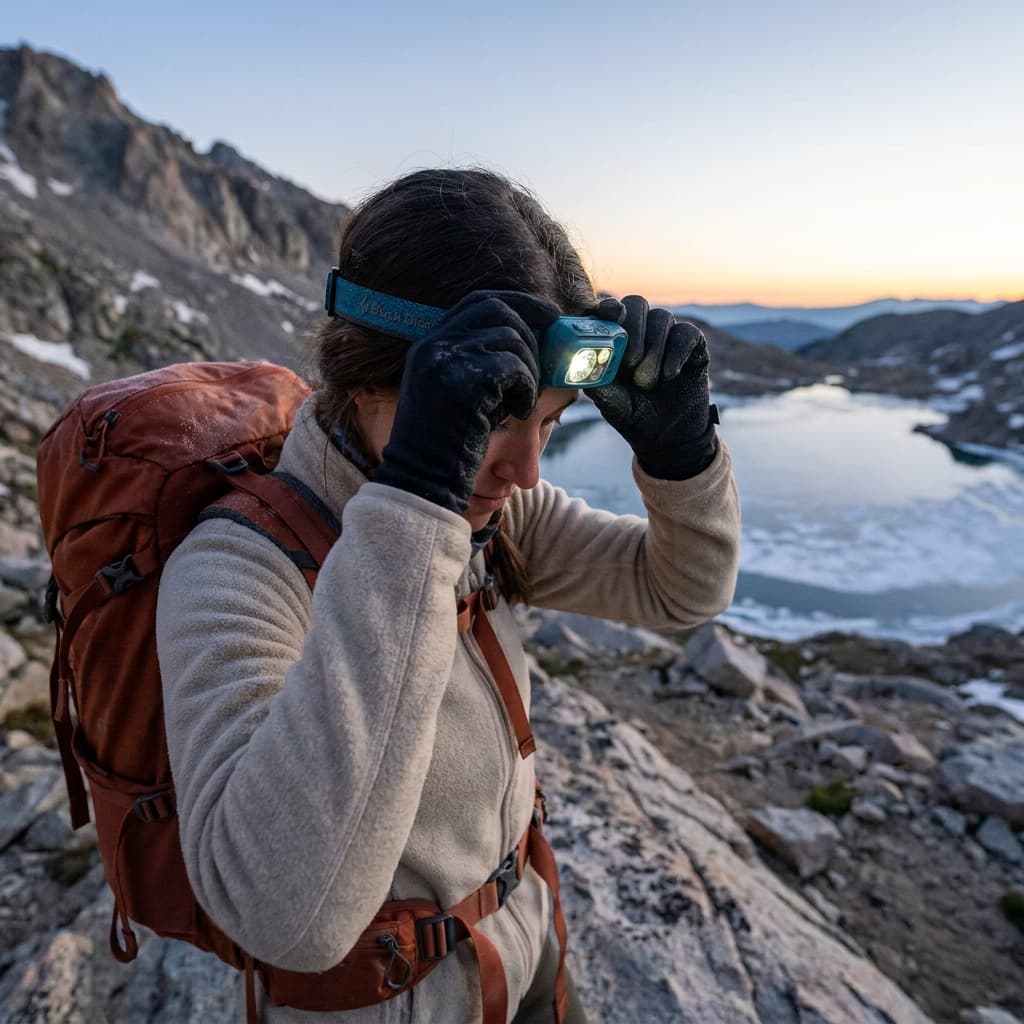
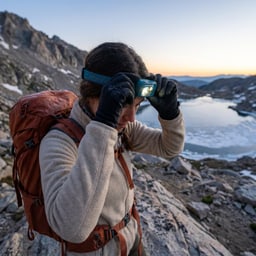
Black Diamond Spot 400-R Rechargeable Headlamp
A rechargeable headlamp that stays in the pack even for hikes planned before dark.
Kit Score 8.5/10 · Check current price
Sun protection
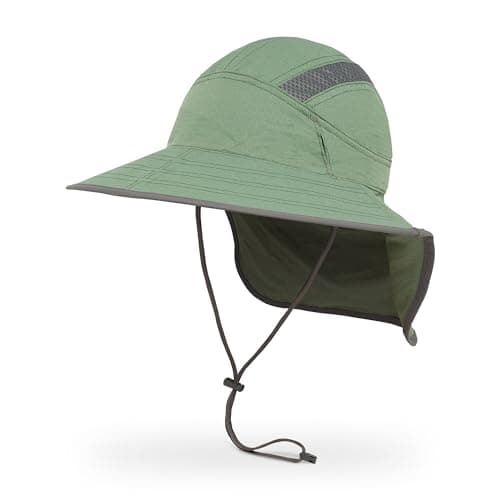
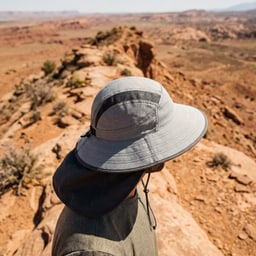
Sunday Afternoons Ultra Adventure Hat
A brimmed hat plus sunscreen for exposed miles and high-elevation UV.
Kit Score 8.5/10 · Check current price
Weather layer
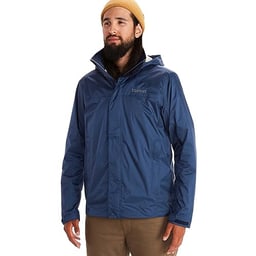
Marmot PreCip Eco Rain Jacket
A light waterproof shell with pit zips that also blocks wind when conditions change.
Kit Score 7.6/10 · Check current price
Who this kit is for
This loadout targets the standard day hike: 4 to 12 miles, established trails, front-country or moderate backcountry, three-season conditions. It scales down gracefully for a two-hour local loop and up to a big single-day summit push with more water and food.
If you want the packing checklist rather than the gear picks, the printable day hike checklist lists every item in order. This page is the buying companion to that list: the specific gear that fills each slot.
The daypack: 20-25 liters is the sweet spot
THE PACK
Osprey Talon 22
The Talon 22 is the daypack you see on the trail more than any other for good reason: it packs in a padded hipbelt, adjustable torso harness, and dual hipbelt pockets into a 22-liter package that handles loads up to 20 lb without complaint. Owners across hundreds of Amazon ratings consistently cite its adjustability and durability as standouts.
Best for: Hikers who want a proven all-around daypack with solid load support, plenty of adjustment, and a warranty they can actually use.
- Adjustable torso fit covers a wide range of body sizes
- Padded hipbelt and dual hipbelt pockets at this size are rare
- At 2 lb 1 oz it runs heavier than ultralight rivals for the same volume
Kit Score 8.6/10 · Check current price · how we score gear
Buy on AmazonTwenty-two liters holds a 3 L water bladder, food, first aid, a rain shell, and a warm layer with room to spare. Bigger packs invite overpacking; smaller ones force you to leave safety items home.
The Osprey Talon 22 is the benchmark for the class: a tool-free adjustable hipbelt, a back panel that keeps airflow moving, an external hydration sleeve so a wet bladder never soaks your gear, and a lifetime warranty. The full comparison, including a premium ventilation pick and a strong under-$120 option, is in the best daypacks for hiking roundup, with a deeper look in the Osprey Talon 22 review.
Fit note: torso length matters more than volume. A pack that matches your torso carries 20 lb comfortably; a mismatched one makes 12 lb miserable.
Water: a bladder for the trail, a bottle for the trailhead
THE WATER SYSTEM
CamelBak Crux 3L Water Reservoir
The Crux is a proven performer with the highest measured flow rate among major bladders tested, a large ergonomic handle that simplifies stream fills, and clean-tasting water straight out of the packaging. At around $42, it delivers genuine all-around reliability at an honest price.
Best for: Day hikers and weekend backpackers who want a reliable, fast-flowing bladder at a wallet-friendly price.
- Best-in-class flow rate delivers noticeably more water per sip than competing designs
- Large twist handle makes one-handed stream and sink fills straightforward
- Heavier and bulkier than ultralight alternatives; the rigid handle reduces packability
Kit Score 8.2/10 · Check current price · how we score gear
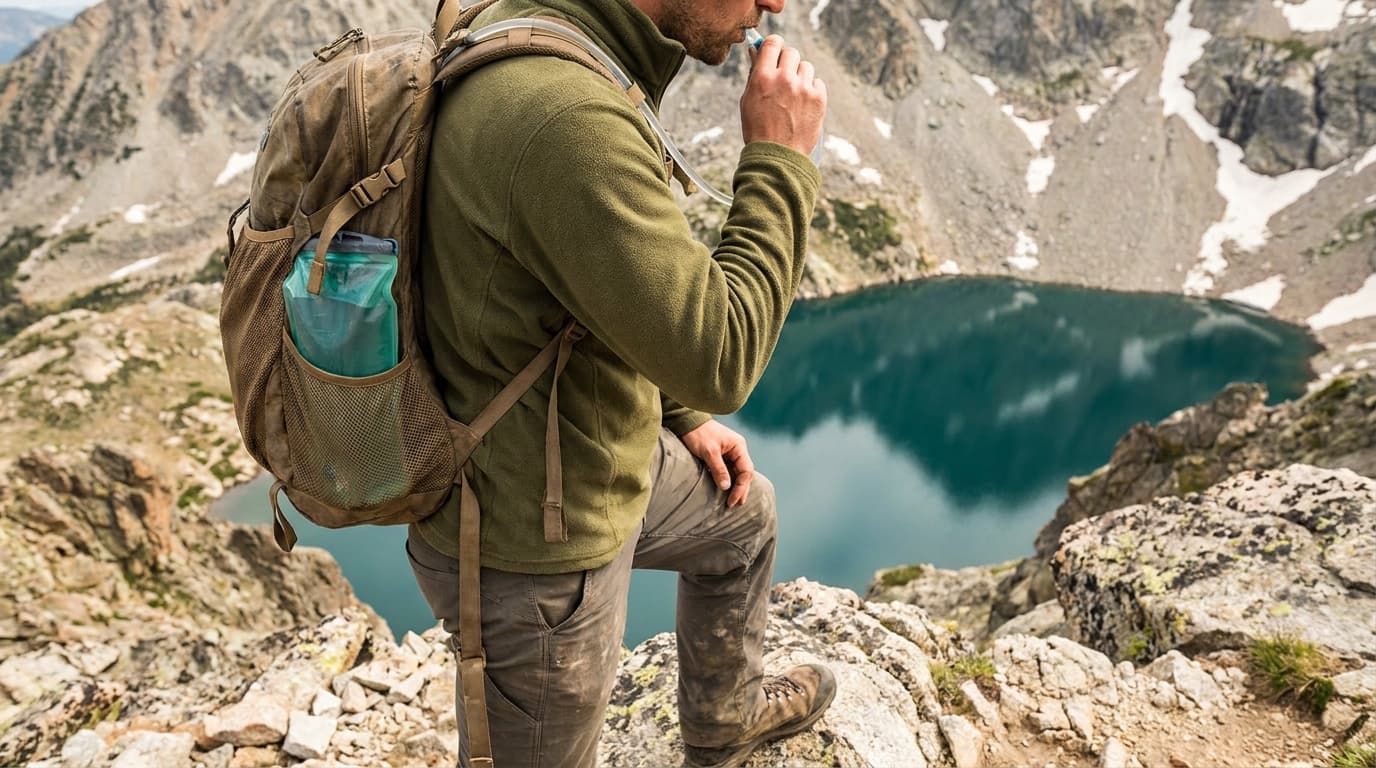
Buy on AmazonDehydration degrades judgment before it degrades legs, and hikers drink far more when the water is on a hose instead of buried in a side pocket. A 3 L bladder like the CamelBak Crux covers most full-day hikes for most people: fill to 2 L for short cool-weather outings, all 3 L for long or hot ones.
The working rule: half a liter per hour of hiking, more in heat or at altitude. The hiking water calculator turns your specific mileage, temperature, and elevation gain into a fill target, which is worth running before any hike where water sources are uncertain.
Leave a full bottle in the car for the drive home; an insulated one like the Hydro Flask 32 oz Wide Mouth keeps it cold through a full day in a hot trunk. Bladder alternatives and capacity guidance are in the best hydration bladders guide.
First aid: buy the kit, then customize it
FIRST AID
Adventure Medical Kits Ultralight/Watertight Medical Kit .7
The Ultralight/Watertight .7 is AMK's kit for one or two people on trips of up to four days. At 5.8 oz it disappears into a pack side pocket, and the waterproof DryFlex inner bag keeps bandages and medications dry through stream crossings and downpours.
Best for: Solo hikers and pairs on day hikes through 4-day trips who want waterproof protection without adding noticeable weight.
- Genuinely waterproof inner bag keeps contents dry in rain and wet crossings
- Includes aspirin, ibuprofen, acetaminophen, and diphenhydramine for pain, fever, and allergy
- No irrigation syringe or CPR mask, so owners who want full trauma response should supplement or size up
Kit Score 7.8/10 · Check current price · how we score gear
Buy at Adventure Medical KitsA pre-built hiking kit beats a homemade one for a simple reason: it is organized for finding things while flustered, and it comes in a waterproof pouch. The Adventure Medical Kits Ultralight/Watertight .7 covers one to two people for a day at about 8 oz, with the blister supplies that handle the most common trail injury by a wide margin.
Add three things the stock kit lacks: any personal medications, extra blister patches if you are breaking in boots, and tweezers you have actually tested on a splinter. Larger group kits and minimalist options are compared in the best hiking first aid kits roundup.
Light: the headlamp goes on every hike, no exceptions
THE HEADLAMP
Black Diamond Spot 400-R Rechargeable Headlamp
The Spot 400-R is the benchmark mid-range headlamp: 400 lumens, a 100 m beam, and a soft recycled-fiber headband that stays put through long approaches. The PowerTap side panel jumps straight to full brightness with a tap, so you are never fumbling through modes on a tricky section of trail.
Best for: All-purpose hikers and campers who want a dependable, waterproof rechargeable headlamp without overcomplicating the decision.
- IP67 submersible rating exceeds most competitors at this price, handling full submersion to 1 m
- PowerTap instant-max feature and intuitive dual-button UI make it easy to operate with cold gloves
- Micro-USB charging port is outdated when rivals have moved to USB-C
Kit Score 8.5/10 · Check current price · how we score gear
Buy on AmazonBenighted day hikers are a search-and-rescue staple, and nearly all of them left in daylight planning to be back in daylight. A headlamp weighs 3 oz and removes the entire failure mode. It lives in the pack permanently, not in the "do I need it today?" decision loop.
The Black Diamond Spot 400-R is the category benchmark: 400 lumens, USB-C rechargeable, a red mode for preserving night vision, and enough water resistance to shrug off a storm. Check the charge monthly. Alternatives, including ultralight and battery-powered options, are in the best headlamps guide.
Navigation: phone plus paper, and know when to add more
Navigation is the one category where the right answer is often gear you already own. A phone with a downloaded offline map covers established trails, with two conditions: download the map before leaving cell coverage, and start the day at full battery with the phone in airplane mode. On long days, a 5 oz bank from our best ultralight power banks guide holds about two more phone charges.
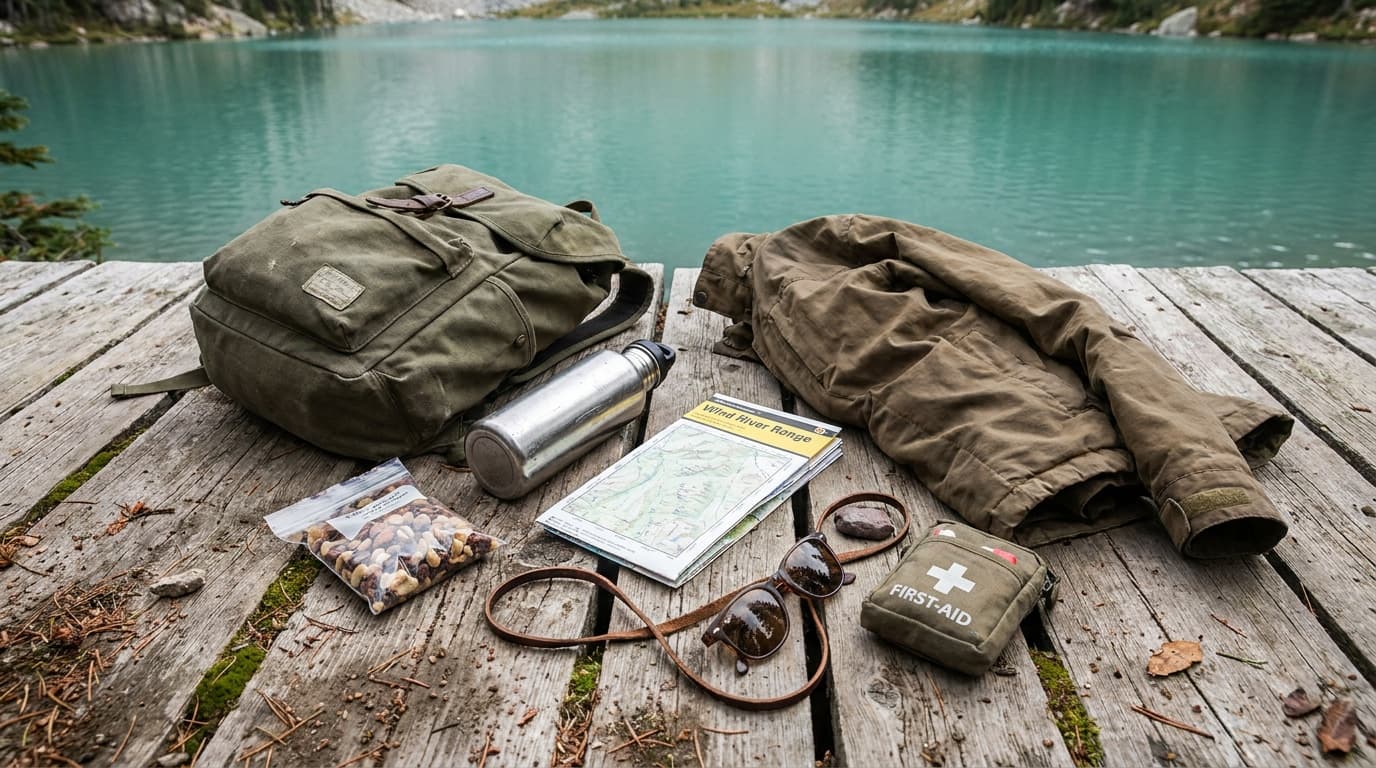
Back the phone with something that cannot run out of battery: a paper map of the area, even a printed one, plus a basic compass you know how to orient. That redundancy costs a few dollars and has ended a lot of bad afternoons.
Add dedicated hardware when your hiking outgrows the phone: a handheld GPS unit for dense canyon or forest terrain where phones struggle, or a satellite messenger once you regularly hike solo or beyond cell coverage. The guide to whether you need a satellite messenger draws that line honestly.
Sun protection: a real hat outworks reapplied sunscreen
SUN PROTECTION
Sunday Afternoons Ultra Adventure Hat
A featherlight wide-brim hat with a foldable Reverse Split Brim and a 6-inch neck cape, rated UPF 50+ including the mesh, purpose-built for long days in alpine or desert sun. Side mesh panels let heat out, and a recycled wicking sweatband keeps it comfortable through steep climbs.
Best for: Backpackers and desert hikers who want maximum coverage in a sub-3-oz package they will forget is in their kit.
- Reverse Split Brim folds flat for compact packing at just 2.6 oz
- Neck cape extends to 6 in., covering ears and the back of the neck on exposed ridges
- Aesthetic is purely utilitarian, not a trail-to-town crossover
Kit Score 8.5/10 · Check current price · how we score gear
Buy on AmazonSunscreen sweats off; a brim does not. A dedicated sun hat like the Sunday Afternoons Ultra Adventure shades face, ears, and neck (the three most-burned spots on hikers) with a UPF 50+ rating and a design that survives being stuffed in a pack pocket.
Round out the slot with sunglasses and a travel-size sunscreen for hands and any exposed skin. On exposed routes above treeline or in the desert, a lightweight sun hoodie replaces both the sunscreen routine and a layer. More brim styles and packable options are in the best sun hats for hiking roundup.
The weather layer: a rain shell earns its slot every time
THE SHELL
Marmot PreCip Eco Rain Jacket
The PreCip Eco has been the budget benchmark for waterproof hiking shells for years, and the Eco update keeps it current with a fully recycled face fabric and PFC-free DWR. At around $132, it delivers a feature set including pit zips, a stowable hood, and full seam taping that rivals jackets priced significantly higher.
Best for: Budget-focused hikers and day-trippers who want all the essential features of a waterproof shell without spending over $140.
- Full feature set at a sub-$140 street price: pit zips, stowable helmet-compatible hood, fully seam-taped, and packable into its own pocket
- 10.3 oz weight keeps it light enough for day hiking and backpacking without the premium price tag
- 2.5-layer construction means a painted liner rather than a fabric backer, which feels rubbery against the neck and wrists during sustained sweaty output
Kit Score 7.6/10 · Check current price · how we score gear
Buy on AmazonMountain and shoulder-season weather changes faster than forecasts resolve, and a wet cotton hoodie at 55°F is a genuine hypothermia setup. A packable rain shell is the insurance policy: roughly 10 oz, the volume of a burrito, and it doubles as a wind layer on exposed ridges.
The Marmot PreCip Eco is the budget pick that still covers the important details: full seam taping, pit zips, a stowable hood, and a 10.3 oz weight. Its 2.5-layer construction feels clammy sooner than a premium 3-layer shell, but for day hikes it puts dependable rain protection in the pack without a $200 purchase. Pair it with a light fleece or merino long-sleeve from fall through spring. Alternatives by budget are in the best rain jackets guide, and base layer options cover the insulation underneath.
Food, and what stays home
Food is the simplest slot: 200-300 calories per hour of hiking, weighted toward things you will actually eat when tired. Salty beats sweet after hour three for most people. Pack one extra bar beyond the plan; it weighs 2 oz and covers both a longer-than-expected day and a hungry trail companion.
What stays home on a day hike: camp stoves, chairs, bulky binoculars (unless wildlife is the point of the trip), a second pair of shoes, and the full-size first aid kit built for car camping. Every one of those has a place; that place is not a 22 L pack. Cross-check your final pack against the day hike checklist the night before, when adding a forgotten item is still easy.
Frequently asked questions
How much does a complete day hike kit cost?
A dependable full loadout runs $350-$500 new: $100-$160 for the pack, $35-$45 for a bladder, $30-$40 for first aid, $50-$65 for a headlamp, $30-$45 for a sun hat, and $100-$180 for a rain shell. The pack, shell, and headlamp are decade-scale purchases, so the annualized cost is small. Cut the total by starting with any daypack you own and upgrading it last.
What size daypack do I need for a day hike?
Twenty to 25 liters suits most day hikers year-round: enough for 3 L of water, food, first aid, a shell, and a warm layer. Go up to 28-30 L only for winter hiking (bulkier layers) or if you carry gear for kids. Below 18 L you start leaving safety items home to make things fit, which is the wrong trade.
How much water should I carry on a day hike?
Plan on half a liter per hour of actual hiking, so 2-3 L covers most full days. Heat, altitude, and sustained climbing push the number up sharply; a hot exposed 10-miler can demand 4 L or more. Run your route through the hiking water calculator, and treat reliable mid-hike water sources as a bonus rather than part of the plan.
Do I really need a headlamp for a day hike?
Yes, on every hike. Delayed turnarounds, a sprained ankle, a wrong turn, or simply underestimating mileage regularly puts day hikers on trail after dark, and a phone flashlight burns the battery you need for navigation. A 3 oz headlamp that lives permanently in the pack removes the risk for the cost of a monthly recharge.
What should I wear on a day hike?
Non-cotton everything: synthetic or merino shirt, hiking pants or shorts, merino socks, and broken-in footwear appropriate to the terrain. Cotton holds sweat and rain against your skin and chills you in any breeze. If the day starts cool and turns hot, use our convertible vs regular hiking pants guide to decide whether zip-off legs are worth carrying. Carry the rain shell and, outside of summer, a light insulating layer regardless of the forecast.
Start with the pack, since it determines how everything else carries: the best daypacks for hiking roundup ranks the field. Browse the hike gear hub for every category in this loadout, and read how we research to see how Kit Authority evaluates gear.
Keep going
Free toolHiking Water CalculatorHow much water to carry for the distance and the heat.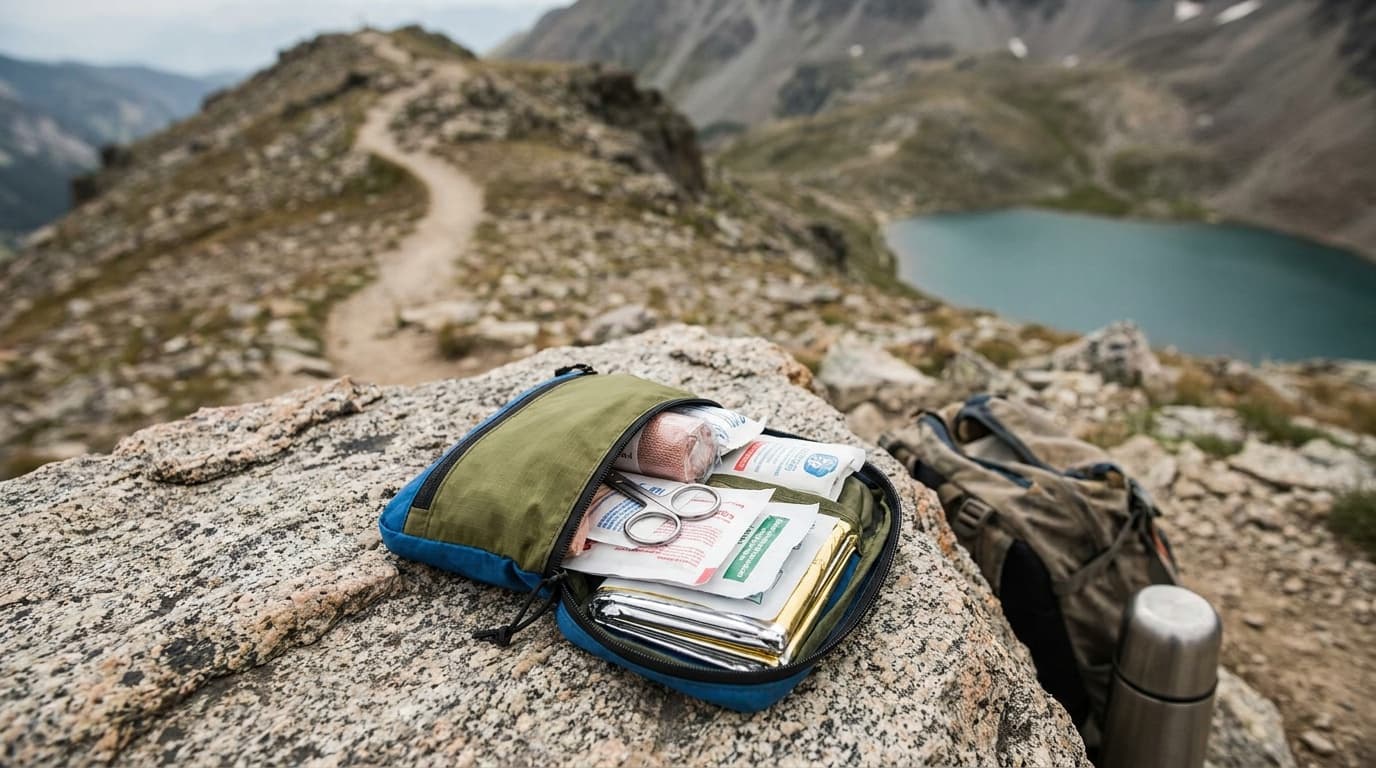
Our recommendations draw on manufacturer documentation, retailer listings, owner feedback, and comparisons with alternatives.
As an Amazon Associate I earn from qualifying purchases. We may earn a commission from links here, at no extra cost to you. How we research →