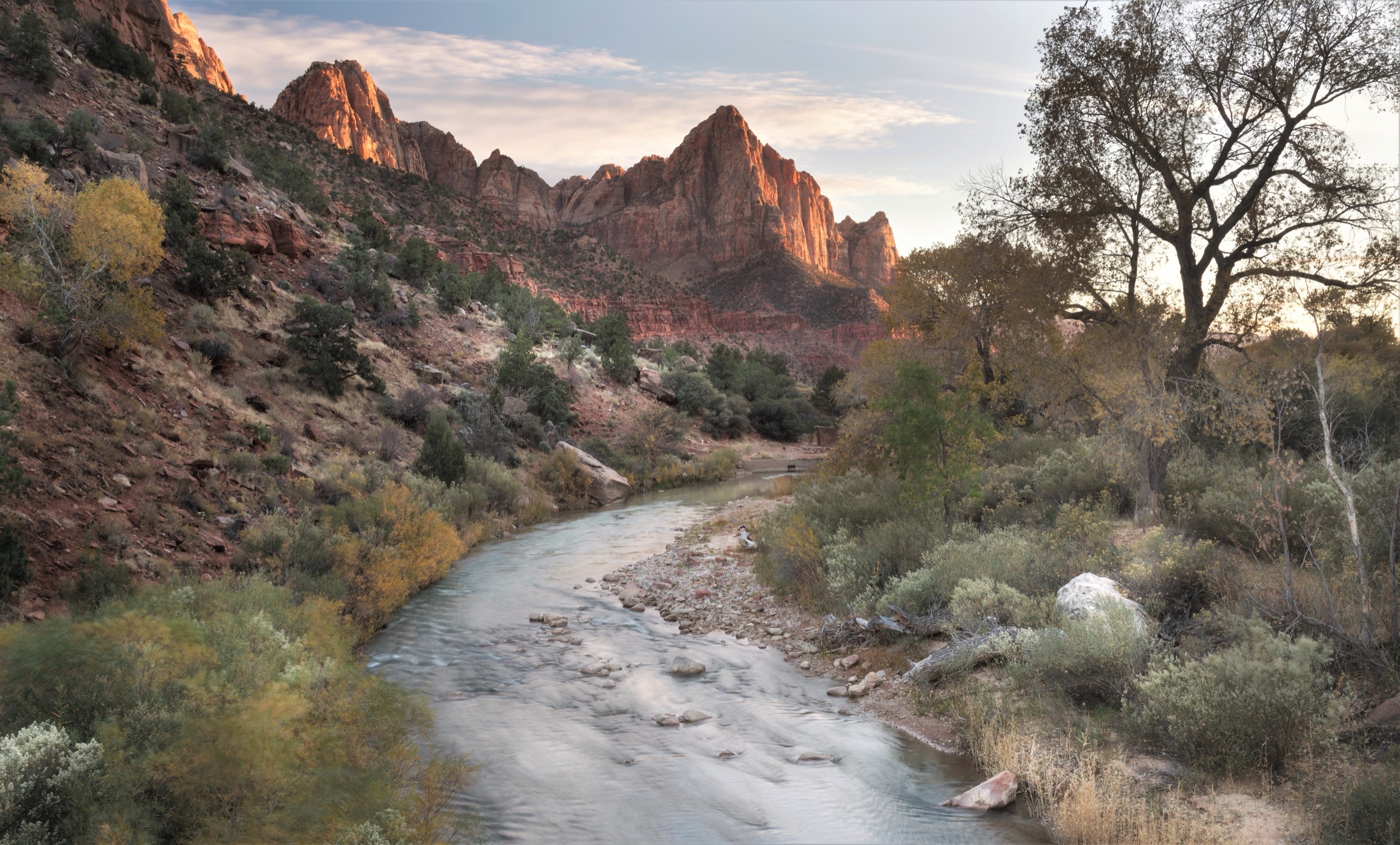
When to go
Conditions, crowds, and what each season asks you to pack.
Spring
60-80F
Mild, highs 60-80F. The Virgin River runs high with snowmelt, which can close the Narrows.
Pack Layers and sun protection; check Narrows flow before wading.
Summer
95-105F
Hot, highs 95-105F, with flash-flood risk during July to September monsoon storms.
Pack Sun shirt, electrolytes, and at least 3 liters of water per person.
Fall
70-85F
Warm days, cool nights, highs 70-85F. The most settled weather of the year.
Pack Light layers for warm canyon days and cool mornings.
Winter
40-55F
Cold, highs 40-55F, with ice on shaded high routes like Angels Landing.
Pack Traction devices, insulation, and a willingness to skip icy chains.
Crowds by month, from NPS visit counts
Busiest: June. An average June brings about 588,000 recreation visits to Zion, roughly 19,600 a day. Peak crowds run April to October.
Quietest: January. About 128,000 visits, 22% of the busiest month. Crowds stay low January to February.
- Low
- Moderate
- High
- Peak
Bar height is each month's average visits compared with the busiest month. Low is under 25% of that peak, Moderate 25 to 49%, High 50 to 74%, Peak 75% and up.
See the monthly numbers
| Month | Avg visits | Share of year | Crowds |
|---|---|---|---|
| January | 128,265 | 3% | Low |
| February | 145,711 | 3% | Low |
| March | 393,026 | 8% | High |
| April | 487,643 | 10% | Peak |
| May | 564,356 | 12% | Peak |
| June | 587,543 | 12% | Peak |
| July | 545,759 | 11% | Peak |
| August | 468,700 | 10% | Peak |
| September | 491,136 | 10% | Peak |
| October | 511,043 | 11% | Peak |
| November | 298,138 | 6% | High |
| December | 228,339 | 5% | Moderate |
Source: NPS Visitor Use Statistics, monthly recreation visits, averaged over 2023–2025. October and November 2025 are left out of the averages because of the federal government shutdown. Visits count entries, not unique people. NPS monthly report for Zion · Crowd calendar for all 63 parks
Zion weather by month
Average daily highs and lows, plus monthly precipitation, from NOAA's 1991-2020 climate normals for Zion Canyon near Springdale. Shaded months are the park's best season. Tap a month to build a pack list for it.
| Month | Jan | Feb | Mar | Apr | May | Jun | Jul | Aug | Sep | Oct | Nov | Dec |
|---|---|---|---|---|---|---|---|---|---|---|---|---|
| High (F) | 54 | 58 | 66 | 73 | 84 | 95 | 100 | 98 | 91 | 78 | 64 | 53 |
| Low (F) | 30 | 34 | 39 | 44 | 53 | 62 | 70 | 69 | 61 | 49 | 37 | 29 |
| Precip (in) | 2.0 | 2.1 | 2.0 | 1.2 | 0.8 | 0.2 | 1.2 | 1.6 | 1.2 | 1.2 | 1.2 | 1.6 |
| Snow (in) | 0.7 | 0.8 | 0.7 | 0.0 | 0.0 | 0.0 | 0.0 | 0.0 | 0.0 | 0.0 | 0.1 | 1.7 |
Station ZION NP (USC00429717), 4,038 ft, under a mile from Zion Canyon Visitor Center. Kolob Canyons and the Kolob Terrace sit higher and run cooler than the main canyon.
Source: NOAA NCEI U.S. Climate Normals, 1991-2020 monthly averages. Averages describe a typical year, not a forecast; check current conditions and alerts before you go. Precipitation includes the water in melted snow.
Top things to do

Angels Landing
A climb up chained switchbacks to a narrow fin with huge exposure. A permit is required for the final section.

The Narrows
Wade up the Virgin River through a slot canyon between thousand-foot walls. Closes when the flow runs too high.

Observation Point
A higher, quieter viewpoint that looks down on Angels Landing, usually reached from the east side.
The canyon highlights
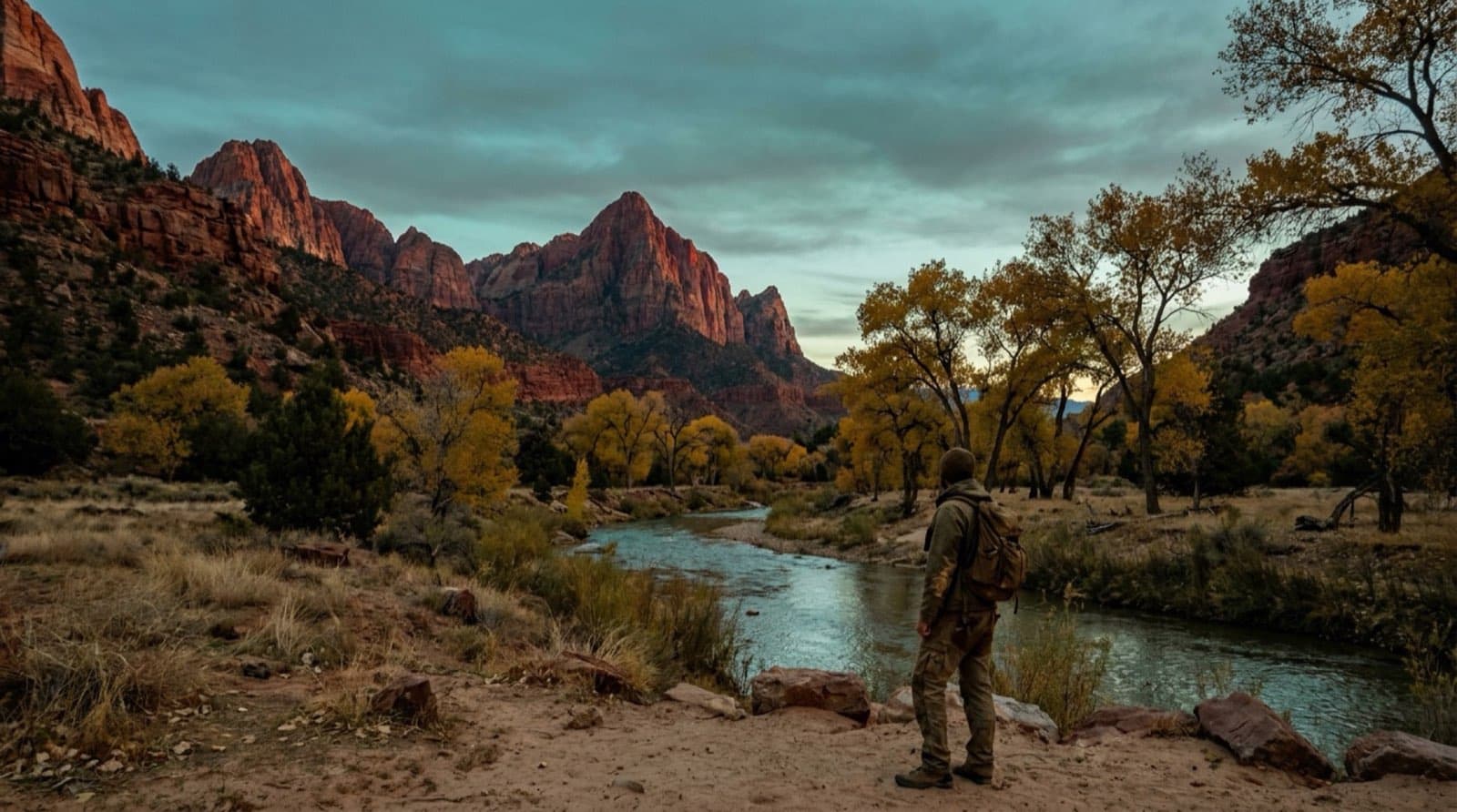
Ride the shuttle to the end of the scenic drive, walk the paved Riverside Walk, then wade the lower Narrows if the flow allows. On the way back, stop at the Emerald Pools and finish at sunset on the Pa'rus Trail with the Watchman glowing red.
- 1Start early on the shuttle to Temple of Sinawava, then walk Riverside Walk before the canyon floor fills.
- 2Wade the lower Narrows only if flow, forecast, and water temperature are all reasonable.
- 3Use Emerald Pools and the Pa'rus Trail as the return-day finish rather than forcing another major climb.
Where to stay

Stay strategy
Sleep where the first morning stays simple.
Stay strategy
Stay in Springdale unless your route gives you a better reason.
For a first Zion trip, lodging is really a shuttle decision. Springdale lets you park once, ride the free town shuttle to the pedestrian entrance, and connect to the canyon shuttle. Move outside town only when price, camping, Kolob, or the east side matters more than morning friction.
- Shuttle season
- Spring through fall, use the canyon shuttle
- Town connection
- 9 Springdale stops link to the pedestrian entrance
- Camp booking
- Watchman 6 months ahead; South and Lava Point 14 days
- Permits needed
- Angels Landing, wilderness overnights, and Narrows top-down
Compare base options
Compare each base by the first morning: where you park, what you ride, and how many decisions happen before the trail or viewpoint.
Paid links: we may earn a commission if you book, at no extra cost to you.

- Best for
- Most first visits, shuttle days, restaurants, rentals, and no-car evenings
- Tradeoff
- Highest room rates, and parking still takes planning.
Planning detail
Choose this for Angels Landing, Emerald Pools, Riverside Walk, and the Narrows from the bottom up. The Springdale Line stops in town and drops you near the pedestrian entrance, so the morning problem becomes walking to a stop instead of finding a space inside the park.
- Best for
- Earliest canyon starts, Emerald Pools access, and staying inside the walls
- Tradeoff
- Limited rooms and cabins, usually sold early and priced accordingly.
Planning detail
Zion Lodge is the only lodging inside the park: 76 hotel rooms, 6 suites, and 40 cabins in the canyon. It is also the only place inside the park to buy food, and you can walk or shuttle to nearby trailheads.

- Best for
- Campers who want the South Entrance, or a primitive cooler base away from the canyon
- Tradeoff
- Reservations are required, and mid-March through late November fills almost nightly.
Planning detail
Watchman is by the South Entrance and opens reservations up to 6 months ahead. South is also by the South Entrance but releases sites up to 14 days ahead. Lava Point is about 1 hour from Zion Canyon on Kolob Terrace Road, seasonal, and best when you accept a drive.

- Best for
- Permitted overnights and point-to-point routes
- Tradeoff
- You need transport planning and permit pickup time.
Planning detail
All overnight backpacking trips require wilderness permits. The Narrows top-down is a strenuous 16-mile route that can be done in a day or with 1 night of camping, but both need a permit and a weather-aware exit plan.

Budget base
Virgin, La Verkin, Hurricane, or East Zion
Shuttle details- Best for
- Lower rates, car-based trips, Kolob Canyons, or east-side trailheads
- Tradeoff
- You give back time each morning and must solve parking before the day heats up.
Planning detail
Use these towns when Springdale pricing breaks the trip or when your itinerary is not only Zion Canyon. Leave early for visitor-center parking, or pay for Springdale parking and ride the town shuttle in.
Book order
Lock lodging or campground first, then permits, then your water, pack, and sleep-system tools.
Parking reality
If you sleep outside Springdale, assume the visitor-center lot can fill early and build the morning around that.
When to pay more
Pay for Springdale or Zion Lodge when your trip depends on the main canyon; save outside town when the car is part of the plan.
Camping reservations
Camping reservations
Reserve Zion camping before the rest of the trip gets rigid.
Zion's developed campgrounds all require reservations. Watchman is the close-in first choice for most campers, while South and Lava Point use shorter booking windows and need more date flexibility.
Reviewed June 6, 2026
Booking window
Watchman standard sites open up to 6 months ahead, Watchman group sites up to 12 months ahead, and South plus Lava Point sites up to 14 days ahead.
- First-come sites are not available at Watchman or Lava Point.
- South and Lava Point are more date-sensitive, so do not treat them as overflow until you have checked availability.
- All overnight backpacking and Narrows top-down camping plans need a wilderness permit.
Where to book or verify
Start here for campground status, seasons, rules, and official reservation links.
Use Recreation.gov for reservable developed campground inventory.
Required for overnight backpacking, including Narrows top-down camping.
Use this for wilderness permits, timed systems, tours, and other park-specific reservations.
Campgrounds to know
Watchman Campground
Details- Booking
- Standard sites up to 6 months ahead; group sites up to 12 months ahead.
- Season
- Typically available year-round.
- Sites
- Tent, RV, walk-in, electric, and group sites.
- Located by the South Entrance and visitor center, so it is the most practical Zion Canyon camping base.
South Campground
Details- Booking
- Usually releases sites up to 14 days ahead.
- Season
- Seasonal. Check the NPS page for current open dates.
- Sites
- Developed campground near the South Entrance.
- Best treated as a short-window option, not a guaranteed backup.
Lava Point Campground
Details- Booking
- Sites can be reserved up to 14 days ahead.
- Season
- Weather-dependent, typically May through September.
- Sites
- Six primitive tent-only sites, no running water, no RVs or trailers.
- Cooler and quieter, but far from Zion Canyon and limited to vehicles under 19 feet.
Getting there and practical info

Plan the handoff from arrival to shuttle.
Parking, pedestrian entrances, and shuttle timing decide how calmly the first morning starts.
Getting there
Get to Zion, then remove the first-morning friction.
- Nearest airport
- St. George (SGU) about 1 hour; Las Vegas (LAS) about 2.5 hours
- Access rhythm
- Park once, ride in
- Region
- Utah
Fly in
Fly into St. George (SGU) for the closest airport, about an hour away, or Las Vegas (LAS) for more flights and a 2.5-hour drive.
Shuttle access
From spring through late fall, private vehicles cannot drive the Zion Canyon Scenic Drive; park in Springdale or at the visitor center and take the free shuttle.
Car strategy
A car is still worth having for the Kolob Canyons section and the east entrance.
Book ahead
- Rental cars at St. George (SGU)Paid link, Economybookings
- Guided tours in ZionPaid link, Viator
Paid links: we may earn a commission if you book, at no extra cost to you.
Pair this with lodging: sleep where the park transfer is simple, especially if your route needs an early start.
Plan your trip
Build one complete pack brief from Zion's season, activity, and trip length. Fine-tune an individual calculation only if you need it.
Fine-tune water, pack size, warmth, or stove fuel

Build around conditions
Let season, elevation, and weather set the plan.
Plan your trip
4 quick tools, already seeded for Zion. Tune the numbers around temperature swings, footing, layers, and how much margin the route needs.
What to pack
Start with the gear decisions Zion changes: water, footing, weather, and overnight needs. The checklist is there once your route and dates are set.
Kit Authority
Zion packing list
0 of 22 packed. Check items as you pack, then take this list to the store, trailhead, or campsite.
Pack planning
Decide what Zion asks of your kit before you start checking boxes.
Use this as a constraint check while you are still shaping the trip. The active checklist becomes useful once your route, dates, and sleep plan are set.
- First constraintHydration and exposureWater, Electrolyte mix, hat, sunscreen, sunglasses, 4 more
- Route realityFooting and tractionHiking boots, Hiking socks, Trekking poles
- Load choicePack and carry systemBackpacking pack
- If overnightSleep and shelterBackpacking tent, Sleeping bag, Sleeping pad, 1 more
Checklist mode
22 items, grouped for the trip you are actually taking.
- Dates and season are set.
- Primary route, campground, or lodge is chosen.
- Water, footwear, and overnight needs are sized.
One researched pick
The first gear decision for Zion
A stable daypack is the one purchase that organizes water, layers, food, first aid, and the small safety margin.
We may earn a commission from links on this page, at no extra cost to you. Product prices and availability are accurate as of the date/time indicated and are subject to change. Any price and availability information displayed on Amazon at the time of purchase will apply to the purchase of this product.
THE DAY-HIKE PICK
Osprey Talon 22
Best Overall
Kit Score 8.6/10
$169.95 Price checked Oct 25, 6:06 AM CDT
Best for: Hikers who want a proven all-around daypack with solid load support, plenty of adjustment, and a warranty they can actually use.
- Adjustable torso fit covers a wide range of body sizes
- At 2 lb 1 oz it runs heavier than ultralight rivals for the same volume
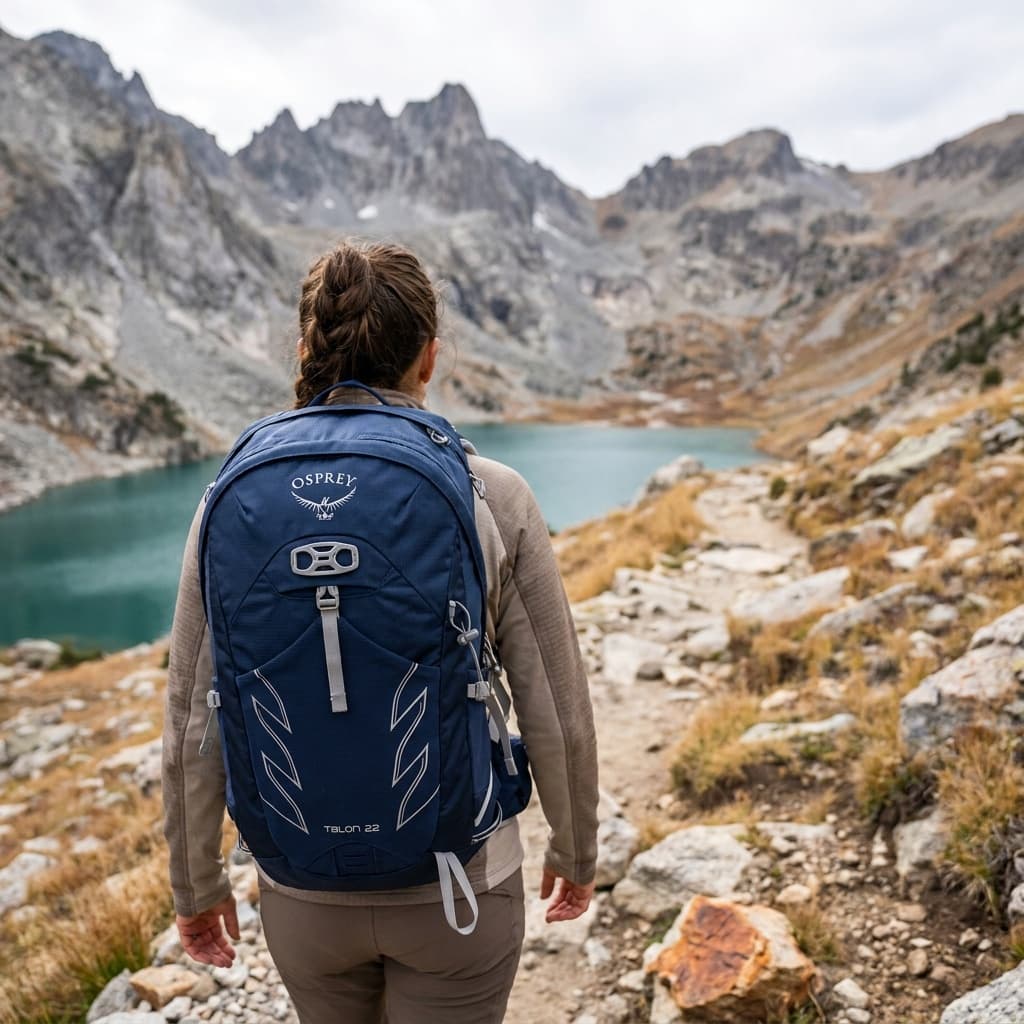
- Volume
- 22 L
- Weight
- 2 lb 1 oz (945 g)
- Back Panel
- AirScape foam with ventilation channels
- Hipbelt Pockets
- 2 zippered
- Hydration
- Compatible up to 3 L reservoir (sold separately)
- Warranty
- All Mighty Guarantee (lifetime repair or replace)
About this pick
The Talon 22 is the daypack you see on the trail more than any other for good reason: it packs in a padded hipbelt, adjustable torso harness, and dual hipbelt pockets into a 22-liter package that handles loads up to 20 lb without complaint. Owners across hundreds of Amazon ratings consistently cite its adjustability and durability as standouts.
Strengths
- Adjustable torso fit covers a wide range of body sizes
- Padded hipbelt and dual hipbelt pockets at this size are rare
- Osprey lifetime warranty backs years of hard use
Weaknesses
- At 2 lb 1 oz it runs heavier than ultralight rivals for the same volume
- AirScape back panel ventilation is functional but not class-leading compared to suspended-mesh designs
Kit Score breakdown
Gear for Zion
The buying guides that match what Zion asks of your kit. Each one has our current top picks across budget and use case.
Can you photograph here? Permit and drone rules
Zion generally does not require a filming or photography permit for groups of eight or fewer using hand-carried equipment in public areas, without exclusive use, adverse impacts, or extra NPS administrative costs. Commercial and personal shoots follow the same rule. Other activity permits and park restrictions still apply; check the official guidance for exceptions.
Official NPS permit guidance (checked 2026-09-05).
- Permit
- Usually no permit for eight or fewer when all NPS conditions are met; check larger or more complex shoots with the park
- Drones
- Effectively banned: launching, landing, or operating a drone within park boundaries is prohibited
- Land
- Yes for personal and editorial photography throughout the park
From our photography sister site, Aperture Authority. Other rules from the feed dated 2026-06-28.
Frequently asked questions
Do you need a permit for Angels Landing in Zion?
Yes. Since 2022 the chained final section of Angels Landing requires a permit, awarded by a seasonal and day-before lottery. You can hike to Scout Lookout, just below the chains, without a permit.
How much water should you bring to hike in Zion?
Plan on at least 3 liters per person for a half-day hike, and more in summer when highs top 100F. There is no reliable drinking water on most trails, so carry what you need and use our hiking water calculator to size it.
Is there a shuttle in Zion National Park?
Yes. For most of the year a free shuttle is the only way to drive the main Zion Canyon Scenic Drive. Park in Springdale or at the visitor center and ride in; private cars are allowed on the canyon road only in the quietest winter weeks.
Keep planning
Compare with another park
Nearby parks
 Bryce CanyonA high-elevation rim trail above thousands of glowing orange hoodoos, easy to reach and unreal to walk into.
 Capitol ReefA 100-mile wrinkle of red rock cliffs and hidden canyons, with a historic fruit orchard you can pick from in season.
 Grand CanyonA mile-deep, 277-mile gorge carved by the Colorado River, with rim walks for everyone and inner-canyon hikes for the prepared.
Trail guides in Utah