Inflatable paddleboard listings bury you in specs that barely matter and skip the three that do. This guide is the decoder: what volume and capacity actually mean for your weight, why PSI is the spec everyone gets wrong, and how shape, fins, and the pump situation should steer the buy. If you want the shortlist first, our best inflatable paddleboards roundup names the picks.
Our quick picks
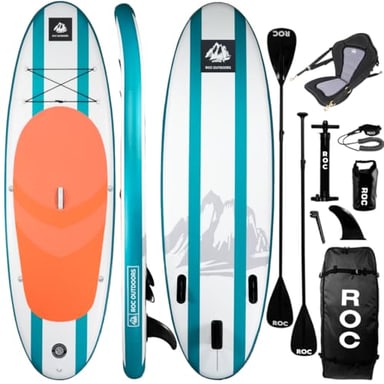
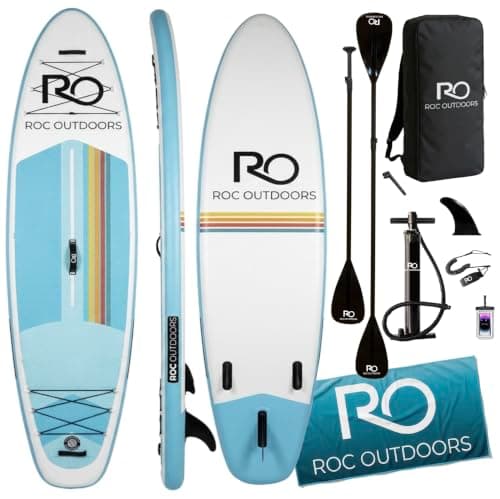
Roc Inflatable Paddle Board 10'6"
Board, paddle, pump, leash, and carry bag cover the essential first-day setup
Best for: First-time paddlers and families who want one affordable board that handles calm lakes, slow rivers, and guests.
Buy on Amazon →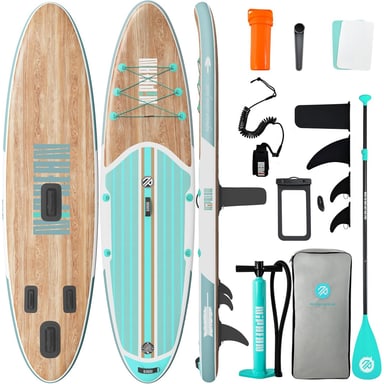
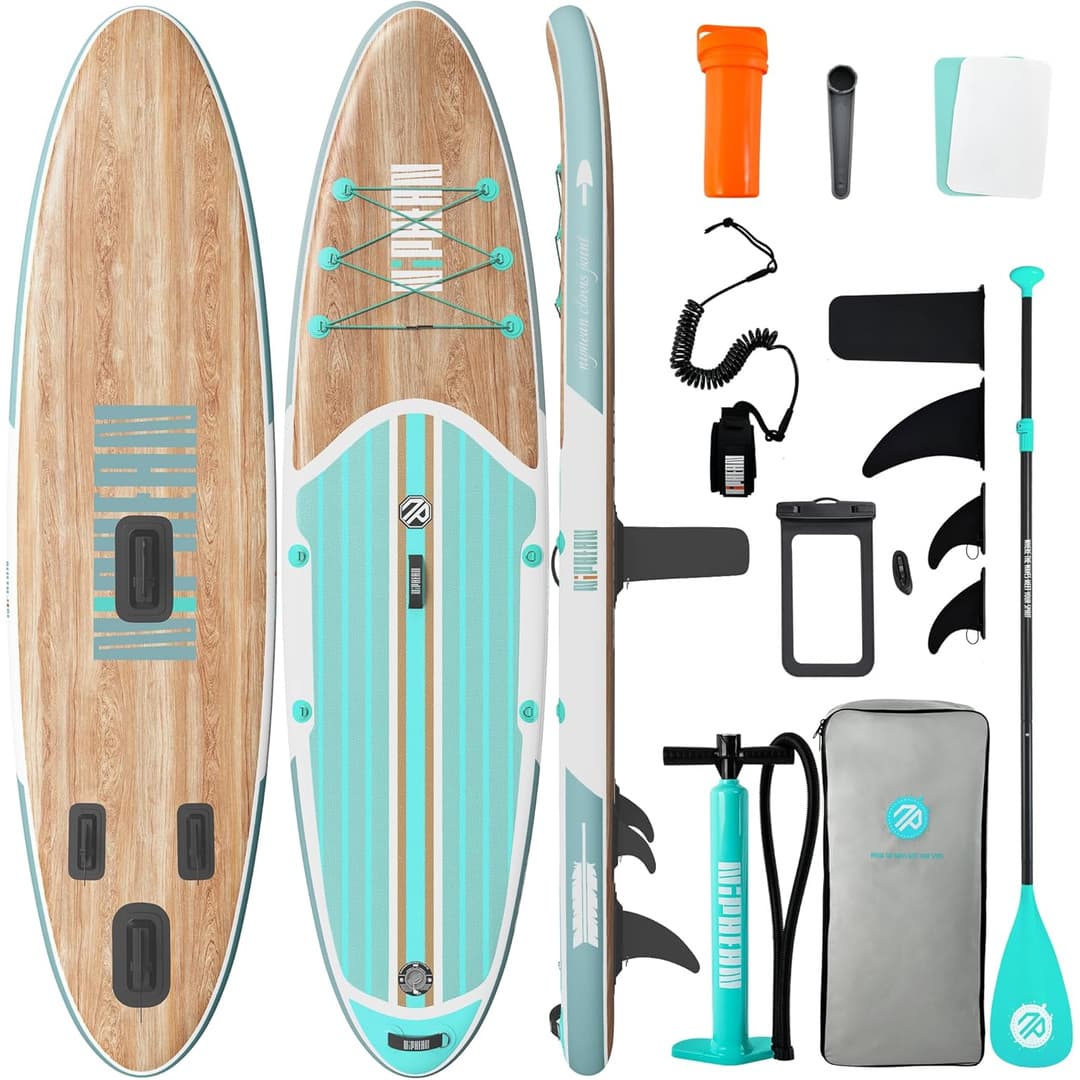
Niphean Inflatable Paddle Board 10'6"
Complete accessory kit includes the small pieces budget buyers often discover they still need
Best for: First-time paddlers who want the broadest complete kit and more attachment flexibility than a stripped-down budget board.
Buy on Amazon →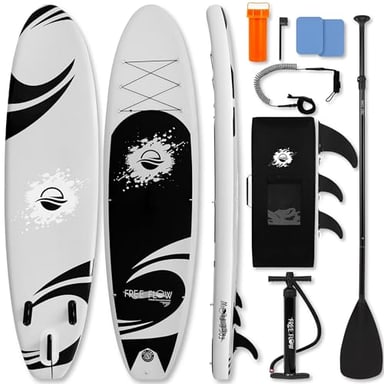
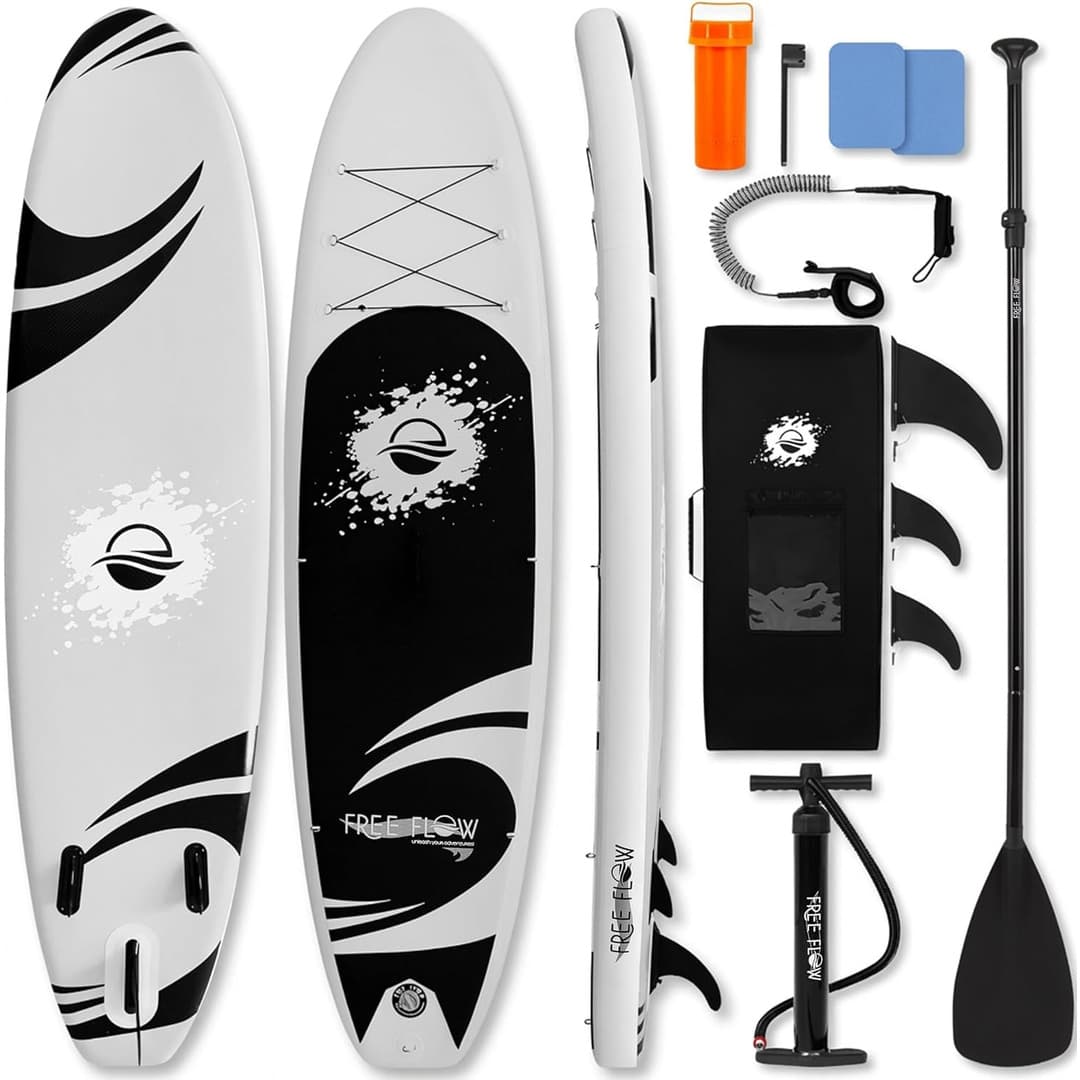
SereneLife Inflatable SUP 10'6"
Frequently the cheapest complete kit from an established name, ideal for testing the sport
Best for: Lighter, budget-first paddlers using calm water who are comfortable treating 275 lb as the working published limit.
Buy on Amazon →Volume and weight capacity: the spec that decides everything
A board's volume (in liters) and its rated weight capacity are two views of the same question: how much board is under you. Under-buy and the board rides low, flexes in the middle, and paddles like a wet mattress. The listing number is a maximum, not a target.
Add body weight, clothing, gear, and any passenger, child, or dog, then leave meaningful room below the published maximum. Using about 70 percent as a conservative planning target can expose an undersized board, but it is an editorial screening rule rather than a manufacturer standard. A 200 lb paddler with 20 lb of gear should not choose a 240 lb board simply because the total sits below the printed ceiling.
Height matters less than weight, but taller paddlers benefit from a wider board: a higher center of gravity makes the extra inch of width the difference between relaxed and twitchy.
PSI: the number everyone ignores
Every inflatable feels firm before a gauge necessarily reaches the target. Drop-stitch boards are engineered to work at their published pressure, which varies by model. Many list 15 PSI; the current SereneLife product table lists 13 PSI. The label and manual for the exact board override category shorthand.
The catch is that the last 5 PSI is also where hand-pumping turns miserable: the gauge barely moves and every stroke fights the pressure already in the board. This is not a reason to stop early. It is the reason the electric pump exists as a category.
Shape: default to the all-arounder
Board shapes sort into three families, and for lake paddling the choice is nearly made for you:
All-around (10'-11' long, 32"-34" wide, rounded nose). Stable, forgiving, fine at everything, brilliant at nothing. This is the right first board for almost everyone, and the shape every pick in our roundup shares.
Touring (11'6"-12'6", narrower, pointed nose). Faster and straighter for distance paddling, at the cost of stability. A good second board once your balance is automatic and your outings get longer.
Compact and specialty (under 10', or extra-wide platforms). Kids' boards, surf shapes, yoga and fishing barges. Buy these for their specific job, not as a first board.
Thickness is part of shape: 6 inches is the standard that keeps adult weight above the waterline. Treat 4 to 5 inch boards as kids' or small-paddler boards regardless of what the listing says.
Fins: removable beats fancy
Fins are what make a board go straight. Without them a SUP spins with every stroke; with them your strokes convert to glide. For a beginner the setup barely needs a decision, with two rules:
Make sure the center fin is removable. It is the part that hits bottom at every launch and the part that snaps in a car trunk. Removable means replaceable, and it means the board rolls flat for storage.
Triple fin setups (a center fin plus two side bites) track a little straighter and keep some steerage in shallow water with the center fin out, which is why mid-range boards like the iROCKER carry them. It is a nice-to-have, not a reason to spend up on its own.
Check the fin box style before buying spares: most budget boards use a slide-and-clip or screwless box and the fins are cheap to replace. Just keep a spare in the backpack.
Pumps: the accessory that keeps people paddling
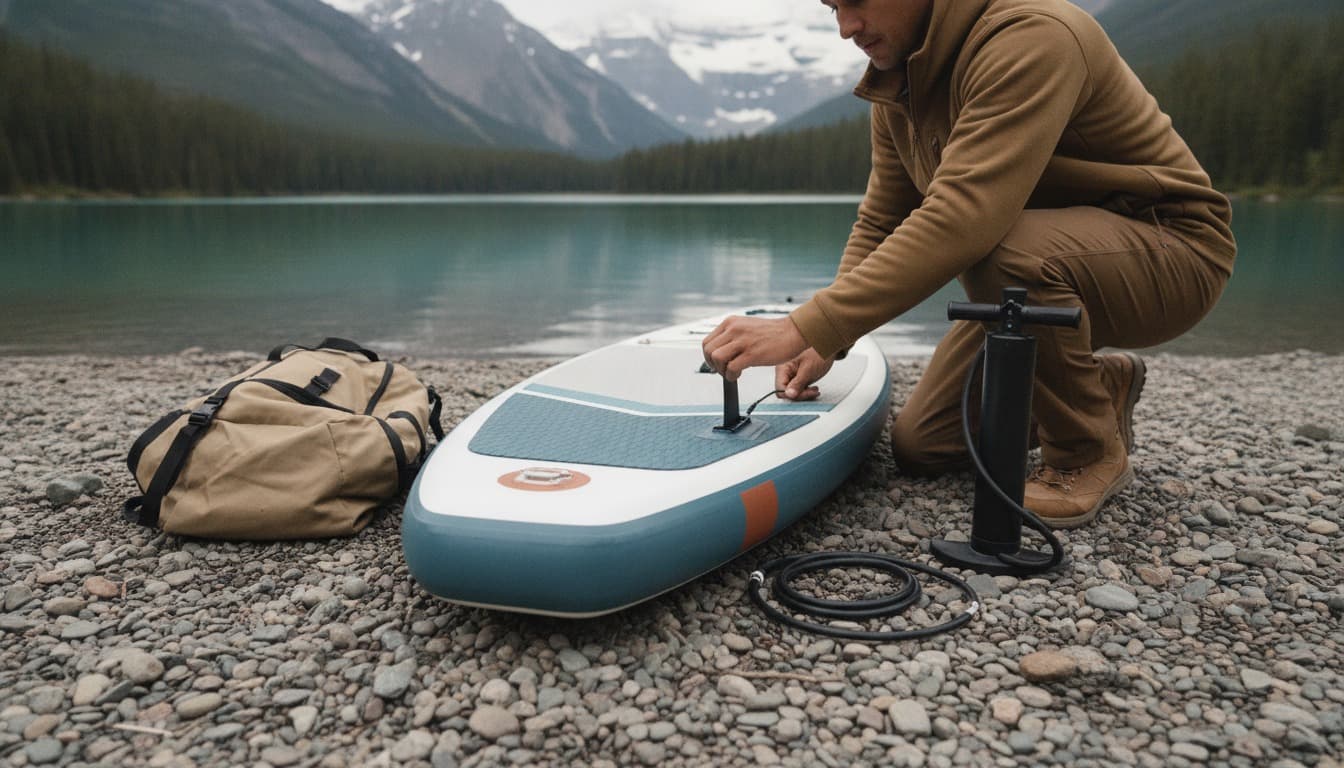
The bundled hand pump works, and for the first few outings the ritual is even enjoyable. Around outing five, the 8 to 10 sweaty pre-paddle minutes start deciding whether the board comes out at all. The options:
Dual-action hand pumps (fills on both strokes) come bundled with better kits and cut the work meaningfully. Switch them to single-action mode for the final high-pressure phase.
Rechargeable electric pumps are the real fix: set the target PSI, clip the hose, and carry your cooler to the water while the pump does the boring part and shuts itself off at pressure. Most also deflate the board for a tighter pack-down. Our pick and the reasoning live in the lakefront day-trip packing list.
12V car-outlet pumps cost less than rechargeable ones but chain you to the parking spot. Fine if you always launch next to the car.
Storage and care: where boards actually die
Inflatables rarely die on the water. They die in storage, and the failure modes are all preventable:
Sun is the enemy. UV chalks and weakens PVC skin. Store the board indoors, and do not leave it inflated on a roof rack or beach for days at a time.
Heat plus full inflation is the seam-killer. A board at 15 PSI inside a car on a July afternoon has nowhere for the expanding air to go. Let a few PSI out before it goes in the car, and never store it long-term fully inflated in the heat.
Dry before you roll. Rolling up a wet board grows mold and delaminates glue lines over time. Ten minutes of drying, a loose roll rather than a tight one, and a cool closet buys years of life.
Rinse after grit and sand. Sand in the valve is how a board develops a slow, maddening leak. A quick freshwater rinse and a valve check is the whole maintenance program.
The five-minute buying checklist
Capacity with margin
Add every person, pet, and bag, then leave substantial room below the published maximum.
Standard shape
10'6" x 32-33" x 6" all-around unless you have a specific reason otherwise.
Removable center fin
Replaceable, packable, and shallow-water friendly.
Complete kit
Paddle, pump, leash, and bag included, or price them into the comparison.
Pressure plan
Use the exact board-label target every outing; budget for an electric pump if hand inflation makes that unlikely.
Frequently asked questions
What size paddleboard do I need for my weight?
Add body weight, gear, and every passenger or pet, then leave substantial room below the published maximum. Capacity alone is not enough: board length, width, volume, pressure, and construction determine how the load feels. Larger paddlers and shared loads should favor more volume rather than choosing the smallest board whose maximum happens to exceed the total.
What PSI should I inflate my paddleboard to?
Use the exact rated pressure printed on the board and in its current manual. Many inflatable SUPs publish 15 PSI, while some publish a lower or higher limit. A board that merely feels firm may still be below its intended working pressure. An auto-stop electric pump can make the correct target easier to repeat without exceeding it.
Is a 3-fin paddleboard better than a single fin?
Slightly, for tracking, and usefully, for shallow water, but it is not a reason to pick one board over another on its own. The large removable center fin does most of the work of keeping a board straight; the two small side bites on a triple setup add a little directional stability and let you keep some steerage with the center fin removed in shallow rivers. What matters more for a first board: that the center fin is removable and cheap to replace.
How should I store an inflatable paddleboard for winter?
Clean it, dry it completely, roll it loosely with the valve open, and keep it somewhere cool and indoors, a closet or basement rather than a garage that freezes or an attic that bakes. Storing it partially inflated on a rack also works if you have the space, with a few PSI let out. The three things to avoid are moisture inside the roll, long-term UV exposure, and full pressure in high heat; dodge those and a board sleeps through winter without complaint.
Choose by total load with margin, follow the exact pressure label, and default to the all-around shape. See the boards that clear the bar in best inflatable paddleboards, compare Roc vs Niphean, add a life jacket you will actually wear, and pack the rest of the day with the lakefront day-trip list.
Keep going
Related buying guideBest inflatable paddleboards: starter kits and higher-capacity optionsRelated guides
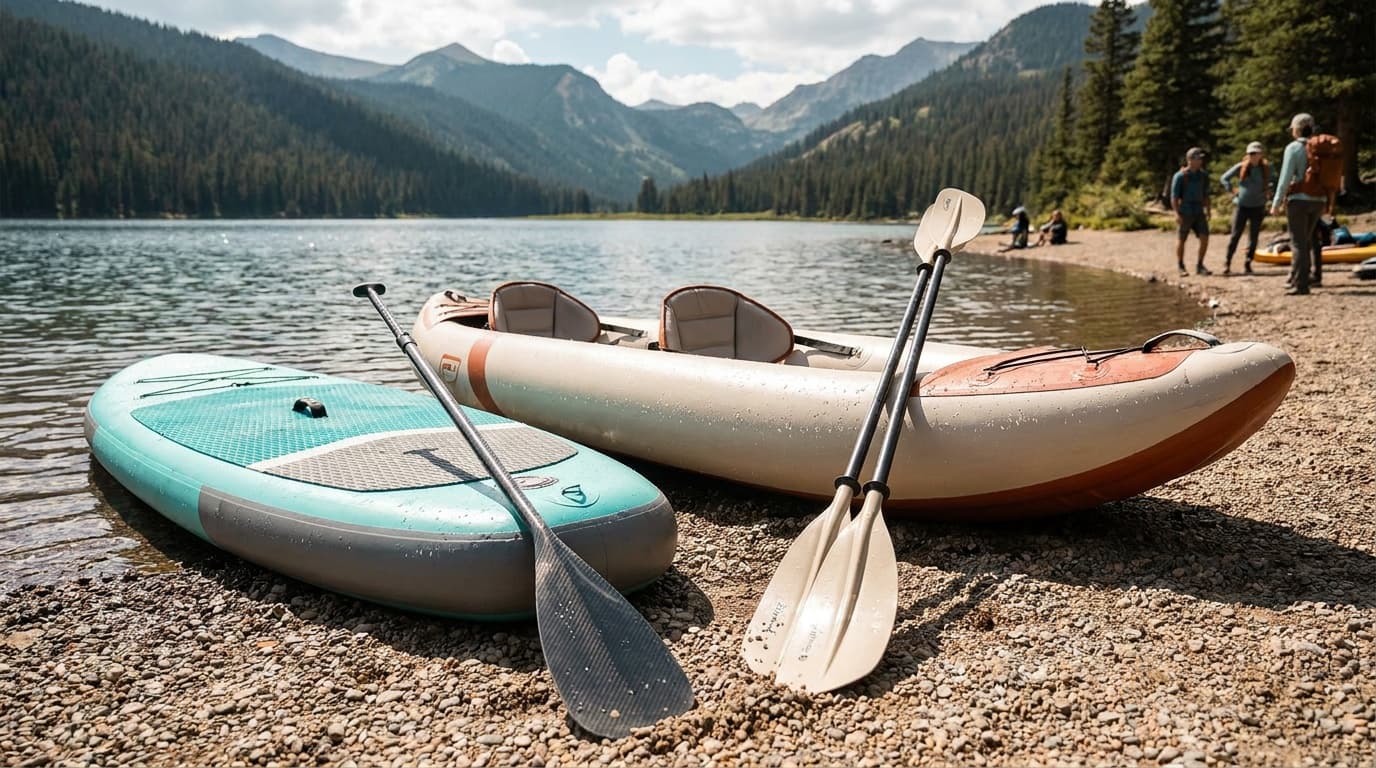
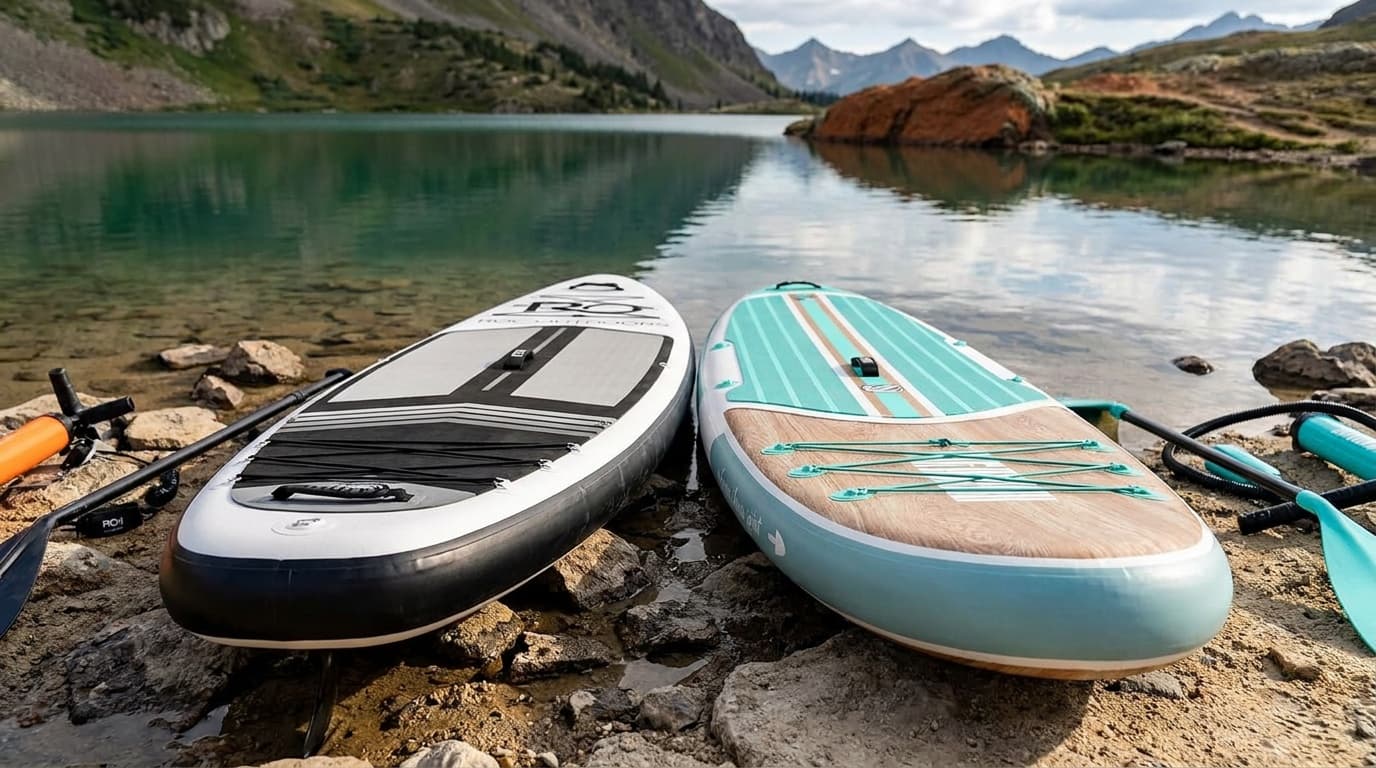
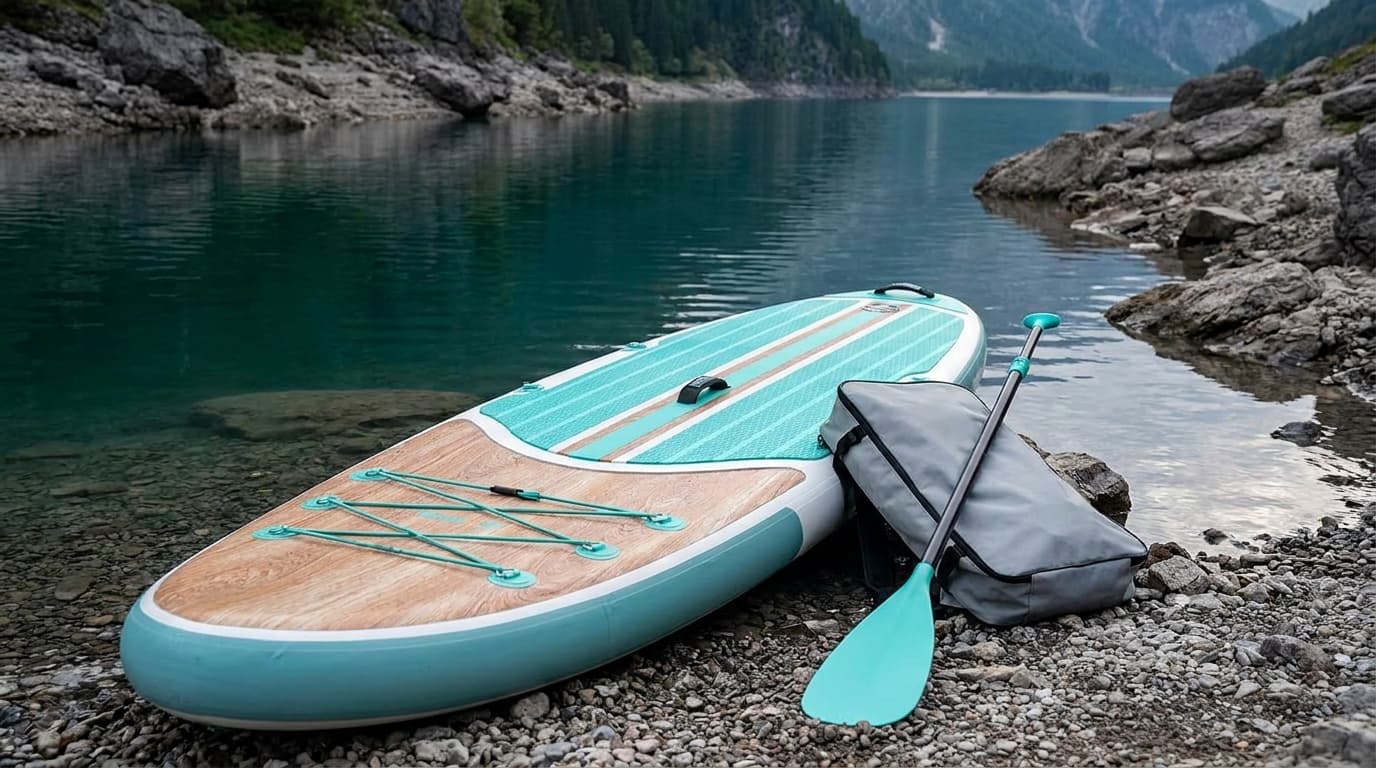
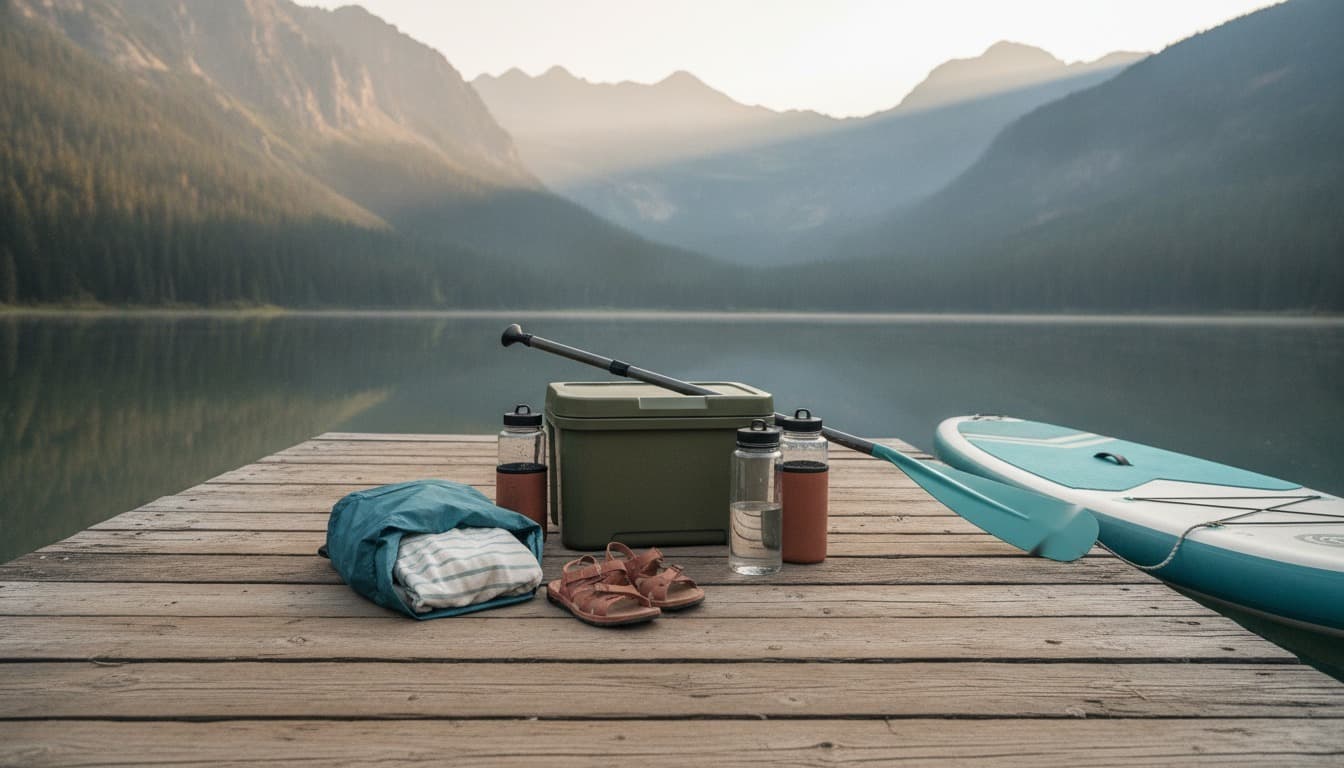 Complete water loadoutComplete lake-day kitBuild the complete kit
Our recommendations draw on manufacturer documentation, retailer listings, owner feedback, and comparisons with alternatives.
As an Amazon Associate I earn from qualifying purchases. We may earn a commission from links here, at no extra cost to you. How we research →