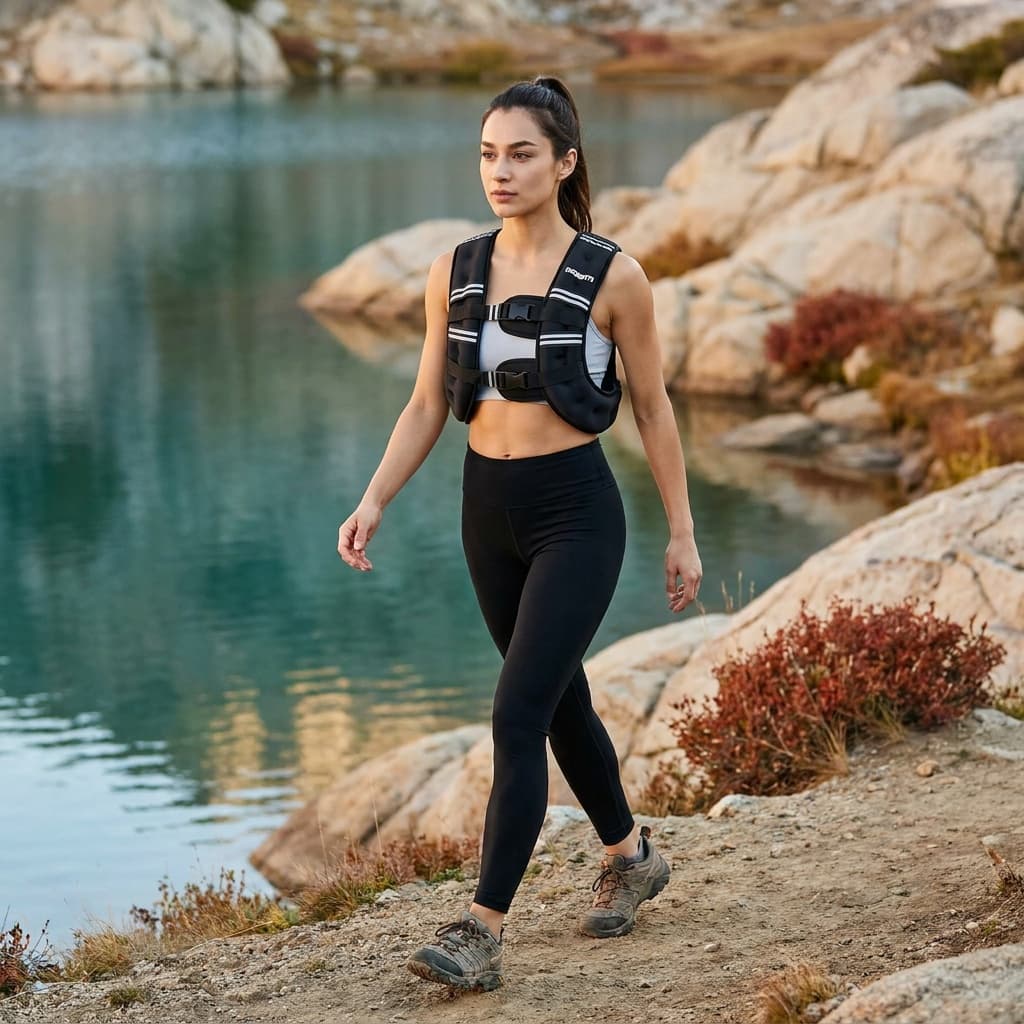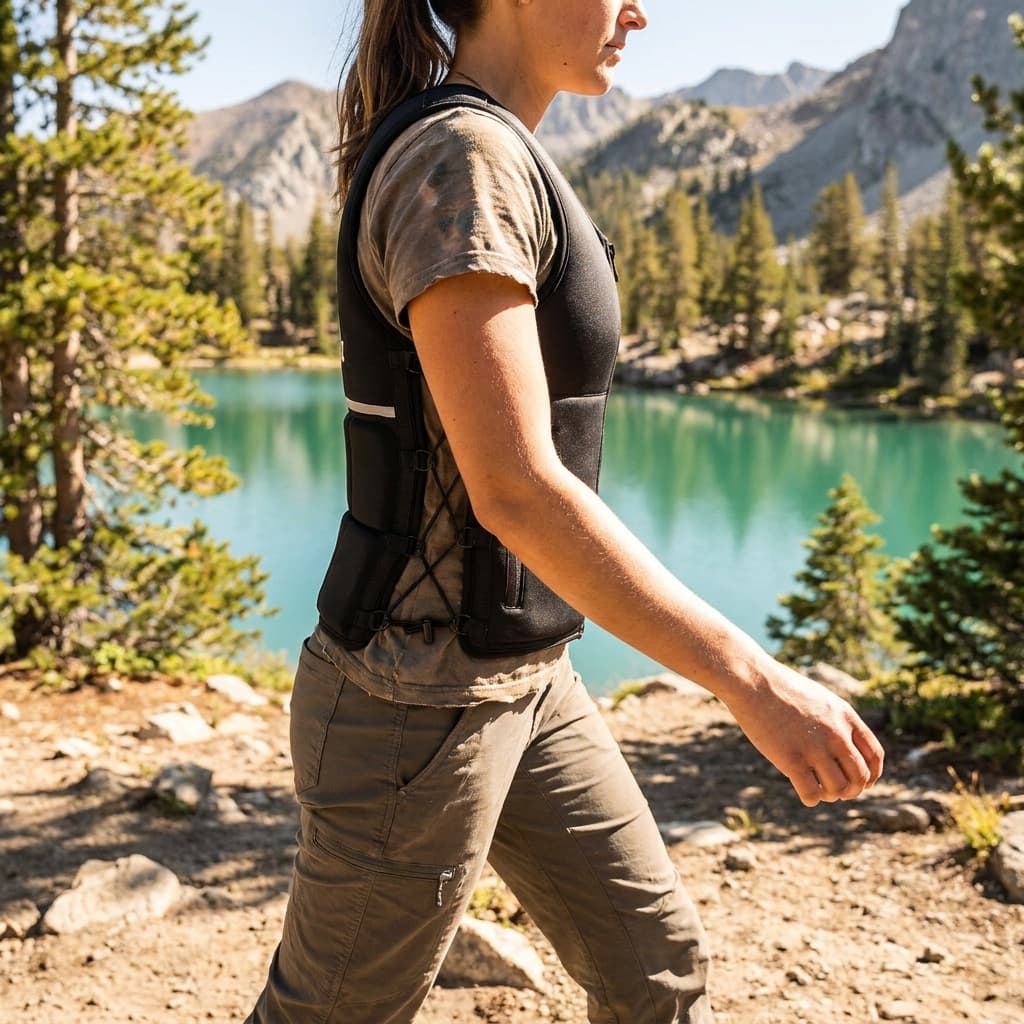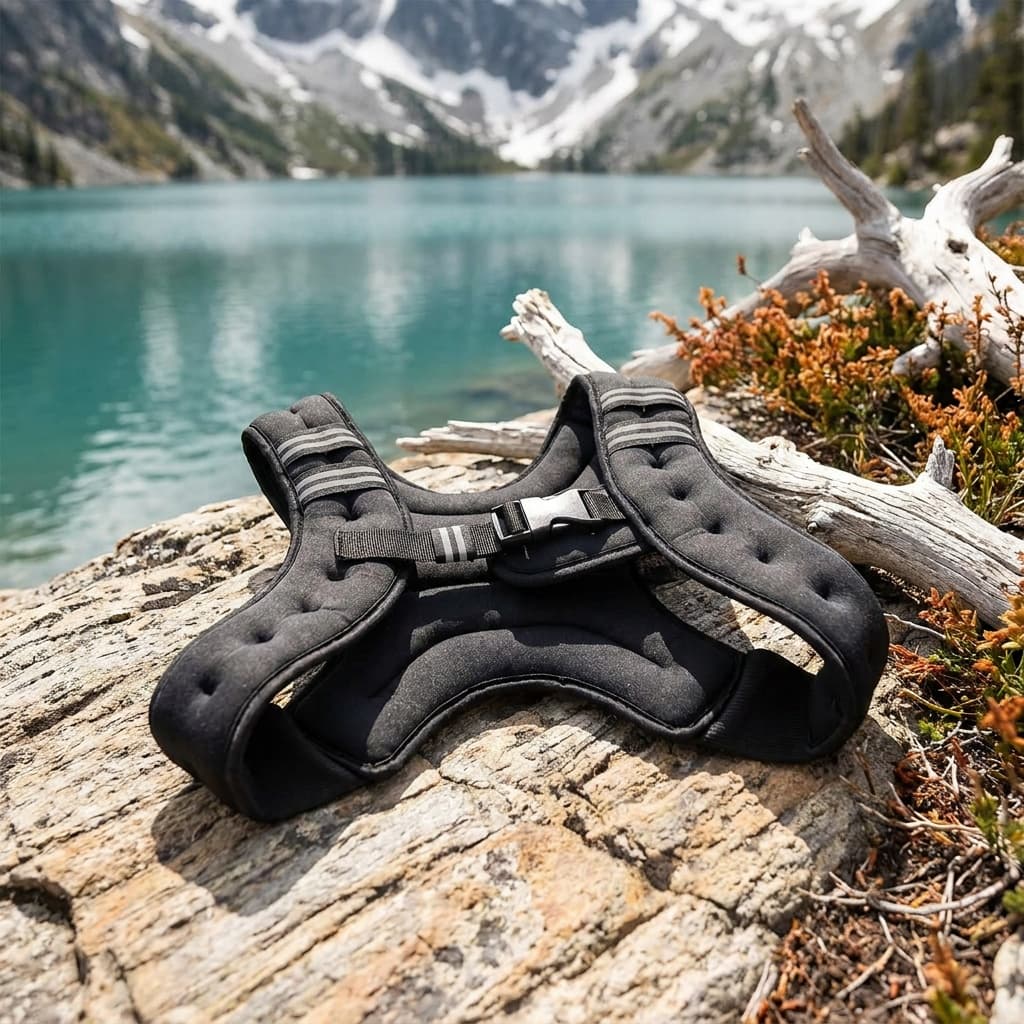
Adding a vest is a simple way to raise a walk's intensity, but starting too heavy can aggravate knees, hips, or the lower back. The right fixed-weight vest fits snugly and begins at a conservative load. If you need to progress in small steps, use the separate adjustable-vest guide.
Our quick picks
Compare the picks
| Product | Kit Score | Price | Best for |
|---|---|---|---|
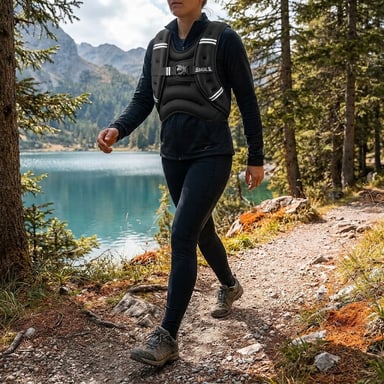
| BAGAIL Comfort-Fit Weighted Vest | 8.8 | $24.99 Price checked Oct 25, 3:41 PM CDT | Best for: Walkers and everyday fitness enthusiasts who want a polished, comfort-first vest they can wear daily without irritation. Why it stands out: Even weight distribution prevents the vest from shifting or bouncing during walks Tradeoff: Fixed weight per vest means you need to buy a new vest to add significant load |
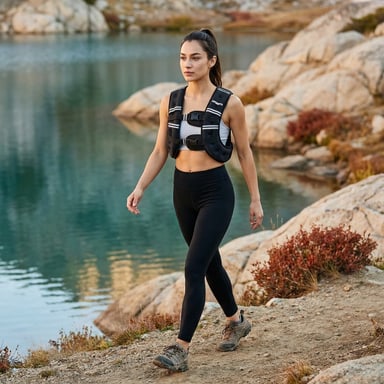
| PACEARTH Weighted Vest | 8.8 | $18.99 Price checked Oct 25, 3:41 PM CDT | Best for: Budget-conscious walkers who want the highest-rated vest in the category without spending more than necessary. Why it stands out: Highest owner rating (4.7 stars) in the category backed by nearly 5,000 verified reviews Tradeoff: Fixed weight construction, no option to incrementally add or remove plates |
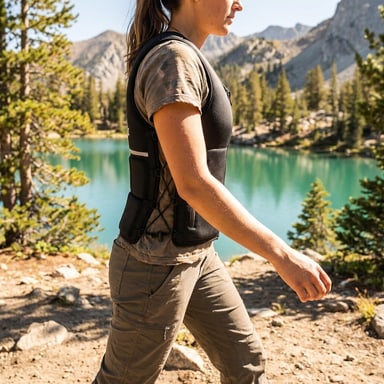
| ZELUS Weighted Vest | 8.5 | $26.49 Price checked Oct 25, 3:41 PM CDT | Best for: Walkers who want the most proven vest on the market with the largest owner review base and excellent breathability for warm-weather walks. Why it stands out: Over 16,000 reviews makes this the most battle-tested vest in the category, a strong signal of consistent quality Tradeoff: Fixed weight only, no modular plates or removable inserts for incremental progression |
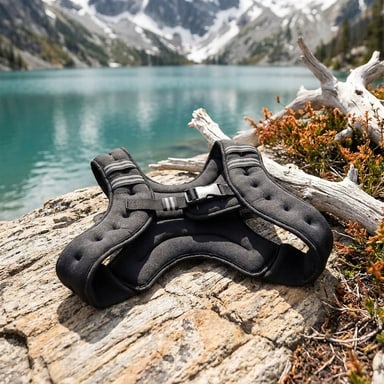
| Henkelion Weighted Vest | 8.1 | $11.36 Price checked Oct 25, 3:41 PM CDT | Best for: Absolute beginners testing weighted walking for the first time, or anyone with a strict budget who wants a proven, entry-level option from a well-reviewed brand. Why it stands out: Low entry price on lighter sizes; compare prices by weight, since they vary widely Tradeoff: Simpler single-strap construction offers less stability than multi-point fastening systems |
BAGAIL Comfort-Fit Weighted Vest
- Best for
- Walkers and everyday fitness enthusiasts who want a polished, comfort-first vest they can wear daily without irritation.
- Why it stands out
- Even weight distribution prevents the vest from shifting or bouncing during walks
- Tradeoff
- Fixed weight per vest means you need to buy a new vest to add significant load
PACEARTH Weighted Vest
- Best for
- Budget-conscious walkers who want the highest-rated vest in the category without spending more than necessary.
- Why it stands out
- Highest owner rating (4.7 stars) in the category backed by nearly 5,000 verified reviews
- Tradeoff
- Fixed weight construction, no option to incrementally add or remove plates
ZELUS Weighted Vest
- Best for
- Walkers who want the most proven vest on the market with the largest owner review base and excellent breathability for warm-weather walks.
- Why it stands out
- Over 16,000 reviews makes this the most battle-tested vest in the category, a strong signal of consistent quality
- Tradeoff
- Fixed weight only, no modular plates or removable inserts for incremental progression
Henkelion Weighted Vest
- Best for
- Absolute beginners testing weighted walking for the first time, or anyone with a strict budget who wants a proven, entry-level option from a well-reviewed brand.
- Why it stands out
- Low entry price on lighter sizes; compare prices by weight, since they vary widely
- Tradeoff
- Simpler single-strap construction offers less stability than multi-point fastening systems
Start with the numbers
Weighted walking works when you ramp it slowly. These are the figures to anchor on before you add a single pound.
Best overall: BAGAIL Comfort-Fit
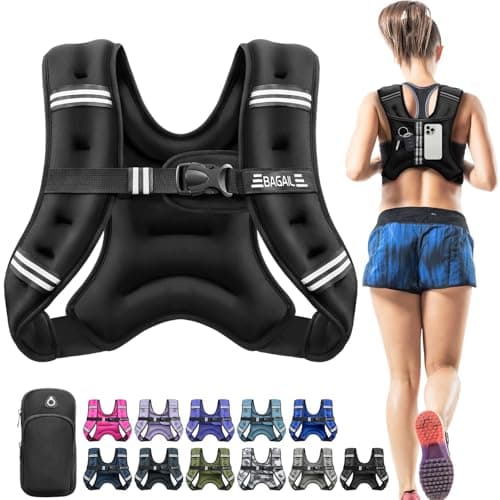
The Comfort-Fit earns the top spot for walkers because it does the boring things well: it sits snugly without bouncing, uses iron sand in sweat-resistant neoprene, and comes in fixed-weight versions from 5 to 30 lb. Neoprene runs warmer than open Lycra on hot days. Its strap adjusts the fit, not the load, so choose a weight you can use now rather than one you hope to grow into.
BEST OVERALL
BAGAIL Comfort-Fit Weighted Vest
Best for: Walkers and everyday fitness enthusiasts who want a polished, comfort-first vest they can wear daily without irritation.
- Even weight distribution prevents the vest from shifting or bouncing during walks
- Fixed weight per vest means you need to buy a new vest to add significant load
Kit Score 8.8/10 · $24.99 Price checked Oct 25, 3:41 PM CDT · how we score gear
Buy on AmazonProduct details
The BAGAIL Comfort-Fit pairs a stable fit with practical details like a detachable phone pouch. It is sold in fixed loads from 5 to 30 lb, so buyers must choose the weight before purchase.
- Weight Options
- 5, 8, 10, 12, 15, 20, 25, 30 lb
- Material
- Neoprene outer, iron sand fill
- Closure
- Adjustable buckle straps
- Safety
- Reflective stripes
- Storage
- Detachable phone pouch + back pocket
- Rating (Amazon)
- 4.6 stars / 3,661 reviews
More strengths
- No-chafe construction with padded contact points, comfortable for extended daily wear
- Detachable phone pouch is a practical feature most budget vests omit
- Multiple fixed-load options from 5 to 30 lb let buyers choose a conservative current load
Other tradeoffs
- Neoprene can retain heat on warm days; breathability is limited compared to open-mesh designs
Best value: PACEARTH
The PACEARTH delivers most of what the top pick does, with odor-resistant Lycra, added shoulder pads, and a reflective stripe for early-morning walks, in fixed loads from 6 to 30 lb. The value choice for getting started.
BEST VALUE
PACEARTH Weighted Vest
Best for: Budget-conscious walkers who want the highest-rated vest in the category without spending more than necessary.
- Highest owner rating (4.7 stars) in the category backed by nearly 5,000 verified reviews
- Fixed weight construction, no option to incrementally add or remove plates
Kit Score 8.8/10 · $18.99 Price checked Oct 25, 3:41 PM CDT · how we score gear
Buy on AmazonProduct details
The PACEARTH edges out rivals on owner satisfaction, scoring 4.7 stars from nearly 5,000 buyers. Odor-resistant Lycra and integrated shoulder padding punch well above its low price, making it the top pick for value-focused walkers.
- Weight Options
- 6, 8, 10, 12, 16, 20, 25, 30 lb
- Material
- Odor-free Lycra fabric, fixed internal weight
- Shoulder Padding
- Yes, integrated padded shoulders
- Safety
- Reflective stripes
- Storage
- Phone pouch
- Rating (Amazon)
- 4.7 stars / 4,881 reviews
More strengths
- Odor-free Lycra fabric stays fresher longer than neoprene alternatives
- Padded shoulders reduce fatigue on longer walks, uncommon at this price point
- Low price on the lighter weight options makes it an accessible entry point
Other tradeoffs
- One-size-fits-most fit may not suit very petite or very large frames as snugly
Choose a load you can use with normal gait and posture now, not the one you hope to tolerate later.
Best mid-range: ZELUS
A comfortable fixed-weight vest whose buckle straps fit chests from 31.5 to 45 inches, the ZELUS is the step up if fit range matters. Garage Gym Reviews names it its best budget weighted vest. Select the load at checkout; the weight itself is not removable.
EDITOR'S CHOICE
ZELUS Weighted Vest
Best for: Walkers who want the most proven vest on the market with the largest owner review base and excellent breathability for warm-weather walks.
- Over 16,000 reviews makes this the most battle-tested vest in the category, a strong signal of consistent quality
- Fixed weight only, no modular plates or removable inserts for incremental progression
Kit Score 8.5/10 · $26.49 Price checked Oct 25, 3:41 PM CDT · how we score gear
Buy on AmazonProduct details
With 16,000+ Amazon reviews and a nod from Garage Gym Reviews as their top budget pick, the ZELUS is the most extensively validated walking vest in this roundup. Its soft spandex construction and wide chest-fit range make it a dependable choice for a broad range of body types.
- Weight Options
- 6, 8, 12, 16, 20, 25, 30 lb
- Material
- Spandex fabric, iron sand fill
- Chest Fit Range
- 31.5" – 45" (one-size-fits-most)
- Safety
- Reflective stripes
- Storage
- Built-in back pocket
- Rating (Amazon)
- 4.6 stars / 16,028 reviews
More strengths
- Spandex construction tends to run cooler than full neoprene vests
- Adjustable straps accommodate a wide range of chest sizes from 31.5 to 45 inches
- Named Best Budget Weighted Vest by Garage Gym Reviews in their independently tested 2026 roundup
Other tradeoffs
- Universal sizing may feel slightly loose on smaller frames without maximum strap tightening
Best budget: Henkelion
The Henkelion is a simple, low-cost way to find out whether weighted walking is for you; prices vary a lot by weight, so compare the size you need. The strap provides useful fit adjustment, but its internal iron-pellet and metal-rock load is fixed.
BEST BUDGET
Henkelion Weighted Vest
Best for: Absolute beginners testing weighted walking for the first time, or anyone with a strict budget who wants a proven, entry-level option from a well-reviewed brand.
- Low entry price on lighter sizes; compare prices by weight, since they vary widely
- Simpler single-strap construction offers less stability than multi-point fastening systems
Kit Score 8.1/10 · $11.36 Price checked Oct 25, 3:41 PM CDT · how we score gear
Buy on AmazonProduct details
The Henkelion is the simple entry point of this roundup: a fixed iron-pellet and metal-rock load in a neoprene shell, backed by a large Amazon review base. It covers the basics for beginner walkers without any unnecessary expense.
- Weight Options
- Several fixed weights (check the size you order)
- Material
- Neoprene outer, iron pellets and metal rock fill
- Closure
- Adjustable single strap
- Storage
- Mesh back pocket
- Fit
- Men, women, and kids sizes
- Rating (Amazon)
- 4.5 stars / 8,876 reviews
More strengths
- Light fixed-weight sizes suit complete beginners
- 8,876 Amazon reviews confirm consistent performance at this price tier
- Soft neoprene is genuinely comfortable against skin for shorter daily walks
Other tradeoffs
- Neoprene retains heat; less breathable than Lycra-based alternatives on longer or warmer walks
- Build quality reflects the price, not suited for high-intensity workouts beyond walking
How to start conservatively
The vest matters less than how you introduce it. These rules keep the first changes small and make symptoms easier to interpret.
Six rules for starting out
Start lighter than you think
Around 5% of bodyweight is the conservative starting point used here, not a universal clinical rule. Shorten the first walk and confirm that gait and posture stay normal.
Dial in the fit first
The vest should sit snug with no bounce, so the weight rides your torso, not your shoulders or neck.
Add time before weight
Extend your walk by 5 to 10 minutes at your current load before bumping the weight at all.
Watch your posture
Keep your chest up and shoulders back; the load will expose any forward lean that walking alone hides.
Progress individually
Increase only while symptom-free, and change one variable at a time. A fixed calendar or 2- to 5-lb rule cannot account for fitness, vest increments, health history, or recovery.
Build in rest days
Start with a few weighted walks a week, leaving recovery days between them for joints and connective tissue to adapt.

Which type is right for you
Match the vest to your goal
Fixed-weight vest
Best for walkers who want simplicity and a lower price; pick one close to your target load and wear it consistently.
Adjustable vest
Best for anyone who plans to progress or share it; removable plates let you start light and add weight in small steps.
A rucksack instead
Best if you already own a good pack; weighted backpack walking gives similar benefits, with the load carried differently. Ruck Authority covers both no-new-gear setups and purpose-built GORUCK equipment in more depth.
For the no-new-gear version, start with Ruck Authority's guide to rucking with a regular backpack. If you want a purpose-built pack or vest, compare the Rucker, GR1, plates, and vest options in its GORUCK guide.
FAQ
How heavy should a weighted vest be for walking?
Around 5% of bodyweight is a conservative starting point used in this guide, not a universal clinical standard. Choose a load that preserves normal gait and posture, and increase only while symptom-free. A clinician or qualified coach should individualize the plan when health history, pain, osteoporosis, or a heart condition is involved.
Does walking with a weighted vest burn more calories?
Usually, but the increase can be modest. Laboratory studies find higher oxygen use as load, speed, or grade rises. In one preliminary 2026 conference abstract, a fixed 10 lb vest added about 15 calories per hour during brisk treadmill walking. See the source-by-source evidence rather than treating one percentage as a guaranteed calorie result.
Is a weighted vest or a rucksack better?
Both add external load, but they distribute it differently and should not be treated as physiologically identical. A vest keeps weight around the torso; a pack shifts more load through the shoulders and hips. Choose the format that fits the activity, comfort, and progression plan. Ruck Authority has a direct weighted vest vs rucksack comparison.
Is a weighted vest actually good for walking?
A vest can raise the demand of a walk, but suitability depends on health history, gait, load, and progression. Around 5% is the conservative starting point used in this guide, not a clinical rule. Keep the fit snug, stop if pain or gait changes, and individualize progression. The evidence and limitations are covered in weighted vest benefits; beginners can start with weighted vest walking for beginners.
Should I get an adjustable weighted vest for walking?
An adjustable vest makes sense when you want one purchase to cover gradual progression or multiple users. A fixed-weight vest is simpler and often cheaper if you already know a conservative load you will keep using. All four picks on this page are fixed-weight models with fit-adjustment straps; see the adjustable weighted vest guide for removable-load options.
Are cheap weighted vests worth it?
Often, yes, if you buy them for the right job. Budget fixed-weight vests like the Henkelion are a lower-cost way to find out whether weighted walking sticks. You usually give up removable-load progression, plusher padding, and long-term durability. If the habit takes hold, a more stable adjustable vest can be a useful later upgrade.
Is a walking vest the same as a weighted vest?
Not always, and the difference matters when you shop. "Walking vest" sometimes means a lightweight reflective or utility vest with pockets, which adds visibility but no training load. A weighted vest carries a stated fixed or adjustable load across the torso. Check the listed weight and whether that load is removable; an adjustable fit strap does not make the weight adjustable.
Where these numbers come from
| Claim | Source | Checked |
|---|---|---|
| ACE study: 13 untrained women, vests at 10% and 15% of body mass; calorie cost rose about 12 to 13% depending on load and grade | ACE ProSource, improve walking workouts with weighted vests | Sep 2026 |
| 2025 randomized trial of 150 older adults: vest did not prevent hip bone loss during weight loss | Wake Forest University News, INVEST trial | Sep 2026 |
| A 10 lb vest added about 15 kcal per hour at 3.3 mph (preliminary abstract, 9 people) | IJESAB conference abstract | Sep 2026 |
| BAGAIL: iron sand in sweat-resistant neoprene, fixed loads 5 to 30 lb, reflective strips, phone pouch | BAGAIL listing on Amazon, ASIN B0DYP1F8DX | Sep 2026 |
| PACEARTH: fixed loads 6 to 30 lb, odor-free Lycra, shoulder pads, reflective stripe | PACEARTH listing on Amazon, ASIN B086V2HHP9 | Sep 2026 |
| ZELUS: fixed loads 6 to 30 lb, iron sand, fits 31.5 to 45 in chests | ZELUS listing on Amazon, ASIN B07518RBH2 | Sep 2026 |
| ZELUS named best budget weighted vest | Garage Gym Reviews, best weighted vests | Sep 2026 |
| Henkelion: iron pellets and metal rock, neoprene, weight not adjustable | Henkelion listing on Amazon, ASIN B07Q2T4G3H | Sep 2026 |
The 5% starting load is this guide's conservative editorial choice, not a clinical standard.
Want to size it precisely? Get a transparent starting estimate from the weighted vest sizing calculator, inspect the weighted vest research index, see more fitness gear, or read how we research and rate.
Keep going
Free toolWhich Vest? QuizAnswer three questions, get matched to the right vest.Related guides

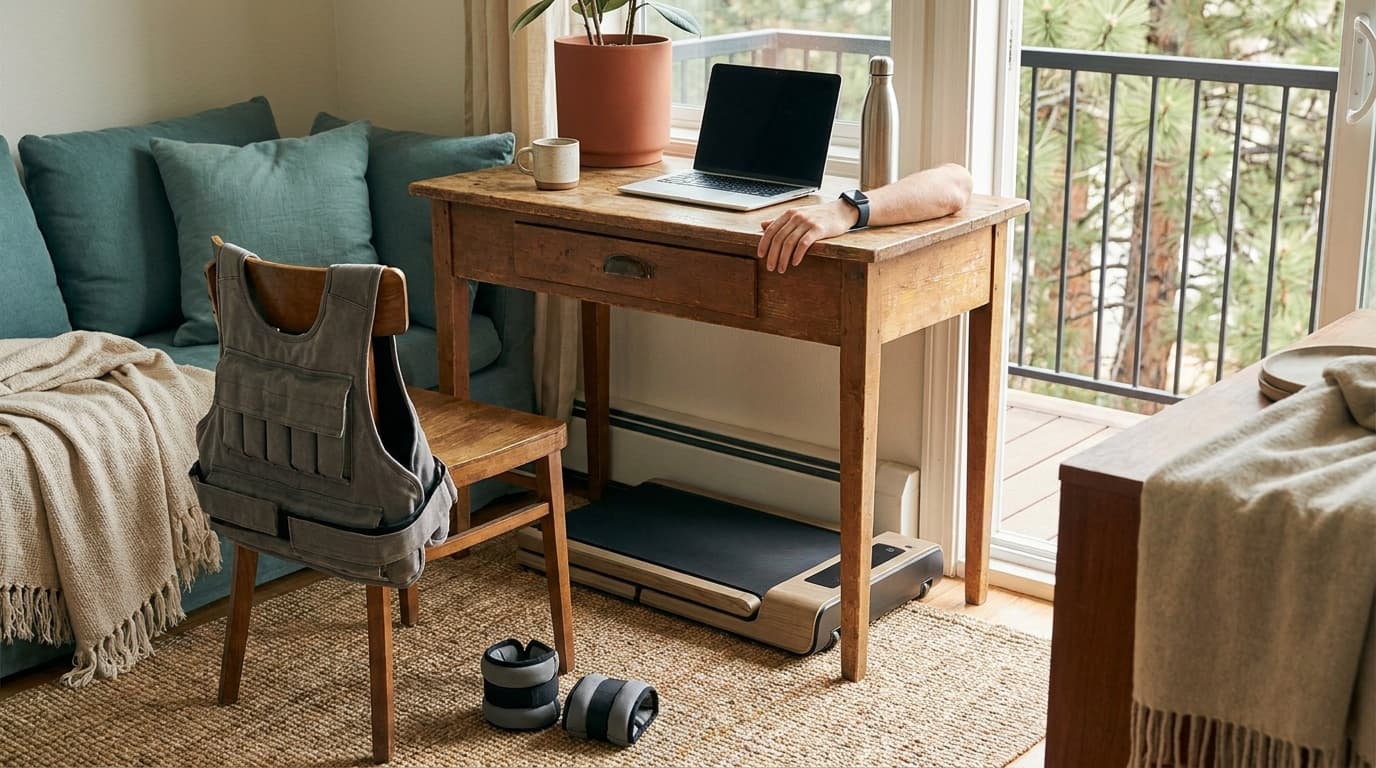

 Complete fitness loadoutWeighted-vest starter kitBuild the complete kit
Our recommendations draw on manufacturer documentation, retailer listings, owner feedback, and comparisons with alternatives.
As an Amazon Associate I earn from qualifying purchases. We may earn a commission from links here, at no extra cost to you. How we research →