The best sleeping bag depends on two questions: how cold the night will get and whether you have to carry the bag. These three researched picks cover comfortable car camping, packable three-season use, and a lower-cost family option without pretending every temperature label means the same thing.
Our quick picks
How we picked
This guide compares current manufacturer specifications, standardized temperature results where published, owner feedback, and credible third-party references. We have not personally slept in these bags. A manufacturer temperature label is identified as such, and we do not convert an extreme or lower-limit figure into a comfort promise. See the full Kit Score methodology.
Best for cold-weather car camping
BEST FOR COLD CAR CAMPING
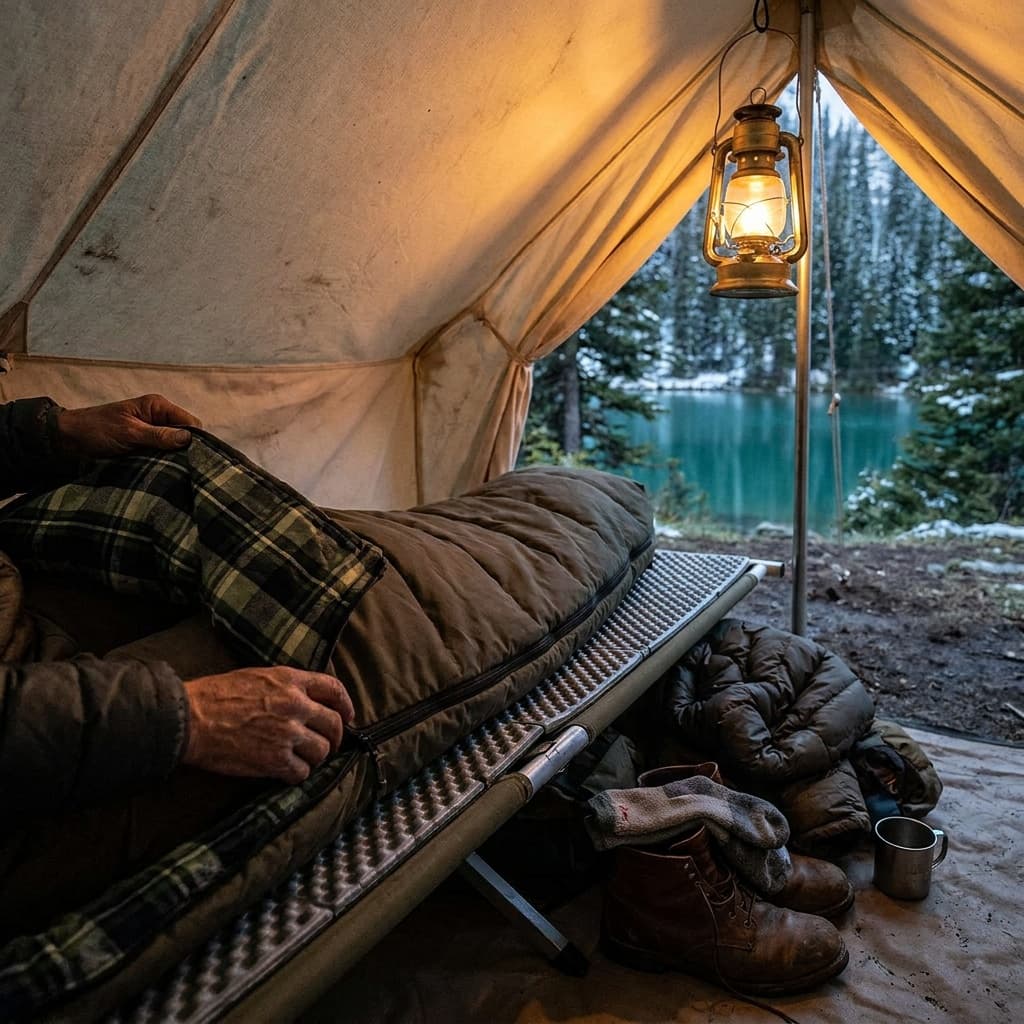
ALPS OutdoorZ Redwood -10 Sleeping Bag
Best for: Car campers, hunters, and cabin trippers who want the warmest, most hotel-bed-like night of sleep possible and have the trunk space to carry it.
- Heavy insulation and draft-control features suit cold-weather car camping
- Large packed size (rolls full-width, not a stuff sack), not suitable for backpacking
Kit Score 8.8/10 · $179.99 Price checked Oct 25, 3:41 PM CDT · how we score gear
Buy on AmazonProduct details
The ALPS OutdoorZ Redwood is a roomy, heavily insulated car-camping bag with a cotton canvas shell and flannel liner. Its -10F label comes from the manufacturer rather than an ISO comfort test, so buyers should leave temperature margin.
- Temperature Rating
- -10°F (-23°C)
- Insulation
- TechLoft synthetic (two-layer offset)
- Shell
- 100% cotton canvas
- Liner
- 100% cotton flannel (plaid)
- Weight
- 11 lb 8 oz
- Dimensions (open)
- 80 x 38 in
More strengths
- Soft, weighted cotton flannel interior with virtually no cold spots
- Oversized 38-inch width, ideal for restless or side sleepers
Other tradeoffs
- Cotton absorbs moisture quickly and dries slowly; keep it dry
The ALPS OutdoorZ Redwood -10 is an 11-pound, 8-ounce rectangular bag built around comfort and insulation rather than portability. ALPS lists an 80 by 38 inch cut, 104 oz of two-layer offset TechLoft synthetic fill, a cotton canvas shell, a cotton flannel liner, and a rolled size of 38 by 11.5 inches. All of that makes sense in a trunk, hunting camp, or cabin. It makes no sense in a backpack.
The -10F number needs context. ALPS publishes it as the product's temperature rating, but we could not verify a corresponding ISO 23537 comfort result. Treat it as a relative signal that this is the warmest, heaviest bag in this group, not a promise that every sleeper will be comfortable at -10F. Your pad, shelter, clothing, metabolism, wind, and moisture all change the result.
Best for: Car campers who prioritize space and heavy insulation, keep the bag dry, and can leave a wide temperature margin. Read our full ALPS OutdoorZ Redwood -10 review.
Best packable value
BEST PACKABLE VALUE
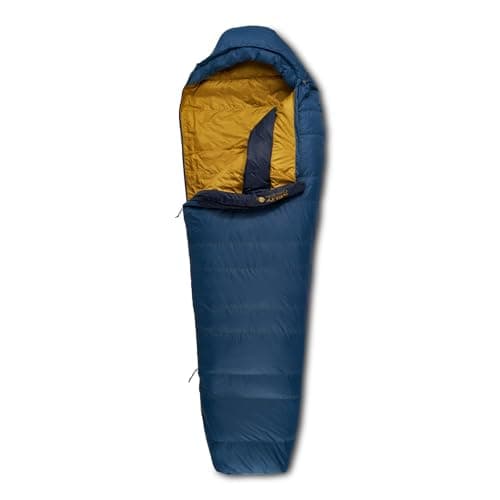
Kelty Cosmic Down 20 Sleeping Bag
Best for: Campers and entry-level backpackers who want real down insulation and long-term durability without paying premium-bag prices.
- Genuine down insulation at a fraction of premium-bag pricing
- ISO Comfort sits at 31°F, so cold sleepers should size up in temperature rating
Kit Score 8.6/10 · Check current price · how we score gear
Buy on AmazonProduct details
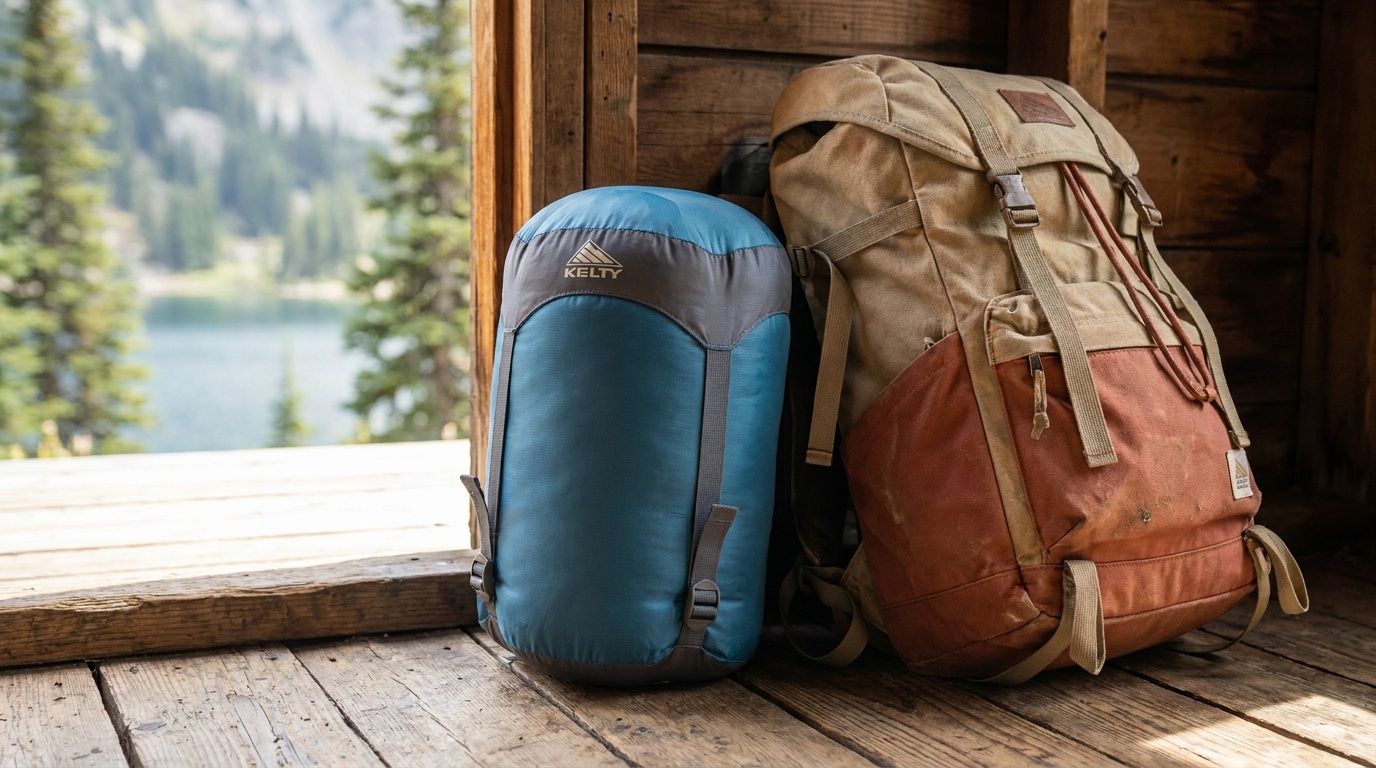
The Kelty Cosmic 20 combines 550-fill DriDown, trapezoidal baffles, and a draft collar in a packable three-season design. Its published ISO comfort rating is 31F for the regular bag, a more useful buying number than the 20F model name.
- Temperature Rating
- 20°F / ISO Comfort 31°F / ISO Limit 21°F
- Insulation
- 550-fill DriDown (water-treated)
- Shell
- Recycled 50D polyester taffeta
- Liner
- Recycled 20D nylon taffeta
- Weight (Regular)
- 2 lb 7 oz
- Packed Size (Regular)
- 8 x 13 in (10.7L)
More strengths
- Durable 50D shell handles rougher treatment better than most budget bags
- Compact enough to double as a backpacking bag for lighter trips
Other tradeoffs
- Recycled taffeta lining is not the softest against skin
The Kelty Cosmic Down 20 is the most versatile choice here. Kelty lists the current regular model at 550-fill down with 16.4 oz of fill, 2 pounds 7 ounces, an 8 by 13 inch stuff sack, recycled 20D nylon and 50D polyester fabrics, and a $189.95 list price. That is light and compact enough for shorter backpacking trips while remaining approachable for ordinary campground use.
The useful warmth number is the 31F ISO comfort rating for the regular bag, not the 20F product name. Kelty's own page shows only the 20F label; REI publishes the ISO figures, 31F comfort and 21F lower limit, and independent reviews report the same pair. Cold sleepers should shop by the comfort figure and add margin for the forecast; warmer sleepers may be comfortable closer to the lower-limit figure. Our sleeping bag temperature ratings explained guide breaks down how comfort, lower limit, and extreme differ and shows which catalog bags publish them. Down still needs protection from sustained moisture, so use a waterproof pack liner when rain is possible.
Best for: Campers and entry-level backpackers who want one compact down bag for typical three-season conditions.
Best budget car-camping bag
BEST BUDGET
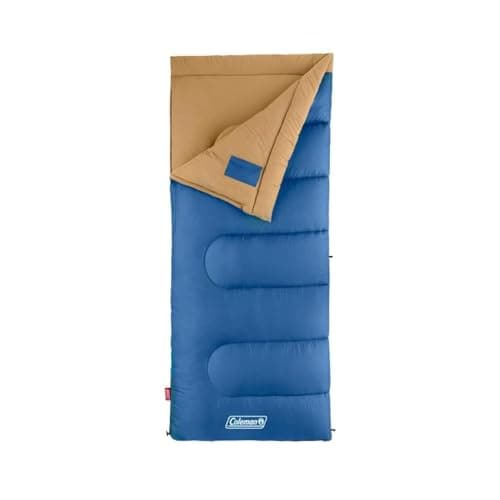
Coleman Brazos 20 Sleeping Bag
Best for: New campers, families buying multiple bags on a single budget, or anyone who camps a few nights a year and wants reliable warmth without a large upfront spend.
- Outstanding price per warm night for car camping or occasional use
- Heavy at 5.3 lb and difficult to repack into its stuff sack
Kit Score 7.5/10 · $58.99 Price checked Oct 25, 3:41 PM CDT · how we score gear
Buy on AmazonProduct details
The Coleman Brazos is the go-to first sleeping bag for families and occasional campers. It delivers solid warmth, a comfortable tricot lining, and a no-snag zipper at a price that makes outfitting several people practical. Weight and packed size are the honest tradeoffs.
- Temperature Rating
- 20°F manufacturer rating (not ISO comfort)
- Insulation
- ColeTherm synthetic (4 lb fill)
- Shell
- Stain-resistant polyester
- Liner
- Soft tricot
- Weight
- 5.3 lb (manufacturer listed)
- Dimensions
- 75 x 33 in, fits to 5'11"
More strengths
- Soft tricot liner feels noticeably better than typical budget nylon
- Machine washable, full-length zipper zips two bags together
Other tradeoffs
- No hood or draft collar, so drafts around the shoulders are noticeable in colder temps
The Coleman Brazos 20 is a straightforward rectangular synthetic bag for occasional campground use. Coleman lists a soft tricot liner, Fiberlock construction that helps keep insulation from shifting, a Thermolock draft tube along the zipper, and a 75-by-33-inch fit for sleepers up to 5 feet 11 inches.
Coleman markets it for temperatures as low as 20F, but we could not find an ISO comfort result for this model. That makes it a poor place to gamble on the coldest night of the year. Use it for mild-to-cool car camping with deliberate temperature margin, not as a 20F comfort guarantee. Coleman's listed weight is 5.3 pounds, and some third-party listings show close to 7; either way it is much too heavy for backpacking.
Best for: New campers, families buying several bags, and occasional warm-to-cool weather trips close to the car.
Emergency backup, not a fourth sleeping bag
EMERGENCY BACKUP
Wallaby Emergency Mylar Sleeping Bag 2-Pack
Best for: Drivers, day hikers, campers, and households building compact emergency kits, as a backup layer rather than planned overnight sleep gear.
- Two individually packed bags are easy to split between a car kit and day pack
- No insulation or standardized temperature rating
Kit Score 7.9/10 · $16.99 Price checked Oct 25, 3:41 PM CDT · how we score gear
Buy on AmazonProduct details
A compact Mylar emergency bag for a vehicle kit, go-bag, or day pack. It can slow radiant and convective heat loss while blocking wind, but it does not replace an insulated sleeping bag, ground insulation, shelter, dry layers, or emergency help.
- Use
- Emergency heat-loss reduction
- Construction
- Reflective Mylar
- Quantity
- 2 bags with nylon storage pouches
- Included
- Whistle pull, paracord, carabiners, survival guide
- Temperature rating
- None published
- Primary limitation
- No insulation; condensation and tears are possible
More strengths
- Full-body bag shape is easier to keep wrapped than a loose emergency blanket
- Included whistle and cord add useful signaling and kit-organizing functions
Other tradeoffs
- Non-breathable Mylar can trap condensation and may tear on rough surfaces
- Limited independent product-specific testing
The Wallaby two-pack belongs in a different category. It is a reflective Mylar enclosure for a stranded vehicle, day pack, go-bag, or unexpected night outside. It has no loft, no insulation, and no standardized temperature rating. A full-body bag can be easier to keep closed against wind than a loose emergency blanket, but it will not make the ground warm and its non-breathable material can collect condensation.
The bundle includes two bags with nylon storage pouches, a whistle pull, paracord with carabiners, and a pocket survival guide. Wallaby does not publish a material thickness or independent tear-test standard, and independent product-specific coverage is limited, so we cannot support stronger durability claims.
Best for: Compact emergency kits, in addition to dry clothing, ground insulation, shelter, and a plan to contact help. For safe use and a direct comparison, read our Wallaby Emergency Mylar Sleeping Bag review.
How to choose a camping sleeping bag
Choose the right sleep system
Start with the coldest realistic forecast
Buy from a published ISO comfort figure when available. If only a manufacturer rating exists, leave more margin.
Count the sleeping pad too
A bag cannot stop conductive heat loss into the ground. Match the pad's R-value to the season and conditions.
Decide whether you will carry it
Car campers can choose roomy rectangular bags. Backpackers need a compact mummy bag and should watch total system weight.
Choose down or synthetic
Down usually packs smaller for its warmth. Synthetic insulation is generally less expensive and less vulnerable to moisture.
Fit the bag to your body
Extra empty space takes more energy to warm, while a tight bag can compress insulation and create cold spots.
| Product | Kit Score | Price | Best for |
|---|---|---|---|
| ALPS OutdoorZ Redwood -10 Sleeping Bag | 8.8 | $179.99 Price checked Oct 25, 3:41 PM CDT | Best for: Car campers, hunters, and cabin trippers who want the warmest, most hotel-bed-like night of sleep possible and have the trunk space to carry it. Why it stands out: Heavy insulation and draft-control features suit cold-weather car camping Tradeoff: Large packed size (rolls full-width, not a stuff sack), not suitable for backpacking |
| Kelty Cosmic Down 20 Sleeping Bag | 8.6 | Check current price | Best for: Campers and entry-level backpackers who want real down insulation and long-term durability without paying premium-bag prices. Why it stands out: Genuine down insulation at a fraction of premium-bag pricing Tradeoff: ISO Comfort sits at 31°F, so cold sleepers should size up in temperature rating |
| Coleman Brazos 20 Sleeping Bag | 7.5 | $58.99 Price checked Oct 25, 3:41 PM CDT | Best for: New campers, families buying multiple bags on a single budget, or anyone who camps a few nights a year and wants reliable warmth without a large upfront spend. Why it stands out: Outstanding price per warm night for car camping or occasional use Tradeoff: Heavy at 5.3 lb and difficult to repack into its stuff sack |
ALPS OutdoorZ Redwood -10 Sleeping Bag
- Best for
- Car campers, hunters, and cabin trippers who want the warmest, most hotel-bed-like night of sleep possible and have the trunk space to carry it.
- Why it stands out
- Heavy insulation and draft-control features suit cold-weather car camping
- Tradeoff
- Large packed size (rolls full-width, not a stuff sack), not suitable for backpacking
Kelty Cosmic Down 20 Sleeping Bag
- Best for
- Campers and entry-level backpackers who want real down insulation and long-term durability without paying premium-bag prices.
- Why it stands out
- Genuine down insulation at a fraction of premium-bag pricing
- Tradeoff
- ISO Comfort sits at 31°F, so cold sleepers should size up in temperature rating
Coleman Brazos 20 Sleeping Bag
- Best for
- New campers, families buying multiple bags on a single budget, or anyone who camps a few nights a year and wants reliable warmth without a large upfront spend.
- Why it stands out
- Outstanding price per warm night for car camping or occasional use
- Tradeoff
- Heavy at 5.3 lb and difficult to repack into its stuff sack
What temperature rating do I need for camping?
Start with the coldest overnight forecast, then compare it with an ISO comfort rating when one is available. Cold sleepers should use the comfort number and leave additional margin. A product name such as “20F” may refer to a lower-limit or manufacturer rating rather than the temperature at which every person will sleep comfortably.
What is the difference between comfort, limit, and extreme ratings?
In an ISO-tested bag, comfort estimates the temperature at which a cold-average sleeper can remain comfortable. Lower limit estimates a warm-average sleeper in a curled position. Extreme is a survival-risk threshold, not a shopping target. Manufacturer ratings that are not tied to ISO testing should be treated more conservatively.
Can an emergency Mylar bag replace a camping sleeping bag?
No. Mylar reflects radiant heat and blocks wind, but it does not contain lofted insulation and does not insulate you from the ground. It is an emergency backup, not planned overnight sleep gear. Read our Wallaby emergency sleeping bag review before adding one to a kit.
Is down or synthetic insulation better for camping?
Down generally offers better packability and warmth for its weight. Synthetic insulation often costs less and retains more useful insulation when damp. Either can work for camping when the bag's verified warmth range, fit, and moisture management match the trip.
Can I use a backpacking sleeping bag for car camping?
Yes. A backpacking bag works at a campground and gives you the option to carry it later. The tradeoff is usually a narrower cut and higher price than a bulky rectangular car-camping bag.
Where these numbers come from
| Claim | Source | Checked |
|---|---|---|
| Kelty Cosmic Down 20 (regular): 550-fill down, 16.4 oz fill, 2 lb 7 oz, 8 x 13 in stuff sack, recycled 20D nylon and 50D polyester, 20F label only, $189.95 list | Kelty, Cosmic Down 20 Sleeping Bag | Sep 2026 |
| Kelty Cosmic Down 20: 31F ISO comfort, 21F ISO lower limit | REI, Kelty Cosmic 20 Sleeping Bag (REI blocks automated fetches; the same figures appear in Treeline Review's Cosmic 20 review) | Sep 2026 |
| ALPS Redwood -10: -10F manufacturer rating with no ISO figure, 11 lb 8 oz, 80 x 38 in, 104 oz TechLoft fill, cotton canvas shell, cotton flannel liner, 38 x 11.5 in rolled, $179.99 list | ALPS OutdoorZ, Redwood -10 | Sep 2026 |
| Coleman Brazos 20: 20F manufacturer rating, 5.3 lb, 75 x 33 in, fits to 5 ft 11 in, tricot liner, Fiberlock, Thermolock draft tube | Coleman listing on Amazon, linked from the pick above (coleman.com blocks automated fetches); Switchback Travel's review lists 6 lb 15.2 oz and no ISO rating | Sep 2026 |
| Wallaby two-pack: Mylar, two bags with pouches, whistle pull, paracord with carabiners, survival guide, no published thickness or temperature rating | Wallaby listing on Amazon, linked from the pick above | Sep 2026 |
We have not slept in these bags. Temperature figures are labeled as ISO results or as manufacturer ratings throughout, and we do not treat a lower-limit or manufacturer number as a comfort promise.
Browse more camp gear guides, use the sleeping bag warmth calculator, or read how Kit Authority researches products.
Keep going
Complete loadoutCamp sleep systemFive coordinated pieces that solve shelter, insulation, cushioning, head support, and light for nights outside.Free tool: Sleeping-Bag WarmthRelated guides
Our recommendations draw on manufacturer documentation, retailer listings, owner feedback, and comparisons with alternatives.
As an Amazon Associate I earn from qualifying purchases. We may earn a commission from links here, at no extra cost to you. How we research →