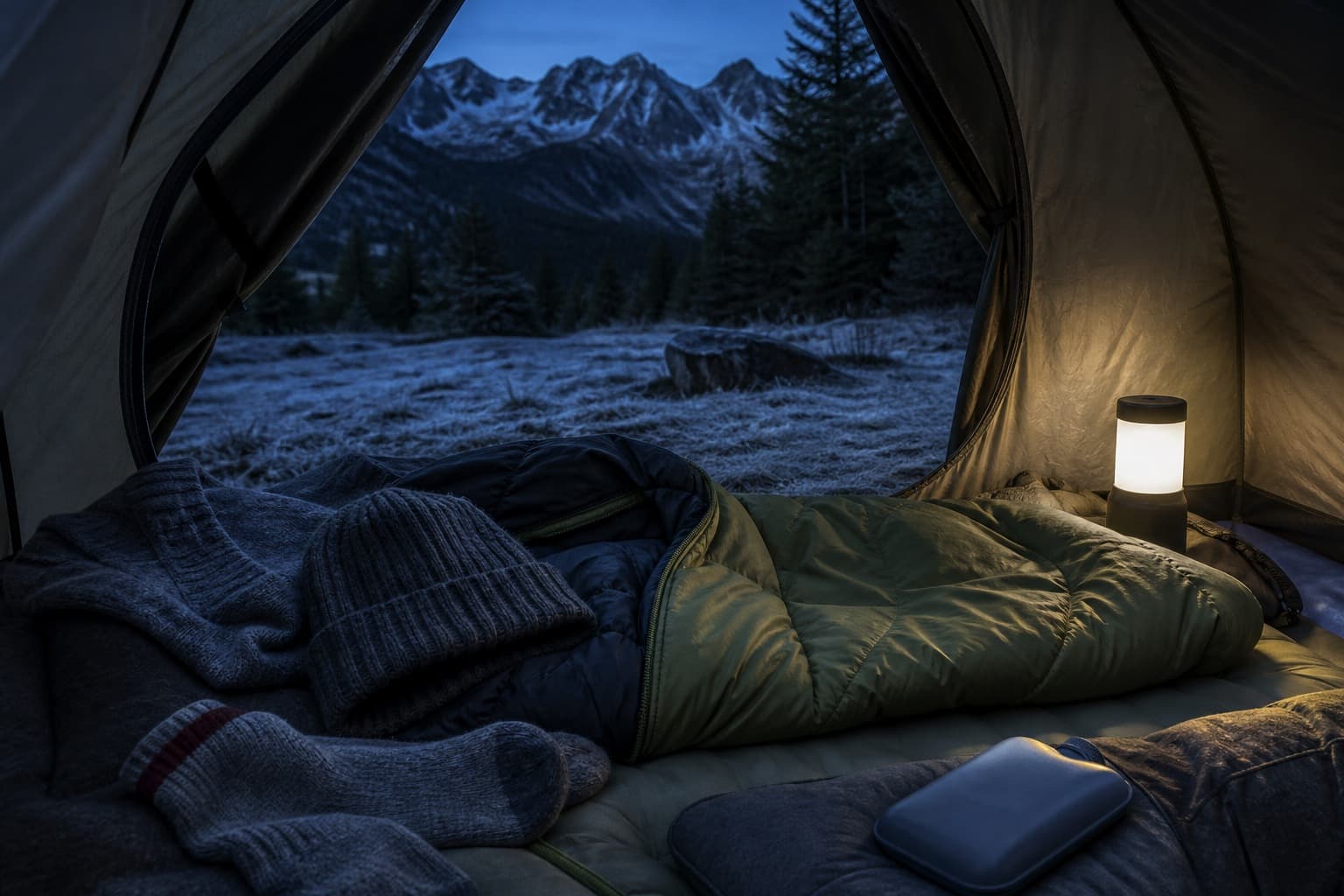
Warmth while camping is a system. Your sleeping bag, your pad, your layers, and even your dinner all pull in the same direction or against each other. Get the system right and you sleep through the night. Get one piece wrong and a bag rated to 20°F leaves you shivering at 35°F.
How sleeping bag ratings actually work
Every sleeping bag tested to the ISO 23537 standard receives three numbers, not one. The Comfort temperature is where a sleeper lying relaxed on their back is at the threshold of feeling cold. The Lower Limit is where a sleeper curled up is at that same threshold. The Extreme temperature is where hypothermia becomes a risk: an emergency figure, not a target.
The gap between Comfort and Lower Limit grows as bags get warmer. In the ISO 23537-1:2022 table it runs from about 5°F for the lightest bags to about 14°F for the warmest it covers, and for a bag with a 20°F lower limit it is about 11°F.
Model names and labels do not always tell you which number you are looking at. The men's Kelty Cosmic Down 20, for example, is 31°F Comfort and 21°F Lower Limit, while the women's version with the same "20" in its name is 25°F Comfort and 13°F Lower Limit. Look up the ISO Comfort figure and buy to that unless you run genuinely warm and accept some discomfort at the bottom of the range.
The pad is half the system
ISO 23537 bag ratings are measured with a heated manikin lying on a foam mattress with a thermal resistance of 0.85 m²K/W. Converted to the US units pad makers label with, that is roughly R 4.8 (the two tests use different methods, so treat the conversion as approximate). If your sleeping pad is well below that, your bag will sleep colder than its rating. Ground conducts heat away from your body far faster than still air at the same temperature, so a summer pad on cold earth drains warmth your bag cannot replace.
Pad R-values are standardized under ASTM F3340-18, which Therm-a-Rest says was finalized and published in 2019. Therm-a-Rest also notes that R-values are additive: an R 2.0 closed-cell foam pad like the Therm-a-Rest Z Lite Sol stacked under an R 3 inflatable gives a combined R 5. This matters on cold trips where weight limits what you can carry: a thin closed-cell foam pad used as a base layer under your inflatable both adds R-value and protects the inflatable from punctures.
Match your pad R-value to the season
Warm summer nights
A low-R pad is usually fine when the ground is warm. Most of the cold-sleeping complaints start in fall.
Three-season and fall camping
Therm-a-Rest's guide puts typical three-season pads at R 2 to 4. October nights near freezing belong at the top of that range.
Winter and sub-freezing nights
Therm-a-Rest's winter range is R 5 to 8. This is where stacking pays off: an R 2 foam pad under an R 3 inflatable reaches R 5 without buying a dedicated winter pad.
Check your bag's test conditions
ISO bag ratings assume a pad of roughly R 4.8. If yours is lower, treat the bag's rating as optimistic and add a pad layer or wear more insulation inside.
Want a single number for your setup? The sleeping bag warmth calculator combines your bag rating, pad R-value, and clothing into one estimated low.
Eat before you sleep
Your sleeping bag only traps heat; your body has to make it. Digesting food produces some heat, and a snack before bed means you are not starting the coldest hours of the night on empty after a long day outside.
Going to bed hungry and underfed after a long day is a common reason campers wake up cold in the small hours, when temperatures hit their overnight low. The bag and pad have not changed. The heat source has.
Your bag cannot create heat. Your body can, so give it something to work with before bed.
Practical choices: a handful of nuts, a piece of dark chocolate with peanut butter, or a small portion of the calorie-dense camp food you already carry. This does not need to be a full meal. It needs to be enough to keep digestion ticking through the night.
Layering and what to wear inside the bag
The goal inside the bag is dry insulation against dry skin. Moisture on skin accelerates heat loss. Cotton holds moisture and should be left at home.
Sleep in a clean, dry base layer of merino wool (like the Smartwool Classic All-Season Merino Long Sleeve) or moisture-wicking synthetic. If you wore your base layer all day while sweating, change before bed. Damp insulation performs poorly whether it is in your sleeping bag or on your body.
Cover your head. The head and neck are a major convective heat-loss surface. A light merino balaclava or the hood of your sleeping bag cinched down makes a meaningful difference at the lower end of your bag's rated range.
Moisture, condensation, and vapor barriers
Moisture is the part of the warmth system that compounds quietly across a trip. Your body gives off water vapor all night through breathing and skin. In a sleeping bag, that vapor migrates outward through insulation toward the cold shell, where some of it condenses.
Down insulation is particularly sensitive to moisture. Even a small amount of condensation compresses fill, reduces loft, and cuts warmth. Claims of "condensation-proof breathable shells" are marketing hyperbole: condensation forms regardless of shell fabric, and airing the bag is the only reliable way to restore loft on multi-night trips.
The morning routine: open your bag inside-out and drape it in sunlight or on top of your shelter for 20–30 minutes. This evaporates trapped moisture before it compounds on night two.
Managing moisture across a multi-night trip
Night one
Sleep in a dry base layer. Keep the bag hood cinched to reduce respiratory condensation entering the insulation.
Morning one
Open the bag fully inside-out. Drape it over your shelter or a tarp in sun or moving air for at least 20 minutes before packing.
Sub-freezing conditions
Consider a vapor barrier liner: a non-breathable fabric layer worn or placed inside the bag. It traps sweat vapor before it reaches insulation, keeping down dry at full loft. You will feel damp by morning, but your bag will perform at full rating.
Multi-night winter trips
The vapor barrier payoff increases each night. Without it, down progressively wets out and warmth degrades cumulatively. With it, the bag performs as rated on night five as on night one.
Ground insulation: the underestimated variable
Ground robs heat faster than still air at the same temperature. This is why R-value matters more than most people expect on their first cold-night camp.
A thin closed-cell foam pad on bare ground outperforms no pad even when placed under a high-R inflatable, because it adds insulation and protects the inflatable from puncture or slow deflation. Deflated sleeping pads provide almost no insulation regardless of their rated R-value.
If you camp on snow or cold rock regularly, treat R 5 as a floor, not a premium; that is the bottom of Therm-a-Rest's winter range. Stack pads rather than carry one impossibly light option.
Never heat the tent with a flame
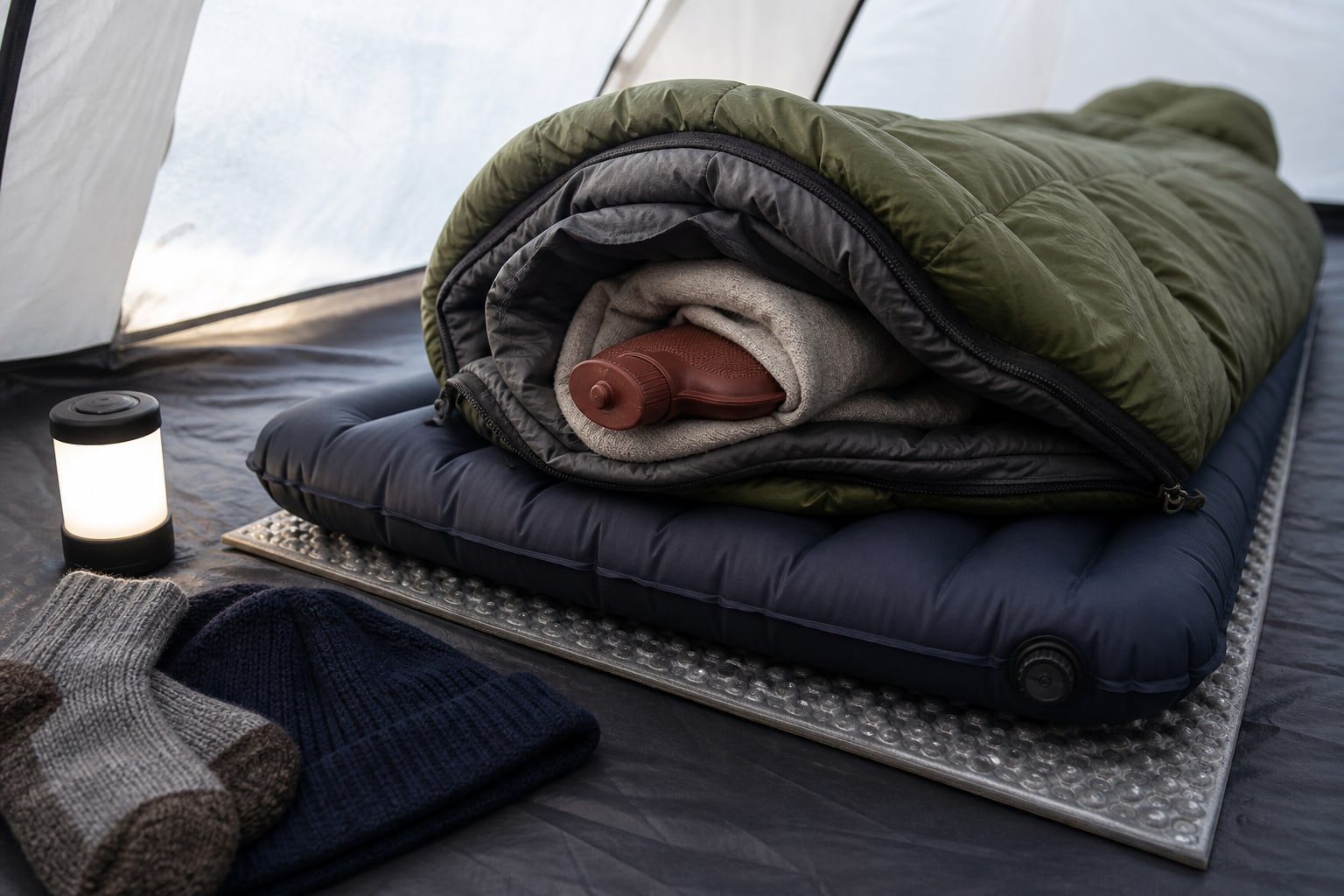
As nights turn cold, it is tempting to run a propane heater or a stove in the tent or vestibule. Do not. Fuel-burning heaters produce carbon monoxide, which has no smell, and patio and camp heater manuals are blunt about it: never use the appliance in an enclosed space such as a camper, tent, car, or home. The CDC's carbon monoxide guidance likewise says never to use a portable gas camp stove indoors. Get warm with insulation instead: a higher-R pad, a warmer bag or quilt, a tightly sealed bottle of hot water inside the bag, and dry layers.
If you camp near your car and have power, electric options such as a 12V heated pad are covered in our guide to keeping an air mattress warm.
FAQ
My sleeping bag is rated to 20°F but I was still cold. What went wrong?
The two most likely causes are your sleeping pad and moisture in the insulation. ISO 23537 ratings are measured on a foam pad of roughly R 4.8. A thin summer pad sitting on cold ground lets body heat bleed into the earth faster than the bag can replace it. Also check which number you bought: a bag named "20" may have a Comfort rating near 30°F. The second cause is a damp bag: even a small amount of moisture in down insulation compresses the fill and cuts warmth. Check the loft of your bag before bed and air it out each morning on multi-night trips.
Do I need a separate women's sleeping bag, or can I just buy a warmer men's bag?
You need a bag whose ISO Comfort temperature matches the low you expect, not specifically a bag marketed as "women's." The label can mislead in both directions: the men's Kelty Cosmic Down 20 is 31°F Comfort, while the women's version with the same name is 25°F Comfort thanks to extra fill. Women's-specific bags often carry extra insulation, which can help, but compare the Comfort numbers directly rather than trusting the name.
Do vapor barrier liners actually work, and are they worth the discomfort?
Yes, with conditions. A vapor barrier liner traps sweat vapor before it migrates into your insulation, keeping down dry and at full loft. The catch: you will feel damp by morning because moisture pools inside the liner rather than wicking away. The trade-off is most worth it on multi-night winter trips below freezing, where down insulation progressively wets out without a barrier and the degradation compounds each night. For three-season camping above freezing, simply airing your bag each morning is usually sufficient.
Where these numbers come from
| Claim | Source | Checked |
|---|---|---|
| Comfort, limit, and extreme definitions; comfort and limit values by bag insulation (Table 1); test manikin lies on a foam mattress of Rct 0.85 m²K/W | ISO 23537-1:2022 preview | Sep 2026 |
| Kelty Cosmic 20: men's 31°F Comfort / 21°F Limit; women's 25°F / 13°F | Treeline Review, Kelty Cosmic 20 review | Sep 2026 |
| R-values are additive; three-season pads about R 2 to 4, winter R 5 to 8 | Therm-a-Rest, Ultimate guide to sleeping pads | Sep 2026 |
| ASTM F3340 R-value standard finalized and published in 2019 | Therm-a-Rest, ASTM R-value standard | Sep 2026 |
| Z Lite Sol: R 2.0; 10 oz Small, 14 oz Regular | Therm-a-Rest, Z Lite Sol | Sep 2026 |
| Never use a fuel-burning heater in an enclosed space such as a tent | EAST OAK patio heater owner's manual and CDC, carbon monoxide poisoning basics | Sep 2026 |
The R 4.8 figure is our conversion of the ISO test pad's metric value (0.85 x 5.678). It is approximate because the ISO and ASTM tests differ.
For specific bag picks at each temperature rating, see our guide to the best sleeping bags for camping.
Browse all camp gear guides, or read how we research and rate the products we cover.
Recommended gear
Our current top picks from the Best sleeping bags for camping in 2026 guide, if you are ready to buy.
ALPS OUTDOORZ
ALPS OutdoorZ Redwood -10 Sleeping Bag
Best Overall
Kit Score 8.8/10
$179.99 Price checked Oct 23, 4:16 PM CDT
Best for: Car campers, hunters, and cabin trippers who want the warmest, most hotel-bed-like night of sleep possible and have the trunk space to carry it.
- Heavy insulation and draft-control features suit cold-weather car camping
- Large packed size (rolls full-width, not a stuff sack), not suitable for backpacking
- Temperature Rating
- -10°F (-23°C)
- Insulation
- TechLoft synthetic (two-layer offset)
- Shell
- 100% cotton canvas
- Liner
- 100% cotton flannel (plaid)
- Weight
- 11 lb 8 oz
- Dimensions (open)
- 80 x 38 in
About this pick
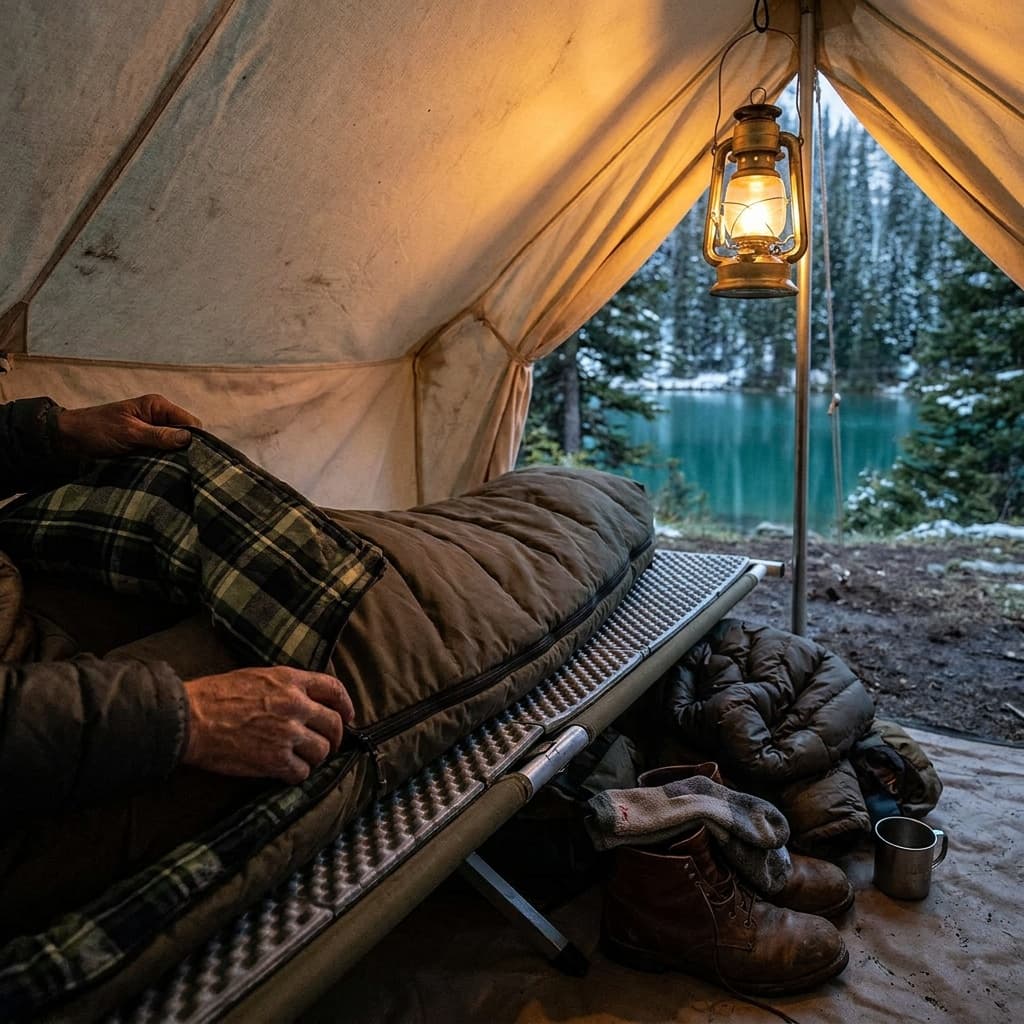
The ALPS OutdoorZ Redwood is a roomy, heavily insulated car-camping bag with a cotton canvas shell and flannel liner. Its -10F label comes from the manufacturer rather than an ISO comfort test, so buyers should leave temperature margin.
Strengths
- Heavy insulation and draft-control features suit cold-weather car camping
- Soft, weighted cotton flannel interior with virtually no cold spots
- Oversized 38-inch width, ideal for restless or side sleepers
Weaknesses
- Large packed size (rolls full-width, not a stuff sack), not suitable for backpacking
- Cotton absorbs moisture quickly and dries slowly; keep it dry
Kit Score breakdown
Best for: Campers and entry-level backpackers who want real down insulation and long-term durability without paying premium-bag prices.
- Genuine down insulation at a fraction of premium-bag pricing
- ISO Comfort sits at 31°F, so cold sleepers should size up in temperature rating
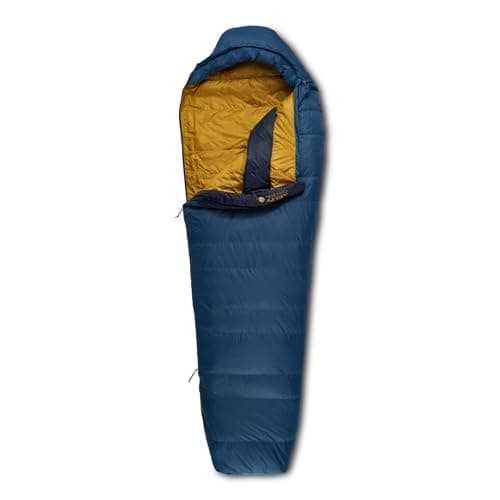
- Temperature Rating
- 20°F / ISO Comfort 31°F / ISO Limit 21°F
- Insulation
- 550-fill DriDown (water-treated)
- Shell
- Recycled 50D polyester taffeta
- Liner
- Recycled 20D nylon taffeta
- Weight (Regular)
- 2 lb 7 oz
- Packed Size (Regular)
- 8 x 13 in (10.7L)
About this pick
The Kelty Cosmic 20 combines 550-fill DriDown, trapezoidal baffles, and a draft collar in a packable three-season design. Its published ISO comfort rating is 31F for the regular bag, a more useful buying number than the 20F model name.
Strengths
- Genuine down insulation at a fraction of premium-bag pricing
- Durable 50D shell handles rougher treatment better than most budget bags
- Compact enough to double as a backpacking bag for lighter trips
Weaknesses
- ISO Comfort sits at 31°F, so cold sleepers should size up in temperature rating
- Recycled taffeta lining is not the softest against skin
Kit Score breakdown
COLEMAN
Coleman Brazos 20 Sleeping Bag
Best Budget
Kit Score 7.5/10
$58.99 Price checked Oct 23, 4:16 PM CDT
Best for: New campers, families buying multiple bags on a single budget, or anyone who camps a few nights a year and wants reliable warmth without a large upfront spend.
- Outstanding price per warm night for car camping or occasional use
- Heavy at 5.3 lb and difficult to repack into its stuff sack
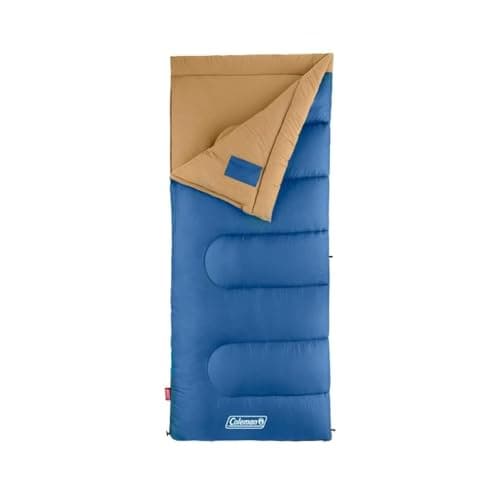
- Temperature Rating
- 20°F manufacturer rating (not ISO comfort)
- Insulation
- ColeTherm synthetic (4 lb fill)
- Shell
- Stain-resistant polyester
- Liner
- Soft tricot
- Weight
- 5.3 lb (manufacturer listed)
- Dimensions
- 75 x 33 in, fits to 5'11"
About this pick
The Coleman Brazos is the go-to first sleeping bag for families and occasional campers. It delivers solid warmth, a comfortable tricot lining, and a no-snag zipper at a price that makes outfitting several people practical. Weight and packed size are the honest tradeoffs.
Strengths
- Outstanding price per warm night for car camping or occasional use
- Soft tricot liner feels noticeably better than typical budget nylon
- Machine washable, full-length zipper zips two bags together
Weaknesses
- Heavy at 5.3 lb and difficult to repack into its stuff sack
- No hood or draft collar, so drafts around the shoulders are noticeable in colder temps
Kit Score breakdown
Keep going
Free toolSleeping-Bag WarmthWill you be warm enough? Bag rating plus pad and clothing.Related guides
 Complete camp loadoutCar-camping starter kitBuild the complete kit
Researched, not hands-on tested
Updated Sep 25, 2026Our recommendations draw on manufacturer documentation, retailer listings, owner feedback, and comparisons with alternatives.
As an Amazon Associate I earn from qualifying purchases. We may earn a commission from links here, at no extra cost to you. How we research →