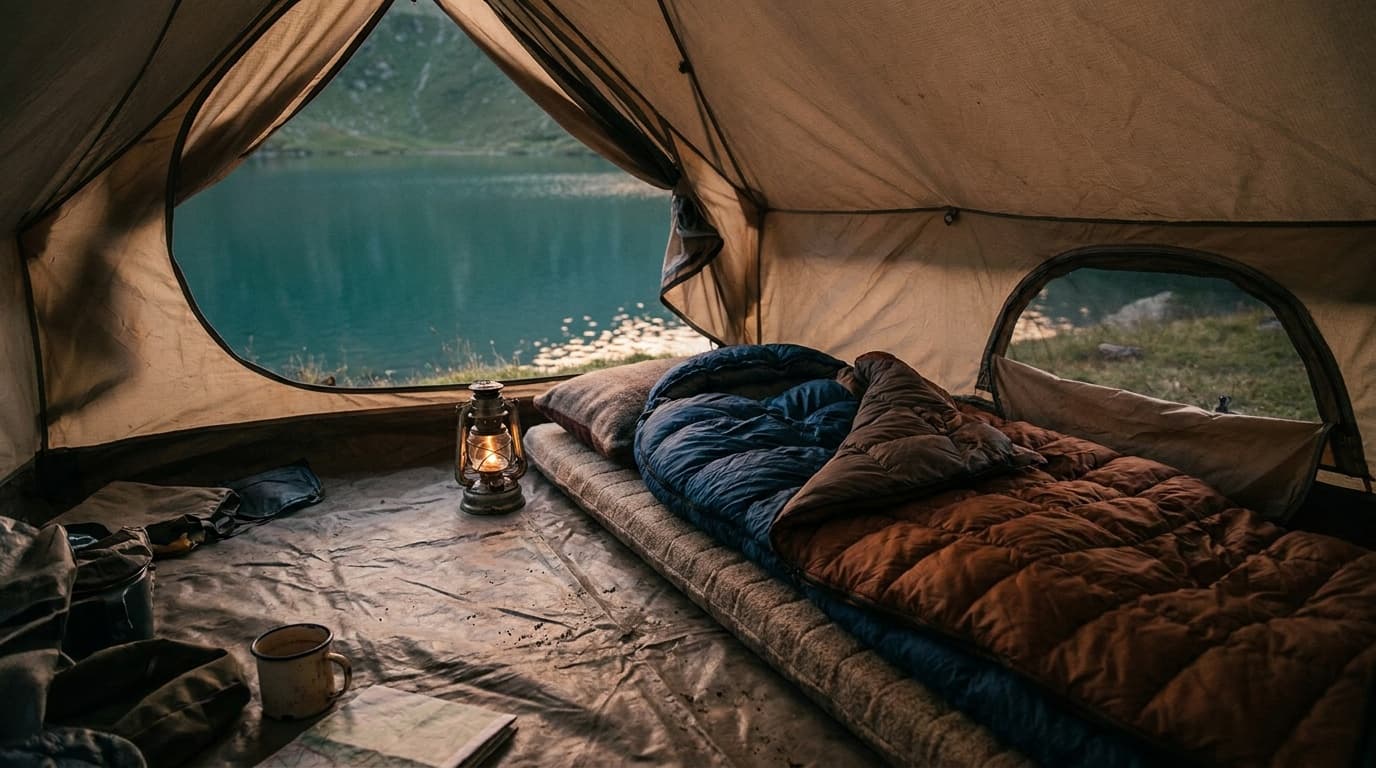
Down and synthetic sleeping bags are built on different physics. The right choice depends almost entirely on where you camp and how often, not on which fill is universally better.
Warmth-to-weight: where down has a clear lead
Fill power measures how many cubic inches one ounce of down expands to. Bags in the 600–700 range are very good for most campers; 800–900 is high-performance territory found in ultralight and alpine gear. Higher fill power means each ounce of down does more insulating work, so less fill is needed to hit a given temperature rating.
Higher-fill-power down can reach a target warmth with less fill, which often produces a lighter, smaller bag than a synthetic model aimed at similar conditions. The actual difference varies by shell, cut, baffles, insulation amount, and test rating. Compare complete product weights and packed volumes rather than applying a fixed percentage.
One thing fill power does not tell you: how warm the bag is. Two bags can share a 20°F rating regardless of fill power. The fill power number tells you how efficiently each ounce works, which determines weight and packed size, not the temperature rating itself.
Wet performance: the condition that changes everything
Conventional down absorbs moisture into the clusters themselves. When thoroughly soaked, those clusters mat together and collapse, leaving very little functional insulation. This is not a marginal performance drop.
Synthetic polyester fibers absorb little water into the fibers themselves, though water between fibers can still reduce loft and comfort. Synthetic bags generally retain more useful insulation than untreated down when damp, which can make them a practical choice for wet climates and trips where moisture control is difficult.
Hydrophobic-treated down is designed to resist moisture and dry faster than untreated down, but performance depends on the treatment and test method. It narrows the wet-weather gap without making down waterproof. A waterproof pack liner and careful shelter setup still matter more than a coating in sustained rain.
Hydrophobic down is a middle path, not a complete answer to wet conditions. In climates with sustained heavy rain, synthetic is the more reliable tool.
Most quality down sleeping bags now ship with hydrophobic treatment as standard. Check the spec sheet: look for "hydrophobic down," "water-resistant down," or brand-specific treatments like Nikwax Hydrophobic Down or Allied Feather's Downtek.
Packability: a consistent down advantage
Packability follows fill power closely. Down at 550 fill occupies roughly 9 cubic inches per ounce; 900-fill down occupies around 15 cubic inches per ounce. No synthetic insulation currently compresses to equivalent density, so for the same temperature rating, a down bag consistently fits into a smaller stuff sack than its synthetic counterpart.
For car camping where you are loading gear into a trunk, this difference is irrelevant. For backpacking, where you are fitting a sleeping bag, shelter, food, and three days of clothes into a 50-liter pack, the volume difference between a down bag and a synthetic bag matters in practice.
Reading temperature ratings correctly
ISO 23537 testing reports comfort, lower-limit, and extreme values under standardized conditions. The comfort rating is the most conservative planning number for many campers. Lower limit represents a colder threshold for a warm-average sleeper in a curled position. Extreme is a survival-risk threshold and should never be used as a target for a camping trip.
If you run cold at night, plan around the Comfort rating and add five degrees of buffer. If you sleep warm, the Lower Limit is a reasonable guide.
Care and lifespan: down rewards the diligent
Both down and synthetic bags lose performance through dirt, oils, repeated compression, and poor storage. Well-maintained down often retains loft longer, but no fixed lifespan applies across all fills and construction methods. Care and storage can matter as much as the insulation family.
The catch: down's longevity requires the right maintenance. Washing a down bag in standard detergent, or drying it without breaking up clumps, will degrade the fill faster than normal use.
How to care for a sleeping bag
Use the right detergent
Down bags need a down-specific wash product, not standard detergent. Standard detergent leaves residue that mats down clusters and reduces loft. Synthetic bags tolerate standard detergent but a gentle option extends fiber life.
Use the right machine
A front-loading machine with no center agitator. Top-loaders with agitators can damage baffles and pull apart down clusters.
Dry completely before storage
Low heat, long cycle. Add clean tennis balls or dryer balls to break up clumps and restore loft. Run multiple cycles until you are certain no damp patches remain inside the baffles. Damp down promotes mildew.
Store uncompressed
Never store a sleeping bag long-term in its stuff sack. Compression breaks down synthetic fibers and down clusters over time. Store loosely in the large mesh or cotton storage bag most quality bags include, or hang it flat in a cool dry space.
Refresh hydrophobic treatment
For hydrophobic-down bags, the coating degrades over wash cycles. Reapply a wash-in DWR product (Nikwax Down Proof is widely used) when water stops beading on the shell fabric or when loft drops noticeably after washing.
Synthetic bags are more forgiving to wash and dry but do not reward the same long-term maintenance. That ease of care is part of why synthetic fibers degrade faster: the same mechanical process that makes washing simpler accelerates breakdown over repeated cycles.
Cost: higher upfront, potentially lower over time
Quality synthetic 20°F bags typically cost $150–$200. A comparable down bag runs $350–$500, a 30–50% premium at purchase. High-fill-power expedition bags go considerably higher.
For frequent campers who store and wash gear correctly, down's packability and potential longevity can justify the higher starting price. Entry-level options such as the Kelty Cosmic Down 20 reduce that premium. For occasional car camping, a lower-cost synthetic bag can still be the more practical value.
Which fill suits which camper
The decision comes down to climate, use frequency, and how you store gear.
Down makes the most sense for: multi-day backpackers counting pack weight, campers in dry alpine or desert environments, and anyone who camps frequently enough and carefully enough to justify a 15-year investment in a bag.
Synthetic makes the most sense for: wet maritime climates, canoe camping, any trip where the bag may get genuinely wet, campers on a tight budget, and people who camp infrequently or store gear compressed without much maintenance.
Hydrophobic down is a reasonable middle path for: mixed conditions, shoulder-season camping with light moisture exposure, and campers who want down's weight advantage with some additional water resistance. Follow the manufacturer's care guidance because treatments differ.
For a curated look at current options across fill types and temperature ratings, see our guide to the best sleeping bags for camping.
Does hydrophobic down solve the wet-performance problem?
It can help, but results vary by treatment and test method. Hydrophobic down is still not waterproof, and moisture trapped inside the shell can reduce loft. In sustained rain or trips where a bag could become thoroughly soaked, synthetic insulation is generally the lower-risk choice. Keep either type protected with a waterproof pack liner.
What fill power do I actually need in a sleeping bag?
Fill power tells you how efficiently the down lofts, not how warm the bag is. Two bags with the same temperature rating provide the same warmth regardless of fill power. The difference shows up in weight and packed size: an 800-fill bag achieves a 20°F rating with less down, so it weighs less and packs smaller than a 600-fill bag at the same rating. For car camping or occasional use, 550–650 fill is practical and cost-effective. For backpacking where pack weight matters, 700–800 and above is worth the additional cost.
How should I store a sleeping bag to make it last?
Never store a sleeping bag long-term in its stuff sack. Compression breaks down both synthetic fibers and down clusters over time. Store down bags loosely in the large mesh or cotton storage sack that most quality bags include, hung or laid flat in a cool, dry location away from direct sunlight. Synthetic bags are slightly more tolerant of moderate long-term compression but still benefit from being stored loose. For both types, wash only when visibly dirty or noticeably lofting less, not on a fixed schedule. Over-washing accelerates degradation in both fill types.
Browse all camp gear guides or learn more about how we research and rate gear at Kit Authority.
Recommended gear
Our current top picks from the Best sleeping bags for camping in 2026 guide, if you are ready to buy.

ALPS OUTDOORZ
ALPS OutdoorZ Redwood -10 Sleeping Bag
Best Overall
Kit Score 8.8/10
$179.99 Price checked Oct 23, 4:16 PM CDT
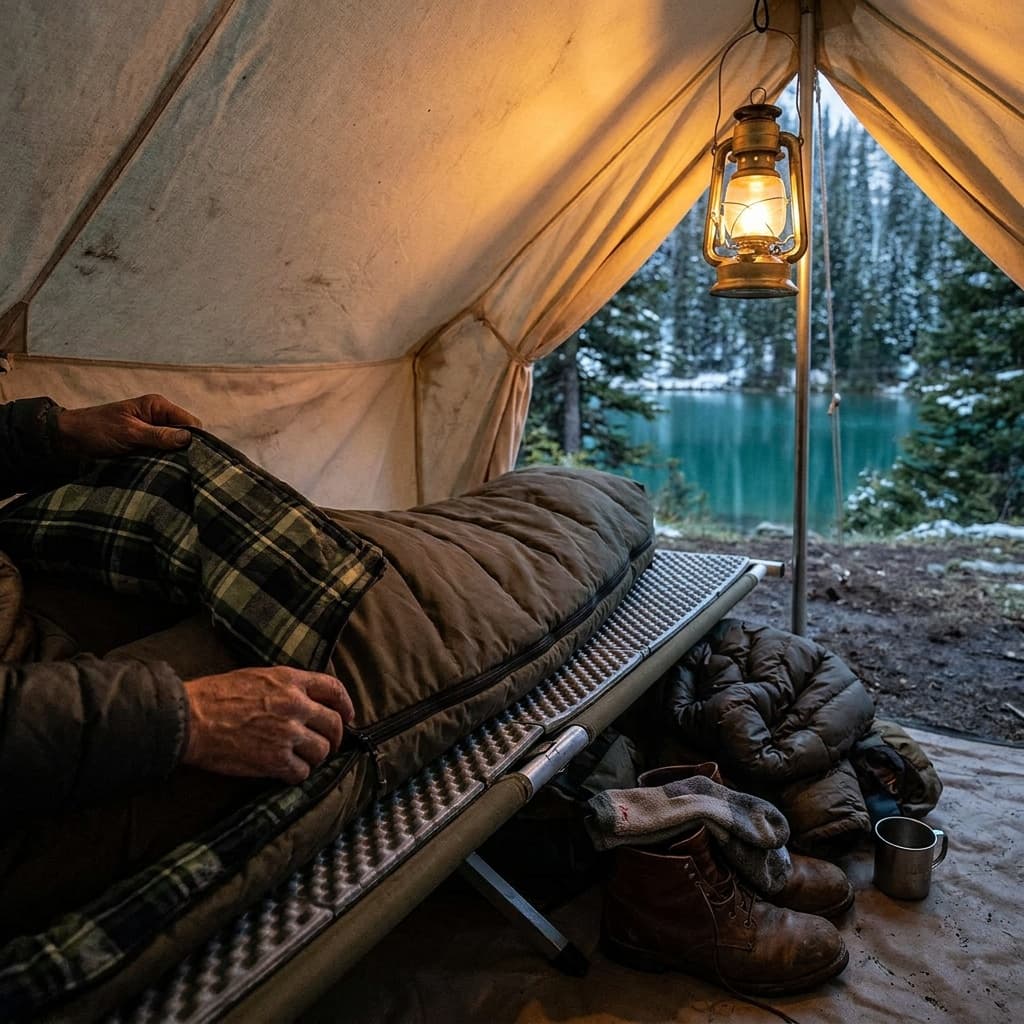
Best for: Car campers, hunters, and cabin trippers who want the warmest, most hotel-bed-like night of sleep possible and have the trunk space to carry it.
- Heavy insulation and draft-control features suit cold-weather car camping
- Large packed size (rolls full-width, not a stuff sack), not suitable for backpacking
- Temperature Rating
- -10°F (-23°C)
- Insulation
- TechLoft synthetic (two-layer offset)
- Shell
- 100% cotton canvas
- Liner
- 100% cotton flannel (plaid)
- Weight
- 11 lb 8 oz
- Dimensions (open)
- 80 x 38 in
About this pick
The ALPS OutdoorZ Redwood is a roomy, heavily insulated car-camping bag with a cotton canvas shell and flannel liner. Its -10F label comes from the manufacturer rather than an ISO comfort test, so buyers should leave temperature margin.
Strengths
- Heavy insulation and draft-control features suit cold-weather car camping
- Soft, weighted cotton flannel interior with virtually no cold spots
- Oversized 38-inch width, ideal for restless or side sleepers
Weaknesses
- Large packed size (rolls full-width, not a stuff sack), not suitable for backpacking
- Cotton absorbs moisture quickly and dries slowly; keep it dry
Kit Score breakdown
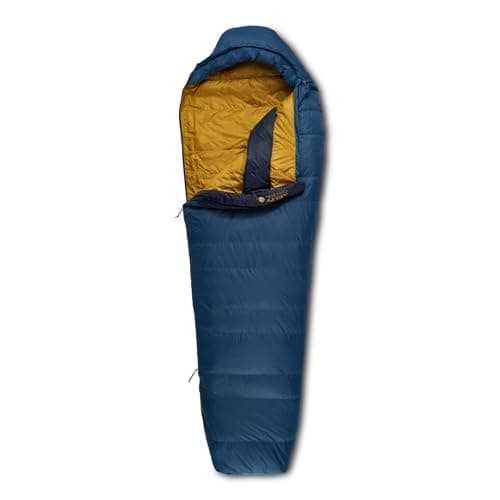
Best for: Campers and entry-level backpackers who want real down insulation and long-term durability without paying premium-bag prices.
- Genuine down insulation at a fraction of premium-bag pricing
- ISO Comfort sits at 31°F, so cold sleepers should size up in temperature rating
- Temperature Rating
- 20°F / ISO Comfort 31°F / ISO Limit 21°F
- Insulation
- 550-fill DriDown (water-treated)
- Shell
- Recycled 50D polyester taffeta
- Liner
- Recycled 20D nylon taffeta
- Weight (Regular)
- 2 lb 7 oz
- Packed Size (Regular)
- 8 x 13 in (10.7L)
About this pick
The Kelty Cosmic 20 combines 550-fill DriDown, trapezoidal baffles, and a draft collar in a packable three-season design. Its published ISO comfort rating is 31F for the regular bag, a more useful buying number than the 20F model name.
Strengths
- Genuine down insulation at a fraction of premium-bag pricing
- Durable 50D shell handles rougher treatment better than most budget bags
- Compact enough to double as a backpacking bag for lighter trips
Weaknesses
- ISO Comfort sits at 31°F, so cold sleepers should size up in temperature rating
- Recycled taffeta lining is not the softest against skin
Kit Score breakdown
COLEMAN
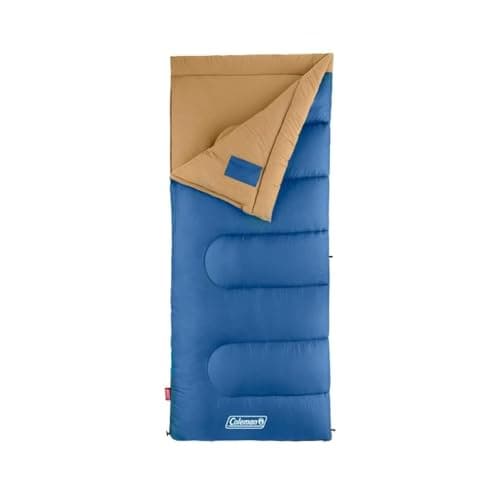
Coleman Brazos 20 Sleeping Bag
Best Budget
Kit Score 7.5/10
$58.99 Price checked Oct 23, 4:16 PM CDT
Best for: New campers, families buying multiple bags on a single budget, or anyone who camps a few nights a year and wants reliable warmth without a large upfront spend.
- Outstanding price per warm night for car camping or occasional use
- Heavy at 5.3 lb and difficult to repack into its stuff sack
- Temperature Rating
- 20°F manufacturer rating (not ISO comfort)
- Insulation
- ColeTherm synthetic (4 lb fill)
- Shell
- Stain-resistant polyester
- Liner
- Soft tricot
- Weight
- 5.3 lb (manufacturer listed)
- Dimensions
- 75 x 33 in, fits to 5'11"
About this pick
The Coleman Brazos is the go-to first sleeping bag for families and occasional campers. It delivers solid warmth, a comfortable tricot lining, and a no-snag zipper at a price that makes outfitting several people practical. Weight and packed size are the honest tradeoffs.
Strengths
- Outstanding price per warm night for car camping or occasional use
- Soft tricot liner feels noticeably better than typical budget nylon
- Machine washable, full-length zipper zips two bags together
Weaknesses
- Heavy at 5.3 lb and difficult to repack into its stuff sack
- No hood or draft collar, so drafts around the shoulders are noticeable in colder temps
Kit Score breakdown
Keep going
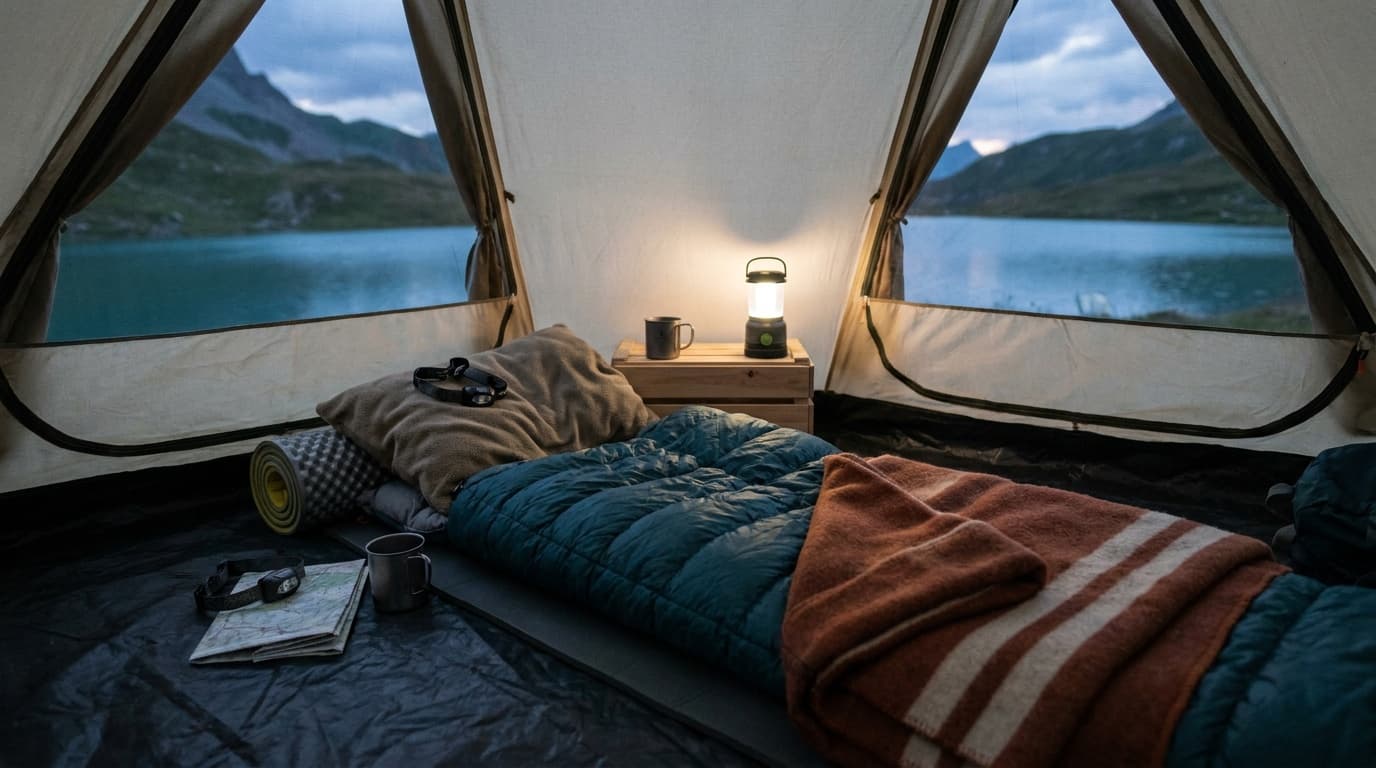
Complete loadoutCamp sleep systemFive coordinated pieces that solve shelter, insulation, cushioning, head support, and light for nights outside.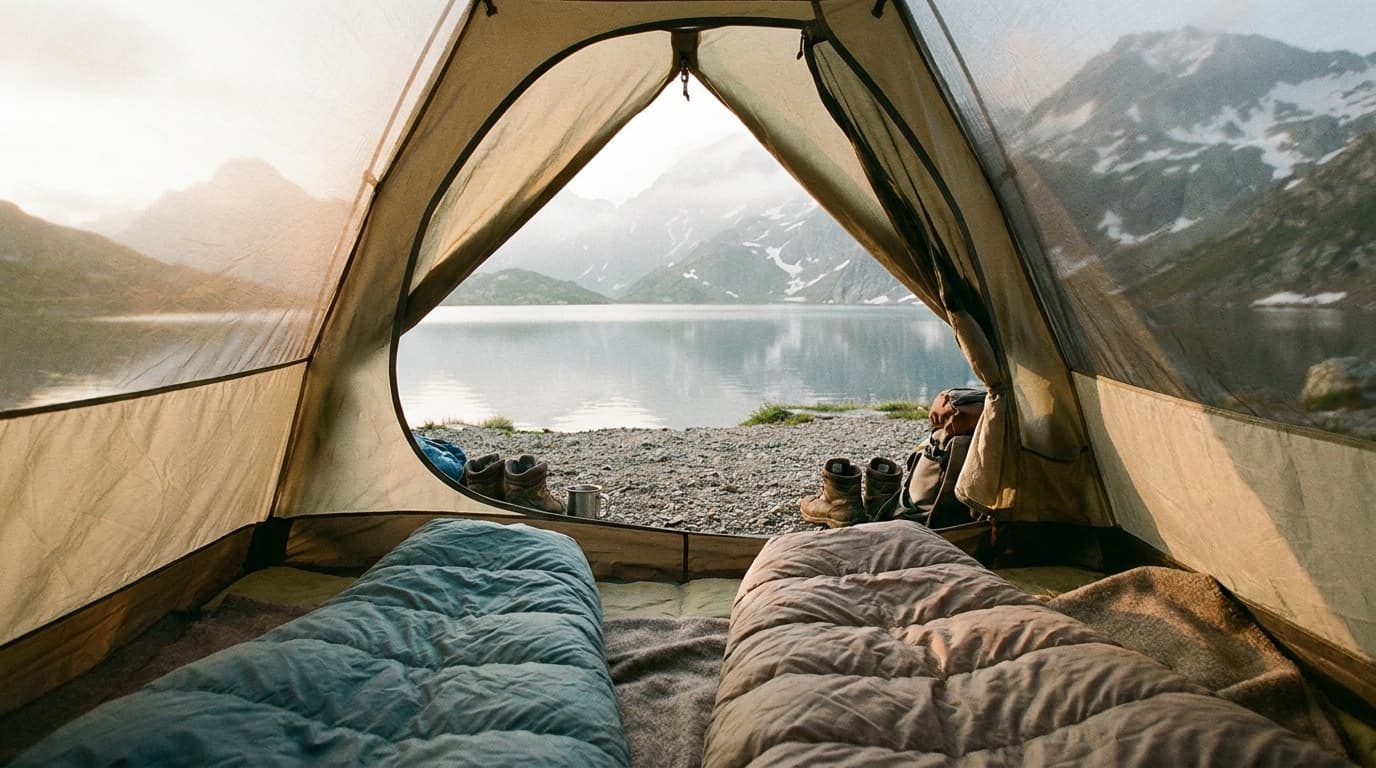
Researched, not hands-on tested
Updated Sep 3, 2026Our recommendations draw on manufacturer documentation, retailer listings, owner feedback, and comparisons with alternatives.
As an Amazon Associate I earn from qualifying purchases. We may earn a commission from links here, at no extra cost to you. How we research →