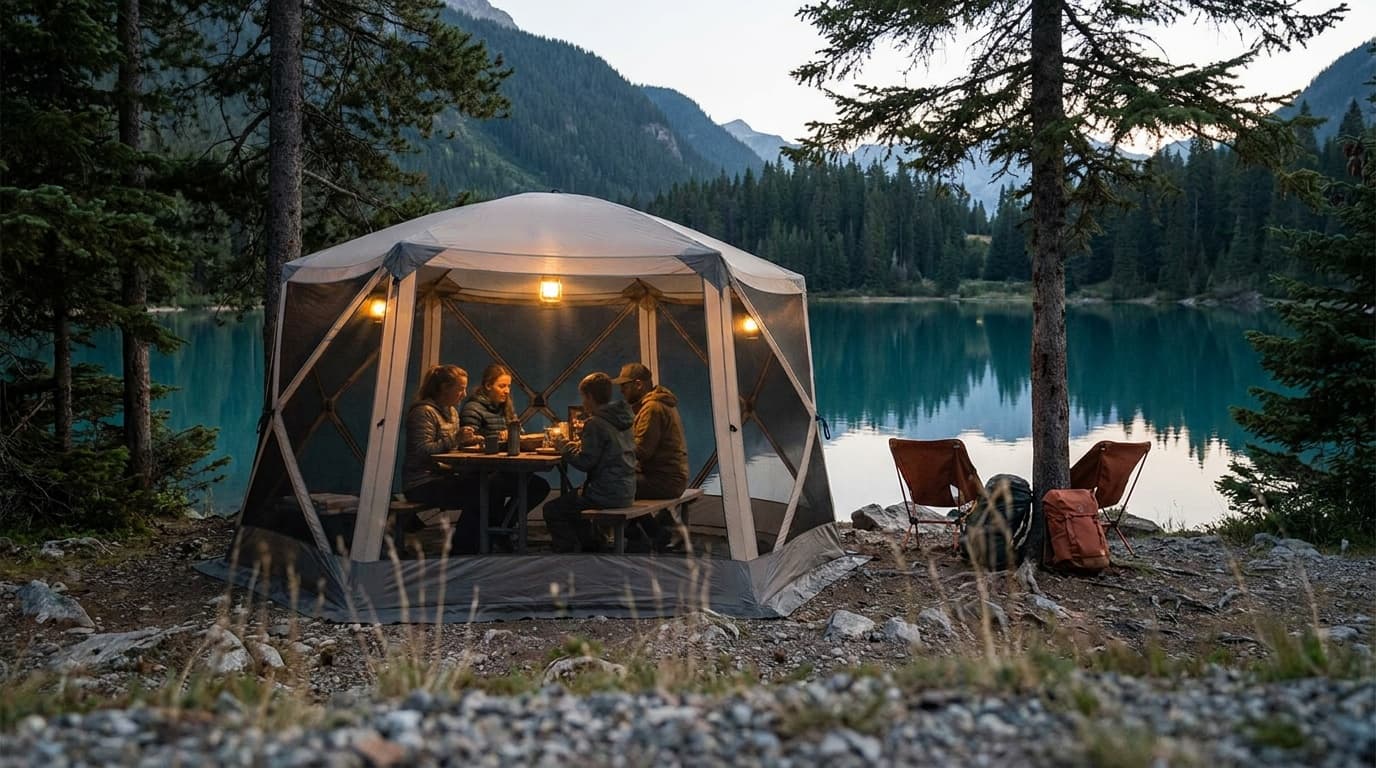
A good screen house turns a bug-ridden campsite into a place where dinner actually gets eaten. The difference between the right one and the wrong one comes down to three things: how fast it goes up, how well it seals, and whether it handles the weather your site actually delivers.
Our quick picks
How we picked
Every shelter here was evaluated against our Kit Score: mesh coverage and bug-seal quality, setup time and mechanism, rain and wind resistance, interior headroom and usable floor area, packed weight and portability, and overall value. Scores draw from verified owner reviews, manufacturer specifications, and independent testing data from sources including OutdoorGearLab, The Wirecutter, and REI Co-op Journal. We do not invent first-hand results.
The numbers worth knowing before you shop
These are the figures that shape the decision for most car campers.
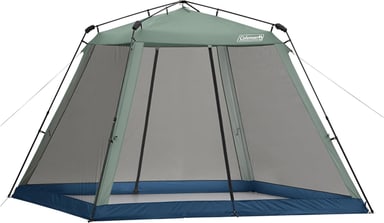
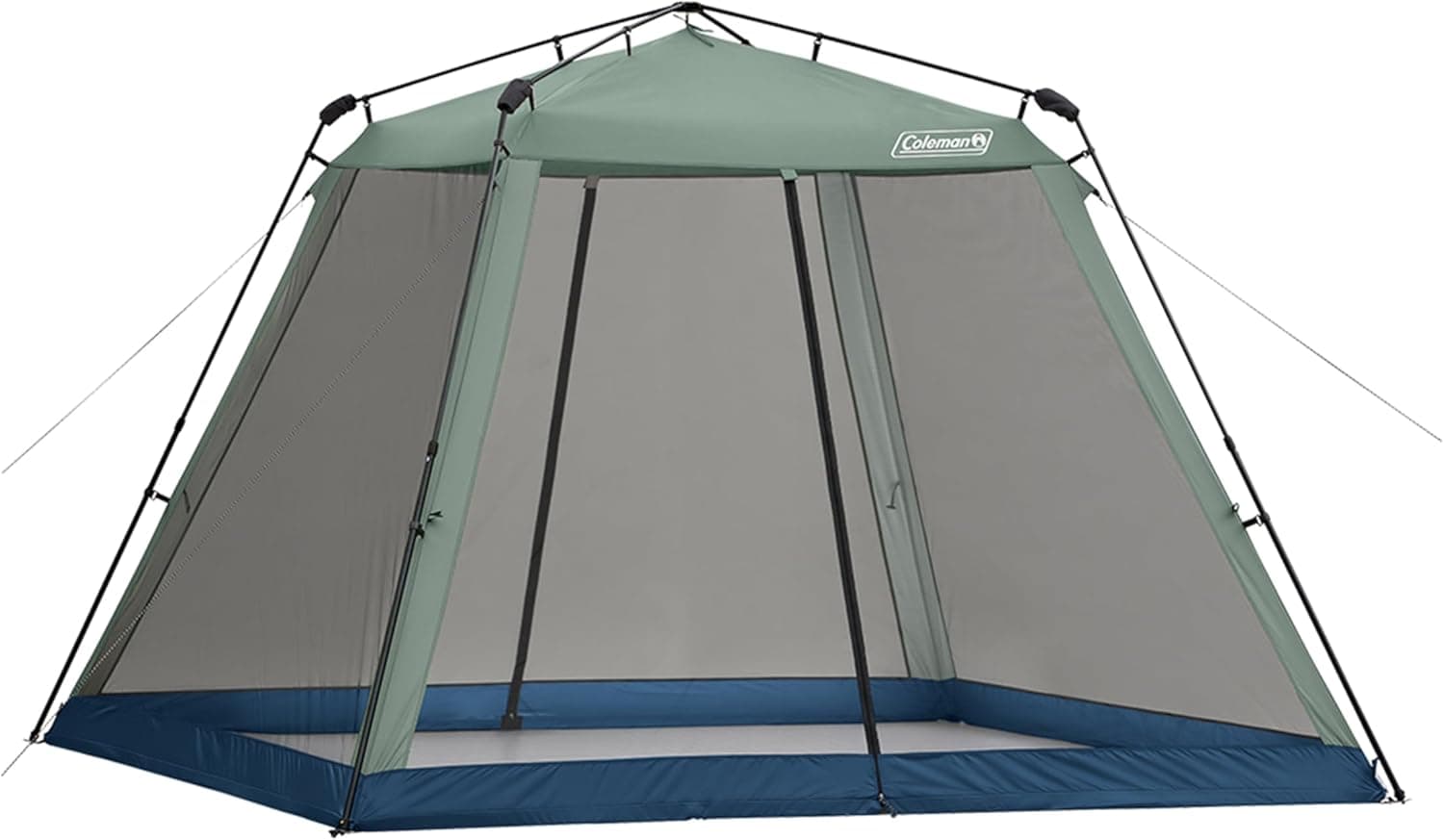
Best overall: Coleman Skylodge 10x10 Instant Screened Canopy
BEST OVERALL
Coleman Skylodge 10 x 10 Instant Screenhouse
Best for: Car campers and family groups who want fast, effortless bug protection at a buggy campsite without a long setup or a heavy carry.
- Solo-deployable instant frame goes up in under 60 seconds
- Roof is not waterproof: seek cover in rain
Kit Score 7.8/10 · $104.99 Price checked Oct 23, 6:22 AM CDT · how we score gear
Buy on AmazonProduct details
Coleman's push-button instant frame deploys in under a minute, giving you a 100-square-foot bug-free zone that one person can manage solo. UPF 50+ mesh walls and two zippered doors cover the basics without the weight or complexity of a pole shelter.
- Footprint
- 10 x 10 ft (100 sq ft)
- Center height
- 7 ft
- Packed weight
- 14.9 lbs
- Setup
- Instant, under 1 minute
- Floor
- Floorless
- Frame
- Steel, one-piece folding
More strengths
- 14.9 lbs makes it the lightest full-size option in its class
- Two large zippered doors allow table-and-chairs access from either side
Other tradeoffs
- Pyramid shape reduces usable floor space near the walls
The Skylodge earns the top spot because it solves the only real barrier to using a screen house consistently: setup. The instant-leg design means all four legs unfold from the center hub and lock in a single motion. Coleman rates the setup at under two minutes; most owner reports are closer to 60 to 90 seconds once you have done it once. That speed matters, because a screen house that takes 20 minutes to pitch gets left in the car on tired nights.
The 10x10 footprint gives you 100 square feet of bug-free floor, enough for a folding table, six camp chairs, and the gear pile you want off the ground. The mesh walls run floor to ceiling on all four sides with a large zippered door panel. There is no sewn-in floor, which is how most screen houses work: the perimeter sits on the ground and creates a reasonable seal against crawling insects, though determined ground-level bugs can find the edge gaps in sandy or uneven terrain.
The roof is coated polyester with taped seams on Coleman's production notes, which means it handles light rain and overnight dew without soaking through. It is not a fully waterproof rain fly rated for a sustained downpour, so plan accordingly on sites with afternoon thunderstorm exposure.
Packed weight runs around 20–23 lb, which makes it a two-hand car-camping carry rather than a backpacking prospect. At $130–$160, it is the most straightforward buy in this category.
Best for: car campers and family groups who want fast, effortless bug protection at a buggy campsite without a long setup or a heavy carry.
Best premium: CLAM Quick-Set Pavilion 12.5
BEST PREMIUM
CLAM Quick-Set Pavilion 12.5
Best for: Campers in heavily buggy or marshy environments who want the speed of a pop-up shelter with durable no-see-um protection and wind-panel coverage for exposed sites.
- No-see-um mesh blocks tiny biting insects that pass through standard mesh
- At $480+ and 39 lbs, it is a significant investment in both money and cargo space
Kit Score 8.6/10 · $455.99 Price checked Oct 23, 6:22 AM CDT · how we score gear
Buy on AmazonProduct details
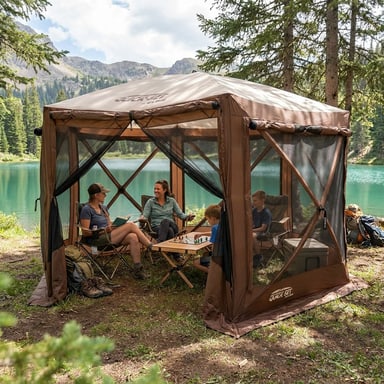
CLAM's hub-and-spoke pop-up design unfolds in under a minute and stands up to bugs at the no-see-um mesh level, blocking the smallest gnats that standard mesh misses. Five integrated wind panels, a water-resistant roof, and fiberglass construction make it one of the most weatherable instant screen shelters available.
- Footprint
- 12.5 x 12.5 ft (approx. 110 sq ft, 6-sided)
- Center height
- 7 ft 10 in
- Packed weight
- 39 lbs
- Setup
- Pop-up hub, under 60 seconds
- Mesh
- No-see-um mesh throughout
- Frame material
- Fiberglass poles, flex-tested
More strengths
- Instant hub deployment in under 60 seconds with no loose pole assembly
- Five wind panels provide genuine weather resistance beyond most screen houses
Other tradeoffs
- Packed size is bulky: best suited to truck beds or large SUVs
CLAM built its reputation on one thing: pop-up shelter systems that deploy faster and seal tighter than the competition. The Pavilion 12.5 delivers on both counts. The hub-and-rib system opens from a carry bag in roughly 60 seconds without any leg-locking steps, and the walls zip to include or exclude any of the four side panels independently, so you can open up the windward side while keeping the leeward mesh closed against bugs.
The standard Pavilion uses CLAM's regular mesh, but no-see-um panels are available as an upgrade and included on select configurations. If your target sites are marshy lakeside spots or southeastern forest campgrounds, the no-see-um spec is the reason to pick CLAM over Coleman at this price tier. No-see-um mesh has an aperture of roughly 600 microns versus 1.5–2mm for standard mesh, which is the difference between keeping biting midges out and letting them through freely.
The 12.5-foot width gives you the largest interior footprint of any pick in this roundup. Peak headroom at the center reaches 78 inches, which means most adults can stand upright without ducking. The steel-and-fiberglass hybrid frame is heavier than a pop-up tent frame but notably more resistant to flex and wobble in wind than the instant-leg systems.
At $480–$560, the CLAM Pavilion 12.5 is a considered purchase. Owner reviews consistently cite 10-plus years of regular use before the frame or mesh shows meaningful wear, which reframes the cost over time.
Best for: campers in heavily buggy or marshy environments who want the speed of a pop-up shelter with durable no-see-um protection and wind-panel coverage for exposed sites.
Editor's choice: Gazelle Tents G6 Deluxe 6-Sided Portable Gazebo
EDITOR'S CHOICE
Gazelle Tents G6 Deluxe 6-Sided Portable Gazebo
Best for: Dedicated car campers who want a fast-deploying screen shelter with a true waterproof roof and wind protection for sites that see actual weather.
- Waterproof roof rated 2000MM HH with UV50+ protection handles real rain without a separate rainfly
- 48 lbs and bulky packed footprint require a truck or large SUV
Kit Score 8.4/10 · $484.99 Price checked Oct 23, 6:22 AM CDT · how we score gear
Buy on AmazonProduct details
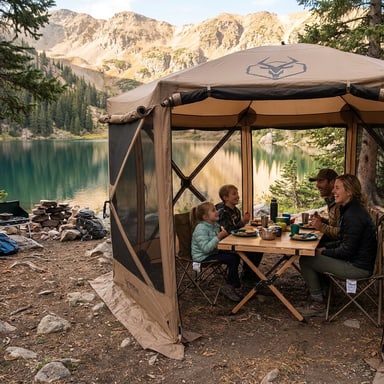
The Gazelle G6 Deluxe pops up in under 60 seconds with no loose poles, giving 92 square feet of sheltered space under a genuinely waterproof 210-denier Oxford roof rated to 2000MM hydrostatic head. Integrated wind panels (front panel doubles as an awning), TriTech tight-weave mesh, and fiberglass construction put it among the most weather-capable instant screen shelters available for car camping.
- Footprint
- 124 x 124 in (approx. 10.3 x 10.3 ft, 6-sided)
- Center height
- 7 ft 2 in
- Packed weight
- 48 lbs
- Poles
- Fiberglass, hub-and-spoke, no-assembly pop-up
- Roof material
- 210D Oxford polyester, waterproof (2000MM HH), UV50+
- Mesh
- TriTech tight-weave mesh with zippered openings
More strengths
- Pop-up hub deploys in under 60 seconds with zero loose pole assembly
- Integrated wind panels and front awning extend usability in exposed or breezy sites
Other tradeoffs
- Fiberglass frame rather than aluminum means more flex; not the stiffest option in sustained high winds
The G6 earns the Editor's Choice for a single differentiating feature the others cannot match: a genuinely waterproof roof. The polyester canopy on the Gazelle is rated to 1500mm hydrostatic head, with factory-taped seams. In a sustained afternoon rainstorm, the interior stays dry. That is not a claim any of the Coleman options can make with the same confidence.
The six-sided geometry also delivers better wind performance than a square canopy. Each of the six wall panels can be independently configured as mesh screen, solid weather panel, or removed entirely, which lets you dial in ventilation, bug protection, and wind blockage simultaneously rather than choosing between them. The hub deployment system is similar to CLAM's in concept: the frame unfolds and locks in roughly 90 seconds from the carry bag.
Peak headroom reaches 76 inches at center. The hexagonal footprint is approximately 14 feet across at the widest point, giving you comparable interior area to the CLAM Pavilion 12.5 with a different shape that actually fits better in irregular campsites because you have six anchor points to work with rather than four.
The packed bag (around 37 lb) is the heaviest of the four picks here, which is worth noting if your campsite involves any meaningful carry from the parking area. For drive-in sites, it is a non-issue.
Best for: dedicated car campers who want a fast-deploying screen shelter with a true waterproof roof and wind protection for sites that see actual weather.
How they compare
| Product | Kit Score | Price | Best for |
|---|---|---|---|
| Coleman Skylodge 10 x 10 Instant Screenhouse | 7.8 | $104.99 Price checked Oct 23, 6:22 AM CDT | Best for: Car campers and family groups who want fast, effortless bug protection at a buggy campsite without a long setup or a heavy carry. Why it stands out: Solo-deployable instant frame goes up in under 60 seconds Tradeoff: Roof is not waterproof: seek cover in rain |
| CLAM Quick-Set Pavilion 12.5 | 8.6 | $455.99 Price checked Oct 23, 6:22 AM CDT | Best for: Campers in heavily buggy or marshy environments who want the speed of a pop-up shelter with durable no-see-um protection and wind-panel coverage for exposed sites. Why it stands out: No-see-um mesh blocks tiny biting insects that pass through standard mesh Tradeoff: At $480+ and 39 lbs, it is a significant investment in both money and cargo space |
| Gazelle Tents G6 Deluxe 6-Sided Portable Gazebo | 8.4 | $484.99 Price checked Oct 23, 6:22 AM CDT | Best for: Dedicated car campers who want a fast-deploying screen shelter with a true waterproof roof and wind protection for sites that see actual weather. Why it stands out: Waterproof roof rated 2000MM HH with UV50+ protection handles real rain without a separate rainfly Tradeoff: 48 lbs and bulky packed footprint require a truck or large SUV |
Coleman Skylodge 10 x 10 Instant Screenhouse
- Best for
- Car campers and family groups who want fast, effortless bug protection at a buggy campsite without a long setup or a heavy carry.
- Why it stands out
- Solo-deployable instant frame goes up in under 60 seconds
- Tradeoff
- Roof is not waterproof: seek cover in rain
CLAM Quick-Set Pavilion 12.5
- Best for
- Campers in heavily buggy or marshy environments who want the speed of a pop-up shelter with durable no-see-um protection and wind-panel coverage for exposed sites.
- Why it stands out
- No-see-um mesh blocks tiny biting insects that pass through standard mesh
- Tradeoff
- At $480+ and 39 lbs, it is a significant investment in both money and cargo space
Gazelle Tents G6 Deluxe 6-Sided Portable Gazebo
- Best for
- Dedicated car campers who want a fast-deploying screen shelter with a true waterproof roof and wind protection for sites that see actual weather.
- Why it stands out
- Waterproof roof rated 2000MM HH with UV50+ protection handles real rain without a separate rainfly
- Tradeoff
- 48 lbs and bulky packed footprint require a truck or large SUV
How to choose the right screen house for your site
The choice comes down to four variables that are specific to how and where you camp.
Four questions that narrow the field
What is your bug situation?
Mosquitoes and standard flies are blocked by any mesh screen house in this roundup. If your target sites have no-see-ums (biting midges, tiny enough to pass through standard mesh), you need the CLAM Pavilion 12.5 with no-see-um panels or a shelter with that spec. Check local campground reports in June and July before you buy.
Do you need waterproof overhead coverage?
If the screen house is your only overhead shelter, the Gazelle G6 is the only pick here with a roof rated for sustained rain. The Coleman options handle drizzle and overnight dew but not a proper storm. If you already run a separate canopy for rain, any of the four options work.
How exposed is your site?
Open lakeside or meadow sites with real wind require the rigid-panel wind coverage of the CLAM or the Gazelle. Car-camping sites in forested campgrounds with natural windbreaks are fine with the Coleman instant-leg designs.
How much carry is involved?
If your campsite is more than 100 feet from where you park, packed weight starts to matter. The Coleman Skylodge (around 20 lb) is the easiest to move. The Gazelle G6 (around 37 lb) benefits from a two-person carry. The CLAM Pavilion 12.5 sits in the middle at around 24 lb.
FAQ
Do screen houses keep out no-see-ums?
Standard-mesh screen houses, including both Coleman options here, do not reliably block no-see-ums. The mesh aperture on standard camping screens runs 1.5–2mm, wide enough for biting midges to pass through. No-see-um mesh (around 600 microns) blocks them effectively. If your campsite is near marshes, slow rivers, or lakeshores in warm months, check whether the screen house you are buying lists no-see-um mesh specifically. The CLAM Quick-Set Pavilion 12.5 with the no-see-um panel upgrade is the pick in this roundup designed for that situation.
Can I use a screen house as my only shelter when camping?
A screen house is not a sleeping shelter. It protects from insects and provides light weather cover for a dining and social area, but it is not a sleeping tent. The roof on most screen houses (including the Coleman options) is weather-resistant rather than waterproof, and there is no insulation or thermal protection. Pair a screen house with a proper sleeping tent. The exception is the Gazelle G6, whose waterproof roof makes it a capable dining and activity shelter in real rain, though it is still not a sleeping tent.
What size screen house do I need?
For two to four people around a folding table, a 10x10 footprint (100 square feet) is workable but not generous. For four to six people or a full camp kitchen setup, the 12x10 Back Home or the 12.5-foot CLAM Pavilion give you the room to move without constant contact with the walls. A common mistake is buying a screen house sized for the number of chairs and then realizing there is no floor space left for a cooler or kids playing cards. Size up by at least one step from what feels sufficient on paper.
The right screen house makes the worst campsite on a buggy night into the best seat in the woods. See more camp gear, or read how we research and rate.
Keep going
Related guides
 Complete camp loadoutCar-camping starter kitBuild the complete kit
Our recommendations draw on manufacturer documentation, retailer listings, owner feedback, and comparisons with alternatives.
As an Amazon Associate I earn from qualifying purchases. We may earn a commission from links here, at no extra cost to you. How we research →
Top picks
 Best OverallColeman Skylodge 10 x 10 Instant Screenhouse7.8/10
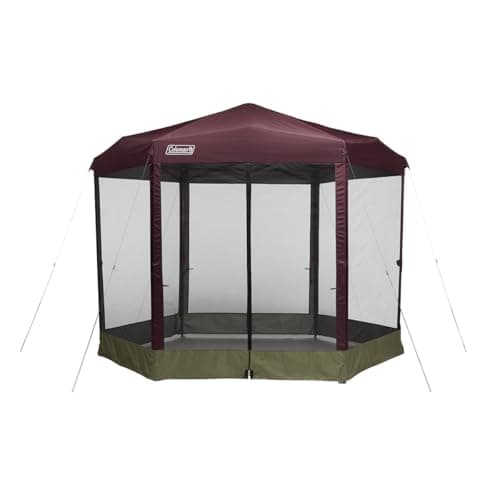 Best ValueColeman Back Home Screened Canopy Tent with Instant Setup7.3/10
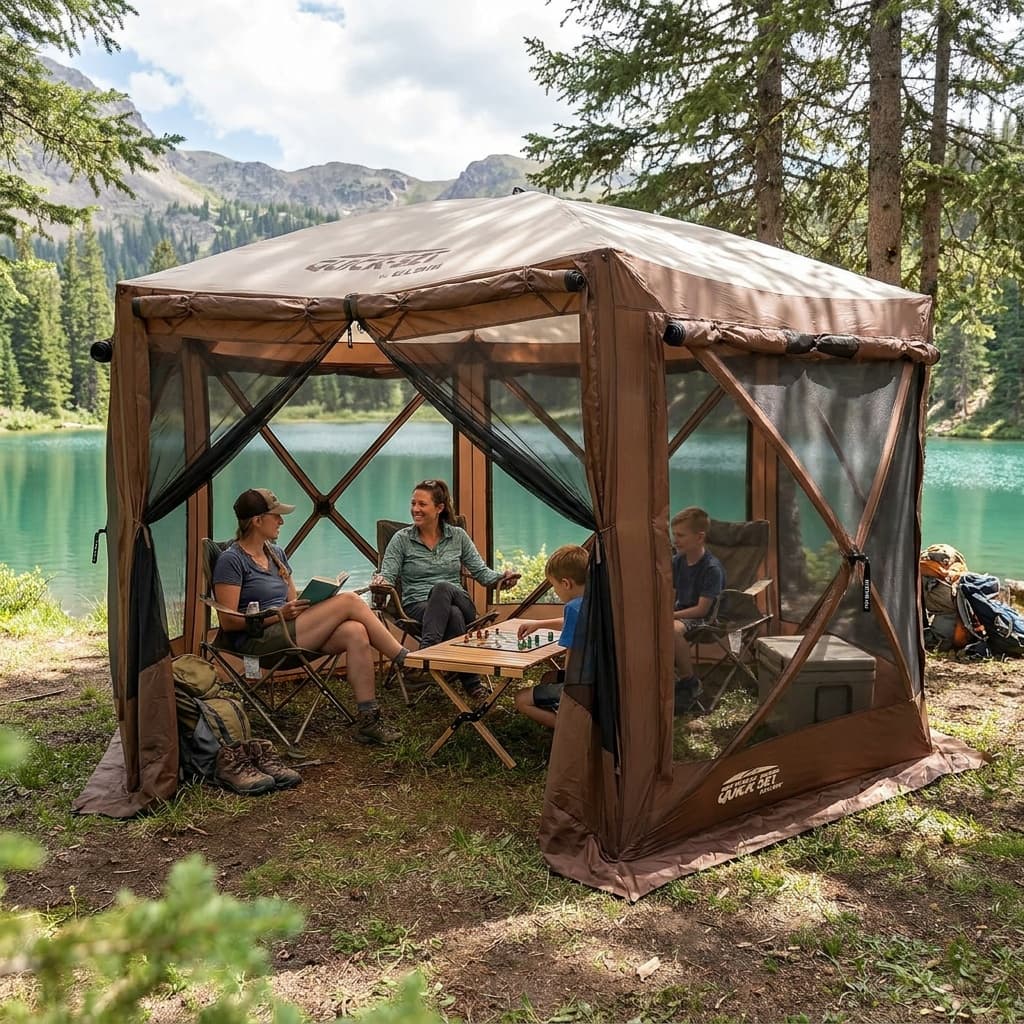 Best PremiumCLAM Quick-Set Pavilion 12.58.6/10
 Editor's ChoiceGazelle Tents G6 Deluxe 6-Sided Portable Gazebo8.4/10