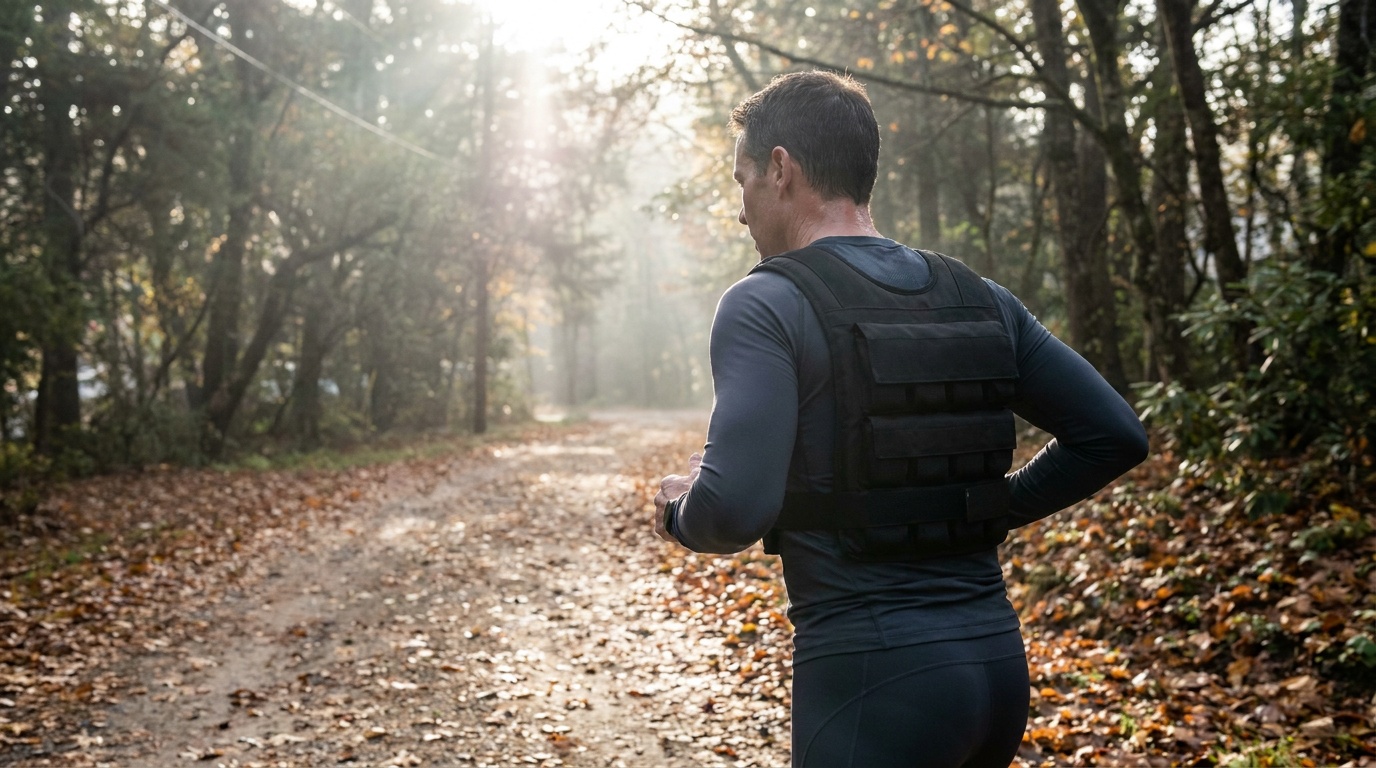
How heavy should your weighted vest be?
Enter your bodyweight, goal, and experience to get a conservative starting estimate, an editorial ceiling, and a step-by-step progression. The result is a planning aid, not a clinical safety threshold.
Start here
about 5% of your bodyweight
17.5 lb
editorial ceiling (~10%)
~8 wks
to reach the cap
Your progression
Add about 2.5 lb every 2 to 3 weeks. Only step up when the current weight feels easy.
- Weeks 1–29 lb
- Weeks 3–411.5 lb
- Weeks 5–614 lb
- Weeks 7–816.5 lb
- Weeks 9–10Target range, hold and reassess17.5 lb
These percentages are conservative planning defaults, not a clinically proven safe range. Task, terrain, health, and vest fit all change the real load.
Vests that fit this plan
Each one can be set to your starting weight, which rules out vests whose lightest setting is already too heavy.
Best match
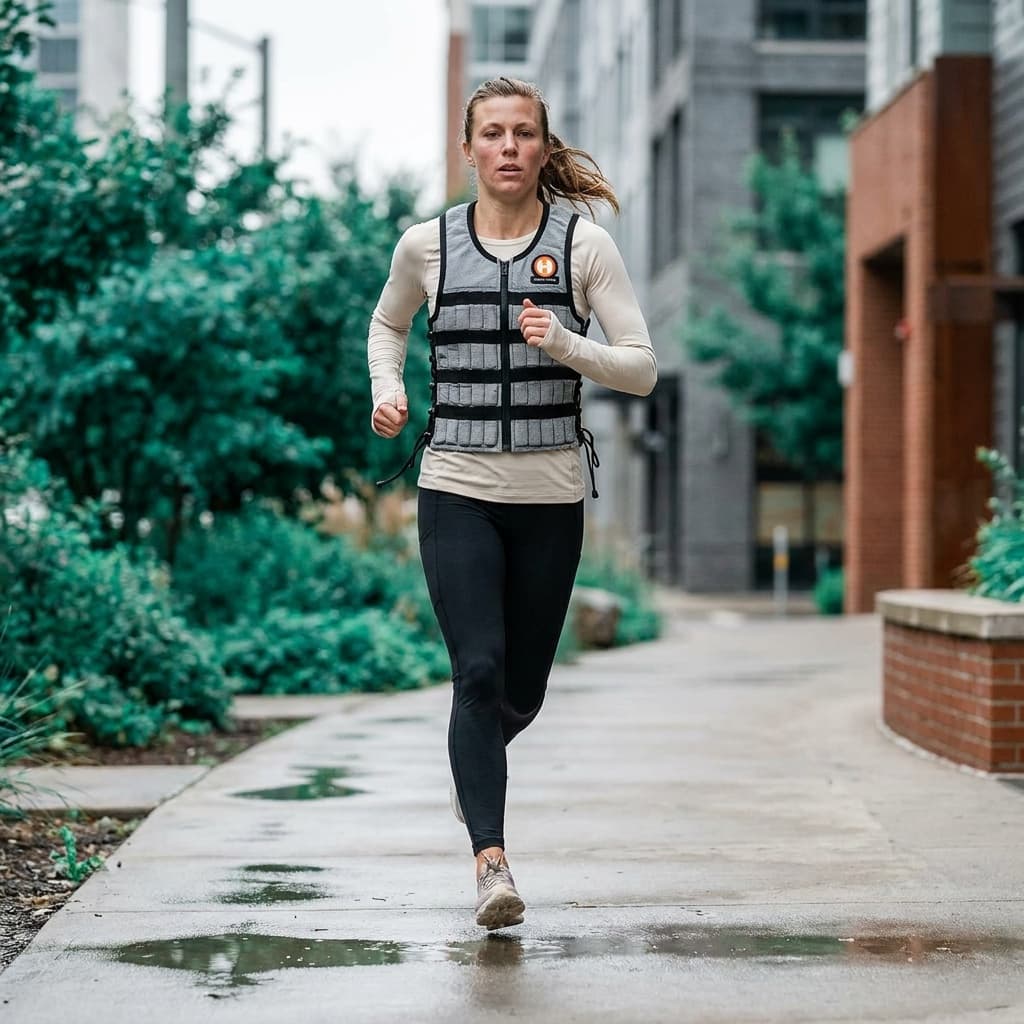
Hyperwear Hyper Vest PRO Adjustable Weighted Vest
Kit Score 8.9/10
Adjusts in 2.25 oz micro-weights, up to 20 to 40 lb by size: covers your 9 lb start and your 17.5 lb ceiling.
Also fits
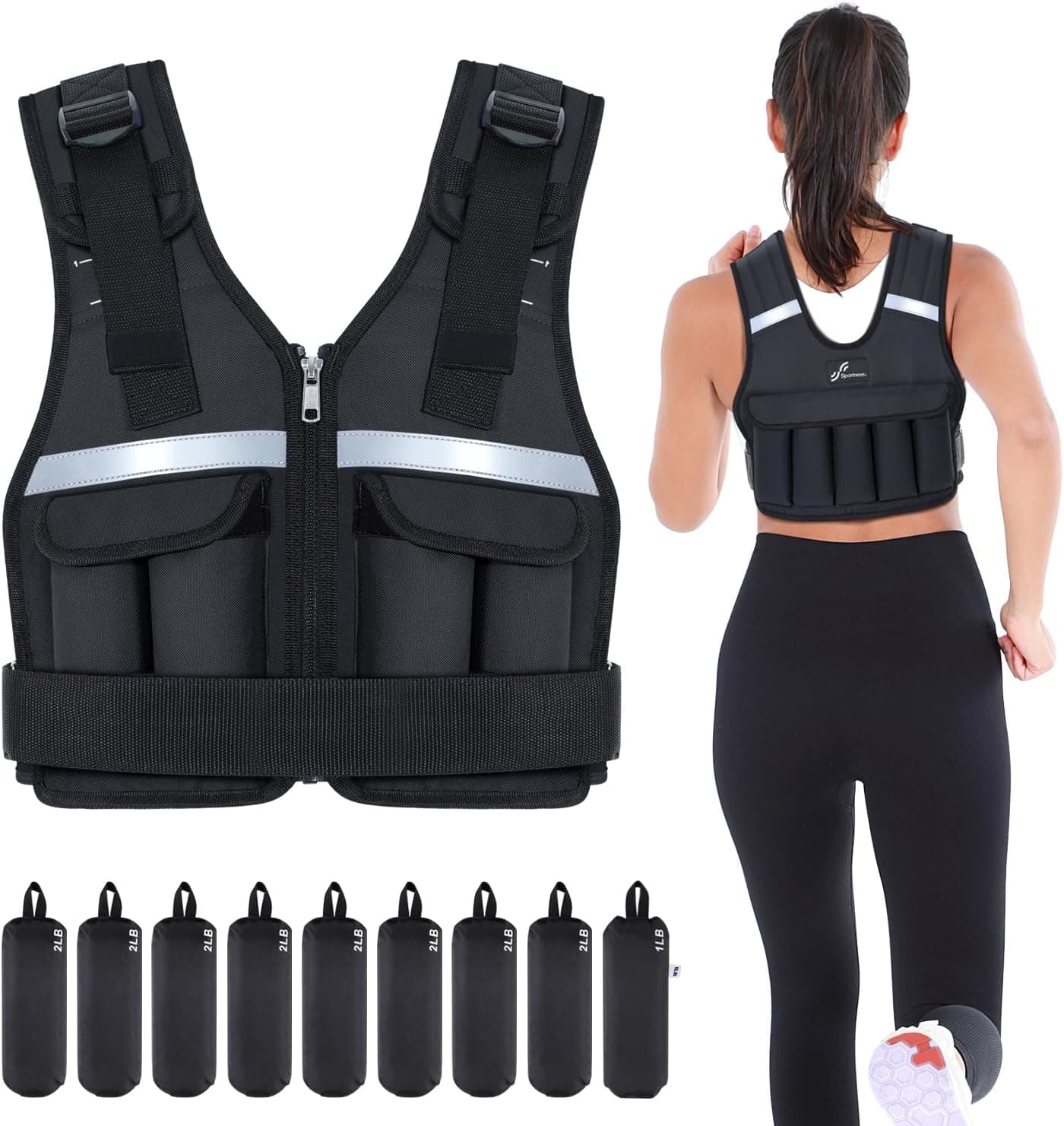
Sportneer Adjustable Weighted Vest 2 – 18 lb
Kit Score 7.4/10
Adjusts from 2 to 18 lb in 2 lb packs: covers your 9 lb start and your 17.5 lb ceiling.
Also fits
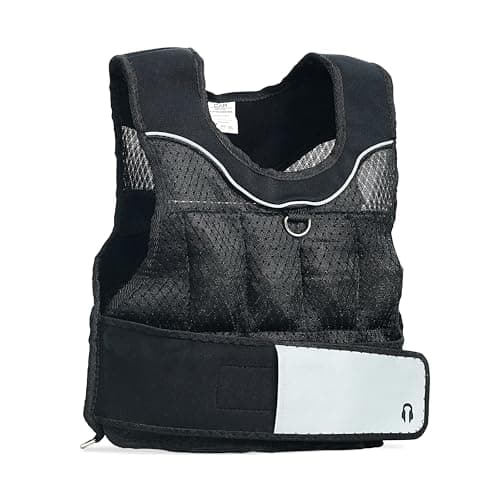
CAP 20 LB Adjustable Weighted Vest
Kit Score 7.2/10
Adjusts from 1 to 20 lb in 1 lb bags: covers your 9 lb start and your 17.5 lb ceiling.
Specs are the makers' published figures. We may earn a commission from retailer links, at no extra cost to you.
Weighted-vest weight by bodyweight
Kit Authority uses 5% as a conservative starting estimate, 10%as an editorial walking ceiling, and 15%only as a planning ceiling for deliberate strength work. These are not clinically validated safe limits. They are deliberately cautious defaults that the calculator adjusts to your goal and experience.
| Bodyweight | Start (5%) | Walking ceiling (10%) | Strength ceiling (15%) |
|---|---|---|---|
| 120 lb | 6 lb | 12 lb | 18 lb |
| 140 lb | 7 lb | 14 lb | 21 lb |
| 160 lb | 8 lb | 16 lb | 24 lb |
| 180 lb | 9 lb | 18 lb | 27 lb |
| 200 lb | 10 lb | 20 lb | 30 lb |
| 220 lb | 11 lb | 22 lb | 33 lb |
| 240 lb | 12 lb | 24 lb | 36 lb |
The failure mode is almost always going too heavy too fast, not too light. Spend more time at the starting number than you think you need to.
What changes as weighted-vest load rises
Human studies do not establish one ideal percentage. They do show a consistent direction: more load raises physiological demand and can raise mechanical loading, while the size of the effect depends on pace, grade, task, and population.
- 5% to 10% of bodyweight: a 2026 preliminary treadmill study found that oxygen use, heart rate, and perceived exertion rose from unloaded walking to 5% and 10% loads, without a significant change in the gait measures it recorded.
- 10% to 20% of bodyweight: a small 2006 laboratory study found increasing oxygen use, vertical ground reaction force, and loading rate as vest load and treadmill speed increased.
- Calories: in a nine-person 2026 conference abstract, a fixed 10 lb vest added about 0.25 kcal per minute during brisk treadmill walking, roughly 15 calories per hour. The result is preliminary and modest.
Read the source records, study limits, and newer conflicting bone-health evidence in the weighted vest research index.
How we get these numbers
The calculator uses transparent editorial defaults: experience selects a 5%, 6.5%, or 8% start; goal selects a 10%, 12%, or 15% planning ceiling; and the schedule adds 2.5 lb every two weeks. Published studies have used many different loads and protocols, so these settings are a conservative decision framework, not a result copied from one trial.
These are researched picks and guidance, not personally tested, and this is general information rather than medical advice. If you are coming back from an injury or have a joint or heart condition, check with a professional before adding load. See how we research and rate.
Got your number but not sure which vest to get? Take the which weighted vest quiz or see the best weighted vests for walking.
Want to inspect the evidence before using the estimate? Open the source-by-source weighted vest research index, including its downloadable dataset and correction method.
Frequently asked questions
How heavy should a weighted vest be for walking?
Kit Authority uses about 5% of bodyweight as a conservative starting estimate and 10% as an editorial ceiling for ordinary walking. Those are not validated universal safety thresholds. Research has tested different loads, tasks, and populations, so build slowly and reduce the load if your posture or gait changes.
How heavy should a beginner's weighted vest be?
If you are new to weighted training, a conservative plan is to begin near 5% of bodyweight and hold there for 2 to 3 weeks before adding anything. Five percent is an editorial starting point, not a clinical prescription. Stop or reduce load if your gait, posture, or recovery changes.
How much weight can I add, and how often?
Add about 2 to 5 lb every 2 to 3 weeks, and only when the current weight already feels easy. If you get sharp pain, poor sleep, or your walking form breaks down, hold the weight or drop back a step. Slow beats sore.
Is it safe to walk with a weighted vest every day?
There is no universal evidence-based daily schedule. A cautious plan leaves unweighted or rest days between early sessions and changes only one variable at a time. Daily use in one 2025 trial involved older adults in a supervised weight-loss study and did not prevent hip bone loss, so it should not be treated as a general walking prescription.
Does a heavier weighted vest burn more calories?
Yes. Laboratory studies generally show that oxygen use and energy cost rise with load, speed, or grade, but the size varies. In one preliminary 2026 conference abstract, a fixed 10 lb vest added about 15 calories per hour during brisk treadmill walking. A vest is a progression tool, not a calorie shortcut.
More free tools
 Which Vest? QuizAnswer three questions, get matched to the right vest.
 Vest Walking PlanA multi-week weighted-walking plan built around your level.
 Beginner Walking PlanA free 8-week beginner walking plan built around your week.Shoe FinderFive questions match you to the right outdoor shoes, men's and women's.
Embed this tool on your site (free)
Paste this where you want the tool to appear. It is free to use with a small credit link back to Kit Authority.
<iframe src="https://kitauthority.com/embed/vest-calculator" title="Weighted-Vest Sizing Calculator" width="100%" height="640" style="border:0;width:100%;max-width:680px" loading="lazy"></iframe>
<script>window.addEventListener("message",function(e){if(e&&e.data&&e.data.type==="ka-embed-height"){var f=document.querySelector('iframe[src="https://kitauthority.com/embed/vest-calculator"]');if(f){f.style.height=e.data.height+"px";}}});</script>