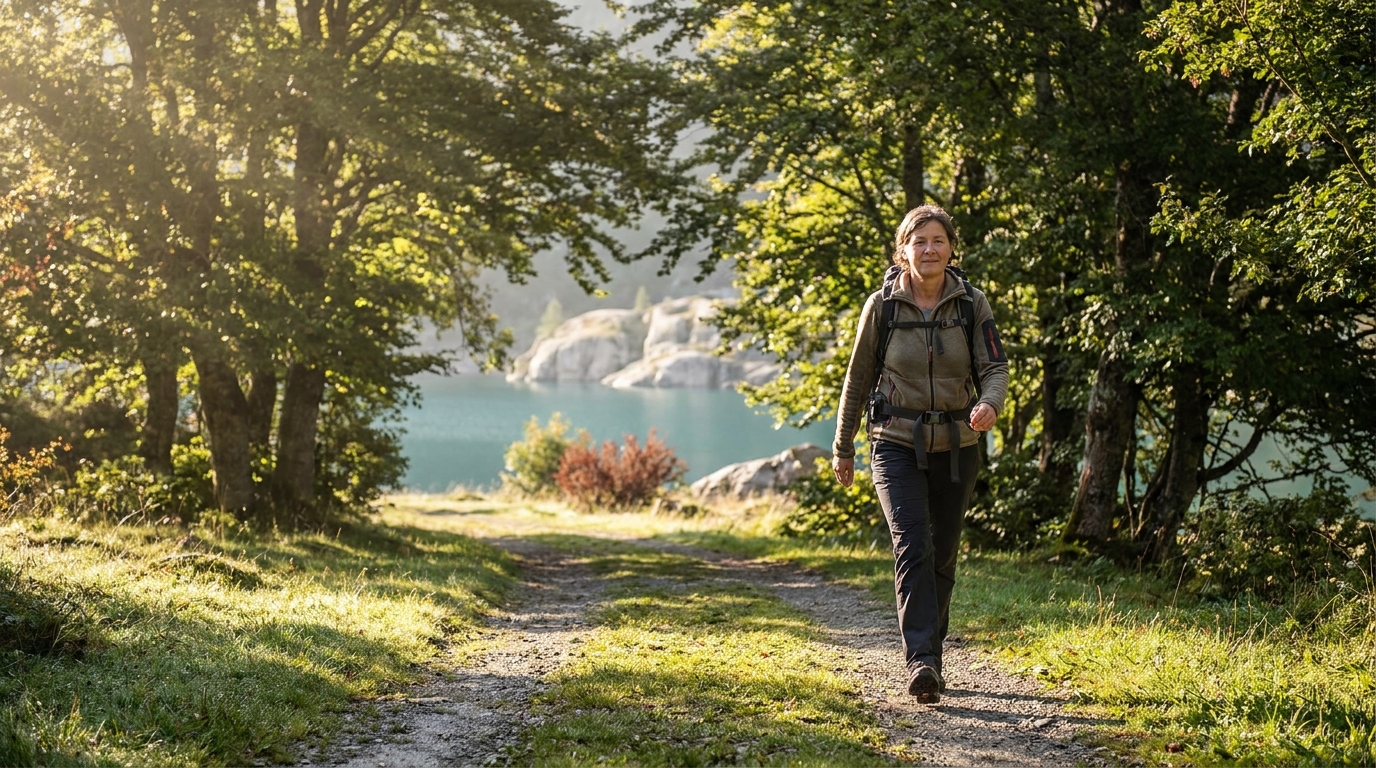
Build your 8-week walking plan
A beginner walking plan should start easier than you think and build slower than you expect. Set your starting point, goal, and schedule, and get a week-by-week plan that grows about 10% at a time.
Your 8-week plan, 4 walks a week
bar = total walking minutes that week
| Week | Each walk | Brisk | Week total | Focus |
|---|---|---|---|---|
| 1 | 15 min | 10 min | 60 min | Find the routine: easy pace, finish feeling fresh |
| 2 | 15 min | 10 min | 60 min | Add a little time, keep it conversational |
| 3 | 20 min | 15 min | 80 min | Settle into the brisk blocks |
| 4hold | 20 min | 15 min | 80 min | Hold week: repeat the volume and let the body adapt |
| 5 | 20 min | 15 min | 80 min | Build again: add time |
| 6 | 20 min | 15 min | 80 min | Keep building; this is the biggest week so far |
| 7 | 25 min | 15 min | 100 min | Push the brisk share of each walk |
| 8hold | 25 min | 15 min | 100 min | Consolidate, then set your next block |
Each walk: 5 minutes easy to warm up, with the rest at a brisk pace, quick enough that you can talk but not sing. If a week feels hard, repeat it before moving on.
- This schedule peaks at 100 minutes a week. In your next block, add a day or longer sessions to reach the 150-minute weekly target in public health guidance.
- Week 4 is a hold week on purpose. Repeating a week is progress; it is where the adaptation happens.
How the plan works
The plan follows the conventions that make beginner walking programs stick. You start with short sessions at an easy pace (15 to 25 minutes, depending on where you are now), grow total weekly time by roughly 10% per week, and take hold weeks at week 4 and week 8 so your feet, shins, and joints consolidate before the next build. Each walk wraps a brisk block, quick enough to talk but not sing, in a few easy minutes of warm-up and cool-down.
The destination is the 150-plus minutes a week of moderate activity that public health guidance recommends. Most schedules in this builder reach it by week 5 or 6; if your available time keeps the plan under that line, the plan says so and tells you what to add in your next block. This is general guidance, not medical advice. If you have a heart or joint condition, or you are returning from injury, check with a professional first.
Walking for weight loss? The brisk blocks matter more than the total. Building toward weighted walks? The final two weeks introduce a light vest, sized with the vest sizing calculator, and hand off to the weighted-vest walking plan and our guide to weighted vest walking for beginners. For the fundamentals in article form, read how to start walking for fitness and the walking workout plan for beginners.
Gear for the plan
You do not need much to start walking, but three things earn their keep over eight weeks: cushioned shoes, socks that will not blister, and a simple tracker to log the minutes. These are our researched picks for each. See all four walking-shoe picks →
Brooks officially markets the Ghost 18 as a Neutral Running and Walking Shoe, and the tagline holds up: its DNA Loft v3 midsole, 10mm drop, and wide-width lineup (narrow through 4E) make it the most walker-friendly general-purpose shoe in this roundup. The Ghost line has logged 18 generations because it reliably delivers a stable, cushioned ride that works from a 20-minute morning walk to a full day on pavement. The Ghost 18 carries both the APMA Seal of Acceptance and PDAC A5500 Diabetic footwear certification.
Best for: Daily fitness walkers who want a proven, durable, width-inclusive shoe that transitions from neighborhood walks to the gym without fuss.
- Men's version comes in four widths, narrow (1B) through extra wide (4E), so it fits a wide range of foot shapes
- 10mm drop and stable neutral platform suit heel-strike walkers who log miles daily without specialty support needs
- Forefoot cushioning is firmer and lower-stack than the Clifton 10 or 1080v14, so heavier walkers or those with joint sensitivity may want more underfoot volume
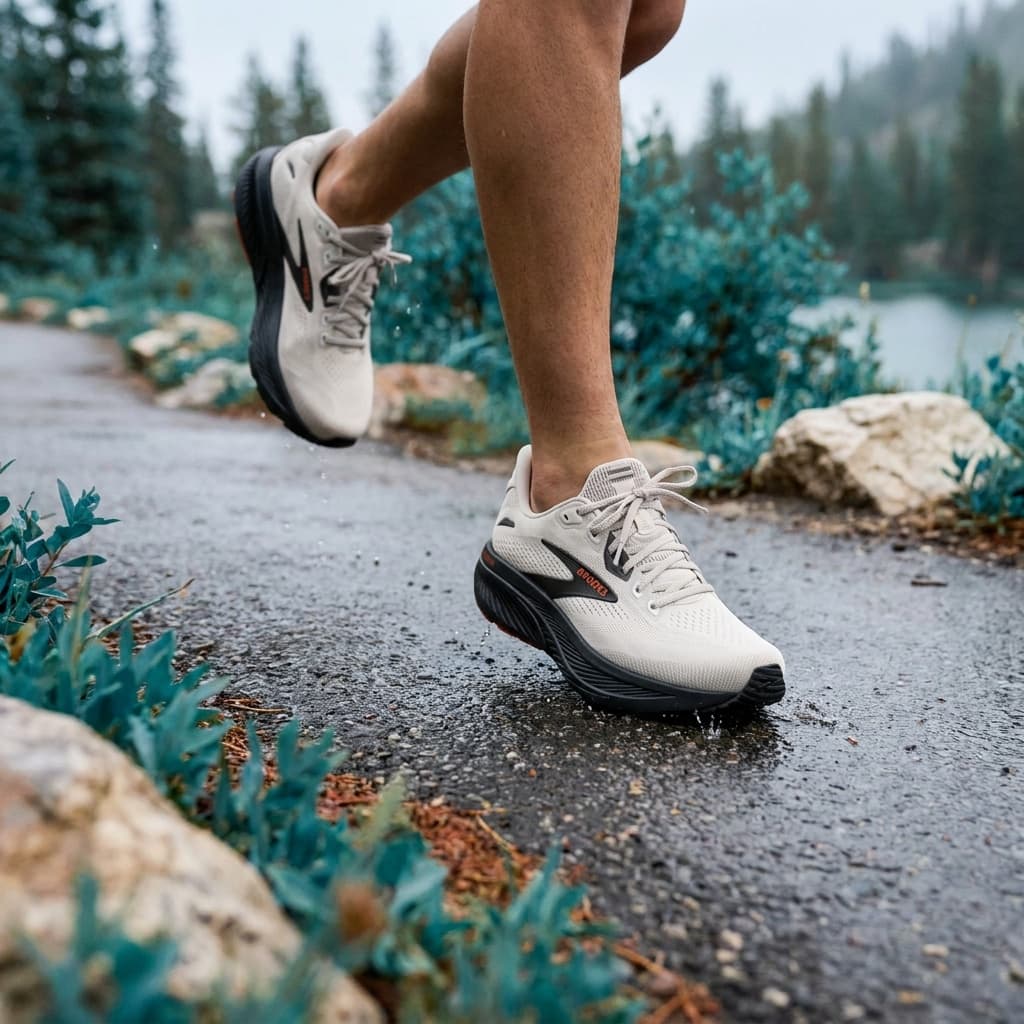
- Weight
- 10.2 oz (men) / 9.2 oz (women)
- Heel drop
- 10 mm
- Stack height
- 36 mm heel / 26 mm forefoot
- Midsole
- DNA Loft v3 nitrogen-injected foam
- Widths
- Narrow, Standard, Wide (2E), Extra Wide (4E)
- Replacement
- Based on wear, support, and comfort
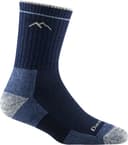
The 1466 earns its reputation across tens of thousands of thru-hiker miles: a tight merino knit with just enough midweight cushion to absorb trail impact without adding volume in a snug boot. The unconditional lifetime warranty removes the durability question entirely.
Best for: Hikers who want one sock that handles everything from summer day hikes to week-long backpacking trips and expect it to last for years.
- Goldilocks cushion level works for day hikes and multi-week backpacking without sizing up footwear
- Lifetime warranty with a real no-hassle replacement policy makes the per-wear cost competitive over time
- Some owners note the fit runs slightly large and recommend sizing down
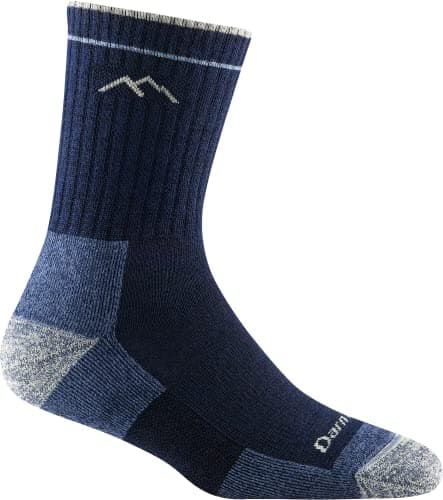
- Material
- 61% merino wool, 36% nylon, 3% Lycra spandex
- Cushion
- Midweight (terry loops underfoot, targeted Achilles zone)
- Height
- Micro crew (approx. 8.5 in. from heel to cuff)
- Warranty
- Lifetime, no-questions replacement
- Sizing
- Men's XS–XXL (shoe 2.5–17); Women's Style 1903 S–L
- Origin
- Knit in Vermont, USA
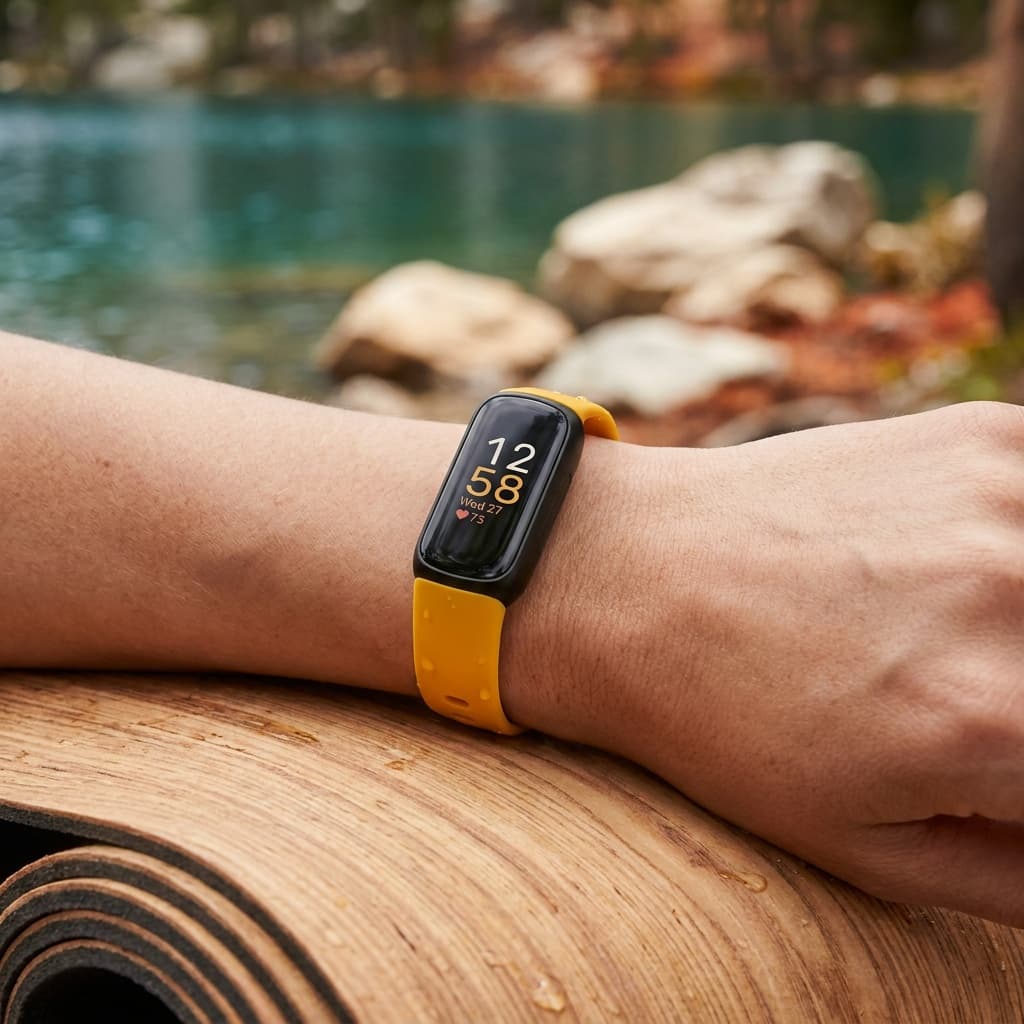
The Inspire 3 is the lightest, most wrist-friendly tracker in this group and came within 41 steps of a hand-tallied 7,000 in a published Tom's Guide walk. Its 10-day battery, Fitbit app ecosystem, and sub-$100 street price make it the practical pick for everyday walkers who do not need onboard GPS.
Best for: Daily walkers who want a slim, accurate, set-and-forget band and already carry a phone on most walks.
- Excellent step accuracy relative to price
- Among the lightest trackers in its class at 17.69 g
- No onboard GPS: route maps require carrying a phone
- Display
- Color AMOLED touchscreen, Gorilla Glass 3
- Battery life
- Up to 10 days
- GPS
- Connected GPS (phone required)
- Water resistance
- 5 ATM (50 m)
- Weight
- 17.69 g (tracker, per Google)
- Exercise modes
- 40+ with SmartTrack auto-detection
Researched, not personally tested: picks come from specs, verified-owner reviews, and expert sources, scored into the Kit Score. As an Amazon Associate I earn from qualifying purchases. We may earn a commission from links here, at no extra cost to you. How we research →
Frequently asked questions
How should a beginner start a walking routine?
Start with 15 to 20 minute walks at an easy, conversational pace, 3 to 4 days a week. Keep the first two weeks comfortable so the habit sticks, then add about 10% more total time each week. Consistency beats intensity for the first month.
How many days a week should a beginner walk?
Three to five days a week is the sweet spot for most beginners. It is enough frequency to build the habit and the fitness, while leaving rest days for your feet, shins, and joints to adapt. More days at shorter lengths usually beats fewer, longer walks early on.
How long should each walk be for a beginner?
Begin with 15 to 20 minutes and build toward 30 to 45 minute sessions over about eight weeks. Public health guidance targets 150 minutes of moderate activity a week, which is five 30-minute brisk walks. You do not need to start there; you need to build there.
What counts as a brisk walking pace?
Brisk means quick enough that you can hold a conversation but could not sing, roughly 3 to 4 mph for most people. A simple check: your breathing is noticeably deeper within a few minutes. The plan wraps each brisk block in a few easy minutes to warm up and cool down.
When can I add a weighted vest to my walking plan?
Once you can walk 30 to 45 minutes briskly, several days a week, for a few weeks without soreness. Then add a light vest, about 5% of your bodyweight, on two walks a week while keeping the time the same. Change one variable at a time: add the vest or add time, never both in the same week.
More free tools
 Walking Pad Fit CheckerWhich walking pad fits your height, weight, desk, and floor space.
 Vest Sizing CalculatorHow heavy a vest to start with, plus a safe progression.
 Shoe FinderFive questions match you to the right outdoor shoes, men's and women's.Vest Walking PlanA multi-week weighted-walking plan built around your level.
Embed this tool on your site (free)
Paste this where you want the tool to appear. It is free to use with a small credit link back to Kit Authority.
<iframe src="https://kitauthority.com/embed/walking-plan" title="Beginner Walking Plan Builder" width="100%" height="640" style="border:0;width:100%;max-width:680px" loading="lazy"></iframe>
<script>window.addEventListener("message",function(e){if(e&&e.data&&e.data.type==="ka-embed-height"){var f=document.querySelector('iframe[src="https://kitauthority.com/embed/walking-plan"]');if(f){f.style.height=e.data.height+"px";}}});</script>