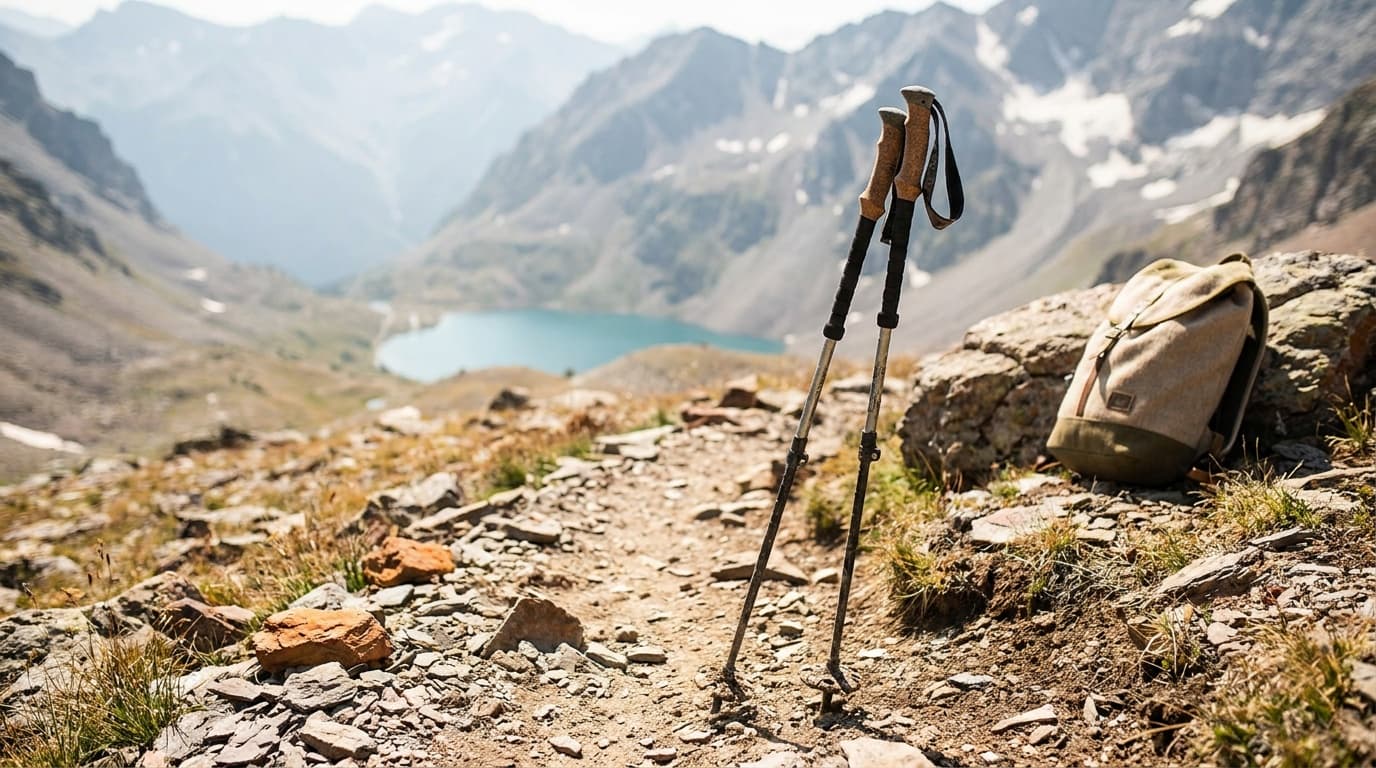
The best trekking pole is the one whose lock, grip, adjustment range, and packed length fit the way it will actually be used. Material is only one decision. A low-priced carbon pole can be lighter than premium aluminum, while a costly carbon model earns its price through folding architecture rather than the shaft label alone.
Our quick picks
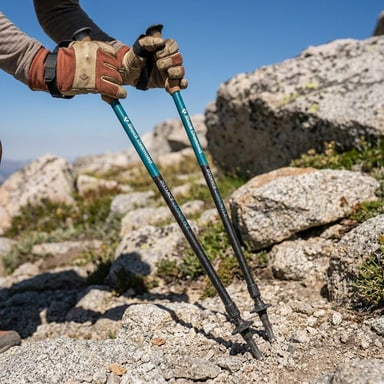
Verified numbers
| Pick | Pair weight | Packed | Range | Current verified price |
|---|---|---|---|---|
| Black Diamond Trail Back | 560 g | 61.5 cm | 100–140 cm | $75.03 |
| LEKI Legacy Lite | 502 g | 66 cm | 100–135 cm | $109.95 |
| Cascade Mountain Tech Carbon | 408 g before tips | About 63.5 cm | About 63.5–135 cm | $68.19 |
| Black Diamond Distance Carbon FLZ | 308–364 g | 34–40 cm | Three 15 cm size ranges | $174.88–$219.95 |
Prices and availability were verified through Amazon's Creators API on July 31, 2026. They can change. Weights and lengths are the makers' current published figures; Black Diamond's Trail Back page now lists a single 560 g pair weight where an earlier version showed both 534 and 560 g.
Best overall: Black Diamond Trail Back
BEST OVERALL
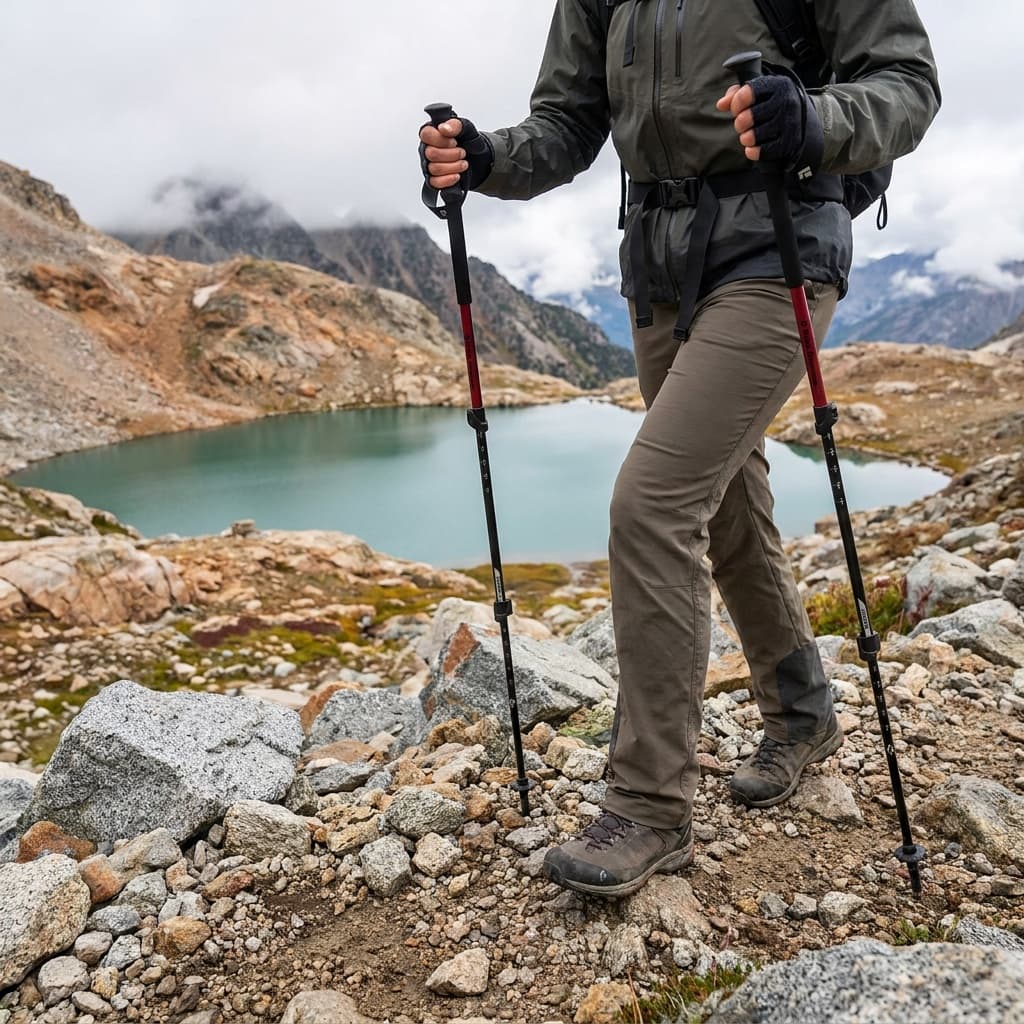
Black Diamond Trail Back Trekking Poles
Best for: Day hikers and backpackers who favor visible lever locks, broad adjustment, and included snow baskets over minimum weight or compact packing.
- Wide 100–140 cm adjustment range suits most adult heights and terrain changes
- Heavier than carbon alternatives at 18+ oz per pair, noticeable on long-mileage days
Kit Score 8.6/10 · Check current price · how we score gear
Buy on AmazonProduct details
A straightforward three-section aluminum pole with Black Diamond FlickLock adjustment, an extended EVA grip, and included snow baskets. It is heavier than carbon and folding alternatives, but its wide 100–140 cm range and uncomplicated layout suit ordinary hiking and backpacking.
- Weight (pair)
- 19.7 oz (560 g)
- Shaft material
- 7075 aluminum
- Lock type
- FlickLock lever (2x)
- Length range
- 39 – 55 in (100 – 140 cm)
- Collapsed length
- 24 in (61 cm)
- Grip
- EVA foam with extended upper grip
More strengths
- FlickLock levers are easy to see, open, and retension on trail
- Included trekking and snow baskets broaden seasonal use
Other tradeoffs
- The long 24.2-inch collapsed length is awkward on compact travel packs
Trail Back is the easiest pair to recommend when the buyer has not identified a specialized problem. The 100–140 cm range fits most adults and accommodates terrain changes. External FlickLock levers are visible and easy to retension, while the 7075 aluminum shafts (30 percent pre-consumer recycled, per Black Diamond) tolerate ordinary rough handling. The dual-density EVA grip extends down the shaft for choking up on climbs, standard and snow baskets are in the box, and the warranty is two years.
The compromise is bulk. At 560 g (19.7 oz) per pair and 61.5 cm (24.2 inches) collapsed, it is unremarkable for conventional poles but poor for a running vest or tight luggage.
Read the Black Diamond Trail Back review, or compare it with LEKI in Trail Back vs Legacy Lite.
Best grip: LEKI Legacy Lite
BEST CORK GRIP
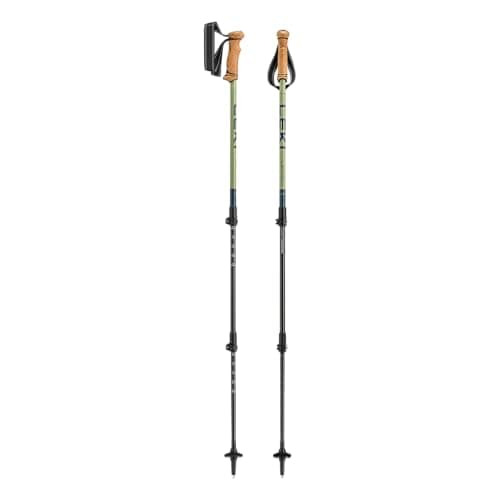
LEKI Legacy Lite Trekking Poles
Best for: Day hikers and backpackers who prioritize a cork-rich grip and long-term shaft coverage over compact packing.
- Cork composite grip wicks moisture and stays comfortable across full hiking days
- Grip circumference runs smaller than average, less comfortable for larger hands
Kit Score 8.5/10 · Check current price · how we score gear
Buy on AmazonProduct details
LEKI's adjustable aluminum value pole pairs a CorTec grip containing 80% natural cork with Speed Lock Plus levers and a 100–135 cm range. It weighs slightly less than the Trail Back on current manufacturer figures and carries a lifetime warranty against shaft breakage.
- Weight (pair)
- 17.7 oz (502 g)
- Shaft material
- HTS 6.0 aluminum
- Lock type
- Speed Lock+ lever (external)
- Length range
- 100 – 135 cm (39 – 53 in)
- Collapsed length
- 26 in (66 cm)
- Grip
- 80% cork composite (EVOCON Cor-Tec)
More strengths
- Speed Lock+ adjusters are intuitive and field-serviceable without tools
- Lifetime shaft-breakage warranty adds meaningful ownership value
Other tradeoffs
- The 26-inch packed length remains bulky on a small daypack
Legacy Lite centers the hand interface. Its EVOCON CorTec grip contains 80% natural cork, the shafts are LEKI's HTS 6.0 aluminum with Speed Lock Plus levers, and LEKI offers a lifetime warranty against shaft breakage. LEKI lists 502 g a pair and $109.95. The current verified Amazon version adjusts from 100 to 135 cm; a separate 90–125 cm size serves shorter users.
At 66 cm (26 inches) collapsed, it is the least compact pick. The price premium makes sense for buyers who value the grip and support policy, not for someone simply chasing lower weight.
See the complete LEKI Legacy Lite review.
Best budget carbon: Cascade Mountain Tech
BEST BUDGET CARBON
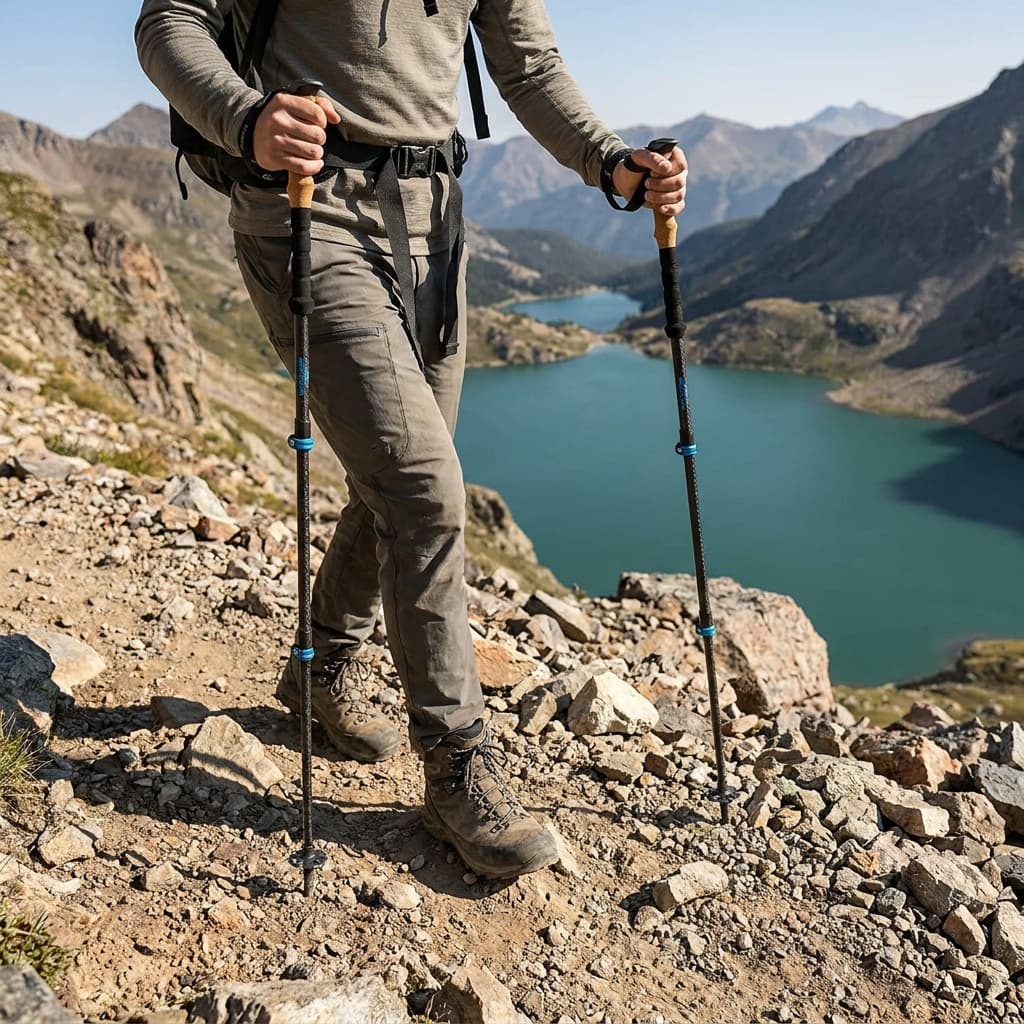
Cascade Mountain Tech Carbon Fiber Quick Lock Trekking Poles
Best for: Budget-conscious hikers and weekend backpackers who want carbon fiber weight savings without the premium price tag.
- Carbon fiber shafts at roughly half the price of premium carbon poles
- Quick-release hardware is less refined than forged or metal-clasp premium systems
Kit Score 7.9/10 · $65.99 Price checked Oct 25, 3:41 PM CDT · how we score gear
Buy on AmazonProduct details
Carbon fiber shafts at a price below many name-brand aluminum pairs define the Cascade Mountain Tech value proposition. Quick-release locks cover 25–53 inches, while cork grips, carbide tips, mud baskets, and rubber tips provide a complete starter package.
- Weight (pair)
- 14.4 oz (408 g) before tips
- Shaft material
- Carbon fiber (100%)
- Lock type
- Plastic lever lock (quick lock)
- Length range
- 25 – 53 in (63.5 – 135 cm)
- Collapsed length
- 25 in (63.5 cm)
- Grip
- Cork grip
More strengths
- Complete accessory kit included: carbide tips, mud baskets, rubber caps, and carry bag
- Lighter than most aluminum competitors while costing less
Other tradeoffs
- The 25-inch collapsed length limits packability for travel or fastpacking
Cascade's carbon pair costs less than the current Trail Back offer (a $69.99 list price) and weighs 7.2 oz per pole before tips, 7.68 oz with, so about 14.4 oz a pair bare. Cork grips, quick-release levers, carbide tips, rubber tips, and mud baskets make it a complete starter package on three-section 18/16/14 mm carbon shafts.
The hardware is more modest than the premium field, Cascade's page states no warranty term, and the 25-inch packed length means the product saves swing weight rather than storage space.
Read the Cascade carbon review and Cascade vs Trail Back.
Best folding: Black Diamond Distance Carbon FLZ
BEST FOLDING
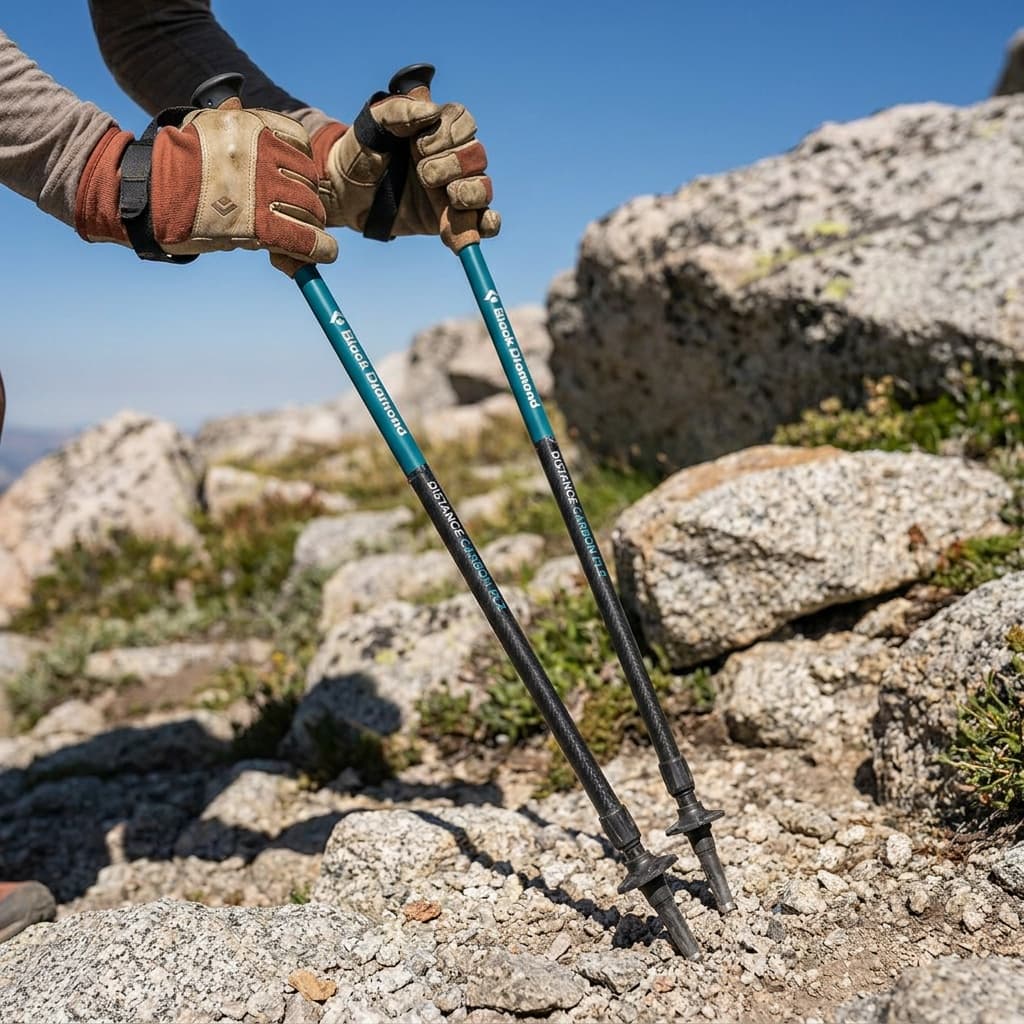
Black Diamond Distance Carbon FLZ Trekking Poles
Best for: Trail runners, ultralight backpackers, and fastpackers who need a pole that disappears when stowed and weighs almost nothing when in hand.
- Among the lightest adjustable poles in production at 12 oz per pair with a packed length under 15 in
- At $240, the price is significantly higher than any other option in this roundup
Kit Score 8.4/10 · $197.88 Price checked Oct 25, 3:41 PM CDT · how we score gear
Buy on AmazonProduct details
The Distance Carbon FLZ combines three-section Z-Pole folding with 15 cm of FlickLock+ adjustment in each size. Current manufacturer figures run from 308 to 364 g per pair with packed lengths from 34 to 40 cm, making it the compact performance option in this set.
- Weight (pair)
- 10.9–12.8 oz (308–364 g), depending on size
- Shaft material
- 100% carbon fiber
- Lock type
- FlickLock+ (aluminum clasp)
- Length range
- 15 cm per size (three sizes: 95 – 140 cm)
- Collapsed length
- 13.4–15.7 in (34–40 cm), depending on size
- Grip
- EVA Lite foam
More strengths
- Three-section folding design clips into a running vest or the lid of a technical pack without protruding
- Improved durability in the current revision: long-term owners report years of use without shaft failure
Other tradeoffs
- Each size covers only 15 cm of adjustment range, so sizing selection matters; not ideal for hikers whose terrain demands wide length swings
Distance Carbon FLZ folds into short linked sections, then provides 15 cm of FlickLock+ adjustment within each size. Black Diamond lists the 95–110 cm pair at 308 g and 34 cm folded, the 110–125 cm at 336 g and 37 cm, and the 125–140 cm at 364 g and 40 cm, all on 100 percent carbon shafts with interchangeable carbide and rubber tips and a two-year warranty. List price is $239.95; on July 31, 2026 the verified Amazon range was $174.88 to $219.95.
That architecture is valuable for running, fastpacking, and travel. It is needless expense for a hiker who extends poles at the trailhead and never stows them before returning.
The Distance Carbon FLZ review covers sizing. Our folding vs telescoping guide determines whether the design belongs in your kit.
Side-by-side comparison
| Product | Kit Score | Price | Best for |
|---|---|---|---|
| Black Diamond Trail Back Trekking Poles | 8.6 | Check current price | Best for: Day hikers and backpackers who favor visible lever locks, broad adjustment, and included snow baskets over minimum weight or compact packing. Why it stands out: Wide 100–140 cm adjustment range suits most adult heights and terrain changes Tradeoff: Heavier than carbon alternatives at 18+ oz per pair, noticeable on long-mileage days |
| LEKI Legacy Lite Trekking Poles | 8.5 | Check current price | Best for: Day hikers and backpackers who prioritize a cork-rich grip and long-term shaft coverage over compact packing. Why it stands out: Cork composite grip wicks moisture and stays comfortable across full hiking days Tradeoff: Grip circumference runs smaller than average, less comfortable for larger hands |
| Cascade Mountain Tech Carbon Fiber Quick Lock Trekking Poles | 7.9 | $65.99 Price checked Oct 25, 3:41 PM CDT | Best for: Budget-conscious hikers and weekend backpackers who want carbon fiber weight savings without the premium price tag. Why it stands out: Carbon fiber shafts at roughly half the price of premium carbon poles Tradeoff: Quick-release hardware is less refined than forged or metal-clasp premium systems |
| Black Diamond Distance Carbon FLZ Trekking Poles | 8.4 | $197.88 Price checked Oct 25, 3:41 PM CDT | Best for: Trail runners, ultralight backpackers, and fastpackers who need a pole that disappears when stowed and weighs almost nothing when in hand. Why it stands out: Among the lightest adjustable poles in production at 12 oz per pair with a packed length under 15 in Tradeoff: At $240, the price is significantly higher than any other option in this roundup |
Black Diamond Trail Back Trekking Poles
- Best for
- Day hikers and backpackers who favor visible lever locks, broad adjustment, and included snow baskets over minimum weight or compact packing.
- Why it stands out
- Wide 100–140 cm adjustment range suits most adult heights and terrain changes
- Tradeoff
- Heavier than carbon alternatives at 18+ oz per pair, noticeable on long-mileage days
LEKI Legacy Lite Trekking Poles
- Best for
- Day hikers and backpackers who prioritize a cork-rich grip and long-term shaft coverage over compact packing.
- Why it stands out
- Cork composite grip wicks moisture and stays comfortable across full hiking days
- Tradeoff
- Grip circumference runs smaller than average, less comfortable for larger hands
Cascade Mountain Tech Carbon Fiber Quick Lock Trekking Poles
- Best for
- Budget-conscious hikers and weekend backpackers who want carbon fiber weight savings without the premium price tag.
- Why it stands out
- Carbon fiber shafts at roughly half the price of premium carbon poles
- Tradeoff
- Quick-release hardware is less refined than forged or metal-clasp premium systems
Black Diamond Distance Carbon FLZ Trekking Poles
- Best for
- Trail runners, ultralight backpackers, and fastpackers who need a pole that disappears when stowed and weighs almost nothing when in hand.
- Why it stands out
- Among the lightest adjustable poles in production at 12 oz per pair with a packed length under 15 in
- Tradeoff
- At $240, the price is significantly higher than any other option in this roundup
Choose in this order
Four decisions before the brand
Measure normal pole length
Buy a range that contains your level-ground setting with adjustment left in both directions.
Measure the pack
If a 25-inch bundle already fits securely, folding may solve no problem.
Match material to terrain
Carbon rewards maintained-trail mileage; aluminum is the conservative choice around rock traps and rough off-trail use.
Choose the hand interface
Cork, foam, strap shape, and grip extension affect every pole plant. Do not treat them as decoration.
Frequently asked questions
Do trekking poles reduce knee strain?
Poles redistribute some work to the upper body and can improve stability and braking on descents. The benefit depends on technique, terrain, pace, and the person. They do not treat an injury or replace medical advice.
Should beginners buy one pole or two?
Two poles support a symmetric alternating rhythm and provide two points of contact. A single staff can help with occasional balance or leave a hand free, but it changes the loading pattern.
What length should trekking poles be?
Start with the grip positioned so the elbow is near 90 degrees on level ground. Shorten slightly for long climbs and lengthen slightly for descents. Exact comfort matters more than a generic height chart.
Where these numbers come from
| Claim | Source | Checked |
|---|---|---|
| Trail Back: 560 g (19.7 oz) per pair, 61.5 cm collapsed, 100–140 cm, 7075 aluminum with 30% pre-consumer recycled content, dual-density extended EVA grip, FlickLock, standard and snow baskets included, two-year warranty, $99.95 list | Black Diamond, Trail Back Trekking Poles | Sep 2026 |
| Legacy Lite: 502 g per pair, 66 cm collapsed, 100–135 cm (90–125 cm size available), HTS 6.0 aluminum, EVOCON CorTec grip with 80% natural cork, Speed Lock Plus, lifetime warranty on shaft breakage, $109.95 | LEKI USA, Legacy Lite | Sep 2026 |
| Cascade carbon: 7.2 oz per pole without tip and 7.68 oz with, 25 in collapsed, 25–53 in (63.5–135 cm), 18/16/14 mm three-section carbon, cork grip, quick-release locks, carbide tips, rubber tips and mud baskets included, $69.99 | Cascade Mountain Tech, Carbon Tek Quick Lock Trekking Pole | Sep 2026 |
| Distance Carbon FLZ: 308 g / 34 cm (95–110), 336 g / 37 cm (110–125), 364 g / 40 cm (125–140), 100% carbon, FlickLock+, EVA grip, carbide and rubber tips, two-year warranty, $239.95 | Black Diamond, Distance Carbon FLZ Poles | Sep 2026 |
| Amazon prices ($75.03, $109.95, $68.19, $174.88–$219.95) | Listings on Amazon, linked from the picks above, verified through Amazon's Creators API on July 31, 2026 | Jul 2026 |
We did not hike with these poles ourselves. Weights and lengths are the makers' published figures; Black Diamond and LEKI state pair weights, Cascade states per-pole weights, and we have doubled Cascade's figure rather than mixing the two.
Still deciding whether to carry a pair at all? Read are trekking poles worth it, then browse the complete hiking gear hub.
Keep going
Related guides
 Complete hike loadoutDay hike kitBuild the complete kit
Our recommendations draw on manufacturer documentation, retailer listings, owner feedback, and comparisons with alternatives.
As an Amazon Associate I earn from qualifying purchases. We may earn a commission from links here, at no extra cost to you. How we research →