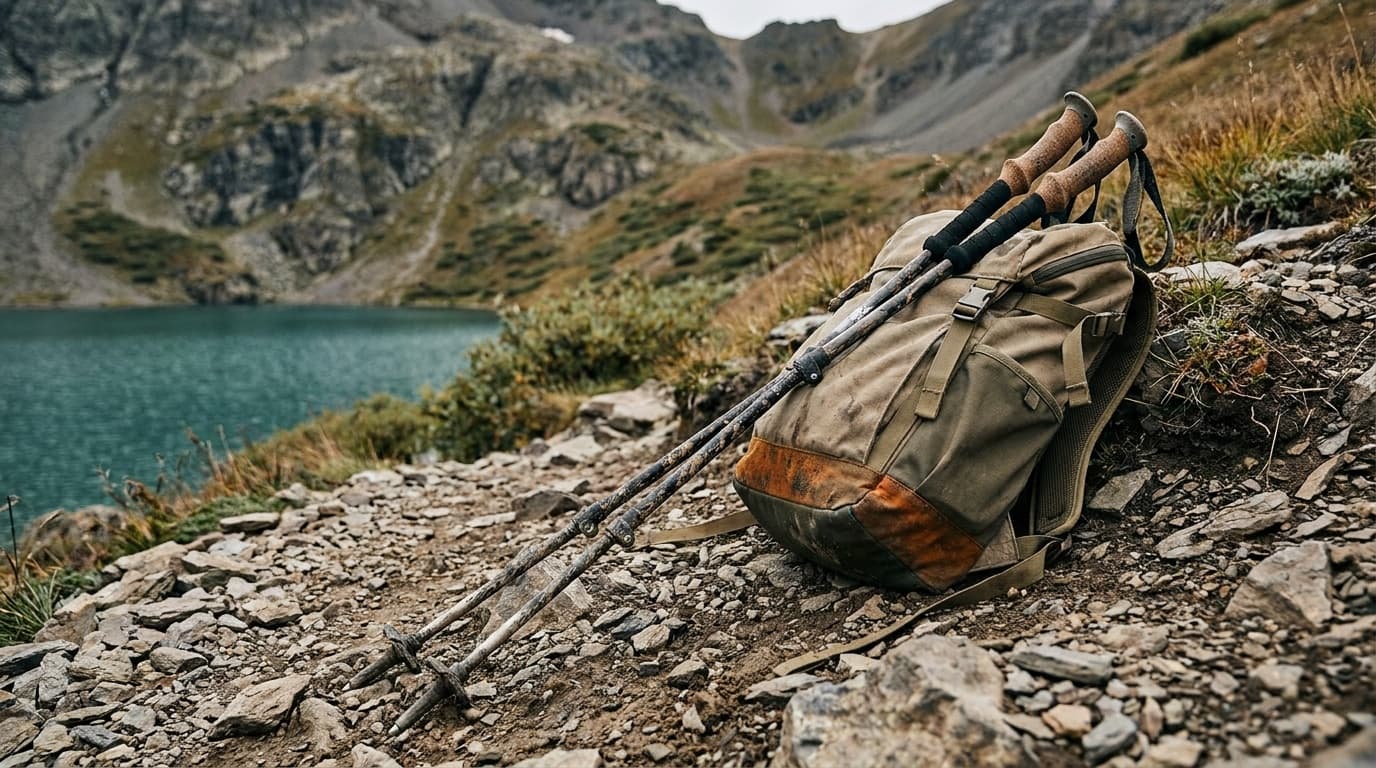
Trekking poles are one of the most debated pieces of gear in hiking. The short answer is yes, they earn their place on the right terrain. The longer answer depends on where you are, what you are carrying, and whether you are using them correctly.
What the research actually shows
The case for trekking poles on descents is well supported by peer-reviewed data, not just trail lore.
The creatine kinase finding from Northumbria University is worth pausing on. Creatine kinase is a blood marker for muscle damage. In a field study of 37 hikers on Snowdon, pole users arrived at the trailhead with levels near baseline. The no-pole group showed significant elevation at the 24-hour mark. That is the difference between waking up ready to hike and waking up barely able to walk downstairs.
Poles planted correctly shift load away from the knee joint. Poles planted too short or too late in the stride do very little.
The energy cost tradeoff
Here is the counterintuitive part: poles do not save energy. Heart rate and oxygen consumption both rise with pole use, even on flat terrain. What they do instead is redistribute effort across your upper body and reduce the load concentration at your knees and quads on the way down. Mountain Tactical Institute research puts perceived effort roughly 20% lower on steep grades even as physiological demand goes up. You feel less wrecked, but you are working harder overall.
The practical upshot: if you are packing light on a flat, well-groomed trail, poles add exertion without much return. On a loaded, multi-day trip with significant elevation loss, they are doing real work.
When poles help vs. when to stow them
Not every section calls for poles. Knowing when to put them away is as important as knowing how to use them.
When poles help vs. hinder
Long descents with a load
The evidence is clearest here. Knee shear forces drop 10–25%, muscle damage accumulates more slowly, and recovery between days improves. Lengthen poles 5–10 cm from flat-ground setting; quick-lock adjusters like those on the [Cascade Mountain Tech Carbon Fiber Quick Lock](/api/go?product=cascade-mountain-tech-carbon-quick-lock&retailer=amazon&article=are-trekking-poles-worth-it) make this a ten-second change.
Wet, loose, or uneven terrain
Two extra points of contact change the risk profile on slippery surfaces without meaningful cost.
Stream crossings
Plant both poles upstream, face the current, shuffle sideways. Keep at least two points on the bottom at all times while the third moves. This is the clearest safety case for poles.
Scrambling or hand-over-hand sections
Stow the poles before you need your hands. Poles dangling from your wrists on rock moves are a liability. Do not wait until you are committed to the move.
Narrow ridges
The International Climbing and Mountaineering Federation cautions that continuous pole use can erode natural balance and coordination, particularly where pole placement is not possible. Treat these sections as pole-free practice.
Dense brush or blowdown
Poles snag constantly and slow you down. Collapse and stow them; a folding pole like the [Black Diamond Distance Carbon FLZ](/api/go?product=black-diamond-distance-carbon-flz&retailer=amazon&article=are-trekking-poles-worth-it) packs down fastest.
Flat groomed trail, no load
Energy cost outweighs benefit. Save the poles for terrain that earns them.
The three technique rules
Poles used with bad technique deliver maybe half the benefit. Three things matter most.
Basic trekking pole technique
Thread the strap correctly
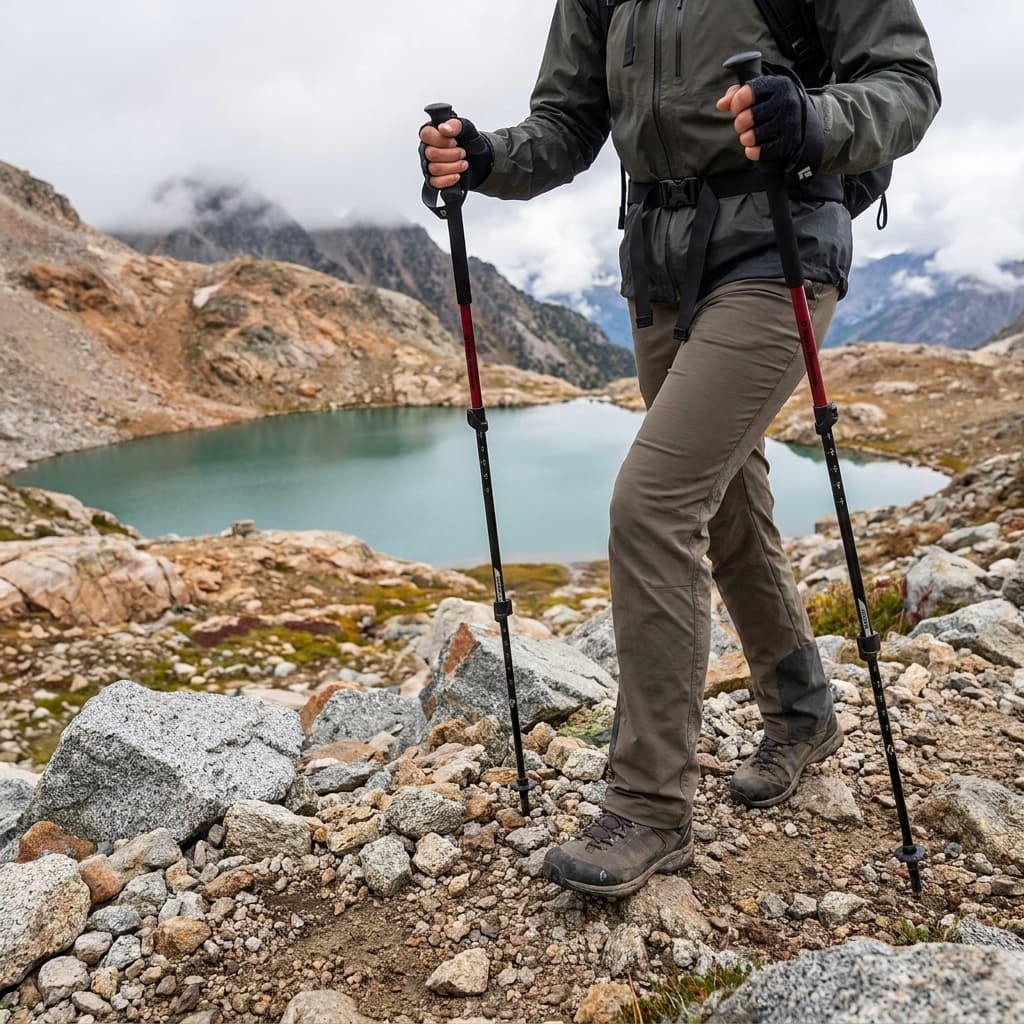
Slide your hand up through the bottom of the wrist loop, then close your grip around the handle so the strap runs between thumb and index finger. You should be pushing down and forward through the strap, not squeezing the handle. Your grip should be loose enough that the pole would fall if the strap were not there.
Walk contralateral
Right pole plants as the left foot steps forward. Left pole as the right foot steps. This matches your natural arm swing and keeps the load distribution balanced.
Adjust length for terrain
On flat ground, elbow near 90 degrees. Shorten 5–10 cm for sustained climbs so you are pushing down, not reaching back. Lengthen 5–10 cm for sustained descents so the pole meets the ground ahead of you and absorbs the first wave of impact.
Who gets the most out of them
Poles are most valuable when one or more of these apply: you are carrying 30% or more of your body weight (firmly in rucking territory, and Ruck Authority's trekking pole picks for rucking cover that use case specifically), you have knee arthritis or a prior joint injury, you are logging significant daily elevation loss, you are crossing water or navigating loose scree, or you are three or more days into a trip when cumulative fatigue is compounding.
They add the least value for day hikers on flat, dry, groomed trail without a load. That is not a knock on poles. It is just an honest read of where the benefit lives.
For specific gear recommendations, see our guide to the best trekking poles, where we break down options by weight class, terrain type, and pack load.
Do trekking poles actually protect your knees on the way down?
Yes, with caveats. Lab studies show knee joint shear forces drop 10–25% on steep descents when poles are used correctly. The key word is correctly: poles need to be lengthened 5–10 cm beyond your flat-ground setting, planted ahead of the foot to absorb the first wave of impact, and loaded through the strap rather than death-gripped at the handle. Poles planted too short or too late in the stride do very little. The Northumbria University field study adds real-world weight to the lab numbers: creatine kinase stayed near baseline in pole users after a full day on Snowdon, while the no-pole group showed significant elevation 24 hours later.
When should I stow the poles instead of using them?
Any section that requires your hands: scrambling, hand-over-hand rock moves, rope assists, or ladder rungs. Also consider stowing on narrow ridges where you cannot plant poles to either side, in dense brush or blowdown where poles snag constantly, and on flat groomed trail without a load where the energy cost outweighs any benefit. The International Climbing and Mountaineering Federation specifically cautions that continuous pole use can erode your natural balance and coordination over time, so treating easy sections as pole-free practice is reasonable.
What is the correct way to hold trekking poles?
Slide your hand up through the bottom of the wrist loop, then close your grip around the handle so the strap runs between thumb and index finger. This lets you push down and forward through the strap rather than squeezing the handle, which is what keeps forearms from fatiguing. Your grip should be light enough that the pole would fall if the strap were not there. Walk in a contralateral pattern: right pole plants as the left foot steps, left pole as the right foot steps. For uphill, shorten poles 5–10 cm. For sustained downhill, lengthen 5–10 cm from your flat-ground setting.
Browse all hike gear or read how we research and rate to understand the sourcing and criteria behind every piece of guidance on this site.
Recommended gear
Our current top picks from the Best trekking poles for hiking: 4 verified picks guide, if you are ready to buy.
BLACK DIAMOND
Black Diamond Trail Back Trekking Poles
Best Overall
Kit Score 8.6/10
$74.19 Price checked Oct 23, 4:16 PM CDT
Best for: Day hikers and backpackers who favor visible lever locks, broad adjustment, and included snow baskets over minimum weight or compact packing.
- Wide 100–140 cm adjustment range suits most adult heights and terrain changes
- Heavier than carbon alternatives at 18+ oz per pair, noticeable on long-mileage days
- Weight (pair)
- 19.7 oz (560 g)
- Shaft material
- 7075 aluminum
- Lock type
- FlickLock lever (2x)
- Length range
- 39 – 55 in (100 – 140 cm)
- Collapsed length
- 24 in (61 cm)
- Grip
- EVA foam with extended upper grip
About this pick
A straightforward three-section aluminum pole with Black Diamond FlickLock adjustment, an extended EVA grip, and included snow baskets. It is heavier than carbon and folding alternatives, but its wide 100–140 cm range and uncomplicated layout suit ordinary hiking and backpacking.
Strengths
- Wide 100–140 cm adjustment range suits most adult heights and terrain changes
- FlickLock levers are easy to see, open, and retension on trail
- Included trekking and snow baskets broaden seasonal use
Weaknesses
- Heavier than carbon alternatives at 18+ oz per pair, noticeable on long-mileage days
- The long 24.2-inch collapsed length is awkward on compact travel packs
Kit Score breakdown
Best for: Day hikers and backpackers who prioritize a cork-rich grip and long-term shaft coverage over compact packing.
- Cork composite grip wicks moisture and stays comfortable across full hiking days
- Grip circumference runs smaller than average, less comfortable for larger hands
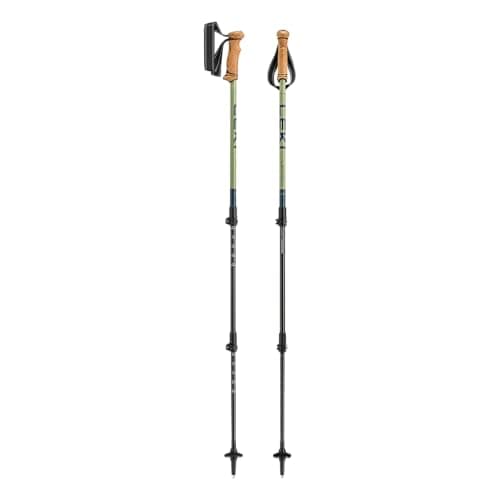
- Weight (pair)
- 17.7 oz (502 g)
- Shaft material
- HTS 6.0 aluminum
- Lock type
- Speed Lock+ lever (external)
- Length range
- 100 – 135 cm (39 – 53 in)
- Collapsed length
- 26 in (66 cm)
- Grip
- 80% cork composite (EVOCON Cor-Tec)
About this pick
LEKI's adjustable aluminum value pole pairs a CorTec grip containing 80% natural cork with Speed Lock Plus levers and a 100–135 cm range. It weighs slightly less than the Trail Back on current manufacturer figures and carries a lifetime warranty against shaft breakage.
Strengths
- Cork composite grip wicks moisture and stays comfortable across full hiking days
- Speed Lock+ adjusters are intuitive and field-serviceable without tools
- Lifetime shaft-breakage warranty adds meaningful ownership value
Weaknesses
- Grip circumference runs smaller than average, less comfortable for larger hands
- The 26-inch packed length remains bulky on a small daypack
Kit Score breakdown
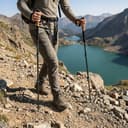
CASCADE MOUNTAIN TECH
Cascade Mountain Tech Carbon Fiber Quick Lock Trekking Poles
Best Budget
Kit Score 7.9/10
$65.99 Price checked Oct 23, 4:16 PM CDT
Best for: Budget-conscious hikers and weekend backpackers who want carbon fiber weight savings without the premium price tag.
- Carbon fiber shafts at roughly half the price of premium carbon poles
- Quick-release hardware is less refined than forged or metal-clasp premium systems
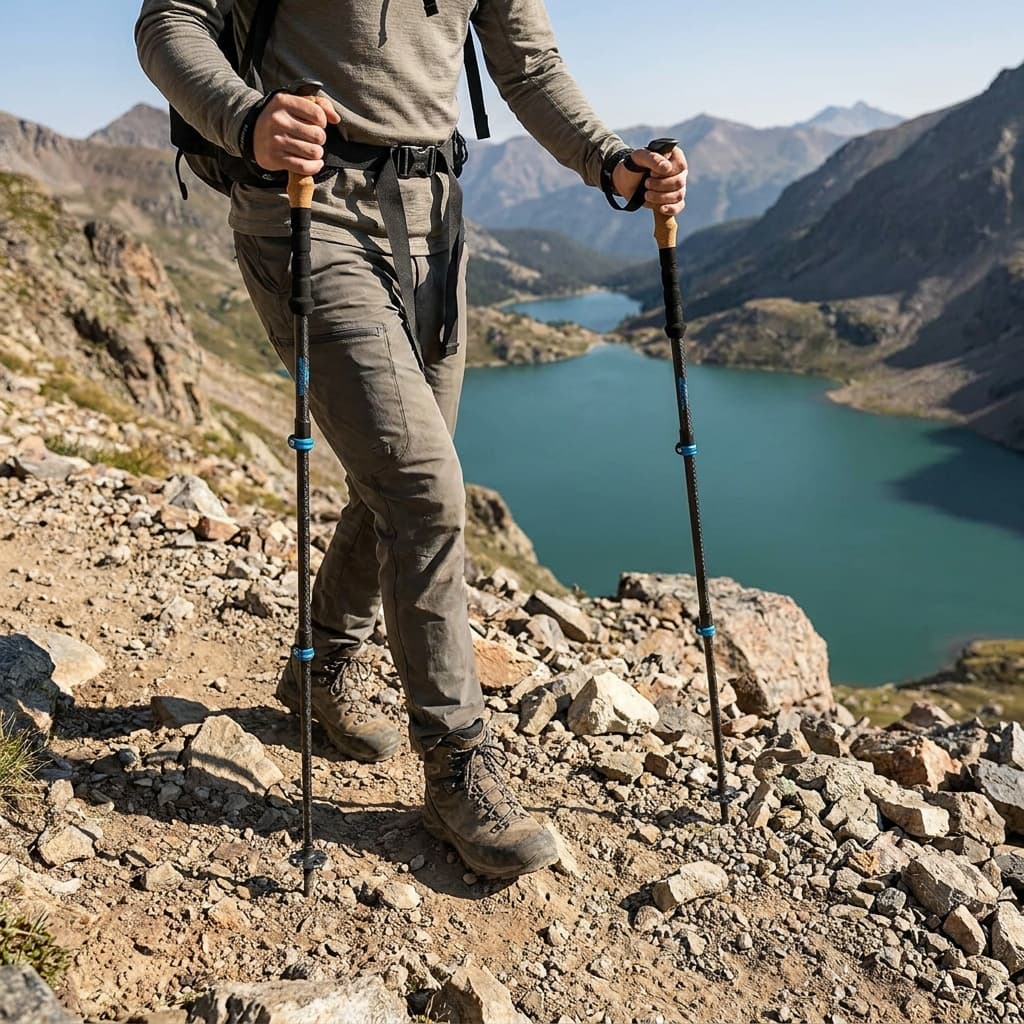
- Weight (pair)
- 14.4 oz (408 g) before tips
- Shaft material
- Carbon fiber (100%)
- Lock type
- Plastic lever lock (quick lock)
- Length range
- 25 – 53 in (63.5 – 135 cm)
- Collapsed length
- 25 in (63.5 cm)
- Grip
- Cork grip
About this pick
Carbon fiber shafts at a price below many name-brand aluminum pairs define the Cascade Mountain Tech value proposition. Quick-release locks cover 25–53 inches, while cork grips, carbide tips, mud baskets, and rubber tips provide a complete starter package.
Strengths
- Carbon fiber shafts at roughly half the price of premium carbon poles
- Complete accessory kit included: carbide tips, mud baskets, rubber caps, and carry bag
- Lighter than most aluminum competitors while costing less
Weaknesses
- Quick-release hardware is less refined than forged or metal-clasp premium systems
- The 25-inch collapsed length limits packability for travel or fastpacking
Kit Score breakdown
See all picks in Best trekking poles for hiking: 4 verified picks
Keep going
Related guides
 Complete hike loadoutDay hike kitBuild the complete kit
Researched, not hands-on tested
Updated Jun 3, 2026Our recommendations draw on manufacturer documentation, retailer listings, owner feedback, and comparisons with alternatives.
As an Amazon Associate I earn from qualifying purchases. We may earn a commission from links here, at no extra cost to you. How we research →