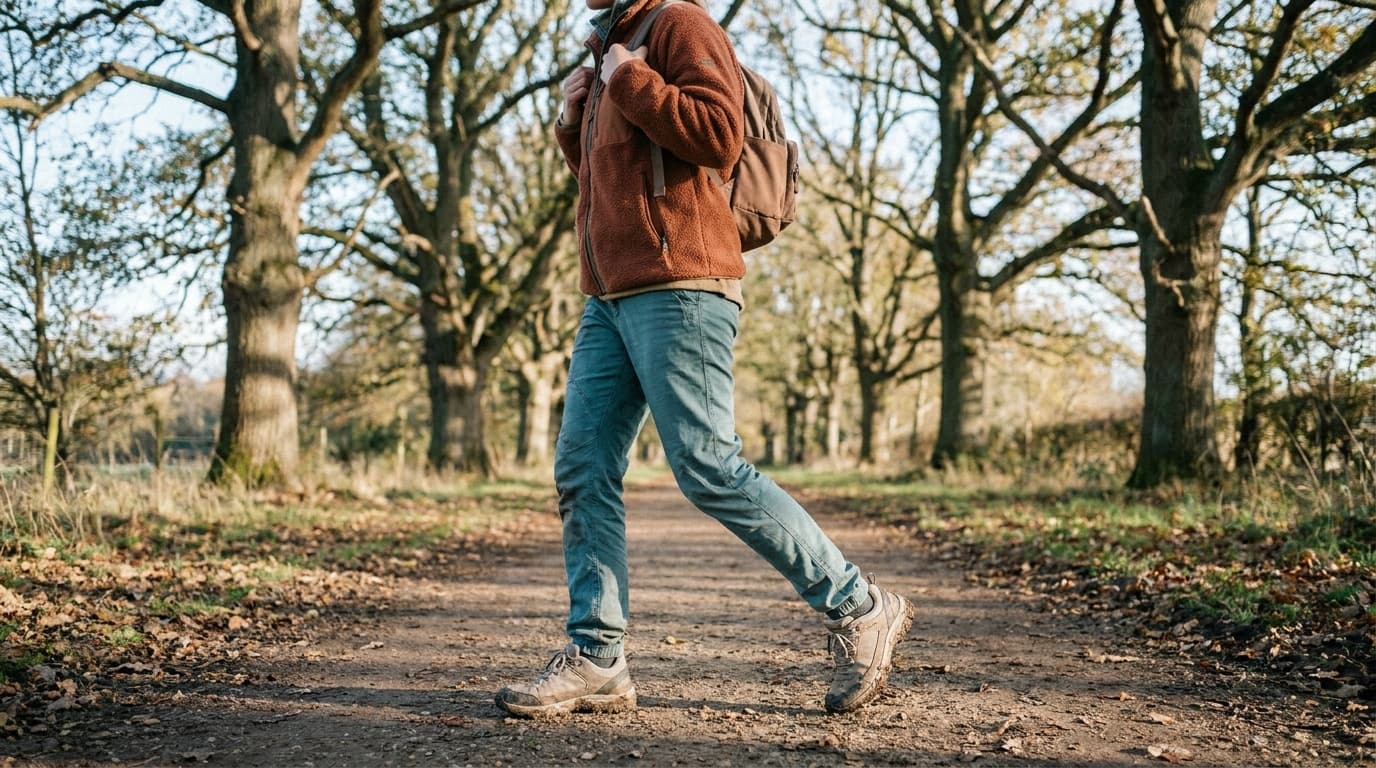
Walking is the most accessible fitness tool you own, and almost nobody starts it right the first time.
Why walking works (and what the research actually says)
Walking sits at a sweet spot: it's low-impact enough to do every day without recovery debt, but load-bearing enough to improve bone density, cardiovascular health, and mood. A landmark meta-analysis published in the European Journal of Preventive Cardiology found that each additional 1,000 steps per day was associated with a 15 percent reduction in all-cause mortality risk. You do not need to hit a specific round number to benefit.
The 10,000-step target originated as a marketing slogan for a 1960s Japanese pedometer, not a clinical finding. It is a fine aspirational number once you are consistent, but chasing it in week one is a reliable way to quit in week two.
Building your baseline: the first four weeks
Begin with what you can actually do today, not what you think you should be able to do. For a true beginner, that might be two 10-minute walks. That is a real starting point, not a failure.
Four-week progression
Week 1
Two 10-minute walks per day, easy conversational pace, flat terrain
Week 2
One 20-minute walk per day, aim for 3–4 days of 5 consecutive days
Week 3
25–30 minutes per day, introduce one slightly faster 5-minute segment mid-walk
Week 4
30 minutes most days, begin tracking average pace (target 3.0–3.5 mph)
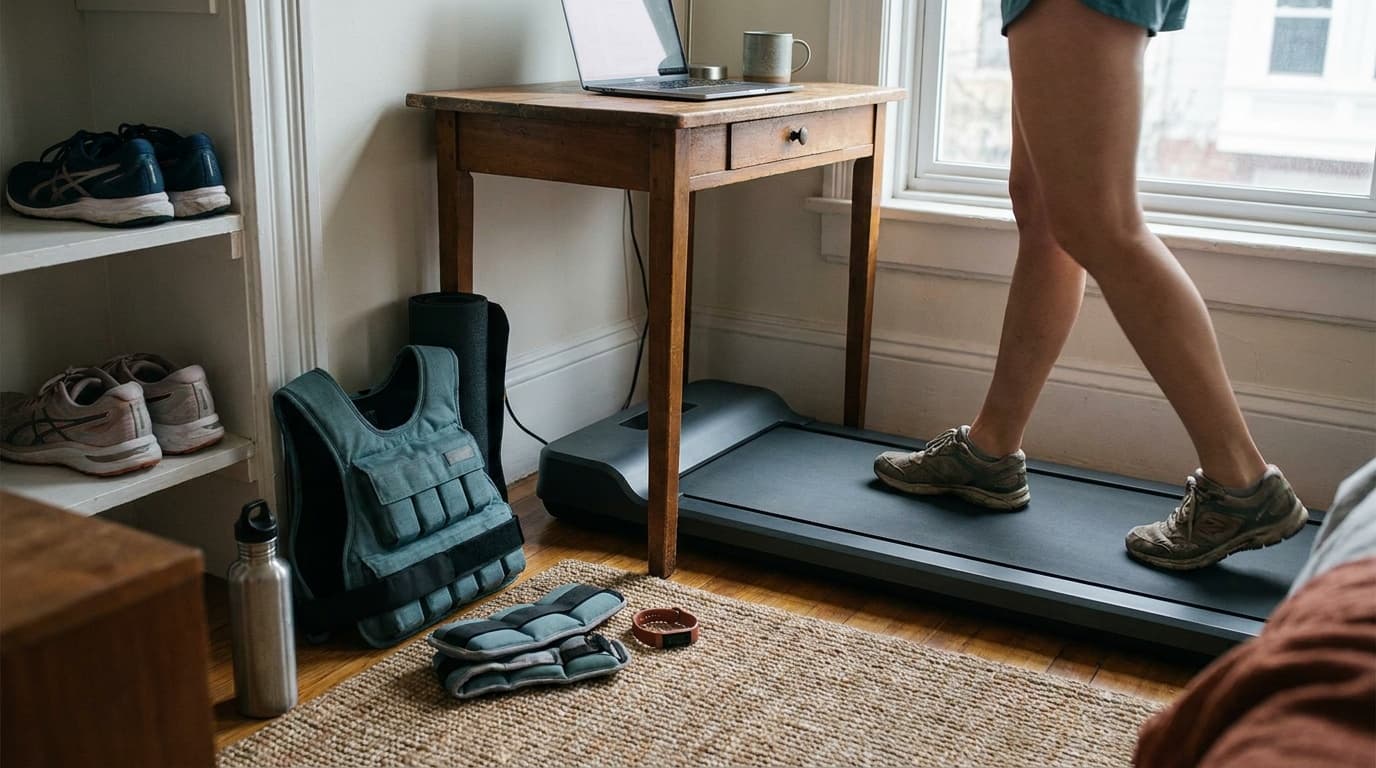
The goal of the first month is not distance or steps. It is showing up. If your first month lands in winter, read what to wear for winter walking before your first cold morning, and keep a plan for walking indoors at home on days when ice or wind chill keeps you in. Schedule walks at the same time each day. Morning walkers have higher long-term adherence rates in habit research, because the walk happens before the day's friction accumulates. That said, the best time is whichever one you will actually do.
Pace, posture, and the mechanics of a good walk
Most beginners either shuffle (too slow to be cardiovascular) or overstride (heels slamming out ahead of the body, which loads the knees). Neither is necessary.
A productive walking posture looks like this: chin parallel to the ground, eyes forward rather than down at the phone, shoulders relaxed and slightly back, arms bent at roughly 90 degrees and swinging naturally, foot strike landing under the hips rather than well ahead of them. That last point is the big one. Let your foot land beneath your center of mass, not in front of it.
Pace targets for beginners:
- Casual (recovery, warm-up): below 2.5 mph, about 24-minute miles
- Moderate (fitness zone): 3.0–3.5 mph, about 17–20-minute miles
- Brisk (cardiovascular benefit): 3.5–4.0 mph, about 15–17-minute miles
You do not need to maintain brisk pace for an entire walk. Interval walking, alternating 2 minutes brisk with 2 minutes moderate, is as effective as steady-state brisk walking for cardiovascular adaptation and much more sustainable for beginners.
Foot strike under your hips, not in front of them, is the single mechanical change that reduces beginner knee pain most reliably.
When to add a weighted vest (and how)
A weighted vest is not a beginner tool. It is a progression tool, appropriate after you have established a consistent 30-minute-per-day habit with solid posture and no joint complaints. That typically means week six at the earliest, often week eight to twelve.
When you are ready, the protocol is straightforward. Start at 5–10 percent of your body weight; an adjustable model like the Hyperwear HyperVest ELITE makes those small increments easy. A 160-pound person starts with 8–16 pounds maximum. Walk your normal route at your normal pace. Do not increase distance or pace simultaneously with adding weight. The vest does the work; your job is to keep form intact.
Signs you have gone too heavy too fast: your posture collapses forward, your pace drops significantly, or you feel lumbar compression at the end of a walk. Drop the weight 20 percent and rebuild.
Rucking, the practice of walking with a loaded pack, follows the same logic and is a viable alternative if you already own a quality hiking pack. The vest is simply more evenly distributed.
Tracking, gear, and what actually matters
A phone or a basic fitness tracker like the Fitbit Inspire 3 is sufficient for tracking. You want to know approximate steps and average pace. Heart rate monitoring is useful once you are doing interval work but is not necessary in the first month.
Your shoes matter more than any other gear decision. Walking shoes should have a flexible forefoot (so the shoe bends where your foot bends), adequate heel cushioning for your gait, and a fit that allows a thumb's width of space at the toe. Running shoes can work, but they are built for a heel-strike running gait, not a walking gait, and some runners will feel overly rigid or unstable on a walking pace. Dedicated walking shoes like the ASICS Gel-Contend 9 or trail runners with moderate stack height are the better default.
For help choosing footwear suited to your terrain and foot shape, the best walking shoes roundup covers the options worth considering across price points.
How many days per week should a beginner walk?
Five days per week is the evidence-based target for the WHO's 150-minute weekly recommendation, but three days is a perfectly valid starting point if five feels like too much. Consistency over weeks matters more than frequency within a week. Build to five days over the first month rather than starting there and burning out.
Is walking enough exercise on its own?
For general health, cardiovascular improvement, and weight management at a moderate deficit, yes. Walking is genuine exercise, not just active recovery. For muscle mass or athletic performance goals, it works best as a complement to resistance training rather than a replacement. Most beginners should prioritize walking first and layer in strength work once the habit is established.
When should I start tracking steps versus just tracking time?
Track time for the first four weeks. It is a simpler metric that keeps you focused on habit formation. Once you are walking consistently for 25–30 minutes per day, add step tracking as a second signal. Use steps to measure intensity (more steps in the same time means faster pace) rather than as your primary goal.
How far should a beginner walk each day?
Measure in minutes, not miles, for the first month. Two 10-minute walks is a legitimate day-one starting point; 30 minutes at a moderate pace is the week-four target. In distance terms, 30 minutes at 3.0–3.5 mph covers roughly 1.5–1.75 miles. Distance grows naturally as pace improves, so anchoring to a mileage number early tends to push beginners into overstriding and soreness. If you want a structured version of this ramp, our walking workout plan for beginners lays out the full 4-week schedule.
Do I need special shoes to start walking for fitness?
You need appropriate shoes, not necessarily new ones. A daily-trainer running shoe or a purpose-built walking shoe both work; the failure cases are worn-out foam (300–500 miles is the useful life), casual sneakers with no structure, and shoes that are too narrow. If the shoes you own are comfortable for 30 minutes on pavement with no hotspots, start with them and upgrade once the habit is established. When you do shop, walking shoes vs running shoes explains the real differences, and the best walking shoes roundup covers specific picks.
Want a week-by-week schedule instead of building your own? The free walking plan builder generates a progressive 8-week plan from your activity level, goal, and available days. Ready to gear up properly? The best walking shoes guide breaks down the top options for flat pavement, mixed terrain, and wider foot shapes. Explore the full fitness hub for guides on weighted vests, rucking progression, and building toward longer hikes. Our research approach explains how we evaluate gear and source the data behind our recommendations.
Recommended gear
Our current top picks from the Best walking shoes 2026: 4 picks for daily fitness walks guide, if you are ready to buy.
Best for: Daily fitness walkers who want a proven, durable, width-inclusive shoe that transitions from neighborhood walks to the gym without fuss.
- Men's version comes in four widths, narrow (1B) through extra wide (4E), so it fits a wide range of foot shapes
- Forefoot cushioning is firmer and lower-stack than the Clifton 10 or 1080v14, so heavier walkers or those with joint sensitivity may want more underfoot volume
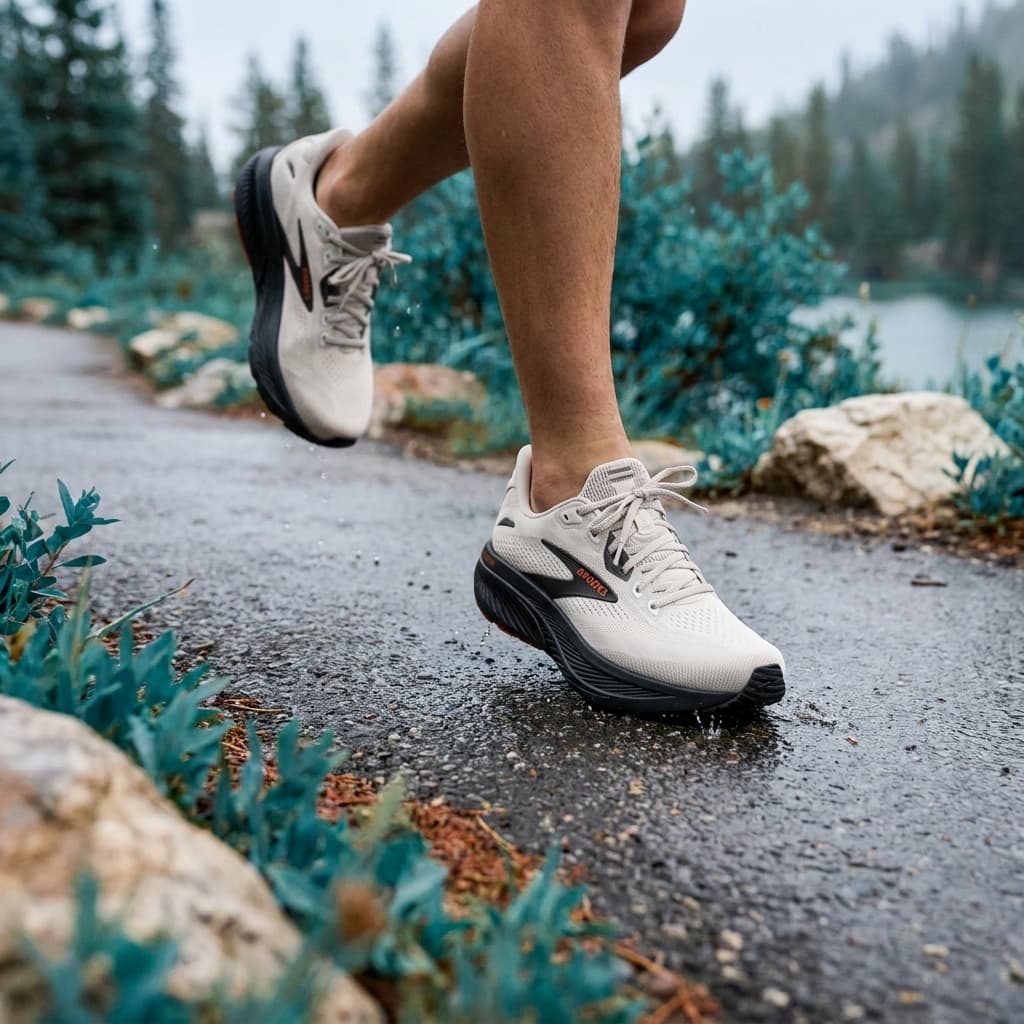
- Weight
- 10.2 oz (men) / 9.2 oz (women)
- Heel drop
- 10 mm
- Stack height
- 36 mm heel / 26 mm forefoot
- Midsole
- DNA Loft v3 nitrogen-injected foam
- Widths
- Narrow, Standard, Wide (2E), Extra Wide (4E)
- Replacement
- Based on wear, support, and comfort
About this pick
Brooks officially markets the Ghost 18 as a Neutral Running and Walking Shoe, and the tagline holds up: its DNA Loft v3 midsole, 10mm drop, and wide-width lineup (narrow through 4E) make it the most walker-friendly general-purpose shoe in this roundup. The Ghost line has logged 18 generations because it reliably delivers a stable, cushioned ride that works from a 20-minute morning walk to a full day on pavement. The Ghost 18 carries both the APMA Seal of Acceptance and PDAC A5500 Diabetic footwear certification.
Strengths
- Men's version comes in four widths, narrow (1B) through extra wide (4E), so it fits a wide range of foot shapes
- 10mm drop and stable neutral platform suit heel-strike walkers who log miles daily without specialty support needs
- RunRepeat's lab abrasion test left only 0.8 mm of outsole wear, a good sign for daily walking mileage
Weaknesses
- Forefoot cushioning is firmer and lower-stack than the Clifton 10 or 1080v14, so heavier walkers or those with joint sensitivity may want more underfoot volume
- 10.2 oz men's weight feels heavier on longer outings compared to lighter max-cushion options
Kit Score breakdown
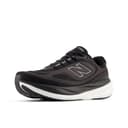
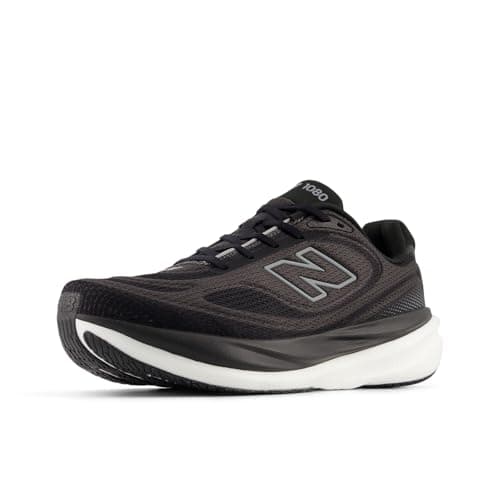
NEW BALANCE
New Balance 1080 v15
Best Premium
Kit Score 8.4/10
$169.95 Price checked Oct 25, 3:41 PM CDT
Best for: Walkers logging serious daily mileage on pavement who want maximum cushioning and joint protection.
- Softer, more resilient Infinion foam under a 40 mm heel stack
- The plush, high-volume fit can feel less locked in, per Doctors of Running
- Weight
- 9.2 oz (men's 9.5) / 7.3 oz (women's 7)
- Heel drop
- 6 mm (brand spec), 6.4 mm lab-measured
- Stack height
- 40 mm heel / 34 mm forefoot (brand spec)
- Midsole
- Infinion, a TPEE-based foam blended with EVA
- Widths
- Narrow, Standard, Wide (2E), X-Wide (4E)
About this pick
The 1080 v15 is New Balance's max-cushion daily shoe rebuilt around Infinion foam, which replaces the Fresh Foam X of earlier versions. It keeps the tall stack and 6 mm drop that suit long pavement walks, weighs about 10% less than the V14 in RunRepeat's lab, and has a roomier, higher-volume upper.
Strengths
- Softer, more resilient Infinion foam under a 40 mm heel stack
- About 10% lighter than the V14 in RunRepeat's measurements
- Four widths, from narrow to extra-wide (4E)
Weaknesses
- The plush, high-volume fit can feel less locked in, per Doctors of Running
- Limited lateral stability and poor breathability in RunRepeat's lab
Kit Score breakdown
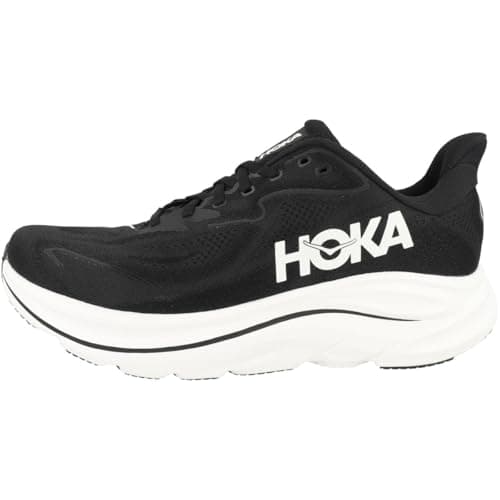
Best for: Walkers who prioritize maximum underfoot protection and a smooth rolling stride on pavement, particularly those on their feet all day at work or managing joint sensitivity.
- Tallest stack (42mm heel) in the roundup delivers the most joint-protective ride, especially on concrete and hard tile
- Breathability rates 3/5: feet run warm in hot weather or high-humidity environments
- Weight
- 9.8 oz (men) / 8.0 oz (women)
- Heel drop
- 8 mm (brand spec)
- Stack height
- 42 mm heel / 34 mm forefoot
- Midsole
- Compression-molded EVA with metarocker geometry
- Upper
- Jacquard knit
- Widths
- Regular, Wide, Extra Wide
About this pick
The Clifton 10 pushes the stack to 42mm at the heel, moves the drop from 5mm to 8mm, and widens the toe box relative to the Clifton 9, making it the tallest-stacked shoe in this roundup. RunRepeat's lab found it firmer than the Clifton 9. The rocker geometry rolls the foot forward smoothly, which owners who spend long days on their feet single out.
Strengths
- Tallest stack (42mm heel) in the roundup delivers the most joint-protective ride, especially on concrete and hard tile
- Metarocker geometry creates a smooth heel-to-toe roll that reduces active effort on long flat walks
- Toe box is much roomier than the Clifton 9's in RunRepeat's measurements, giving more room for natural toe splay
Weaknesses
- Breathability rates 3/5: feet run warm in hot weather or high-humidity environments
- Compression-molded EVA is a basic foam, and RunRepeat found the v10 firmer than the Clifton 9
Kit Score breakdown
See all picks in Best walking shoes 2026: 4 picks for daily fitness walks
Keep going
Free toolBeginner Walking PlanA free 8-week beginner walking plan built around your week.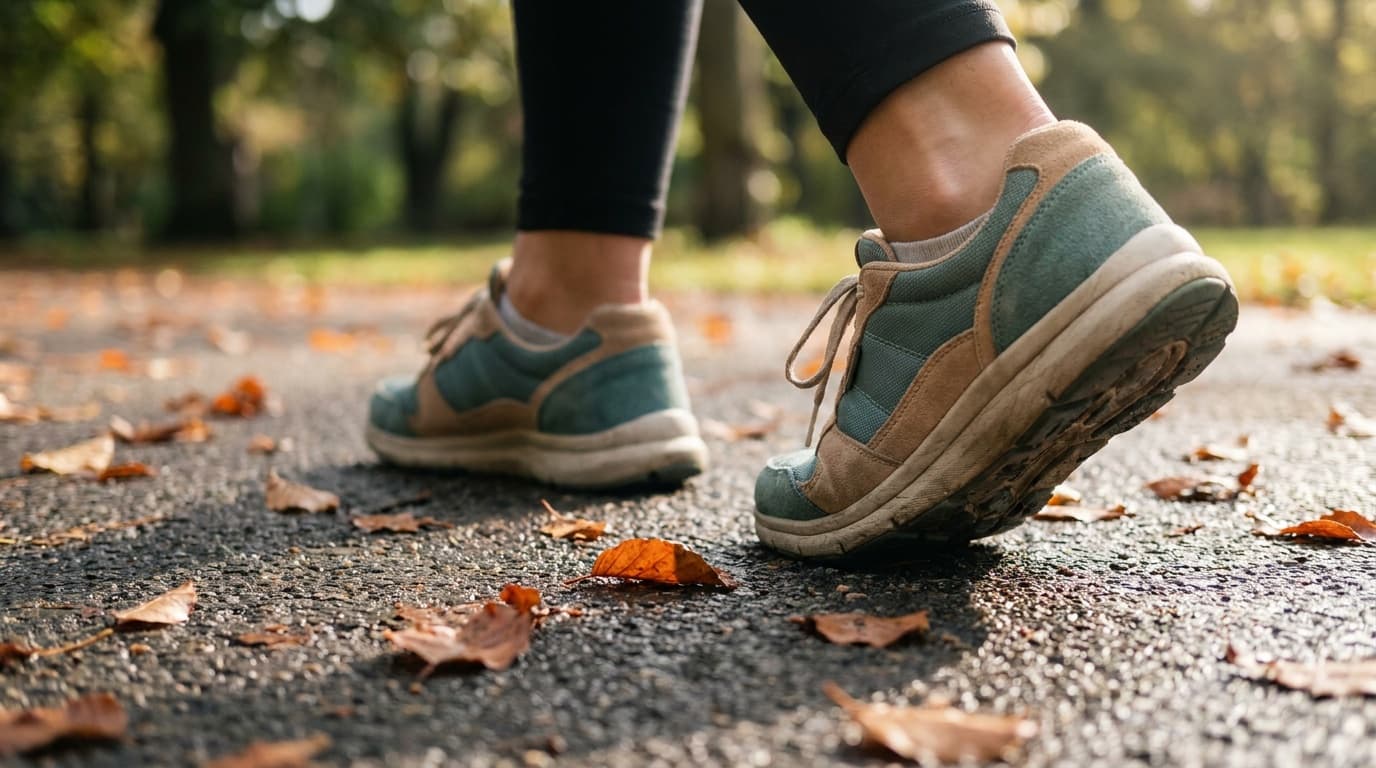
Researched, not hands-on tested
Updated Jul 7, 2026Our recommendations draw on manufacturer documentation, retailer listings, owner feedback, and comparisons with alternatives.
As an Amazon Associate I earn from qualifying purchases. We may earn a commission from links here, at no extra cost to you. How we research →