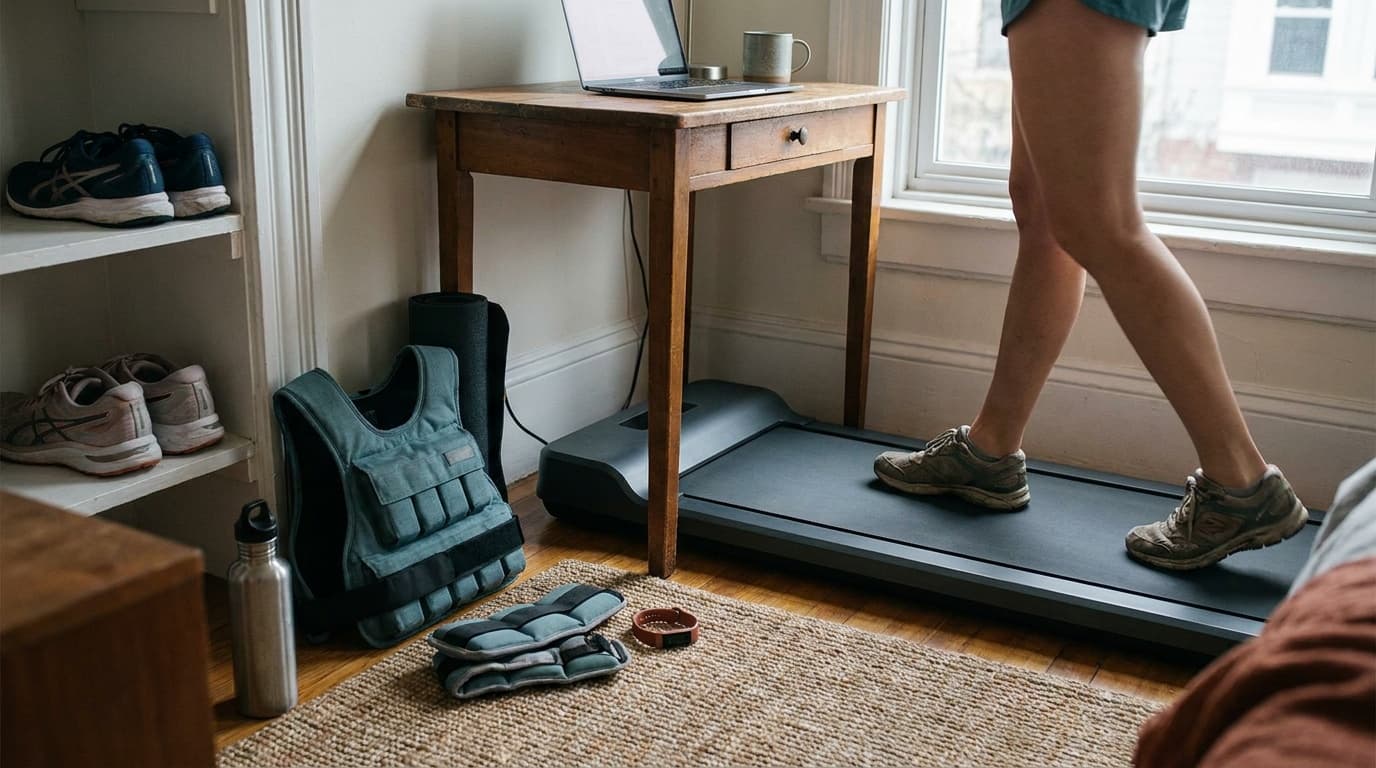
Running shoes work fine for fitness walking, but you should not run in walking shoes. Harvard Health puts the load at about 1.5 times your body weight per walking step versus about three times for running, so running shoes carry thicker, more shock-absorbing soles, while a good walking shoe mainly needs to bend easily at the ball of the foot.
Why the mechanics actually differ
Walking and running are not just fast and slow versions of the same movement. Walking always keeps one foot on the ground. Running has a flight phase where both feet leave the ground at once, and that moment of air changes everything about the forces your shoes have to handle.
Walking absorbs roughly 1.5 times your body weight with each step. Running absorbs approximately 3 times your body weight per step. That is not a small gap. It is the reason running shoes are built with thicker, more shock-absorbing soles. A lab study of walking and running found the same pattern: peak vertical force of about 1.0 to 1.5 times body weight walking and 2.0 to 2.9 times running. Walkers can use that extra cushioning, but they do not need it.
Running vs walking shoes: the differences at a glance
Every difference below flows from the same fact: running generates roughly twice the impact force of walking, so running shoes are over-built for a walker's needs and walking shoes are under-built for a runner's. Individual models vary, so treat this as the general pattern.
| Feature | Walking shoes | Running shoes |
|---|---|---|
| Heel-to-toe drop | Often lower than a daily trainer | Typically 8–12 mm on daily trainers |
| Sole | Flexible, bends easily at the ball of the foot | Thicker, more shock-absorbing |
| Built for | About 1.5x body weight per step | About 3x body weight per step |
| Can cross over? | Not suitable for running | Fine for walking |
That last row is the practical summary of this whole comparison: running shoes can walk, walking shoes cannot run. The sections below explain why each row breaks the way it does.
Heel drop: the number that matters most
Heel drop is the height difference between the heel and the forefoot inside the shoe. It is the single most useful number when comparing walking and running shoes, and it is often buried in the specs.
Daily running shoes like the Brooks Ghost 18 (10 mm drop per Brooks) sit in the typical 8–12 mm range RunRepeat reports for daily trainers. That height is designed to absorb the hard heel strikes that happen at speed. Walking shoes often use a lower drop, which keeps the foot closer to a natural heel-to-toe rolling motion through each stride; check the spec, because there is no fixed standard.
The practical consequence: if you walk long distances in a 12 mm running shoe, the elevated heel can change your stride mechanics subtly over time. Most walkers never notice. Some do, particularly on hilly terrain or after several hours on foot. For casual or short walks, it is a non-issue. For fitness walkers logging regular 5-mile outings, a lower-drop shoe often feels more natural, but comfort is individual.
Zero-drop shoes exist and have advocates, but they are not the place to start. Switching quickly from a high-drop shoe to zero-drop shifts more load to the Achilles tendon and calf. If you go that direction, transition gradually over weeks to months.
Cushioning: where it sits, not just how much
Both shoe types cushion, and sources disagree on which feels softer. Harvard Health describes walking shoes as having soft, flexible soles; Nike notes many walking shoes use firmer midsoles because walking impact is lower. What is consistent is that running shoes carry thicker, more shock-absorbing soles because a runner's foot lands at about twice the force.
For a walker, the practical test is comfort at your pace, not the label. A budget running shoe like the ASICS Gel-Contend 9 (8 mm drop, rearfoot GEL) is sold as a running shoe but suits many walkers, which is exactly the crossover this guide describes.
Flexibility: the part that surprises people
Walking shoes should flex most at the forefoot, which is where a walker generates push-off. Harvard Health's test is simple: the shoe should bend easily at the ball of the foot. If a walking shoe does not bend easily when you press the toe toward the heel, it is resisting your gait in the most active part of your stride.
Heel drop tells you more about a shoe's purpose than price, brand, or looks combined. Check it before you buy.
Outsole durability
Running shoes are built for roughly twice the impact of walking, and that extra margin is the reason for the one-directional rule Harvard Health spells out: running shoes can be used for walking, but you should not run in walking shoes. A walking shoe asked to absorb running impact is working outside what it was designed for.
When to use each type
Match the shoe to your walking habit
Short, casual walks (under 3 miles, flat ground)
A purpose-built walking shoe that bends easily at the forefoot is the natural fit.
Fitness walking (3 or more miles, brisk pace)
Either type works. A neutral or stability running shoe gives you extra cushioning. The higher heel drop is rarely a problem at this distance.
High-mileage or mixed walking and jogging
A supportive running shoe in the neutral-to-stability category is the practical choice because it handles both modes.
Trails or variable terrain
Look for trail shoes with a lugged, grippy outsole rather than flat walking shoes, which are not built for loose or rocky ground.
How often to replace them
Both shoe types follow the same mileage window: 300–500 miles before replacement. At 30 minutes of walking, 5 days a week, that lands at roughly 6–12 months of use.
The catch is that the midsole foam loses its cushioning before the outsole shows visible wear. A shoe that looks fine from the outside can be offering substantially less protection than it did at 100 miles. If you start noticing more fatigue in your legs and feet after routes that used to feel easy, that is usually the first reliable sign that the foam has compressed past its useful life. Track miles, not looks.
One sizing note worth keeping: try shoes on in the late afternoon or evening, when your feet are largest, and leave at least half an inch of space between your longest toe and the front of the shoe, as the American Academy of Orthopaedic Surgeons advises. Buying snug because the shoes look better is the fastest way to blisters and toenail problems on longer walks.
FAQ
Can I use running shoes for everyday fitness walking?
Yes. Running shoes handle walking loads easily, and the extra heel cushioning is genuinely useful for brisk or long-distance walks. The main trade-offs are added weight and a higher heel drop, often 10–12 mm, which a small number of walkers find uncomfortable over many miles. If your walks are casual and short, a purpose-built walking shoe with a lower drop may feel more natural. If you walk fast, log serious mileage, or occasionally jog, a running shoe is a sound choice.
What heel drop should I look for in a walking shoe?
There is no official standard. Walking shoes often run lower than the 8–12 mm typical of daily running shoes, which keeps the foot close to a natural heel-to-toe roll, but comfort is individual and plenty of walkers do well in a 10 mm running shoe. Zero-drop shoes are an option for experienced walkers who have transitioned gradually; switching quickly shifts more load to the Achilles and calf, so take weeks to months if you go that direction.
How often should I replace my walking or running shoes?
Every 300–500 miles is Harvard Health's guidance, which works out to roughly 6–12 months for someone walking or running about 30 minutes a day, 5 days a week. The midsole foam loses its cushioning before the outsole looks worn, so going by mileage gives you a more reliable replacement window than checking for visible wear. More fatigue in your legs and feet after familiar routes is usually the first real signal that the foam has compressed past its useful life.
What is the main difference between walking shoes and running shoes?
Impact force, and everything that follows from it. Running loads each foot strike with roughly 3 times body weight versus about 1.5 times for walking, so running shoes carry thicker, more shock-absorbing soles and daily trainers typically have an 8–12 mm heel drop. Walking shoes prioritize a sole that flexes easily at the forefoot, matching the slower heel-to-toe roll of a walking gait. The at-a-glance table above lays the differences out side by side.
Which is better for everyday walking: walking shoes or running shoes?
For most people who walk for fitness, a neutral daily-trainer running shoe is the more practical everyday choice: it cushions well, its outsole lasts longer, and it covers you if a walk turns into a jog. A purpose-built walking shoe wins for shorter, casual walks where the lower drop and lighter build feel more natural. Where running shoes are the wrong call is racing-oriented models with plates or aggressive geometry, which feel harsh at walking pace. Our best walking shoes roundup picks specific models that handle daily walking mileage well.
Where these numbers come from
| Claim | Source | Checked |
|---|---|---|
| Walking loads about 1.5x body weight per step vs about 3x running; running shoes can walk, walking shoes should not run; walking shoes should bend at the ball of the foot; replace every 300 to 500 miles (about 6 to 12 months) | Harvard Health, the right shoe for walking and running | Sep 2026 |
| Peak vertical force about 1.0 to 1.5 body weights walking and 2.0 to 2.9 running | Nilsson and Thorstensson, Acta Physiol Scand 1989 (Europe PMC record) | Sep 2026 |
| Walkers always have one foot on the ground; many walking shoes use firmer midsoles | Nike, running vs walking shoes | Sep 2026 |
| Midsole foam stops rebounding before the outsole looks worn | AAPSM, when to replace your shoes | Sep 2026 |
| Leave at least 1/2 inch past the longest toe; feet swell during the day | AAOS OrthoInfo, athletic shoes | Sep 2026 |
| Daily running shoes average 8 to 12 mm drop | RunRepeat, best running shoes | Sep 2026 |
| Brooks Ghost 18: 10 mm drop, 10.2 oz men's, narrow to 4E widths | Brooks, Ghost 18 | Sep 2026 |
| ASICS Gel-Contend 9: 8 mm drop, 9.7 oz men's, 8.3 oz women's | RunRepeat, ASICS Gel Contend 9 | Sep 2026 |
Ready to shop? See our guide to the best walking shoes for researched picks across pace, budget, and foot shape. Browse all fitness gear, or read how we research and rate.
Recommended gear
Our current top picks from the Best walking shoes 2026: 4 picks for daily fitness walks guide, if you are ready to buy.
Best for: Daily fitness walkers who want a proven, durable, width-inclusive shoe that transitions from neighborhood walks to the gym without fuss.
- Men's version comes in four widths, narrow (1B) through extra wide (4E), so it fits a wide range of foot shapes
- Forefoot cushioning is firmer and lower-stack than the Clifton 10 or 1080v14, so heavier walkers or those with joint sensitivity may want more underfoot volume
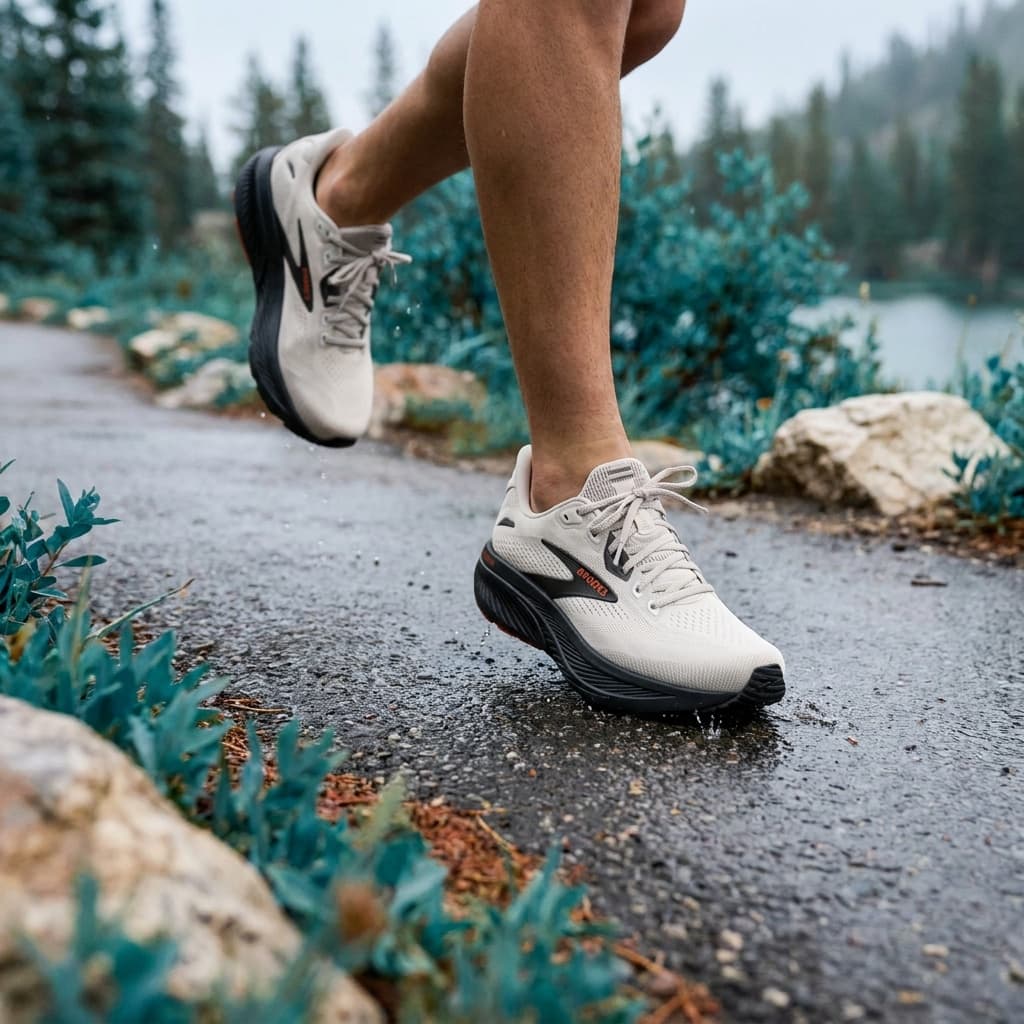
- Weight
- 10.2 oz (men) / 9.2 oz (women)
- Heel drop
- 10 mm
- Stack height
- 36 mm heel / 26 mm forefoot
- Midsole
- DNA Loft v3 nitrogen-injected foam
- Widths
- Narrow, Standard, Wide (2E), Extra Wide (4E)
- Replacement
- Based on wear, support, and comfort
About this pick
Brooks officially markets the Ghost 18 as a Neutral Running and Walking Shoe, and the tagline holds up: its DNA Loft v3 midsole, 10mm drop, and wide-width lineup (narrow through 4E) make it the most walker-friendly general-purpose shoe in this roundup. The Ghost line has logged 18 generations because it reliably delivers a stable, cushioned ride that works from a 20-minute morning walk to a full day on pavement. The Ghost 18 carries both the APMA Seal of Acceptance and PDAC A5500 Diabetic footwear certification.
Strengths
- Men's version comes in four widths, narrow (1B) through extra wide (4E), so it fits a wide range of foot shapes
- 10mm drop and stable neutral platform suit heel-strike walkers who log miles daily without specialty support needs
- RunRepeat's lab abrasion test left only 0.8 mm of outsole wear, a good sign for daily walking mileage
Weaknesses
- Forefoot cushioning is firmer and lower-stack than the Clifton 10 or 1080v14, so heavier walkers or those with joint sensitivity may want more underfoot volume
- 10.2 oz men's weight feels heavier on longer outings compared to lighter max-cushion options
Kit Score breakdown
NEW BALANCE
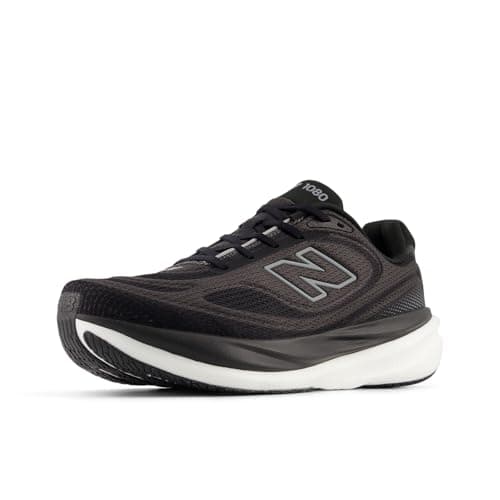
New Balance 1080 v15
Best Premium
Kit Score 8.4/10
$169.95 Price checked Oct 23, 4:16 PM CDT
Best for: Walkers logging serious daily mileage on pavement who want maximum cushioning and joint protection.
- Softer, more resilient Infinion foam under a 40 mm heel stack
- The plush, high-volume fit can feel less locked in, per Doctors of Running
- Weight
- 9.2 oz (men's 9.5) / 7.3 oz (women's 7)
- Heel drop
- 6 mm (brand spec), 6.4 mm lab-measured
- Stack height
- 40 mm heel / 34 mm forefoot (brand spec)
- Midsole
- Infinion, a TPEE-based foam blended with EVA
- Widths
- Narrow, Standard, Wide (2E), X-Wide (4E)
About this pick
The 1080 v15 is New Balance's max-cushion daily shoe rebuilt around Infinion foam, which replaces the Fresh Foam X of earlier versions. It keeps the tall stack and 6 mm drop that suit long pavement walks, weighs about 10% less than the V14 in RunRepeat's lab, and has a roomier, higher-volume upper.
Strengths
- Softer, more resilient Infinion foam under a 40 mm heel stack
- About 10% lighter than the V14 in RunRepeat's measurements
- Four widths, from narrow to extra-wide (4E)
Weaknesses
- The plush, high-volume fit can feel less locked in, per Doctors of Running
- Limited lateral stability and poor breathability in RunRepeat's lab
Kit Score breakdown
Best for: Walkers who prioritize maximum underfoot protection and a smooth rolling stride on pavement, particularly those on their feet all day at work or managing joint sensitivity.
- Tallest stack (42mm heel) in the roundup delivers the most joint-protective ride, especially on concrete and hard tile
- Breathability rates 3/5: feet run warm in hot weather or high-humidity environments
- Weight
- 9.8 oz (men) / 8.0 oz (women)
- Heel drop
- 8 mm (brand spec)
- Stack height
- 42 mm heel / 34 mm forefoot
- Midsole
- Compression-molded EVA with metarocker geometry
- Upper
- Jacquard knit
- Widths
- Regular, Wide, Extra Wide
About this pick
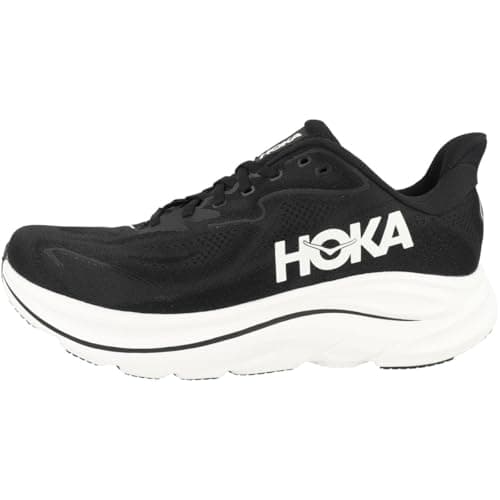
The Clifton 10 pushes the stack to 42mm at the heel, moves the drop from 5mm to 8mm, and widens the toe box relative to the Clifton 9, making it the tallest-stacked shoe in this roundup. RunRepeat's lab found it firmer than the Clifton 9. The rocker geometry rolls the foot forward smoothly, which owners who spend long days on their feet single out.
Strengths
- Tallest stack (42mm heel) in the roundup delivers the most joint-protective ride, especially on concrete and hard tile
- Metarocker geometry creates a smooth heel-to-toe roll that reduces active effort on long flat walks
- Toe box is much roomier than the Clifton 9's in RunRepeat's measurements, giving more room for natural toe splay
Weaknesses
- Breathability rates 3/5: feet run warm in hot weather or high-humidity environments
- Compression-molded EVA is a basic foam, and RunRepeat found the v10 firmer than the Clifton 9
Kit Score breakdown
See all picks in Best walking shoes 2026: 4 picks for daily fitness walks
Keep going

Researched, not hands-on tested
Updated Sep 25, 2026Our recommendations draw on manufacturer documentation, retailer listings, owner feedback, and comparisons with alternatives.
As an Amazon Associate I earn from qualifying purchases. We may earn a commission from links here, at no extra cost to you. How we research →