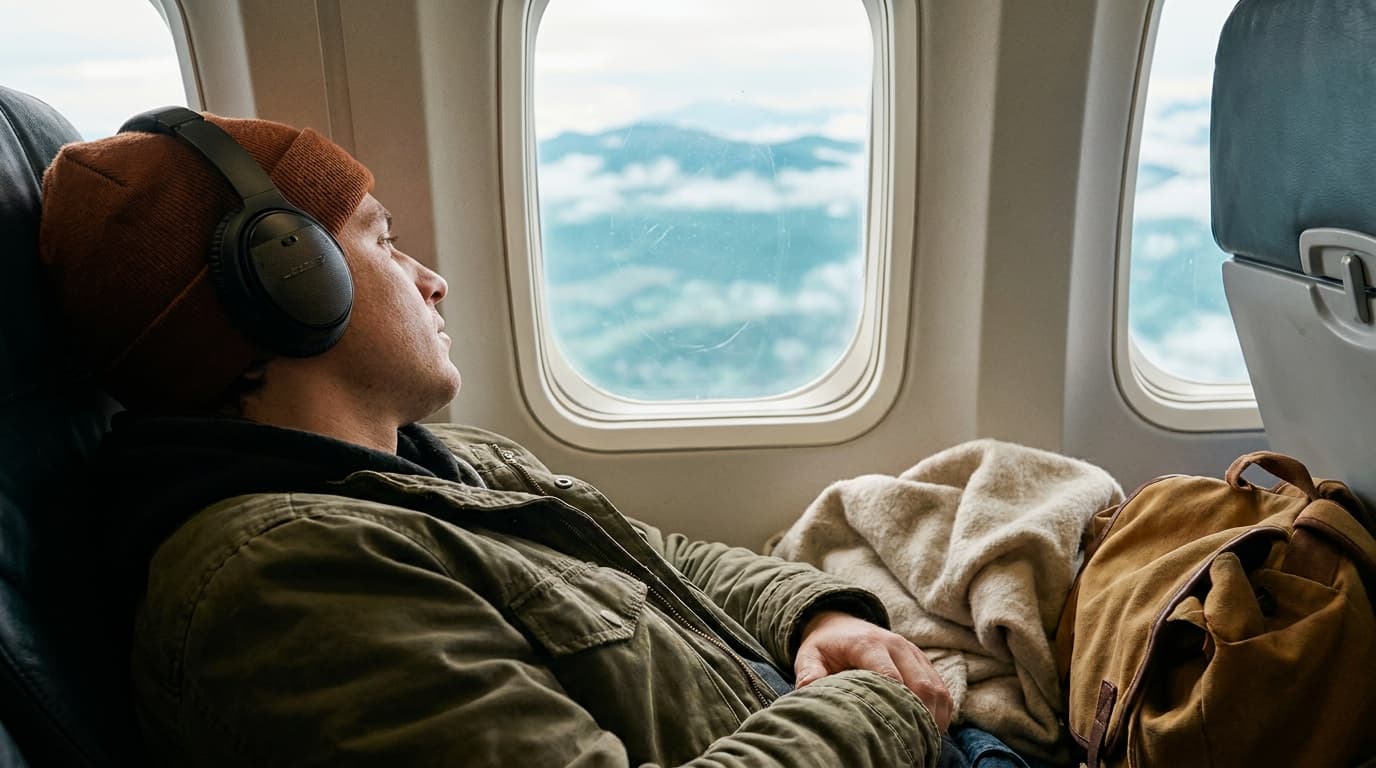
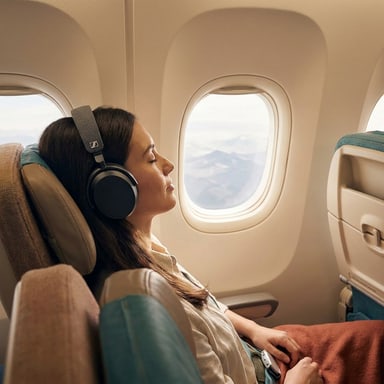
The best noise cancelling headphones for travel in 2026 are the Sony WH-1000XM6: RTINGS names them the best travel headphones it has tested, measured close to 32 hours of playback with ANC on, and they now fold into a compact case. Choose the Bose QuietComfort Ultra (2nd Gen) if comfort on 10-hour flights matters most, the Sennheiser Momentum 4 for a rated 60-hour battery, or the Soundcore Space 2 on a budget. The job they all do: in a study that measured sound on 200 flights, the median cabin level was 83.5 dB(A), and most of that is the low-frequency engine and airflow rumble that ANC handles best.
Our quick picks
How we picked
Every pick is scored against our Kit Score: noise cancelling in cabin-type noise, rated battery life checked against independent battery tests, fit and clamp on long flights, call quality, and value across the full price range. We cross-referenced the makers' spec sheets with published lab measurements from RTINGS and SoundGuys and with owner feedback. We did not test these headphones ourselves.
The picks
Best overall
BEST OVERALL
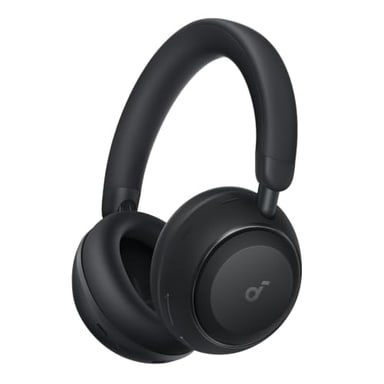
Sony WH-1000XM6 Wireless Noise Canceling Headphones
Best for: Travelers who want the strongest all-around noise cancelling and a headphone that folds into a small case.
- Top noise isolation in RTINGS' testing, ahead of the Bose QuietComfort Ultra on overall noise suppression
- Thin, shallow earpads that RTINGS and SoundGuys both say are less comfortable over long wear than the Bose
Kit Score 8.5/10 · $458.00 Price checked Oct 25, 3:41 PM CDT · how we score gear
Buy on AmazonProduct details
Sony's current flagship adds a folding design, a magnetic-closure case, and 12 microphones run by the new QN3 processor. RTINGS names it the best travel headphone it has tested, with 31.75 hours of measured playback with ANC on, and Sony rates it at 30 hours on AAC.
- Battery life (ANC on)
- 30 hours NC on with AAC (26 hours LDAC); 40 hours NC off (Sony)
- Weight
- Approx. 254 g (9 oz)
- Microphones
- 12 in total; 6 used for calls
- Bluetooth
- 5.3 with SBC, AAC, LDAC, LC3; 2-device multipoint
- Charging
- USB-C, approx. 3.5 hr full charge; 3 min = about 3 hr with a USB PD charger (about 1 hr otherwise)
- Design
- Folds, with a compact case that closes magnetically
More strengths
- Folds into a compact case with a magnetic closure, fixing the XM5's biggest packing complaint
- 30 hours rated with ANC on (AAC), and a 3-minute charge on a USB PD charger gives about 3 hours
Other tradeoffs
- The priciest Sony model here, and no USB-C audio or water resistance rating
The WH-1000XM6 replaced the XM5 as Sony's flagship in May 2025, and it now tops RTINGS' travel list. RTINGS rates its noise isolation as outstanding across most of the frequency range, from engine rumble to nearby chatter, and places it ahead of the Bose QuietComfort Ultra on overall noise suppression. Sony credits the new QN3 processor running 12 microphones, 1.5 times as many as the XM5.
For travelers, the bigger change is packing. The XM5's headband does not fold; the XM6 folds and ships with a compact case that closes magnetically. Sony rates the battery at 30 hours with noise cancelling on over AAC (26 hours on LDAC, 40 with NC off), and RTINGS measured 31.75 hours. A 3-minute charge gives about 3 hours of playback on a USB PD charger (about 1 hour on a standard 5 V adaptor), and a full charge takes about 3.5 hours. The headset weighs about 254 g.
The tradeoff is comfort over very long wear. RTINGS and SoundGuys both describe the earpads as thin and shallow, and RTINGS rates the Bose as more comfortable. If you wear glasses or have larger ears, that is the reason to look at the Bose instead.
Battery: 30 h rated (NC on, AAC) | ANC strength: strongest overall in RTINGS' travel testing | Calls: 6-microphone beamforming for voice | Folds: yes, into a magnetic-closure case
Best value
BEST VALUE
Sony WH-1000XM5 Wireless Noise Canceling Headphones
Best for: Travelers who want near-flagship Sony noise cancelling and call quality for less than the XM6.
- Noise cancelling that RTINGS rates only slightly behind the XM6, strongest on low-frequency engine rumble
- Does not fold flat, which limits packing efficiency compared to rivals like the Sennheiser Momentum 4 (and the newer XM6, which does fold)
Kit Score 8.3/10 · $155.99 Price checked Oct 25, 3:41 PM CDT · how we score gear
Buy on AmazonProduct details
Sony's 2022 flagship pairs 8 microphones with strong low-frequency noise cancelling for engine hum, weighs about 250 g, and is rated for 30 hours with ANC on. Since the WH-1000XM6 replaced it in May 2025, it sells for well under the newer model, and RTINGS rates its cancelling only slightly behind the XM6.
- Battery life (ANC on)
- 30 hours NC on with AAC (26 hours LDAC); 40 hours NC off
- Weight
- 250 g (8.8 oz)
- Microphones
- 8-unit array
- Bluetooth
- 5.2 with LDAC, AAC, SBC
- Charging
- USB-C, approx. 3.5 hr full charge; 3 min = about 1 hr (about 3 hr only with a USB PD charger); 10 min = about 5 hr
- Design
- Over-ear, closed-back; earcups swivel flat but the headband does not fold
More strengths
- 8-microphone system with strong owner marks for call clarity
- 30-hour rated battery with ANC on (AAC) covers most long-haul round trips, with a 3-minute quick charge as backup
- Sells for noticeably less than the XM6 now that it is the previous generation
Other tradeoffs
- Default sound tuning is bass-heavy and benefits from EQ adjustment in the Sony app
The XM5 is the previous Sony flagship, and Amazon still sells it new for well under the XM6. RTINGS describes its cancelling as slightly less effective than the XM6, with a similar sound profile, so most of the in-flight experience carries over. Sony rates it at 30 hours with noise cancelling on (AAC), and it weighs about 250 g.
Two things to know. The headband does not fold: the earcups swivel flat into a case that takes more room than a folding design, so check it against your bag. And RTINGS notes owner reports of durability issues and a fit some people find uncomfortable. If you pack tight or keep headphones for years, the XM6 is worth the difference. Read our full Sony WH-1000XM5 review or the XM5 vs Bose QuietComfort Ultra comparison.
Battery: 30 h rated (NC on, AAC) | ANC strength: slightly behind the XM6 | Calls: 8-microphone system | Folds: no, swivels flat only
Best premium
BEST PREMIUM
Bose QuietComfort Ultra Headphones (2nd Gen)
Best for: Frequent flyers who want the most consistent, fatigue-free ANC on the market and are willing to pay a premium for it.
- Noise cancelling that RTINGS places just behind the Sony XM6, with a longer battery in its testing
- List price of $449 is the highest in this roundup, and SoundGuys finds the in-app EQ too basic for precise sound shaping
Kit Score 8.4/10 · $449.00 Price checked Oct 25, 3:41 PM CDT · how we score gear
Buy on AmazonProduct details
The QC Ultra 2nd Gen builds on Bose's benchmark noise cancellation with up to 30 hours of rated battery (23 with Immersive Audio), Bluetooth 5.4, listen-while-charging, and USB-C lossless playback, all in a 0.583 lb (about 264 g) frame that reviewers consistently call one of the most comfortable in the category.
- Battery life (ANC on)
- 30 hours (Quiet/Aware modes); 23 hours with Immersive Audio
- Weight
- 0.583 lb (about 264 g) headphone only, per Bose product page
- Microphones
- Multi-mic system with Echo Reduction
- Bluetooth
- 5.4; aptX Adaptive on Snapdragon Sound devices; USB-C lossless wired audio
- Charging
- USB-C, 3 hr full charge; 15 min = 3 hrs
- ANC modes
- Quiet, Aware, Immersion
More strengths
- The most comfortable pick here: RTINGS credits deeper ear cups that fit a wider range of head and ear shapes
- USB-C lossless wired audio and Bluetooth 5.4, plus Cinema mode and automatic on/off when you put them on or take them off
Other tradeoffs
- No IP water resistance rating limits versatility outside controlled travel environments
Bose builds the QuietComfort line around comfort over a long day, and reviewers agree it is the most comfortable pick here. RTINGS credits deeper ear cups that suit a wider range of head and ear shapes, and says its noise isolation falls just short of the Sony XM6 while its battery lasts longer in their testing. The second generation adds a Cinema mode, Bluetooth 5.4, USB-C wired audio for lossless playback, and automatic power on and off when you put the headphones on or take them off.
Bose rates the battery at 30 hours in Quiet or Aware mode and 23 hours with Immersive Audio on, up from the first generation's 24 and 18 hours. A 15-minute charge is rated for 3 hours of playback, and a full charge takes 3 hours. Bose lists the headphones alone at 0.583 lb, about 264 g, and they fold into the included travel case.
At a $449 list price it is the most expensive pick. It earns that if you fly often enough that a pressure-free fit on a 10-hour leg is worth paying for.
Battery: 30 h rated (23 h with Immersive Audio) | ANC strength: just behind the XM6 | Comfort: best in this lineup | Folds: yes, into the included case
Editor's choice
EDITOR'S CHOICE
Sennheiser Momentum 4 Wireless Noise Canceling Headphones
Best for: Multi-leg travelers who want to stop thinking about charging and like a complete in-flight kit in the box.
- 60 hours rated with ANC on, about double the Sony and Bose picks, and RTINGS measured about 62 hours
- RTINGS finds it does not filter very low-pitched noise as well as the flagships, so more engine drone gets through
Kit Score 8.2/10 · Check current price · how we score gear
Buy on AmazonProduct details
The Momentum 4 is rated for 60 hours with ANC on, and RTINGS measured about 62 hours, so it covers a week of travel without a recharge. It ships with a carry case, an audio cable, and an airplane adapter.
- Battery life (ANC on)
- 60 hours rated (Sennheiser); about 62 hours in RTINGS' test
- Drivers
- 42 mm
- Microphones
- 4-mic beamforming array
- Bluetooth
- Bluetooth 5.2; SBC, AAC, aptX, aptX Adaptive (no aptX HD or LDAC listed by Sennheiser)
- Charging
- USB-C, approx. 2 hr full charge; 5 min = up to 4 hr; 10 min = up to 6 hr
- In box
- Carry case, USB-C cable, 3.5 mm to 2.5 mm audio cable, airplane adapter
More strengths
- Warm, bassy tuning with an app EQ; aptX Adaptive, aptX, AAC, and SBC over Bluetooth 5.2
- Carry case, audio cable, and airplane adapter in the box make it a complete in-flight kit
Other tradeoffs
- Sennheiser has released the pricier Momentum 5, so the Momentum 4 is now the previous generation
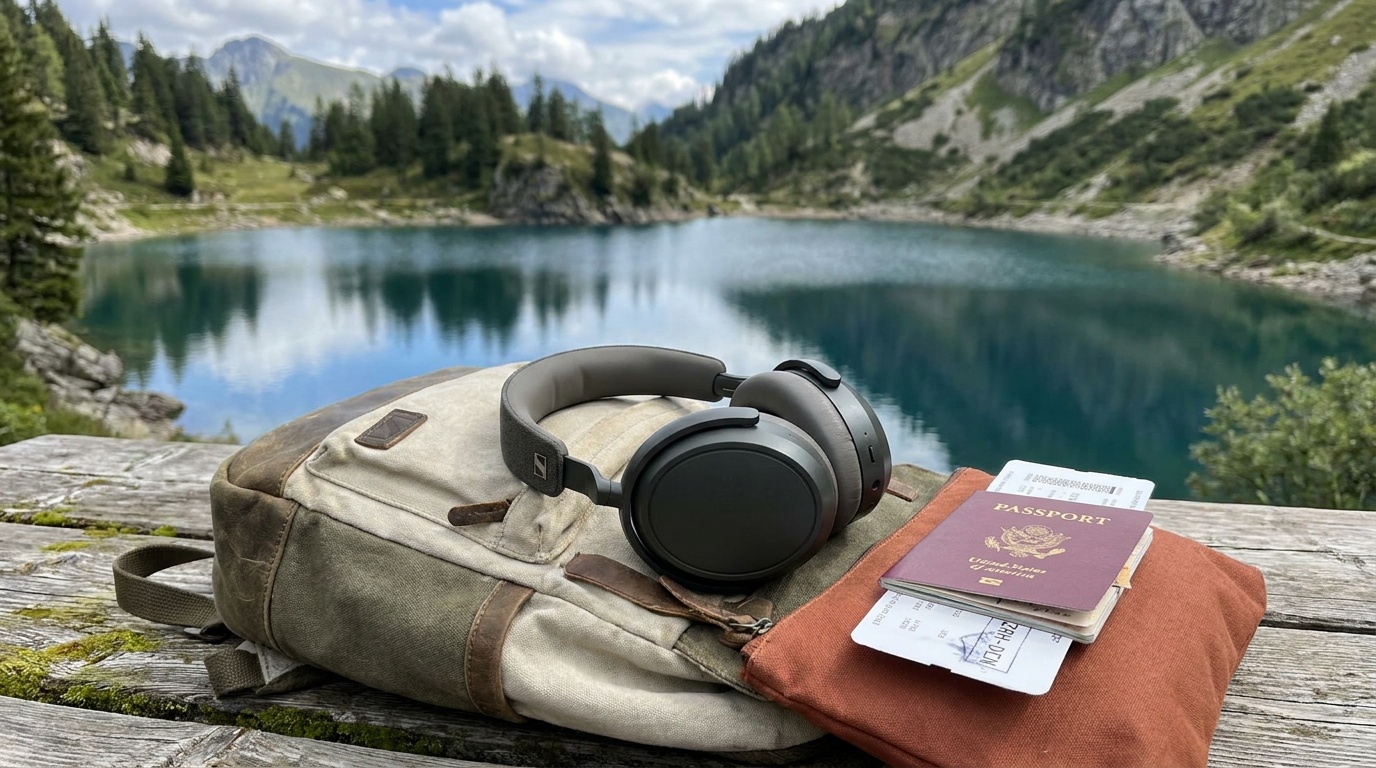
Sixty hours of rated playback with ANC on is double the Sony and Bose ratings, and RTINGS measured about 62 hours. For back-to-back travel days, that means charging once a week rather than every few days. When you do charge, Sennheiser rates 10 minutes for up to 6 hours of playback and about 2 hours for a full charge.
The box is the most complete carry-on kit here: a carry case, a USB-C cable, a 3.5 mm to 2.5 mm audio cable, and an airplane adapter for seat-back screens. The cancelling is strong on voices, but RTINGS finds it does not filter the lowest-pitched noise as well as the flagships, so you will hear more engine drone than with the Sony or Bose. It supports SBC, AAC, aptX, and aptX Adaptive over Bluetooth 5.2, and the app includes an EQ for tuning movies and music.
Sennheiser has since released the Momentum 5 at a higher price. The Momentum 4 stays on sale and is the better buy for travelers who value battery over the newest features.
Battery: 60 h rated | ANC strength: very good, weaker on the lowest frequencies | In the box: case, audio cable, airplane adapter
Best budget
BEST BUDGET
Soundcore Space 2 Noise Cancelling Headphones
Best for: Occasional flyers who want strong cabin noise cancelling and long battery life without paying flagship prices.
- Long battery for the price: 50 hours rated with ANC on, 42 hours in RTINGS' test and 53 hours in SoundGuys' test
- Ships with a cloth pouch, not a hard case, and the earcups do not fold flat
Kit Score 7.9/10 · $106.49 Price checked Oct 25, 3:41 PM CDT · how we score gear
Buy on AmazonProduct details
Soundcore's 2026 follow-up to the Space One pairs a rated 50 hours of ANC playback with memory foam cushions that SoundGuys ranks among the most comfortable budget headphones you can buy. RTINGS measured 42 hours of continuous playback and calls them great for travel.
- Battery life (ANC on)
- 50 hours ANC on, 70 hours off (Soundcore, 50% volume, wear detection off)
- Weight
- 264 g (9.31 oz)
- Microphones
- 3 for calls
- Bluetooth
- 6.1 with SBC, AAC, LDAC; multipoint
- Charging
- USB-C, 5 min = 4 hours
- Design
- Folds inward (not flat); cloth pouch included
More strengths
- Memory foam headband and cushions with low clamping force, comfortable over long flights
- LDAC and multipoint over Bluetooth 6.1, and a 5-minute charge is rated for 4 hours
Other tradeoffs
- Call quality is passable rather than strong, and the default tuning needs EQ according to SoundGuys
The Space 2 is Soundcore's 2026 follow-up to the Space One, and it costs a fraction of any other pick here. RTINGS calls it great for travel: the ANC handles jet engine rumble well, and memory foam in the headband and cushions keeps clamping pressure low. SoundGuys measured an average of 84% of outside noise blocked and calls it one of the most comfortable budget headphones you can buy.
Soundcore rates the battery at 50 hours with ANC on at 50% volume and 70 hours with it off, and a 5-minute charge is rated for 4 hours. RTINGS measured 42 hours of continuous playback, and SoundGuys measured just over 53 hours. It weighs 264 g and supports LDAC and multipoint over Bluetooth 6.1.
The savings show up in the extras. It ships with a cloth pouch instead of a hard case, the earcups fold inward but not flat, and RTINGS rates the microphone as passable. Fine for a quick check-in call; move up to a Sony if you take work calls on the road.
Battery: 50 h rated (ANC on) | ANC strength: strong for the price | Calls: passable | Folds: inward, not flat; pouch included
How to choose
| Spec | Sony XM6 | Sony XM5 | Bose QC Ultra (2nd Gen) | Sennheiser Momentum 4 | Soundcore Space 2 |
|---|---|---|---|---|---|
| Kit Score | 8.5/10 | 8.3/10 | 8.4/10 | 8.2/10 | 7.9/10 |
| Price | $458.00 Price checked Oct 25, 3:41 PM CDT | $155.99 Price checked Oct 25, 3:41 PM CDT | $449.00 Price checked Oct 25, 3:41 PM CDT | Check current price | $106.49 Price checked Oct 25, 3:41 PM CDT |
| Best for | Travelers who want the strongest all-around noise cancelling and a headphone that folds into a small case. | Travelers who want near-flagship Sony noise cancelling and call quality for less than the XM6. | Frequent flyers who want the most consistent, fatigue-free ANC on the market and are willing to pay a premium for it. | Multi-leg travelers who want to stop thinking about charging and like a complete in-flight kit in the box. | Occasional flyers who want strong cabin noise cancelling and long battery life without paying flagship prices. |
| Why it stands out | Top noise isolation in RTINGS' testing, ahead of the Bose QuietComfort Ultra on overall noise suppression | Noise cancelling that RTINGS rates only slightly behind the XM6, strongest on low-frequency engine rumble | Noise cancelling that RTINGS places just behind the Sony XM6, with a longer battery in its testing | 60 hours rated with ANC on, about double the Sony and Bose picks, and RTINGS measured about 62 hours | Long battery for the price: 50 hours rated with ANC on, 42 hours in RTINGS' test and 53 hours in SoundGuys' test |
| Tradeoff | Thin, shallow earpads that RTINGS and SoundGuys both say are less comfortable over long wear than the Bose | Does not fold flat, which limits packing efficiency compared to rivals like the Sennheiser Momentum 4 (and the newer XM6, which does fold) | List price of $449 is the highest in this roundup, and SoundGuys finds the in-app EQ too basic for precise sound shaping | RTINGS finds it does not filter very low-pitched noise as well as the flagships, so more engine drone gets through | Ships with a cloth pouch, not a hard case, and the earcups do not fold flat |
| Rated battery, ANC on | 30 h (AAC) | 30 h (AAC) | 30 h (23 h Immersive) | 60 h | 50 h |
| Independent battery test | 31.75 h (RTINGS) | Not listed here | 27 h 12 min (SoundGuys) | about 62 h (RTINGS) | 42 h (RTINGS) |
| Weight | about 254 g | about 250 g | about 264 g | Not listed by Sennheiser | 264 g |
| Packs | Folds, magnetic case | Swivels flat, case | Folds, travel case | Carry case | Folds inward, pouch |
| Bluetooth | 5.3, LDAC, LC3 | 5.2, LDAC | 5.4, USB-C lossless | 5.2, aptX Adaptive | 6.1, LDAC |
Match the headphones to your trip
How often do you fly?
Two or more round trips a month, the comfort and cancelling of the Sony XM6 or Bose pays off quickly. A few trips a year, the Soundcore Space 2 covers the job.
How long are your longest legs?
Under 4 hours, any pick here has battery to spare. Over 8 hours, the Bose comfort and the Momentum 4's battery start to separate from the pack.
What do you do mid-flight?
Mostly movies and sleep, cancelling depth matters most, so start with the XM6. Work calls on layovers, stick with a Sony for the stronger microphones.
Do you have a small carry-on?
The XM6 and the Bose fold into compact cases. The XM5 only swivels flat, and the Space 2 comes with a soft pouch rather than a hard case.
Over-ear or earbuds?
All five picks are over-ear, which adds the earcup's passive seal to the cancelling. If you want something smaller, see our guide to the [best wireless earbuds for travel](/travel/best-wireless-earbuds-for-travel).
A study that measured 200 flights found a median cabin sound level of 83.5 dB(A). Good ANC turns most of that into a low hum.
Frequently asked questions
What are the best noise cancelling headphones for travel in 2026?
The Sony WH-1000XM6 is the best pick for most travelers. RTINGS names it the best travel headphone it has tested, it measured close to 32 hours with ANC on, and it folds into a compact case. The Bose QuietComfort Ultra (2nd Gen) is the more comfortable choice for very long flights, the Sennheiser Momentum 4 has a rated 60-hour battery, and the Soundcore Space 2 is the budget pick.
Is the Sony WH-1000XM6 worth it over the XM5?
For frequent flyers, usually yes. RTINGS finds the XM6 ahead of the XM5 on most measures, with slightly stronger cancelling, and the XM6 folds into a smaller case while the XM5 only swivels flat. The XM5 still makes sense if you want Sony cancelling and call quality for noticeably less money and have room in your bag for its wider case.
Are over-ear headphones better than earbuds for flights?
For most travelers, yes. Over-ear ANC headphones add the passive seal of the earcup on top of the electronic cancelling, which helps with the low-frequency rumble that makes up most of cabin noise. The exception is travelers who find over-ear pressure uncomfortable after 4 to 5 hours, or who want to sleep leaning on a headrest; a well-fitting ANC earbud may work better for them. If you plan to sleep in over-ears, pair them with one of the travel pillows that work with over-ear headphones so the pillow wall does not lift the earcup.
Do noise cancelling headphones work for ear pressure on flights?
No. ANC lowers how loud the cabin sounds, but it does not equalize air pressure. Ear pressure on climb and descent comes from the Eustachian tube adjusting to altitude changes, not from sound. Some travelers find the calmer sound makes the sensation less stressful, but for the pressure itself, swallowing, yawning, or filtered earplugs are the tools that help.
How much battery life do I actually need for travel?
A single long-haul flight fits within any pick here: New York to London is roughly 7 hours and Los Angeles to Sydney roughly 15. Battery matters more on multi-day trips without reliable charging. A 30-hour Sony or Bose needs a charge every two or three days of heavy use, while the Sennheiser Momentum 4, rated for 60 hours, can last a typical five-day trip on one charge.
Do noise cancelling headphones work in a loud airplane cabin?
Yes, this is the use ANC is built for. In a study that measured 200 flights, the median cabin level was 83.5 dB(A), and much of that energy is low-frequency engine and airflow noise, the band ANC reduces best. A strong over-ear pair turns it into a low hum, so you can hear dialogue at a moderate volume. ANC does less for sudden, higher-pitched sounds like a crying baby or an announcement; the earcup seal is what softens those.
Where these numbers come from
| Claim | Source | Checked |
|---|---|---|
| RTINGS' best travel headphones: Sony WH-1000XM6 top pick; Bose QC Ultra (2nd Gen) more comfortable with slightly lower isolation and a longer battery; XM6 battery close to 32 h with ANC on | RTINGS, The Best Travel Headphones (updated Jul 28, 2026) | Sep 2026 |
| Sony WH-1000XM6: 31.75 h continuous with ANC in RTINGS' test; outstanding noise isolation; ahead of the Bose QC Ultra on overall noise suppression; XM5 has slightly less effective ANC plus reports of durability issues | RTINGS, Sony WH-1000XM6 review | Sep 2026 |
| Sony WH-1000XM6: 30 h NC on with AAC, 26 h on LDAC, 40 h NC off; 3 min charge for about 1 h (about 3 h with a USB PD charger) | Sony Help Guide, WH-1000XM6 Available operating time | Sep 2026 |
| Sony WH-1000XM6: approx. 254 g, approx. 3.5 h full charge, Bluetooth 5.3, SBC/AAC/LDAC/LC3, 2-device multipoint | Sony Help Guide, WH-1000XM6 Specifications | Sep 2026 |
| Sony WH-1000XM6: 12 microphones (1.5 times the XM5), QN3 processor, foldable design, magnetic-closure case, $449.99 launch price, May 2025 release | Sony press release via PR Newswire | Sep 2026 |
| Sony WH-1000XM6: thin earpads, 6-microphone beamforming for calls, no USB-C audio or water resistance rating | SoundGuys, Sony WH-1000XM6 review | Sep 2026 |
| Sony WH-1000XM5: 30 h NC on with AAC, 26 h on LDAC, 40 h NC off | Sony Help Guide, WH-1000XM5 Available operating time | Sep 2026 |
| Sony WH-1000XM5: approx. 250 g, approx. 3.5 h full charge, Bluetooth 5.2, SBC/AAC/LDAC | Sony Help Guide, WH-1000XM5 Specifications | Sep 2026 |
| Bose QC Ultra (2nd Gen): 30 h in Quiet/Aware, 23 h with Immersive Audio, 15 min charge for 3 h, 3 h full charge, Bluetooth 5.4, USB-C lossless wired audio, 0.583 lb headphone only, $449 list | Bose, QuietComfort Ultra Headphones (2nd Gen) | Sep 2026 |
| Bose QC Ultra (2nd Gen): Cinema mode, on-head auto power, and battery improved over Gen 1 | Bose Support, What's new in the latest generation | Sep 2026 |
| Bose QC Ultra (2nd Gen): 27 h 12 min with ANC in SoundGuys' battery test; folds into the included travel case; basic in-app EQ | SoundGuys, Bose QuietComfort Ultra Headphones (2nd Gen) review | Sep 2026 |
| Sennheiser Momentum 4: up to 60 h with ANC, 10 min for up to 6 h, approx. 2 h full charge, Bluetooth 5.2, SBC/AAC/aptX/aptX Adaptive, carry case, audio cable, and airplane adapter in the box; Momentum 5 now sold alongside it | Sennheiser, MOMENTUM 4 Wireless | Sep 2026 |
| Sennheiser Momentum 4: about 62 h in RTINGS' battery test; weaker on very low-pitched noise | RTINGS, Sennheiser MOMENTUM 4 Wireless review | Sep 2026 |
| Sennheiser Momentum 4: 42 mm drivers | Sennheiser Momentum 4 listing on Amazon, ASIN B0CDH415QV | Sep 2026 |
| Soundcore Space 2: 50 h ANC on and 70 h off at 50% volume, 5 min for 4 h, 264 g, Bluetooth 6.1, LDAC, 3 call microphones, multipoint, $129.99 list | Soundcore, Space 2 | Sep 2026 |
| Soundcore Space 2: 42 h continuous in RTINGS' test; great for travel; folds inward but not flat; pouch only; passable microphone | RTINGS, Anker Soundcore Space 2 review | Sep 2026 |
| Soundcore Space 2: 53 h 21 min in SoundGuys' test, 84% average noise reduction, cloth pouch, default tuning needs EQ | SoundGuys, Anker Soundcore Space 2 review | Sep 2026 |
| Aircraft cabin sound measured on 200 flights: median 83.5 dB(A) across flight phases | Zevitas et al., Journal of Exposure Science & Environmental Epidemiology (2018) | Sep 2026 |
We did not test these headphones ourselves. Battery figures are the makers' ratings under the conditions they state (codec, volume, and ANC mode all change the result) plus the independent battery tests named above, and the cancelling comparisons summarize published lab measurements and owner reports rather than our own lab work.
The right pair makes a 10-hour flight manageable rather than exhausting. Any of these five will get you there; the difference is which tradeoffs fit your travel style and budget. For fit, codecs, and what the specs mean, read how to choose noise cancelling headphones, browse more picks on the travel hub, or see how we research and rate every product we recommend.
Keep going
Complete loadoutLong-flight comfort kitFive packable pieces for neck support, darkness, quieter cabins, leg comfort, and more consistent sleep away from home.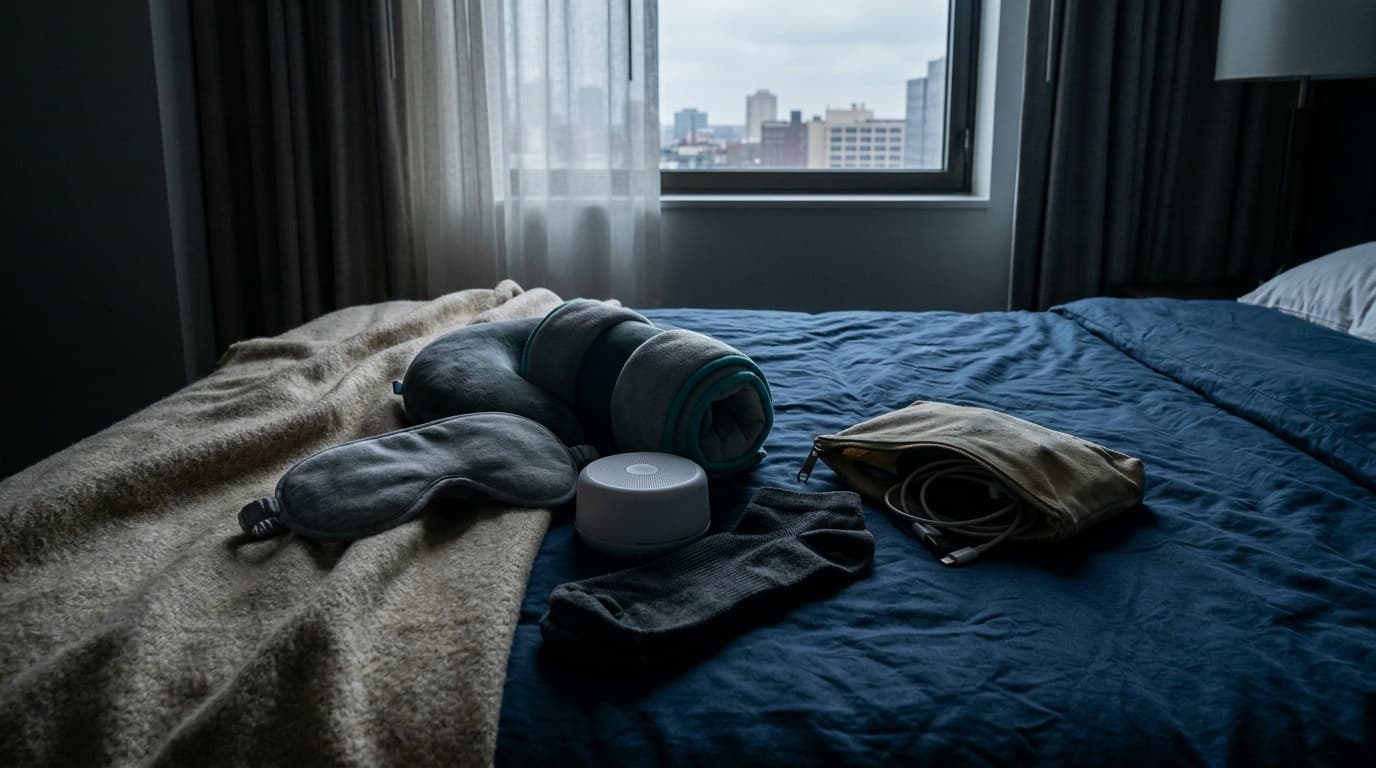
Our recommendations draw on manufacturer documentation, retailer listings, owner feedback, and comparisons with alternatives.
As an Amazon Associate I earn from qualifying purchases. We may earn a commission from links here, at no extra cost to you. How we research →
Top picks
 Best OverallSony WH-1000XM6 Wireless Noise Canceling Headphones8.5/10
 Best ValueSony WH-1000XM5 Wireless Noise Canceling Headphones8.3/10
 Best PremiumBose QuietComfort Ultra Headphones (2nd Gen)8.4/10
 Editor's ChoiceSennheiser Momentum 4 Wireless Noise Canceling Headphones8.2/10
 Best BudgetSoundcore Space 2 Noise Cancelling Headphones7.9/10