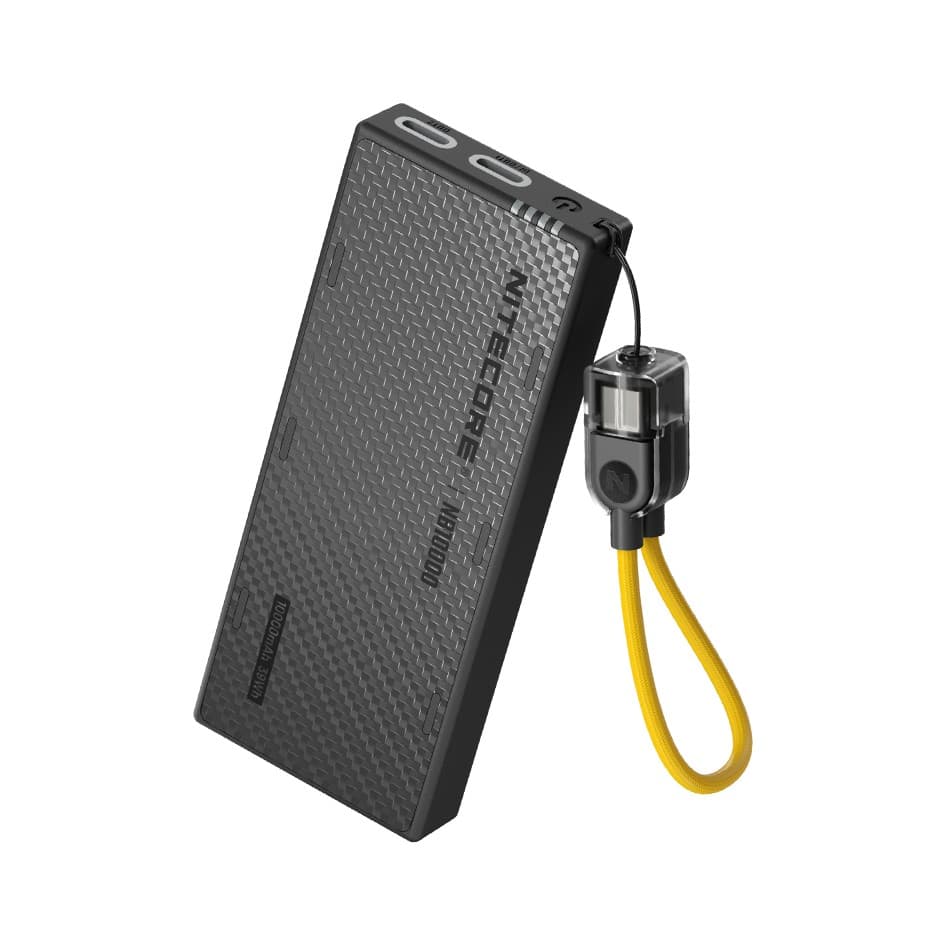
Lightest that covers it · best overall
Nitecore NB10000 Gen4
39Wh rated, 143 g.
- Fits: FAA carry-on rules. Allowed in your carry-on.
- Fits: 2026 international baseline (two banks max). Allowed in your carry-on.
Enter your days away from an outlet and what you charge. Get the watt-hours and mAh to buy, whether it can fly, and the banks from our research that cover it.
The mAh on the box is not what reaches your phone. This calculator works backward from what your devices actually use, adds the energy lost in conversion, and lands on a size you can carry. Picks come from our best ultralight power banks, best travel power banks, and best portable power stations guides.
Your power bank
One 10,000mAh bank
About 37 to 39Wh, the lightest useful size.
| Device | Battery | Recharges | Energy |
|---|---|---|---|
| Phone | 19.1Wh | 1.1 | 21Wh |
| Headlamp | 4.8Wh | 0 | 0Wh |
Fits: Flying with it. One bank this size is under 100Wh, so it can go in your carry-on (never checked bags). Check your airline's power bank rules.
Lightest that covers it · best overall
39Wh rated, 143 g.
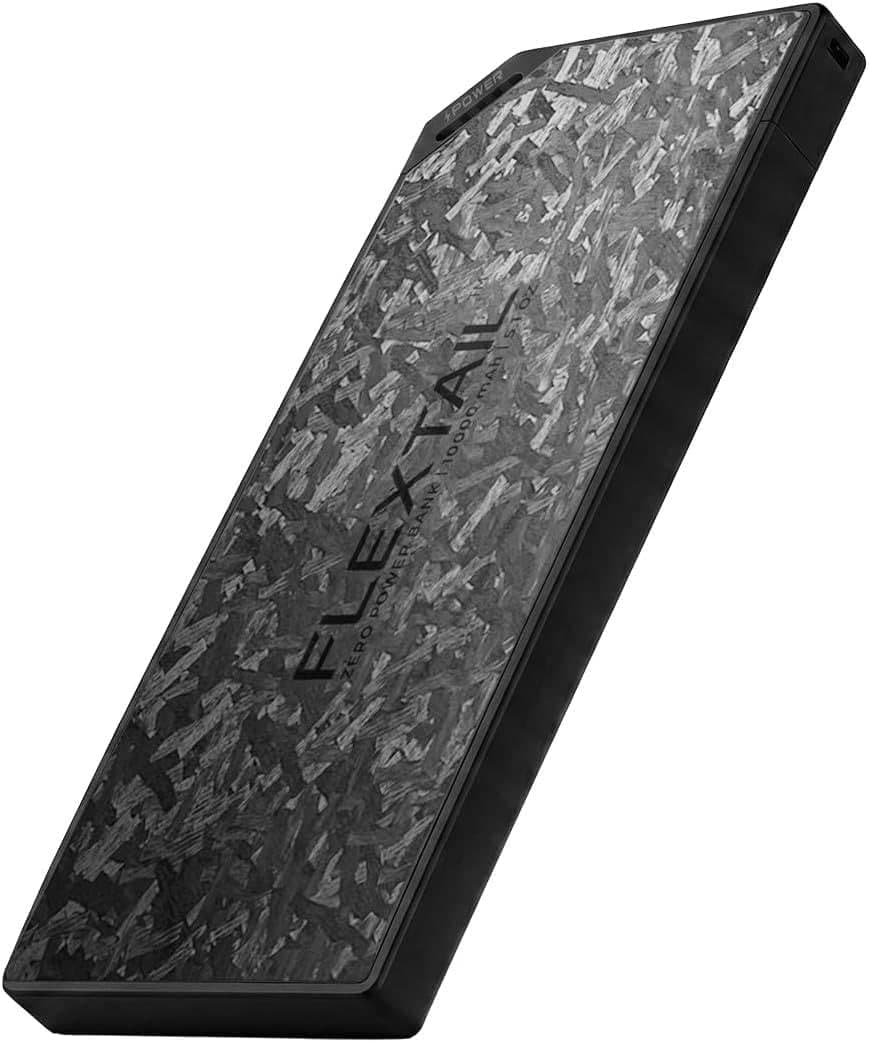
Also covers it · best value
38.7Wh rated, 145 g.
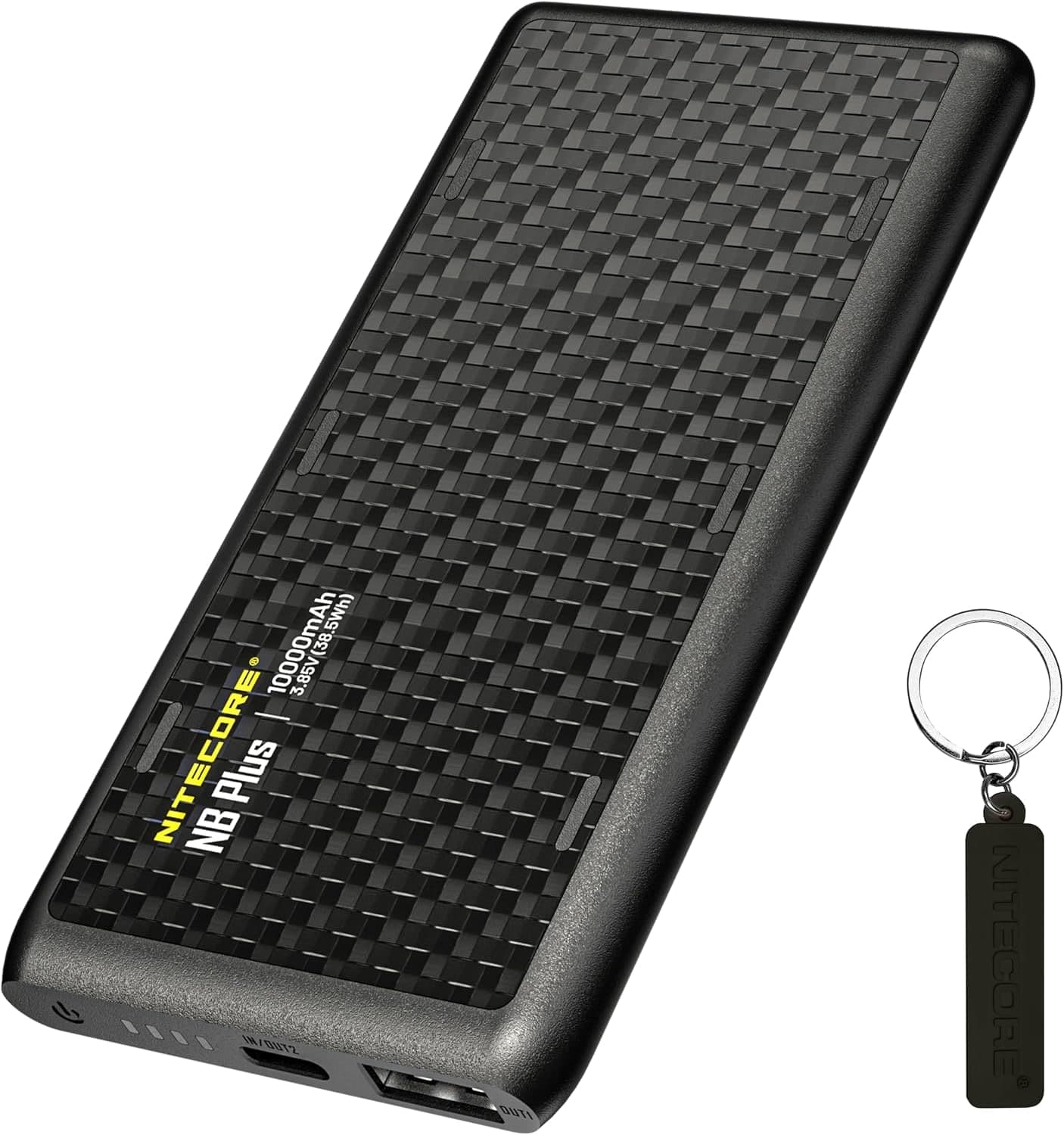
Also covers it · best with usb-a
38.5Wh rated, 155 g.
Capacities and weights are the makers' published figures, not our own measurements. We may earn a commission from retailer links, at no extra cost to you.
Full phone charges from each bank at 65% delivered efficiency, using the makers' rated watt-hours. Round down: a partial charge still helps, but plan on the whole number.
| Bank | Rated | Compact phone (4,000 mAh) | Standard phone (4,970 mAh) | Large phone (5,200 mAh) |
|---|---|---|---|---|
| 10,000mAh ultralight (Nitecore NB10000 Gen4) | 39Wh | 1.6 | 1.3 | 1.2 |
| 20,000mAh (Baseus Blade 100W) | 74Wh | 3.1 | 2.5 | 2.4 |
| 24,000mAh (Anker 737) | 86.4Wh | 3.6 | 2.9 | 2.8 |
| Small power station (EcoFlow RIVER 3 Plus) | 286Wh | 12.0 | 9.7 | 9.2 |
Energy your devices need. For each device we multiply its battery size in watt-hours by the full charges it uses per day and the days you are away, then take off one charge if it starts the trip full. Phone sizes are the makers' typical capacities: 4,000 mAh for the Galaxy S25, 4,970 mAh for the Pixel 10, and 5,200 mAh for the Pixel 10 Pro XL. To turn mAh into watt-hours we assume 3.85V, a typical modern lithium-ion cell voltage; if your device lists watt-hours, enter that instead.
How much of the bank reaches your batteries. We assume 65% by default. That is our planning figure, not a published standard, and it sits below the numbers measured at the bank's own port: Anker puts typical conversion at about 82%, and The Verge measured 86.1% for the Nitecore NB10000 Gen4. The phone then loses more charging its own battery. As a check, The Verge's 39Wh Gen4 refilled an iPhone 15 Pro twice with a few watt-hours left. Pick 60% for older banks or wireless charging, 70% if you want the optimistic case.
Cold. Batteries give back less energy in the cold. CleverHiker measured a 13% efficiency drop for the NB10000 Gen4 in its cold test, one of the bigger drops it recorded, so the cold setting multiplies efficiency by 0.87. Keep the bank in an inside pocket by day and in your sleeping bag at night.
Default charge rates. Treeline Review's battery guide expects 4 to 5 phone charges over a week on trail, a headlamp charge every 3 to 5 nights, a GPS watch charge every other day, and a satellite messenger that rarely needs a recharge inside a week. Those set the defaults; change any of them to match how you use your gear.
Flying. FAA rules allow spare lithium batteries up to 100Wh in carry-on bags, 100 to 160Wh with airline approval, and nothing larger; power banks never go in checked bags. The 2026 international baseline adds a two-bank limit, and airlines can be stricter. Our airline power bank rules checker has carrier-by-carrier limits.
Picks. The calculator recommends only banks and stations from our guides with a published watt-hour rating, using one unit or a small multiple (two banks, say) that covers your need. Backpacking picks sort by carried weight, flying picks by fewest banks, and car camping picks by the smallest unit that covers it. The INIU Pocket Rocket P50 and P41 are not included because INIU does not publish a watt-hour rating, and the two home-backup stations in our power station guide are left out because they are not trip gear.
| Claim | Source | Checked |
|---|---|---|
| Power banks convert at about 82% efficiency; a 10,000mAh bank gives about 6,068mAh at 5V | Anker support, Why is the rated capacity marked on a power bank lower than expected? | 2026-10-03 |
| A 10,000mAh bank's actual output is about 6,000 to 6,500mAh | Anker, Why your 10,000mAh power bank isn't actually 10,000mAh | 2026-10-03 |
| Nitecore NB10000 Gen4: 33.58Wh of 39Wh delivered (86.1%); two iPhone 15 Pro recharges | The Verge, Nitecore NB10000 Gen4 review (measured delivered Wh) | 2026-10-03 |
| 13% efficiency drop in cold testing for the NB10000 Gen4 | CleverHiker, Nitecore NB10000 Gen4 review (cold-weather efficiency) | 2026-10-03 |
| 1 to 2 phone charges per 10,000mAh; 4 to 5 phone charges a week; headlamp, watch, and messenger charge intervals | Treeline Review, outdoor battery strategy guide | 2026-10-03 |
| Pixel 10 typical 4,970 mAh | Google Store, Pixel 10 tech specs | 2026-10-03 |
| Pixel 10 Pro XL typical 5,200 mAh | Google Store, Pixel 10 Pro and Pixel 10 Pro XL tech specs | 2026-10-03 |
| Galaxy S25 typical 4,000 mAh | Samsung Newsroom, Galaxy S25 series specifications | 2026-10-03 |
| GoPro Enduro battery 1,720 mAh | GoPro support, Enduro battery | 2026-10-03 |
| 100Wh carry-on limit; 100 to 160Wh with airline approval; no power banks in checked bags | FAA PackSafe: lithium batteries | 2026-10-03 |
| 2026 international baseline of two power banks per passenger | IATA 2026 power-bank operator guidance | 2026-10-03 |
| Bank and station watt-hours and weights | The makers' specs, as cited in each guide linked above | 2026-10-03 |
For one standard phone used the way most hikers use it (airplane mode, maps, photos), about 32.4Wh of rated capacity, which is one 10,000mah bank. That assumes the phone starts full and 65% of the bank's rated energy reaches the battery. Add a headlamp, watch, or camera in the calculator and the number grows.
Fewer than the mAh numbers suggest: about 1.3 full charges of a Pixel 10-size battery (4,970 mAh) and about 1.6 of a Galaxy S25-size one, at 65% efficiency. The bank's mAh is counted at its internal cell voltage, while it charges your phone at 5V or more, and energy is lost to heat in both the bank and the phone. Treeline Review puts it at 1 to 2 full smartphone charges.
It depends on your phone habits. A 20,000mAh bank holds about 74Wh. A week with one standard phone at trail-typical use needs about 114.8Wh rated at our 65% efficiency, so it falls short; keep the phone off most of the day and the need drops to about 42.7Wh, which it covers. Treeline Review expects 4 to 5 phone charges over a week and says a 20,000mAh bank earns its weight on 4 to 7 night trips, but it assumes smaller conversion losses than we do.
Two reasons. The label counts the cells at about 3.7V, but USB charges at 5V or more, so the same energy shows up as fewer mAh at the port. Then the conversion itself loses energy as heat: Anker puts typical conversion efficiency at about 82%, which is why a 10,000mAh bank delivers about 6,000mAh at 5V. Your phone loses a bit more charging its own battery, and wireless charging loses more still.
Under 100Wh per bank, carried in the cabin, is allowed under FAA rules; 100 to 160Wh needs airline approval, and nothing over 160Wh can fly. The 2026 international baseline also limits you to two power banks, and some airlines allow only one. A 24,000 to 27,000mAh bank is the largest size that stays under 100Wh.
A power bank covers phones and small gear for a long weekend. Once the need passes about 100Wh, a small station such as the EcoFlow RIVER 3 Plus (286Wh) is simpler than a pile of banks, and it can run a few small appliances too. Stations cannot fly, which does not matter on a car trip.
 Power-Bank Flight CheckerConvert mAh to Wh and check current airline power-bank rules.
 Base-Weight BuilderAdd up your pack base weight and see where to cut.
 Pack-Size SelectorWhat size pack (in liters) your trip actually needs.
 Hiking Water CalculatorHow much water to carry for the distance and the heat.
Paste this where you want the tool to appear. It is free to use with a small credit link back to Kit Authority.
<iframe src="https://kitauthority.com/embed/power-bank-calculator" title="Power Bank Size Calculator" width="100%" height="640" style="border:0;width:100%;max-width:680px" loading="lazy"></iframe>
<script>window.addEventListener("message",function(e){if(e&&e.data&&e.data.type==="ka-embed-height"){var f=document.querySelector('iframe[src="https://kitauthority.com/embed/power-bank-calculator"]');if(f){f.style.height=e.data.height+"px";}}});</script>