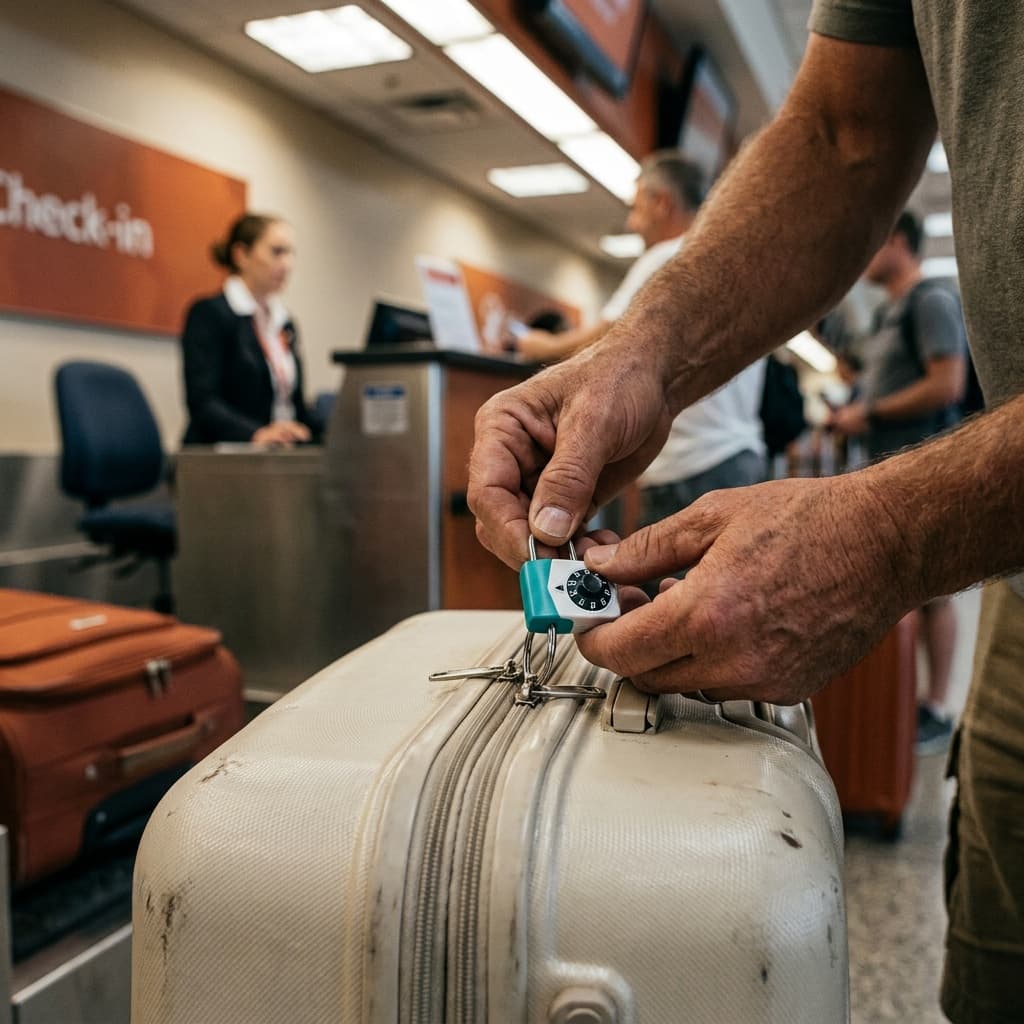
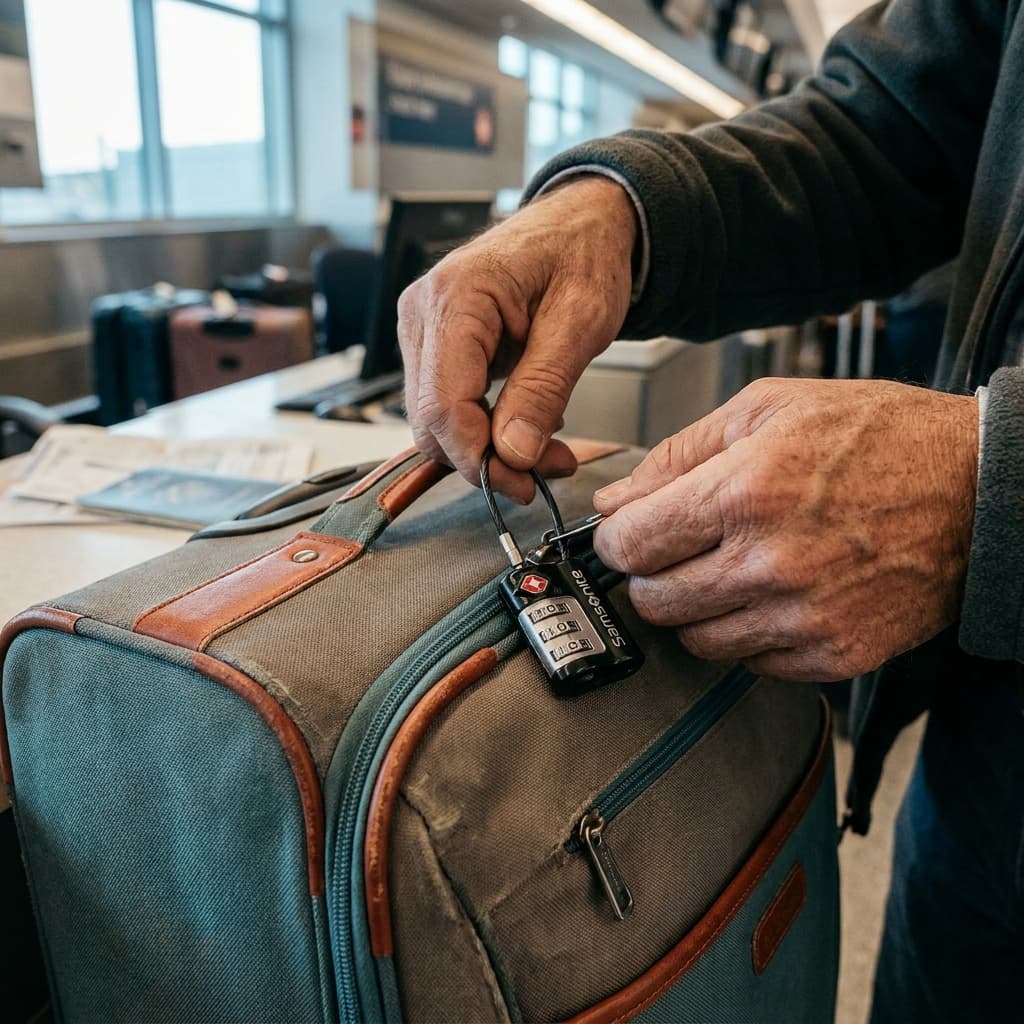
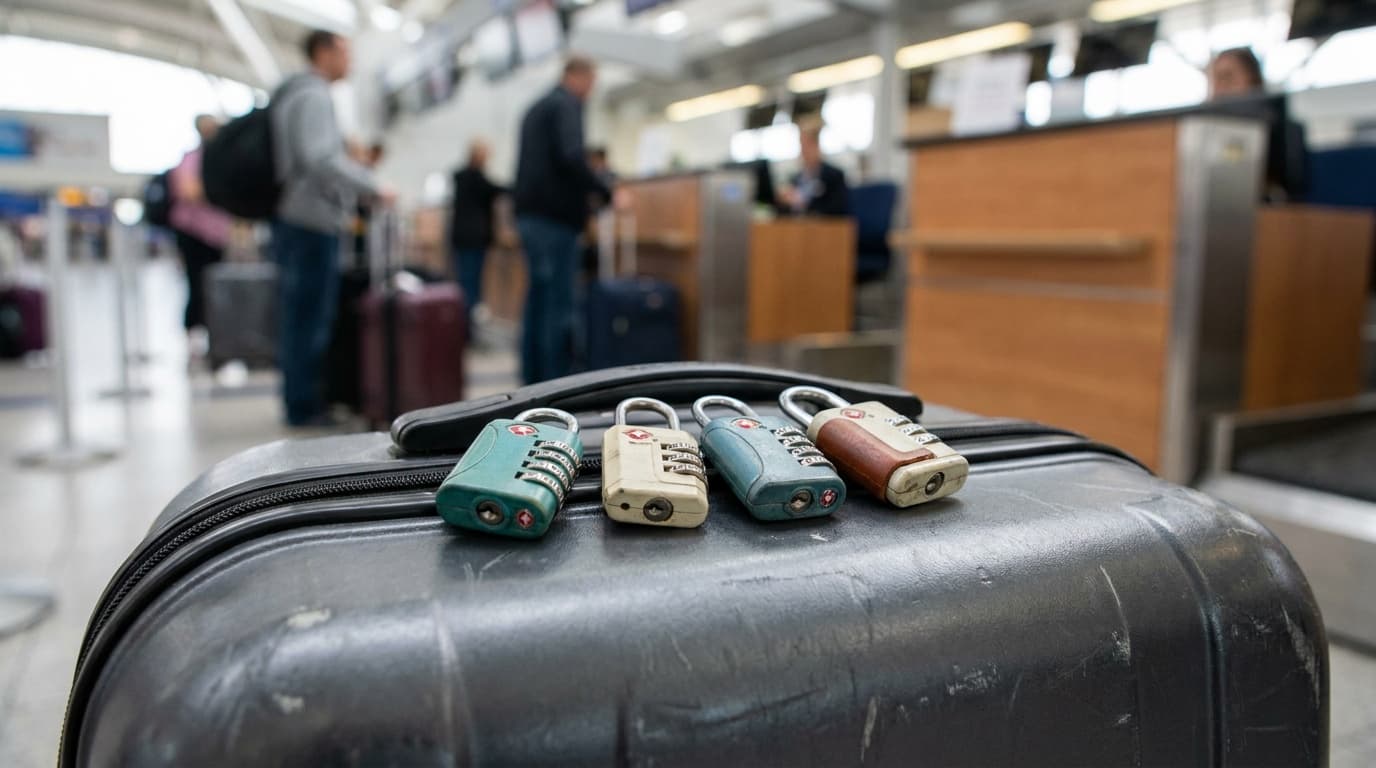
A TSA-approved lock is one of the cheapest travel upgrades you can make, but the wrong one gets cut off, will not reach your zipper pulls, or gives you a false sense of security. Here are the three worth buying, what each one fits, and exactly what a luggage lock does and does not protect.
Our quick picks
The picks
Best overall
BEST OVERALL
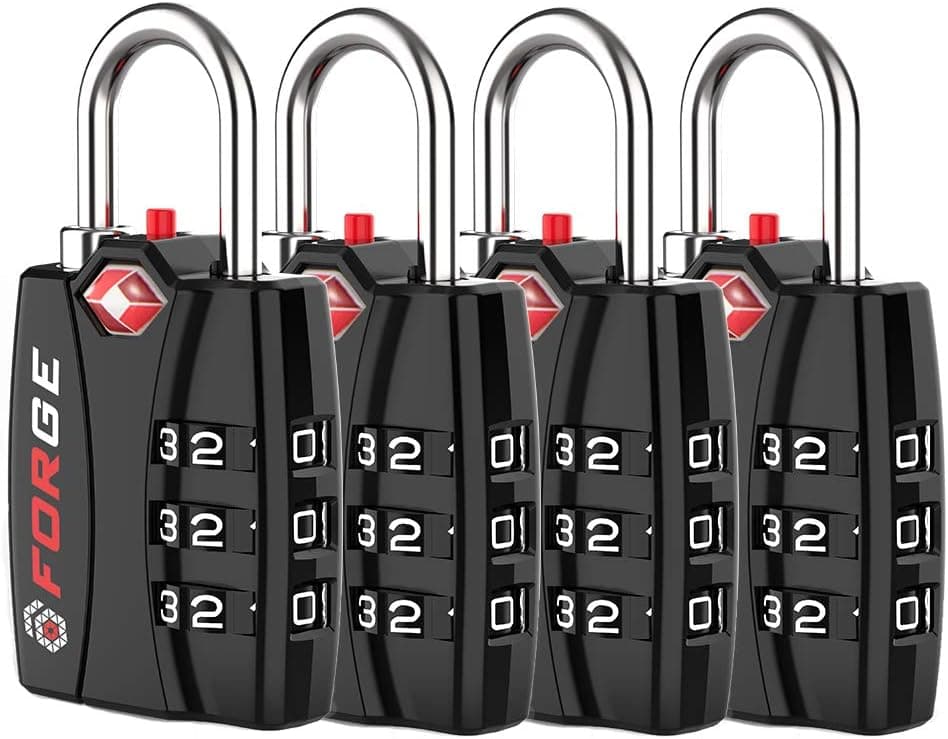
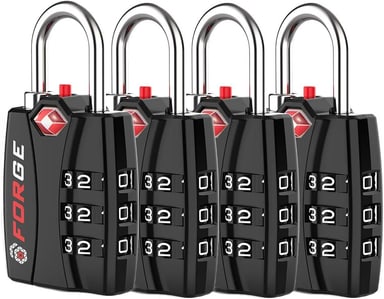
Forge Open Alert TSA Approved Luggage Locks (4 Pack)
Best for: Travelers who check multiple bags and want TSA inspection transparency built in to every lock.
- Open alert indicator lets you verify contents at baggage claim without guessing
- 3-digit dial gives only 1,000 combinations, fewer than 4-digit alternatives
Kit Score 8.8/10 · $23.95 Price checked Oct 23, 6:22 AM CDT · how we score gear
Buy on AmazonProduct details
The Forge Open Alert 4-pack gives you a zinc alloy body, steel shackle, and a red inspection indicator that pops when TSA uses their master key. At roughly $6 per lock with an unconditional lifetime warranty, it consistently earns the recommendation from travel publications including Forbes Vetted.
- Lock type
- Solid shackle padlock
- Combination
- 3-digit resettable (1,000 combos)
- Body material
- Zinc alloy
- Shackle material
- Steel
- Open alert indicator
- Yes, red pop-up shows TSA inspection
- Pack size
- 4 locks
- Lock cylinder
- TSA008 (agent must re-lock to remove key)
- Size per lock
- 1.24" x 2.45"
More strengths
- Solid steel shackle resists cutting better than flexible cable designs
- Four locks per pack covers a full checked-bag setup at a strong per-unit cost
Other tradeoffs
- No cable option, so it does not thread through tight zipper pulls on soft-side bags
The Forge Open Alert set earns the top spot because it solves a problem other locks ignore: knowing whether TSA actually opened your bag. Each lock has a red indicator that pops up after an agent uses their master key. That matters when you land and something is missing or repositioned inside. Forge also builds the lock so the agent has to re-lock it to remove the key, which closes the most common failure of inspected bags: arriving unlocked.
The body is zinc alloy with a steel shackle around a TSA008 cylinder, 1.24 by 2.45 inches per lock. At $23.95 for four on the day of this update, the per-lock cost is about $6, in line with a single Master Lock. Forge does not publish the shackle diameter, so if your zipper pulls have unusually small holes, buy one pack and check before you kit out every bag. The dials are wide enough to read in dim baggage-claim lighting, and owner reviews consistently flag the indicator as the feature they did not know they needed until they used it.
Best budget
BEST BUDGET
Master Lock 4688D Set-Your-Own Combination TSA Luggage Lock
Best for: Budget-conscious travelers who want a flexible, brand-name TSA lock for soft-side suitcases and backpack zippers.
- Flexible braided shackle threads through soft-side zipper pulls more easily than a rigid solid shackle
- No open alert indicator, so a TSA inspection leaves no visible trace
Kit Score 7.7/10 · $6.39 Price checked Oct 23, 6:22 AM CDT · how we score gear
Buy on AmazonProduct details
The Master Lock 4688D brings a flexible braided-steel shackle to a proven metal body at under $10 per lock. The vinyl-coated braid is forgiving on zipper pulls and soft-side luggage while providing more cut resistance than a thin plastic cable, and the limited lifetime warranty backs it up.
- Lock type
- Flexible braided steel shackle (cable-style)
- Combination
- 3-digit resettable (1,000 combos)
- Body material
- Metal, 30 mm (1-3/16 in) wide
- Shackle material
- Vinyl-covered flexible braided steel, 3 mm (1/8 in) diameter
- Shackle length
- 38 mm (1-1/2 in)
- Open alert indicator
- None
More strengths
- Under $10 single-pack pricing makes it the clear budget pick in this comparison
- Limited lifetime warranty from a widely available, well-known brand
Other tradeoffs
- 3-digit dial and flexible shackle offer less physical security than solid shackle or 4-digit alternatives
Cable locks trade shackle rigidity for reach, and that trade makes sense for soft-side suitcases and backpacks where two zipper pulls do not sit neatly together. The Master Lock 4688D uses a vinyl-covered braided steel shackle 3 mm (1/8 inch) in diameter, 38 mm (1-1/2 inch) long and 16 mm (5/8 inch) wide, on a 30 mm (1-3/16 inch) metal body, with a set-your-own 3-digit combination. Master Lock says it is recognized as a TSA-accepted lock in 29 countries.
On Amazon it is among the lowest entry points in this list from a name-brand manufacturer. That matters because cable-lock quality degrades sharply at no-name prices: the cable crimp and the body junction are where cheap versions fail first, and owners of the 4688D report locks still working after a decade of trips.
The compromise is clear: a 3 mm braided cable can be cut faster than a solid shackle. For checked luggage that is acceptable, because the threat is opportunistic pilfering, not a thief with tools and time. If you want a solid shackle, that is the Forge.
Easiest to read
EASIEST TO READ
Samsonite Travel Sentry 3-Dial Combination Cable Lock
Best for: Travelers who prioritize dial readability and cable flexibility across mixed bag types, and want a widely recognized brand name on the lock.
- Oversized, high-contrast dials are the easiest to read in low airport lighting
- Cable design offers less cut resistance than a solid steel shackle
Kit Score 7.2/10 · $14.62 Price checked Oct 23, 6:22 AM CDT · how we score gear
Buy on AmazonProduct details
Samsonite's Travel Sentry cable lock pairs a zinc alloy body with a stainless steel cable and oversized dials, making it the most readable option in this group at a glance. The flexible cable threads through any zipper pull configuration, and Travel Sentry certification means the TSA key system is reliable across major security agencies.
- Lock type
- Cable lock
- Combination
- 3-digit resettable
- Body material
- Zinc alloy
- Cable material
- Stainless steel
- Dial size
- Oversized for easy reading
- Open alert indicator
- None
More strengths
- Flexible stainless steel cable routes through any zipper pull arrangement on any bag style
- Samsonite brand and Travel Sentry certification recognized across global airports
Other tradeoffs
- Owner reports of combination mechanism failing after limited use are more frequent than for the Forge or Master Lock alternatives
The Samsonite Travel Sentry lock is here for one buyer: anyone who finds standard luggage-lock dials too small to read or turn. The three oversized dials are the largest of the group and spaced so a single spin does not drag the neighbor, and the flexible stainless steel cable threads through double zipper pulls that sit apart. The body is zinc alloy, 0.75 by 1.25 by 2.5 inches.
Be clear about what you are paying for. On Amazon it costs about three times the Master Lock and slightly less than a whole Forge 4-pack, and it has no inspection indicator. Owner feedback is also mixed on the combination mechanism holding its code over time. If dial size is not your problem, the other two picks are better value. If it is, this is the lock you will actually use.
Compare the picks
| Product | Kit Score | Price | Best for |
|---|---|---|---|
| Forge Open Alert TSA Approved Luggage Locks (4 Pack) | 8.8 | $23.95 Price checked Oct 23, 6:22 AM CDT | Best for: Travelers who check multiple bags and want TSA inspection transparency built in to every lock. Why it stands out: Open alert indicator lets you verify contents at baggage claim without guessing Tradeoff: 3-digit dial gives only 1,000 combinations, fewer than 4-digit alternatives |
| Master Lock 4688D Set-Your-Own Combination TSA Luggage Lock | 7.7 | $6.39 Price checked Oct 23, 6:22 AM CDT | Best for: Budget-conscious travelers who want a flexible, brand-name TSA lock for soft-side suitcases and backpack zippers. Why it stands out: Flexible braided shackle threads through soft-side zipper pulls more easily than a rigid solid shackle Tradeoff: No open alert indicator, so a TSA inspection leaves no visible trace |
| Samsonite Travel Sentry 3-Dial Combination Cable Lock | 7.2 | $14.62 Price checked Oct 23, 6:22 AM CDT | Best for: Travelers who prioritize dial readability and cable flexibility across mixed bag types, and want a widely recognized brand name on the lock. Why it stands out: Oversized, high-contrast dials are the easiest to read in low airport lighting Tradeoff: Cable design offers less cut resistance than a solid steel shackle |
Forge Open Alert TSA Approved Luggage Locks (4 Pack)
- Best for
- Travelers who check multiple bags and want TSA inspection transparency built in to every lock.
- Why it stands out
- Open alert indicator lets you verify contents at baggage claim without guessing
- Tradeoff
- 3-digit dial gives only 1,000 combinations, fewer than 4-digit alternatives
Master Lock 4688D Set-Your-Own Combination TSA Luggage Lock
- Best for
- Budget-conscious travelers who want a flexible, brand-name TSA lock for soft-side suitcases and backpack zippers.
- Why it stands out
- Flexible braided shackle threads through soft-side zipper pulls more easily than a rigid solid shackle
- Tradeoff
- No open alert indicator, so a TSA inspection leaves no visible trace
Samsonite Travel Sentry 3-Dial Combination Cable Lock
- Best for
- Travelers who prioritize dial readability and cable flexibility across mixed bag types, and want a widely recognized brand name on the lock.
- Why it stands out
- Oversized, high-contrast dials are the easiest to read in low airport lighting
- Tradeoff
- Cable design offers less cut resistance than a solid steel shackle
How we picked
Every lock on this list was evaluated against the Kit Score: shackle or cable gauge and reach, Travel Sentry certification, set-your-own versus factory combination, indicator and re-lock behavior, and aggregate owner feedback from verified purchasers. Specifications come from the manufacturers and the live Amazon listings, checked September 5, 2026. We have not cut, picked, or load-tested these locks; the security section below relies on what TSA and Travel Sentry publish and on documented public research.
Will it fit your bag? Check three things
Most luggage-lock returns are fit problems, not quality problems. Before you order, look at the bag you will actually lock.
Zipper and hasp compatibility
Measure the hole in your zipper pull
Hold a 3 mm drill bit or the tip of a standard pencil against the hole. If it passes, the Master Lock's 3 mm cable will too. Solid-shackle padlocks like the Forge run thicker; Forge does not publish the figure, so test one lock before buying for every bag.
Measure how far apart the pulls sit when closed
Two pulls that meet at the same point suit any lock. Pulls that stop an inch or more apart, common on expandable suitcases and duffels, need a cable lock: the Master Lock cable spans 38 mm (1-1/2 inch) and the Samsonite cable flexes further.
Check for a built-in lock or a hasp
Many hardside suitcases have an integrated Travel Sentry combination lock; adding a padlock does nothing. Bags with a molded hasp need a shackle that clears the hasp thickness, which favors the cable locks.
Count your bags
If you regularly check two or more, the Forge 4-pack at about $6 per lock beats buying singles of anything else and leaves spares for a daypack or a hostel locker.
Set the combination before you fly. Every lock here ships on a factory code (usually 000). Set your own at home, confirm it opens three times, and record the code somewhere other than the lock. Photograph the lock, including its Travel Sentry logo, on the bag before check-in; that photo is your evidence if a lock is cut.
How to choose the right TSA lock
Combination vs keyed: why combination wins for most travelers
Keyed TSA locks need your personal key to open. Losing that key at 11 p.m. before a 6 a.m. flight is a genuinely bad situation. Combination locks remove that failure mode entirely. A 3-dial lock has 1,000 possible codes, which is trivial for a determined thief with time alone and more than enough for the opportunistic-pilfering threat a checked bag actually faces.
Cable vs solid shackle: the real tradeoff
A solid shackle resists cutters better than a braided cable, but for checked luggage the difference is mostly about fit. Cables thread through tight pulls and bridge pulls that sit apart; solid shackles are rigid, simpler, and harder to cut. TSA agents who need access use their master key either way.
For checked luggage, a TSA lock is a signal and a deterrent, not a vault. Buy for fit and certification first, shackle strength second.
What a TSA lock does not protect against
This is the part most lock guides skip. Know the limits before you rely on one.
- TSA can still cut it, and will not pay for it. TSA's own guidance: officers hold master keys for Travel Sentry and Safe Skies locks so those locks "may not have to be cut," but if a bag cannot be opened another way "the locks may have to be cut," and TSA states it is "not liable for damage caused to locked bags that must be opened for security purposes." An opened bag gets a Notice of Baggage Inspection inside.
- The master keys are public. In 2015 a Washington Post photo of the TSA master key set was turned into 3D-printable files and posted publicly; a hobbyist opened a Travel Sentry lock with a plastic print on the first try. The keys have not been changed since. A TSA lock stops casual tampering, not anyone who has printed a key.
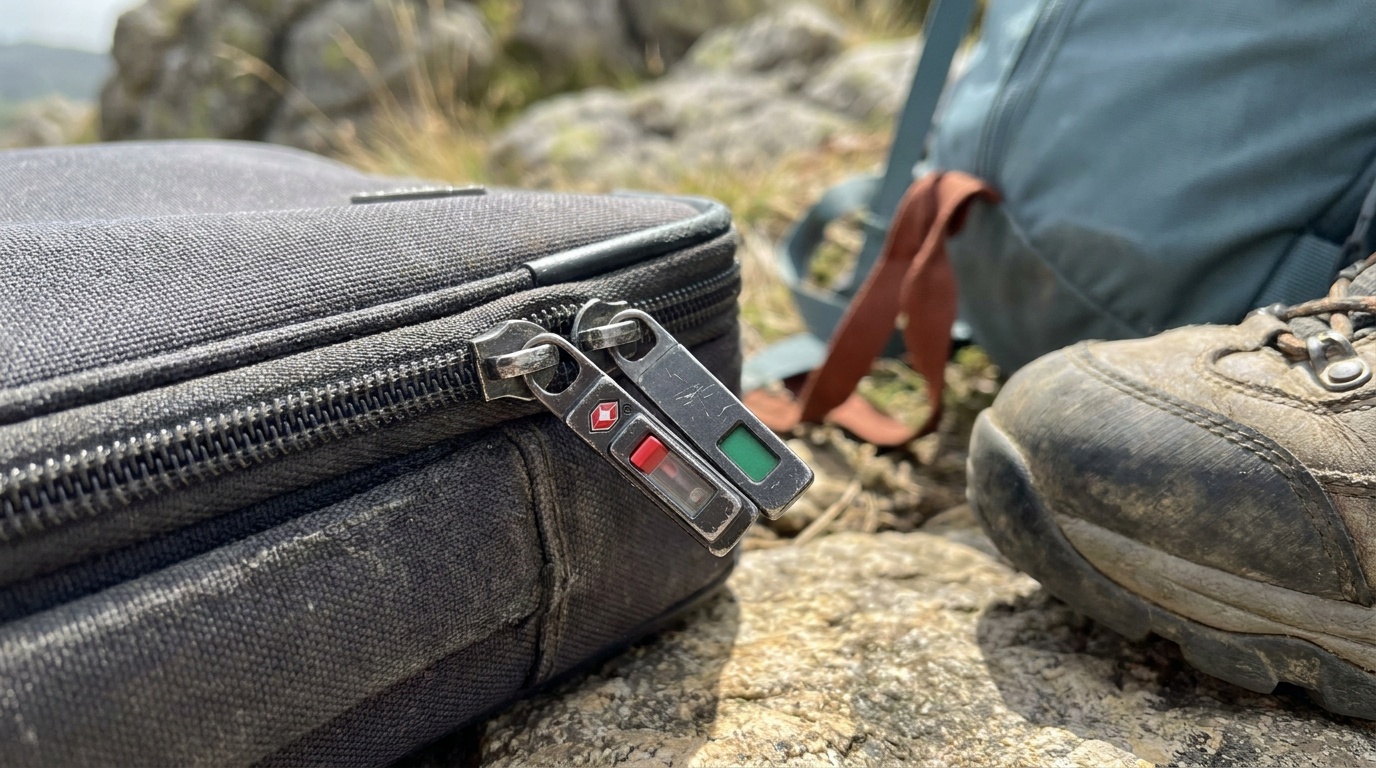
- Zippers are the weak point, not the lock. On a soft-side bag the lock only holds two pulls together. The fabric, the zipper coil, and the seams are all easier to attack than the lock body. That is why we rank fit and inspection transparency above shackle strength.
- Outside the program, expect a cut. Travel Sentry lists 80 countries and about 800 airports in its system, covering the US, Canada, most of Europe, Japan, Australia, New Zealand, China, South Korea, the UAE and others. Elsewhere, security staff without keys may cut the lock. Check the destination before locking a checked bag.
- The indicator is evidence, not prevention. The Forge indicator tells you the lock was opened. It does not tell you by whom, and it does not stop anything.
What "TSA approved" actually means
TSA does not certify locks. Travel Sentry and Safe Skies license lock designs and supply master keys to TSA and partner agencies. A Travel Sentry lock carries a red diamond logo; Safe Skies uses a red torch. Locks without either logo get cut and are not replaced. The Forge, Master Lock and Samsonite here all carry the Travel Sentry mark.
A TSA lock only matters on a bag you check. If you would rather keep your bag with you in the cabin, our guides to the best carry-on luggage, the best travel backpacks and the best underseat luggage cover the options.
Frequently asked questions
Will TSA cut my lock even if it's TSA approved?
Usually not, but it happens: TSA says recognized locks "may not have to be cut," not that they never will be, and it does not accept liability for locks cut during a security inspection. Agents occasionally cut certified locks when the logo is worn or the brand is unfamiliar. If your lock or bag is damaged, file form SF-95 with TSA within two years of the flight, include your photo of the locked bag, and expect up to six months for the investigation.
Can I use a TSA lock on international flights?
Yes, in the 80 countries Travel Sentry lists, which include Canada, the UK and most of Europe, Japan, Australia, New Zealand, China, South Korea, Brazil, the UAE and others. Outside that list, security staff may not hold keys and can cut the lock. Some airports and airlines ask travelers not to lock checked bags for this reason, so check the destination before you fly.
Do TSA locks fit every suitcase zipper?
No. Cable locks with a 3 mm shackle, like the Master Lock 4688D, fit the widest range of zipper pulls and bridge pulls that sit apart. Solid-shackle padlocks are thicker and need pulls that meet closely. Hardside suitcases with a built-in Travel Sentry lock do not need a padlock at all. Measure the pull hole and the gap between pulls before you buy.
Are TSA locks secure?
Against casual tampering, yes. Against a determined thief, no: a 3-dial lock has 1,000 codes, the master keys have been publicly reproducible since 2015, and on a soft bag the zipper is easier to attack than the lock. Treat a TSA lock as a deterrent and an inspection record, keep valuables in your carry-on, and pick the lock by fit and indicator rather than by shackle strength.
Where these numbers come from
| Claim | Source | Checked |
|---|---|---|
| Master Lock 4688D shackle 3 mm x 38 mm x 16 mm, body 30 mm, set-your-own 3 digits, recognized in 29 countries | Master Lock 4688D product page and Amazon listing B000WO84Z2 | 2026-09-05 |
| Forge zinc alloy body, steel shackle, TSA008 cylinder, 1.24 x 2.45 in., agent must re-lock to remove key, $23.95 for four | Amazon listing B01N7ILPEL, read through the Amazon Creators API | 2026-09-05 |
| Samsonite zinc alloy body, stainless cable, oversized dials, 0.75 x 1.25 x 2.5 in., $19.49 | Amazon listing B075D81TBS | 2026-09-05 |
| Master keys, cutting, liability, Notice of Baggage Inspection | TSA Travel Tips: TSA-recognized locks | 2026-09-05 |
| Two-year claim window, form SF-95, up to six months to investigate | TSA claims page and the SF-95 cover package | 2026-09-05 |
| 80 countries, 800 airports, participating country list | Travel Sentry: what countries accept TSA locks | 2026-09-05 |
| 2015 master-key photo and 3D-printed keys | Engadget, September 2015 | 2026-09-05 |
A good lock is a small investment in trip confidence, and every option on this list covers the basics correctly. Browse the full travel gear hub for more research-backed picks, or read more about how we research and rate every product we cover.
Keep going
Complete loadoutCarry-on travel kitA one-week suitcase system with the bag, organization, laundry, toiletries, security, scale, and power.
Our recommendations draw on manufacturer documentation, retailer listings, owner feedback, and comparisons with alternatives.
As an Amazon Associate I earn from qualifying purchases. We may earn a commission from links here, at no extra cost to you. How we research →