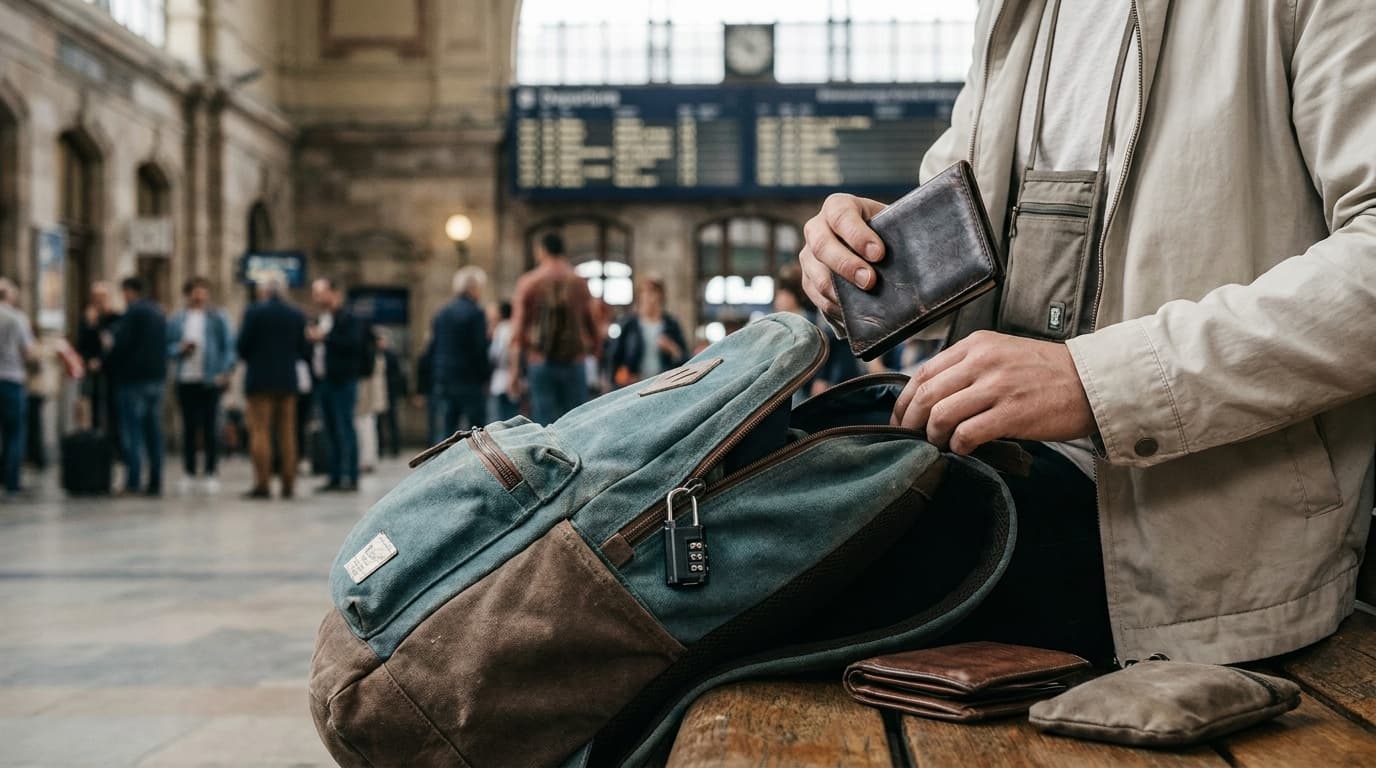
Losing your passport or wallet mid-trip is not just inconvenient, it can strand you. A few simple habits, layered on top of each other, make that scenario genuinely unlikely.
Split your assets before you leave the hotel
The single most effective security habit is also the simplest: never carry everything in one place. Before you head out, divide your resources deliberately.
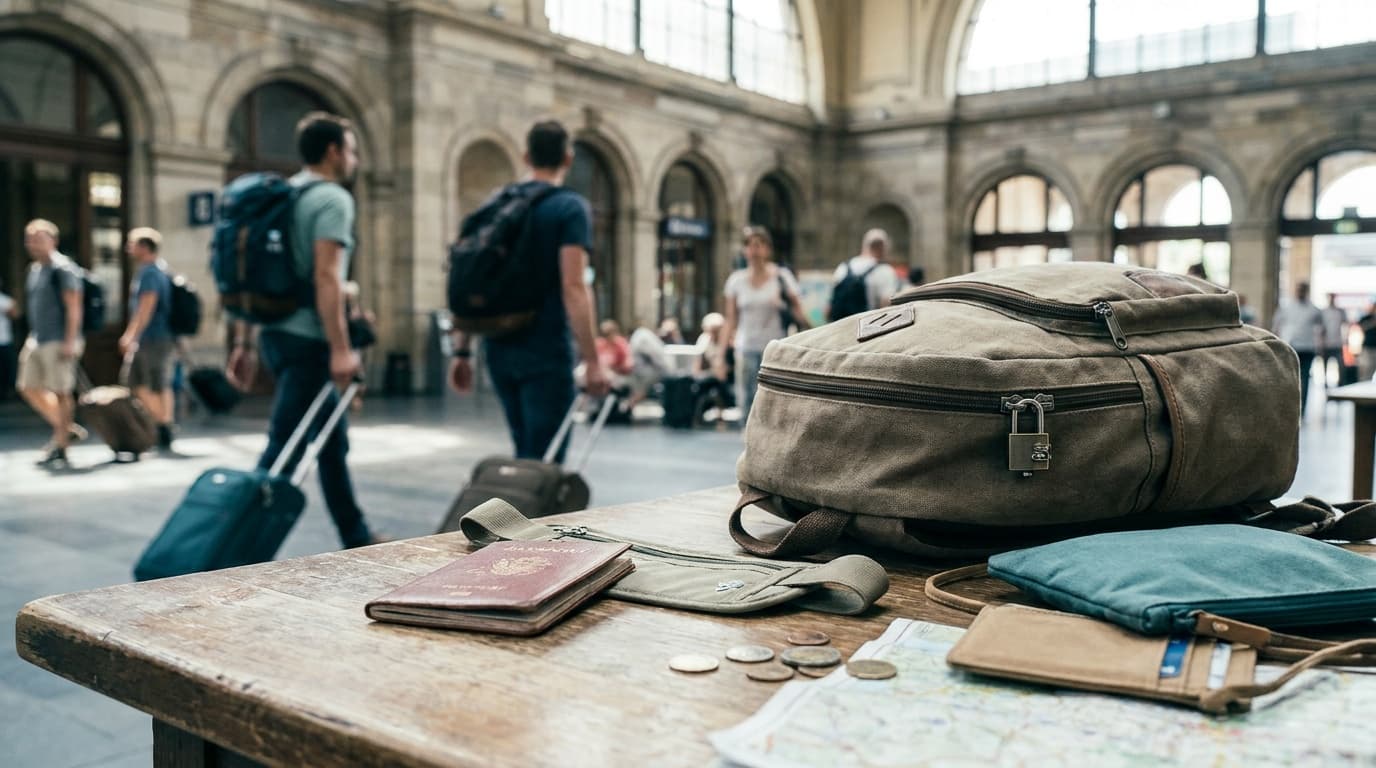
Carry one debit or credit card and spending cash for the day in your front pocket or a small zip pouch. Lock your second card, remaining cash, and your actual passport in the hotel safe. If your accommodation lacks a safe, use the inner zip pocket of a daypack and keep the pack on your front in crowded spaces.
A card left locked in the room can not be skimmed or pickpocketed. If your wallet does get taken, your backup card and the money in the hotel safe mean you are inconvenienced, not stranded.
The case for a neck wallet or money belt
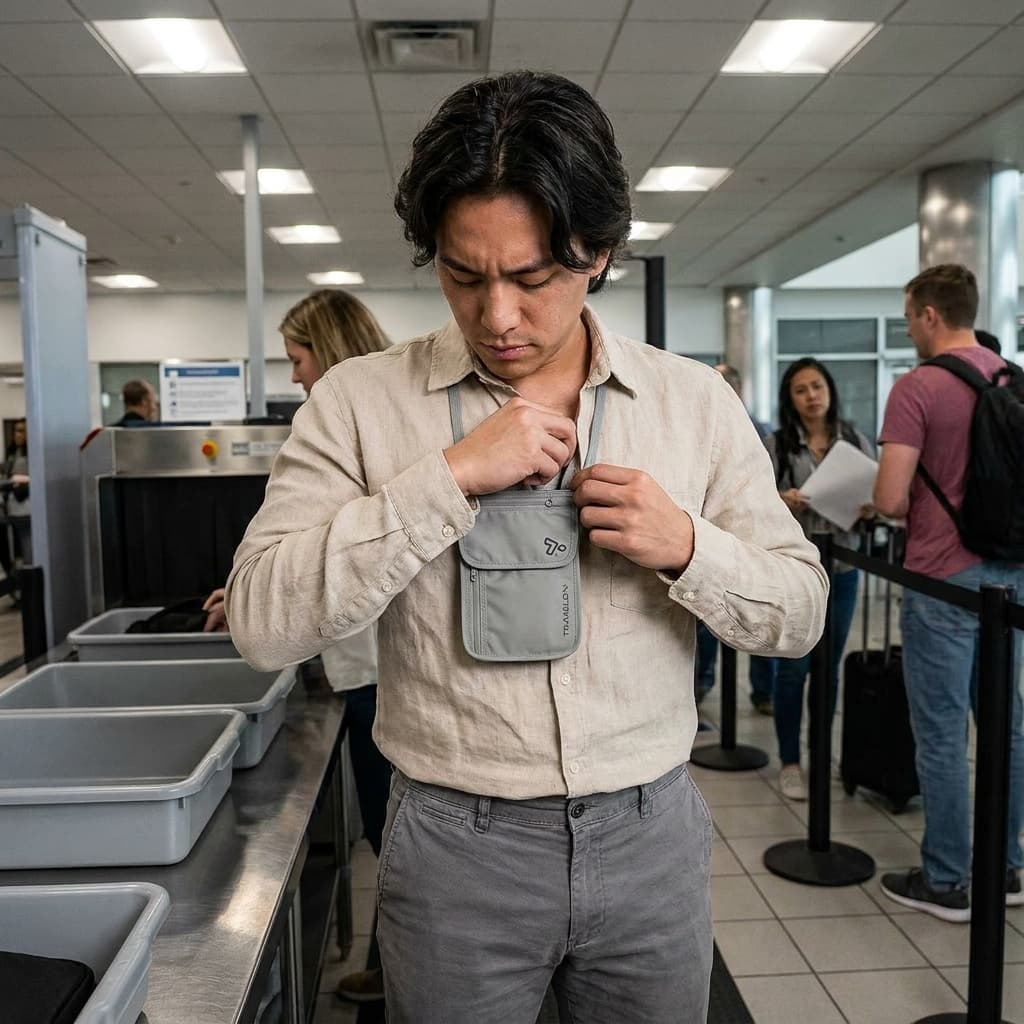
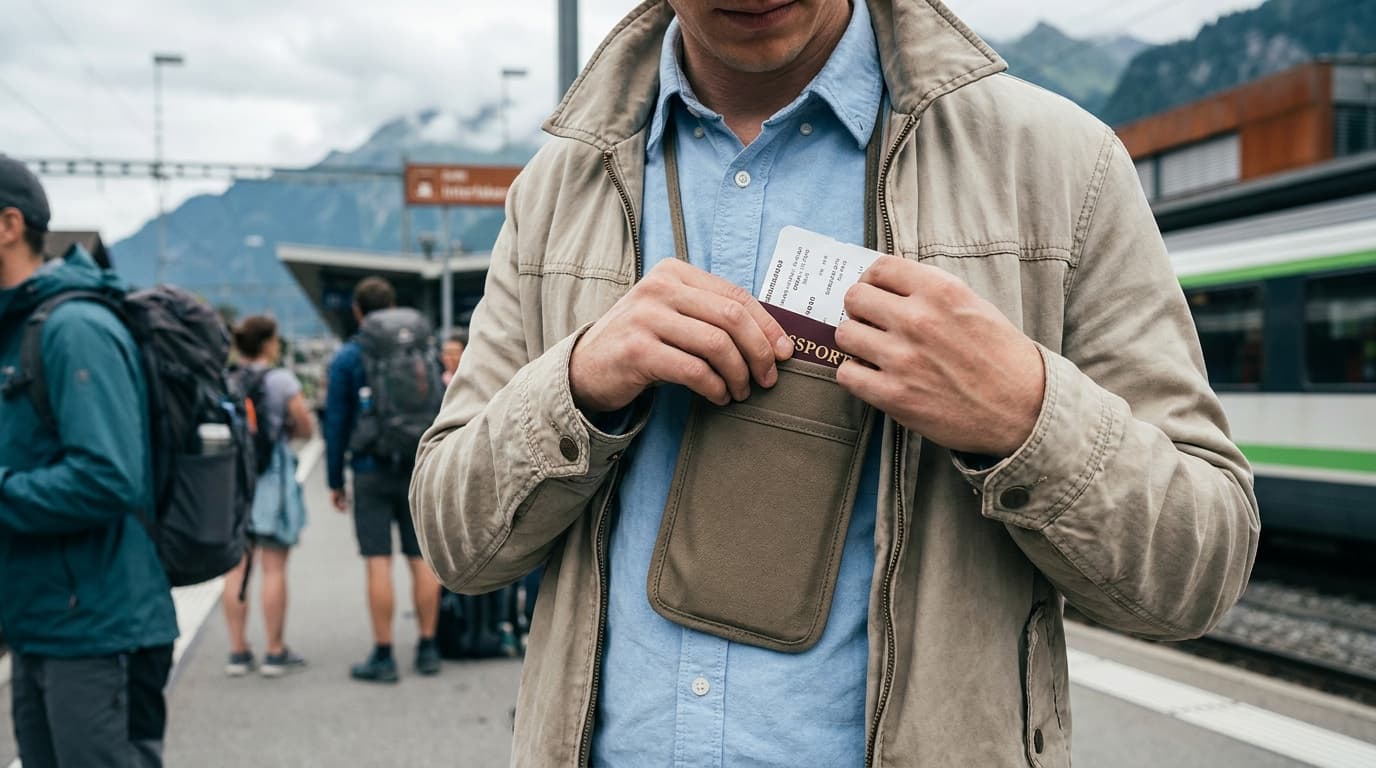
Under-clothing carry puts a physical barrier between a thief and your most critical documents. A neck wallet like the Travelon Undergarment Neck Pouch hangs under your shirt on a cord; a money belt sits flat against your stomach under your waistband. Either works well for:
- Your passport (or a color photocopy when the original is locked up)
- Emergency cash, typically $100–$200 in mixed denominations
- A backup credit or debit card
The trade-off is accessibility. Reaching into your shirt in a cafe is awkward, which is exactly why you should not put your daily spending money there. The neck wallet holds the things you almost never need to access on the street.
The neck wallet's job is to be invisible, not convenient, keep your daily cash elsewhere.
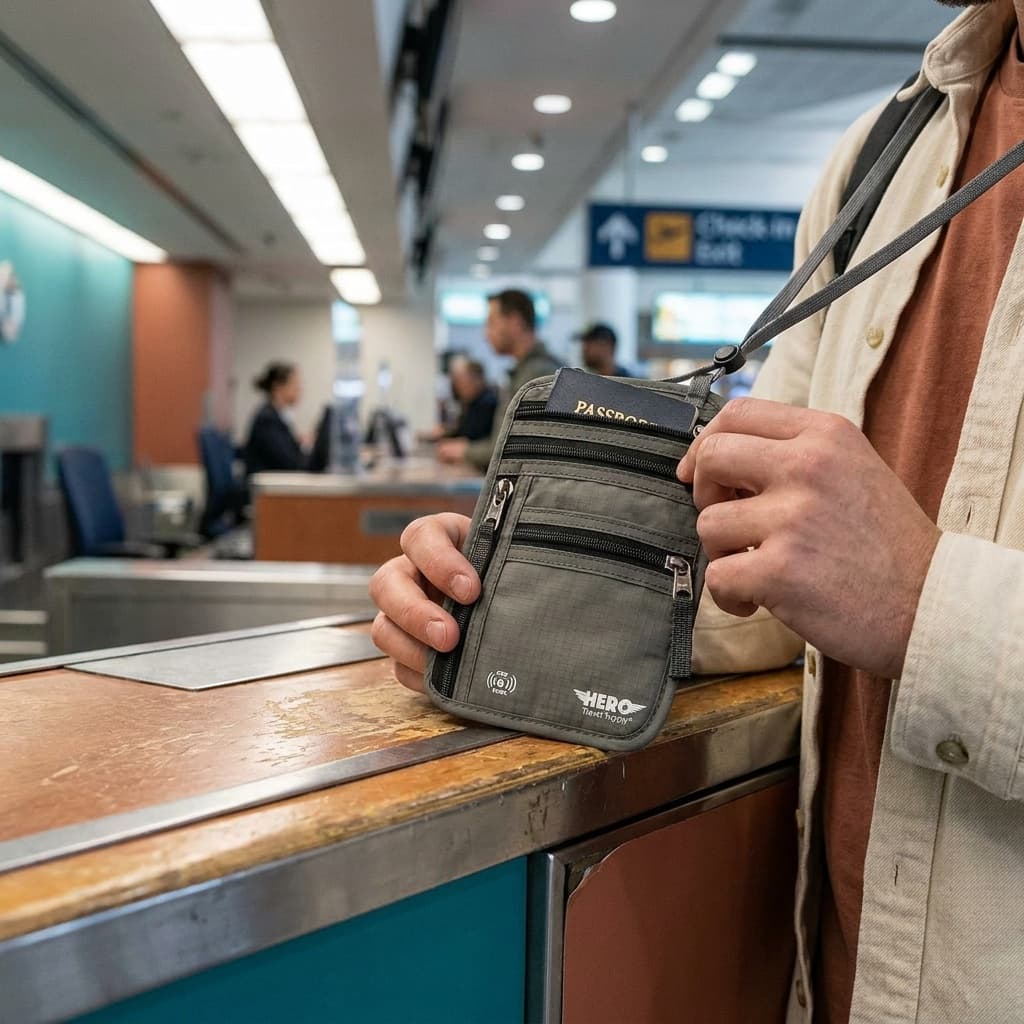
Look for a wallet like the HERO Neck Wallet, made from a material that does not show through light-colored shirts, with a cord long enough to wear comfortably but not so long that it swings visibly when you bend. For specific picks, see our guide to the best neck wallets.
Using a dummy wallet
A dummy wallet is a decoy: an old or cheap wallet with a small amount of expired cards and a little local cash. If you are ever in a situation where handing over a wallet feels like the right call, you hand over the dummy.
This is not paranoia, it is a practical tool used by long-term travelers in high-risk urban environments. Keep $10–$20 in it so it looks credible. Do not put anything in it that requires cancellation.
Hotel safe and digital backup basics
Setting up your document safety net
Hotel safe
Use it for your passport and spare card every single day, not just on high-risk excursions. Most hotel safes accept a four-digit PIN you set yourself.
Photocopy your passport
Keep one paper copy in a separate bag from the original. Give a second copy to someone at home.
Digital backup
Photograph the data page of your passport and email it to yourself, or store it in a password-protected cloud folder. Consulates move faster when you can show them your document number.
Note emergency contacts
Write down the number for your country's nearest embassy and your bank's international collect line. Keep this on paper, not only in your phone.
Card alert setup
Before travel, enable transaction notifications on your cards so you know immediately if one is used without your knowledge.
If your passport is lost or stolen, report it to the local police for a report number, then contact your embassy or consulate. The digital backup does not replace the document but it dramatically speeds up the replacement process.
When your room has no safe, a lock on your bag is the next best deterrent for opportunistic theft, especially in hostels and shared rooms. One of the best TSA luggage locks secures your zippers while still letting airport screeners inspect a checked bag without cutting the lock off.
RFID: real risk or marketing?
RFID-blocking wallets and sleeves are widely marketed to travelers. The honest picture: contactless card skimming at distance is theoretically possible but exceedingly rare in practice. Academic researchers have demonstrated it in controlled settings; documented real-world thefts using the technique are difficult to find.
The actual threat to your cards is overwhelmingly physical: your wallet being taken, your card number being copied at a compromised terminal, or a data breach at a merchant. Basic chip-and-PIN card fraud protections from your bank are your real safety net here.
If an RFID sleeve gives you peace of mind and costs a few dollars, it does no harm. Just do not let it become your primary security strategy, the layered physical habits above matter far more.
Situational awareness as a habit
No gear replaces the habit of reading your environment. A few practical patterns:
- In markets and on transit, move your bag to your front or hold the straps.
- Avoid displaying expensive gear in areas where it stands out.
- When using an ATM, choose one attached to a bank in daylight hours over a standalone machine at night.
- Agree in advance with travel companions on a meeting point and a check-in time if you split up.
The goal is not anxiety, it is a calm, practiced awareness that lets you enjoy a destination rather than scanning it for threats.
Frequently asked questions
Do I need to carry my actual passport every day?
In most countries, no. A color photocopy of the data page and your entry stamp is sufficient for routine police checks in popular tourist destinations. Check the specific entry rules for each country you visit, and always carry the original when crossing borders or checking into accommodation.
What is the best way to store cash when traveling?
Split it into three pools: small spending cash in a front pocket or easy-access pouch, medium float in your main bag's inner pocket, and an emergency reserve (typically $100 or the local equivalent) in your neck wallet or money belt. This way a pickpocket gets at most one layer, never all three.
Is a money belt or a neck wallet better?
Both work well; the right choice depends on your clothing. Money belts sit under your waistband and work better with pants and skirts that have a waistband gap. Neck wallets work with almost any outfit but can shift around more. Some travelers carry both: a money belt for passport and large bills, a neck wallet for a backup card.
For specific picks, see our guide to the best neck wallets. Browse all travel guides or read how we research and rate gear.
Recommended gear
Our current top picks from the Best neck wallets for travel: 4 picks for 1 or 2 passports guide, if you are ready to buy.
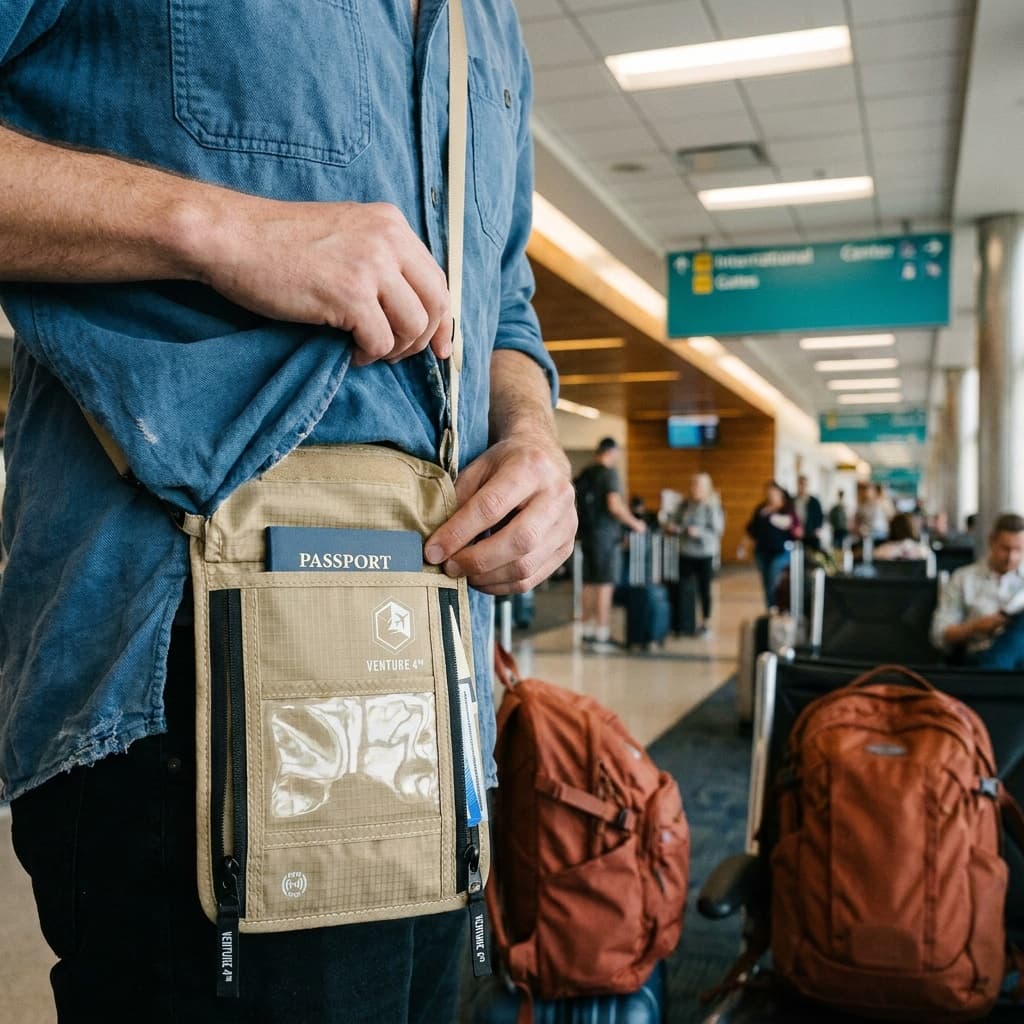
Best for: Travelers who want a well-organized pouch for two passports, a phone, and cards that stays slim under a shirt.
- Six distinct compartments keep two passports, a phone, cards, and folded cash sorted without much bulk
- Beige and lighter color options can show dirt faster on extended trips
- Dimensions
- 6.25" W x 8" H
- Material
- 210D ripstop nylon, water-resistant
- RFID blocking
- Multi-layer, blocks 13.56 MHz (passports and credit cards)
- Strap
- Adjustable, about 20" to 48"
- Compartments
- 6: two zippered pockets, one velcro stash, two open pouches, one clear ID window
- Capacity
- Fits 2 passports, smartphones up to iPhone Pro Max, 4-6 cards, 20-30 bills
About this pick
The VENTURE 4TH neck pouch organizes two passports, a phone, cards, and folded cash across six compartments while keeping a slim profile under a shirt. Double-stitched 210D ripstop nylon and a lifetime replacement guarantee make it a practical choice for long international trips, with owner feedback praising its concealment and comfort.
More specifications
- Warranty
- Lifetime replacement guarantee
Strengths
- Six distinct compartments keep two passports, a phone, cards, and folded cash sorted without much bulk
- Slim under-shirt profile with consistent owner feedback on concealment and comfort
- Lifetime replacement guarantee backed by a responsive brand
Weaknesses
- Beige and lighter color options can show dirt faster on extended trips
- No belt-loop attachment; neck-only carry
Kit Score breakdown
HERO TRAVEL SUPPLY
HERO Neck Wallet
Best Value
Kit Score 8.8/10
$24.95 Price checked Oct 23, 4:16 PM CDT
Best for: Travelers who prioritize durable hardware and quick access to a passport, phone, cards, and cash in a slim under-shirt pouch.
- YKK zippers and individually tested construction push durability noticeably above budget-tier options
- Strap can run short for plus-size wearers who want to use the crossbody configuration
- Size
- About 5.5" W x 8" H (Amazon item dimensions)
- Phone fit
- iPhone up to 17 Pro Max without a bulky case, per listing
- Material
- Premium ripstop nylon with heavy-duty YKK zippers
- RFID blocking
- Multi-layer lining; blocks cards, passports, and personal data
- Compartments
- Multiple zippered and open pockets for passport, phone, cards, cash, tickets
- Strap
- Adjustable neck strap; can be worn as crossbody
About this pick
The HERO Neck Wallet combines YKK hardware and individually inspected build quality with a pocket layout for a passport, phone, cards, cash, and tickets. Its thin profile sits under a shirt, while the adjustable strap supports neck or crossbody carry for quick airport access.
More specifications
- Build
- Individually tested before shipping; reinforced seams
- Warranty
- Lifetime replacement guarantee
Strengths
- YKK zippers and individually tested construction push durability noticeably above budget-tier options
- Pocket layout keeps a passport, phone, cards, cash, and tickets accessible
- Slim enough to sit discreetly under a T-shirt or dress shirt according to consistent owner feedback
Weaknesses
- Strap can run short for plus-size wearers who want to use the crossbody configuration
- Slightly higher price than the VENTURE 4TH for a comparable feature set
Kit Score breakdown
TRAVELON
Travelon Undergarment Neck Pouch Travel Wallet
Best Budget
Kit Score 8.2/10
$17.99 Price checked Oct 23, 4:16 PM CDT
Best for: Budget-conscious travelers who want a breathable under-clothing pouch with room for a passport, cards, cash, and travel papers on an occasional trip.
- Breathable air-mesh back panel is comfortable during warm-weather travel
- Polyester construction is less durable over multi-year heavy use than ripstop nylon competitors
- Dimensions
- 5.5" W x 8" H x 0.125" D
- Material
- Polyester with breathable air-mesh back panel
- RFID blocking
- Blocks RFID-enabled credit cards, debit cards, and passports
- Compartments
- 5: two zippered main pockets, three drop pockets for tickets and boarding passes
- Strap
- Adjustable up to 52 inches; wear under or over clothing
- Weight
- 0.38 lbs
About this pick
Travelon is a specialist travel brand, and this undergarment pouch delivers a breathable air-mesh back panel with five pockets for a passport, cards, cash, tickets, and boarding passes. Its adjustable strap extends to 52 inches for under-clothing carry.
Strengths
- Breathable air-mesh back panel is comfortable during warm-weather travel
- Five pockets organize a passport, cards, cash, tickets, and boarding passes
- Strap extends to 52 inches, accommodating a wider range of body sizes
Weaknesses
- Polyester construction is less durable over multi-year heavy use than ripstop nylon competitors
Kit Score breakdown
See all picks in Best neck wallets for travel: 4 picks for 1 or 2 passports
Keep going
Researched, not hands-on tested
Updated Jun 5, 2026Our recommendations draw on manufacturer documentation, retailer listings, owner feedback, and comparisons with alternatives.
As an Amazon Associate I earn from qualifying purchases. We may earn a commission from links here, at no extra cost to you. How we research →