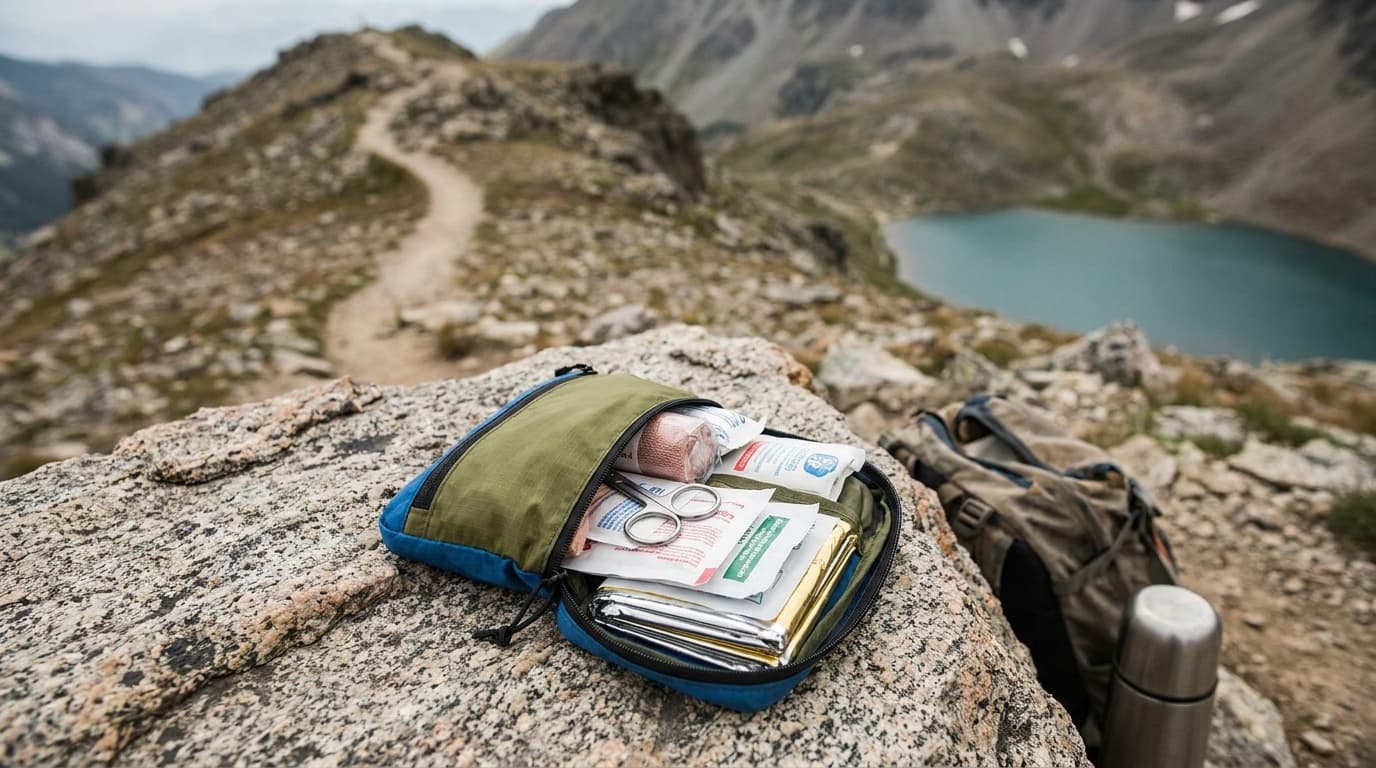
A first aid kit you never need is still one of the best pieces of gear you can carry. The right kit matches your trip length, group size, and pack weight budget before you're three miles from the trailhead and need it.
Our quick picks
How we picked
Every kit below was evaluated against the Kit Score: verified item counts and weights from manufacturer specs, owner reviews flagged for real-use feedback, and editorial sources covering wilderness first aid practice. We did not simply rank by price or item count.
Best overall: Adventure Medical Kits Ultralight/Watertight .7
BEST OVERALL
Adventure Medical Kits Ultralight/Watertight Medical Kit .7
Best for: Solo hikers and pairs on day hikes through 4-day trips who want waterproof protection without adding noticeable weight.
- Genuinely waterproof inner bag keeps contents dry in rain and wet crossings
- No irrigation syringe or CPR mask, so owners who want full trauma response should supplement or size up
Kit Score 7.8/10 · Check current price · how we score gear
Buy at Adventure Medical KitsProduct details
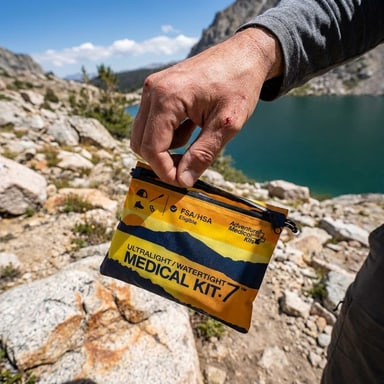
The Ultralight/Watertight .7 is AMK's kit for one or two people on trips of up to four days. At 5.8 oz it disappears into a pack side pocket, and the waterproof DryFlex inner bag keeps bandages and medications dry through stream crossings and downpours.
- Weight
- 5.8 oz (AMK)
- Capacity
- 1 to 2 people, up to 4 days
- Case
- DryFlex waterproof inner bag, water-resistant outer shell
- Medications included
- Yes (aspirin, ibuprofen, acetaminophen, antihistamine)
- Blister care
- Pre-cut moleskin
- Extras
- Duct tape, elastic bandage, tick and splinter forceps
More strengths
- Includes aspirin, ibuprofen, acetaminophen, and diphenhydramine for pain, fever, and allergy
- Compact enough for a pack side pocket while still covering blisters, wounds, and basic trauma
Other tradeoffs
- Quantities are sized for solo to two-person use and run low on longer group trips
The AMK Ultralight/Watertight .7 earns best overall by solving the two things hikers actually argue about: weight and wet. At 7.5 oz with a roll-top DryFlex bag that passes IPX7 waterproof testing, it disappears in a hip belt pocket and survives a stream crossing. The contents cover the most common trail injuries (blisters, lacerations, sprains, basic wound irrigation) sized for one to two people on trips up to three days.
What you do not get: prescription medications, a WFA reference booklet, or extra capacity for a group of four. For those, look at the Mountain Series below. But for solo hikers and pairs who want a proven, compact kit without thinking too hard about it, the .7 is the default answer.
Price: $30 – $45
Editor's choice: Adventure Medical Kits Mountain Series Backpacker
EDITOR'S CHOICE
Adventure Medical Kits Mountain Series Backpacker Medical Kit
Best for: Two-person or small-group backpackers on trips of 2 to 4 days who want a well-organized kit with a wilderness first aid reference and medications included.
- 160-page wilderness first aid guide gives non-medics a real reference in the field
- Case is only moderately water-resistant; wrap in a dry bag on wet routes
Kit Score 8.3/10 · $57.49 Price checked Oct 24, 3:33 PM CDT · how we score gear
Buy on AmazonProduct details
The Mountain Series Backpacker is a full-coverage kit for multi-day trips where the nearest trailhead is hours away. Ninety-six pieces cover everything from blisters and wound irrigation to sprains and medications, and the included 160-page wilderness first aid guide by Eric Weiss MD adds genuine reference value.
- Weight
- 15.2 oz (10.9 oz without guide book)
- Capacity
- 2 people, up to 4 days
- Item count
- 96 pieces
- Case
- Fold-open organizer with labeled compartments; moderate weather resistance
- Medications included
- Yes (acetaminophen, ibuprofen, aspirin, antihistamine, loperamide)
- Wilderness guide
- 160-page Wilderness First Aid guide by Eric Weiss, MD
More strengths
- Labeled, color-coded compartments let you find items quickly under stress
- 96 pieces cover blister care, wound irrigation, medications, and some trauma supplies in one kit
Other tradeoffs
- Weighs over a pound with the guide book, which some solo ultralight packers will find too heavy
The Mountain Series Backpacker is the step-up kit for two-person or small-group trips running two to four days. It adds meaningful depth over the .7: more blister and wound-care supplies scaled for a second person, over-the-counter medications (ibuprofen, antihistamine, antacid), and AMK's illustrated wilderness first aid reference card. The case uses a clamshell layout with a removable internal organizer so you can reach items without dumping the kit on a rock.
Weight runs heavier than the .7 at roughly 10 oz for the case, but that tradeoff is reasonable when you're covering multiple people. The medications alone remove the "I meant to add ibuprofen" moment that plagues DIY kits.
Price: $40 – $55
Best value: Surviveware 98-piece kit
BEST VALUE
Surviveware 98 Pcs Comprehensive Premium Survival First Aid Kit
Best for: Hikers who want a well-stocked, well-organized base kit they can attach to any pack and customize with their own medications, covering day hikes through weekend backpacking.
- Labeled compartments sorted by injury category make it fast to locate items when it matters
- No medications included from the factory; owners need to add their own aspirin, ibuprofen, and antihistamine
Kit Score 8.7/10 · Check current price · how we score gear
Buy at eBayProduct details
Surviveware's 98-piece kit delivers serious coverage for the price: a rugged 600D polyester case, labeled compartments sorted by injury type, and a full spread of wound care and trauma supplies. No medications are included from the factory, which is a clear trade-off, but the MOLLE attachment and HSA/FSA eligibility make it a strong base kit to build on for day hikes through weekend trips.
- Weight
- 16 oz
- Dimensions
- 6 x 4 x 8 in
- Piece count
- 98 pieces
- Case
- 600D polyester with water-resistant coating; MOLLE-compatible
- Organization
- Labeled compartments, sorted by injury type
- Medications included
- No (leaves space to add your own)
More strengths
- 98 pieces at this price point deliver strong coverage for wound care and basic trauma response
- MOLLE-compatible; attaches to pack exterior or belt for quick access
Other tradeoffs
- Quantities per item are limited, so restocking after a multi-day trip is expected
The Surviveware 98-piece kit leads on item count at this price point and ships in a ripstop nylon semi-rigid case with a MOLLE-compatible strap so it attaches directly to a pack. The interior uses labeled mesh pockets by category (wound care, blister, medication) which matters when your hands are cold and you need the right thing fast.
The core gap shared by most value kits applies here too: no prescription or OTC medications are included (FDA regulations). Plan to add ibuprofen, antihistamine, and any personal prescriptions before you go. With that addition, this kit covers day hikes through weekend backpacking for one to two hikers at a price that makes restocking genuinely painless.
Price: $32 – $42
Best premium compact: My Medic Sidekick
BEST PREMIUM COMPACT
My Medic Sidekick Camping Hiking and Backpacking First Aid Kit
Best for: Hikers who want a USA-made, MOLLE-ready compact kit with a lifetime guarantee and are willing to pay a premium for build quality over item count.
- Durable Hypalon case with MOLLE panel attaches cleanly to any pack or belt
- At around $79 it sits well above budget-kit territory; the value story depends on the Hypalon case quality and lifetime support
Kit Score 7.6/10 · $74.95 Price checked Oct 24, 3:33 PM CDT · how we score gear
Buy on AmazonProduct details
The My Medic Sidekick is the current in-production hiking kit from My Medic, built for day-hikers and backpackers who want a compact, MOLLE-ready kit with quality construction. Seventy items cover wound care, blister treatment, burn aids, and hydration support, all packed in a durable Hypalon case. HSA and FSA eligible.
- Weight
- 1 lb
- Dimensions
- 5.5 x 7.5 in
- Item count
- 70 items
- Case
- Hypalon with MOLLE panel; water-resistant
- Hiker extras
- Hydration tabs, blister pads
- Made in
- USA (Salt Lake City)
More strengths
- Hydration tabs and blister pads are built in, not afterthoughts
- HSA/FSA eligible and backed by My Medic's lifetime guarantee
Other tradeoffs
- Only 73 verified reviews as of verification, so owner sentiment data is thinner than competitors in this roundup
- No medications included; owners need to add their own pain relief and antihistamine
The My Medic Sidekick is the outlier in this group: USA-assembled, backed by a lifetime guarantee, and built around a semi-rigid MOLLE-ready case that attaches to chest harnesses, pack straps, or belt loops. My Medic publishes the exact contents list and lets you order individual replacement items, which matters for a kit you plan to carry for years rather than replace wholesale.
At $75 to $85 it costs roughly twice the AMK .7 for a similar item count. You are paying for build quality, restockability, and the guarantee rather than more bandages. If any of those three matter to you, the premium is defensible. If you just need solid coverage at a lower price, the AMK .7 is still the rational pick.
Price: $75 – $85
How they compare
| Product | Kit Score | Price | Best for |
|---|---|---|---|
| Adventure Medical Kits Ultralight/Watertight Medical Kit .7 | 7.8 | Check current price | Best for: Solo hikers and pairs on day hikes through 4-day trips who want waterproof protection without adding noticeable weight. Why it stands out: Genuinely waterproof inner bag keeps contents dry in rain and wet crossings Tradeoff: No irrigation syringe or CPR mask, so owners who want full trauma response should supplement or size up |
| Adventure Medical Kits Mountain Series Backpacker Medical Kit | 8.3 | $57.49 Price checked Oct 24, 3:33 PM CDT | Best for: Two-person or small-group backpackers on trips of 2 to 4 days who want a well-organized kit with a wilderness first aid reference and medications included. Why it stands out: 160-page wilderness first aid guide gives non-medics a real reference in the field Tradeoff: Case is only moderately water-resistant; wrap in a dry bag on wet routes |
| Surviveware 98 Pcs Comprehensive Premium Survival First Aid Kit | 8.7 | Check current price | Best for: Hikers who want a well-stocked, well-organized base kit they can attach to any pack and customize with their own medications, covering day hikes through weekend backpacking. Why it stands out: Labeled compartments sorted by injury category make it fast to locate items when it matters Tradeoff: No medications included from the factory; owners need to add their own aspirin, ibuprofen, and antihistamine |
| My Medic Sidekick Camping Hiking and Backpacking First Aid Kit | 7.6 | $74.95 Price checked Oct 24, 3:33 PM CDT | Best for: Hikers who want a USA-made, MOLLE-ready compact kit with a lifetime guarantee and are willing to pay a premium for build quality over item count. Why it stands out: Durable Hypalon case with MOLLE panel attaches cleanly to any pack or belt Tradeoff: At around $79 it sits well above budget-kit territory; the value story depends on the Hypalon case quality and lifetime support |
Adventure Medical Kits Ultralight/Watertight Medical Kit .7
- Best for
- Solo hikers and pairs on day hikes through 4-day trips who want waterproof protection without adding noticeable weight.
- Why it stands out
- Genuinely waterproof inner bag keeps contents dry in rain and wet crossings
- Tradeoff
- No irrigation syringe or CPR mask, so owners who want full trauma response should supplement or size up
Adventure Medical Kits Mountain Series Backpacker Medical Kit
- Best for
- Two-person or small-group backpackers on trips of 2 to 4 days who want a well-organized kit with a wilderness first aid reference and medications included.
- Why it stands out
- 160-page wilderness first aid guide gives non-medics a real reference in the field
- Tradeoff
- Case is only moderately water-resistant; wrap in a dry bag on wet routes
Surviveware 98 Pcs Comprehensive Premium Survival First Aid Kit
- Best for
- Hikers who want a well-stocked, well-organized base kit they can attach to any pack and customize with their own medications, covering day hikes through weekend backpacking.
- Why it stands out
- Labeled compartments sorted by injury category make it fast to locate items when it matters
- Tradeoff
- No medications included from the factory; owners need to add their own aspirin, ibuprofen, and antihistamine
My Medic Sidekick Camping Hiking and Backpacking First Aid Kit
- Best for
- Hikers who want a USA-made, MOLLE-ready compact kit with a lifetime guarantee and are willing to pay a premium for build quality over item count.
- Why it stands out
- Durable Hypalon case with MOLLE panel attaches cleanly to any pack or belt
- Tradeoff
- At around $79 it sits well above budget-kit territory; the value story depends on the Hypalon case quality and lifetime support
How to choose the right kit for your trip
Matching a kit to your hike
Trip length first
Day hike (under 8 hours) means a 0.5 kit with blister and wound basics. Two to four days means a larger kit with more wound-care depth and OTC medications.
Count heads, not just weight
A kit rated for one person runs short on supplies by day two with two people. Check the manufacturer's rated person-count, not just the item total.
Waterproof is not "water-resistant"
Roll-top dry bags and IPX-rated cases survive submersion. Ziplock-style pouches and nylon zipper bags do not. If your route crosses streams or operates in rain, verify the rating.
Add medications before you leave
No retail first aid kit ships with ibuprofen or antihistamine due to FDA regulations. Add 400 mg ibuprofen (pain, swelling, altitude headache), diphenhydramine (allergic reaction), and any personal prescriptions before every trip.
Restock after every use
Replace anything you opened or used within 48 hours of returning. A kit missing its only SAM splint or last blister pad is not a kit.
The best first aid kit for hiking is the one sized for your actual trip, not the smallest one that fits in your pocket.
Frequently asked questions
What should a hiking first aid kit always include?
At minimum: nitrile gloves, gauze pads (2x2 and 4x4), rolled gauze, medical tape, irrigation syringe or SAM splint-compatible wound wash, blister treatment (moleskin or hydrocolloid), a SAM splint, tweezers, and trauma scissors. Medications (ibuprofen, antihistamine, antacid) are excluded from retail kits by law but are essential additions before any trip.
How heavy should a backpacking first aid kit be?
Solo day hikers can keep a kit under 4 oz with a minimal setup. Solo backpackers on multi-day trips are well-served by kits in the 7 to 10 oz range. Add weight proportionally for each additional person. A kit over 14 oz for a two-person trip usually means you have more supplies than your skill level lets you use.
How often should I replace my hiking first aid kit?
Inspect the kit before every trip and replace any used or expired items immediately after returning. Most supplies (bandages, gauze, tape) have shelf lives of 3 to 5 years from manufacture. Medications expire faster: check the packaging annually. A full kit replacement every 3 to 4 years is a reasonable baseline if you hike regularly.
A well-chosen first aid kit is invisible when nothing goes wrong and essential when something does. Browse more gear tested for the trail in our hike hub, and see exactly how we research and rate every pick on this site.
Keep going
Complete loadoutDay hike kitSeven slots for a full trail day, from the pack and water system to light and weather protection.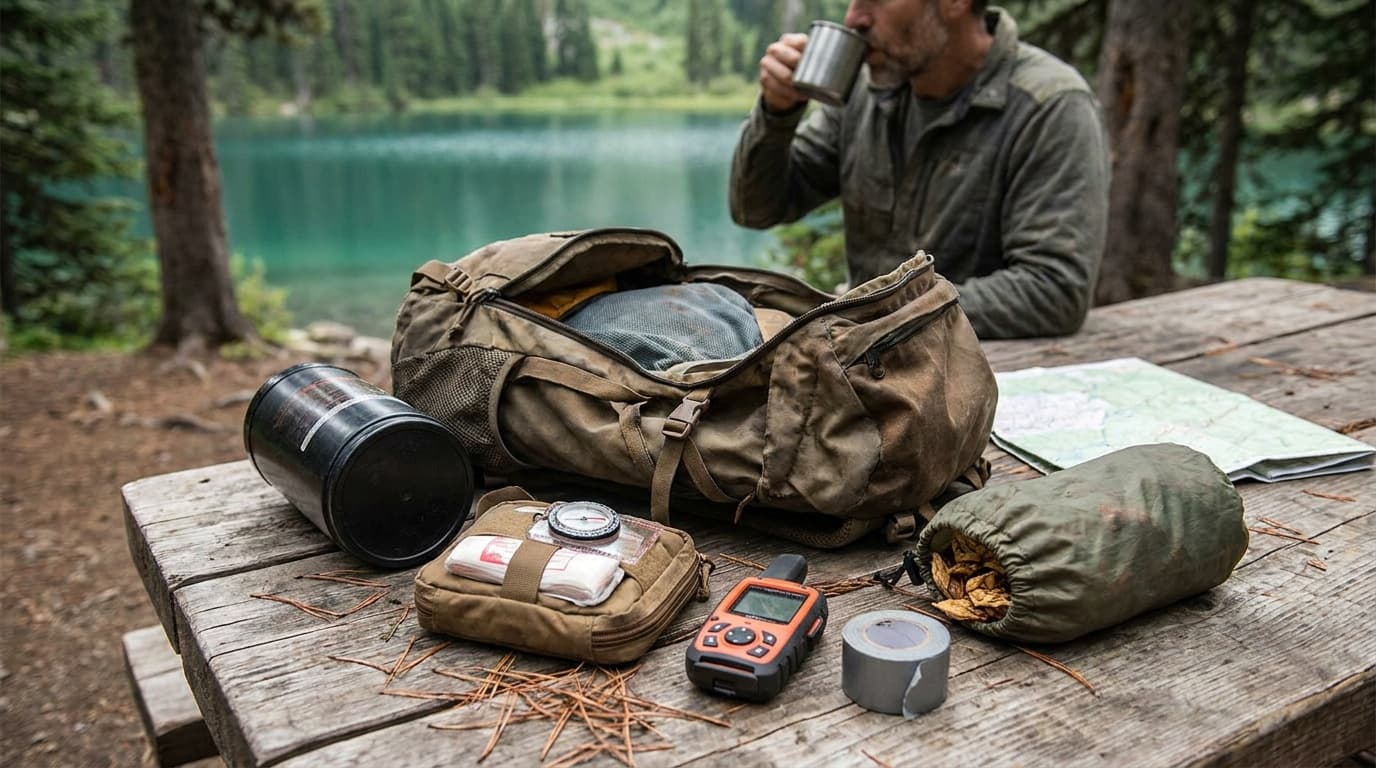
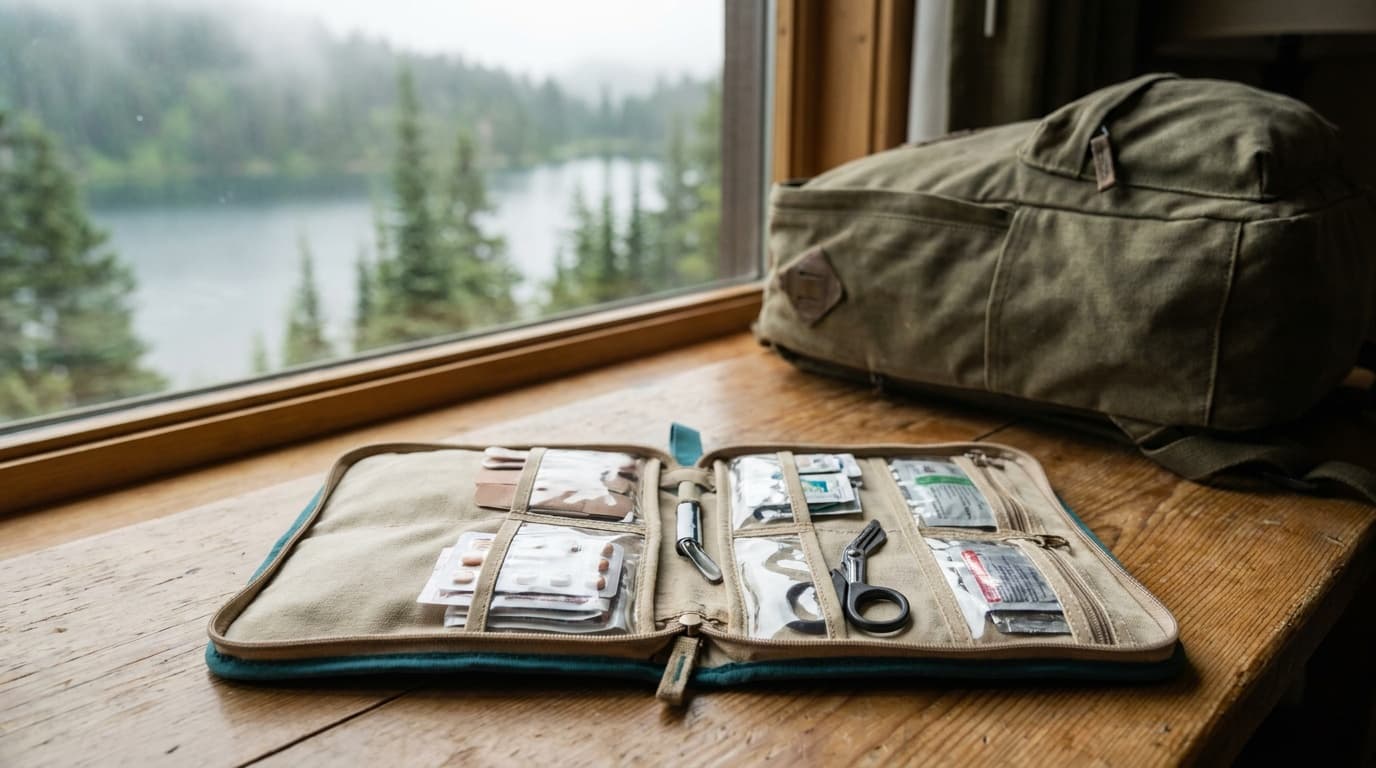
Our recommendations draw on manufacturer documentation, retailer listings, owner feedback, and comparisons with alternatives.
As an Amazon Associate I earn from qualifying purchases. We may earn a commission from links here, at no extra cost to you. How we research →
Top picks
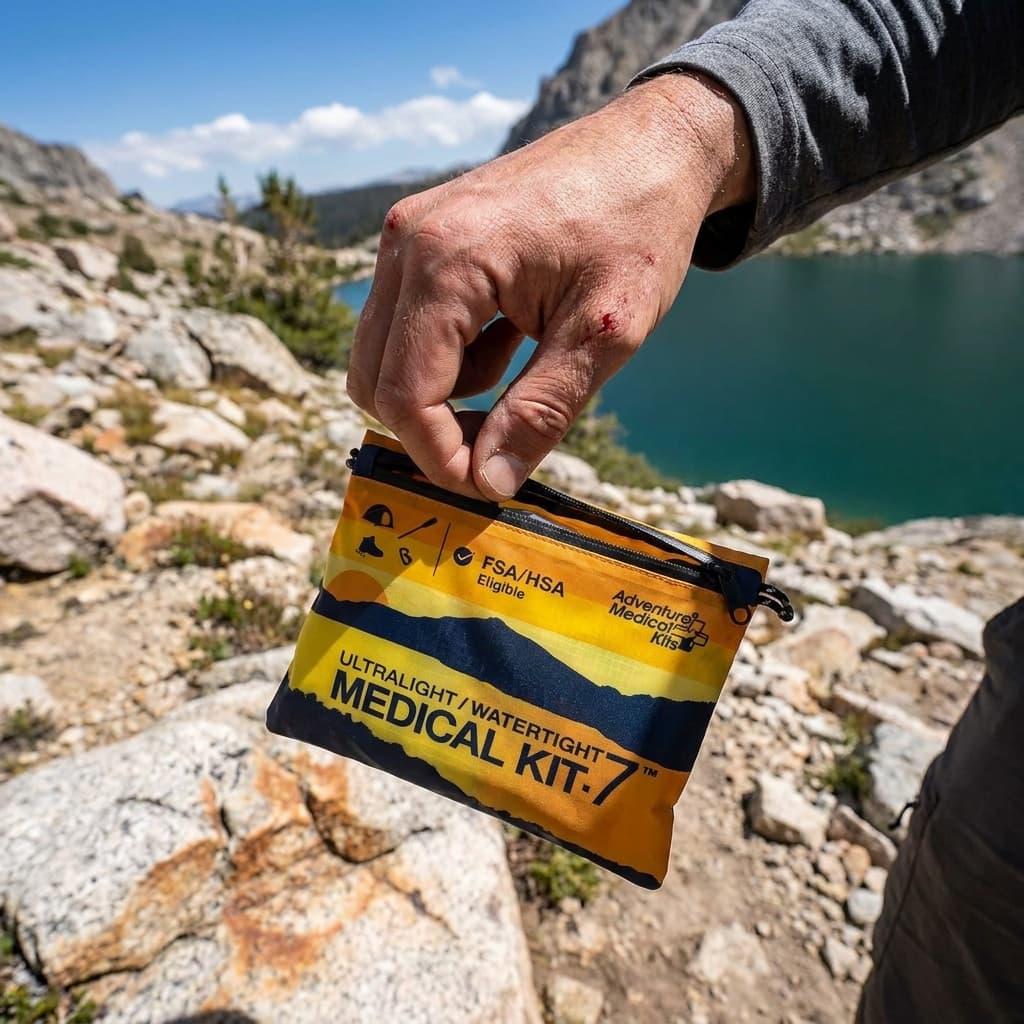 Best OverallAdventure Medical Kits Ultralight/Watertight Medical Kit .77.8/10
 Editor's ChoiceAdventure Medical Kits Mountain Series Backpacker Medical Kit8.3/10
 Best ValueSurviveware 98 Pcs Comprehensive Premium Survival First Aid Kit8.7/10
 Best Premium CompactMy Medic Sidekick Camping Hiking and Backpacking First Aid Kit7.6/10