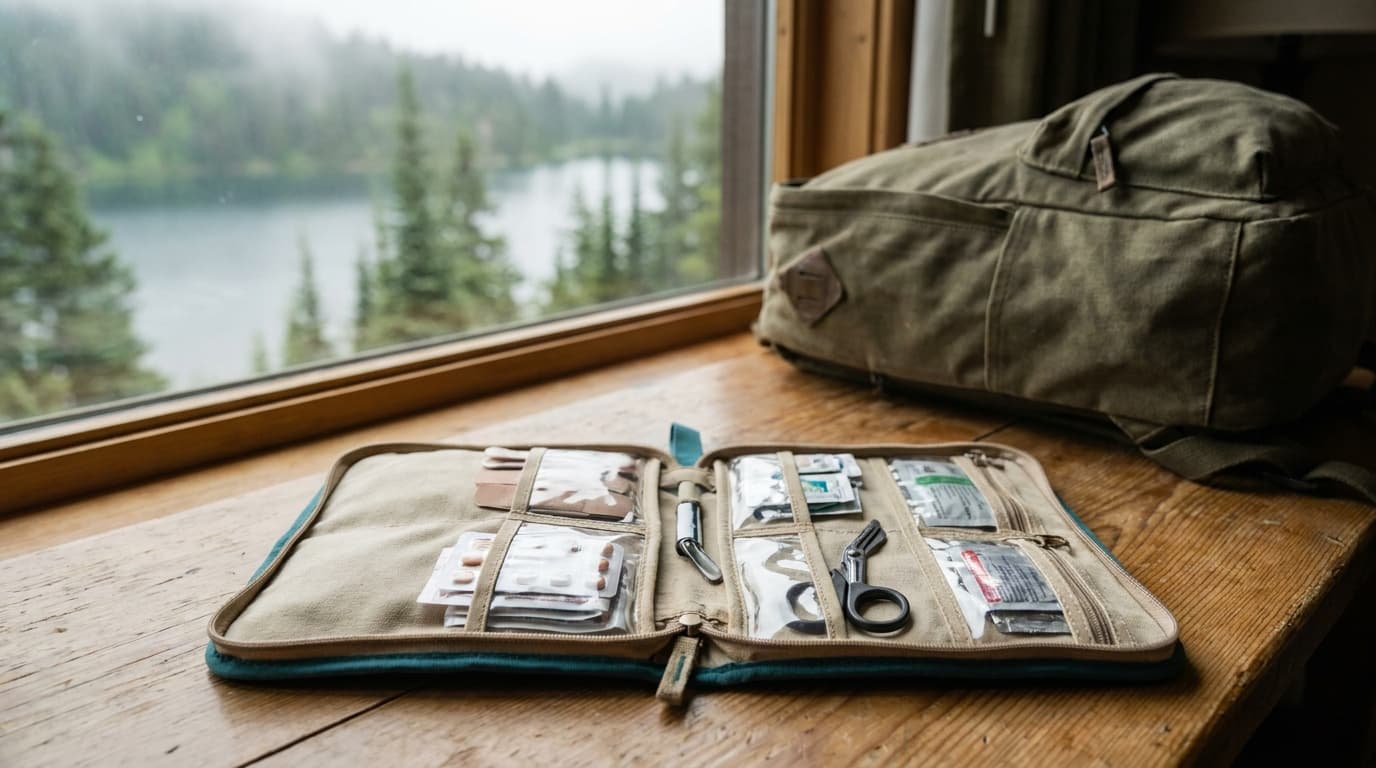
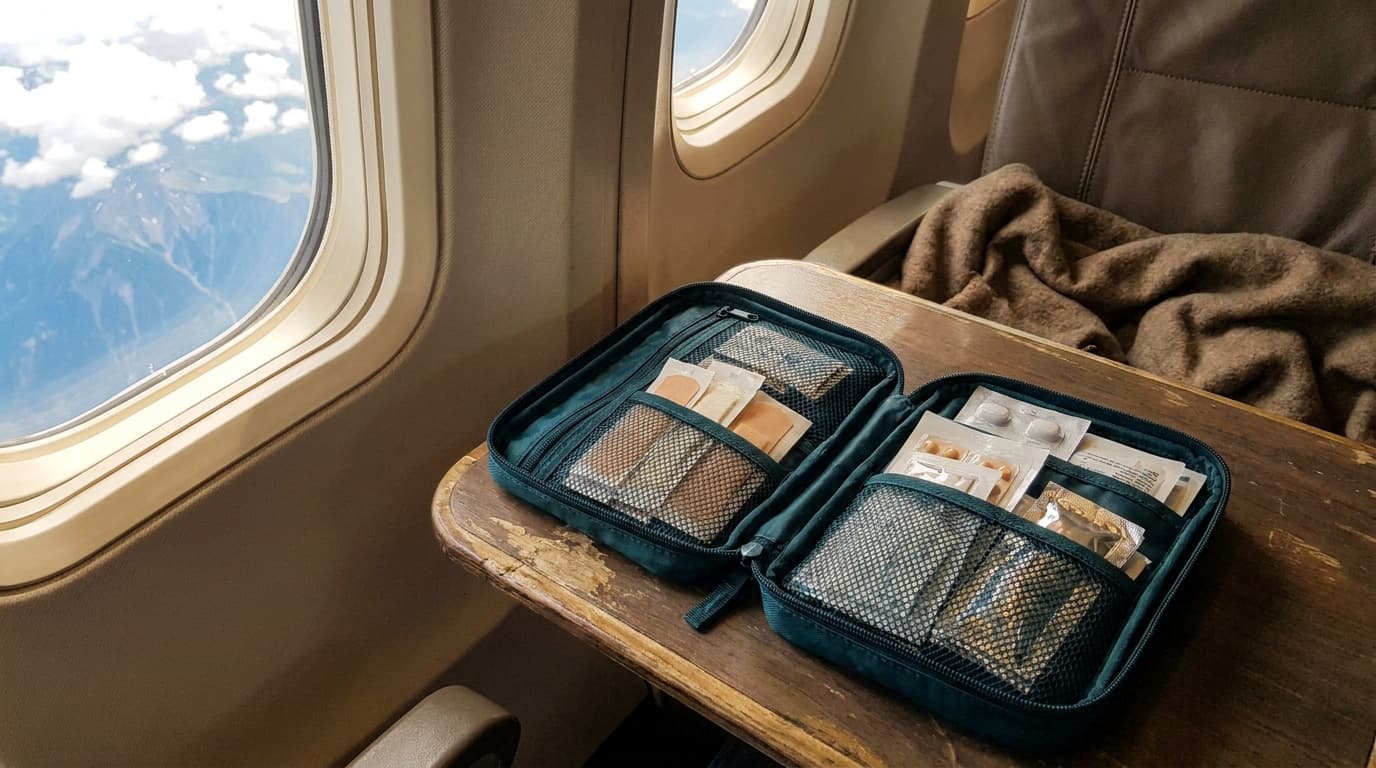
Yes. TSA allows first aid kits in both carry-on and checked bags; it simply screens each item inside. Three things need attention in a carry-on: creams and liquids must follow the 3-1-1 rule, scissors must be less than 4 inches from the pivot point, and larger medically necessary liquids must be declared at the checkpoint. Everything else in a typical kit is routine.
What TSA says about first aid kits in carry-on
TSA does not treat a first aid kit as a special category. It is evaluated item by item, just like anything else in your bag. Most standard first aid supplies, including bandages, gauze, medical tape, antiseptic wipes, and elastic bandages, are unrestricted. They are dry goods with no blade, no liquid over the limit, and no pressurized gas. Pack them and forget about it. A pre-assembled kit like the Adventure Medical Kits Smart Travel goes through the same item-by-item screening; its bandage scissors and any creams are the parts to check against the rules below.
The items that require attention fall into three categories: liquids and gels, sharp tools, and medications. Each has a clear rule.
The 3-1-1 rule for ointments, sanitizer, and sprays
Any first aid liquid, gel, cream, or paste counts toward your 3-1-1 allowance. This includes antibiotic ointment (like Neosporin), hydrocortisone cream, antiseptic spray, hand sanitizer, eye drops, and aloe gel. Each container must be 3.4 oz (100 ml) or smaller, and all containers must fit comfortably in a single clear, quart-sized zip bag.
The practical implication: buy travel-sized versions, check that any creams in a pre-packed kit are 3.4 oz or smaller (most single-use packets and small tubes are), or decant into small containers before you fly. A standard 1 oz tube of antibiotic ointment and a 2 oz hand sanitizer take up very little room in your liquids bag.
Scissors and tweezers: what is and is not allowed
This is the area where travelers most often get confused, and the rule is actually simple.
Sharp tools in your first aid kit
Small scissors (under 4 inches from the pivot point)
Allowed in carry-on. Most small first aid kit scissors meet this threshold; measure yours.
Large scissors (4 inches or longer from the pivot point)
Must go in checked baggage, sheathed or wrapped. Full-size trauma shears often exceed this limit.
Tweezers
Allowed in carry-on and checked bags.
Needle and thread
Allowed in carry-on. TSA permits sewing needles, but thread cutters with blades go in checked bags.
Lancets and glucose meters
Allowed as part of a blood sugar test kit. Tell the officer you have diabetes and are carrying supplies.
The 4-inch rule is measured from the pivot point to the tip, not the full handle length. Small bandage scissors usually pass; full-size trauma shears are closer to the line, so measure them. When in doubt, pack them in checked baggage, sheathed or wrapped, and remember the TSA officer makes the final call at the checkpoint.
Medications and prescriptions
TSA allows medications in carry-on and checked bags, including prescription pills, over-the-counter tablets, and liquid medications. Medically necessary liquids, gels, and aerosols can exceed 3.4 oz in reasonable quantities for your trip, but you must declare them to TSA officers at the checkpoint for inspection.
TSA does not require medications to be in prescription bottles, but it recommends clearly labeling them, and individual states have their own labeling laws. Keeping medications in their original labeled containers makes screening faster and avoids questions. For international travel, having the original pharmacy label and a copy of your prescription is strongly advisable, as other countries have stricter rules.
The TSA officer at the checkpoint has the final say, so declaring medications upfront and keeping them organized saves time for everyone.
Sharps, syringes, and epinephrine
Insulin, epinephrine auto-injectors (like EpiPens), and other injectable medications are allowed in carry-on bags. Unused syringes are allowed when they accompany injectable medication, and you must declare them to the officer for inspection.
Blood sugar test kits, including lancets and meters, are allowed in carry-on bags; TSA asks you to tell the officer you have diabetes and are carrying supplies, and insulin supplies must be accompanied by insulin. A small travel sharps container is good practice for used lancets and needles.
Rules for medical sharps outside the US are set by each country, so check your departure and connecting airports' guidance before an international trip.
International variations
TSA rules govern US airports and outbound US flights. When you land abroad or connect through a foreign airport, that country's aviation security rules apply.
The 100 ml (3.4 oz) container limit is widely used outside the US too, so a 3-1-1 bag usually works abroad, but it is no longer universal: some UK airports with newer scanners allow containers up to 2 liters, and UK airports let essential medicines through in containers up to 2 liters. Scissors limits can differ from TSA's 4-inch rule, so check the rules for each airport on your route or pack scissors in a checked bag.
The area requiring the most care is medications. The US Embassy in Japan warns that many common US prescription and over-the-counter drugs are illegal in Japan, even with a valid US prescription, and that larger quantities need an import certificate approved before you travel. For any international trip, check the embassy or health ministry guidance for your destination before you pack your medical kit.
Where these numbers come from
| Claim | Source | Checked |
|---|---|---|
| Scissors in carry-on must be less than 4 inches from the pivot point; sharp objects in checked bags should be sheathed or wrapped | TSA, scissors | 2026-09-25 |
| Hand sanitizer: carry-on 3.4 oz (100 ml) or less; checked bags allowed within FAA limits | TSA, hand sanitizers | 2026-09-25 |
| Medically necessary liquids allowed in reasonable quantities above 3.4 oz if declared at the checkpoint | TSA, liquid medications | 2026-09-25 |
| Pills allowed in carry-on and checked bags; officer has the final decision | TSA, medications (pills) | 2026-09-25 |
| TSA recommends clearly labeling medication and informing the officer about medically necessary liquids | TSA Cares, disabilities and medical conditions | 2026-09-25 |
| Unused syringes allowed when accompanied by injectable medication and declared | TSA, unused syringes | 2026-09-25 |
| Blood sugar test kits allowed; tell the officer about diabetes supplies; insulin supplies must be accompanied by insulin | TSA, blood sugar test kit | 2026-09-25 |
| Tweezers allowed in carry-on and checked bags | TSA, tweezers | 2026-09-25 |
| Sewing and needlepoint tools allowed in carry-on; thread cutters with blades must be checked | TSA, sewing needles | 2026-09-25 |
| UK: 100 ml limit at most airports, some allow up to 2 L containers; essential medicines up to 2 L at all UK airports | GOV.UK, liquids in hand luggage | 2026-09-25 |
| Many common US medications are illegal in Japan even with a US prescription; larger quantities need a Yunyu Kakunin-sho | US Embassy in Japan, importing medication | 2026-09-25 |
Frequently asked questions
Can I bring a complete pre-packaged first aid kit on a plane?
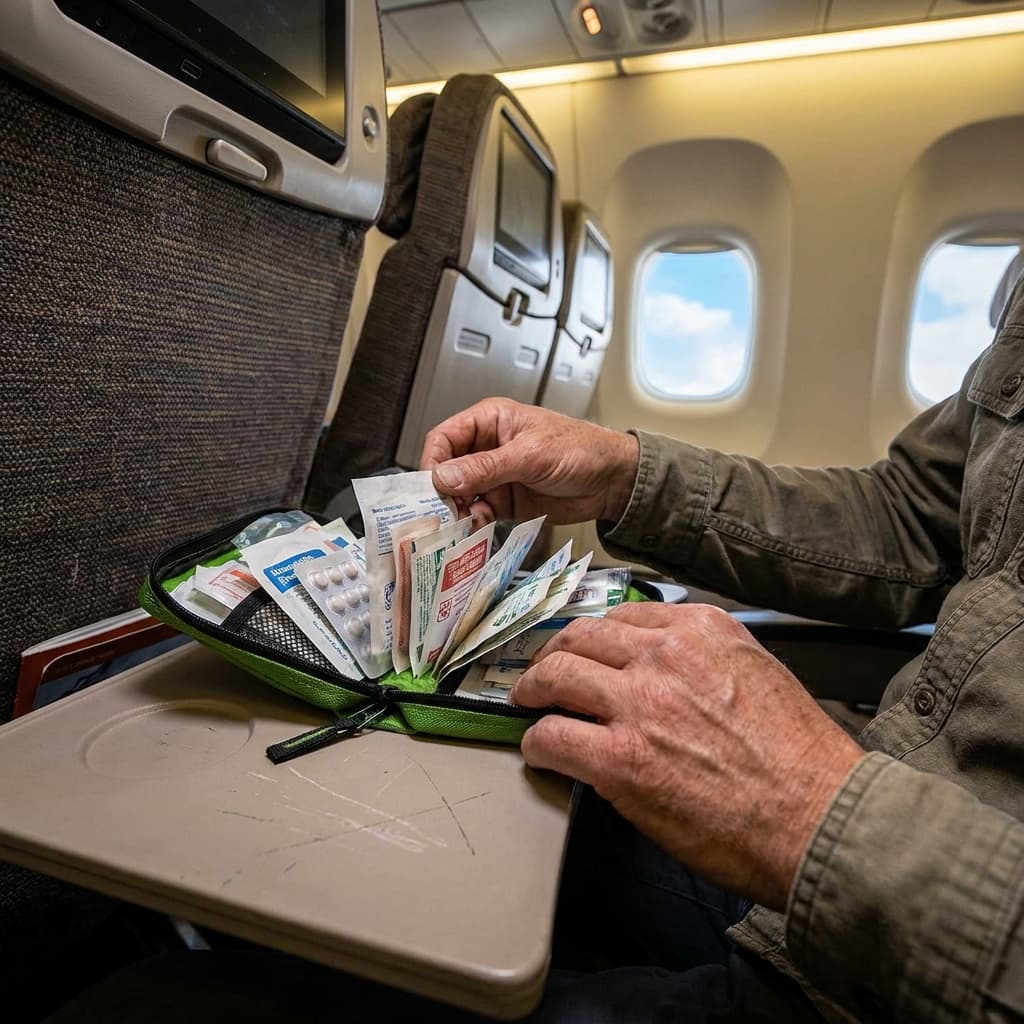
Yes. Pre-packaged kits like those from Adventure Medical Kits or similar brands are allowed in carry-on baggage. TSA will screen the bag and may open the kit for inspection. Any liquids inside still need to meet the 3-1-1 rule, and any scissors must measure less than 4 inches from the pivot point. Bandages, gauze, gloves, and CPR masks are routine items.
Does hand sanitizer count as a liquid for TSA?
Yes. TSA's current rule allows hand sanitizer in carry-on bags only in containers of 3.4 oz (100 ml) or less, inside your quart-sized liquids bag. Larger bottles can go in checked bags, where FAA limits apply to alcohol-based toiletries. The temporary 12 oz allowance from the COVID-19 period no longer appears in TSA's guidance.
What happens if TSA flags something in my first aid kit?
A TSA officer may open your bag for a closer look if something is unclear on the X-ray. Stay calm, explain what the item is and why you have it, and follow their instructions. In most cases, compliant items are cleared quickly. TSA states that the final decision on whether an item is allowed rests with the officer at the checkpoint, so if something is borderline, pack it in a checked bag instead.
For specific picks built around these rules, see our guide to the best travel first aid kits. Browse all travel guides or read how we research and rate gear.
Recommended gear
Our current top picks from the Best travel first aid kits for 2026 guide, if you are ready to buy.
ADVENTURE MEDICAL KITS
Adventure Medical Kits Smart Travel First Aid Kit
Editor's Choice
Kit Score 7.9/10
Best for: International travelers, backpackers crossing borders, and anyone prioritizing a built-in medication supply over raw piece count.
- The only kit in this roundup with a full medication suite covering diarrhea, nausea, oral rehydration, and antihistamine for international trip needs
- Heavier and bulkier than an ultralight kit because of the guidebook and medication supply
- Piece count
- About 70 listed items plus guidebook
- Sized for
- 1 to 2 people, multiple days, domestic and international travel
- Medications
- Ibuprofen, acetaminophen, aspirin, diphenhydramine, loperamide, calcium carbonate antacid, bismuth subsalicylate, oral rehydration salts
- Blister care
- Die-cut moleskin, GlacierGel hydrogel bandages
- International tools
- Visual Communication Tool, travel medicine guidebook
About this pick
Designed for domestic and international travel, the Smart Travel includes eight kinds of OTC medication for common travel ailments, GlacierGel blister and burn dressings, and a Visual Communication Tool to bridge language barriers, organized in compartments labeled by injury.
Strengths
- The only kit in this roundup with a full medication suite covering diarrhea, nausea, oral rehydration, and antihistamine for international trip needs
- GlacierGel hydrogel blister bandages are a genuine upgrade over standard moleskin for multi-day walkers
- Visual language communication card and travel medicine handbook add real utility for remote or foreign destinations
Weaknesses
- Heavier and bulkier than an ultralight kit because of the guidebook and medication supply
- Higher price point reflects the medication and guidebook bundle, not superior case durability
Kit Score breakdown
ADVENTURE MEDICAL KITS
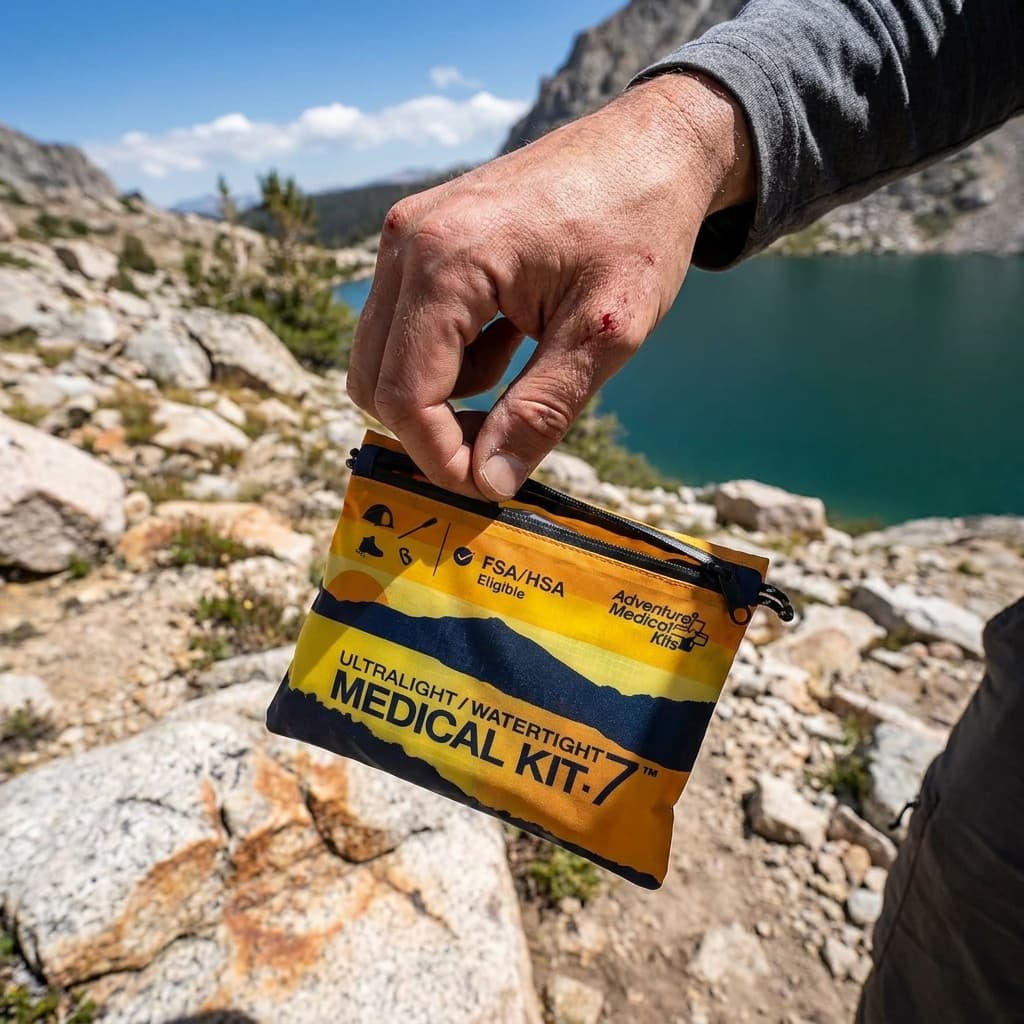
Adventure Medical Kits Ultralight/Watertight Medical Kit .7
Best Overall
Kit Score 7.8/10
Best for: Solo hikers and pairs on day hikes through 4-day trips who want waterproof protection without adding noticeable weight.
- Genuinely waterproof inner bag keeps contents dry in rain and wet crossings
- No irrigation syringe or CPR mask, so owners who want full trauma response should supplement or size up
- Weight
- 5.8 oz (AMK)
- Capacity
- 1 to 2 people, up to 4 days
- Case
- DryFlex waterproof inner bag, water-resistant outer shell
- Medications included
- Yes (aspirin, ibuprofen, acetaminophen, antihistamine)
- Blister care
- Pre-cut moleskin
- Extras
- Duct tape, elastic bandage, tick and splinter forceps
About this pick
The Ultralight/Watertight .7 is AMK's kit for one or two people on trips of up to four days. At 5.8 oz it disappears into a pack side pocket, and the waterproof DryFlex inner bag keeps bandages and medications dry through stream crossings and downpours.
Strengths
- Genuinely waterproof inner bag keeps contents dry in rain and wet crossings
- Includes aspirin, ibuprofen, acetaminophen, and diphenhydramine for pain, fever, and allergy
- Compact enough for a pack side pocket while still covering blisters, wounds, and basic trauma
Weaknesses
- No irrigation syringe or CPR mask, so owners who want full trauma response should supplement or size up
- Quantities are sized for solo to two-person use and run low on longer group trips
Kit Score breakdown
BAND-AID
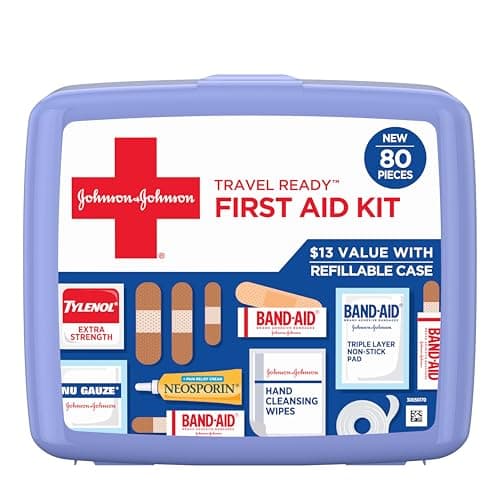
BAND-AID Brand Travel Ready Portable Emergency First Aid Kit, 80 Piece
Best Budget
Kit Score 8.1/10
$10.98 Price checked Oct 23, 4:16 PM CDT
Best for: Budget-conscious travelers, families on road trips, and anyone who wants recognizable brand-name supplies they can easily restock anywhere.
- Recognizable brand-name contents that are easy to restock
- No blister care (no moleskin or hydrogel pads), a meaningful gap for walkers and hikers
- Piece count
- 80 pieces
- Medications
- TYLENOL acetaminophen caplets, itch-stopping cream, NEOSPORIN antibiotic cream
- Wound care
- Assorted BAND-AID bandages, gauze pads, rolled gauze, cleansing wipes, instant cold pack
- Case
- Durable plastic box (not sold as waterproof)
- Refillability
- Refillable box; drugstore-brand contents
- TSA carry-on
- Yes
About this pick
An 80-piece kit in a durable plastic box, built around trusted drugstore brands: BAND-AID bandages, NEOSPORIN, TYLENOL, BENGAY, and BENADRYL. It covers minor cuts, scrapes, burns, and aches, and the contents are easy to restock at US drugstores.
Strengths
- Recognizable brand-name contents that are easy to restock
- Plastic box protects contents better than a soft pouch
- Includes an instant cold pack and a first aid guide
Weaknesses
- No blister care (no moleskin or hydrogel pads), a meaningful gap for walkers and hikers
- Water resistance is light-duty; not suitable as a primary kit for wet outdoor environments
Kit Score breakdown
Keep going
Researched, not hands-on tested
Updated Sep 25, 2026Our recommendations draw on manufacturer documentation, retailer listings, owner feedback, and comparisons with alternatives.
As an Amazon Associate I earn from qualifying purchases. We may earn a commission from links here, at no extra cost to you. How we research →