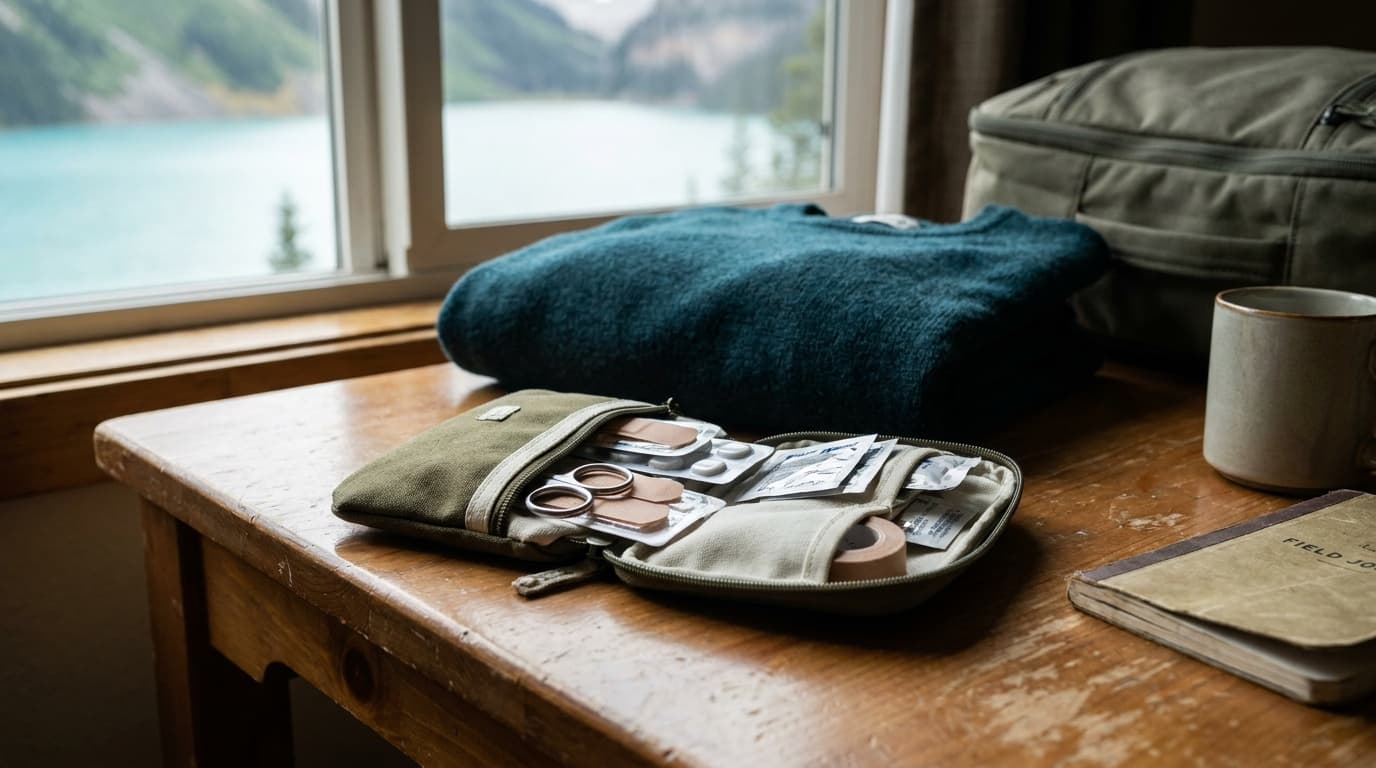
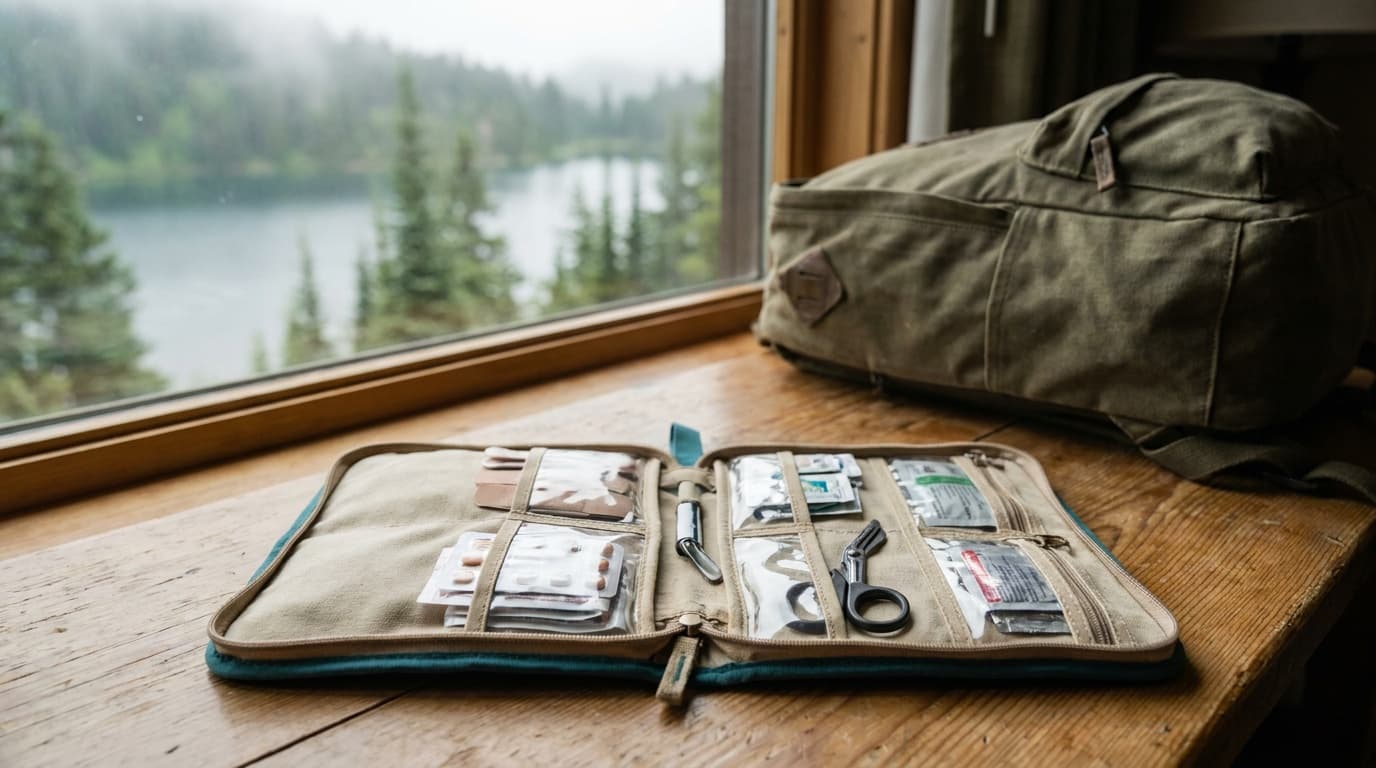
A travel first aid kit should hold wound and blister care plus the medicines the CDC's travel health kit list recommends: pain and fever medicine, an antihistamine, diarrhea medicine, an antacid, and your prescriptions, preferably in their original bottles. Pair it with a digital kit of copies of your prescriptions, health insurance card, immunization records, and emergency contacts, which the CDC also lists, and if you are a US citizen traveling abroad, enroll in the State Department's free STEP program so the embassy can reach you in an emergency. The whole physical kit fits in a pouch the size of a paperback.
The core checklist
These are the items that earn their weight on almost every trip. Skip any one of them and it tends to be the thing you need.
Beyond the list above, include:
- Antiseptic wipes or solution (benzalkonium chloride wipes travel better than liquid iodine)
- Blister care: a small sheet of moleskin or a few hydrocolloid blister plasters. Walking days in new shoes are when blisters start.
- Pain reliever and fever reducer: acetaminophen or ibuprofen, the two examples the CDC gives.
- Antihistamine: for allergic reactions, insect stings, and hives. Cetirizine is a non-drowsy option; diphenhydramine is sedating.
- Anti-diarrheal: the CDC lists diarrhea medicine such as Imodium (loperamide) or Pepto-Bismol. Loperamide is for getting through a bus ride or flight, not a long-term fix.
- Oral rehydration salts (ORS): a few sachets, light and cheap, to replace fluids and salts during stomach illness or heat.
- Antacid, decongestant, and motion sickness medicine: all on the CDC's travel health kit list.
- Medical tape and scissors or a multi-tool with scissors
- Digital thermometer (the flat, credit-card style fits anywhere)
Prescription meds and documentation
The CDC's advice is to pack medications in your carry-on in case your luggage is lost or delayed.
Traveling with prescription meds
Original containers
Keep medicines in their original, labeled containers showing your name, your prescriber, the generic and brand names, and the dose, as the CDC recommends.
Doctor's note
The CDC advises asking your prescriber for a note if you use controlled substances or injectable medicines such as EpiPens and insulin.
Copies of prescriptions
Bring copies of all prescriptions with the generic names, and leave a copy with a friend or relative at home in case you lose yours or need an emergency refill (CDC).
Enough for delays
Take enough for the whole trip plus extra in case of travel delays (CDC).
Check destination rules
Check with your destination's embassy, and those of any layover countries, that your medicines are permitted (CDC). Some medicines legal at home are restricted elsewhere.
Your digital first aid kit
A digital first aid kit is the paperwork side of your kit: the health documents you need when something goes wrong, saved where you can reach them without a signal. Keep them offline on your phone and in a secure cloud folder, and share them with a travel companion or someone at home. The CDC's Pack Smart list covers what to include:
- Copies of prescriptions for medicines, glasses, and medical supplies, with generic names.
- Health insurance card and documents, including any travel insurance policy.
- Immunization records, plus proof of yellow fever vaccination if your trip requires it.
- A contact card with the addresses, phone numbers, and email of a family member or close contact at home, and contact information for your own healthcare professional.
- Local care information: hospitals or clinics (including emergency services) at your destination, and the US embassy or consulate.
- Copies of your passport and travel documents, and your lodging information.
US citizens traveling abroad can also enroll the trip in the State Department's Smart Traveler Enrollment Program (STEP). It is free, takes about five minutes, sends health, weather, safety, and security updates for your destination, and helps the embassy or consulate contact you in an emergency, including a family emergency.
Customizing by destination
The core kit is the floor. What you add depends on where you are going.
Beach and resort travel: add waterproof bandages, aloe vera gel (100 mL or under for carry-on), and a higher-SPF sunscreen. Heat and saltwater stress skin and open cuts faster than most travelers expect.
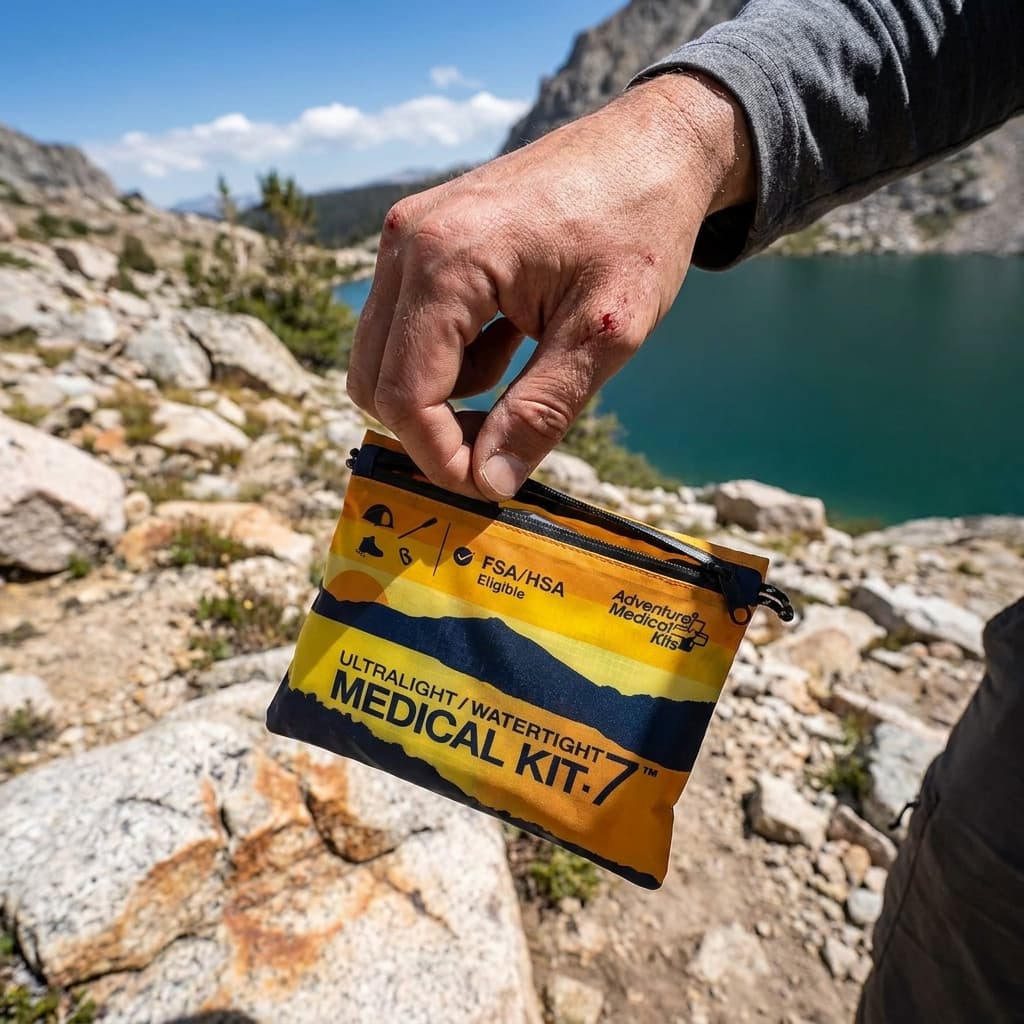
Backcountry and trekking: start from a base like the Adventure Medical Kits Ultralight/Watertight .7, then add a SAM splint, a triangular bandage, a blister kit with needle and alcohol swabs, and altitude sickness medication (acetazolamide, by prescription) if you are heading to high altitude. A lightweight irrigation syringe for flushing wounds is worth the few grams.
International travel to lower-income regions: ask your healthcare professional about an antibiotic for travelers' diarrhea and antimalarial medicine, both of which the CDC lists as prescription-only additions, and pack water purification tablets or a filter. The CDC recommends seeing your healthcare provider or a travel health specialist at least 4 to 6 weeks before you leave.
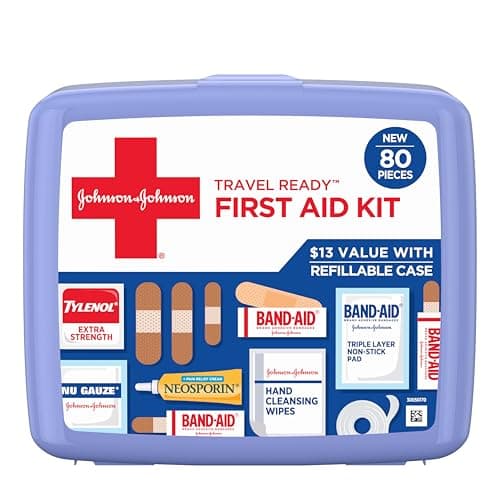
City travel: the core kit is often enough, and a pre-assembled pocket kit like the BAND-AID Travel Ready Kit covers most of it. Add a few extra blister plasters if you plan heavy walking days.
The kit you actually bring is more useful than the perfect kit you left at home because it felt too heavy.
TSA rules and airline carry-on
Most first aid supplies travel without friction. Know where the limits are.
- Non-medical liquids and gels (antiseptic solution, aloe gel, hand sanitizer): the 3-1-1 rule applies in carry-on, with containers of 3.4 oz (100 mL) or less in one quart-sized bag.
- Medications: TSA lists medications as exempt from the 3.4 oz limit. You may bring medically necessary liquids, medications, and creams over 3.4 oz in reasonable quantities; they are screened separately, so tell the officer.
- Pills and solid medication: allowed in carry-on and checked bags.
- EpiPens: allowed in carry-on; declare them at the checkpoint.
- Unused syringes: allowed when accompanied by injectable medication; declare them at the checkpoint.
- Scissors: allowed in carry-on if the blades are less than 4 inches from the pivot point; longer ones go in checked baggage.
Keeping the kit current
A neglected kit fails at the worst moment. Once a year (and after any trip where you used supplies), do a 10-minute audit:
- Check expiration dates on all medications and ORS sachets.
- Replace used or opened items before the next trip.
- Verify your prescription quantities are still accurate for trip length.
- Reassess the destination column: a kit packed for a European city trip may need additions before a Southeast Asia trek.
Frequently asked questions
What is a digital first aid kit for travel?
It is the document side of your kit, saved on your phone and in the cloud: copies of your prescriptions (with generic names), your health insurance card and travel insurance policy, immunization records, a contact card for someone at home, your doctor's contact details, and a list of hospitals and the US embassy at your destination. All of these are on the CDC's Pack Smart list. US citizens going abroad can add STEP enrollment so the embassy can reach them in an emergency.
Do I need a travel first aid kit if my destination has pharmacies?
Pharmacies exist in most destinations, but the supplies you need at 2 a.m. on a remote island or in a national park are not reliably available. A compact kit handles the first hours while you find help. It also removes the stress of locating a pharmacy in an unfamiliar language while you are already dealing with an injury.
What is the lightest way to build a carry-on-friendly kit?
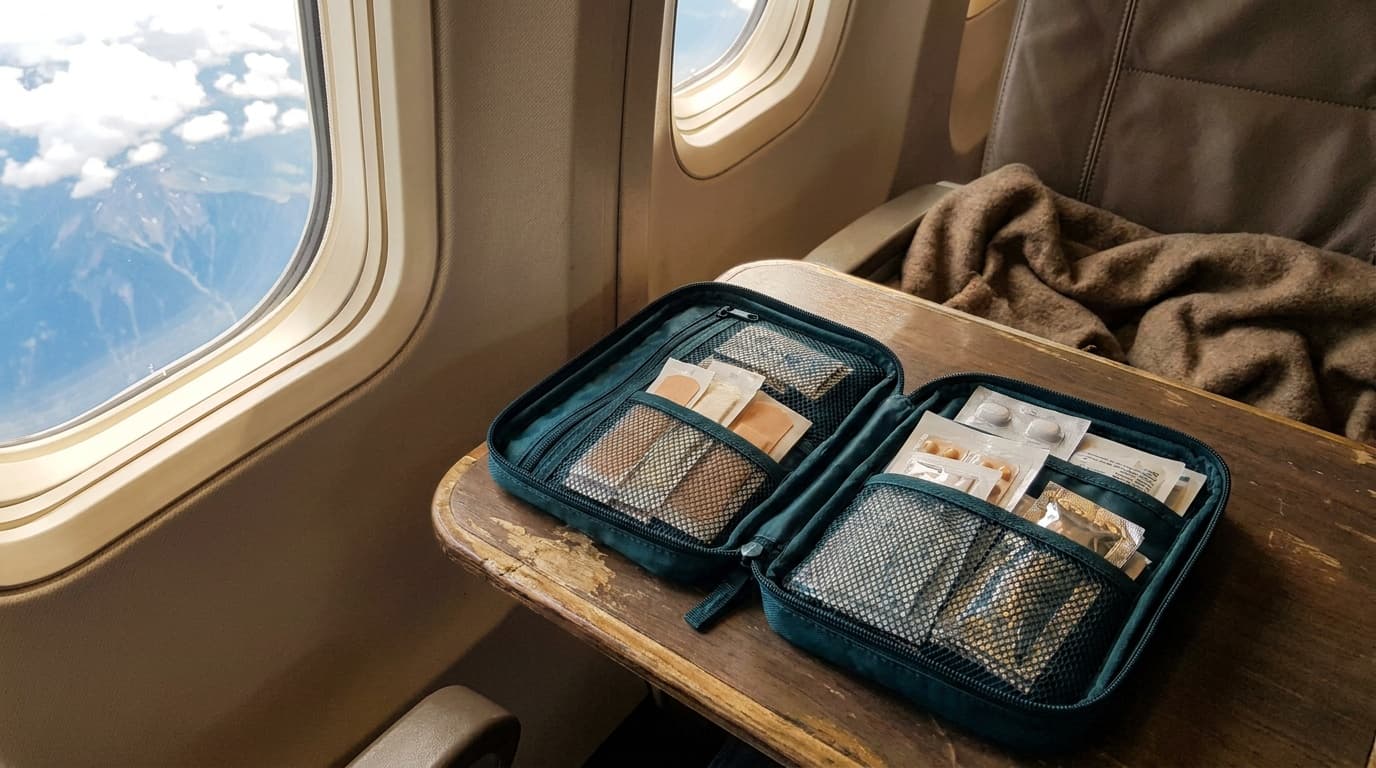
Choose solid forms where possible (tablet medications, benzalkonium wipes instead of liquid antiseptic), swap a full-size bandage roll for a sheet of moleskin, and use a small zipper pouch rather than a rigid case. A lean carry-on kit can stay small and still cover the core checklist. Pre-assembled travel kits often include excess items; buying individual components lets you cut weight deliberately.
Can I bring my EpiPen on a plane?
Yes. TSA allows EpiPens in carry-on and checked bags, and asks you to declare them to officers at the checkpoint. The CDC recommends carrying a note from your prescriber for injectable medicines such as EpiPens, and keeping medicines in their original labeled containers. Keep it in your personal item so you can reach it during the flight.
Where these numbers come from
| Claim | Source | Checked |
|---|---|---|
| Travel health kit medicines, supplies, and documents (copies of prescriptions, insurance card and travel insurance, immunization records, yellow fever proof, contact card, healthcare professional info, hospital list, US embassy info, passport copies, lodging) | CDC, Pack Smart | Sep 2026 |
| Original labeled containers, copies of prescriptions with generic names (leave one at home), prescriber note for controlled or injectable medicines, check embassy rules, extra supply for delays, pack in carry-on | CDC, Traveling Abroad with Medicine | Sep 2026 |
| See a healthcare provider or travel health specialist at least 4 to 6 weeks before you leave | CDC, Need travel vaccines? Plan ahead | Sep 2026 |
| STEP: free for US citizens and nationals, about 5 minutes, destination updates, embassy can contact you in an emergency | US Department of State, Smart Traveler Enrollment Program | Sep 2026 |
| 3-1-1 rule (3.4 oz containers, one quart-sized bag); medications exempt | TSA, Liquids, Aerosols, and Gels Rule | Sep 2026 |
| Medically necessary liquids, medications, and creams over 3.4 oz allowed in carry-on, screened separately | TSA, Traveling with medication | Sep 2026 |
| Pills allowed in carry-on and checked bags | TSA, Medications (Pills) | Sep 2026 |
| EpiPens allowed, declare at the checkpoint | TSA, EpiPens | Sep 2026 |
| Unused syringes allowed with injectable medication, declare at the checkpoint | TSA, Unused Syringes | Sep 2026 |
| Scissors in carry-on must be less than 4 inches from the pivot point | TSA, Scissors | Sep 2026 |
This is general information, not medical advice. Ask your healthcare professional which medicines and doses suit you and your destination.
For specific picks, see our guide to the best travel first aid kits. Browse all travel guides or read how we research and rate gear.
Recommended gear
Our current top picks from the Best travel first aid kits for 2026 guide, if you are ready to buy.
ADVENTURE MEDICAL KITS
Adventure Medical Kits Smart Travel First Aid Kit
Editor's Choice
Kit Score 7.9/10
Best for: International travelers, backpackers crossing borders, and anyone prioritizing a built-in medication supply over raw piece count.
- The only kit in this roundup with a full medication suite covering diarrhea, nausea, oral rehydration, and antihistamine for international trip needs
- Heavier and bulkier than an ultralight kit because of the guidebook and medication supply
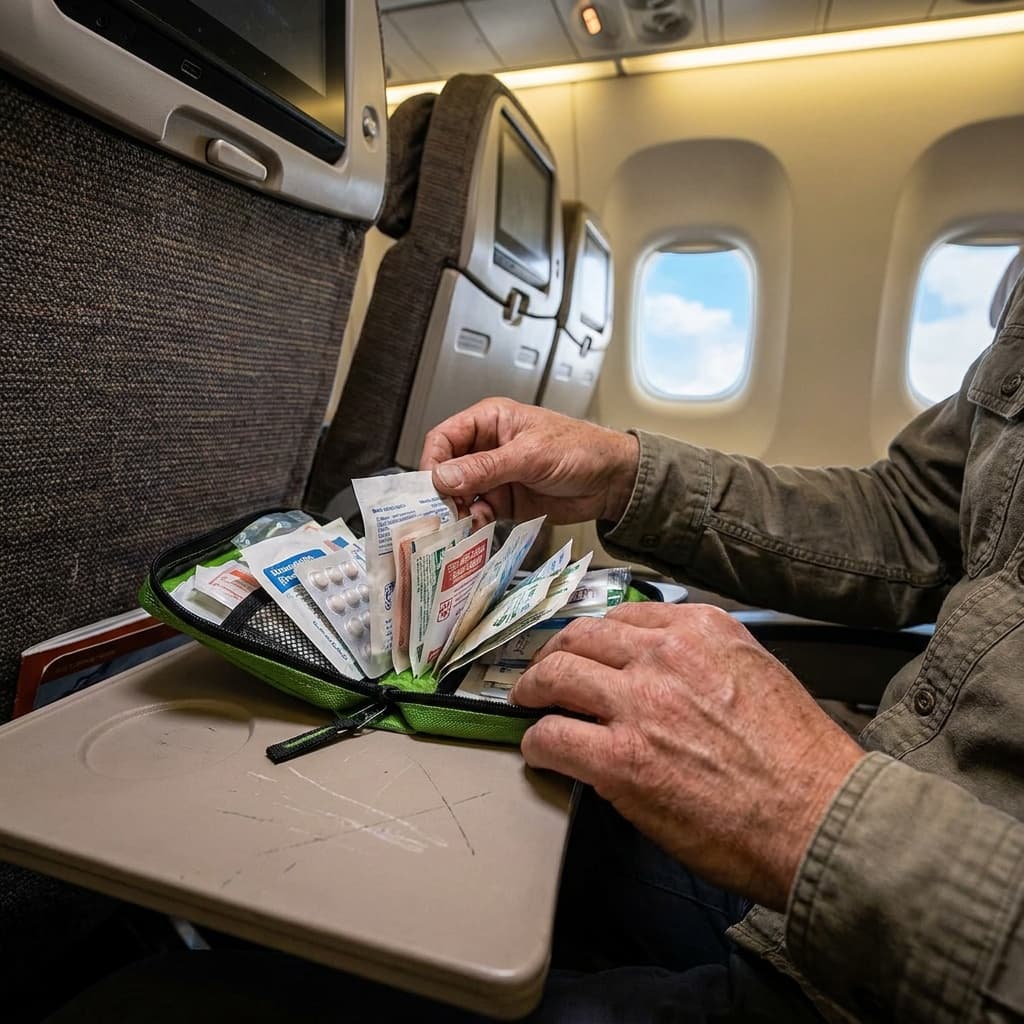
- Piece count
- About 70 listed items plus guidebook
- Sized for
- 1 to 2 people, multiple days, domestic and international travel
- Medications
- Ibuprofen, acetaminophen, aspirin, diphenhydramine, loperamide, calcium carbonate antacid, bismuth subsalicylate, oral rehydration salts
- Blister care
- Die-cut moleskin, GlacierGel hydrogel bandages
- International tools
- Visual Communication Tool, travel medicine guidebook
About this pick
Designed for domestic and international travel, the Smart Travel includes eight kinds of OTC medication for common travel ailments, GlacierGel blister and burn dressings, and a Visual Communication Tool to bridge language barriers, organized in compartments labeled by injury.
Strengths
- The only kit in this roundup with a full medication suite covering diarrhea, nausea, oral rehydration, and antihistamine for international trip needs
- GlacierGel hydrogel blister bandages are a genuine upgrade over standard moleskin for multi-day walkers
- Visual language communication card and travel medicine handbook add real utility for remote or foreign destinations
Weaknesses
- Heavier and bulkier than an ultralight kit because of the guidebook and medication supply
- Higher price point reflects the medication and guidebook bundle, not superior case durability
Kit Score breakdown
ADVENTURE MEDICAL KITS
Adventure Medical Kits Ultralight/Watertight Medical Kit .7
Best Overall
Kit Score 7.8/10
Best for: Solo hikers and pairs on day hikes through 4-day trips who want waterproof protection without adding noticeable weight.
- Genuinely waterproof inner bag keeps contents dry in rain and wet crossings
- No irrigation syringe or CPR mask, so owners who want full trauma response should supplement or size up
- Weight
- 5.8 oz (AMK)
- Capacity
- 1 to 2 people, up to 4 days
- Case
- DryFlex waterproof inner bag, water-resistant outer shell
- Medications included
- Yes (aspirin, ibuprofen, acetaminophen, antihistamine)
- Blister care
- Pre-cut moleskin
- Extras
- Duct tape, elastic bandage, tick and splinter forceps
About this pick
The Ultralight/Watertight .7 is AMK's kit for one or two people on trips of up to four days. At 5.8 oz it disappears into a pack side pocket, and the waterproof DryFlex inner bag keeps bandages and medications dry through stream crossings and downpours.
Strengths
- Genuinely waterproof inner bag keeps contents dry in rain and wet crossings
- Includes aspirin, ibuprofen, acetaminophen, and diphenhydramine for pain, fever, and allergy
- Compact enough for a pack side pocket while still covering blisters, wounds, and basic trauma
Weaknesses
- No irrigation syringe or CPR mask, so owners who want full trauma response should supplement or size up
- Quantities are sized for solo to two-person use and run low on longer group trips
Kit Score breakdown
BAND-AID
BAND-AID Brand Travel Ready Portable Emergency First Aid Kit, 80 Piece
Best Budget
Kit Score 8.1/10
$10.98 Price checked Oct 24, 5:42 AM CDT
Best for: Budget-conscious travelers, families on road trips, and anyone who wants recognizable brand-name supplies they can easily restock anywhere.
- Recognizable brand-name contents that are easy to restock
- No blister care (no moleskin or hydrogel pads), a meaningful gap for walkers and hikers
- Piece count
- 80 pieces
- Medications
- TYLENOL acetaminophen caplets, itch-stopping cream, NEOSPORIN antibiotic cream
- Wound care
- Assorted BAND-AID bandages, gauze pads, rolled gauze, cleansing wipes, instant cold pack
- Case
- Durable plastic box (not sold as waterproof)
- Refillability
- Refillable box; drugstore-brand contents
- TSA carry-on
- Yes
About this pick
An 80-piece kit in a durable plastic box, built around trusted drugstore brands: BAND-AID bandages, NEOSPORIN, TYLENOL, BENGAY, and BENADRYL. It covers minor cuts, scrapes, burns, and aches, and the contents are easy to restock at US drugstores.
Strengths
- Recognizable brand-name contents that are easy to restock
- Plastic box protects contents better than a soft pouch
- Includes an instant cold pack and a first aid guide
Weaknesses
- No blister care (no moleskin or hydrogel pads), a meaningful gap for walkers and hikers
- Water resistance is light-duty; not suitable as a primary kit for wet outdoor environments
Kit Score breakdown
Keep going
Researched, not hands-on tested
Updated Sep 26, 2026Our recommendations draw on manufacturer documentation, retailer listings, owner feedback, and comparisons with alternatives.
As an Amazon Associate I earn from qualifying purchases. We may earn a commission from links here, at no extra cost to you. How we research →