The best travel first aid kit for most travelers is the Adventure Medical Kits Smart Travel: AMK builds it for domestic and international trips for one or two people, and it carries the medicine types the CDC's travel health kit list recommends (pain and fever relief, an antihistamine, diarrhea medicine, and an antacid) plus oral rehydration salts and a visual communication tool for getting care abroad. For a lighter, waterproof kit, pick the AMK Ultralight/Watertight .7 (5.8 oz, per AMK), and for a cheap drugstore-brand kit, the BAND-AID Travel Ready 80-piece.
Our quick picks
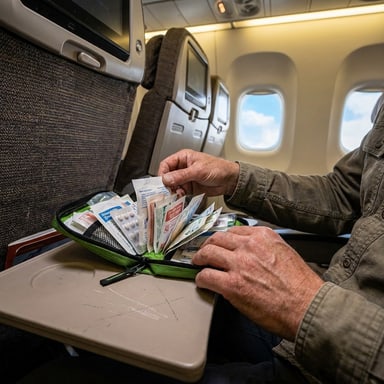
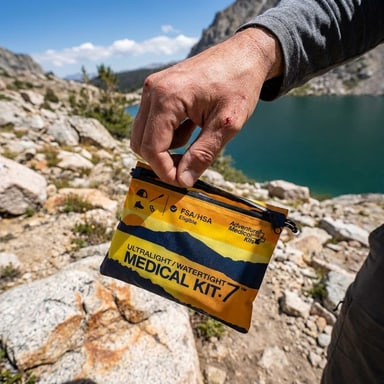
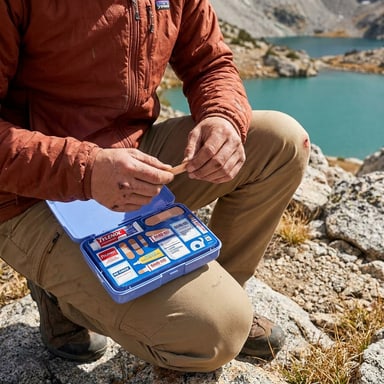
How we picked
Every kit here is scored on the same criteria: medications included, wound and blister care, case protection and waterproofing, weight, TSA carry-on friendliness, and how easy it is to restock. We compared the makers' published contents lists against the CDC's travel health kit guidance and owner reviews. For the full scoring method, see how we research and rate. We did not test these kits ourselves.
The picks
Best overall
BEST OVERALL
Adventure Medical Kits Smart Travel First Aid Kit
Best for: International travelers, backpackers crossing borders, and anyone prioritizing a built-in medication supply over raw piece count.
- The only kit in this roundup with a full medication suite covering diarrhea, nausea, oral rehydration, and antihistamine for international trip needs
- Heavier and bulkier than an ultralight kit because of the guidebook and medication supply
Kit Score 7.9/10 · Check current price · how we score gear
Buy at Adventure Medical KitsProduct details
Designed for domestic and international travel, the Smart Travel includes eight kinds of OTC medication for common travel ailments, GlacierGel blister and burn dressings, and a Visual Communication Tool to bridge language barriers, organized in compartments labeled by injury.
- Piece count
- About 70 listed items plus guidebook
- Sized for
- 1 to 2 people, multiple days, domestic and international travel
- Medications
- Ibuprofen, acetaminophen, aspirin, diphenhydramine, loperamide, calcium carbonate antacid, bismuth subsalicylate, oral rehydration salts
- Blister care
- Die-cut moleskin, GlacierGel hydrogel bandages
- International tools
- Visual Communication Tool, travel medicine guidebook
More strengths
- GlacierGel hydrogel blister bandages are a genuine upgrade over standard moleskin for multi-day walkers
- Visual language communication card and travel medicine handbook add real utility for remote or foreign destinations
Other tradeoffs
- Higher price point reflects the medication and guidebook bundle, not superior case durability
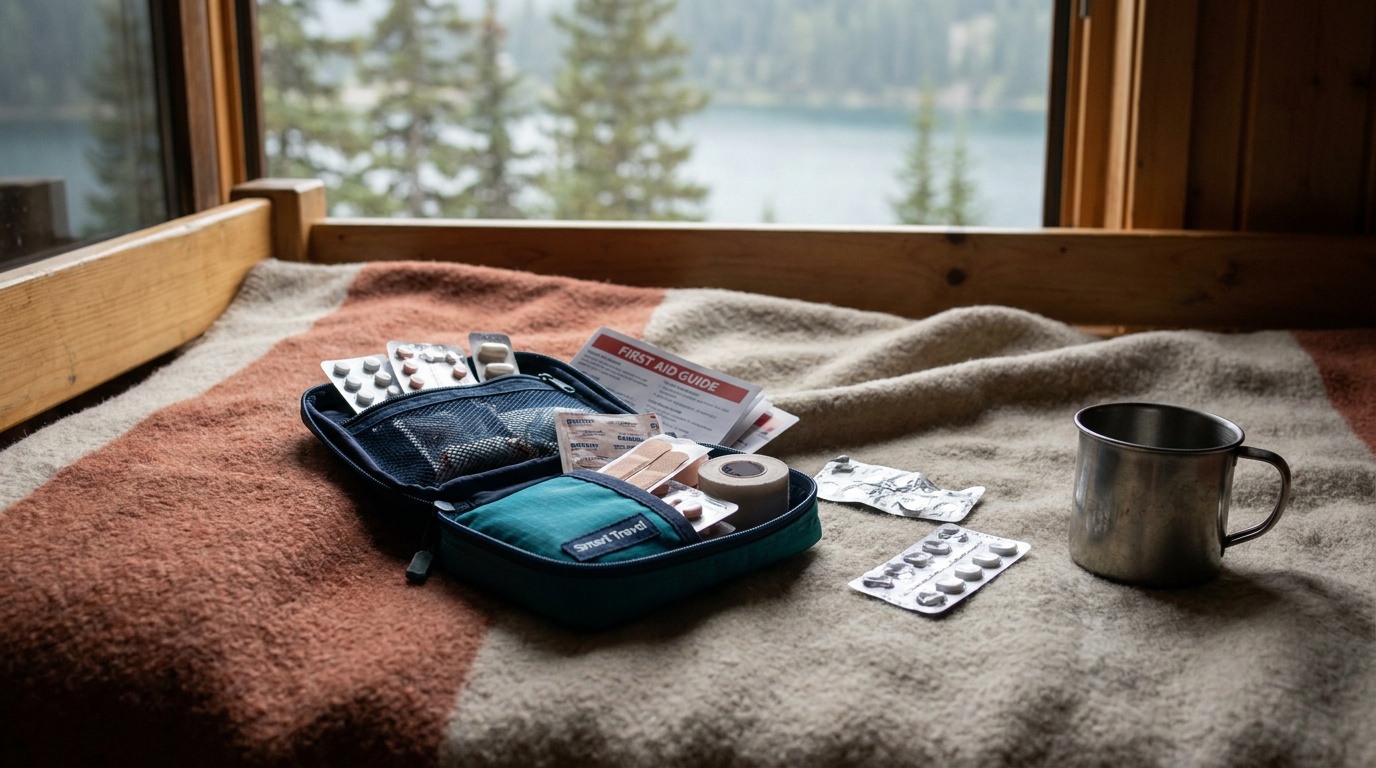
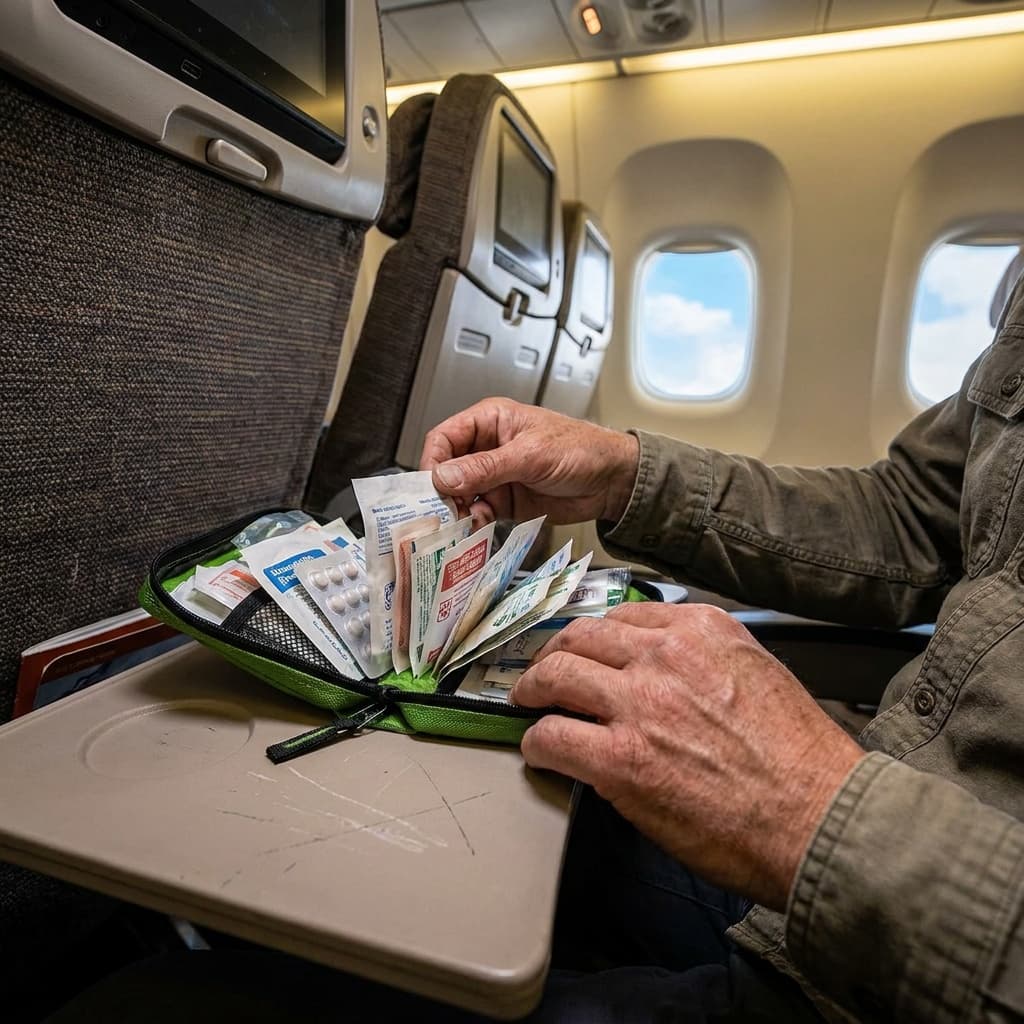
The AMK Smart Travel is built for domestic and international travel, for one or two people over multiple days, and its contents show it. Where many kits ship with little or no medicine, AMK's contents list includes ibuprofen, acetaminophen, aspirin, diphenhydramine (an antihistamine), loperamide for diarrhea, a calcium carbonate antacid, bismuth subsalicylate for upset stomach, and oral rehydration salts. That lines up closely with the medicines the CDC suggests travelers carry.
For travel abroad, two extras matter. The Visual Communication Tool helps you explain symptoms where you do not speak the language, and the kit includes a travel medicine guidebook. AMK organizes and labels the compartments by injury, so you can find the right item fast. Wound care is solid rather than huge: butterfly closures, fabric bandages, gauze, non-adherent dressings, triple antibiotic, antiseptic wipes, gloves, forceps, and GlacierGel blister and burn dressings, about 70 items in all.
It is the priciest pick here (AMK lists it at $74.99). That is the right trade for international trips: a kit with the medicines already in it beats a bigger kit full of bandages and no fever reducer when you get sick far from a pharmacy you trust.
Best for: international travelers and anyone who wants travel medications and a guidebook in one organized kit.
Best value
BEST VALUE
Adventure Medical Kits Ultralight/Watertight Medical Kit .7
Best for: Solo hikers and pairs on day hikes through 4-day trips who want waterproof protection without adding noticeable weight.
- Genuinely waterproof inner bag keeps contents dry in rain and wet crossings
- No irrigation syringe or CPR mask, so owners who want full trauma response should supplement or size up
Kit Score 7.8/10 · Check current price · how we score gear
Buy at Adventure Medical KitsProduct details
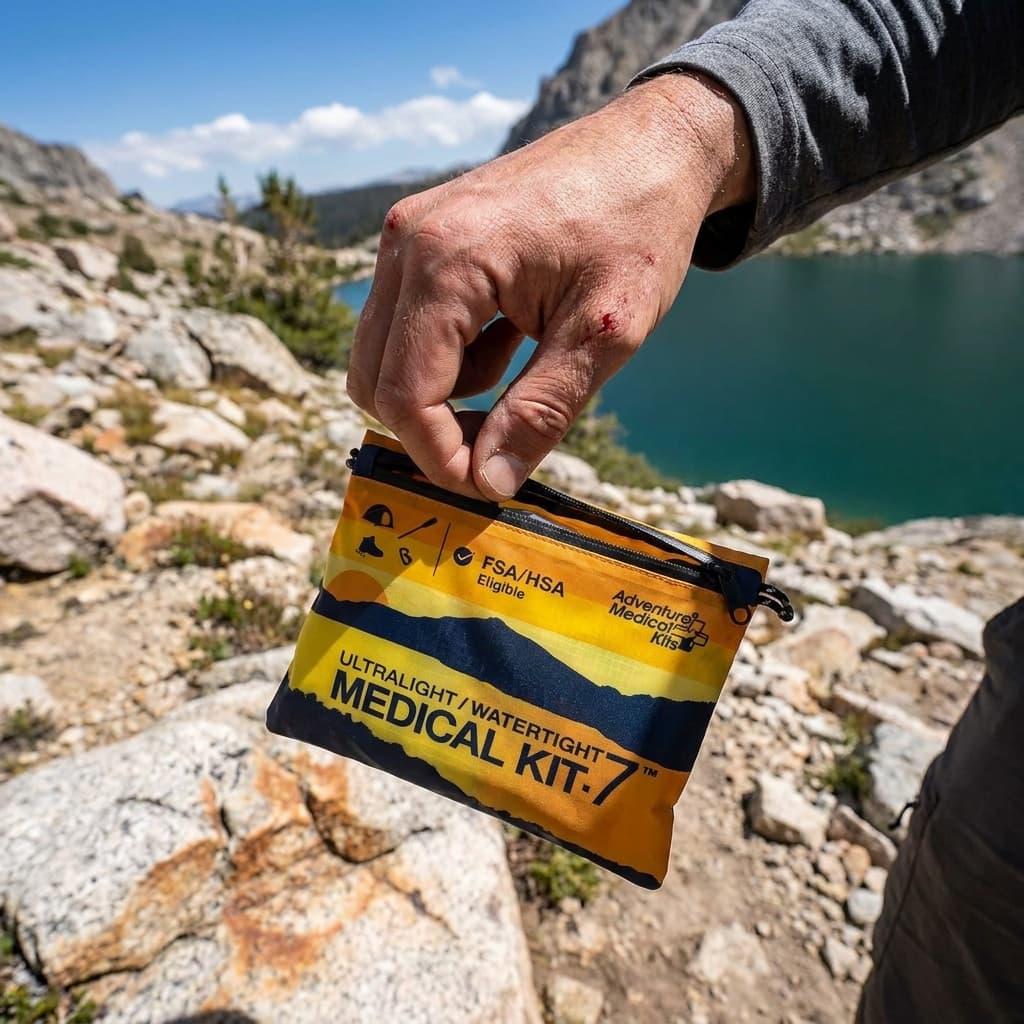
The Ultralight/Watertight .7 is AMK's kit for one or two people on trips of up to four days. At 5.8 oz it disappears into a pack side pocket, and the waterproof DryFlex inner bag keeps bandages and medications dry through stream crossings and downpours.
- Weight
- 5.8 oz (AMK)
- Capacity
- 1 to 2 people, up to 4 days
- Case
- DryFlex waterproof inner bag, water-resistant outer shell
- Medications included
- Yes (aspirin, ibuprofen, acetaminophen, antihistamine)
- Blister care
- Pre-cut moleskin
- Extras
- Duct tape, elastic bandage, tick and splinter forceps
More strengths
- Includes aspirin, ibuprofen, acetaminophen, and diphenhydramine for pain, fever, and allergy
- Compact enough for a pack side pocket while still covering blisters, wounds, and basic trauma
Other tradeoffs
- Quantities are sized for solo to two-person use and run low on longer group trips
The AMK Ultralight/Watertight .7 solves a problem most travel kits ignore: what happens when the kit itself gets soaked. AMK packs the supplies in a waterproof DryFlex inner bag inside a water-resistant outer bag with a DWR finish, so contents stay dry through rain, spray, or a wet pack.
AMK sizes it for one or two people on trips of up to four days and lists it at 5.8 oz. The contents cover the basics: fabric and knuckle bandages, butterfly closures, gauze, non-adherent dressings, an elastic bandage, cloth and duct tape, pre-cut moleskin for blisters, forceps, triple antibiotic, and small doses of aspirin, ibuprofen, acetaminophen, and diphenhydramine. There is no anti-diarrheal or rehydration salts, so add your own for international trips.
At an AMK list price of $44.99, it costs less than the Smart Travel and weighs far less, which suits carry-on-only packers and adventure travelers.
Best for: solo travelers and couples who want a light, waterproof kit for carry-on bags, day packs, and wet trips.
Best budget
BEST BUDGET
BAND-AID Brand Travel Ready Portable Emergency First Aid Kit, 80 Piece
Best for: Budget-conscious travelers, families on road trips, and anyone who wants recognizable brand-name supplies they can easily restock anywhere.
- Recognizable brand-name contents that are easy to restock
- No blister care (no moleskin or hydrogel pads), a meaningful gap for walkers and hikers
Kit Score 8.1/10 · $10.98 Price checked Oct 24, 3:33 PM CDT · how we score gear
Buy on AmazonProduct details
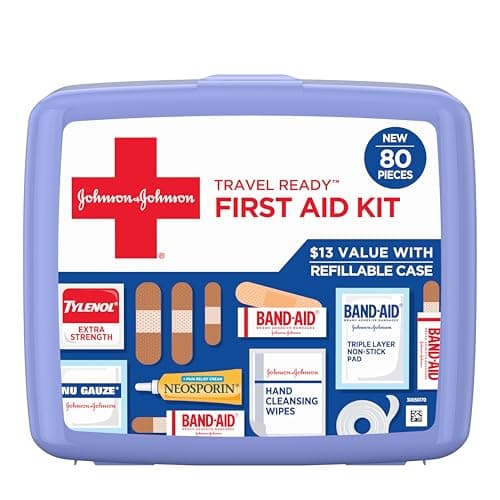
An 80-piece kit in a durable plastic box, built around trusted drugstore brands: BAND-AID bandages, NEOSPORIN, TYLENOL, BENGAY, and BENADRYL. It covers minor cuts, scrapes, burns, and aches, and the contents are easy to restock at US drugstores.
- Piece count
- 80 pieces
- Medications
- TYLENOL acetaminophen caplets, itch-stopping cream, NEOSPORIN antibiotic cream
- Wound care
- Assorted BAND-AID bandages, gauze pads, rolled gauze, cleansing wipes, instant cold pack
- Case
- Durable plastic box (not sold as waterproof)
- Refillability
- Refillable box; drugstore-brand contents
- TSA carry-on
- Yes
More strengths
- Plastic box protects contents better than a soft pouch
- Includes an instant cold pack and a first aid guide
Other tradeoffs
- Water resistance is light-duty; not suitable as a primary kit for wet outdoor environments
The BAND-AID Travel Ready 80-piece gets recognizable supplies into a small plastic box for the price of a lunch. BAND-AID lists cleansing wipes, gauze pads, assorted bandages, rolled gauze, NEOSPORIN antibiotic cream, itch-stopping cream, TYLENOL acetaminophen caplets, an instant cold pack, and a first aid guide, from brands you can restock at almost any US drugstore.
The trade-offs are coverage and waterproofing. There is no blister care, no anti-diarrheal, and no antihistamine tablets, and the plastic box is not sold as waterproof. For a road-trip glove box or a backup kit in a checked bag, that is fine. For international or outdoor trips, pair it with the medicines on the CDC list or step up to an AMK kit.
Best for: budget-conscious travelers, families on road trips, and anyone who wants brand-name supplies they can restock easily.
Side-by-side comparison
| Spec | AMK Smart Travel | AMK Ultralight/Watertight .7 | BAND-AID Travel Ready |
|---|---|---|---|
| Kit Score | 7.9/10 | 7.8/10 | 8.1/10 |
| Price | Check current price | Check current price | $10.98 Price checked Oct 24, 3:33 PM CDT |
| Best for | International travelers, backpackers crossing borders, and anyone prioritizing a built-in medication supply over raw piece count. | Solo hikers and pairs on day hikes through 4-day trips who want waterproof protection without adding noticeable weight. | Budget-conscious travelers, families on road trips, and anyone who wants recognizable brand-name supplies they can easily restock anywhere. |
| Why it stands out | The only kit in this roundup with a full medication suite covering diarrhea, nausea, oral rehydration, and antihistamine for international trip needs | Genuinely waterproof inner bag keeps contents dry in rain and wet crossings | Recognizable brand-name contents that are easy to restock |
| Tradeoff | Heavier and bulkier than an ultralight kit because of the guidebook and medication supply | No irrigation syringe or CPR mask, so owners who want full trauma response should supplement or size up | No blister care (no moleskin or hydrogel pads), a meaningful gap for walkers and hikers |
| Sized for | 1 to 2 people, multiple days | 1 to 2 people, up to 4 days | Minor cuts, scrapes, burns |
| Medications | Pain relievers, antihistamine, loperamide, antacid, bismuth, rehydration salts | Pain relievers, antihistamine | Acetaminophen, antibiotic and itch creams |
| Waterproof | Not stated | Waterproof DryFlex inner bag | Not stated |
| Blister care | GlacierGel dressings, moleskin | Moleskin | None listed |
| Extras | Visual Communication Tool, guidebook, thermometers | Duct tape, elastic bandage | Instant cold pack, first aid guide |
How to choose the right travel first aid kit
Four questions that narrow the field
Trip type first
International trips with uncertain pharmacy access point to the AMK Smart Travel, which carries diarrhea medicine and rehydration salts. Wet or active trips point to the Ultralight/Watertight .7. Road trips and backup kits suit the BAND-AID box.
Carry-on or checked
TSA allows medication in pill or solid form in carry-on bags, and lists medications as exempt from the 3.4 oz liquid limit; declare larger medically necessary liquids and creams so they can be screened separately. Non-medical liquids in your kit still follow the 3-1-1 rule.
Compact vs comprehensive
The Ultralight/Watertight .7 weighs 5.8 oz for carry-on-only trips. The Smart Travel carries more medicine and a guidebook for longer or remote trips.
Refillability
The BAND-AID kit uses drugstore brands that are easy to restock at home. Whatever you carry, restock medicines and blister supplies before you leave rather than counting on finding the same products abroad.
The kit that travels with you on every trip is worth more than the comprehensive one you left at home to save weight.
Frequently asked questions
What is the best travel first aid kit?
For most travelers, the Adventure Medical Kits Smart Travel. AMK builds it for domestic and international trips for one or two people, and it includes pain relievers, an antihistamine, loperamide, an antacid, bismuth, and oral rehydration salts, which cover most of the medicines on the CDC's travel health kit list. For a lighter waterproof kit, choose the AMK Ultralight/Watertight .7; for a cheap backup, the BAND-AID Travel Ready.
Are first aid kits allowed in carry-on luggage?
Yes. TSA allows medication in pill or solid form in carry-on bags, and its 3-1-1 page lists medications as exempt from the 3.4 oz (100 mL) container limit. If you carry medically necessary liquids, gels, or creams larger than 3.4 oz, tell the officer and expect them to be screened separately. Non-medical liquids, like a bottle of hand sanitizer, still go in your quart-sized bag at 3.4 oz or less per container. Sharp items like scissors have their own TSA rules, so check before you fly.
What medications should I pack for international travel?
The CDC's travel health kit list includes pain and fever medicine (such as acetaminophen or ibuprofen), an antihistamine, diarrhea medicine (such as Imodium or Pepto-Bismol), an antacid, a decongestant, motion sickness medicine, and your prescriptions, preferably in their original bottles. Talk to your healthcare professional about destination-specific needs such as antimalarials or an antibiotic for travelers' diarrhea. The AMK Smart Travel covers the pain, allergy, diarrhea, and antacid basics; everything else you add yourself.
How often should I replace or restock a travel first aid kit?
Check your kit before every trip. Replace anything you used on the last trip before repacking, and check the expiration dates on medications and creams. A quick check before departure is worth more than an annual restock you might skip.
Where these numbers come from
| Claim | Source | Checked |
|---|---|---|
| Travel health kit medicines (pain and fever medicine, antihistamine, diarrhea medicine, antacid, decongestant, motion sickness medicine, prescriptions in original bottles) | CDC, Pack Smart | Sep 2026 |
| AMK Smart Travel: for domestic and international travel, 1 to 2 people, multiple days; Visual Communication Tool, travel medicine guidebook, compartments labeled by injury; full contents list including loperamide, aspirin, diphenhydramine, ibuprofen, acetaminophen, calcium carbonate, bismuth subsalicylate, oral rehydration salts, GlacierGel dressings; $74.99 list | Adventure Medical Kits, Smart Travel | Sep 2026 |
| AMK Ultralight/Watertight .7: 1 to 2 people, up to 4 days, 5.8 oz, waterproof DryFlex inner bag and water-resistant DWR outer bag, contents including aspirin, ibuprofen, acetaminophen, diphenhydramine, moleskin, duct tape, elastic bandage; $44.99 list | Adventure Medical Kits, Ultralight/Watertight .7 | Sep 2026 |
| BAND-AID Travel Ready: 80 pieces including cleansing wipes, gauze pads, assorted bandages, rolled gauze, antibiotic cream, itch-stopping cream, acetaminophen caplets, instant cold pack, first aid guide, plastic box; NEOSPORIN, TYLENOL, BENGAY, and BENADRYL brand products | BAND-AID, Travel Ready First Aid Kit | Sep 2026 |
| Medication in pill or solid form allowed in carry-on and checked bags | TSA, Medications (Pills) | Sep 2026 |
| 3-1-1 rule: 3.4 oz (100 mL) containers in one quart-sized bag; medications exempt | TSA, Liquids, Aerosols, and Gels Rule | Sep 2026 |
| Medically necessary liquids, medications, and creams over 3.4 oz allowed in carry-on, screened separately | TSA, Traveling with medication | Sep 2026 |
We did not test these kits ourselves. Contents and weights are the makers' published specs, and this is general information, not medical advice; ask your healthcare professional which medicines suit you and your destination.
The right kit gets your trip back on track without interrupting it. Read whether you can bring a first aid kit on a plane, find more gear breakdowns in the travel hub, or read how we research and rate every piece of kit on this site.
Keep going
Our recommendations draw on manufacturer documentation, retailer listings, owner feedback, and comparisons with alternatives.
As an Amazon Associate I earn from qualifying purchases. We may earn a commission from links here, at no extra cost to you. How we research →