
Walking is one of the most effective and forgiving fitness tools available, and a structured plan turns casual strolls into real, measurable progress.
How the 4-week structure works
The plan follows a simple pattern: add frequency in weeks 1-2, add intensity in weeks 2-3, add load in weeks 3-4. Each variable is introduced one at a time so your body can adapt without breaking down.
Keep at least one rest day between sessions in weeks 1 and 2. By week 3, you can walk on back-to-back days as long as one of those days is an easy, flat recovery walk.
Week-by-week breakdown
Week 1: Build the habit. Three sessions of 20-30 minutes at a comfortable, conversational pace. Flat terrain. Focus on consistent footfall, relaxed shoulders, and a slight forward lean from the ankles. This is not the week to push.
Week 2: Add a session and a day. Move to 4 days per week. Extend two of your sessions to 35-40 minutes. Introduce one incline day: find a hill, a treadmill with a 4-6% grade, or a staircase loop. Incline walking recruits the glutes and calves at a much higher rate than flat walking and bumps heart rate without requiring a faster pace.
Week 3: Add brisk intervals. Move to 4-5 days per week. On two of your sessions, alternate 2 minutes of brisk walking (a 7-8 out of 10 effort, where full sentences are hard) with 2 minutes of easy recovery walking. Start with 4 rounds and build to 6. Keep one session easy and flat as active recovery.
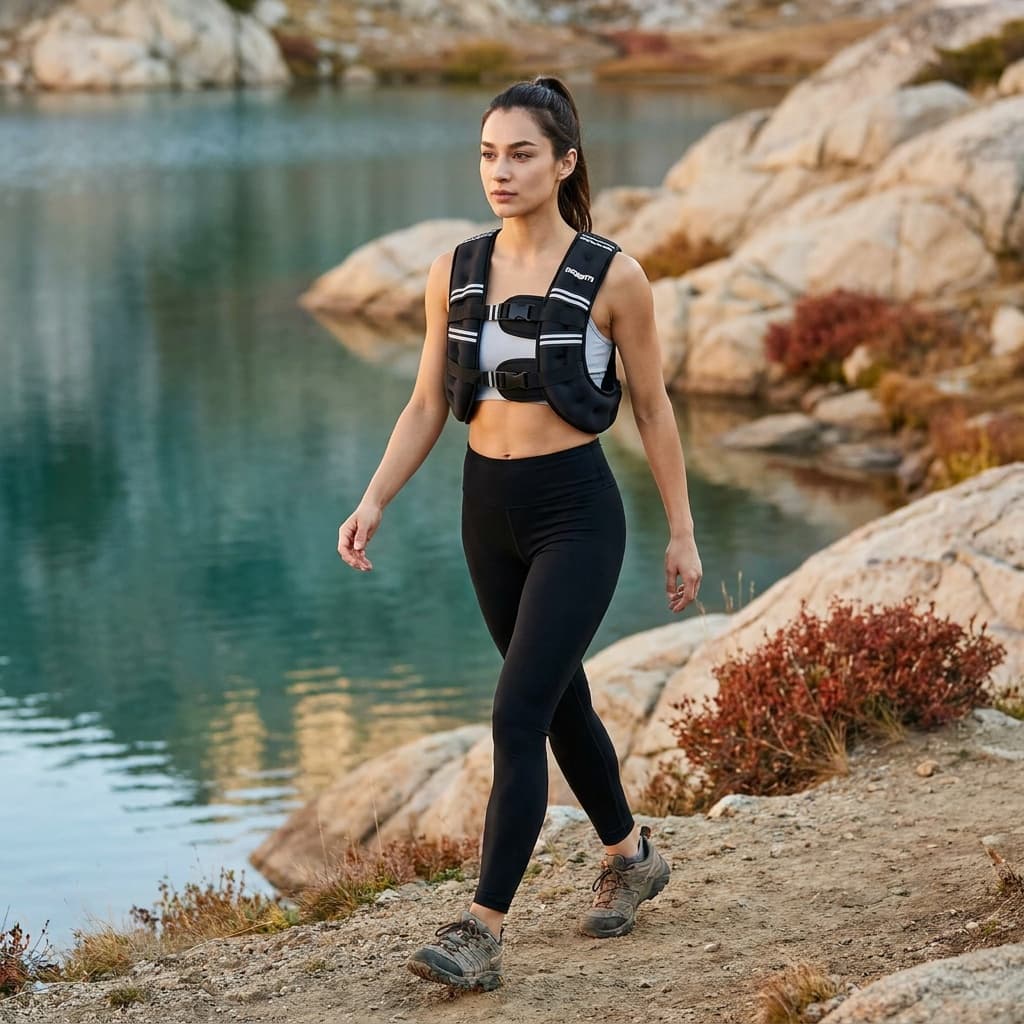
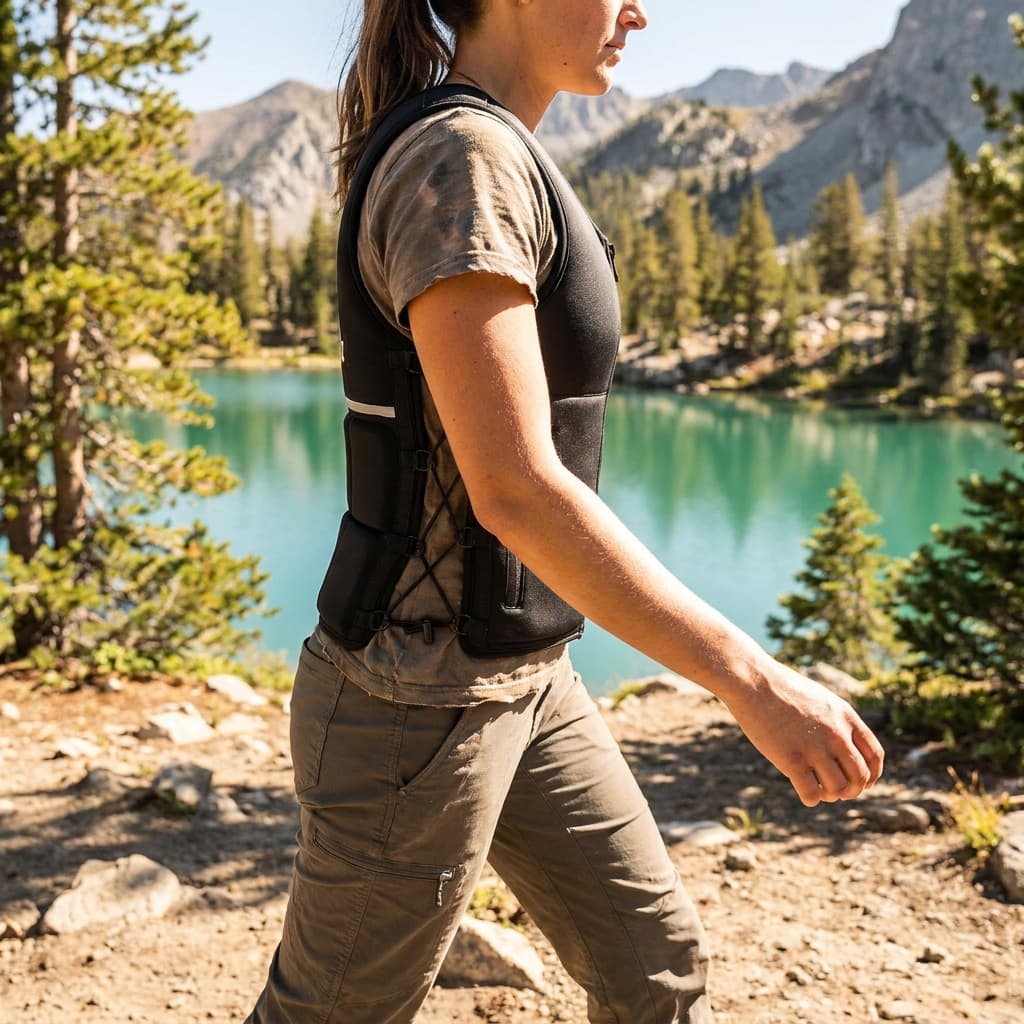
Week 4: Introduce load. Add a weighted vest like the BAGAIL Comfort-Fit on one or two non-interval sessions. Start at 5% of your body weight. A 150-pound person uses about 7-8 lbs. Walk at your easy pace: the vest raises the metabolic cost without requiring you to change your form or speed.
A sample week 3 schedule
Sample week 3 (5 days)
Monday
40 min easy walk, flat terrain
Tuesday
Rest or light stretching
Wednesday
35 min brisk-interval day (4-6 rounds of 2 min fast, 2 min easy)
Thursday
30 min easy recovery walk
Friday
35 min incline day (treadmill 5% grade or outdoor hill loop)
Saturday
40 min brisk-interval day (5-6 rounds)
Sunday
Rest
Adding a weighted vest: what to know before you load up
A weighted vest is the cleanest progressive overload tool for walkers because it distributes load symmetrically across your torso, keeps your arms free, and does not alter your gait the way carrying hand weights or a heavy backpack can (our sibling site Ruck Authority breaks down that trade-off in its weighted vest vs. rucksack comparison).
The standard guidance from exercise science research: start at 5-10% of body weight and do not exceed 15% for most users. Above 15%, gait compensation patterns (shortened stride, forward lean, altered foot strike) start to appear and the injury risk climbs faster than the benefit.
The vest raises the cost of every step without asking you to move any faster, which is exactly the kind of low-impact overload that walkers can sustain long-term.
Wear the vest on your easy or steady-state days first, not on interval days. Once easy-vest walks feel routine after 2-3 weeks, you can bring the vest to one interval session. Add weight in small increments (1-2 lbs at a time, which an adjustable model like the Sportneer Adjustable Weighted Vest makes easy) rather than jumping plates.
For a full breakdown of what to look for in a vest, including plate-loaded vs. shot-filled designs and fit considerations, see the best weighted vests for walking.
How to progress after week 4
Week 4 is not the end: it is the baseline. From here, you have three levers to pull, and the rule is simple: change only one at a time.
Lever 1: Duration. Add 5 minutes to your longest weekly session every 1-2 weeks until you reach a duration that fits your schedule and goals. Most people plateau the benefit curve around 60-75 minutes for a single session.
Lever 2: Intensity. Extend your brisk intervals (3 minutes fast, 2 easy) or shorten the rest (2 minutes fast, 1 easy). You can also increase treadmill incline from 5% to 8-10%.
Lever 3: Vest weight. Add 1-2 lbs every 2-3 weeks as long as your form stays clean. Check your gait in a mirror or a store window: your torso should stay upright, not pitched forward.
Starting this plan in winter? Dress by the forecast with our guide to what to wear for winter walking, and swap any outdoor session for one of the walking pad workouts when the sidewalks ice over.
A useful long-term target: 150-200 minutes of moderate-intensity walking per week, which aligns with the physical activity guidelines from the U.S. Department of Health and Human Services. That is about 30-40 minutes on 5 days. Once you hit that target consistently, the vest and interval days become your primary tools for continued adaptation.
Frequently asked questions
How fast should I walk on easy days?
Easy days should feel conversational: you can speak in full sentences without gasping. On a 1-10 effort scale, aim for a 4-5. Pace in miles-per-hour is less important than perceived effort because fitness levels vary. A typical easy walking pace falls between 2.5 and 3.5 mph, but do not anchor to a number at the expense of listening to your body.
Can I do this plan on a treadmill instead of outdoors?
Yes, and a treadmill has one practical advantage: you can dial in exact incline percentages and hold a consistent pace without traffic or terrain variation. Set the incline to at least 1% on flat days to better approximate outdoor walking mechanics. The plan works identically either way.
Is it safe to use a weighted vest if I have joint issues?
Check with your doctor or physical therapist before adding load if you have active knee, hip, or spinal conditions. For most people with mild joint discomfort, a vest is actually more joint-friendly than hand weights or a backpack because the load sits centered over your hips and spine. Start at the lower end (5% of body weight) and pay attention to any change in knee or hip sensation during or after a session.
What is a good walking routine for a beginner?
Three sessions per week of 20-30 minutes at a conversational pace is the proven starting routine, with at least one rest day between sessions. That is deliberately modest: the first two weeks exist to condition joints and build the habit, not to chase intensity. From there, add one variable per week in this order: a fourth day, then longer sessions, then brisk intervals, then load. The 4-week breakdown above turns that sequence into a day-by-day schedule you can follow as written.
How do I create my own walking plan?
Start from four questions: how many days per week can you realistically walk (start with three), how long can you comfortably walk today (that is your week 1 session length), what intensity tools you have access to (hills, a treadmill with incline, or flat ground with intervals), and whether you want to add load later. Then apply the one-variable rule: each week, increase frequency, duration, intensity, or load, never two at once. If you would rather have the schedule generated for you, the free walking plan builder builds a progressive 8-week plan around your level, goal, and available days.
How long until a beginner walking program shows results?
Faster than most people expect, in stages. Energy and mood improvements often show up within the first two weeks. Measurable cardiovascular changes, such as a lower heart rate at the same pace, typically appear within 4-8 weeks of consistent walking. Weight change depends on diet as well, but the 150-200 minutes per week you reach by week 4 of this plan matches the activity dose associated with meaningful long-term health outcomes in the federal physical activity guidelines. The practical marker: when your week 1 route feels easy, the program is working.
Ready to add load to your walks? The best weighted vests for walking covers the top options across price points, plate-loaded and shot-filled designs, and fit guidance for different body types. Browse the full fitness hub for more training and gear guides, or learn about how we research the recommendations on this site.
Recommended gear
Our current top picks from the The best weighted vests for walking, from beginner to budget guide, if you are ready to buy.
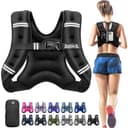
BAGAIL
BAGAIL Comfort-Fit Weighted Vest
Best Overall
Kit Score 8.8/10
$24.99 Price checked Oct 25, 3:41 PM CDT
Best for: Walkers and everyday fitness enthusiasts who want a polished, comfort-first vest they can wear daily without irritation.
- Even weight distribution prevents the vest from shifting or bouncing during walks
- Fixed weight per vest means you need to buy a new vest to add significant load
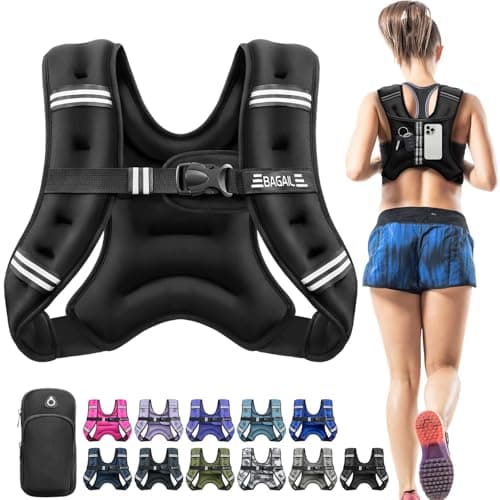
- Weight Options
- 5, 8, 10, 12, 15, 20, 25, 30 lb
- Material
- Neoprene outer, iron sand fill
- Closure
- Adjustable buckle straps
- Safety
- Reflective stripes
- Storage
- Detachable phone pouch + back pocket
- Rating (Amazon)
- 4.6 stars / 3,661 reviews
About this pick
The BAGAIL Comfort-Fit pairs a stable fit with practical details like a detachable phone pouch. It is sold in fixed loads from 5 to 30 lb, so buyers must choose the weight before purchase.
Strengths
- Even weight distribution prevents the vest from shifting or bouncing during walks
- No-chafe construction with padded contact points, comfortable for extended daily wear
- Detachable phone pouch is a practical feature most budget vests omit
- Multiple fixed-load options from 5 to 30 lb let buyers choose a conservative current load
Weaknesses
- Fixed weight per vest means you need to buy a new vest to add significant load
- Neoprene can retain heat on warm days; breathability is limited compared to open-mesh designs
Kit Score breakdown

Best for: Budget-conscious walkers who want the highest-rated vest in the category without spending more than necessary.
- Highest owner rating (4.7 stars) in the category backed by nearly 5,000 verified reviews
- Fixed weight construction, no option to incrementally add or remove plates
- Weight Options
- 6, 8, 10, 12, 16, 20, 25, 30 lb
- Material
- Odor-free Lycra fabric, fixed internal weight
- Shoulder Padding
- Yes, integrated padded shoulders
- Safety
- Reflective stripes
- Storage
- Phone pouch
- Rating (Amazon)
- 4.7 stars / 4,881 reviews
About this pick
The PACEARTH edges out rivals on owner satisfaction, scoring 4.7 stars from nearly 5,000 buyers. Odor-resistant Lycra and integrated shoulder padding punch well above its low price, making it the top pick for value-focused walkers.
Strengths
- Highest owner rating (4.7 stars) in the category backed by nearly 5,000 verified reviews
- Odor-free Lycra fabric stays fresher longer than neoprene alternatives
- Padded shoulders reduce fatigue on longer walks, uncommon at this price point
- Low price on the lighter weight options makes it an accessible entry point
Weaknesses
- Fixed weight construction, no option to incrementally add or remove plates
- One-size-fits-most fit may not suit very petite or very large frames as snugly
Kit Score breakdown
Best for: Walkers who want the most proven vest on the market with the largest owner review base and excellent breathability for warm-weather walks.
- Over 16,000 reviews makes this the most battle-tested vest in the category, a strong signal of consistent quality
- Fixed weight only, no modular plates or removable inserts for incremental progression
- Weight Options
- 6, 8, 12, 16, 20, 25, 30 lb
- Material
- Spandex fabric, iron sand fill
- Chest Fit Range
- 31.5" – 45" (one-size-fits-most)
- Safety
- Reflective stripes
- Storage
- Built-in back pocket
- Rating (Amazon)
- 4.6 stars / 16,028 reviews
About this pick
With 16,000+ Amazon reviews and a nod from Garage Gym Reviews as their top budget pick, the ZELUS is the most extensively validated walking vest in this roundup. Its soft spandex construction and wide chest-fit range make it a dependable choice for a broad range of body types.
Strengths
- Over 16,000 reviews makes this the most battle-tested vest in the category, a strong signal of consistent quality
- Spandex construction tends to run cooler than full neoprene vests
- Adjustable straps accommodate a wide range of chest sizes from 31.5 to 45 inches
- Named Best Budget Weighted Vest by Garage Gym Reviews in their independently tested 2026 roundup
Weaknesses
- Fixed weight only, no modular plates or removable inserts for incremental progression
- Universal sizing may feel slightly loose on smaller frames without maximum strap tightening
Kit Score breakdown
See all picks in The best weighted vests for walking, from beginner to budget
Keep going
Free toolBeginner Walking PlanA free 8-week beginner walking plan built around your week.
Researched, not hands-on tested
Updated Jul 7, 2026Our recommendations draw on manufacturer documentation, retailer listings, owner feedback, and comparisons with alternatives.
As an Amazon Associate I earn from qualifying purchases. We may earn a commission from links here, at no extra cost to you. How we research →