
Running with a weighted vest raises your cardiovascular demand and calorie burn without changing pace. Whether that tradeoff is worth it depends on your goals, your current fitness base, and how seriously you take the risk side of the ledger.
Is running with a weighted vest a good idea?
The honest answer is: sometimes, for some people, at very light loads. The research on weighted running is thinner than the literature on weighted walking, and the risk profile is meaningfully different.
Walking generates ground reaction forces of roughly 1.0–1.2 times bodyweight. Running generates 2.0–3.0 times bodyweight, and on impact peaks, higher still. Adding a vest multiplies those forces on every single stride. A 2006 study by Puthoff et al. in Medicine and Science in Sports and Exercise found that vest loads of 15–20% of body mass caused a significant rise in ground reaction forces during treadmill walking at moderate speeds. During running, the same loading percentage produces a steeper force increase from an already elevated baseline.
The training argument for running with a vest is real. It raises oxygen consumption and heart rate at a given pace, which can improve aerobic fitness and running economy over time. Some research on military personnel shows improved VO2max and speed in conditioned athletes training with light vest loads. But those are conditioned athletes, using light loads, with trained coaches watching their form.
The case for running with a weighted vest is not that it is safe by default. It is that a specific type of athlete, at a specific load, with clean form, can do it without accumulating damage.
For most recreational runners, the risk-to-benefit math is poor. The marginal training gain over unweighted running or alternatives like incline walking does not justify the added joint, tendon, and disc load.
The real risks: joints, gait, and impact
Joint load. Knee, hip, and ankle joints absorb the cumulative shock of thousands of footstrikes per run. A vest that adds 10% of bodyweight to a 150 lb runner adds 15 lb of force multiplication across every step. Over a 30-minute run at roughly 150 steps per minute, that is 4,500 repetitions of elevated impact.
Gait disruption. Adding anterior weight (chest plates) shifts your center of mass forward. Adding posterior weight pulls you back. Either creates compensatory movement patterns: forward lean, shortened stride, altered foot strike, increased torso rotation. Compensatory gait under impact is the mechanism behind stress fractures, patellar tendinopathy, and IT band syndrome.
Spinal compression. Dr. Colin Haines at SpineMD notes that external load during running increases disc compression disproportionately compared to walking because of the repetitive impact component. Anyone with a history of disc problems should treat this as a hard contraindication, not a caution.
Breathing and cardiovascular stress. A vest compresses the thorax to some degree. At effort levels where you are already breathing hard, that compression adds to respiratory work. In healthy runners, this is manageable. In anyone with cardiovascular or pulmonary conditions, it is not.
Who should run with a weighted vest (and who should not)
Potentially appropriate candidates:
- Conditioned runners with at least six months of consistent unweighted mileage at their current volume
- Military, tactical, or performance athletes training under supervision for load-specific events
- Runners who have been cleared by a physical therapist after assessing their gait and joint health
Skip it entirely if you have:
- Any current lower limb, back, or hip injury
- A history of stress fractures
- Disc problems or sciatica
- Uncontrolled hypertension
- Less than six months of consistent running base
- A history of poor running form (overstriding, excessive forward lean, collapse at the knee)
If you are a beginner runner or still building base mileage, the vest adds nothing you need and risks the foundation you are still building.
Choosing a vest for running
Vest design matters far more for running than for walking. The two properties that determine whether a vest is usable for running are fit and bounce suppression.
What to look for in a running vest
Compression fit over adjustable plates
Running vests need to sit flush against the torso at all times. Plate-carrier-style vests designed for strength training or rucking shift too much under running movement. Look for vests with close-body wrap construction, like the [Hyperwear HyperVest ELITE](/api/go?product=hyperwear-hyper-vest-elite&retailer=amazon&article=how-to-run-with-a-weighted-vest), and wide elastic or velcro adjustment across the chest and shoulders.
Front and back load balance
Weight distributed evenly front and back keeps your center of mass where it belongs and reduces torso rotation. Vest designs that load only the front shift you forward into compensatory lean.
Breathability
Running generates substantially more heat than walking. A vest that traps heat raises your core temperature and perceived exertion faster, shortening usable session length. Mesh panels and moisture-wicking materials, as on the [miR Air Flow Weighted Vest](/api/go?product=mir-air-flow-adjustable-weighted-vest&retailer=amazon&article=how-to-run-with-a-weighted-vest), are functional, not cosmetic.
Weight range
For running, you need a vest that fits well at 5–10 lb. Heavier adjustable vests designed for 20–40 lb are overkill and often fit too loosely at the low end of their range. A vest sized for the load you will actually use will fit better.
No bounce
Test the vest with short accelerations before committing to a full run. Any upward displacement of the vest during footstrike means the fit is wrong.
For specific models suited to lighter running loads, see our guide to the best weighted vests for walking and fitness, which covers vest styles across the compression-to-plate-carrier spectrum.
How to start safely
If you have a solid running base and you want to try vest running, start more conservatively than feels necessary.
Keep load at or under 5% of your bodyweight. For a 150 lb runner that is 7–8 lb maximum. For a 180 lb runner, 9 lb. Physical therapists cite 5% as the upper limit for running specifically, compared to 10% for walking, because of the impact multiplier.
Start with short, flat runs. Ten to fifteen minutes on a flat surface. Not your regular workout distance. Assess your gait: does your cadence feel normal? Is your foot strike clean? Are you compensating with your torso? If anything feels off, the load is too heavy or the vest fit is wrong.
Progress by extending duration before adding weight. Add one to two weeks of comfortable running at the current load before considering any increase. Never increase weight and distance in the same session.
Alternatives worth considering
Most of the training goals people pursue with a running vest are better served by other methods, with lower injury risk.
Incline walking with a vest. Research from ACE/University of New Mexico found that walking at a 5–10% incline with a vest equal to 10% of bodyweight produced a 13% increase in caloric expenditure, comparable to the gains from heavier vest loads on flat ground, with walking's much lower ground reaction forces. This is the highest-evidence, lowest-risk combination for most fitness goals.
Rucking. Loaded backpack walking (rucking) shifts more demand to the posterior chain and upper back extensors compared to a vest. It is a legitimate training modality with a strong evidence base for cardiovascular and muscular conditioning, and it does not carry the impact risks of running. A 35 lb ruck is very different mechanically from a 35 lb running vest.
Hill sprints. Unweighted hill sprints increase cardiovascular demand, power output, and muscular load through the movement itself. No vest required, no impact multiplication.
Strength training. If the goal is building the muscular base that supports running, weighted squats, lunges, and deadlifts do it more directly and with better load control than a running vest.
For most recreational runners, the answer to "should I add a vest to my runs?" is: try a weighted walk first. If you adapt well and want more, graduate to inclines before you graduate to running.
Frequently asked questions
What weight vest should I use for running?
Stay at or under 5% of your bodyweight, which is the upper limit cited by most physical therapists for running. That means 7–8 lb for a 150 lb runner, 9 lb for a 180 lb runner. This is lower than the 10% soft cap for walking because running already generates two to three times bodyweight in ground reaction forces; adding external load multiplies that from a higher starting point. If you are new to vest running, start at 3–5% and build up.
Can running with a weighted vest cause injury?
Yes, if the load is too high, the vest fit is poor, or you have not built a sufficient unweighted running base first. The main injury mechanisms are altered gait mechanics leading to overuse injuries (stress fractures, tendinopathy, IT band problems) and increased spinal compression on every footstrike. Keeping load under 5% bodyweight, using a well-fitted vest with minimal bounce, and running shorter distances than your normal workout reduces but does not eliminate these risks.
Is rucking better than running with a weighted vest?
For most people, rucking is lower risk and produces comparable cardiovascular and muscular benefits. Rucking is loaded walking, which means much lower ground reaction forces than running. The load in a rucksack concentrates on the posterior chain rather than distributing front and back, which changes the muscular emphasis, but the injury risk profile is substantially better than running with a vest. If your goal is general fitness rather than sport-specific running performance, rucking is worth trying before vest running.
Browse the full fitness hub for more gear and training guides, or read how we research and rate the advice on this site.
Recommended gear
Our current top picks from the The best weighted vests for walking, from beginner to budget guide, if you are ready to buy.
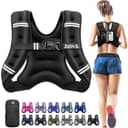
BAGAIL
BAGAIL Comfort-Fit Weighted Vest
Best Overall
Kit Score 8.8/10
$24.99 Price checked Oct 23, 6:22 AM CDT
Best for: Walkers and everyday fitness enthusiasts who want a polished, comfort-first vest they can wear daily without irritation.
- Even weight distribution prevents the vest from shifting or bouncing during walks
- Fixed weight per vest means you need to buy a new vest to add significant load
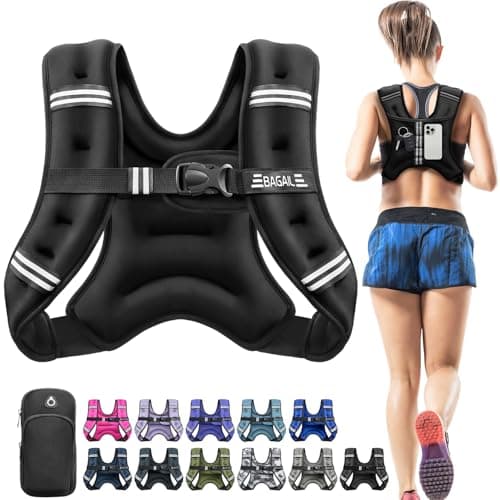
- Weight Options
- 5, 8, 10, 12, 15, 20, 25, 30 lb
- Material
- Neoprene outer, iron sand fill
- Closure
- Adjustable buckle straps
- Safety
- Reflective stripes
- Storage
- Detachable phone pouch + back pocket
- Rating (Amazon)
- 4.6 stars / 3,661 reviews
About this pick
The BAGAIL Comfort-Fit pairs a stable fit with practical details like a detachable phone pouch. It is sold in fixed loads from 5 to 30 lb, so buyers must choose the weight before purchase.
Strengths
- Even weight distribution prevents the vest from shifting or bouncing during walks
- No-chafe construction with padded contact points, comfortable for extended daily wear
- Detachable phone pouch is a practical feature most budget vests omit
- Multiple fixed-load options from 5 to 30 lb let buyers choose a conservative current load
Weaknesses
- Fixed weight per vest means you need to buy a new vest to add significant load
- Neoprene can retain heat on warm days; breathability is limited compared to open-mesh designs
Kit Score breakdown

Best for: Budget-conscious walkers who want the highest-rated vest in the category without spending more than necessary.
- Highest owner rating (4.7 stars) in the category backed by nearly 5,000 verified reviews
- Fixed weight construction, no option to incrementally add or remove plates
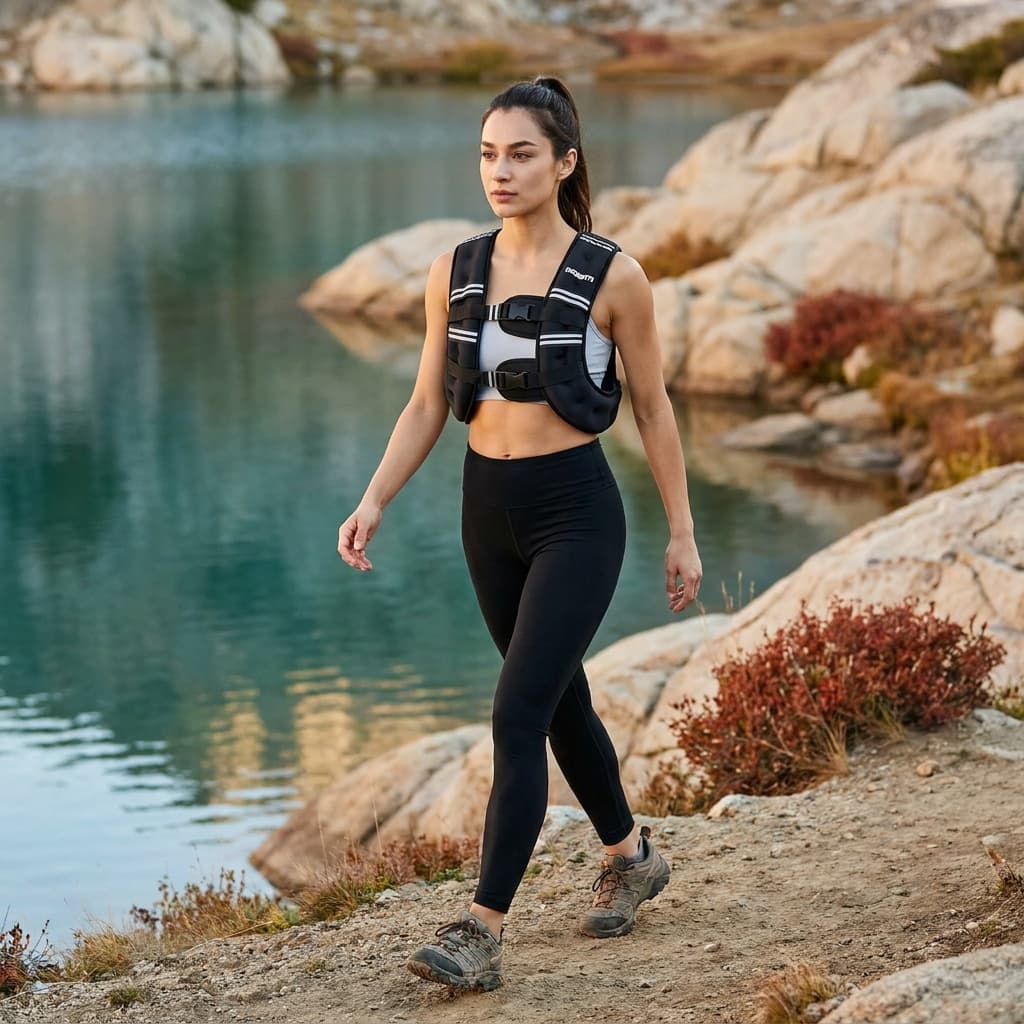
- Weight Options
- 6, 8, 10, 12, 16, 20, 25, 30 lb
- Material
- Odor-free Lycra fabric, fixed internal weight
- Shoulder Padding
- Yes, integrated padded shoulders
- Safety
- Reflective stripes
- Storage
- Phone pouch
- Rating (Amazon)
- 4.7 stars / 4,881 reviews
About this pick
The PACEARTH edges out rivals on owner satisfaction, scoring 4.7 stars from nearly 5,000 buyers. Odor-resistant Lycra and integrated shoulder padding punch well above its low price, making it the top pick for value-focused walkers.
Strengths
- Highest owner rating (4.7 stars) in the category backed by nearly 5,000 verified reviews
- Odor-free Lycra fabric stays fresher longer than neoprene alternatives
- Padded shoulders reduce fatigue on longer walks, uncommon at this price point
- Low price on the lighter weight options makes it an accessible entry point
Weaknesses
- Fixed weight construction, no option to incrementally add or remove plates
- One-size-fits-most fit may not suit very petite or very large frames as snugly
Kit Score breakdown

Best for: Walkers who want the most proven vest on the market with the largest owner review base and excellent breathability for warm-weather walks.
- Over 16,000 reviews makes this the most battle-tested vest in the category, a strong signal of consistent quality
- Fixed weight only, no modular plates or removable inserts for incremental progression
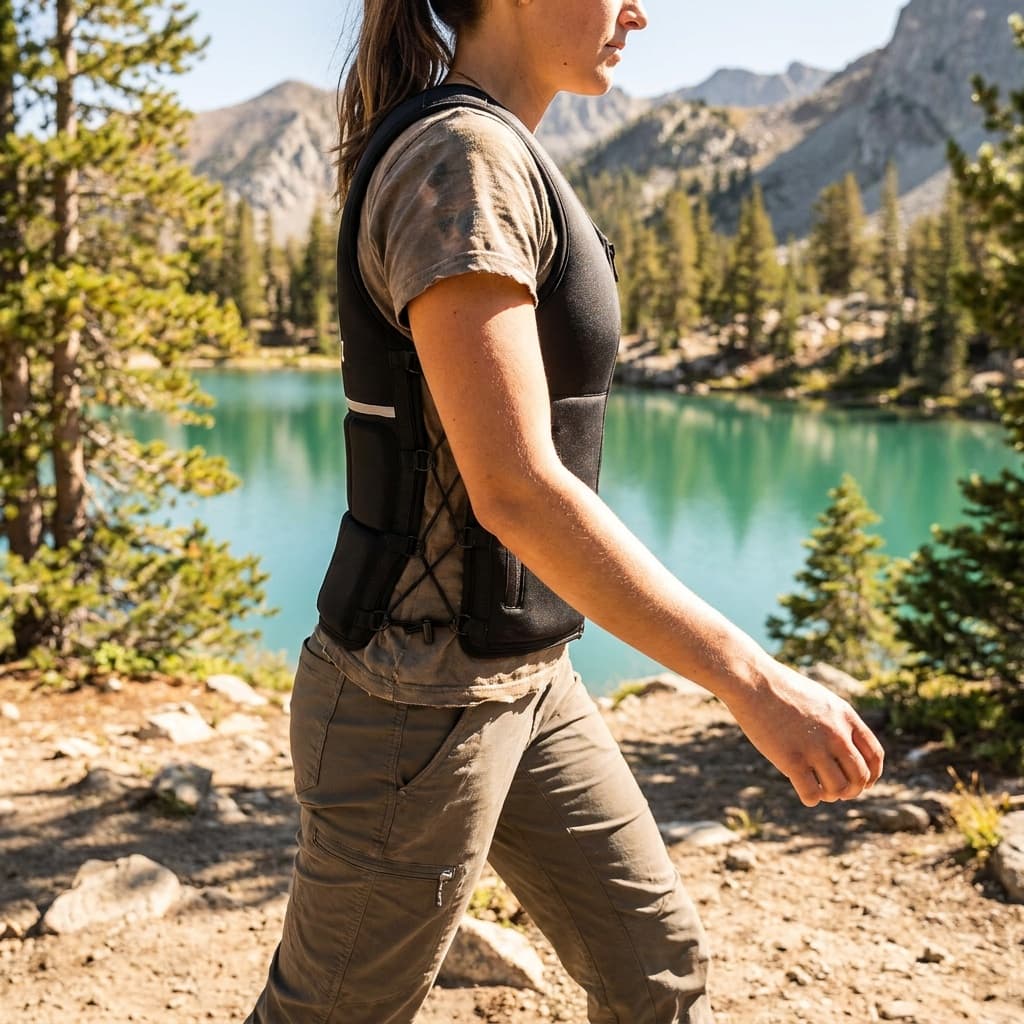
- Weight Options
- 6, 8, 12, 16, 20, 25, 30 lb
- Material
- Spandex fabric, iron sand fill
- Chest Fit Range
- 31.5" – 45" (one-size-fits-most)
- Safety
- Reflective stripes
- Storage
- Built-in back pocket
- Rating (Amazon)
- 4.6 stars / 16,028 reviews
About this pick
With 16,000+ Amazon reviews and a nod from Garage Gym Reviews as their top budget pick, the ZELUS is the most extensively validated walking vest in this roundup. Its soft spandex construction and wide chest-fit range make it a dependable choice for a broad range of body types.
Strengths
- Over 16,000 reviews makes this the most battle-tested vest in the category, a strong signal of consistent quality
- Spandex construction tends to run cooler than full neoprene vests
- Adjustable straps accommodate a wide range of chest sizes from 31.5 to 45 inches
- Named Best Budget Weighted Vest by Garage Gym Reviews in their independently tested 2026 roundup
Weaknesses
- Fixed weight only, no modular plates or removable inserts for incremental progression
- Universal sizing may feel slightly loose on smaller frames without maximum strap tightening
Kit Score breakdown
See all picks in The best weighted vests for walking, from beginner to budget
Keep going
Complete loadoutWeighted-vest starter kitA beginner setup that pairs an adjustable vest with shoes, socks, and tracking for a repeatable walking routine.

Researched, not hands-on tested
Updated Jun 7, 2026Our recommendations draw on manufacturer documentation, retailer listings, owner feedback, and comparisons with alternatives.
As an Amazon Associate I earn from qualifying purchases. We may earn a commission from links here, at no extra cost to you. How we research →