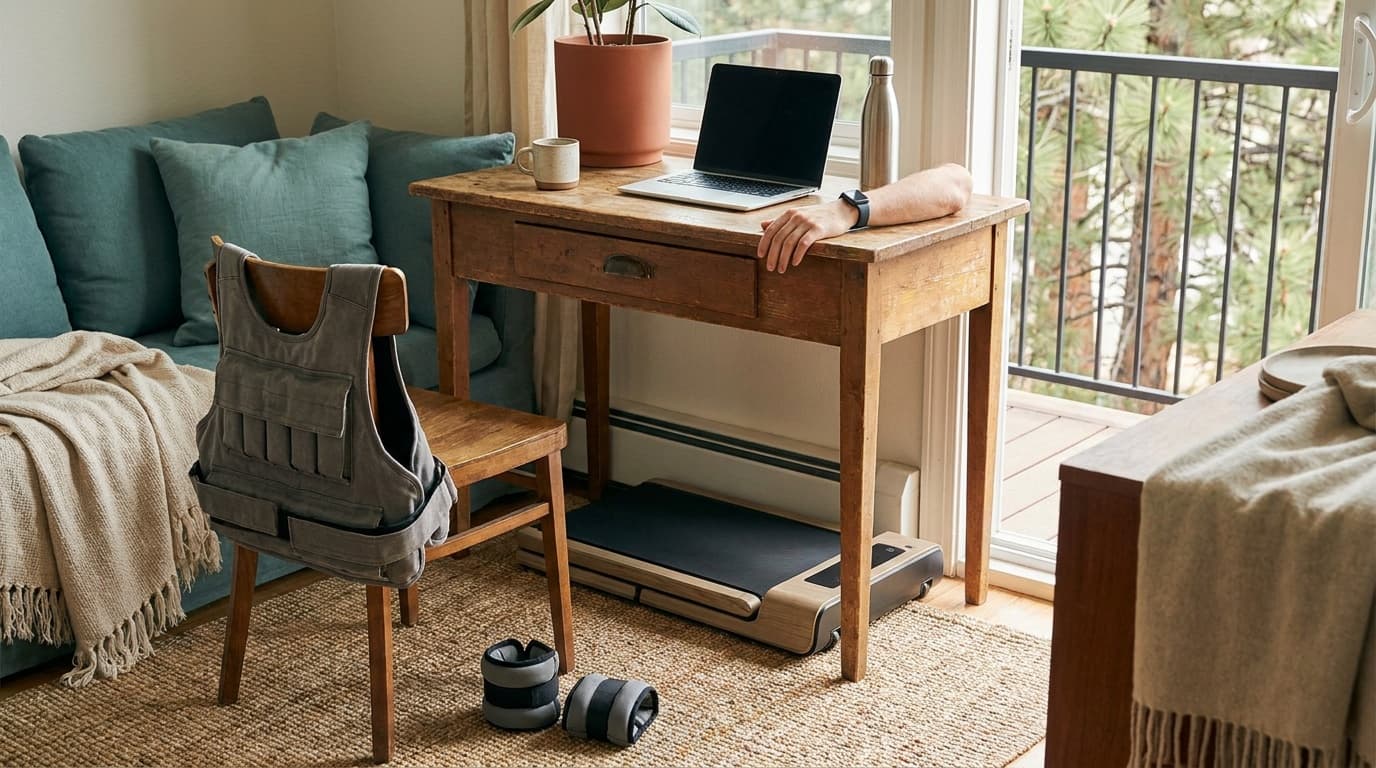
The most common mistake with a weighted vest isn't going too fast or too slow. It's starting too heavy, skipping the adjustment period, and paying for it in the knees or lower back a few weeks later.
The numbers that actually matter
Sports medicine research and clinical guidelines converge on a handful of load thresholds worth knowing before you buy or load a vest.
These numbers come from real sources. Puthoff et al. (2006, Medicine & Science in Sports & Exercise) tested vests at 0%, 10%, 15%, and 20% of body mass during treadmill walking and found a clear dose-response relationship: ground reaction forces rose significantly at 15% and 20% compared to an unweighted baseline. Northwestern Medicine's Dr. Harangody sets the practical ceiling at 10% of total body weight for general use. The bone-health sweet spot sits around 8% body mass, enough skeletal loading to promote bone formation without the joint forces seen at higher percentages.
Weighted vest size chart: load by bodyweight and experience
Five percent sounds abstract. Here's what it means in pounds, across the three stages most people actually move through: the beginner start, the intermediate range after a few months of consistent use, and the soft cap where most walkers should stop.
| Bodyweight | Beginner start (5%) | Intermediate (8%) | Soft cap (10%) |
|---|---|---|---|
| 120 lb | 6 lb | 9–10 lb | 12 lb |
| 150 lb | 7–8 lb | 12 lb | 15 lb |
| 180 lb | 9 lb | 14–15 lb | 18 lb |
| 200 lb | 10 lb | 16 lb | 20 lb |
| 220 lb | 11 lb | 17–18 lb | 22 lb |
| 250 lb | 12–13 lb | 20 lb | 25 lb |
If you're between loads, round down. A vest that fits well at a slightly lighter load is safer than an overloaded vest that shifts on your torso. For a personalized version of this chart, including a week-by-week ramp, the weighted vest sizing calculator runs the same numbers against your bodyweight and goal. If the load feels right but the vest shifts or presses on your neck, see our weighted vest fit and plate guide.
What size vest should you buy?
Buying size is a different question from starting load. Buy an adjustable vest whose maximum capacity is at or slightly above your 10% soft cap, then load it down to your 5% starting weight on day one. A 150 lb walker is well served by a 15–20 lb adjustable vest; a 200 lb walker should look at 20–25 lb capacity. Buying capacity you will grow into beats buying a second vest six months later, and it is why fixed-weight vests are the wrong first purchase for most people.
Where the 5% starting rule comes from
The 5% figure is not one brand's marketing number. It is the starting load commonly cited by clinicians across major health systems, including geriatric and sports medicine specialists at UCLA Health, who recommend beginners start with a vest around 5% of body weight and progress only after the current load feels easy. Northwestern Medicine's guidance points the same direction, with a 10% practical ceiling for general use. The consistency across sources is the point: independent clinical voices converge on start near 5%, cap near 10%, progress slowly.
Even one to two pounds can stimulate adaptation, so there is no minimum threshold for benefit.
University Hospitals sports medicine specialist Dr. Jacob Calcei makes this point directly: you don't need to chase heavy loads to see results. The adaptation signal starts at very modest loads. That matters because it removes the psychological pressure to add weight faster than your body can absorb it.
How to progress safely
The rule is simple: distance leads weight. Add duration or distance first, then add load. Never add both at the same time.
Weighted vest progression
Start at 5% bodyweight
Pick an adjustable vest, such as the CAP 20 LB Adjustable Weighted Vest, loaded at roughly 5% of your bodyweight. On your first session, do less than your normal workout distance or duration. For example, if you usually walk a mile, start with a quarter mile in the vest.
Build duration first
Increase the duration or distance each session until you can complete your full normal workout at the current load with no pain and no form changes. This usually takes 1–3 weeks depending on the starting load.
Add weight gradually
Once you've completed the full workout comfortably at the current load, add 2–5 lb (or roughly 1–2% of your bodyweight); a vest with fine weight increments like the [Hyperwear Hyper Vest PRO](/api/go?product=hyperwear-hyper-vest-pro&retailer=amazon&article=how-much-should-a-weighted-vest-weigh) makes these small jumps practical. Do not skip the adaptation phase before loading up again.
Hold at 10% for most goals
For walking, hiking, and general fitness, the 10% bodyweight ceiling is where most people should stop. The metabolic and bone-loading benefits at this range are meaningful; exceeding it increases joint stress without proportional payoff for everyday health goals.
Adjust for activity type
Running, plyometrics, and box jumps demand stricter limits. For running, stay at 5% or less. For explosive movements, consider skipping the vest entirely or keeping load at 2–5%.
A practical rate suggested by Northwestern Medicine: if your normal walk is one mile, start by wearing a lighter vest for only a quarter mile and build up to the full distance before adding weight. That's the right instinct even if the numbers are different for your situation.
Activity-specific load guidelines
The right vest weight isn't one number. It depends on what you're doing.
Walking and hiking: Up to 10–15% body weight is generally safe for healthy adults. This range delivers meaningful metabolic and bone-loading benefits. Stay toward the lower end if you're on technical terrain or carrying a pack, and if your load rides in a rucksack rather than a vest, Ruck Authority's guide to how heavy your ruck should be covers the pack-specific numbers.
Bodyweight strength work (push-ups, pull-ups, squats): Trained athletes sometimes go to 10–20% body weight on these movements. Beginners should stay in the 5–10% range until movement quality is solid under load.
Running: Most physical therapists recommend 5% or less. Running already generates ground reaction forces several times your body weight; adding external load multiplies joint and disc compression disproportionately compared to walking. Dr. Colin Haines at SpineMD.com is direct on this point.
Plyometrics and jumping: 2–5% at most, or skip the vest. Impact forces during jumping are already extreme. Extra load at high impact carries injury risk that outweighs the benefit for most people.
If you're shopping for a vest that works across these activities, see our guide to the best weighted vests for walking for options that adjust easily between load levels.
When the vest is too heavy
Your body tells you before your schedule does. Watch for these signals and act on them immediately.
Gait changes: shortened stride, forward lean, torso rotation, or waddling. These mean your body is compensating for a load it can't stabilize. Compensation is how injuries start.
Lower back pain during or after the session. The vest increases spinal compression with every step. Pain that lingers after you take it off is not normal soreness.
Sharp or radiating pain into hips or legs. Stop. This is a nerve or disc signal, not a training effect.
Joint discomfort in knees or hips that persists after removing the vest. Reduce load at the next session.
Breathing that feels labored beyond normal cardio effort. Some added breathing effort is expected. Gasping or chest tightness is a different signal.
Any one of these: reduce weight, extend the adaptation period, or both. University Hospitals recommends two to three sessions per week with rest days between, partly for this reason. The vest is a progressive overload tool, not everyday gear.
Joint and back safety
For healthy adults, three things reduce joint and spine risk substantially:
Fit matters. Dr. Sharon Hame, sports medicine orthopedic surgeon at UCLA Health, notes that a properly centered vest is safer than carrying hand weights because uneven load compromises balance. The vest should fit snugly and distribute weight front and back. If weight shifts or bounces during movement, the vest is too loose or poorly designed.
Core engagement is not optional. Belly button toward spine, shoulders back, neutral spine throughout the workout. A vest amplifies whatever posture you bring to it.
Rest days are part of the protocol. Two to three sessions per week is the standard recommendation. Bone and joint adaptation happens during recovery, not during the session.
Frequently asked questions
How do I know what weight to start with if I've never used a weighted vest?
Start at 5% of your bodyweight regardless of how fit you are. For a 150 lb person that's about 7–8 lb; for a 200 lb person it's 10 lb. Begin at less than your normal workout distance or duration, complete a few sessions with no pain or form changes, then gradually extend duration before adding more weight.
Is the 10% bodyweight limit a hard rule or just a guideline?
It's a widely cited soft cap supported by sports medicine guidelines and research showing ground reaction forces rise sharply above 10–15% body mass. For walking and general fitness, staying at or under 10% is sensible for most people. Trained athletes doing specific strength work sometimes go higher, but there's little evidence that exceeding 10% produces better results for everyday health and fitness goals, and injury risk goes up.
Can wearing a weighted vest hurt my back or spine?
It can, if the load is too high, the vest fits poorly, or you skip core engagement. The vest increases spinal compression with every step, so anyone with existing back or disc problems should get clearance from a doctor first. For healthy adults, keeping load at or under 10% bodyweight, wearing a properly fitted vest that distributes weight front and back, and actively bracing the core reduces that risk substantially.
What size weighted vest should I get?
Think in two numbers: the load you start at and the capacity you buy. Start at 5% of your bodyweight, and buy an adjustable vest whose maximum sits at or slightly above your 10% soft cap so you can grow into it. For a 150 lb person that means starting around 7–8 lb in a vest with 15–20 lb capacity; for a 200 lb person, starting at 10 lb in a 20–25 lb vest. The size chart above maps this across bodyweights, and the vest sizing calculator will do the math for your exact weight and goal.
Is a 20 pound weighted vest good?
It depends entirely on your bodyweight and experience. For a 200 lb person, 20 lb is exactly the 10% soft cap: a sensible ceiling, not a starting point. For a 150 lb person, 20 lb is over 13% of bodyweight, past the range where research shows ground reaction forces climb without proportional benefit. And nobody should start at 20 lb regardless of size. A 20 lb adjustable vest is a good purchase for many people precisely because you can load it at 7–10 lb on day one and add weight over months.
How heavy should a weighted vest be for walking specifically?
Walking tolerates more load than running but the beginner math is the same: start at 5% of bodyweight and hold the 10% soft cap for general fitness. Healthy, conditioned walkers can work up toward 10–15% on flat ground, though the research shows joint forces rise meaningfully at 15% and beyond. If your walks include hills, stay toward the lower end; incline raises the demand without needing extra pounds. Our guide to the best weighted vests for walking covers vests that adjust well across that whole range.
Browse more on fitness gear, or see how we research and rate the products and advice on this site.
Recommended gear
Our current top picks from the The best weighted vests for walking, from beginner to budget guide, if you are ready to buy.
BAGAIL
BAGAIL Comfort-Fit Weighted Vest
Best Overall
Kit Score 8.8/10
$24.99 Price checked Oct 23, 6:22 AM CDT
Best for: Walkers and everyday fitness enthusiasts who want a polished, comfort-first vest they can wear daily without irritation.
- Even weight distribution prevents the vest from shifting or bouncing during walks
- Fixed weight per vest means you need to buy a new vest to add significant load
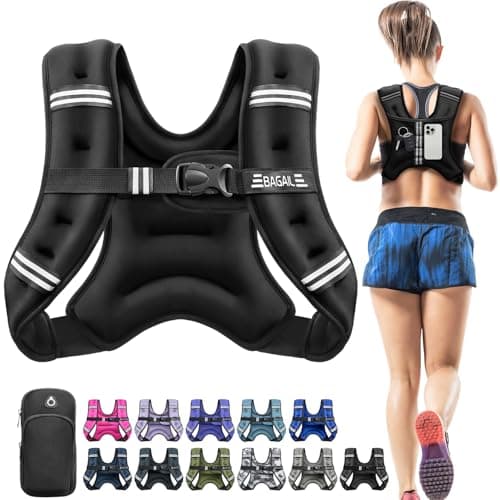
- Weight Options
- 5, 8, 10, 12, 15, 20, 25, 30 lb
- Material
- Neoprene outer, iron sand fill
- Closure
- Adjustable buckle straps
- Safety
- Reflective stripes
- Storage
- Detachable phone pouch + back pocket
- Rating (Amazon)
- 4.6 stars / 3,661 reviews
About this pick
The BAGAIL Comfort-Fit pairs a stable fit with practical details like a detachable phone pouch. It is sold in fixed loads from 5 to 30 lb, so buyers must choose the weight before purchase.
Strengths
- Even weight distribution prevents the vest from shifting or bouncing during walks
- No-chafe construction with padded contact points, comfortable for extended daily wear
- Detachable phone pouch is a practical feature most budget vests omit
- Multiple fixed-load options from 5 to 30 lb let buyers choose a conservative current load
Weaknesses
- Fixed weight per vest means you need to buy a new vest to add significant load
- Neoprene can retain heat on warm days; breathability is limited compared to open-mesh designs
Kit Score breakdown

Best for: Budget-conscious walkers who want the highest-rated vest in the category without spending more than necessary.
- Highest owner rating (4.7 stars) in the category backed by nearly 5,000 verified reviews
- Fixed weight construction, no option to incrementally add or remove plates
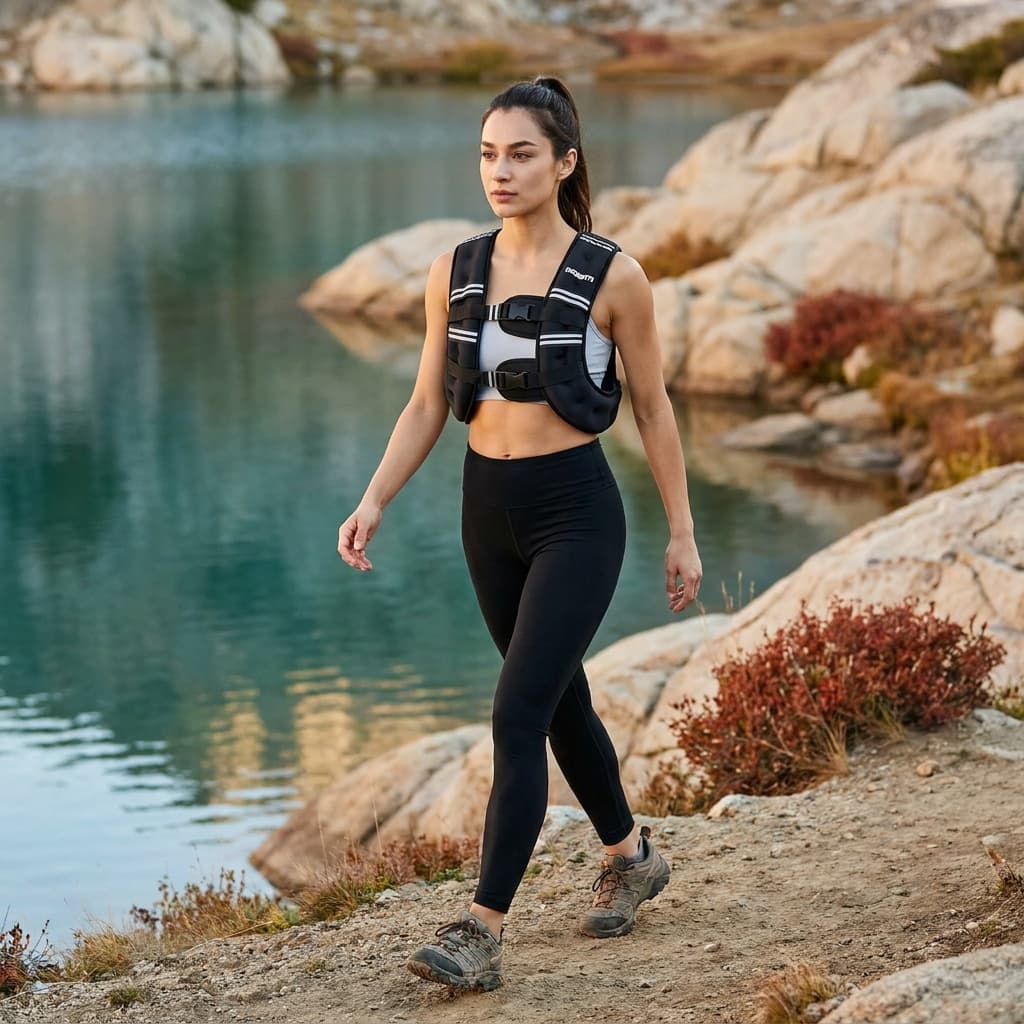
- Weight Options
- 6, 8, 10, 12, 16, 20, 25, 30 lb
- Material
- Odor-free Lycra fabric, fixed internal weight
- Shoulder Padding
- Yes, integrated padded shoulders
- Safety
- Reflective stripes
- Storage
- Phone pouch
- Rating (Amazon)
- 4.7 stars / 4,881 reviews
About this pick
The PACEARTH edges out rivals on owner satisfaction, scoring 4.7 stars from nearly 5,000 buyers. Odor-resistant Lycra and integrated shoulder padding punch well above its low price, making it the top pick for value-focused walkers.
Strengths
- Highest owner rating (4.7 stars) in the category backed by nearly 5,000 verified reviews
- Odor-free Lycra fabric stays fresher longer than neoprene alternatives
- Padded shoulders reduce fatigue on longer walks, uncommon at this price point
- Low price on the lighter weight options makes it an accessible entry point
Weaknesses
- Fixed weight construction, no option to incrementally add or remove plates
- One-size-fits-most fit may not suit very petite or very large frames as snugly
Kit Score breakdown

Best for: Walkers who want the most proven vest on the market with the largest owner review base and excellent breathability for warm-weather walks.
- Over 16,000 reviews makes this the most battle-tested vest in the category, a strong signal of consistent quality
- Fixed weight only, no modular plates or removable inserts for incremental progression
- Weight Options
- 6, 8, 12, 16, 20, 25, 30 lb
- Material
- Spandex fabric, iron sand fill
- Chest Fit Range
- 31.5" – 45" (one-size-fits-most)
- Safety
- Reflective stripes
- Storage
- Built-in back pocket
- Rating (Amazon)
- 4.6 stars / 16,028 reviews
About this pick
With 16,000+ Amazon reviews and a nod from Garage Gym Reviews as their top budget pick, the ZELUS is the most extensively validated walking vest in this roundup. Its soft spandex construction and wide chest-fit range make it a dependable choice for a broad range of body types.
Strengths
- Over 16,000 reviews makes this the most battle-tested vest in the category, a strong signal of consistent quality
- Spandex construction tends to run cooler than full neoprene vests
- Adjustable straps accommodate a wide range of chest sizes from 31.5 to 45 inches
- Named Best Budget Weighted Vest by Garage Gym Reviews in their independently tested 2026 roundup
Weaknesses
- Fixed weight only, no modular plates or removable inserts for incremental progression
- Universal sizing may feel slightly loose on smaller frames without maximum strap tightening
Kit Score breakdown
See all picks in The best weighted vests for walking, from beginner to budget
Keep going
Free toolVest Sizing CalculatorHow heavy a vest to start with, plus a safe progression.Related guides


 Complete fitness loadoutWeighted-vest starter kitBuild the complete kit
Researched, not hands-on tested
Updated Jul 7, 2026Our recommendations draw on manufacturer documentation, retailer listings, owner feedback, and comparisons with alternatives.
As an Amazon Associate I earn from qualifying purchases. We may earn a commission from links here, at no extra cost to you. How we research →