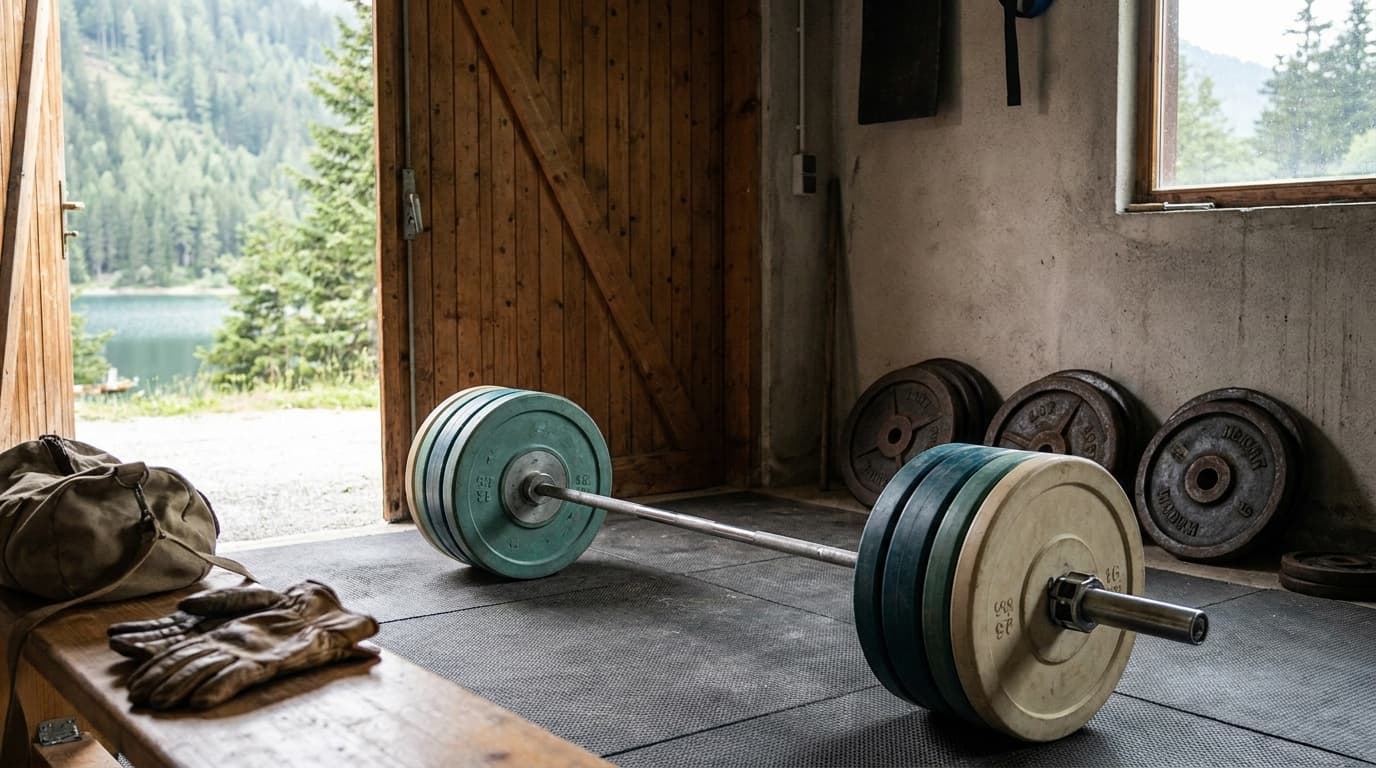
The right weight plates make the difference between a home gym you actually use and one you work around. This guide covers the four strongest options at each price tier, with a clear breakdown of when bumpers are worth the premium and when cast iron is the smarter call.
Our quick picks
How we picked
Every pick is scored through the Kit Score: a weighted evaluation across durability, diameter accuracy, coating quality, owner-reported longevity, and price-per-pound value. We aggregate spec sheets, verified owner reviews across multiple retailers, and expert lifting community sources. No pick makes the list on price alone.
The picks
Best overall
BEST OVERALL
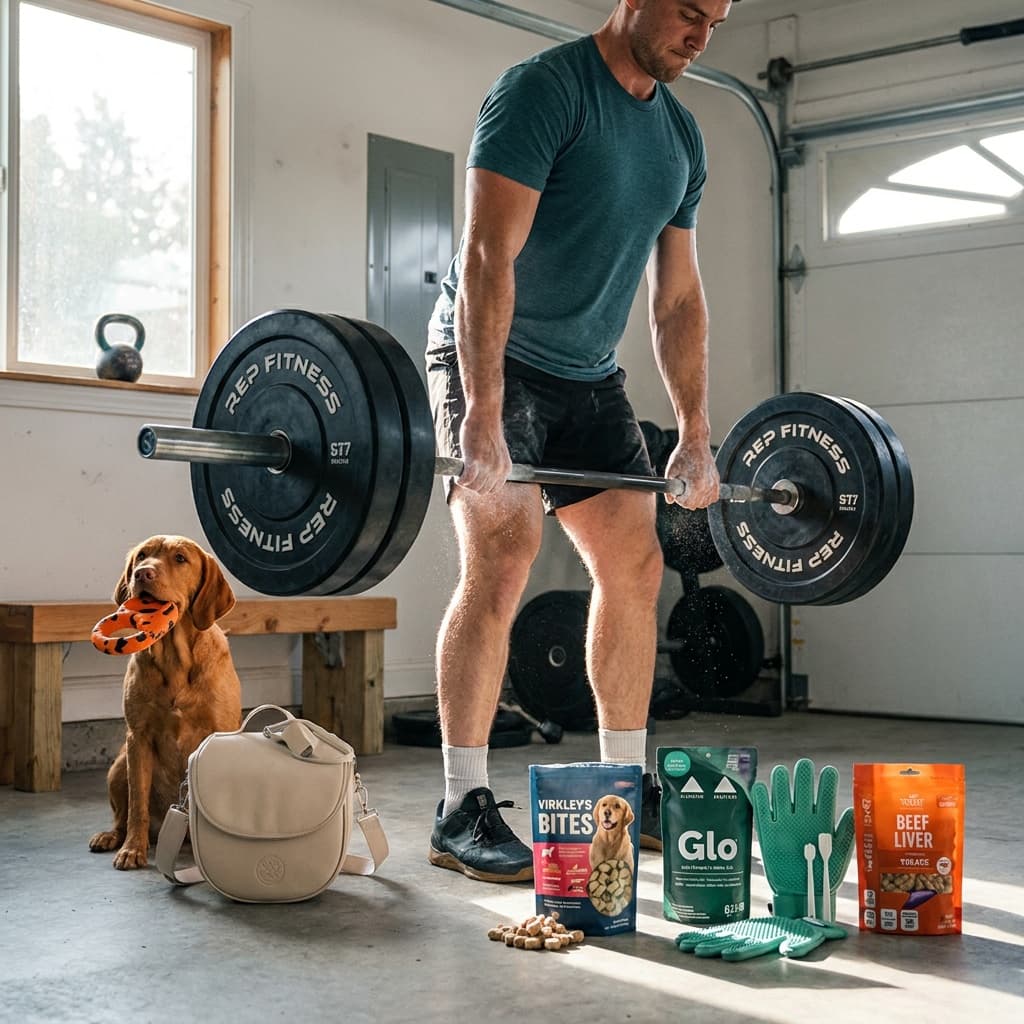
REP Fitness Black Bumper Plates
Best for: Home gym builders doing Olympic lifts, CrossFit, or regular deadlifts who want durability over years without stepping into competition-grade pricing.
- Low-bounce profile keeps the bar close on drops, reducing barbell rebound during Olympic lifts
- No handles, so plate-specific exercises require gripping the rim
Kit Score 8.8/10 · $199.99 Price checked Oct 25, 3:41 PM CDT · how we score gear
Buy on AmazonProduct details
REP's Black Bumper Plates use virgin rubber over hooked steel inserts and are factory-tested to withstand more than 12,000 drops from eight feet. The 10 lb plates are intentionally oversized at 1 inch thick to resist edge bending, while the 45 lb plates run thinner than average to maximize sleeve loading capacity. Weight tolerance is +/- 1% per REP's current official spec.
- Material
- Virgin rubber with hooked steel inserts
- Hole diameter
- 50.4 mm (Olympic 2-inch standard)
- Weight tolerance
- +/- 1%
- Plate diameter
- 450 mm (17.7 in) for 25 lb and up
- Thickness (10 lb)
- 1 in (intentionally oversized for durability)
- Thickness (45 lb)
- 2.83 in
- Drop testing
- Factory-tested to 12,000+ drops from 8 ft
- Warranty
- 3 years home use (25 lb and up), 6 months (10 lb and 15 lb)
More strengths
- Thick 10 lb design resists the edge bending that typically kills budget bumpers first
- Long-term owner reports cite years of heavy use with no rubber-to-insert separation
Other tradeoffs
- Warranty is voided if mixed with Hi-Temp Bumper Plates, limiting compatibility with existing sets
REP Fitness has spent years iterating on bumper plate rubber formulations, and the Black series reflects that. The plates are built to a commercial-grade durometer (rubber hardness), which means they absorb impact without cracking along the insert ring, the most common failure point on budget bumpers after 18 to 24 months of regular drops.
Diameter accuracy matters more than most new buyers realize. Plates that run undersized will rock on the floor between reps; plates that run oversized will bind against neighboring collars. REP holds tolerances that owner reviews consistently describe as precise, with minimal wobble even when mixing plate weights on the same bar.
The steel insert collar is thick-walled and press-fitted, not just molded in, which is the difference between a plate that lasts five years and one that develops collar slop by year two. At $70 to $200 per pair depending on weight, these sit at the upper edge of value-tier pricing but well below competition-grade bumpers from Eleiko or Rogue Hi-Temps.
Best for: Home gym builders doing Olympic lifts, CrossFit, or regular deadlifts who want durability over years without stepping into competition-grade pricing.
Best value
BEST VALUE
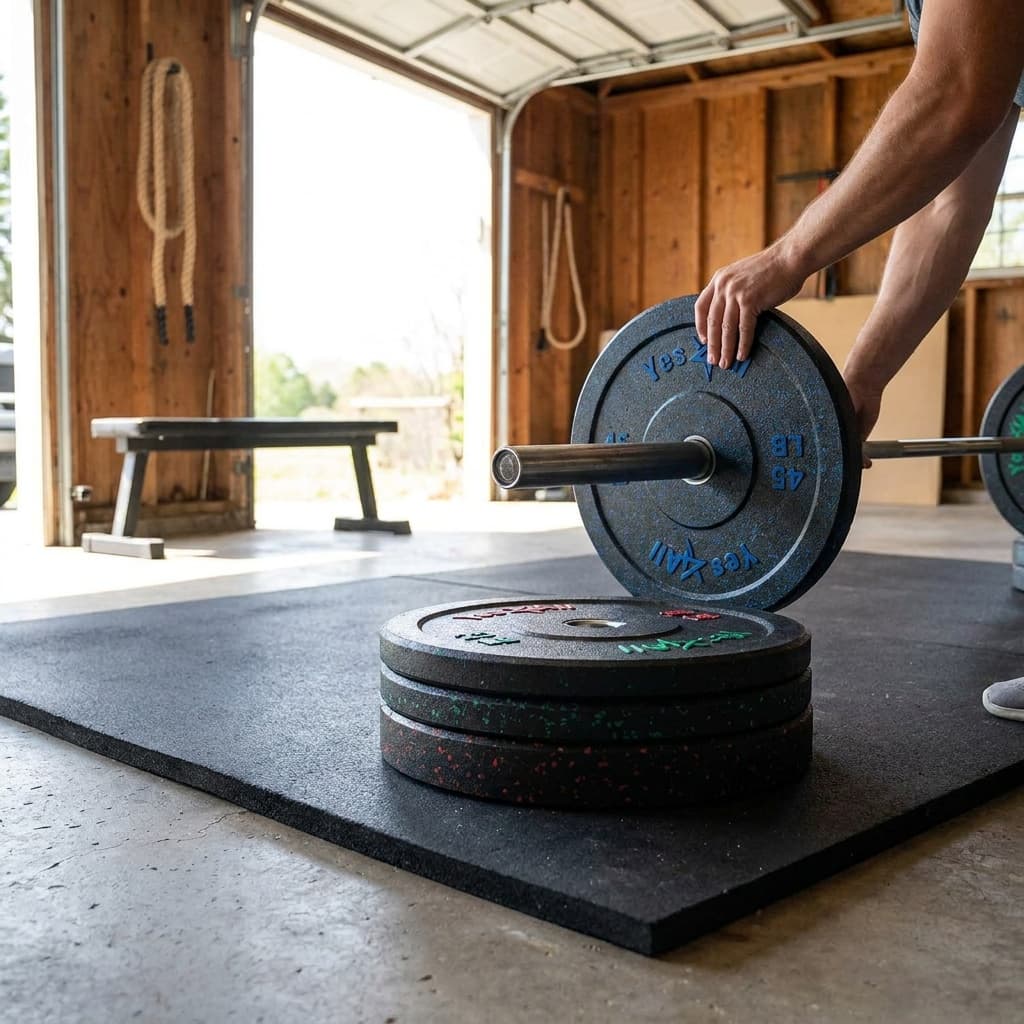
BalanceFrom Color Coded Olympic Bumper Plates
Best for: Budget-focused home gym builders who want a complete bumper set in one purchase and can accept a longer break-in period before the smell clears.
- Full 260 lb set prices close to or below $1 per pound, the strongest value argument in the bumper category
- Some owner reports note a noticeable rubber odor on opening that takes time to off-gas
Kit Score 7.9/10 · $63.94 Price checked Oct 25, 3:41 PM CDT · how we score gear
Buy on AmazonProduct details
BalanceFrom's color-coded bumper plates are available as individual pairs or built-out sets, with a full 260 lb configuration pricing close to $1 per pound. That price-per-pound sits at the low end of the bumper plate market. High-density rubber construction absorbs drops and protects flooring, and the IWF-standard color scheme lets you read the bar at a glance during training.
- Material
- High-density rubber with stainless steel inserts
- Hole diameter
- 50 mm (Olympic 2-inch standard)
- Available configurations
- Individual pairs (10, 15, 25, 35, 45 lb) through complete sets up to 260 lb
- Color coding
- IWF-standard color per weight denomination
- Labeling
- Both lbs and kg marked on each plate
- Amazon rating
- 4.3 out of 5 (990+ reviews across the listing)
More strengths
- Color coding accelerates plate selection during timed workouts or supersets
- Widely reported to fit all standard Olympic barbells with no fitment issues
Other tradeoffs
- Rubber compound uses filler materials rather than pure virgin rubber, which affects long-term drop durability compared to mid-range options
BalanceFrom's color-coded Olympic set is one of the few options where you can go from zero plates to a complete training stack in a single order. The color coding follows IWF convention (red for 25 kg, blue for 20 kg, yellow for 15 kg, green for 10 kg), which speeds up plate changes and reduces loading errors when you're moving fast between sets.
The rubber compound on BalanceFrom plates is softer than REP's, which translates to a longer off-gassing period. Most owners report the rubber smell clearing after two to four weeks of outdoor airing or garage use with ventilation. It's a real consideration, not a dealbreaker.
Tolerances are slightly wider than REP's, and owner reviews note that heavier plates (35 and 45 lb) occasionally run a touch light on the scale. For general strength training and home conditioning work, this is a non-issue. For lifters who compete and need accurate loading, it's worth knowing.
At $75 to $290 depending on configuration, the value-per-pound calculation holds up, particularly on the full-set bundles.
Best for: Budget-focused home gym builders who want a complete bumper set in one purchase and can accept a longer break-in period before the smell clears.
Best budget
BEST BUDGET
CAP Barbell Olympic 2-Inch Grip Plate
Best for: Lifters filling out an existing set one or two plates at a time, or anyone whose training does not involve dropping the bar and wants the lowest possible entry price for cast iron.
- Sold individually from 2.5 lb to 45 lb, so you can buy exactly what you need without paying for plates you already own
- Enamel coating chips with heavy use and the inner bore can be rough, which can score barbell sleeves over time
Kit Score 7.2/10 · $49.99 Price checked Oct 25, 3:41 PM CDT · how we score gear
Buy on AmazonProduct details
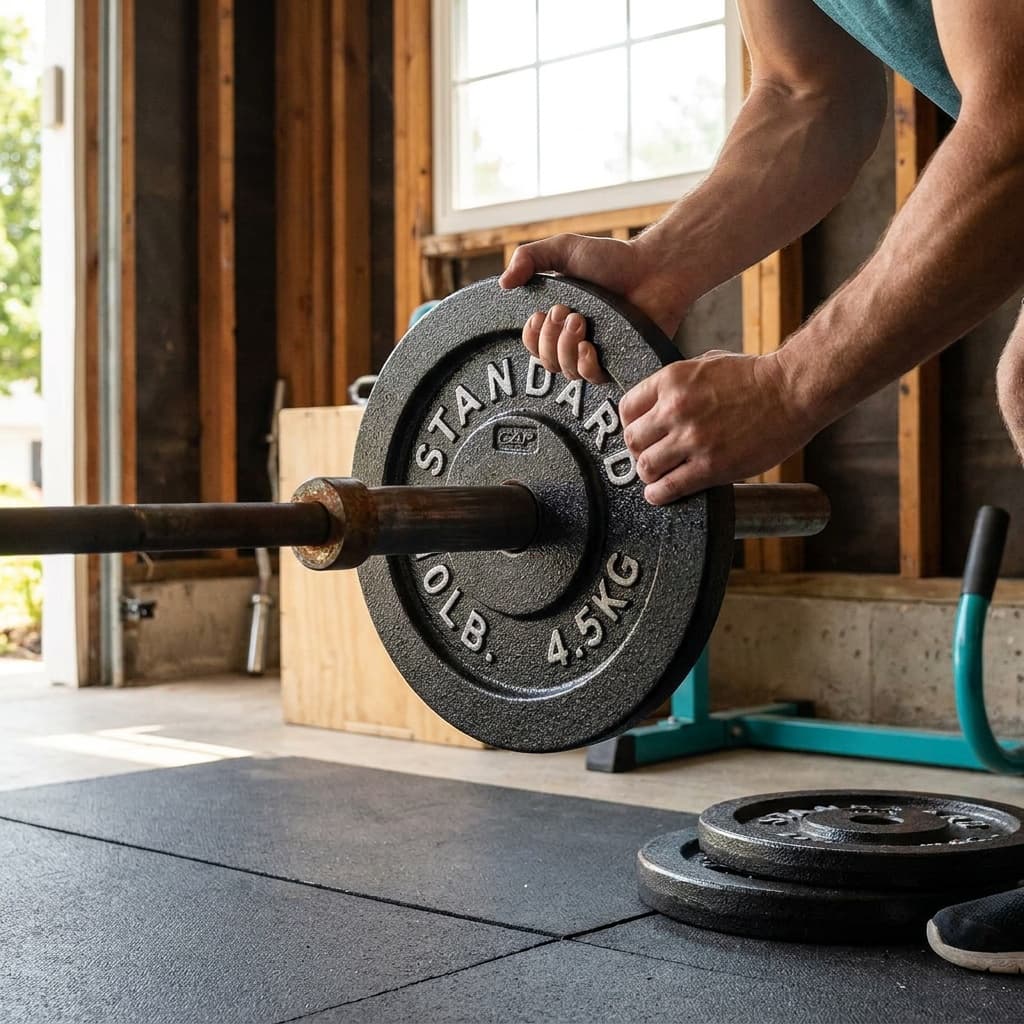
CAP's cast iron grip plates are the most widely available budget Olympic plates on Amazon, sold individually so you can build exactly the weight inventory you need. The baked enamel finish provides basic rust resistance, and the oversized grip holes make loading and unloading a barbell less awkward than smooth-faced plates.
- Material
- Solid cast iron
- Finish
- Baked enamel coating
- Hole diameter
- 2 in (Olympic standard)
- Available sizes
- 2.5 lb through 45 lb (single plates)
- Grip holes
- Oversized tri-grip cutouts on 5 lb and up
- Weight tolerance
- +/- 5%
More strengths
- Grip cutouts reduce bar-loading hassle, especially useful when stacking multiple plates on a loaded bar
- Baked enamel finish holds up to moderate humidity better than bare cast iron
Other tradeoffs
- +/- 5% tolerance means a labeled 45 lb plate may be anywhere from 42.75 lb to 47.25 lb, which matters for accurate programming
CAP Barbell has been producing iron plates long enough that their casting process is genuinely reliable at this price point. The Olympic Grip Plate is cast iron with three oval grip cutouts, which serve a real function: you can load and unload plates one-handed without needing collars to hold everything in place during setup.
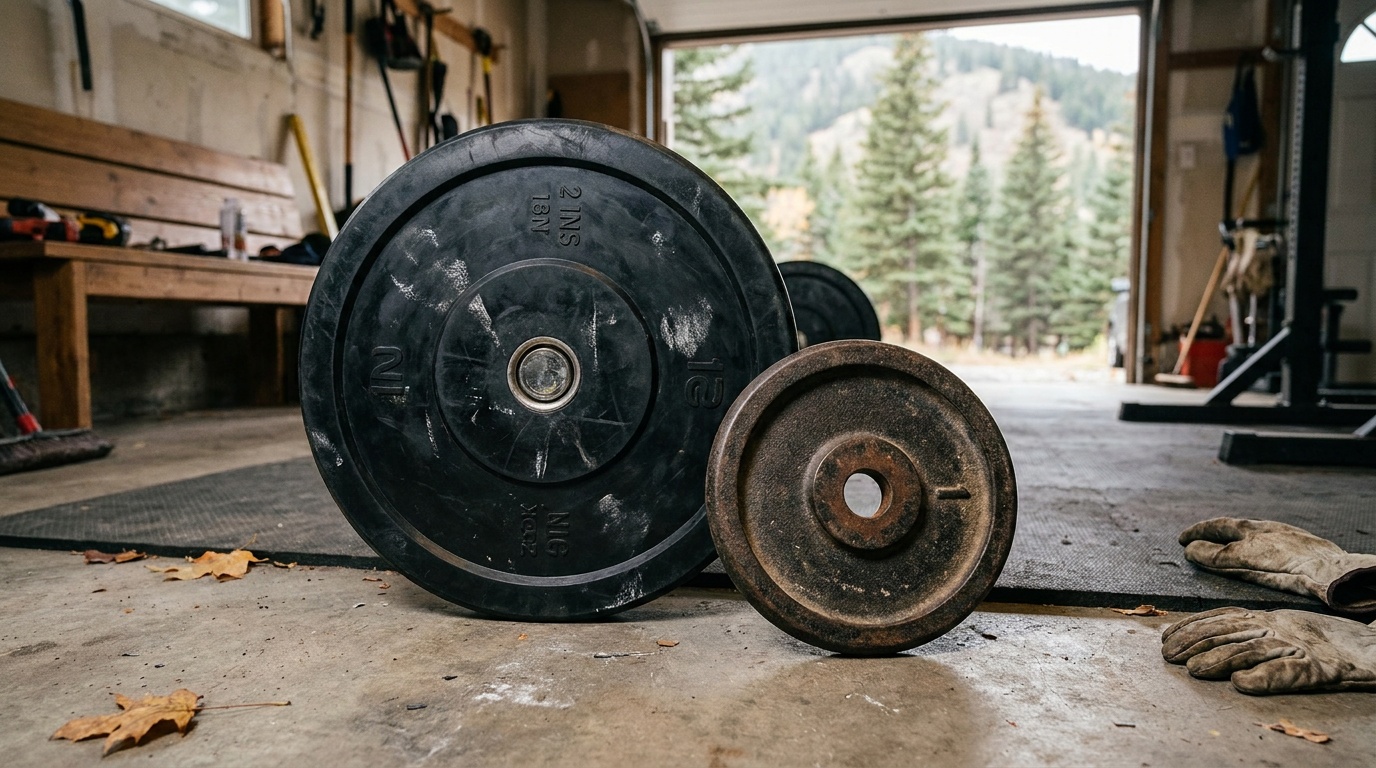
Cast iron does not absorb impact the way rubber does, so these are not drop plates. If your training involves touch-and-go deadlifts or power cleans where the bar contacts the floor, bumpers are the right call. For squats, bench, overhead press, and controlled deadlifts, cast iron is quieter, takes up less collar space per pound, and costs less per pound than rubber.
At $35 to $95 per single plate, CAP is the right choice for filling gaps in an existing set, adding a pair of 35s or 45s without buying a whole new set, or building a barbell-only strength rack where dropping is not part of the program.
Best for: Lifters filling out an existing set one or two plates at a time, or anyone whose training does not involve dropping the bar and wants the lowest possible entry price for cast iron.
Editor's choice
EDITOR'S CHOICE
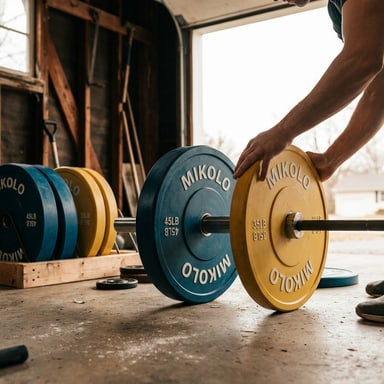
Mikolo Olympic Bumper Plates with Steel Insert
Best for: Home gym owners who prioritize grip safety and quiet drops and want a newer mid-market bumper with tactile handling advantages over standard smooth-faced plates.
- Grooved anti-slip edge texture is a genuine handling advantage over smooth bumpers, especially in a home gym where you are moving plates without chalk
- Newer brand with a shorter track record compared to REP or BalanceFrom, so long-term durability data is still accumulating
Kit Score 8.0/10 · $349.99 Price checked Oct 25, 3:41 PM CDT · how we score gear
Buy on AmazonProduct details
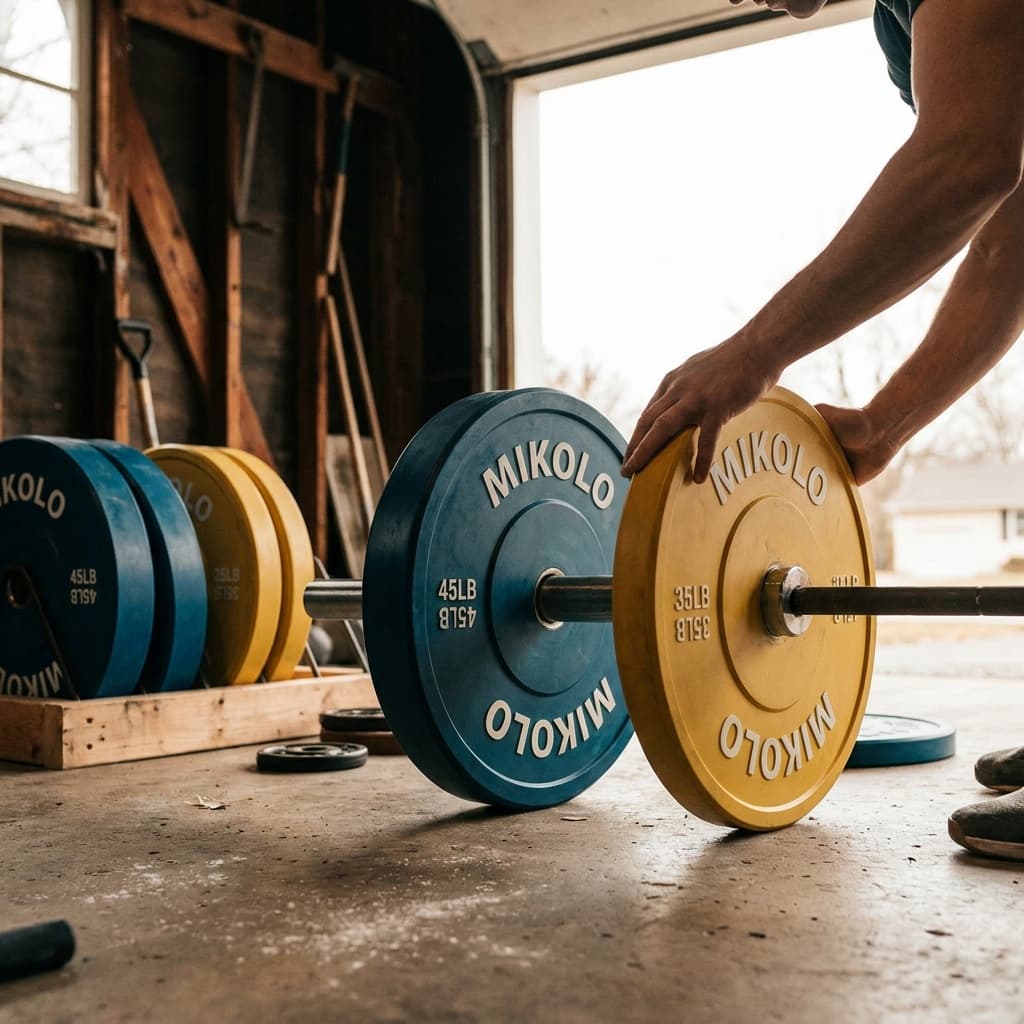
Mikolo's bumper plates stand out for their distinctive matte-textured grooved edge, which gives a noticeably more secure grip when loading or carrying plates compared to smooth-faced competitors. The steel insert and low-bounce rubber construction keep the bar close to the floor on drops, making them a practical choice for home gym spaces where noise management matters.
- Material
- High-density rubber with steel insert
- Grip texture
- Matte-textured edge with anti-slip grooves
- Hole diameter
- 2 in (Olympic standard)
- Bounce profile
- Low-bounce, quiet design
- Available configurations
- Individual pairs or sets up to 230 lb
- Hub material
- Steel insert
More strengths
- Low-bounce profile combined with quiet rubber compound reduces both rebound noise and barbell travel on drops
- Owner reports cite solid packaging and no significant off-gassing smell compared to lower-end rubber plates
Other tradeoffs
- Set configurations are less flexible than brands that sell every individual weight denomination as a standalone pair
Mikolo is a newer name in the mid-market bumper segment, and the steel-insert design is the reason this plate made the list. The insert ring extends further into the rubber body than most budget and mid-range bumpers, which distributes collar stress across a larger surface area and significantly reduces the chance of insert separation under repeated drops.
The surface texture on Mikolo plates is more aggressive than the smooth face on REP or BalanceFrom, which gives better grip when you're pulling the plate off a bar with chalk-dusted hands. It's a small thing until you're racking plates for the tenth set of the day, and then it's not small at all.
At $120 to $200 per set for 35 and 45 lb configurations, Mikolo sits above BalanceFrom but below REP on a per-pair basis. The steel-insert engineering and grip advantage justify the step up for anyone who drops the bar regularly.
Best for: Home gym owners who prioritize grip safety and quiet drops and want a newer mid-market bumper with tactile handling advantages over standard smooth-faced plates.
How to choose weight plates for your home gym
| Product | Kit Score | Price | Best for |
|---|---|---|---|
| REP Fitness Black Bumper Plates | 8.8 | $199.99 Price checked Oct 25, 3:41 PM CDT | Best for: Home gym builders doing Olympic lifts, CrossFit, or regular deadlifts who want durability over years without stepping into competition-grade pricing. Why it stands out: Low-bounce profile keeps the bar close on drops, reducing barbell rebound during Olympic lifts Tradeoff: No handles, so plate-specific exercises require gripping the rim |
| BalanceFrom Color Coded Olympic Bumper Plates | 7.9 | $63.94 Price checked Oct 25, 3:41 PM CDT | Best for: Budget-focused home gym builders who want a complete bumper set in one purchase and can accept a longer break-in period before the smell clears. Why it stands out: Full 260 lb set prices close to or below $1 per pound, the strongest value argument in the bumper category Tradeoff: Some owner reports note a noticeable rubber odor on opening that takes time to off-gas |
| CAP Barbell Olympic 2-Inch Grip Plate | 7.2 | $49.99 Price checked Oct 25, 3:41 PM CDT | Best for: Lifters filling out an existing set one or two plates at a time, or anyone whose training does not involve dropping the bar and wants the lowest possible entry price for cast iron. Why it stands out: Sold individually from 2.5 lb to 45 lb, so you can buy exactly what you need without paying for plates you already own Tradeoff: Enamel coating chips with heavy use and the inner bore can be rough, which can score barbell sleeves over time |
| Mikolo Olympic Bumper Plates with Steel Insert | 8.0 | $349.99 Price checked Oct 25, 3:41 PM CDT | Best for: Home gym owners who prioritize grip safety and quiet drops and want a newer mid-market bumper with tactile handling advantages over standard smooth-faced plates. Why it stands out: Grooved anti-slip edge texture is a genuine handling advantage over smooth bumpers, especially in a home gym where you are moving plates without chalk Tradeoff: Newer brand with a shorter track record compared to REP or BalanceFrom, so long-term durability data is still accumulating |
REP Fitness Black Bumper Plates
- Best for
- Home gym builders doing Olympic lifts, CrossFit, or regular deadlifts who want durability over years without stepping into competition-grade pricing.
- Why it stands out
- Low-bounce profile keeps the bar close on drops, reducing barbell rebound during Olympic lifts
- Tradeoff
- No handles, so plate-specific exercises require gripping the rim
BalanceFrom Color Coded Olympic Bumper Plates
- Best for
- Budget-focused home gym builders who want a complete bumper set in one purchase and can accept a longer break-in period before the smell clears.
- Why it stands out
- Full 260 lb set prices close to or below $1 per pound, the strongest value argument in the bumper category
- Tradeoff
- Some owner reports note a noticeable rubber odor on opening that takes time to off-gas
CAP Barbell Olympic 2-Inch Grip Plate
- Best for
- Lifters filling out an existing set one or two plates at a time, or anyone whose training does not involve dropping the bar and wants the lowest possible entry price for cast iron.
- Why it stands out
- Sold individually from 2.5 lb to 45 lb, so you can buy exactly what you need without paying for plates you already own
- Tradeoff
- Enamel coating chips with heavy use and the inner bore can be rough, which can score barbell sleeves over time
Mikolo Olympic Bumper Plates with Steel Insert
- Best for
- Home gym owners who prioritize grip safety and quiet drops and want a newer mid-market bumper with tactile handling advantages over standard smooth-faced plates.
- Why it stands out
- Grooved anti-slip edge texture is a genuine handling advantage over smooth bumpers, especially in a home gym where you are moving plates without chalk
- Tradeoff
- Newer brand with a shorter track record compared to REP or BalanceFrom, so long-term durability data is still accumulating
Five decisions before you buy
Bumper vs cast iron
If you drop the bar from any height (Olympic lifts, deadlifts, failed attempts), bumpers are non-negotiable. Cast iron dropped from height chips the plate and damages the floor. If all your lifts are controlled, cast iron saves money and collar space.
Olympic 2-inch vs standard 1-inch
Match your barbell. Olympic bars (the standard for any bar rated above 200 lb) use a 2-inch sleeve. Standard bars use a 1-inch sleeve. Mixing the two requires adapters and is not reliable under load.
Set vs individual plates
Buying a complete set costs less per pound than buying pairs individually. If you're starting from scratch, a set buy is almost always the right call. If you're supplementing an existing rack, individual pairs give you exactly what you need without duplicating what you have.
Weight range for your program
For a general strength program (squat, bench, deadlift), a starting stack of two 45 lb, two 35 lb, two 25 lb, and two 10 lb plates covers most programming through an intermediate level. Add a pair of 2.5s and 5s for microloading.
Floor protection
Bumper plates require a rubber floor mat or platform. Dropping iron on bare concrete will crack the concrete over time. Budget $80 to $150 for a 4x6 stall mat if you don't already have one, and factor that into your total.
The most expensive mistake in a home gym build is buying plates that match the bar you have today instead of the bar you'll have in 18 months.
Frequently asked questions
Are bumper plates worth the extra cost over cast iron for a home gym?
For most home gym training, yes. The key variable is whether you drop the bar. Bumper plates absorb impact, protect your floor, reduce noise for apartments and attached garages, and protect the bar sleeves from the stress of metal-on-concrete contact. Cast iron costs less per pound and takes up less collar space, but it is not designed for drops. If your program includes deadlifts from the floor, power cleans, or any Olympic variation, bumpers are the right infrastructure investment.
Can I mix bumper plates and cast iron plates on the same bar?
Yes, with one caveat: the bumper plates must be on the outside. Bumper plates have a larger diameter than cast iron, so if you load cast iron outside the bumpers, the cast iron will contact the floor before the bumpers do, which defeats the purpose of having bumpers. Load bumpers first, then slide cast iron inside them (closer to the collar), then add your collars. This is standard practice and structurally fine.
What weight plates should I buy first for a home gym?
Start with two 45 lb plates and two 25 lb plates in the format that matches your bar. That gives you a working squat, bench, and deadlift setup at a beginner-to-intermediate load range. Add two 10 lb plates and two 5 lb plates next for progression. A pair of 2.5 lb plates rounds out a microloading setup for upper body work. Avoid buying large quantities of 35 lb plates early, as most programs use 45s and 25s as the primary load plates and 35s end up underused.
Explore the full fitness gear hub for more home gym guides, or read about how we research and rate every piece of equipment we cover.
Keep going
Our recommendations draw on manufacturer documentation, retailer listings, owner feedback, and comparisons with alternatives.
As an Amazon Associate I earn from qualifying purchases. We may earn a commission from links here, at no extra cost to you. How we research →