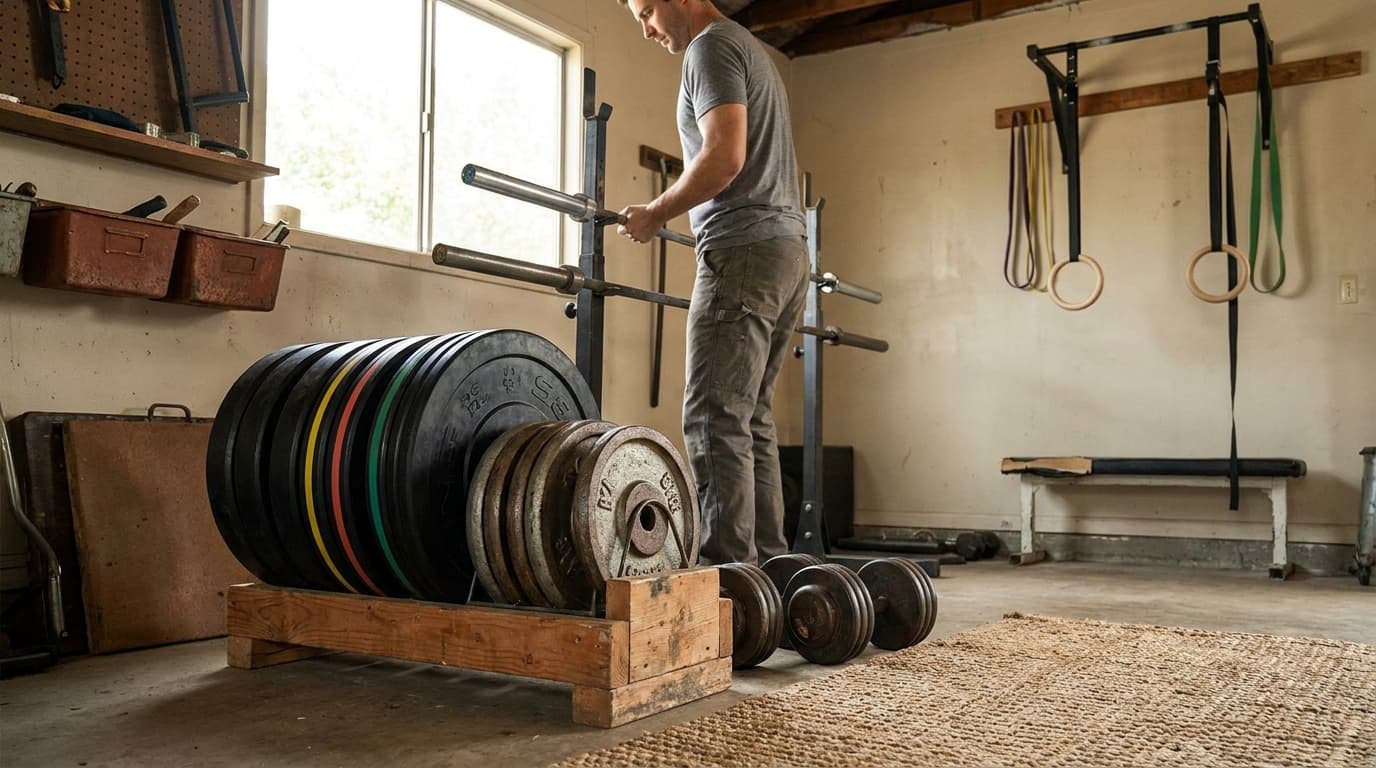
The choice between bumper plates and iron plates comes down to how you train, where you train, and how hard your bar hits the floor. Both deliver the same resistance, but they behave completely differently outside the lift.
Drop safety: the non-negotiable difference
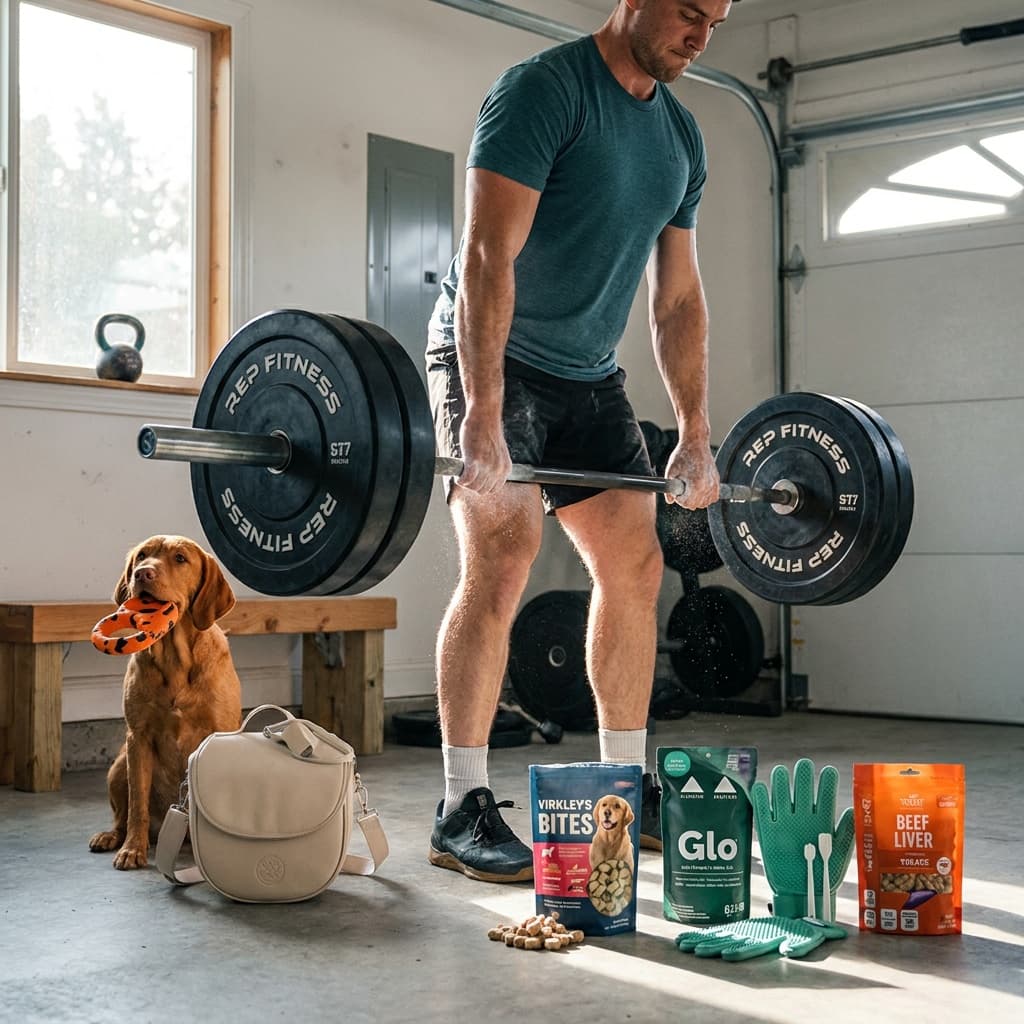
Bumper plates are the only safe choice for dropping a loaded bar from overhead or waist height. Iron plates are not engineered for impact. Dropping iron from waist height or above can crack the plates, gouge concrete floors, and most barbell manufacturers void the warranty on a bar dropped with iron loaded. If your program includes the snatch, clean and jerk, power cleans, or any lift where a failed rep means the bar comes down fast, bumpers like the REP Fitness Black Bumper Plates are required, not optional.
Floor protection and noise
Rubber bumpers absorb impact at the source. Even on thick rubber mats, dropped iron rings far louder than dropped bumpers, and the floor damage compounds over time. For garage gyms close to living spaces or neighbors, the noise difference is meaningful, not marginal.
Bumper plate rubber hardness (Shore durometer) runs roughly 65–100. Higher durometer plates bounce less and produce more impact noise on drop. Crumb-rubber plates sit at the lower end of that range: they bounce more but dissipate energy more quietly, which suits noise-sensitive setups. For a home platform, 3/4-inch horse stall mats paired with standard rubber bumpers are the practical low-cost baseline.
On a concrete garage floor, one dropped set of iron plates can do the kind of surface damage that takes a grinder and patching compound to fix. One dropped set of bumpers leaves a scuff.
Diameter and bar-height consistency
Every bumper plate, regardless of weight, shares a uniform 450mm (17.7 in) outer diameter per IWF equipment standards. The bar sits at the same height off the floor whether you have 135 lb or 315 lb loaded. Iron plates are smaller at lighter weights, so the starting position of every deadlift or pull changes as you strip plates. For learning pulling mechanics, building consistent positioning, or training to competition standards, the fixed diameter matters.
Bar sleeve capacity
Iron plates are roughly half the thickness of bumper plates at the same weight. A 45 lb bumper plate averages about 3 inches thick; a 45 lb iron plate is roughly 1.3 inches thick. This becomes a hard constraint for strong lifters: a bar loaded entirely with bumpers commonly caps out around 400–405 lb before the sleeves run out of room. Iron lets the same bar hold considerably more total weight.
The practical fix for home gym lifters who are approaching that bumper cap: keep a pair of 45 lb bumpers as the outer plates for floor and equipment protection, then load iron inside them. You get the drop safety and the floor buffer without sacrificing sleeve space.
Cost per pound
Iron is the budget choice, consistently.
A basic 45 lb bumper pair runs roughly $175–$200, compared to around $100 for an equivalent iron pair. For a lifter who will never drop weights from height, iron delivers the same training stimulus for less money. Bumpers become cost-justified when drops are a regular part of training or when floor and equipment protection is worth paying for.
Who each suits
Match the plate to the training style
Olympic lifting and CrossFit
Bumpers are the baseline here. The snatch and clean and jerk require a safe drop; the fixed 450mm diameter keeps pulling mechanics consistent across every working set.
Powerlifting and strength-only programs
Iron is the better fit. Squat, bench, and deadlift with a controlled descent never require a drop. Iron keeps the cost lower and the sleeve capacity higher.
Budget-first home gym
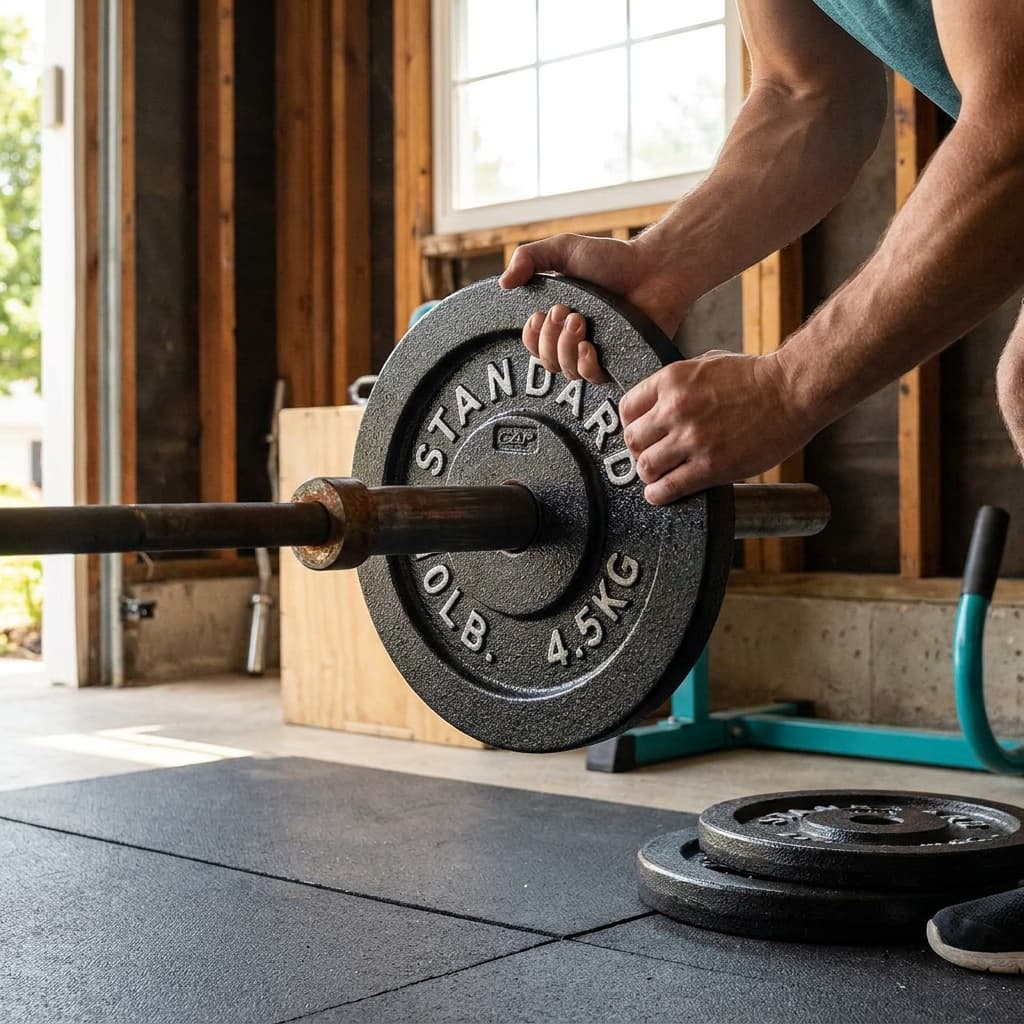
Start with iron, such as the [CAP Barbell Olympic Grip Plate](/api/go?product=cap-barbell-olympic-grip-plate&retailer=amazon&article=bumper-plates-vs-iron-plates). A full iron set costs roughly half the price of an equivalent bumper set, and the training stimulus is identical for lifts that stay under control.
Concrete floor or plywood platform
Bumpers protect both the floor and the bar. One serious drop of iron on concrete is enough to understand why rubber matters.
Mixed home gym (the common case)
A pair of 45 lb bumpers as outer plates, iron filling the middle of the bar, covers most training needs without the sleeve-space penalty of going all-bumper.
Frequently asked questions
Can you drop iron plates like bumper plates?
No. Iron plates are not designed for dropping. Dropping iron from waist height or overhead can crack the plates, chip the floor, and most barbell manufacturers will void the bar's warranty when iron is involved. Drops are for bumpers only.
Do bumper plates fit on any Olympic barbell?
Yes, as long as the barbell has a standard 2-inch (50mm) sleeve. IWF-spec bumpers have a 50.4mm collar opening with a steel insert, which fits any Olympic bar. The 450mm outer diameter is consistent across brands, so mixing plates from different manufacturers on the same bar is generally fine for training (not competition).
Is it worth buying both bumper plates and iron plates?
For many home gym setups, yes. A practical approach: use a pair of 45 lb bumpers as the outer plates for floor and equipment protection, then load iron plates inside them to reach higher totals without running out of sleeve space. A 2023 survey of home gym owners found 52% see value in owning both types.
For specific product picks across both categories, see our guide to the best weight plates. Browse the rest of our fitness gear coverage, or read about how we research and rate the equipment we cover.
Recommended gear
Our current top picks from the Best weight plates for home gyms in 2026 guide, if you are ready to buy.

REP FITNESS
REP Fitness Black Bumper Plates
Best Overall
Kit Score 8.8/10
$199.99 Price checked Oct 23, 4:16 PM CDT
Best for: Home gym builders doing Olympic lifts, CrossFit, or regular deadlifts who want durability over years without stepping into competition-grade pricing.
- Low-bounce profile keeps the bar close on drops, reducing barbell rebound during Olympic lifts
- No handles, so plate-specific exercises require gripping the rim
- Material
- Virgin rubber with hooked steel inserts
- Hole diameter
- 50.4 mm (Olympic 2-inch standard)
- Weight tolerance
- +/- 1%
- Plate diameter
- 450 mm (17.7 in) for 25 lb and up
- Thickness (10 lb)
- 1 in (intentionally oversized for durability)
- Thickness (45 lb)
- 2.83 in
About this pick
REP's Black Bumper Plates use virgin rubber over hooked steel inserts and are factory-tested to withstand more than 12,000 drops from eight feet. The 10 lb plates are intentionally oversized at 1 inch thick to resist edge bending, while the 45 lb plates run thinner than average to maximize sleeve loading capacity. Weight tolerance is +/- 1% per REP's current official spec.
More specifications
- Drop testing
- Factory-tested to 12,000+ drops from 8 ft
- Warranty
- 3 years home use (25 lb and up), 6 months (10 lb and 15 lb)
Strengths
- Low-bounce profile keeps the bar close on drops, reducing barbell rebound during Olympic lifts
- Thick 10 lb design resists the edge bending that typically kills budget bumpers first
- Long-term owner reports cite years of heavy use with no rubber-to-insert separation
Weaknesses
- No handles, so plate-specific exercises require gripping the rim
- Warranty is voided if mixed with Hi-Temp Bumper Plates, limiting compatibility with existing sets
Kit Score breakdown
BALANCEFROM
BalanceFrom Color Coded Olympic Bumper Plates
Best Value
Kit Score 7.9/10
$63.94 Price checked Oct 23, 4:16 PM CDT
Best for: Budget-focused home gym builders who want a complete bumper set in one purchase and can accept a longer break-in period before the smell clears.
- Full 260 lb set prices close to or below $1 per pound, the strongest value argument in the bumper category
- Some owner reports note a noticeable rubber odor on opening that takes time to off-gas
- Material
- High-density rubber with stainless steel inserts
- Hole diameter
- 50 mm (Olympic 2-inch standard)
- Available configurations
- Individual pairs (10, 15, 25, 35, 45 lb) through complete sets up to 260 lb
- Color coding
- IWF-standard color per weight denomination
- Labeling
- Both lbs and kg marked on each plate
- Amazon rating
- 4.3 out of 5 (990+ reviews across the listing)
About this pick
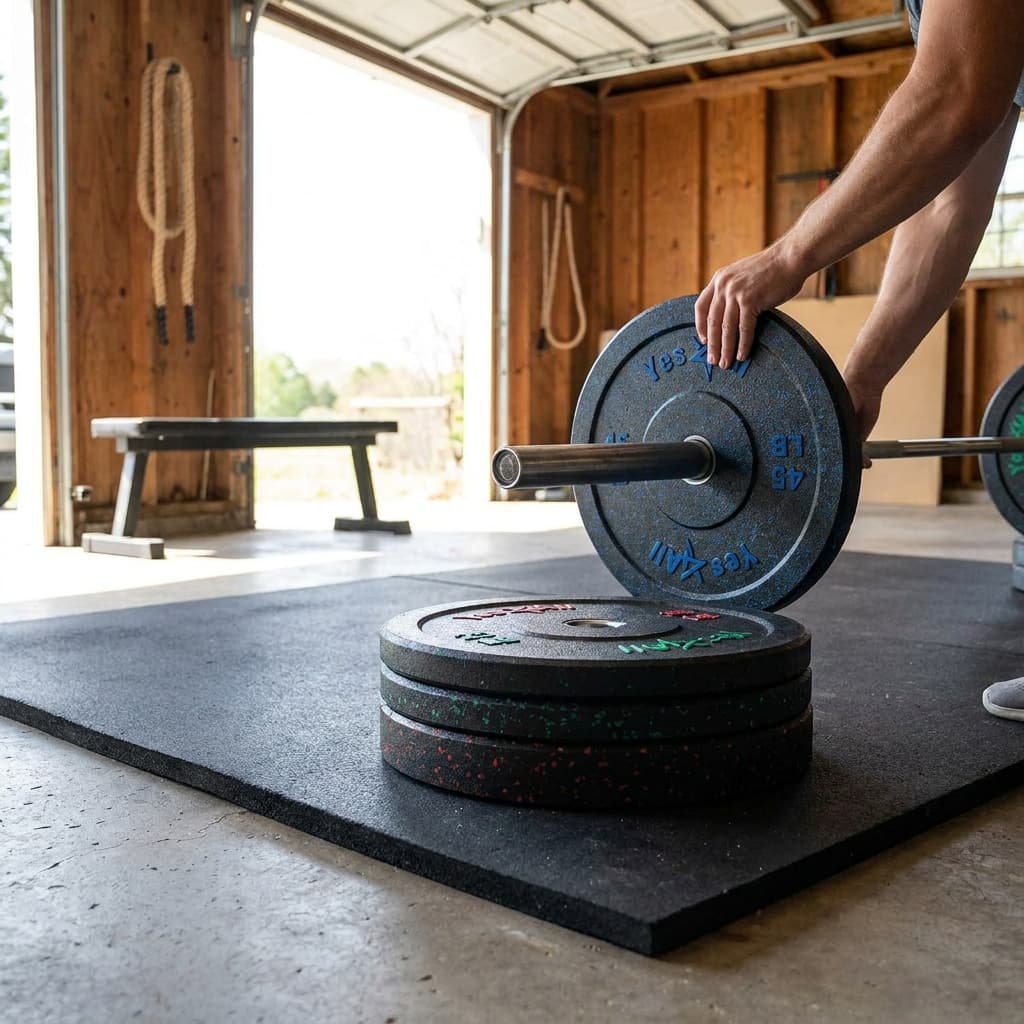
BalanceFrom's color-coded bumper plates are available as individual pairs or built-out sets, with a full 260 lb configuration pricing close to $1 per pound. That price-per-pound sits at the low end of the bumper plate market. High-density rubber construction absorbs drops and protects flooring, and the IWF-standard color scheme lets you read the bar at a glance during training.
Strengths
- Full 260 lb set prices close to or below $1 per pound, the strongest value argument in the bumper category
- Color coding accelerates plate selection during timed workouts or supersets
- Widely reported to fit all standard Olympic barbells with no fitment issues
Weaknesses
- Some owner reports note a noticeable rubber odor on opening that takes time to off-gas
- Rubber compound uses filler materials rather than pure virgin rubber, which affects long-term drop durability compared to mid-range options
Kit Score breakdown
CAP BARBELL
CAP Barbell Olympic 2-Inch Grip Plate
Best Budget
Kit Score 7.2/10
$49.99 Price checked Oct 23, 4:16 PM CDT
Best for: Lifters filling out an existing set one or two plates at a time, or anyone whose training does not involve dropping the bar and wants the lowest possible entry price for cast iron.
- Sold individually from 2.5 lb to 45 lb, so you can buy exactly what you need without paying for plates you already own
- Enamel coating chips with heavy use and the inner bore can be rough, which can score barbell sleeves over time
- Material
- Solid cast iron
- Finish
- Baked enamel coating
- Hole diameter
- 2 in (Olympic standard)
- Available sizes
- 2.5 lb through 45 lb (single plates)
- Grip holes
- Oversized tri-grip cutouts on 5 lb and up
- Weight tolerance
- +/- 5%
About this pick
CAP's cast iron grip plates are the most widely available budget Olympic plates on Amazon, sold individually so you can build exactly the weight inventory you need. The baked enamel finish provides basic rust resistance, and the oversized grip holes make loading and unloading a barbell less awkward than smooth-faced plates.
Strengths
- Sold individually from 2.5 lb to 45 lb, so you can buy exactly what you need without paying for plates you already own
- Grip cutouts reduce bar-loading hassle, especially useful when stacking multiple plates on a loaded bar
- Baked enamel finish holds up to moderate humidity better than bare cast iron
Weaknesses
- Enamel coating chips with heavy use and the inner bore can be rough, which can score barbell sleeves over time
- +/- 5% tolerance means a labeled 45 lb plate may be anywhere from 42.75 lb to 47.25 lb, which matters for accurate programming
Kit Score breakdown
Keep going
Researched, not hands-on tested
Updated Jun 4, 2026Our recommendations draw on manufacturer documentation, retailer listings, owner feedback, and comparisons with alternatives.
As an Amazon Associate I earn from qualifying purchases. We may earn a commission from links here, at no extra cost to you. How we research →