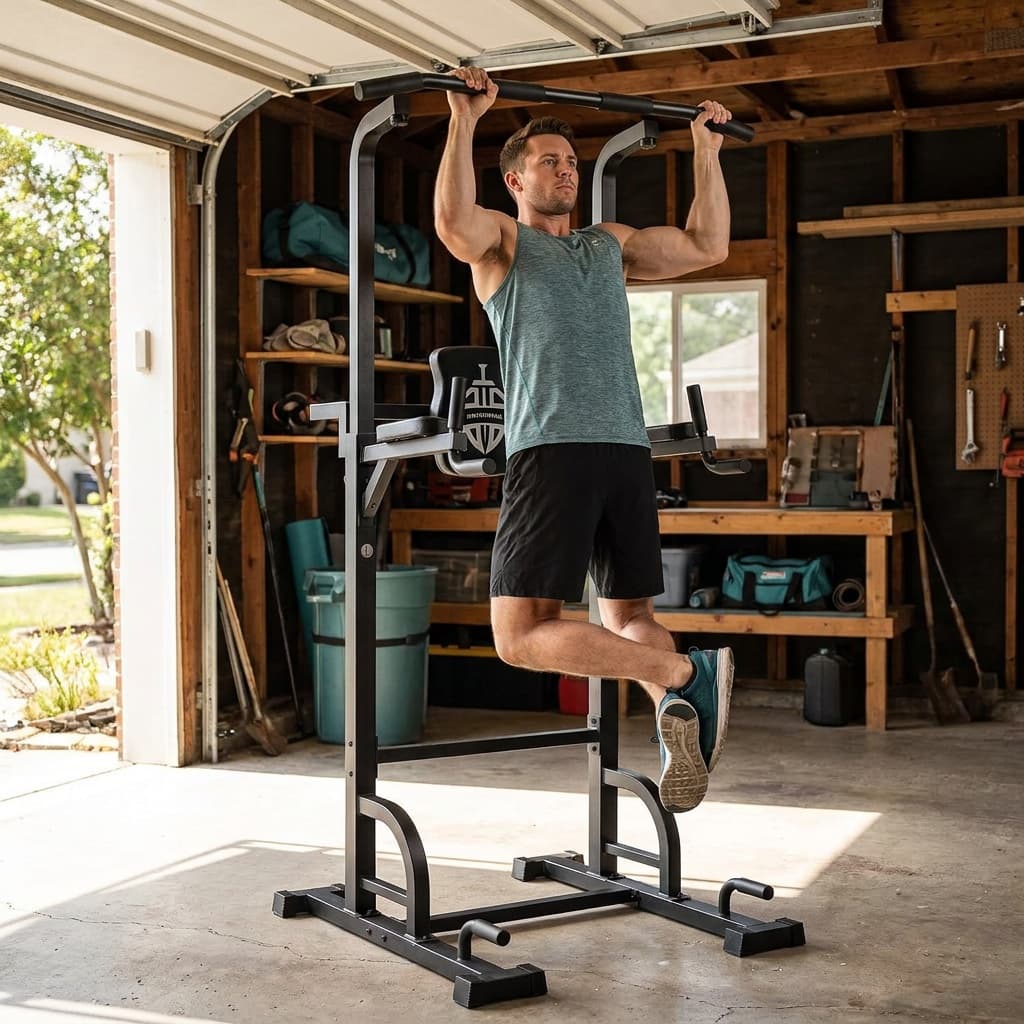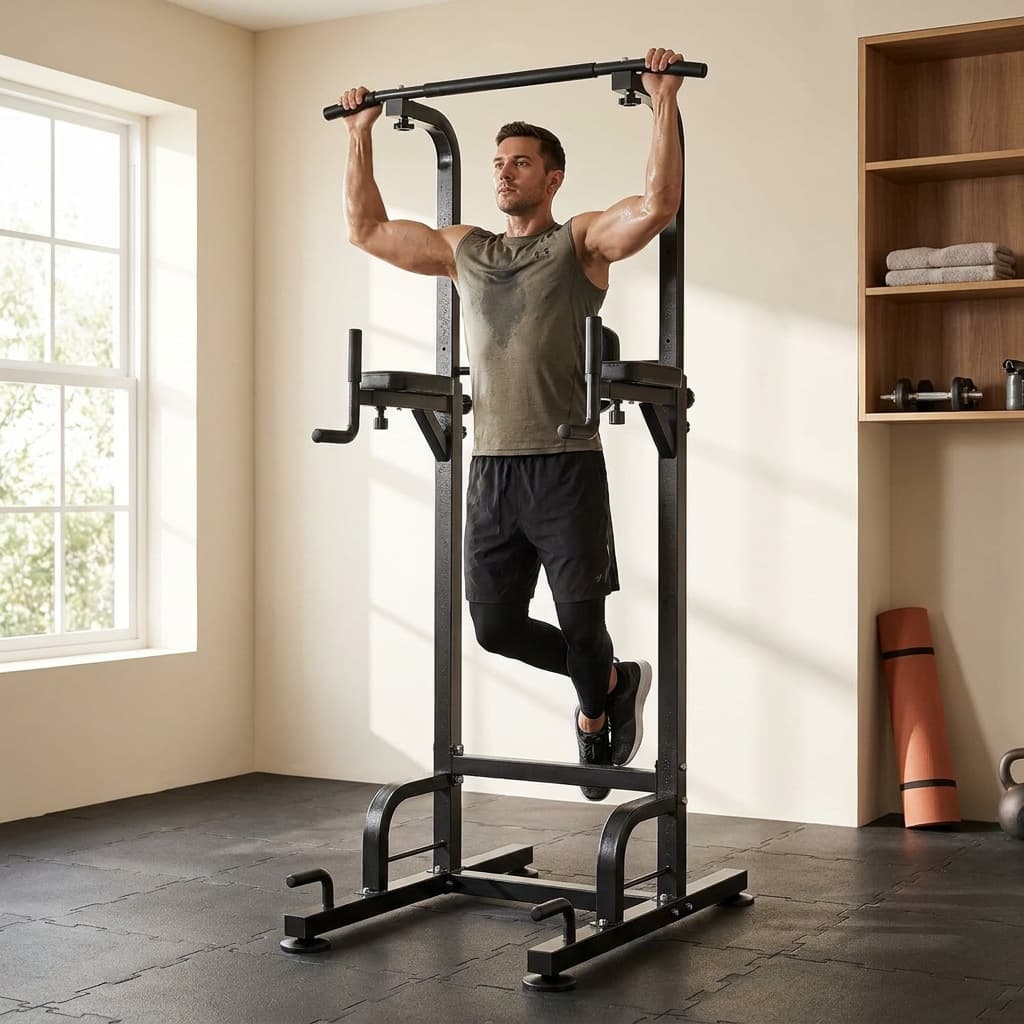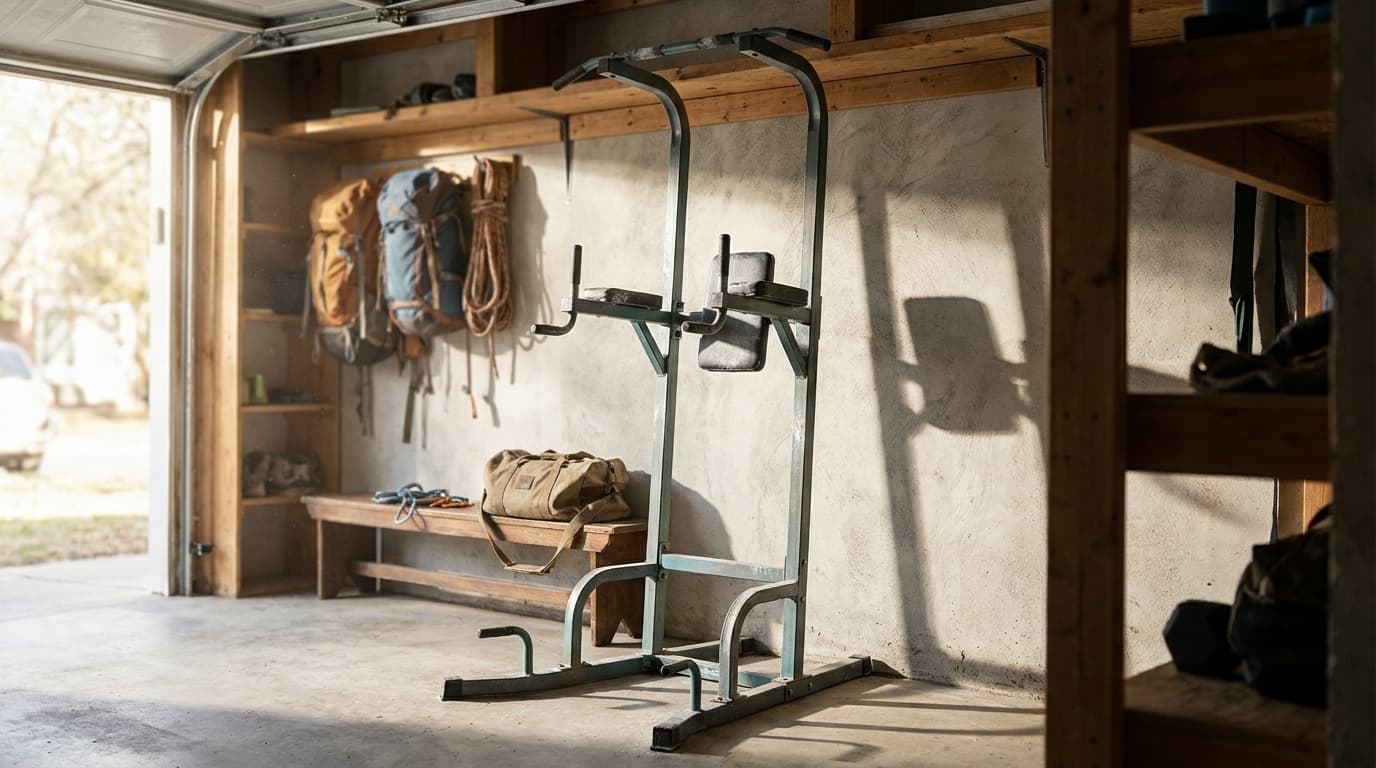
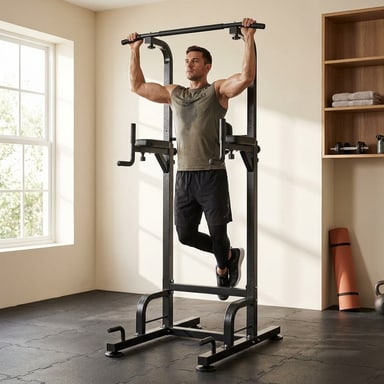
A good power tower turns four square feet of floor space into a complete upper-body calisthenics station: pull-ups, dips, knee raises, and push-up handles, no ceiling anchor needed. The hard part is sorting the stable, well-padded units from the wobbly budget racks that flex under bodyweight.
Our quick picks
How we picked
Every tower below was evaluated against the Kit Score: verified manufacturer specs, aggregated owner reviews across retail platforms, and published load tests. We weighted stability (base footprint, frame gauge, wobble reports), weight capacity, adjustability range, and long-term durability signals like weld quality and hardware corrosion.
The picks
Best overall
BEST OVERALL
Sportsroyals Power Tower Pull Up Bar Station, 450LBS
Best for: Home gym users who want a stable, all-in-one bodyweight station at a mid-range price and plan to train with strict form.
- H-base eliminates lateral sway during strict pull-ups and dips, confirmed by owners training with added weight on a dip belt
- Slight lateral movement appears during kipping or explosive movements, so it is better suited to controlled reps
Kit Score 8.5/10 · $169.98 Price checked Oct 23, 4:16 PM CDT · how we score gear
Buy on AmazonProduct details
The Sportsroyals is one of the best-known freestanding power towers on Amazon, with a 450 lb rated frame and an elongated H-base that distributes load across eight contact points. Multi-grip pull-up bar, padded dip handles, and a captain's chair cover the full bodyweight toolkit in a compact footprint.
- Weight capacity
- 450 lb
- Height range
- 64.6" – 88.2" (6 positions)
- Base footprint
- 41.2" L x 39.7" W (Amazon listing)
- Frame
- 2 mm steel, H-base with 8 support points
- Padding
- Cushioned armrests, 7-position adjustable backrest
- Exercise stations
- Pull-up, dip, knee raise, push-up
More strengths
- Six height settings and a 7-position adjustable backrest fit athletes from roughly 4'8" to 6'6"
- Cushioned armrests with a 10-degree inward tilt to keep elbows from slipping during leg raises
Other tradeoffs
- Assembly runs 60 to 90 minutes and the instructions rely on line drawings rather than photos
The Sportsroyals Power Tower earns the top spot because it resolves the two complaints that show up most in owner reviews of mid-range towers: insufficient weight capacity and a base that shifts under kipping or aggressive dips. Its 450 lb rating puts it well above the 250–300 lb ceiling common at this price, and the listing is specific about why it stays planted: a 39.7-inch H-type base with eight non-slip feet, 2 mm steel tubing, and a 62 lb frame weight, against the 34-inch bases and sub-50 lb frames typical of the category. It holds 4.4 stars across more than 18,000 Amazon ratings.
The station set is complete: vertical knee raise pads, dip bars with a 10-degree inward tilt, a wide pull-up bar, and push-up handles at the bottom, plus inverted rows off the dip bars. The backrest has seven positions. Height is adjustable across six settings from 64.56 to 88.18 inches, which Sportsroyals says fits users from 4 ft 8 in to 6 ft 6 in; at the top setting you want more than an eight-foot ceiling.
The honest caveat: the frame does register some flex at the very top of the pull-up bar when users exceed 200 lb, particularly on wide-grip pulls. It is not a structural concern at the rated capacity, but users who want a completely rigid feel at heavier loads are better served by a wall-mounted bar bolted into studs than by any freestanding tower. Assembly is reported as two-person work (the hardware count is high), and a few owners note that thread quality on the bolts warrants a torque check after the first two weeks.
At $160–$180, this is the tower we would steer most home gym builders toward first.
Best value
BEST VALUE
RELIFE REBUILD YOUR LIFE Power Tower Pull Up Bar Dip Station
Best for: Lighter or intermediate bodyweight trainees who want the most height adjustability for the money and train primarily with controlled form.
- Nine height positions cover the widest range in this price bracket, fitting users from 5'3" up to about 6'2"
- Owners above 180 lb report front-to-back sway of roughly 0.5 inches during dynamic movements; wall placement is recommended above 200 lb
Kit Score 8.0/10 · $132.98 Price checked Oct 23, 4:16 PM CDT · how we score gear
Buy on AmazonProduct details
The RELIFE tower offers the widest height adjustment range in its class (9 positions, from 56 to 86 inches) and a 450 lb rating, for roughly $20 to $30 less than most direct competitors. Suction cup feet and safety locknuts add reassurance for solo training.
- Weight capacity
- 450 lb
- Height range
- 56" – 86" (9 positions)
- Base footprint
- 34" L x 26.4" W (Amazon listing)
- Frame
- 14-gauge steel, powder-coat finish
- Stability features
- Safety locknuts, 4 suction cup feet
- Exercise stations
- Pull-up, dip, knee raise, push-up
More strengths
- Safety locknuts at each adjustment joint keep the tower quiet and prevent height creep during sets
- Strong price-to-capacity ratio: 450 lb rating at a sub-$145 street price is difficult to beat
Other tradeoffs
- Armrest padding compresses noticeably within three to four months of frequent use
The RELIFE Power Tower's standout feature is its adjustment range: nine pull-up bar heights from 56 to 86 inches (the lowest is meant for kids), four backrest positions, and three armrest positions spanning 15.8 to 17.7 inches, so shorter and taller users can dial in the station in a way fixed-height towers in this range cannot. That adjustability extends the useful life of the station as fitness levels and preferred exercises change.
Capacity is rated at 450 lb, the same as the Sportsroyals. The base footprint is the tradeoff: 34 x 26.4 inches against the Sportsroyals' 39.7-inch base, which fits tighter spaces but asks for more form discipline to keep the frame from rocking under momentum-driven reps. RELIFE counters with safety locknuts and four suction-cup feet. It holds 4.4 stars across more than 8,400 Amazon ratings and carries a one-year warranty.
The station set mirrors the Sportsroyals: back pad, arm pads for knee raises, dip bars, wide-grip pull-up bar, and push-up handles.
At about $140, the RELIFE delivers more height flexibility than anything else at its price, which is the right priority for users who are still dialing in their setup or sharing the tower across a household.
How to compare them side by side
| Product | Kit Score | Price | Best for |
|---|---|---|---|
| Sportsroyals Power Tower Pull Up Bar Station, 450LBS | 8.5 | $169.98 Price checked Oct 23, 4:16 PM CDT | Best for: Home gym users who want a stable, all-in-one bodyweight station at a mid-range price and plan to train with strict form. Why it stands out: H-base eliminates lateral sway during strict pull-ups and dips, confirmed by owners training with added weight on a dip belt Tradeoff: Slight lateral movement appears during kipping or explosive movements, so it is better suited to controlled reps |
| RELIFE REBUILD YOUR LIFE Power Tower Pull Up Bar Dip Station | 8.0 | $132.98 Price checked Oct 23, 4:16 PM CDT | Best for: Lighter or intermediate bodyweight trainees who want the most height adjustability for the money and train primarily with controlled form. Why it stands out: Nine height positions cover the widest range in this price bracket, fitting users from 5'3" up to about 6'2" Tradeoff: Owners above 180 lb report front-to-back sway of roughly 0.5 inches during dynamic movements; wall placement is recommended above 200 lb |
Sportsroyals Power Tower Pull Up Bar Station, 450LBS
- Best for
- Home gym users who want a stable, all-in-one bodyweight station at a mid-range price and plan to train with strict form.
- Why it stands out
- H-base eliminates lateral sway during strict pull-ups and dips, confirmed by owners training with added weight on a dip belt
- Tradeoff
- Slight lateral movement appears during kipping or explosive movements, so it is better suited to controlled reps
RELIFE REBUILD YOUR LIFE Power Tower Pull Up Bar Dip Station
- Best for
- Lighter or intermediate bodyweight trainees who want the most height adjustability for the money and train primarily with controlled form.
- Why it stands out
- Nine height positions cover the widest range in this price bracket, fitting users from 5'3" up to about 6'2"
- Tradeoff
- Owners above 180 lb report front-to-back sway of roughly 0.5 inches during dynamic movements; wall placement is recommended above 200 lb
How to choose the right power tower
Five questions to narrow your pick
Weight capacity first
Weigh yourself and add your heaviest training weight (vest, belt). Buy at least 50 lb headroom above that number. Both picks are rated 450 lb, which covers most people; a rating is static, so keep kipping off a freestanding tower.
Measure your footprint before you buy
Mark the base dimensions on your floor with tape before ordering. The Sportsroyals is 41.2 x 39.7 inches; the RELIFE is 34 x 26.4 inches and fits a narrow corridor.
Check ceiling clearance
The Sportsroyals tops out at 88.18 inches and the RELIFE at 86 inches. Add head clearance above the bar. Eight-foot (96 in) ceilings are tight at the top settings; nine feet or higher is comfortable.
Match adjustability to your height
If the tower is shared or you are at either end of the height range, the RELIFE's nine positions (56 to 86 in) give the most room. Sportsroyals' six settings (64.56 to 88.18 in) are rated for 4 ft 8 in to 6 ft 6 in.
Decide whether you will anchor
Neither pick needs floor anchors. If you own the space and want zero movement, a wall-mounted bar bolted into studs beats any freestanding tower; see our [pull-up bar guide](/fitness/best-pull-up-bars).
The single most common regret in power tower reviews is buying to the bottom of the capacity range and outgrowing the frame within a year.
Frequently asked questions
Do power towers need to be bolted to the floor?
Most freestanding power towers are rated for use without floor anchoring, including both picks above. That said, heavier users (above 200 lb), anyone doing kipping pull-ups, or anyone training in a carpeted room will notice frame movement on narrower-base units. If you cannot anchor, prioritize base footprint and frame weight: the Sportsroyals' 39.7-inch base and 62 lb frame are the reason it is the more stable of the two.
Can you do a full upper-body workout on a power tower alone?
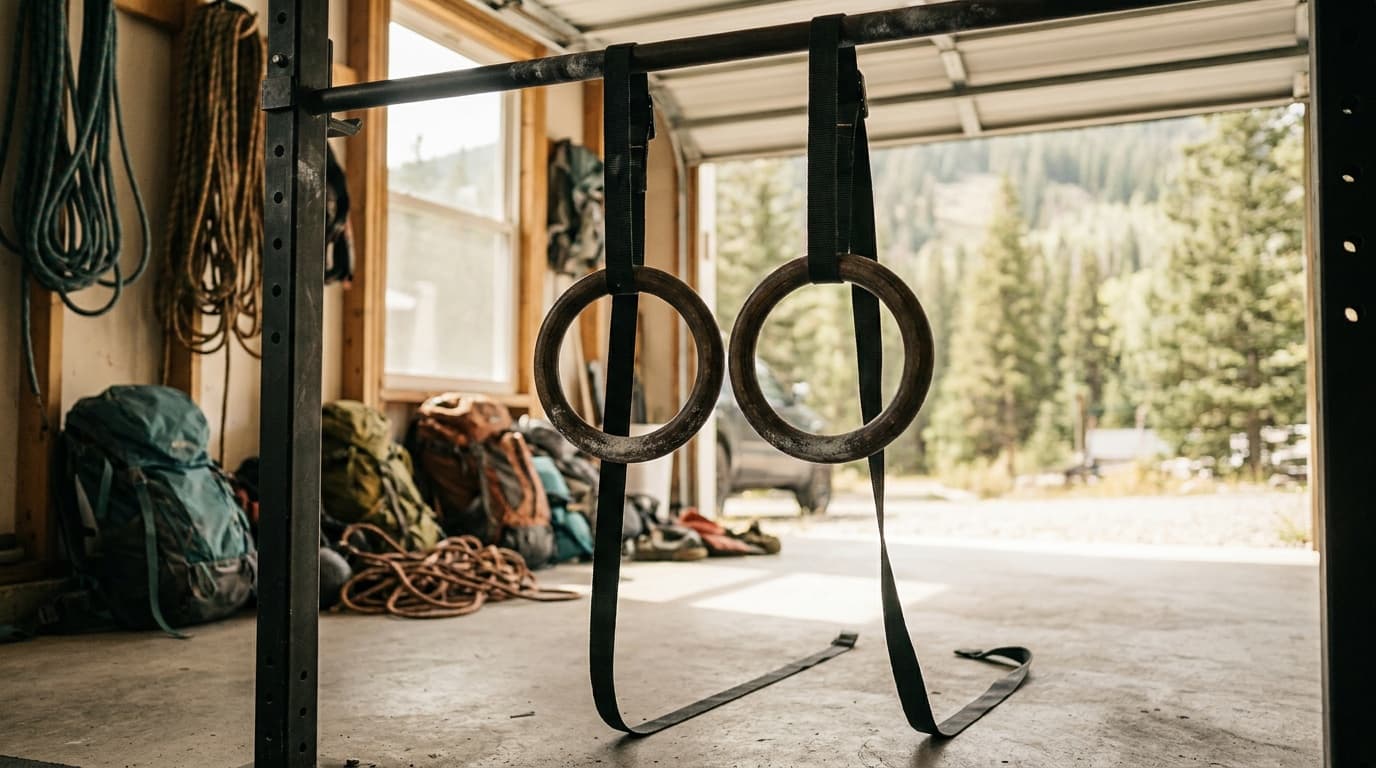
Yes, with some programming creativity. Pull-ups and chin-ups cover vertical pulling; dips cover horizontal pushing (chest and triceps); knee raises and leg raises cover core. Add push-up handles at the base for a pressing angle. The gap is horizontal pulling (rows): you can fill it by using a low-set dip bar as a makeshift row bar, though a separate suspension trainer or ring attachment makes this cleaner. For most people building a bodyweight foundation, a power tower covers 80 percent of upper-body work.
What is the difference between a power tower and a squat rack?
A power tower is a bodyweight-only station: it holds you, not a loaded barbell. It has no uprights for racking plates, no safeties, and no provision for a bench press. A squat rack is a barbell station. They serve different training modalities and do not substitute for each other. If your goal is barbell strength, a squat rack is the correct tool. If your goal is bodyweight calisthenics (pull-ups, dips, and core work), a power tower is the direct solution and takes up far less floor space than a full cage.
Where these numbers come from
| Claim | Source | Checked |
|---|---|---|
| Sportsroyals: 450 lb rating, 2 mm steel, 39.7 in base, 62 lb frame, 8 feet, 6 heights 64.56 to 88.18 in, 7 backrest positions, fits 4 ft 8 in to 6 ft 6 in, 41.2 x 39.7 x 88.18 in, 4.4 stars on 18,100-plus ratings | Sportsroyals listing on Amazon, linked from the pick above | Sep 2026 |
| RELIFE: 450 lb rating, 9 heights 56 to 86 in, 4 backrest and 3 armrest positions (15.8 to 17.7 in), locknuts and 4 suction feet, 34 x 26.4 x 86 in, 1-year warranty, 4.4 stars on 8,400-plus ratings | RELIFE listing on Amazon, linked from the pick above | Sep 2026 |
| Fitness Reality X-Class and Body Champ VKR1010 no longer sold new on Amazon | Amazon search and listing checks | Sep 2026 |
We did not test these towers ourselves. Capacity and dimension figures are the sellers' listed specs; the stability notes are what those specs predict plus what owners report.
A power tower is one of the most space-efficient ways to build upper-body calisthenics capacity at home. Start with the Sportsroyals for the best balance of stability and price, or the RELIFE if adjustability and footprint matter more. For more equipment guides and training resources, browse the fitness hub or see how we research and rate every pick on this site.
Keep going
Our recommendations draw on manufacturer documentation, retailer listings, owner feedback, and comparisons with alternatives.
As an Amazon Associate I earn from qualifying purchases. We may earn a commission from links here, at no extra cost to you. How we research →