A good daypack disappears on your back. A bad one reminds you it exists every mile. These four packs earned their spots through research across spec sheets, verified owner reviews, and gear editorial, here is what the evidence says.
Our quick picks
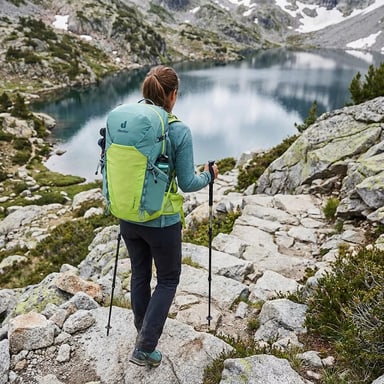
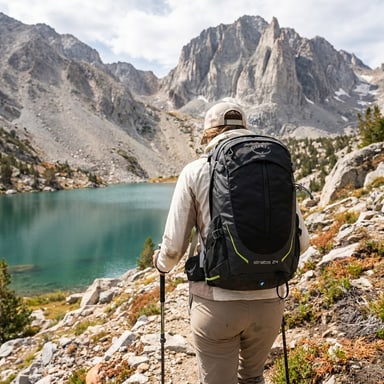
How we picked
Every pack here was evaluated against our Kit Score: load support relative to volume, back ventilation design, organization layout, weight, and long-term ownership value. Volume range was held to 15–30 L so all picks suit a full day out without tipping into overnight territory.
Best overall: Osprey Talon 22
BEST OVERALL
Osprey Talon 22
Best for: Hikers who want a proven all-around daypack with solid load support, plenty of adjustment, and a warranty they can actually use.
- Adjustable torso fit covers a wide range of body sizes
- At 2 lb 1 oz it runs heavier than ultralight rivals for the same volume
Kit Score 8.6/10 · $169.95 Price checked Oct 23, 6:22 AM CDT · how we score gear
Buy on AmazonProduct details
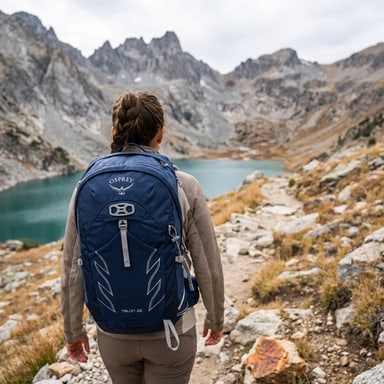
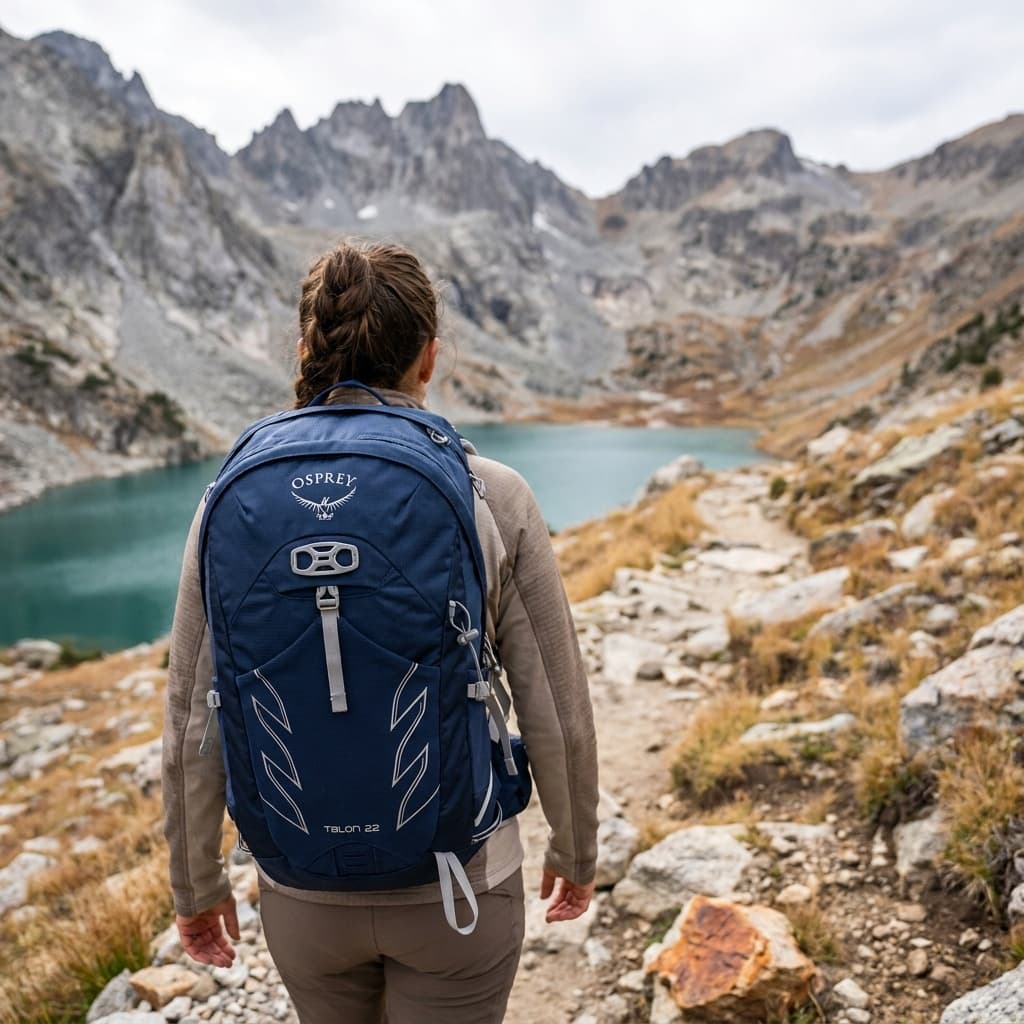
The Talon 22 is the daypack you see on the trail more than any other for good reason: it packs in a padded hipbelt, adjustable torso harness, and dual hipbelt pockets into a 22-liter package that handles loads up to 20 lb without complaint. Owners across hundreds of Amazon ratings consistently cite its adjustability and durability as standouts.
- Volume
- 22 L
- Weight
- 2 lb 1 oz (945 g)
- Back Panel
- AirScape foam with ventilation channels
- Hipbelt Pockets
- 2 zippered
- Hydration
- Compatible up to 3 L reservoir (sold separately)
- Warranty
- All Mighty Guarantee (lifetime repair or replace)
More strengths
- Padded hipbelt and dual hipbelt pockets at this size are rare
- Osprey lifetime warranty backs years of hard use
Other tradeoffs
- AirScape back panel ventilation is functional but not class-leading compared to suspended-mesh designs
The Talon 22 has been a trail staple for good reason. The FitOnTheFly hipbelt adjusts without tools, so you can dial fit on the go rather than regretting it at the trailhead. The AirSpeed back panel keeps fabric off your spine without the full-suspension engineering (and weight penalty) of Osprey's Stratos line. At 22 liters the main compartment handles a full day load comfortably, and the integrated rain cover means one fewer item to remember.
Osprey's All Mighty Guarantee covers the pack for its lifetime, regardless of how you acquired it. For a pack you plan to use hard for years, that backstop has real value.
Worth knowing: the Talon runs generous on the torso, so hikers with a shorter torso should try it on or verify return policy before ordering. Read our full Osprey Talon 22 review.
Best premium: Osprey Stratos 24
BEST PREMIUM
Osprey Stratos 24
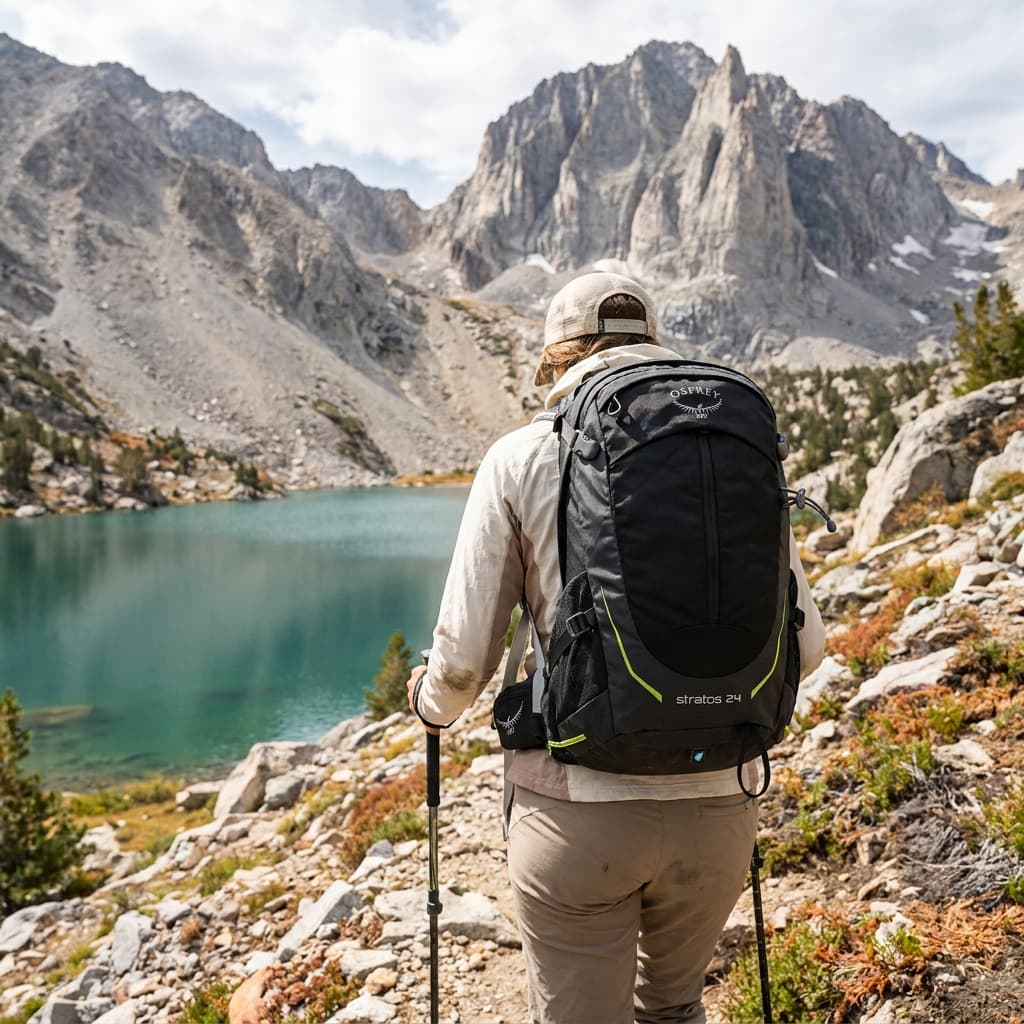
Best for: Hikers in warm or humid climates who prioritize back ventilation and do not mind carrying a few extra ounces for the airflow benefit.
- AirSpeed suspended mesh back panel keeps your back noticeably cooler than foam-panel designs
- Heaviest pack in this roundup at 2 lb 12 oz
Kit Score 8.8/10 · $169.00 Price checked Oct 23, 6:22 AM CDT · how we score gear
Buy on AmazonProduct details
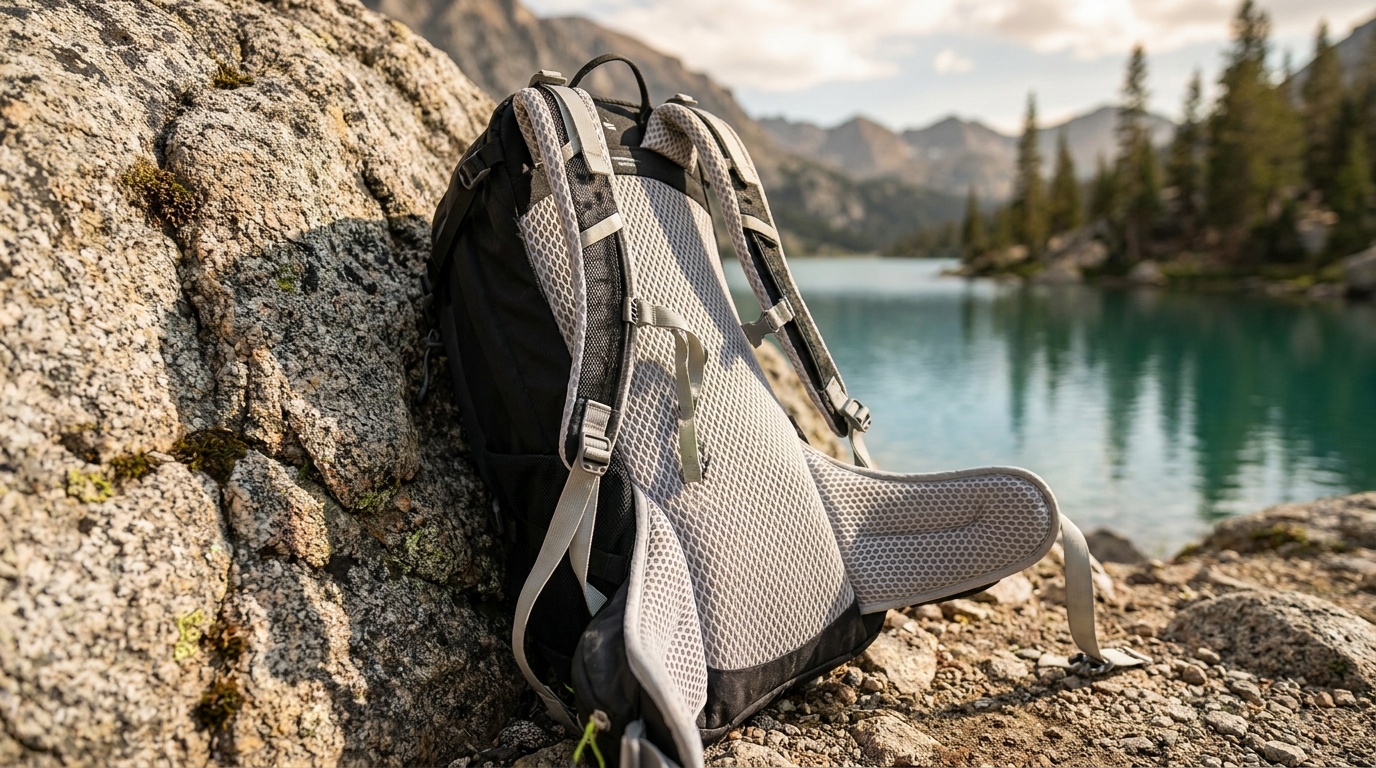
The Stratos 24 runs a suspended mesh AirSpeed back panel that puts roughly two inches of airspace between your back and the pack, making it the go-to pick for hot-weather hiking where a clammy back is the main complaint. It holds strong ratings across multiple retailer platforms and includes an integrated rain cover, earning its premium price for hikers who log long summer days.
- Volume
- 24 L
- Weight
- 2 lb 12 oz (1.25 kg)
- Back Panel
- AirSpeed tensioned mesh (approx. 2 in. air gap)
- Hipbelt Pockets
- 2 zippered
- Hydration
- Compatible up to 3 L reservoir (sold separately)
- Rain Cover
- Integrated and removable
More strengths
- Integrated rain cover included at this price is a genuine extra
- Plush hipbelt transfers load well on all-day efforts
Other tradeoffs
- The stand-off suspension adds bulk that prevents the pack from compressing small
The Stratos earns its price premium through one thing: the AirSpeed suspended mesh back panel creates a genuine airspace between pack and back, which makes a measurable difference in sweat accumulation on warm, humid days. Reviewers consistently cite this as the deciding factor for summer hiking in the Southeast, Pacific Northwest, and comparable climates.
At 24 liters and roughly 2.5 lb, it is heavier than the Talon and noticeably heavier than the Speed Lite. If you are chasing light and fast, look elsewhere. If you are doing long summer days and finishing soaked is your pain point, the Stratos addresses it directly.
Best value: Deuter Speed Lite 25
BEST VALUE
Deuter Speed Lite 25
Best for: Weight-conscious day hikers who want real hipbelt support and a full-size 25 L compartment without paying the premium for a brand-name flagship pack.
- Half a pound lighter than most framed 22-25 L daypacks
- Fixed back length: important to check torso fit before buying
Kit Score 8.6/10 · $124.99 Price checked Oct 23, 6:22 AM CDT · how we score gear
Buy on AmazonProduct details
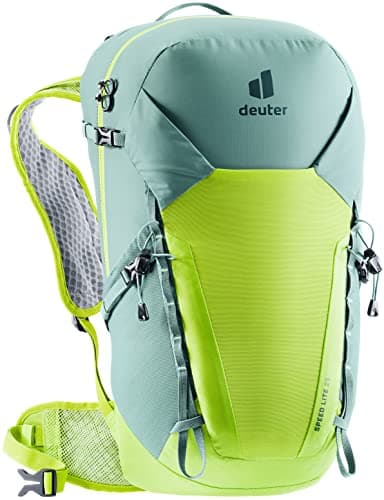
The Speed Lite 25 delivers genuine hiking support at a price well under $120: a Delrin U-frame keeps loads stable up to around 20 lb, breathable hip fins reduce hotspots, and the 25 L volume covers a full-day kit. At 1 lb 9 oz it is roughly a half-pound lighter than either Osprey option, and owner reviews on Amazon and Zappos rate it highly for the price.
- Volume
- 25 L
- Weight
- 1 lb 9 oz (710 g)
- Back System
- Delrin U-frame with breathable contact back panel
- Hipbelt
- Padded fins with removable waist strap
- Hydration
- Compatible up to 3 L reservoir (sold separately)
- Body Fabric
- 100% recycled nylon; bluesign certified
More strengths
- Padded hipbelt and shoulder strap phone pockets included at this price
- 100% recycled body fabric with bluesign certification
Other tradeoffs
- No rain cover included; main compartment has minimal internal dividers
At under $120, the Speed Lite 25 undercuts the flagship options by $40–$80 while delivering things budget packs often skip: a functional hipbelt with padding, a dedicated hydration sleeve, and 25 liters of usable volume. The Aircomfort back system uses a simple flexlite frame to move sweat-prone fabric away from the back, not as aggressive as the Stratos suspension but better than a flat foam panel.
The Speed Lite proves that "value" and "compromised" are not the same thing in the daypack category.
Deuter's fit system runs slightly narrower through the shoulders than Osprey. Hikers with a broad build should check this before committing. Otherwise this is the strongest under-$120 option in the class.
Head-to-head comparison
| Product | Kit Score | Price | Best for |
|---|---|---|---|
| Osprey Talon 22 | 8.6 | $169.95 Price checked Oct 23, 6:22 AM CDT | Best for: Hikers who want a proven all-around daypack with solid load support, plenty of adjustment, and a warranty they can actually use. Why it stands out: Adjustable torso fit covers a wide range of body sizes Tradeoff: At 2 lb 1 oz it runs heavier than ultralight rivals for the same volume |
| Osprey Stratos 24 | 8.8 | $169.00 Price checked Oct 23, 6:22 AM CDT | Best for: Hikers in warm or humid climates who prioritize back ventilation and do not mind carrying a few extra ounces for the airflow benefit. Why it stands out: AirSpeed suspended mesh back panel keeps your back noticeably cooler than foam-panel designs Tradeoff: Heaviest pack in this roundup at 2 lb 12 oz |
| Deuter Speed Lite 25 | 8.6 | $124.99 Price checked Oct 23, 6:22 AM CDT | Best for: Weight-conscious day hikers who want real hipbelt support and a full-size 25 L compartment without paying the premium for a brand-name flagship pack. Why it stands out: Half a pound lighter than most framed 22-25 L daypacks Tradeoff: Fixed back length: important to check torso fit before buying |
Osprey Talon 22
- Best for
- Hikers who want a proven all-around daypack with solid load support, plenty of adjustment, and a warranty they can actually use.
- Why it stands out
- Adjustable torso fit covers a wide range of body sizes
- Tradeoff
- At 2 lb 1 oz it runs heavier than ultralight rivals for the same volume
Osprey Stratos 24
- Best for
- Hikers in warm or humid climates who prioritize back ventilation and do not mind carrying a few extra ounces for the airflow benefit.
- Why it stands out
- AirSpeed suspended mesh back panel keeps your back noticeably cooler than foam-panel designs
- Tradeoff
- Heaviest pack in this roundup at 2 lb 12 oz
Deuter Speed Lite 25
- Best for
- Weight-conscious day hikers who want real hipbelt support and a full-size 25 L compartment without paying the premium for a brand-name flagship pack.
- Why it stands out
- Half a pound lighter than most framed 22-25 L daypacks
- Tradeoff
- Fixed back length: important to check torso fit before buying
How to choose the right daypack
How to choose a hiking daypack
Match volume to your day
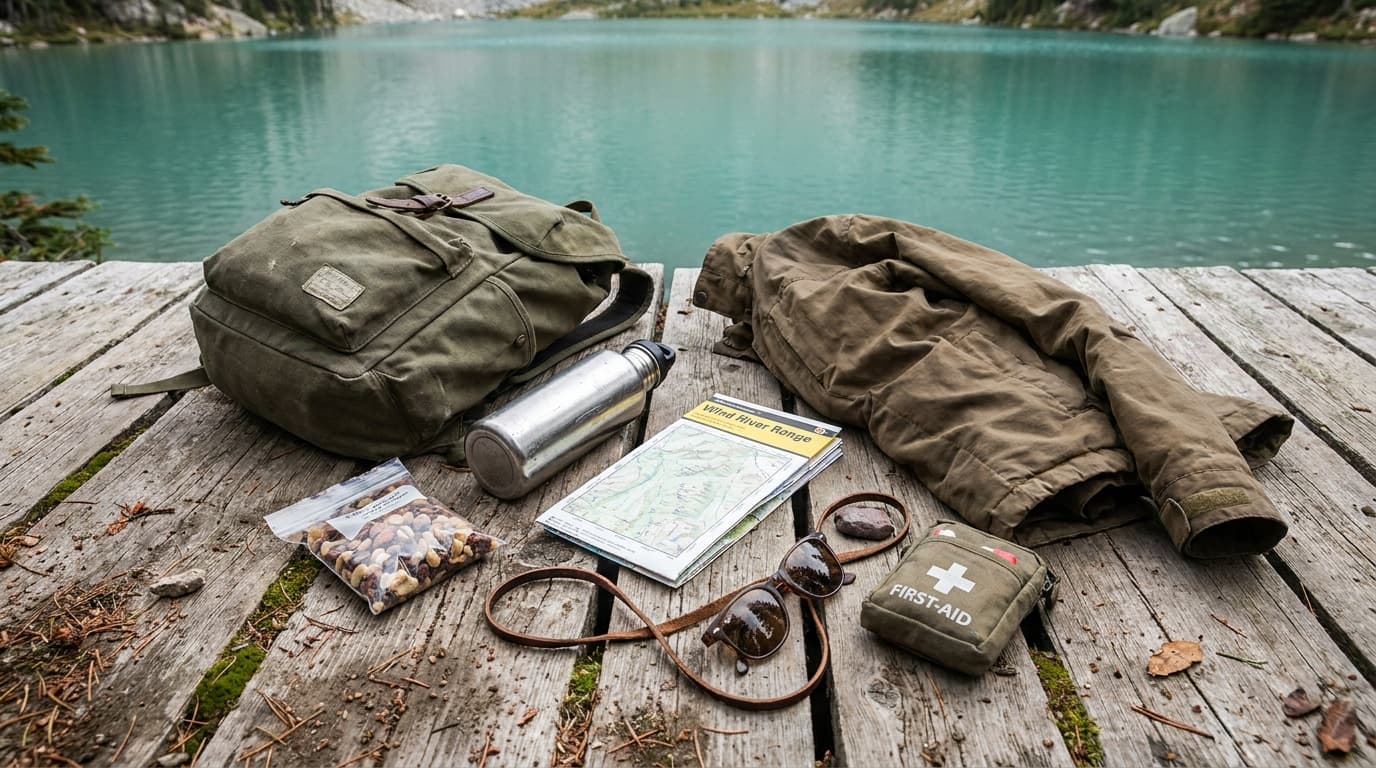
For a standard day hike (water, food, layers, first aid) 20–25 L is the working range. Go toward 15 L for fast trail runs; push toward 28–30 L for shoulder-season days with extra insulation.
Prioritize back system for your climate
Flat foam panels are lightest but transfer heat directly. Suspended mesh panels add 4–8 oz and improve airflow significantly. Worth the tradeoff in warm or humid environments.
Check torso length before you buy
Most packs in this class come in S/M and M/L. Measure from your C7 vertebra (the bony bump at the base of your neck) to the top of your hip crest. A mismatched torso length causes hot spots and load imbalance that no hipbelt adjustment will fix.
Verify hipbelt padding for your distance
For day hikes under 8 miles on moderate terrain a thin hipbelt stabilizes the load. For long days or heavy loads (camera gear, extra water) you want a padded hipbelt that actually transfers weight to your hips. The same applies if you deliberately load a daypack for fitness; Ruck Authority's guide to [turning a backpack you own into a training ruck](https://ruckauthority.com/guides/ruck-with-regular-backpack?utm_source=kitauthority&utm_medium=referral&utm_campaign=sister-site&utm_content=best-daypacks-for-hiking) explains the setup.
Weigh the warranty against the price
A lifetime guarantee on a $150 pack has real dollar value over a 10-year ownership span. Factor it in when comparing options that sit $30–$40 apart.
Frequently asked questions
What size daypack is best for a full day hike?
20–25 liters covers most full day hikes: a 2 L reservoir or water bottles, lunch and snacks, a packable rain jacket, a base layer, first aid kit, and small extras. Go toward 15 L if you hike fast and pack minimal; push toward 28–30 L if you bring a camera system or hike in variable mountain weather where you carry more layers. Hiking with a dog also pushes you up a size, since their water, collapsible bowl, and gear ride in your pack; our sister site House Pet Authority's guide to hiking with your dog breaks down exactly what the dog adds to your load.
Is back ventilation worth the extra weight?
It depends on where and when you hike. Research and owner reviews consistently show that suspended mesh back panels (the Stratos and Zulu designs) reduce sweat accumulation on warm, humid days. The cost is 4–8 extra ounces and a slightly stiffer back-panel feel. For alpine or cool-climate hiking the tradeoff is not worth it; for summer hiking below treeline in humid regions, most owners say it is.
Do hiking daypacks include a rain cover?
Not always. The Osprey Talon 22 ships with an integrated rain cover tucked into a zippered pocket at the base. The Stratos 24 also includes one. The Deuter Speed Lite 25 and Gregory Zulu 24 LT do not include a cover in the base price, though Deuter and Gregory both sell compatible covers separately. Check the current product listing, as manufacturers occasionally add or remove the cover between model years.
More trail gear research is at Hike & Backpack. For the full methodology behind every pick, see how we research and rate.
Keep going
Complete loadoutDay hike kitSeven slots for a full trail day, from the pack and water system to light and weather protection.Free tool: Pack-Size SelectorRelated guides
Our recommendations draw on manufacturer documentation, retailer listings, owner feedback, and comparisons with alternatives.
As an Amazon Associate I earn from qualifying purchases. We may earn a commission from links here, at no extra cost to you. How we research →