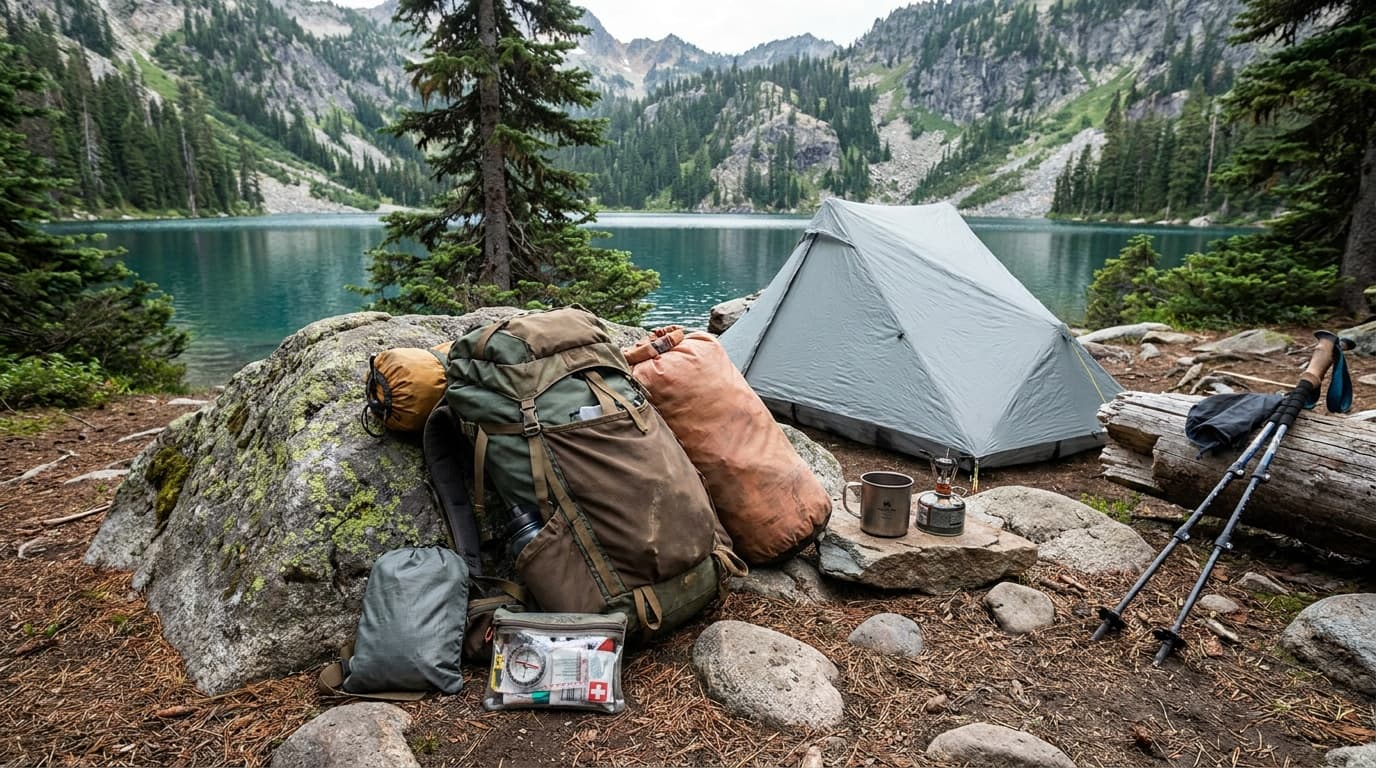
A hiking daypack is one of those pieces of gear where a bad fit makes every mile worse. Get the capacity and fit right and the pack disappears on your back. Get them wrong and you spend the day tugging straps or running out of space.
How much volume you actually need
Capacity is the first decision, but the range is narrower than most buyers expect.
The Ten Essentials (navigation, headlamp, sun protection, first aid, fire starter, knife and repair, emergency shelter, extra food, extra water, extra clothing) fit comfortably inside 20-25 liters, leaving room for a mid-layer and a camera. The 20-30 liter window covers the overwhelming majority of day hikers in three seasons.
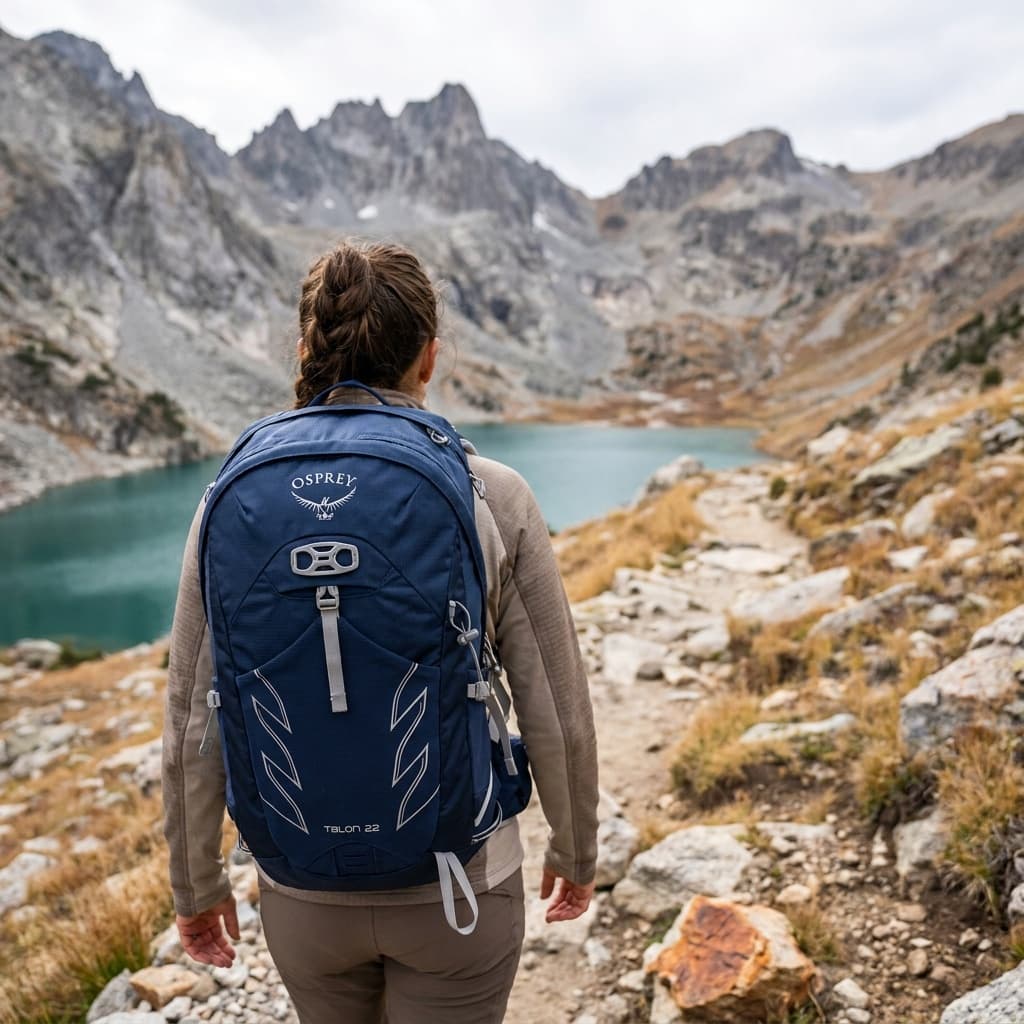
Go toward 25-30 liters if you run cold, regularly carry layers, or hike in shoulder-season conditions where the weather can turn. Stay closer to 20 liters, the Osprey Talon 22 class, for warm-weather, fast-and-light outings. Packs above 35-40 liters for a single day have a real cost: extra frame weight and the psychological pull to fill empty space with gear you will carry but not use.
Packs under 25 liters often omit a structured hipbelt entirely. That is fine when the load stays under 15-20 pounds. Above that threshold, an absent hipbelt means your shoulders carry everything, and fatigue accumulates faster than you expect over a long day.
When you are ready to shop, see our guide to the best daypacks for hiking for researched picks across this capacity range.
Torso fit: the measurement that actually matters
Height is a rough proxy at best. Two hikers at exactly the same height can differ by 7 centimeters or more in torso length, putting them in completely different pack sizes. Torso length is the number that matters.
How to measure your torso length
Find C7
Tilt your head forward. The prominent bony bump at the base of your neck is your C7 vertebra. That is your starting point.
Find your iliac crest
Place both hands on your hips with thumbs pointing toward your spine. The line your thumbs form across your lower back marks the top of your iliac crest. That is your endpoint.
Measure the distance
Run a flexible tape measure along the curve of your spine between those two points. That number in inches is your torso length.
Map to pack size
Most brands size roughly as follows: XS = below 15 inches, S = 15-18 inches, M/Regular = 18-21 inches, L = 21-24 inches. Check the specific brand chart before buying.
Many packs come in a single size with an adjustable torso. Others are fixed-size. If you are buying online, knowing your torso length lets you narrow the field quickly and reduces the chance of a return.
Hipbelt fit and load transfer
A well-fitted hipbelt transfers roughly 70-80% of pack weight from your shoulders to your hips. That shift is the difference between arriving at camp fresh and arriving with aching traps. Carrying weight well is also a posture skill, one Ruck Authority's form guide for walking under load breaks down step by step.
Correct placement means the padded wings sit on top of your iliac crest, not resting on your stomach or floating below the hip bones. When you cinch the belt snug, there should be roughly 3-6 inches of gap between the wing tips at the front. If the wings are touching or wrapping past your navel, the belt is too small. If there is more than 6 inches of gap, it is too large.
Measure your hip circumference across the actual hip bones (the iliac crest), not the narrowest part of your waist. Most pack manufacturers publish a hip circumference range for each belt size.
The hipbelt does the work. If it does not fit, the pack does not fit, regardless of how good everything else is.
Daypacks often use thinner, less structured hipbelts than overnight packs. That is a reasonable weight trade-off for loads under 15 pounds. If your full loaded daypack regularly climbs above that range, prioritize packs with a more robust hipbelt, even in the 20-25 liter class.
Back panel and ventilation
Back panel design affects two things: how much you sweat and how stable the pack feels on your back.
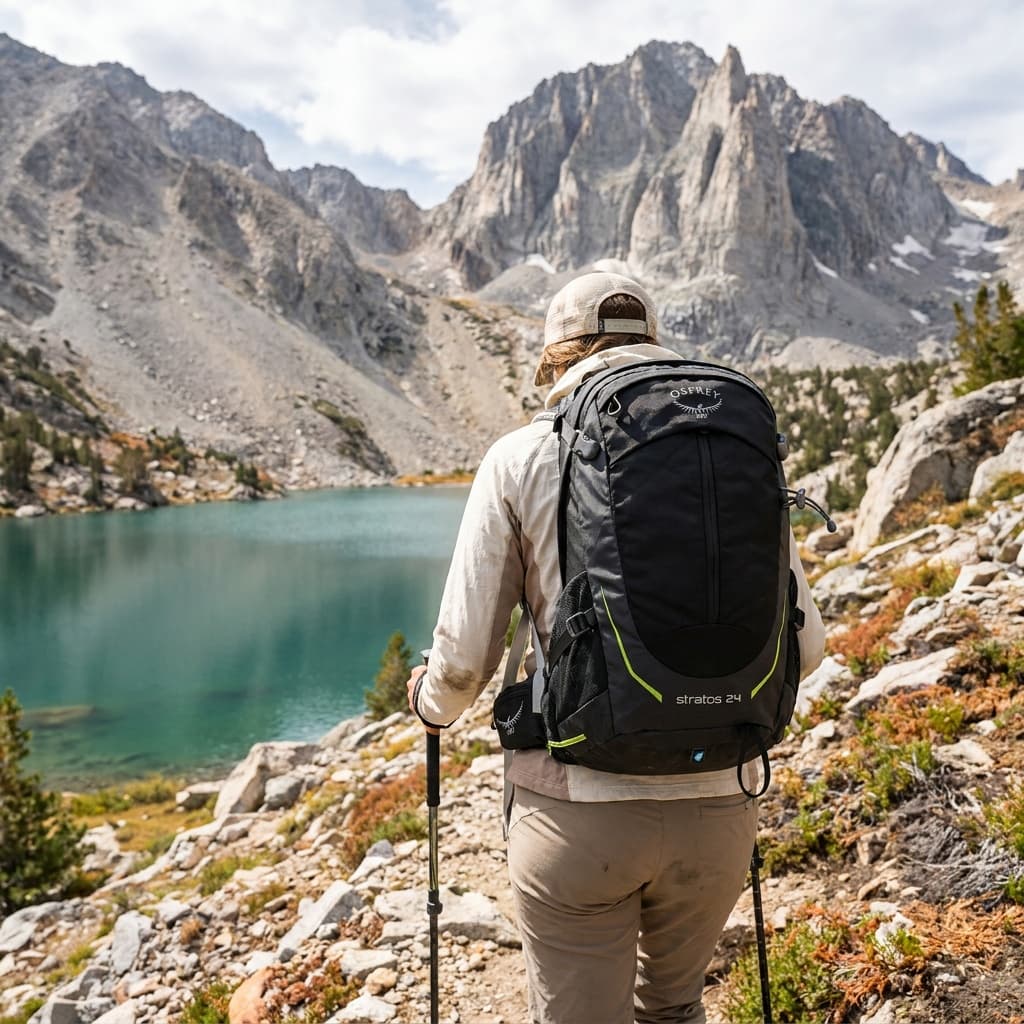
Suspended mesh panels like the one on the Osprey Stratos 24 hold the pack body completely off your back with a tensioned frame and mesh trampoline. Air moves freely across your entire back and spine. The trade-off is that the suspended design shifts the pack's center of gravity a few centimeters farther from your body, which some hikers notice on steep or technical terrain.
Foam contact panels with air channels keep the pack closer to your back. The channels provide partial airflow, but contact panels are noticeably warmer at the lower back on sustained climbs in heat and humidity. The upside is a more stable, connected feel on rough ground.
The practical decision comes down to your most common conditions. If you hike mostly in humid summers on long ridge climbs, the airflow from a suspended panel is a genuine comfort upgrade. If you spend most of your time in cool temperatures or on rocky terrain where stability matters, a contact panel is often the better trade-off in weight and feel.
Hydration options
Most daypacks of 20 liters and above include a hydration sleeve inside the main compartment and a hose port at the top. That sleeve accepts a reservoir (also called a bladder) in the 1.5-3 liter range, like the CamelBak Crux 3L.
A 2-liter reservoir covers moderate conditions comfortably, roughly 4-6 hours of hiking in mild weather. In heat, at elevation, or on longer efforts, move up to 3 liters. The general baseline is 0.5 liters per hour, adjusted upward for temperature and exertion. Hot, steep days can push that to 0.75-1 liter per hour for some hikers.
Reservoirs have a real advantage over water bottles for pacing: you sip continuously rather than stopping to unscrew a cap, which tends to produce better hydration habits on the trail. The trade-off is cleaning time and the need to dry the bladder after every trip.
If you prefer bottles, look for packs with exterior side pockets that are accessible while wearing the pack, or a front stretch pocket for quick grabs.
Rain cover
Three approaches exist: integrated covers, separate covers, and DWR-treated pack shells.
An integrated rain cover stows in a dedicated pocket (usually at the base of the pack) and deploys over the pack body in seconds. Because it lives in the pack permanently, you never leave it in the car. The cover is cut to fit that specific pack shape, which improves coverage at the edges compared to a universal aftermarket cover.
A separate universal rain cover is cheaper and can move between packs, but it adds a loose item to track and is often cut too generously, leaving gaps at the hip belt attachment points.
Some packs use a heavily DWR-treated or coated shell fabric intended to shed water directly. These work well in light to moderate rain but are not a substitute for a cover in a heavy downpour, especially once the DWR treatment ages.
For most three-season hikers, an integrated cover or a well-fitted separate cover are both reliable. Check whether the cover is included or sold separately before comparing prices between packs.
Trekking pole attachment
If you hike with poles, look for two features: lash loops (usually webbing loops at the base of the pack sides) and a bungee or strap at the top to secure the grip end. Together they hold a pair of poles vertically against the pack frame, freeing both hands for a scramble.
Side attachment points are the most common configuration and keep poles accessible without removing the pack. Front attachment bungees are common on running packs and some ultralight designs; they work well but require more effort to stow and retrieve.
If you mostly hike rolling terrain where poles stay deployed, this feature matters less. On technical routes where you frequently transition between using poles and stowing them, dedicated attachment points are worth seeking out.
Frequently asked questions
What size daypack do I need for a full-day hike?
20-30 liters covers the full-day load for most hikers: 2-3 liters of water, lunch and snacks, a rain jacket, an insulating layer, first aid, and the Ten Essentials. Go toward 25-30 liters if you run cold and carry extra layers, or closer to 20 liters for warm-weather fast-and-light trips. Packs under 15 liters are best for trail runs or very short outings. Anything over 35 liters for a day hike will tempt you to pack things you do not need.
How do I find the right torso size?
Measure from your C7 vertebra (the bony bump at the base of your neck when you tilt your head forward) down to your iliac crest (the top of your hip bones, where your thumbs land when you place your hands on your hips). That spine distance is your torso length. Most packs size small at roughly 15-18 inches and medium at 18-21 inches. Two people of the same height can differ by 2-3 inches in torso length, so this measurement matters more than height for fit.
Do I really need a ventilated back panel?
It depends on your climate and pace. Suspended mesh panels keep the pack body fully off your back and reduce sweat buildup noticeably on hot, steady climbs. Foam contact panels with air channels are lighter and keep the load closer to your center of gravity, which helps on rough or steep terrain. If you hike in consistent heat and humidity, the airflow difference is real. If you mostly hike in cooler temperatures or on technical terrain, a contact panel is often the better trade-off.
Browse all hike gear reviews and guides, or read how we research and rate gear at Kit Authority.
Recommended gear
Our current top picks from the Best daypacks for hiking: top picks for 15–30 L guide, if you are ready to buy.

Best for: Hikers who want a proven all-around daypack with solid load support, plenty of adjustment, and a warranty they can actually use.
- Adjustable torso fit covers a wide range of body sizes
- At 2 lb 1 oz it runs heavier than ultralight rivals for the same volume
- Volume
- 22 L
- Weight
- 2 lb 1 oz (945 g)
- Back Panel
- AirScape foam with ventilation channels
- Hipbelt Pockets
- 2 zippered
- Hydration
- Compatible up to 3 L reservoir (sold separately)
- Warranty
- All Mighty Guarantee (lifetime repair or replace)
About this pick
The Talon 22 is the daypack you see on the trail more than any other for good reason: it packs in a padded hipbelt, adjustable torso harness, and dual hipbelt pockets into a 22-liter package that handles loads up to 20 lb without complaint. Owners across hundreds of Amazon ratings consistently cite its adjustability and durability as standouts.
Strengths
- Adjustable torso fit covers a wide range of body sizes
- Padded hipbelt and dual hipbelt pockets at this size are rare
- Osprey lifetime warranty backs years of hard use
Weaknesses
- At 2 lb 1 oz it runs heavier than ultralight rivals for the same volume
- AirScape back panel ventilation is functional but not class-leading compared to suspended-mesh designs
Kit Score breakdown

Best for: Hikers in warm or humid climates who prioritize back ventilation and do not mind carrying a few extra ounces for the airflow benefit.
- AirSpeed suspended mesh back panel keeps your back noticeably cooler than foam-panel designs
- Heaviest pack in this roundup at 2 lb 12 oz
- Volume
- 24 L
- Weight
- 2 lb 12 oz (1.25 kg)
- Back Panel
- AirSpeed tensioned mesh (approx. 2 in. air gap)
- Hipbelt Pockets
- 2 zippered
- Hydration
- Compatible up to 3 L reservoir (sold separately)
- Rain Cover
- Integrated and removable
About this pick
The Stratos 24 runs a suspended mesh AirSpeed back panel that puts roughly two inches of airspace between your back and the pack, making it the go-to pick for hot-weather hiking where a clammy back is the main complaint. It holds strong ratings across multiple retailer platforms and includes an integrated rain cover, earning its premium price for hikers who log long summer days.
Strengths
- AirSpeed suspended mesh back panel keeps your back noticeably cooler than foam-panel designs
- Integrated rain cover included at this price is a genuine extra
- Plush hipbelt transfers load well on all-day efforts
Weaknesses
- Heaviest pack in this roundup at 2 lb 12 oz
- The stand-off suspension adds bulk that prevents the pack from compressing small
Kit Score breakdown
Best for: Weight-conscious day hikers who want real hipbelt support and a full-size 25 L compartment without paying the premium for a brand-name flagship pack.
- Half a pound lighter than most framed 22-25 L daypacks
- Fixed back length: important to check torso fit before buying
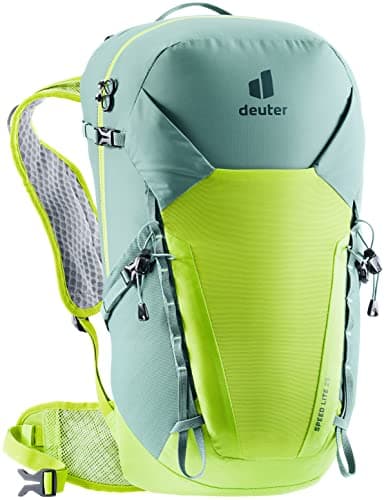
- Volume
- 25 L
- Weight
- 1 lb 9 oz (710 g)
- Back System
- Delrin U-frame with breathable contact back panel
- Hipbelt
- Padded fins with removable waist strap
- Hydration
- Compatible up to 3 L reservoir (sold separately)
- Body Fabric
- 100% recycled nylon; bluesign certified
About this pick
The Speed Lite 25 delivers genuine hiking support at a price well under $120: a Delrin U-frame keeps loads stable up to around 20 lb, breathable hip fins reduce hotspots, and the 25 L volume covers a full-day kit. At 1 lb 9 oz it is roughly a half-pound lighter than either Osprey option, and owner reviews on Amazon and Zappos rate it highly for the price.
Strengths
- Half a pound lighter than most framed 22-25 L daypacks
- Padded hipbelt and shoulder strap phone pockets included at this price
- 100% recycled body fabric with bluesign certification
Weaknesses
- Fixed back length: important to check torso fit before buying
- No rain cover included; main compartment has minimal internal dividers
Kit Score breakdown
See all picks in Best daypacks for hiking: top picks for 15–30 L
Keep going
Complete loadoutDay hike kitSeven slots for a full trail day, from the pack and water system to light and weather protection.Free tool: Pack-Size Selector
Researched, not hands-on tested
Updated Jun 3, 2026Our recommendations draw on manufacturer documentation, retailer listings, owner feedback, and comparisons with alternatives.
As an Amazon Associate I earn from qualifying purchases. We may earn a commission from links here, at no extra cost to you. How we research →