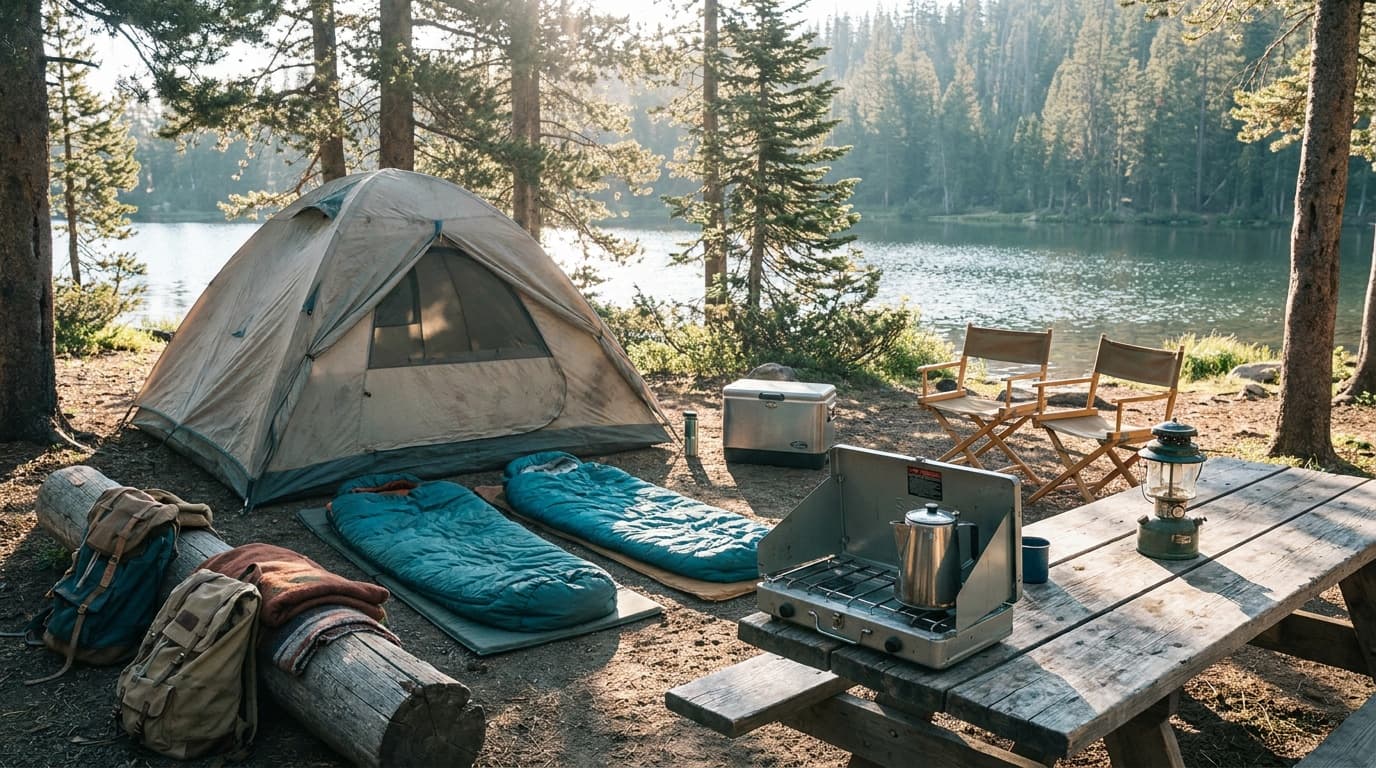
Your first car-camping trip needs six systems: shelter, sleep, cooking, lighting, seating, and water. A functional starter kit usually costs $250 to $450 before borrowed or rented gear, and most first-timers should avoid buying specialized gadgets until they have completed two or three trips.
Build the complete kit
Your first car-camping loadout
Seven pieces cover the six systems that make a first campsite safe and comfortable. Borrow what you can and buy only the gaps.
Gear links open current retailer listings. Price bands are planning ranges; prep steps stay on this page.
Shelter
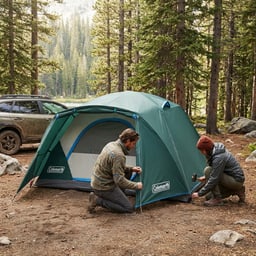
Coleman Skydome 4-Person Camping Tent with Full Fly Vestibule
A freestanding double-wall tent with enough real floor space for two beginners.
Kit Score 7.5/10 · Check current price
Sleep system
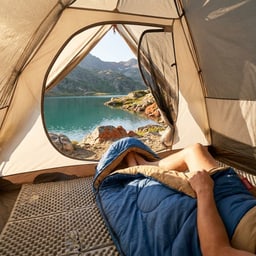
Coleman Brazos 20 Sleeping Bag
A synthetic sleeping bag with a temperature rating below the expected overnight low.
Kit Score 7.5/10 · Check current price
Sleep system
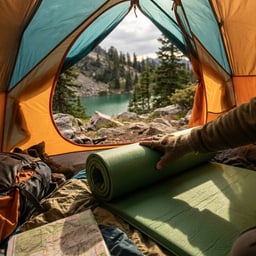
Therm-a-Rest Trail Pro Self-Inflating Sleeping Pad
An insulated pad that separates your body from the cold ground.
Kit Score 8.5/10 · Check current price
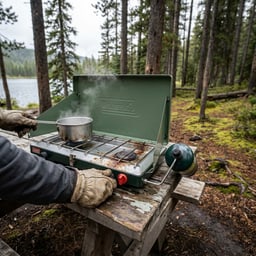
Kitchen
Coleman Cascade Classic 2-Burner Camping Stove
A fuel-efficient two-burner stove, one propane bottle, one pot, and one pan cover the first trip.
Kit Score 7.7/10 · Check current price
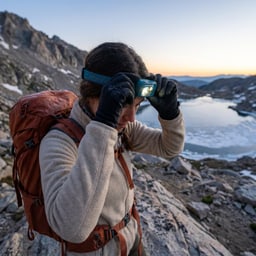
Lighting
Black Diamond Spot 400-R Rechargeable Headlamp
A hands-free headlamp for setup, cooking, and late-night walks.
Kit Score 8.5/10 · Check current price
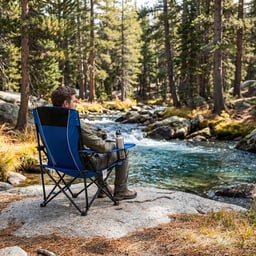
Seating
Kijaro Dual Lock Folding Camp Chair
A stable folding chair for the hours spent around camp.
Kit Score 8.0/10 · Check current price
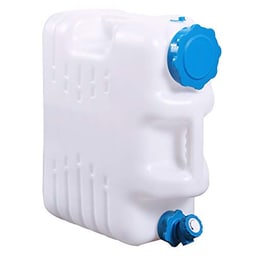
Water
CAMPMAX 5 Gallon Water Container with Spigot
A durable five-gallon site container with a controllable spigot for drinking, cooking, and cleanup.
Kit Score 8.1/10 · Check current price
Shelter: the one item worth buying right
A tent is your single most important purchase because a bad night in a leaky, flimsy shelter will end your camping habit before it starts. For car camping, weight barely matters; roominess and ease of setup do.
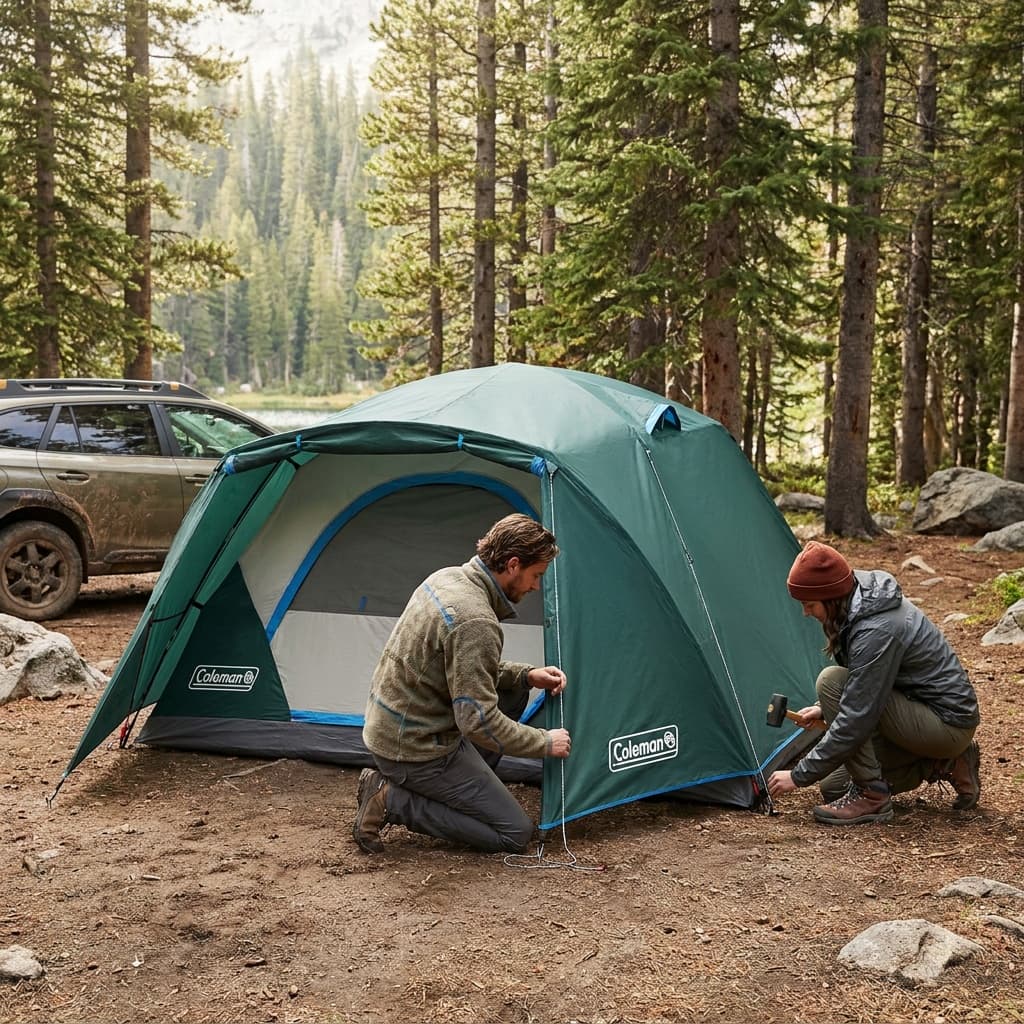
Look for a freestanding, double-wall tent (an inner body plus a separate rain fly) with a footprint that fits your group. A 2-person tent sleeps one adult comfortably or two adults who don't mind close quarters. Most first-timers are better served by a 3-person tent for the extra elbow room (a 4-person dome with a full fly like the Coleman Skydome 4 gives a couple real room to spread out).
Budget tiers:
Practice your setup in the backyard before you leave. The first time you put up a new tent should not be in the dark at a campsite. See the full breakdown in our guide to the best beginner camping tents.
Sleep system: bag plus pad, both matter equally
Most people buy a sleeping bag and forget the sleeping pad, then wonder why they were cold all night. Ground conduction pulls heat out of you faster than cold air does. A pad is not optional.
Sleeping bag: For 3-season car camping (spring through fall, lowland sites), a synthetic bag rated to 20°F–35°F covers nearly every situation. Synthetic fills handle moisture better than down and cost less. Mummy bags are warmer for their weight; rectangular bags are more comfortable if you move around. Check our best sleeping bags for camping roundup for specific picks at each price point.
Sleeping pad: For car camping, a self-inflating foam pad or a double-high air mattress works well. You're not carrying it on your back, so prioritize comfort. A 3-inch or thicker pad is the threshold where most people stop noticing they're on the ground.
Camp kitchen: the three-item core
You don't need a full camp kitchen on trip one. You need a stove (the two-burner Coleman Cascade Classic is the practical starter pick), a propane bottle, and one pot. Everything else is a convenience upgrade.
Build your kitchen in layers
Stove + fuel
A two-burner propane stove such as the Coleman Cascade Classic, or a single-burner backpacking-style stove, handles 90% of camp cooking. Two-burner wins for groups of three or more.
One pot, one pan
A 2-quart pot boils water and makes pasta; a 10-inch cast iron or nonstick skillet handles everything else. Don't buy a 10-piece set before trip one.
Cooler
A 50-quart hard-sided cooler keeps food cold for 3–4 days with good ice management. Soft-sided coolers are cheaper and easier to store but melt ice faster.
Utensils + plates
Lightweight plastic or bamboo plates, mugs, and a basic utensil set. Avoid heavy ceramic; it breaks and weighs down your load.
For single-burner options and two-burner comparisons, the best camping stoves guide goes deep on what's worth the money at each tier.
Lighting: two headlamps before anything else
Buy two headlamps before you buy a lantern. A headlamp keeps your hands free for cooking, setting up camp, and navigating to the bathroom at 2 a.m. Lanterns are nice but secondary.
Headlamp: Aim for 200–300 lumens with a red-light mode (preserves night vision and doesn't bother other campers). Rechargeable USB models like the Black Diamond Spot 400-R have largely displaced AAA-battery versions at the same price point.
Lantern: A 300–600 lumen LED lantern with a dimmer is plenty for a campsite. String lights are a comfort upgrade but not a first-trip item.
Two headlamps and one LED lantern will light your camp better than any setup three times the price.
Seating and shelter from sun/rain
A camp chair is the gear item that most noticeably separates a comfortable trip from a rough one. You will spend hours sitting around the campsite, and the ground gets old fast.
A basic folding camp chair runs $25–$40. A low-to-the-ground "quad" style chair is the classic; rocker-style chairs are a step up in comfort for $10–$20 more. Skip high-end ultralight chairs until you're backpacking.
A tarp or a canopy adds weather flexibility, particularly if you're camping somewhere with afternoon thunderstorms. A 10x10 canopy ($60–$90) creates a covered cooking and seating area. On a first trip to a fair-weather destination, you can skip this and add it later.
Water: filter or carry, never assume
Some campgrounds have potable water at the site; many don't, or it's a long walk to a spigot. Carry more water than you think you need.
If the campground is one stop in a longer RV route, plan the road and site constraints with the same care as the gear. Our RV LIFE Pro and Trip Wizard guide explains RV-safe routing, offline maps, campground verification, and when a paid planner is unnecessary.
Rule of thumb: one gallon per person per day for drinking and cooking. Add half a gallon per person if you're doing any hiking.
A 5-gallon collapsible water container ($15–$25) fills at home or at the campground spigot and sits at your site all trip. A water filter adds a backup option if you're near a stream, and doubles as backpacking gear later.
Frequently asked questions
How much does a complete car-camping kit cost for one person?
A functional kit runs $250–$450 if you buy everything new at entry-level prices: $80–$130 for a tent, $60–$90 for a sleeping bag, $30–$50 for a pad, $60–$80 for a stove and fuel, $25–$40 for a chair, and $15–$25 for a water container. You can cut that significantly by borrowing a sleeping bag or renting a tent from REI for a first trip.
What can I skip on my first car-camping trip?
Skip a camp shower, a camp table, a cast iron dutch oven, a generator, and any specialty lighting beyond two headlamps and one lantern. Skip the cooler if you're doing day hikes and eating simple no-cook meals. You can always add gear after you know what you actually reach for.
Do I need a camping-specific sleeping bag or can I use a regular blanket?
For summer camping in mild climates, a regular blanket plus a sleeping pad works fine. For anything below 55°F at night, a rated sleeping bag is worth it: blankets bunch up, leave gaps, and don't insulate from below. A $50 synthetic bag rated to 35°F is a cheap insurance policy against a cold night.
For the full category research on shelter, start with the best beginner camping tents, which covers the specific models worth buying at each price tier. Browse the full camp gear hub for roundups on every category in this checklist, and read how we research gear to understand how we evaluate products.
Recommended gear
Our current top picks from the Best camping tents for beginners in 2026: 6 easy-pitch picks guide, if you are ready to buy.
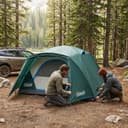
COLEMAN
Coleman Skydome 4-Person Camping Tent with Full Fly Vestibule
Best Value
Kit Score 7.5/10
$189.99 Price checked Oct 24, 3:33 PM CDT
Best for: Beginner couples or small families who want a reliable, fast-pitching shelter with solid rain coverage without spending more than $200.
- Pre-attached poles make solo setup straightforward
- 55-inch peak height means most adults cannot stand up inside
- Capacity
- 4 person
- Floor
- 8 x 7 ft (56 sq ft)
- Peak height
- 55.2 in (4 ft 7 in)
- Weight
- 13.7 lbs
- Wind rating
- Frame tested to 35 mph
- Setup
- Pre-attached poles, under 5 minutes
About this pick
The Skydome's pre-attached poles fold out and lock into corner sleeves without guesswork, making it one of the most foolproof setups at any price. Nearly vertical walls add 20% more headroom than a traditional Coleman dome, and the full-coverage rainfly version includes an 8 x 3.5 ft vestibule for gear storage.
Strengths
- Pre-attached poles make solo setup straightforward
- Full-coverage rainfly with integrated 8 x 3.5 ft vestibule for gear storage
- Nearly vertical walls maximize usable interior space for the footprint
Weaknesses
- 55-inch peak height means most adults cannot stand up inside
- Plastic fly clips and thin fabrics raise durability concerns with frequent use
Kit Score breakdown
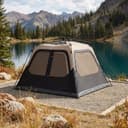
COLEMAN
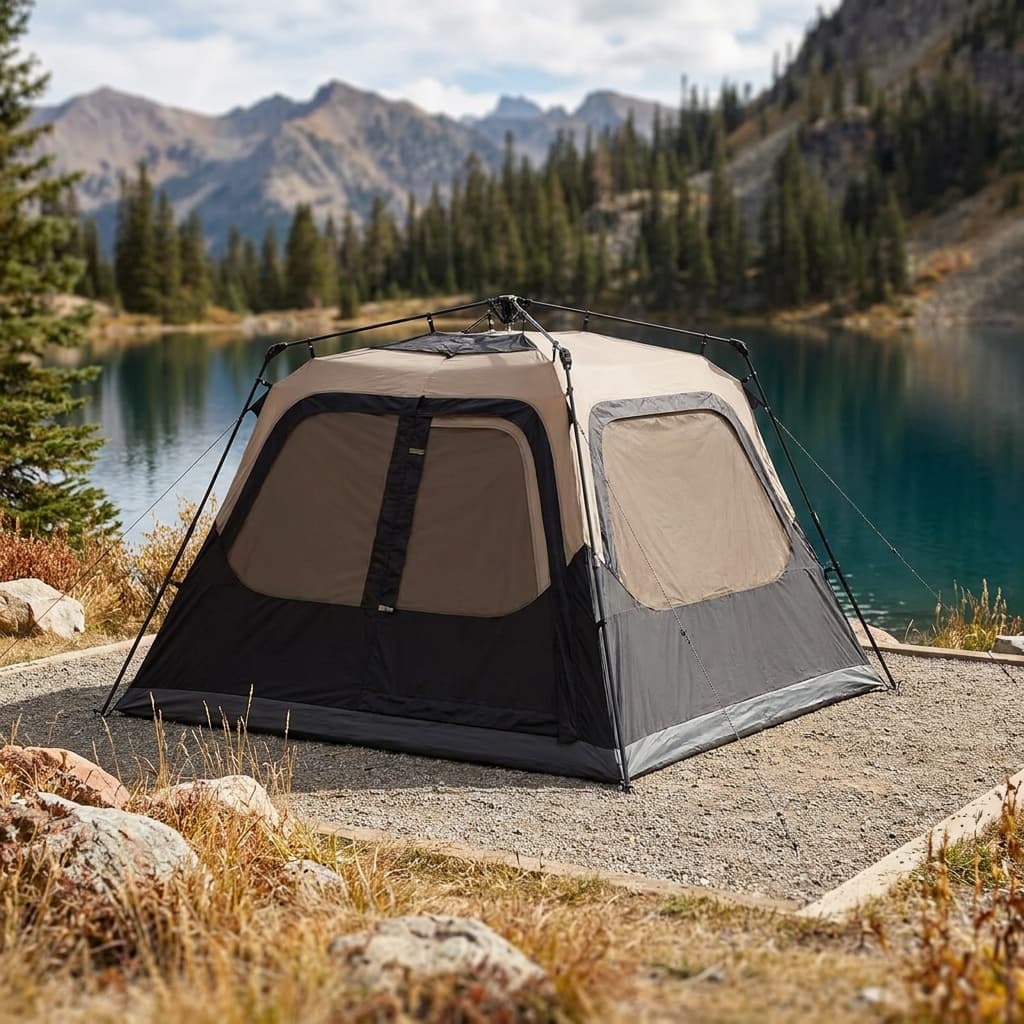
Coleman 4-Person Instant Cabin Tent
Fastest Setup
Kit Score 7.4/10
$179.99 Price checked Oct 24, 3:33 PM CDT
Best for: Road trippers, solo parents, and mobility-limited campers who value a one-minute pitch more than compact storage or full-fly storm protection.
- Pre-attached frame removes pole sorting and can be pitched by one person in about a minute
- At 19.1 lb and almost 40 inches packed, it is a trunk-only shelter
- Capacity
- 4 person (best for 2 adults plus gear)
- Floor
- 8 x 7 ft (56 sq ft)
- Peak height
- 59 in (4 ft 11 in)
- Packed weight
- 19.1 lb
- Setup
- Pre-attached frame, about 60 seconds
- Packed length
- 39.95 in
About this pick
A four-person cabin tent with a pre-attached telescoping frame that unfolds in about a minute. It trades packed weight and full-fly storm coverage for the simplest setup in the beginner field.
Strengths
- Pre-attached frame removes pole sorting and can be pitched by one person in about a minute
- Eight-by-seven-foot floor fits one queen air bed with a narrow gear margin
- Five windows and the vented top create better fair-weather airflow than a basic low dome
Weaknesses
- At 19.1 lb and almost 40 inches packed, it is a trunk-only shelter
- No vestibule, and the integrated top coverage offers less storm margin than a full rainfly
- A pre-attached frame is faster to use but harder to repair than separate poles
Kit Score breakdown
NEMO EQUIPMENT
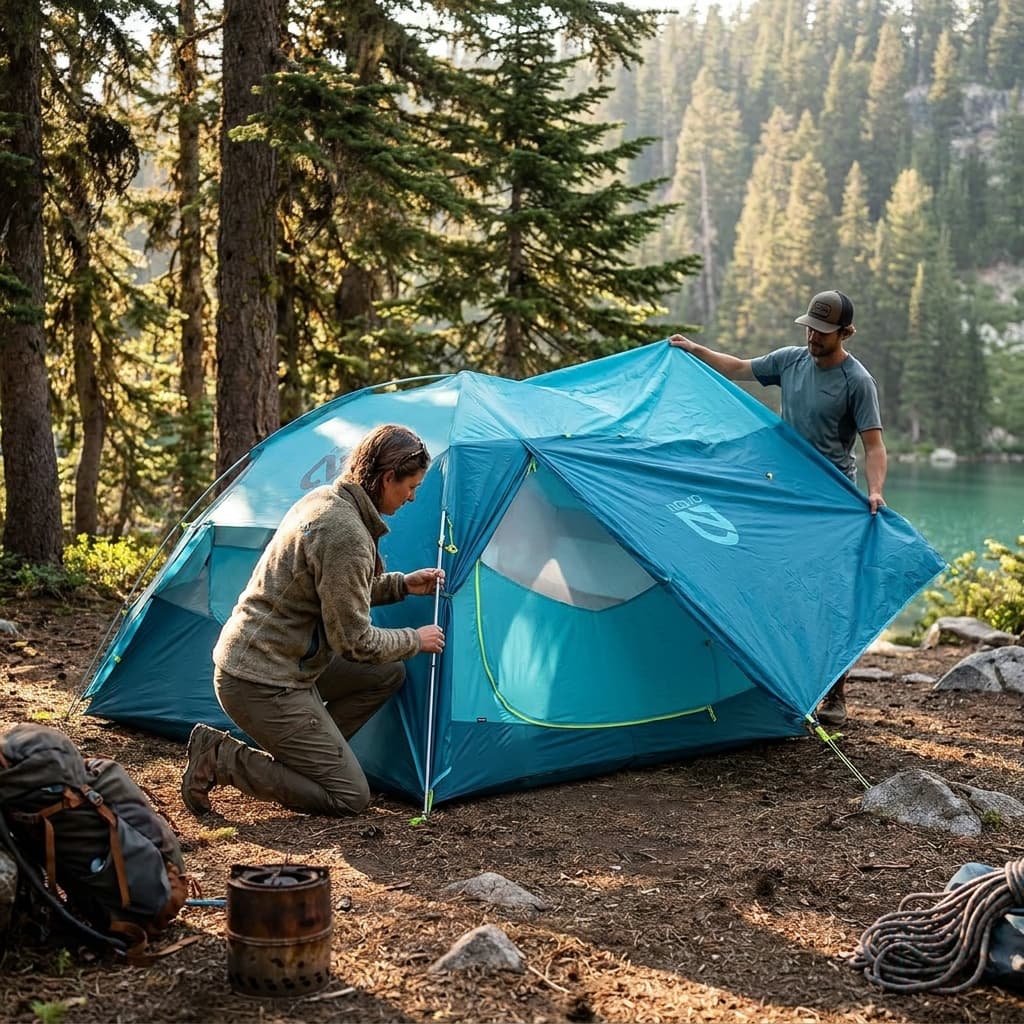
NEMO Aurora Highrise 4-Person Camping Tent
Best Premium
Kit Score 8.6/10
$399.95 Price checked Oct 24, 3:33 PM CDT
Best for: Beginners who want to invest once in a tent that will perform in rain, last several years, and never require a YouTube tutorial to pitch solo.
- Aluminum poles and a full-coverage fly deliver genuine weather protection
- At $400, it is the largest upfront investment of the group
- Capacity
- 4 person
- Floor
- 100 x 90 in (62.5 sq ft)
- Peak height
- 75 in (6 ft 3 in)
- Weight
- 15 lbs 14 oz
- Poles
- Aluminum
- Rainfly
- Full-coverage, 1,200 mm polyester
About this pick
The Aurora Highrise is NEMO's take on the family car-camping tent: aluminum poles, a full-coverage fly, 75 inches (6 ft 3 in) of standing room, and a setup intuitive enough for first-timers without instructions. Aggregate owner sentiment on Reddit is 88% positive across 37 reviews, with setup speed and weather protection as the two most praised traits.
Strengths
- Aluminum poles and a full-coverage fly deliver genuine weather protection
- Straightforward pole layout and an oversized duffel for easy packing
- 4-sided mesh windows with inside-operable controls keep condensation in check
Weaknesses
- At $400, it is the largest upfront investment of the group
- Back door is a half-door only, which limits rear entry compared to the front
Kit Score breakdown
See all picks in Best camping tents for beginners in 2026: 6 easy-pitch picks
Keep going
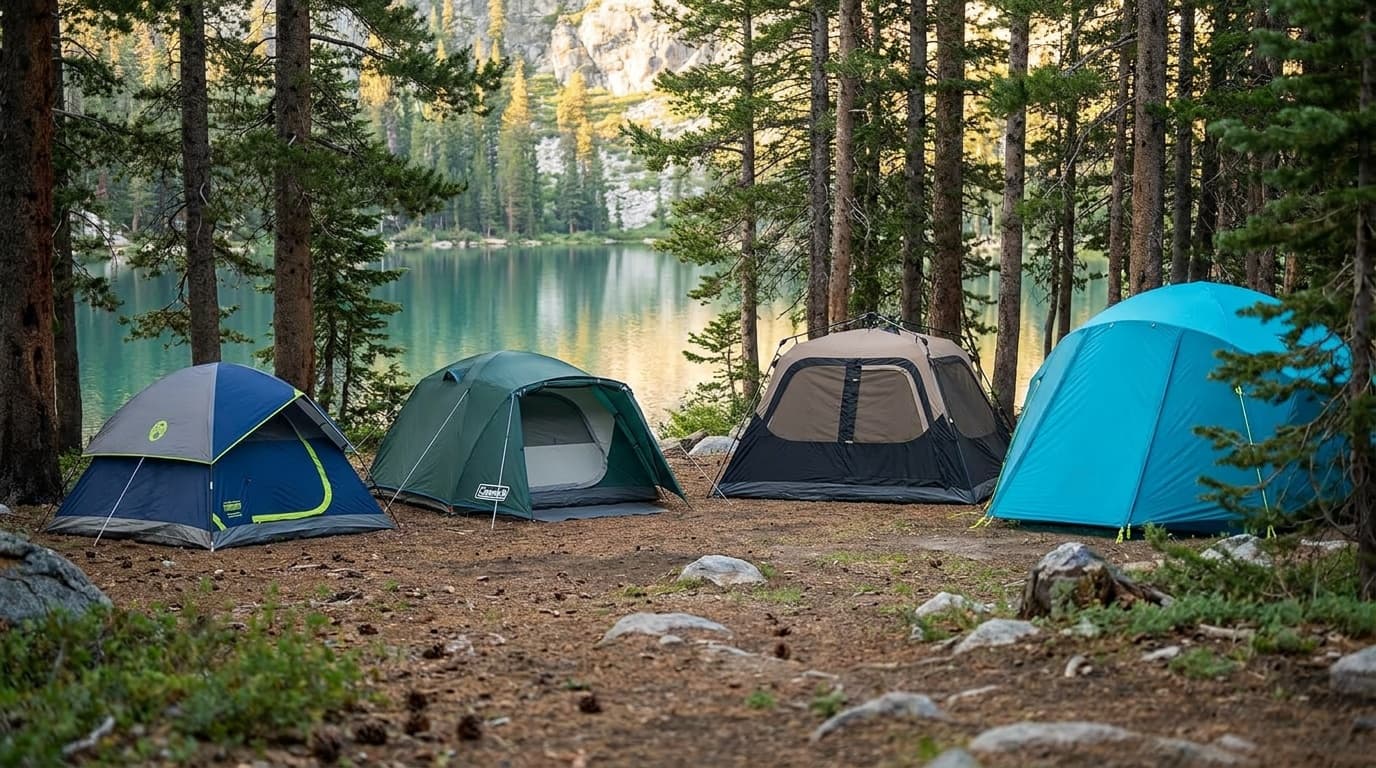
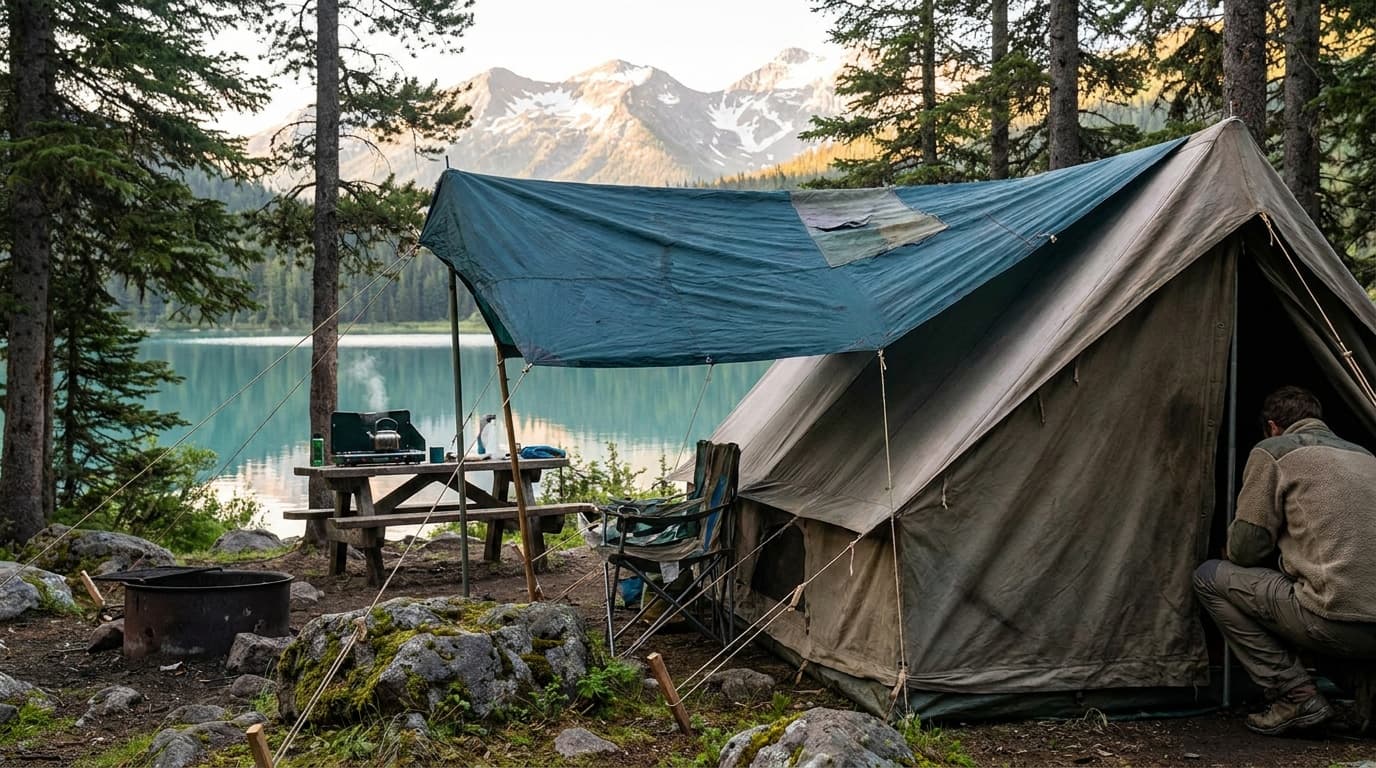
Our recommendations draw on manufacturer documentation, retailer listings, owner feedback, and comparisons with alternatives.
As an Amazon Associate I earn from qualifying purchases. We may earn a commission from links here, at no extra cost to you. How we research →