A good tarp gives you a lighter, more versatile shelter than any tent at the same price point. The tradeoff is that pitch quality matters more, and material choice affects everything from pack weight to long-term durability. Here are the three picks that hold up across the most important use cases.
Our quick picks
How we picked
Every pick is scored against the Kit Score: waterproof rating (hydrostatic head), listed weight, tie-out count and placement, material durability, and aggregated owner feedback from verified purchasers. We have not pitched these tarps ourselves; specs come from the makers and their listings.
The picks
Best overall
BEST OVERALL
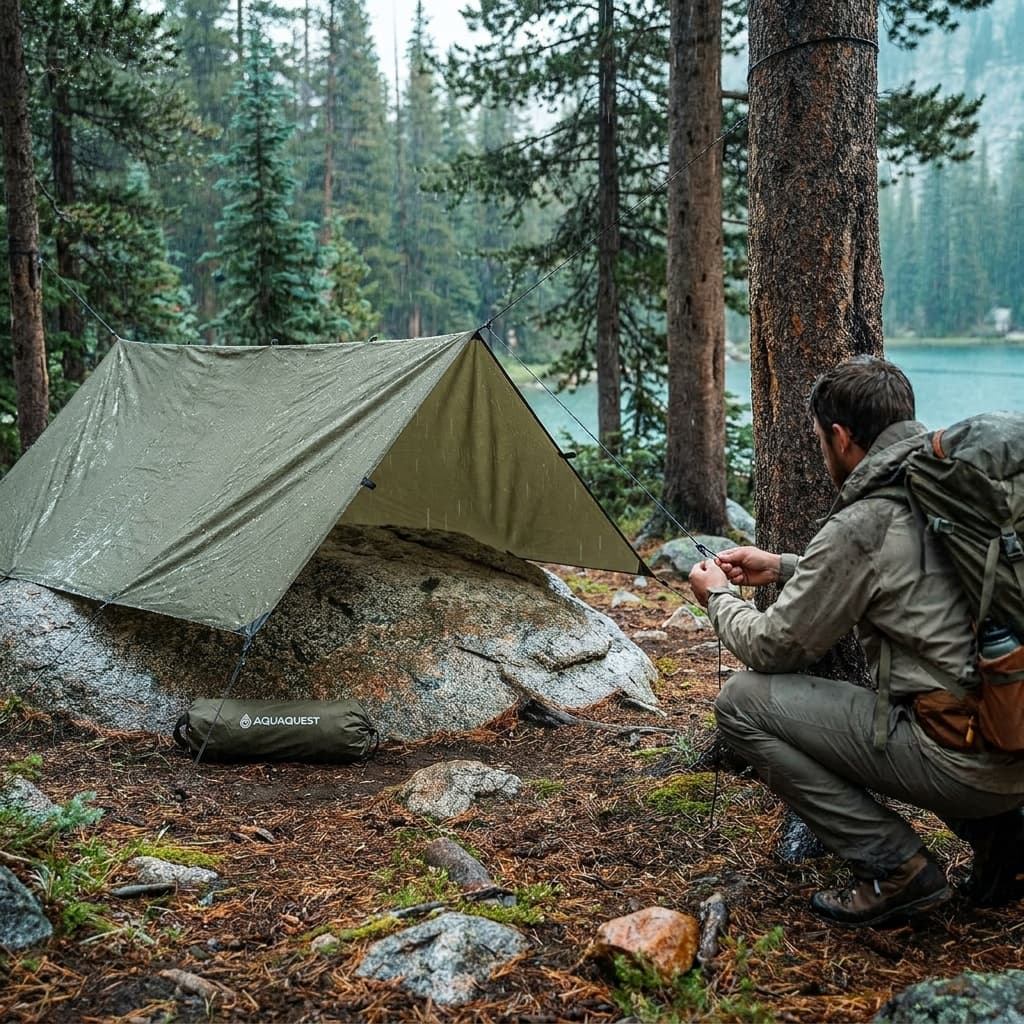
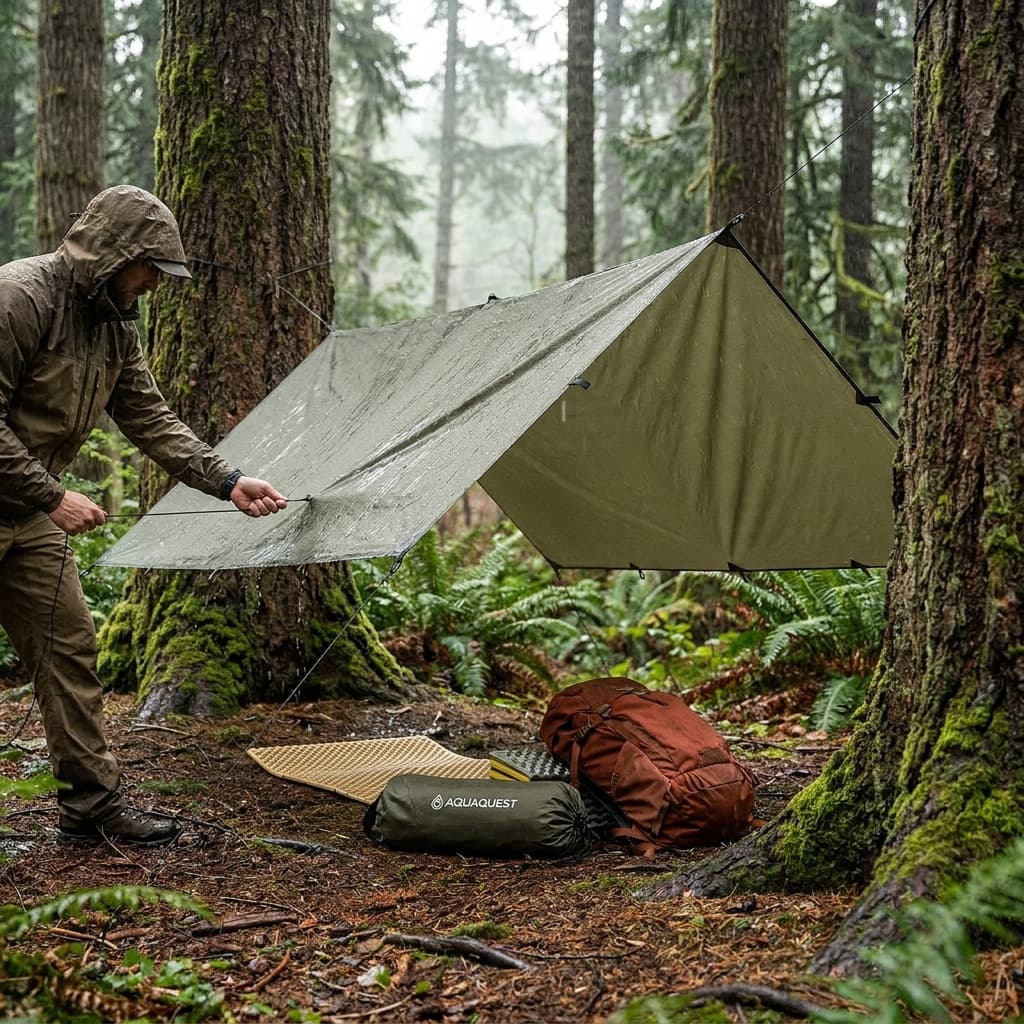
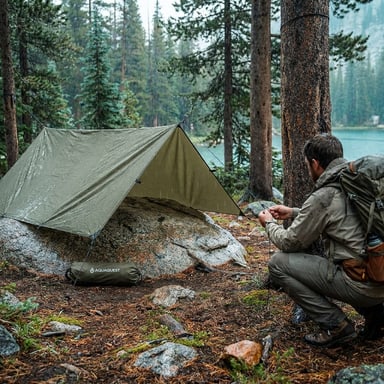
AquaQuest Safari Tarp 10x10
Best for: Car campers, weekend backpackers, and hammock campers who want a durable, fully configurable silnylon tarp without cottage-gear pricing.
- 19 reinforced tie-outs and a ridgeline webbing brace make it one of the most configurable tarps at this price
- Some early units carried a factory chemical odor that required several days of airing before use
Kit Score 8.5/10 · $129.99 Price checked Oct 23, 6:22 AM CDT · how we score gear
Buy on AmazonProduct details
The Safari is built on 70D silnylon, a step up from the 40D construction you find in most sub-$100 tarps, which pays off in abrasion resistance and long-term seam integrity. Nineteen webbing loop tie-outs and factory heat-taped seams give beginners real confidence in the rain without demanding cottage-gear money.
- Material
- 70D ripstop silnylon, dual silicone/PU coating
- Waterproof rating
- 5,000 mm hydrostatic head, heat-taped seams
- Size
- 10 x 10 ft (finished 9'7" x 9'7"), 92 sq ft
- Weight
- 1 lb 11 oz (includes stuff sack)
- Tie-outs
- 19 reinforced grosgrain webbing loops
- Warranty
- Lifetime
More strengths
- 70D dual-coated silnylon outperforms lighter-denier alternatives in abrasion and long-term seam durability
- Named best tarp for most campers by The Prepared after a 53-hour comparative review against 50-plus tarps
Other tradeoffs
- At 1 lb 11 oz it is not a gram-counting shelter, so dedicated ultralight backpackers will want to look elsewhere
The AquaQuest Safari Tarp 10x10 hits the sweet spot that most campers actually need: 92 square feet of finished coverage (9 feet 7 inches square), 19 bar-tacked tie-outs, and dual-coated 70D ripstop nylon rated to 5,000 mm. AquaQuest heat-tapes the seams at the factory, which matters as much as the fabric rating because unsealed seams are where many cheaper tarps leak first.
At 10x10, it covers two adults in hammocks, a single tent footprint with full weather protection, or a cook station on a rainy weekend trip. The rectangular shape means no wasted coverage area and no learning curve for first-time tarp campers. It weighs 1.7 lb (about 27 oz) with its stuff sack, which is not ultralight but is reasonable for a shelter backed by a lifetime warranty.
The $120–$135 price is honest for what you get. This is not cottage-gear pricing for a premium ultralight material; it is production silnylon built to a spec that delivers consistent real-world performance.
Best for: Car campers, weekend backpackers, and hammock campers who want a durable, fully configurable silnylon tarp without cottage-gear pricing.
Best value
BEST VALUE
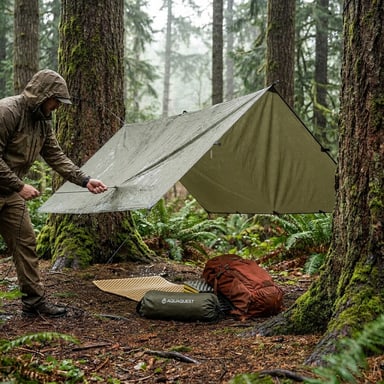
AquaQuest Guide Tarp 10x7
Best for: Solo backpackers and thru-hikers who want proven silnylon waterproofing and a sub-1-lb pack weight without paying premium DCF prices.
- Sub-1-lb weight with full silnylon construction and 5,000 mm rating is uncommon at this price point
- 64 sq ft covers one person comfortably but is snug for two with gear in heavy rain
Kit Score 8.7/10 · $99.99 Price checked Oct 23, 6:22 AM CDT · how we score gear
Buy on AmazonProduct details
The Guide's 40D silnylon fabric and dual waterproof coatings deliver the same 5,000 mm rating as AquaQuest's heavier models at a fraction of the weight, making the 0.9-lb 10x7 a capable backpacking shelter for solo trips in three-season conditions. Its 13 tie-outs and ridgeline braces support A-frame, lean-to, and hammock pitches.
- Material
- 40D ripstop silnylon, dual silicone/PU coating
- Waterproof rating
- 5,000 mm hydrostatic head, seam-taped
- Size
- 10 x 7 ft (finished 9'7" x 6'7"), 64 sq ft
- Weight
- 0.9 lbs (tarp and stuff sack)
- Tie-outs
- 13 reinforced webbing loops including center hang point
- Packed size
- 11.5 x 4.5 x 3 in
More strengths
- 13 webbing tie-outs including a center ridgeline hang point add versatility without adding bulk
- Verified owner reports of surviving severe storms without seam failure over multiple seasons
Other tradeoffs
- 40D fabric is noticeably thinner than the Safari; not the right pick for high-abrasion terrain or frequent car-camping use where extra durability matters
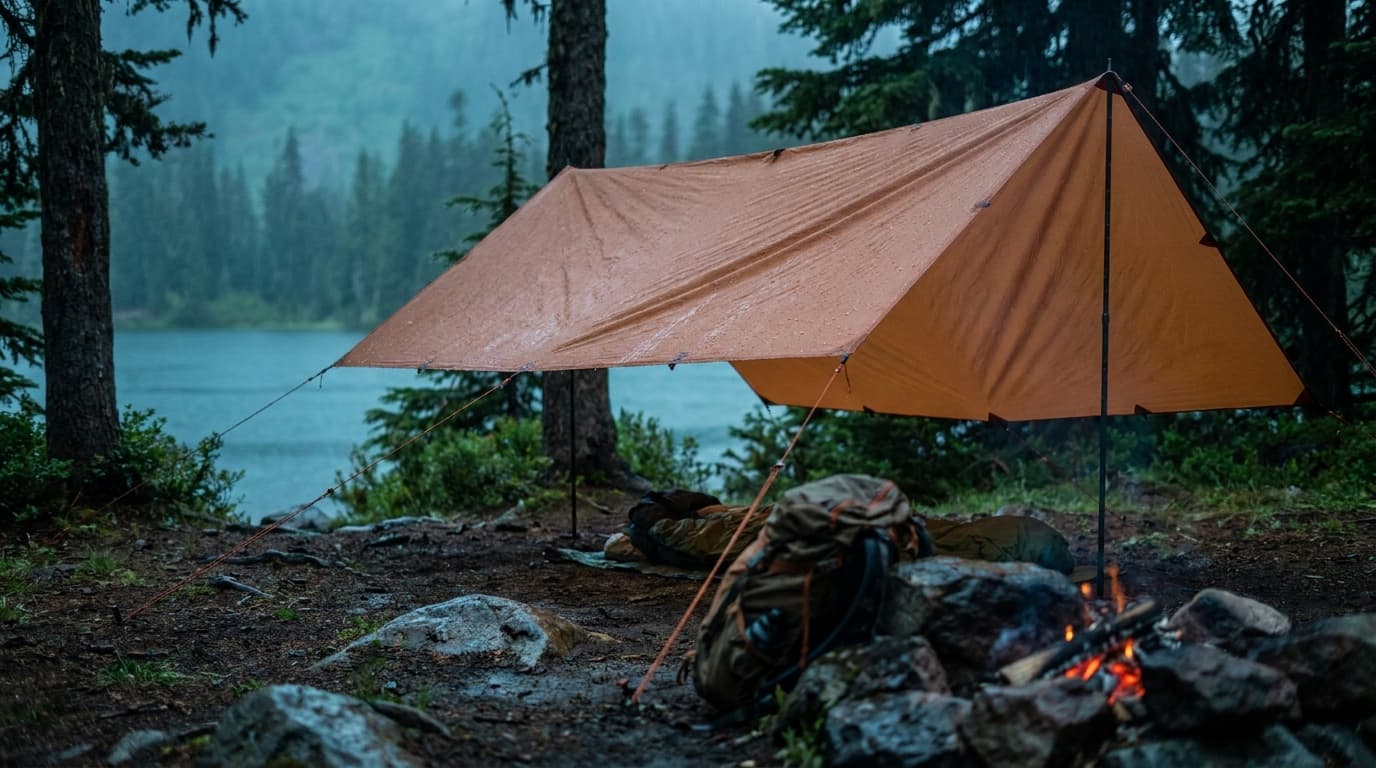
The AquaQuest Guide Tarp 10x7 uses the same dual coating and 5,000 mm rating as the Safari, but in lighter 40D ripstop nylon and a leaner 64-square-foot footprint (9 feet 7 inches by 6 feet 7 inches) that weighs 0.9 lb. For a solo backpacker or a committed duo who pitches tight, that size is enough, and the weight saving over the Safari is meaningful across a multi-day pack.
AquaQuest uses the same heat-taped seams on the Guide, so you are not trading waterproof rating for the smaller size. Its 13 tie-outs give enough configuration options for low A-frame pitches, lean-tos, asymmetric hammock pitches, and porch mode in light wind. The narrower footprint does limit coverage in sideways rain, which is the honest tradeoff at this size.
At $90–$110, the Guide is the best value on this list for anyone going solo, and a fraction of the price of cottage-made Dyneema (DCF) tarps.
Best for: Solo backpackers and thru-hikers who want proven silnylon waterproofing and a sub-1-lb pack weight without paying premium DCF prices.
Editor's choice
EDITOR'S CHOICE
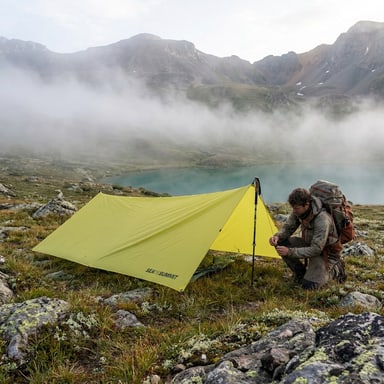
Sea to Summit Escapist Evo Tarp Large
Best for: Experienced backpackers and thru-hikers who carry trekking poles and want the most coverage per ounce from a major brand.
- The most coverage per ounce in this roundup: 126 x 114 inches for 17.6 oz
- No published hydrostatic head, unlike the 5,000 mm AquaQuest tarps in this roundup
Kit Score 8.1/10 · $250.00 Price checked Oct 23, 6:22 AM CDT · how we score gear
Buy on AmazonProduct details
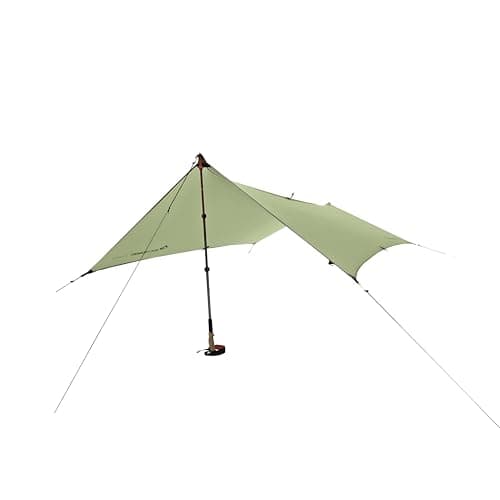
The 2026 Escapist Evo Large covers 126 by 114 inches for 17.6 oz. Its Ultra-Sil LS nylon-polyester ripstop absorbs less water and stretches less than plain silnylon, a catenary cut limits flutter in wind, and circular bar tacks hold trekking-pole tips for a fast pole pitch.
- Material
- Ultra-Sil LS 15D nylon/30D polyester ripstop, Sil/PeU coating, non-PFAS DWR
- Waterproof rating
- Hydrostatic head not published by Sea to Summit
- Size
- 320 x 290 cm (126 x 114.2 in), catenary cut
- Weight
- 499 g (17.6 oz); 418 g (14.7 oz) minimum trail weight
- Tie-outs
- Reinforced points with line tensioners; circular bar tacks for trekking-pole tips; central hang loop
- Packed size
- 20 x 9 x 9 cm (7.9 x 3.5 x 3.5 in)
More strengths
- Circular bar tacks hold trekking-pole tips, and line tensioners allow adjusting the pitch from under the tarp
- Ultra-Sil LS fabric absorbs less water, dries faster, and holds a tighter pitch than plain silnylon, per Sea to Summit
Other tradeoffs
- Setup requires practice: achieving a taut catenary pitch alone with trekking poles takes several attempts
- The priciest tarp here, and the 2026 Evo version has a short owner-review history
The Sea to Summit Escapist Evo Tarp Large is the premium pick for weight per square foot. It covers 126 by 114 inches, the most area here, yet weighs 17.6 oz (14.7 oz minimum trail weight) and packs to about 7.9 by 3.5 by 3.5 inches. The 2026 Evo version uses Ultra-Sil LS, a 15D nylon and 30D polyester ripstop that Sea to Summit says absorbs less water, stretches less, and dries faster than plain silnylon, and a catenary cut to cut edge flutter in wind.
It is built around trekking poles: circular bar tacks hold the pole tips, line tensioners let you adjust the pitch from underneath, and a central hang loop allows suspension from a branch. That makes it faster for practiced hands and harder for first-time tarp campers, who will find a simple rectangular tarp more forgiving. Sea to Summit does not publish a hydrostatic head figure for the Evo, so the AquaQuest tarps are the better-documented choice if a stated waterproof rating matters to you.
It is the priciest pick here, a deliberate gear investment. The case for it is coverage per ounce, not price per square foot.
Best for: Experienced backpackers and thru-hikers who carry trekking poles and want the most coverage per ounce from a major brand.
Comparison
| Product | Kit Score | Price | Best for |
|---|---|---|---|
| AquaQuest Safari Tarp 10x10 | 8.5 | $129.99 Price checked Oct 23, 6:22 AM CDT | Best for: Car campers, weekend backpackers, and hammock campers who want a durable, fully configurable silnylon tarp without cottage-gear pricing. Why it stands out: 19 reinforced tie-outs and a ridgeline webbing brace make it one of the most configurable tarps at this price Tradeoff: Some early units carried a factory chemical odor that required several days of airing before use |
| AquaQuest Guide Tarp 10x7 | 8.7 | $99.99 Price checked Oct 23, 6:22 AM CDT | Best for: Solo backpackers and thru-hikers who want proven silnylon waterproofing and a sub-1-lb pack weight without paying premium DCF prices. Why it stands out: Sub-1-lb weight with full silnylon construction and 5,000 mm rating is uncommon at this price point Tradeoff: 64 sq ft covers one person comfortably but is snug for two with gear in heavy rain |
| Sea to Summit Escapist Evo Tarp Large | 8.1 | $250.00 Price checked Oct 23, 6:22 AM CDT | Best for: Experienced backpackers and thru-hikers who carry trekking poles and want the most coverage per ounce from a major brand. Why it stands out: The most coverage per ounce in this roundup: 126 x 114 inches for 17.6 oz Tradeoff: No published hydrostatic head, unlike the 5,000 mm AquaQuest tarps in this roundup |
AquaQuest Safari Tarp 10x10
- Best for
- Car campers, weekend backpackers, and hammock campers who want a durable, fully configurable silnylon tarp without cottage-gear pricing.
- Why it stands out
- 19 reinforced tie-outs and a ridgeline webbing brace make it one of the most configurable tarps at this price
- Tradeoff
- Some early units carried a factory chemical odor that required several days of airing before use
AquaQuest Guide Tarp 10x7
- Best for
- Solo backpackers and thru-hikers who want proven silnylon waterproofing and a sub-1-lb pack weight without paying premium DCF prices.
- Why it stands out
- Sub-1-lb weight with full silnylon construction and 5,000 mm rating is uncommon at this price point
- Tradeoff
- 64 sq ft covers one person comfortably but is snug for two with gear in heavy rain
Sea to Summit Escapist Evo Tarp Large
- Best for
- Experienced backpackers and thru-hikers who carry trekking poles and want the most coverage per ounce from a major brand.
- Why it stands out
- The most coverage per ounce in this roundup: 126 x 114 inches for 17.6 oz
- Tradeoff
- No published hydrostatic head, unlike the 5,000 mm AquaQuest tarps in this roundup
How to choose the right camping tarp
Five decisions that narrow your choice
Material first
Silnylon is light and packable but stretches when wet, requiring guyline retensioning. Silpoly and nylon-polyester blends like Sea to Summit's Ultra-Sil LS stretch less and hold tension better. For most three-season backpacking, silnylon is the practical default.
Size before weight
Calculate coverage you actually need before optimizing for pack weight. A 10x7 tarp covering one person in an A-frame is fine for solo trips; a 10x10 or 12x10 handles two people or a cook shelter without compromising on pitch options.
Count the tie-outs
Fewer than eight tie-outs limits your configuration options significantly. Eight is a reasonable floor; ten or more lets you adapt to irregular tree spacing and changing weather.
Seam tape or seal yourself
Factory-sealed seams cost more but guarantee watertight performance out of the box. DIY seam sealing with silicone sealer works well, but it is a step that first-time buyers often skip until they get wet. All three picks here have taped seams.
Included hardware matters for beginners
Guylines and stakes add to the real cost. The AquaQuest tarps ship with a stuff sack only, so budget for cord and stakes; the Escapist comes with adjustable guy lines and a stuff sack that doubles as a pole pocket.
The single biggest upgrade you can make to any tarp system is learning two knots: the trucker's hitch for adjustable tension and the bowline for fixed anchor points.
Where these numbers come from
| Claim | Source | Checked |
|---|---|---|
| AquaQuest Safari 10x10: dual-coated 70D ripstop nylon, 5,000 mm, heat-taped seams, finished 9'7" x 9'7" (92 sq ft), 19 tie-outs, 1.7 lb, lifetime warranty | AquaQuest listing on Amazon, ASIN B07VJK5Y3K | 2026-09-25 |
| AquaQuest Guide 10x7: dual-coated 40D ripstop nylon, 5,000 mm, heat-taped seams, finished 9'7" x 6'7" (64 sq ft), 13 tie-outs, 0.9 lb, lifetime warranty | AquaQuest listing on Amazon, ASIN B07VBJZ994 | 2026-09-25 |
| Escapist Evo Large: 320 x 290 cm (126 x 114.2 in), 499 g (17.6 oz), 418 g (14.7 oz) minimum, packs 7.9 x 3.5 x 3.5 in, Ultra-Sil LS 15D nylon/30D polyester ripstop, catenary cut, trekking-pole bar tacks, central hang loop; no hydrostatic head published | Sea to Summit, Escapist Evo Tarp | 2026-09-25 |
| Escapist Evo Large listing: 126 x 112.2 in, 18.0 oz, dual-use stuff sack and pole pocket | Sea to Summit listing on Amazon, ASIN B0GFYHJVT3 | 2026-09-25 |
Frequently asked questions
What is the minimum hydrostatic head rating I should look for in a camping tarp?
Hydrostatic head (HH) measures how tall a column of water the fabric resists before it leaks, so a higher number means more margin under wind-driven rain and pressure points. For a tarp, which never sees the kneeling and sitting pressure a tent floor does, the seams and pitch matter as much as the number. AquaQuest lists 5,000 mm with heat-taped seams for both the Safari and the Guide. Sea to Summit does not publish an HH figure for the Escapist Evo, so judge it on its coated fabric, the brand's track record, and owner reports.
Is silnylon or silpoly better for backpacking tarps?
Silnylon is the more common choice for backpacking because it is lighter and packs smaller for the same coverage area. The downside is that it stretches noticeably when wet, so guylines need retensioning after a rainstorm. Silpoly stretches less and holds pitch geometry better, making it easier to manage in variable conditions; Sea to Summit's Ultra-Sil LS blends nylon and polyester for the same reason. For most three-season trips below treeline, silnylon's weight advantage makes it the practical default. For desert camping in hot weather or for users who want a set-and-forget pitch, silpoly is worth the slight weight penalty.
Do I need trekking poles to pitch a tarp?
Trekking poles work well as tarp supports when trees are not available or spaced too far apart. Most backpackers who carry poles use them as their primary tarp support on open terrain. When trees are available, a ridgeline strung between two trunks plus guylines to stakes is a more stable setup. The AquaQuest Safari and Guide both have ridgeline braces and tie-outs for tree-hung, A-frame, and lean-to pitches. The Sea to Summit Escapist Evo is built for trekking poles, with bar tacks that hold the pole tips, though a central hang loop lets you suspend it from a branch.
Tarps reward practice more than any other shelter system. The first few pitches take time; by trip three or four, setup is faster than a tent and you have a shelter that adapts to the terrain instead of fighting it. For more camp shelter options and gear picks across every category, browse the camp hub or read more about how we research and rate every product on the site.
Keep going
Related guides
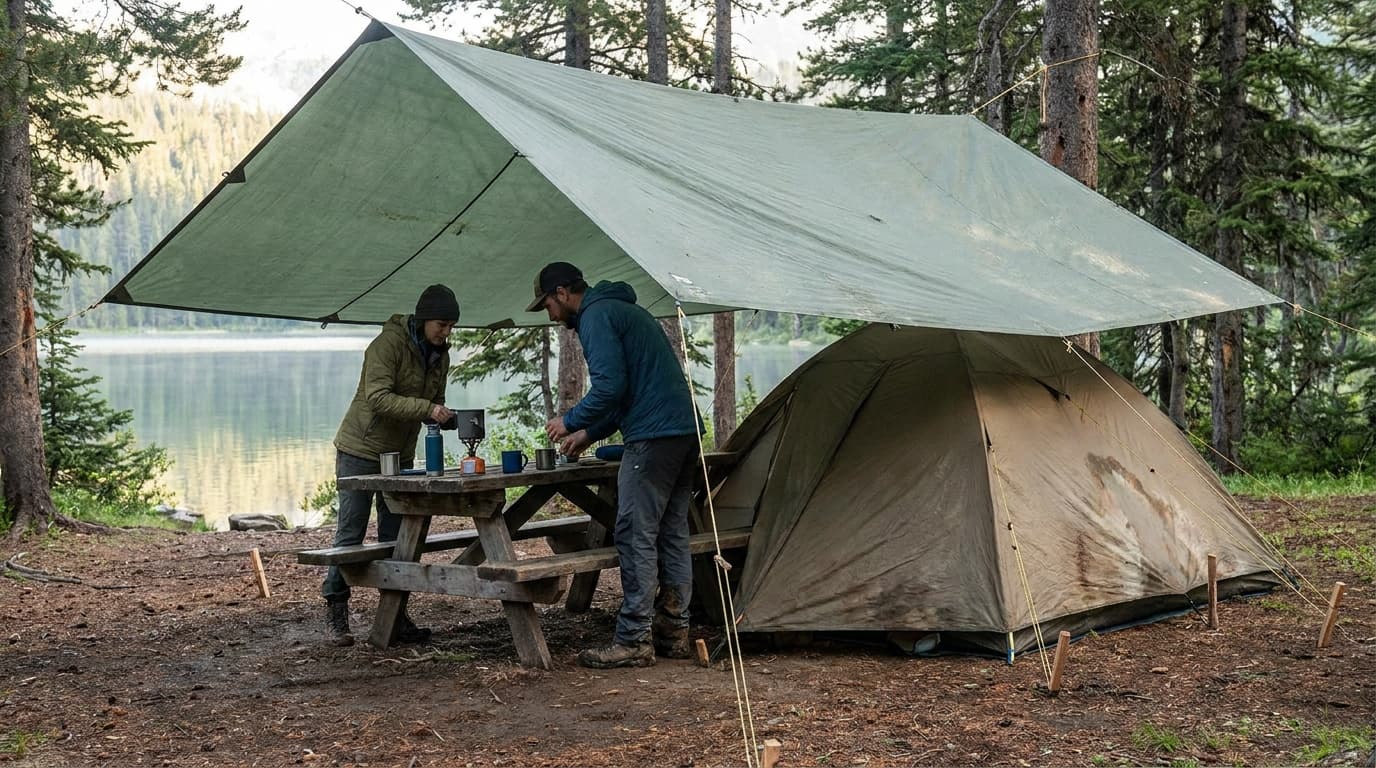
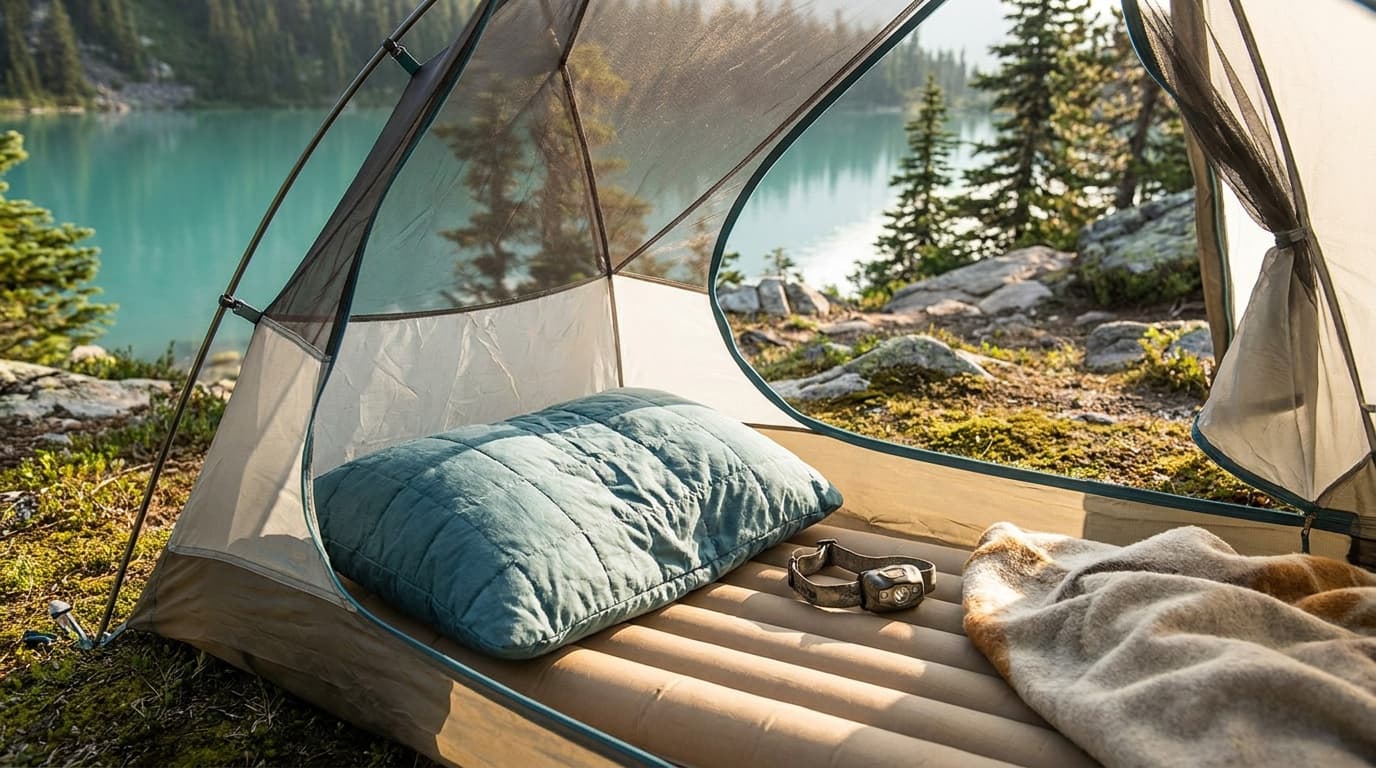
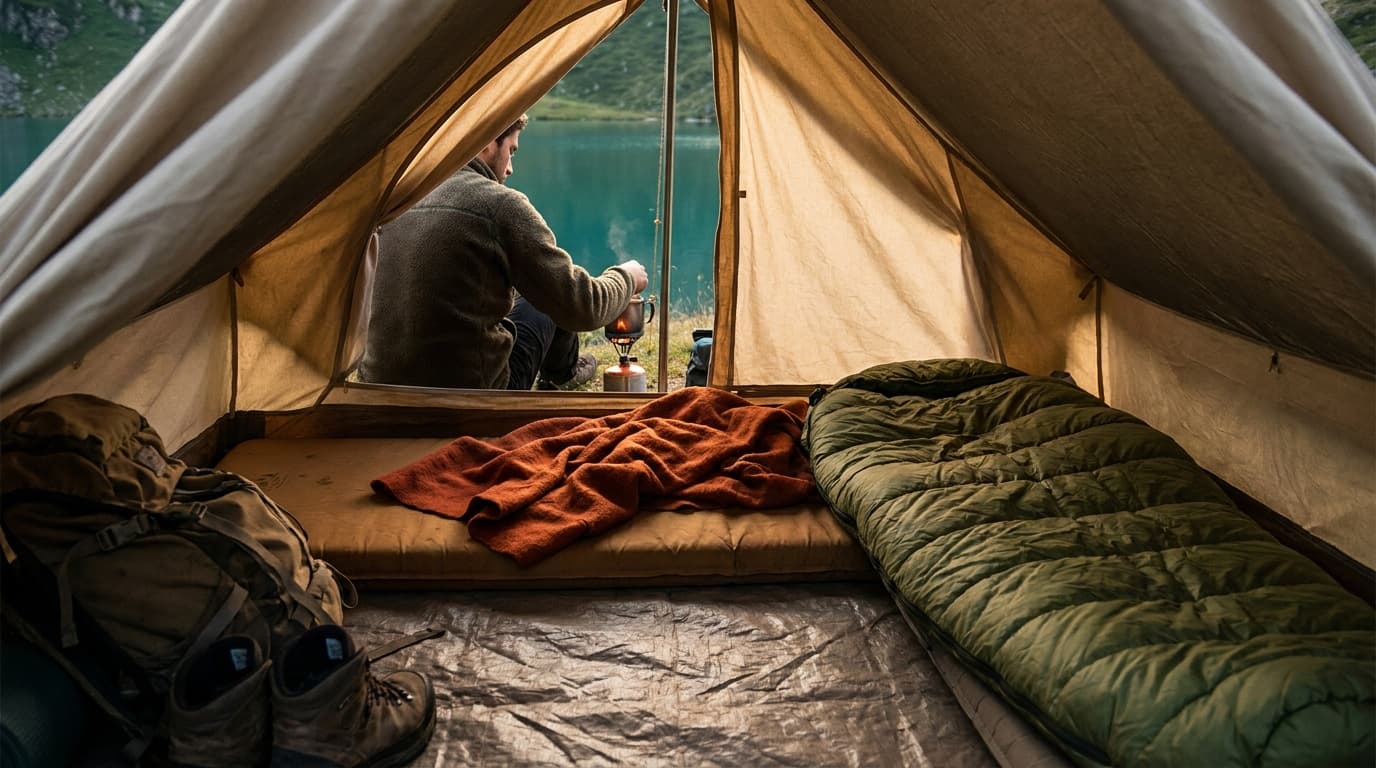
 Complete camp loadoutCar-camping starter kitBuild the complete kit
Our recommendations draw on manufacturer documentation, retailer listings, owner feedback, and comparisons with alternatives.
As an Amazon Associate I earn from qualifying purchases. We may earn a commission from links here, at no extra cost to you. How we research →