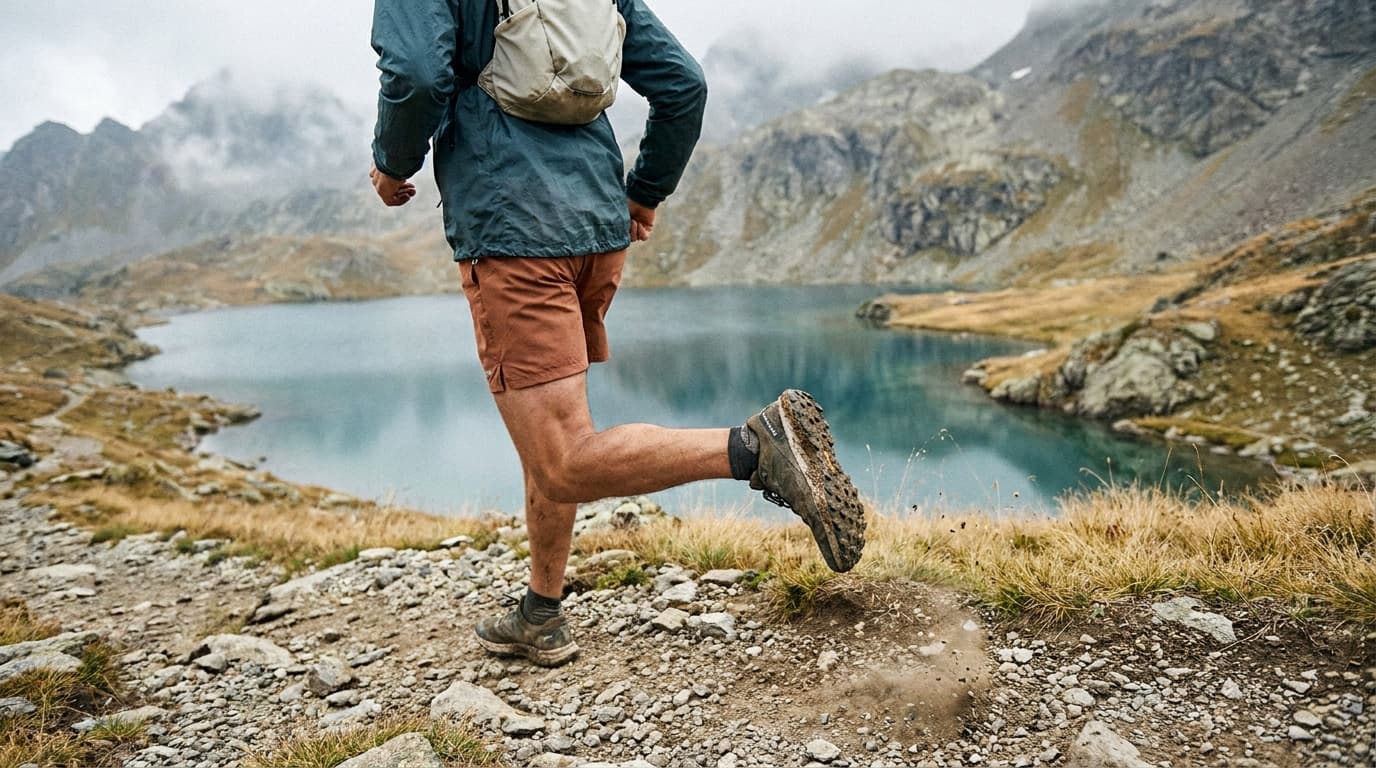
The difference between a great trail run and a sketched-out one often comes down to what's on your feet. Grip, cushion, rock protection, and fit all matter more on dirt than pavement, and no single shoe wins every terrain.
Here are the four trail runners that stand out across the critical specs, based on aggregated owner reviews, brand technical data, and running publication testing notes. We rate every pick against the Kit Score.
October 5, 2026 update: We have paused our men's Brooks Cascadia 20 recommendation because the linked Amazon selection displays a women's title and model number. Our research references remain below, but purchase links are paused until an exact men's listing is verified. This is not a claim that every Cascadia 20 size or retailer is unavailable.
Women's builds of these shoes use a narrower heel and lower instep volume. The best trail running shoes for women ranks them separately.
Not sure trail runners are even the right category for you? The free outdoor shoe finder matches you across trail, walking, hiking, water, and camp shoes in five questions, men's and women's models included.
Our quick picks
How we picked
We evaluated each shoe on six weighted factors: lug depth and rubber compound for grip, midsole stack height and foam type for cushion, rock plate presence and coverage for protection, heel-to-toe drop, construction durability across high-mileage accounts, and price-to-spec ratio. Where manufacturers publish separate men's and women's lasts, we note the fit difference. See the full methodology at how we research and rate.
The picks
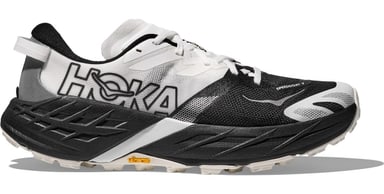
Hoka Speedgoat 7
BEST OVERALL
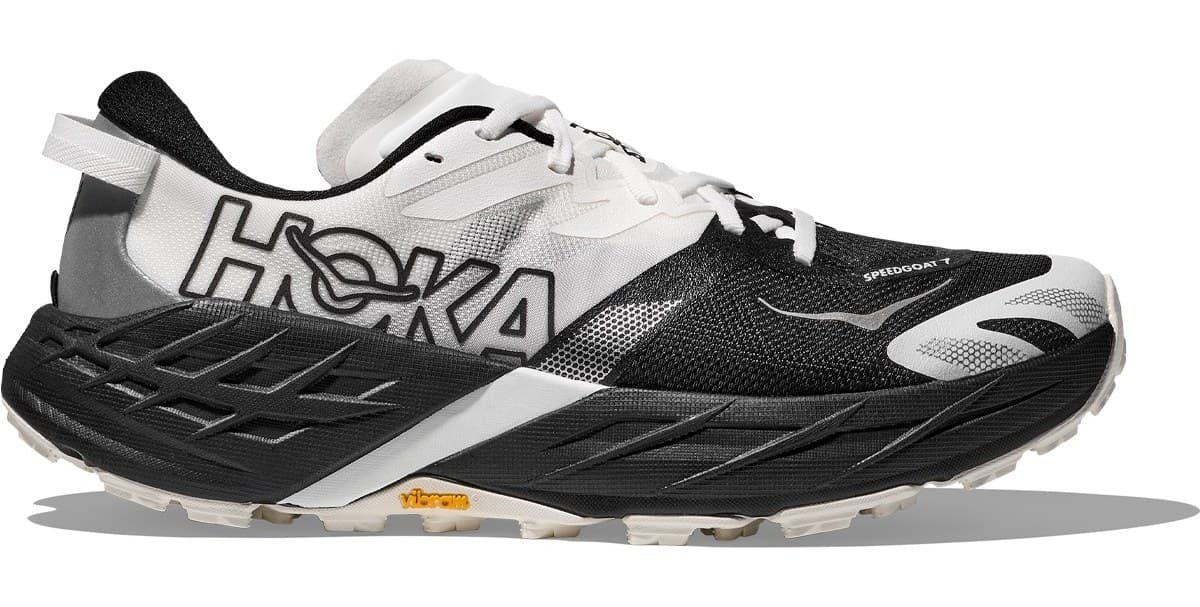
HOKA Speedgoat 7
Best for: Runners logging big mountain days on mixed terrain who want max cushion and reliable grip without sacrificing too much agility.
- Vibram Megagrip with 5 mm Traction Lugs grips wet rock, loose dirt, and scree
- Fits smaller than earlier Speedgoats, so many runners need to size up
Kit Score 7.8/10 · Check current price · how we score gear
Buy at HOKAProduct details
The Speedgoat 7 keeps the line's high-cushion platform and Vibram Megagrip outsole, and moves to a springier supercritical foam in place of the firmer midsole of the Speedgoat 6. A redesigned upper locks the foot down better, and the lugs are rearranged with Vibram's Traction Lug texture for more grip on rock and packed dirt.
- Drop
- 4 mm listed; 7.4 mm lab-measured
- Stack height
- 37 mm heel / 33 mm forefoot (men's)
- Lug depth
- 5 mm (Vibram Megagrip with Traction Lug)
- Midsole
- Supercritical EVA foam
- Weight
- 9.7 oz / 275 g (men's)
- Widths
- Regular and wide
More strengths
- Supercritical foam feels livelier than the Speedgoat 6's firmer midsole
- Redesigned upper holds the foot more securely on descents and off-camber trail
Other tradeoffs
- Not sold on Amazon; buy from HOKA or a running retailer
The Speedgoat 7 is Hoka's flagship trail shoe and the current version of one of the most-reviewed trail runners in the category. The 5 mm Vibram Megagrip lugs now carry Vibram's Traction Lug texture and hold well on wet rock and packed dirt. The bigger change is underfoot: a supercritical foam replaces the firmer midsole of the Speedgoat 6, and iRunFar's reviewer found it much springier. Believe in the Run lists a 37 mm heel and a 4 mm drop, which suits midfoot strikers and still gives heel strikers a forgiving landing (RunRepeat's lab measured the drop at 7.4 mm).
The redesigned upper locks the foot down better than the loose fit of the 6, but it runs small: iRunFar's review says it probably fits smaller than any earlier Speedgoat, so plan to size up. The women's version is lighter at 8.3 oz against 9.7 oz for the men's and sits a little lower, with the same outsole and foam.
It is a recent release, so long-term mileage reports are still coming in. In RunRepeat's Dremel abrasion test the outsole lost only 0.6 mm of rubber, a good sign for a shoe that sees a lot of rock.
At a $165 list price, it sits at the upper end of the category. If the price is a friction point, see the Peregrine 16 below. HOKA does not sell the Speedgoat on Amazon (listings there come from third-party resellers), so the button goes to HOKA's own store. Our Hoka Speedgoat 6 review covers the previous version.
Best for: Runners logging big mountain days on mixed terrain who want max cushion and reliable grip without sacrificing too much agility.
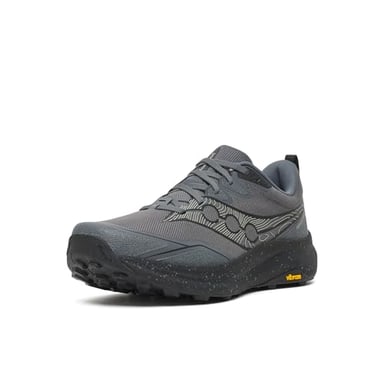
Saucony Peregrine 16
BEST VALUE
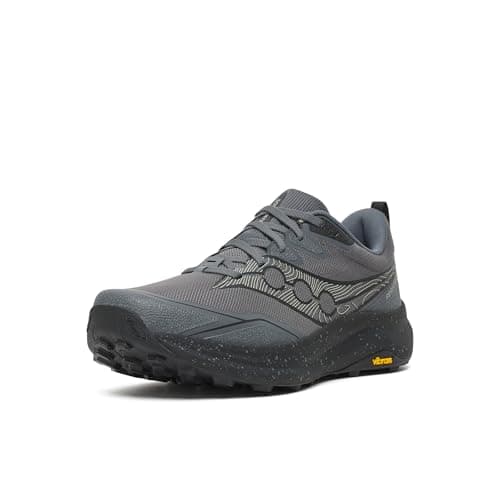
Saucony Peregrine 16
Best for: Midfoot and forefoot strikers who want a versatile all-mountain shoe with sticky grip, a rock plate, and a price that leaves room in the budget for other gear.
- Full Vibram Megagrip outsole replaces the Peregrine 15's PWRTRAC rubber
- RunRepeat's lab measures a tapered toe box; wide feet may want the Lone Peak
Kit Score 8.2/10 · $149.95 Price checked Oct 25, 3:41 PM CDT · how we score gear
Buy on AmazonProduct details
The Peregrine 16 is Saucony's all-mountain workhorse, now on a full Vibram Megagrip outsole with 4 mm Traction Lugs. Saucony added 4 mm of PWRRUN foam over the Peregrine 15 and a slightly wider base, while keeping the 4 mm drop and forefoot rock plate that give it ground feel on technical trail.
- Drop
- 4 mm (brand) / 4.8 mm lab-measured
- Stack height
- 32 mm heel / 28 mm forefoot
- Lug depth
- 4 mm Vibram Megagrip (3.5 mm lab-measured)
- Rock plate
- Yes, woven forefoot plate
- Weight
- 9.5 oz / 269 g (men's 9)
- Also available
- Women's: ASIN B0F9LLNLW9
More strengths
- 4 mm more cushion than the Peregrine 15 with the same 4 mm drop and ground feel
- Forefoot rock plate at one of the lowest list prices in this roundup
Other tradeoffs
- Low drop can fatigue heel strikers on longer runs
The Peregrine 16 shares the lowest list price in this group with the Lone Peak, and it now runs on a full Vibram Megagrip outsole, the same rubber family as the Speedgoat. Its 4 mm Traction Lugs sit in a multidirectional pattern that handles transitions between wet rock, roots, and soft dirt without requiring a terrain-specific shoe. A woven rock plate in the forefoot protects against sharp stone strikes without adding noticeable stiffness.
Saucony added 4 mm of PWRRUN foam over the Peregrine 15, but at 32 mm of heel stack it still sits closer to the ground than the Speedgoat, which some runners prefer for feedback on technical terrain. If you land midfoot or forefoot and want to feel the trail rather than float above it, the Peregrine's platform is the better match.
One fit note: RunRepeat's lab measured a tapered toe box, so wide-footed runners should try it on first or look at the Lone Peak. The women's version shares the outsole, rock plate, and 4 mm drop.
Best for: Midfoot and forefoot strikers who want a versatile all-mountain shoe with aggressive lug grip, a rock plate, and a price that leaves room in the budget for other gear.
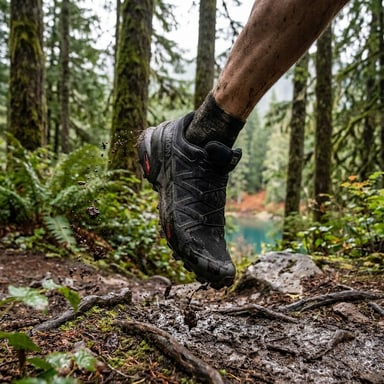
Salomon Speedcross 6
EDITOR'S CHOICE
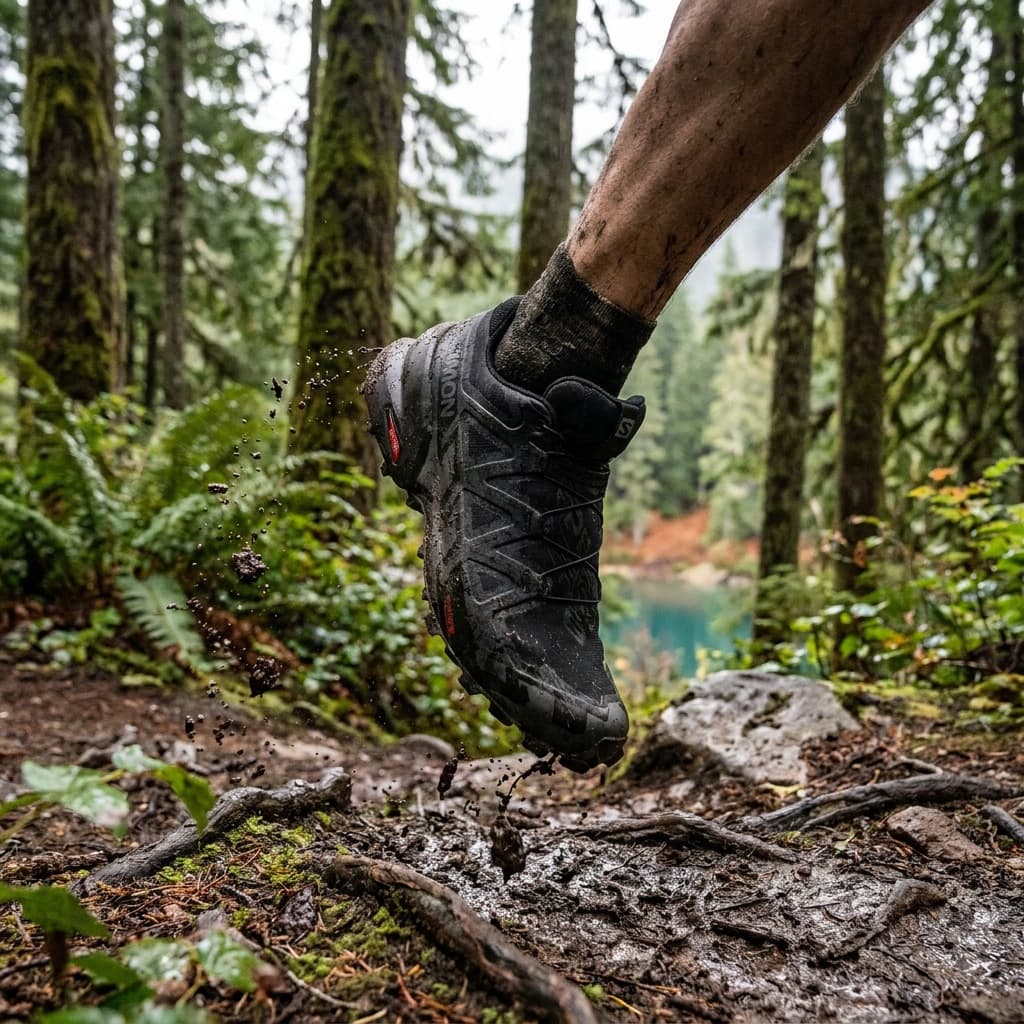
Salomon Speedcross 6
Best for: Trail runners who regularly face mud, loose dirt, wet grass, or packed snow and need a shoe that claws in where others spin out.
- Industry-leading 5.5+ mm Mud Contagrip lugs are unmatched for soft, wet, and muddy terrain
- Deep lugs create a cleat-like, disconnected feel on hardpack and pavement
Kit Score 8.4/10 · $139.90 Price checked Oct 25, 3:41 PM CDT · how we score gear
Buy on AmazonProduct details
The Speedcross 6 is the benchmark for soft-terrain grip: its 5.5 mm chevron Mud Contagrip lugs claw into mud, loose soil, wet grass, and snow with no real rival. The Sensifit upper and QuickLace system create a precise, secure hold that handles steep descents and off-camber roots confidently.
- Drop
- 10 mm (brand) / ~14 mm lab-measured
- Stack height
- 36.5 mm heel / 22.4 mm forefoot
- Lug depth
- 5.5–5.8 mm Mud Contagrip (deepest in class)
- Rock plate
- None
- Weight
- 10.4 oz / 296 g (men); 9.2 oz / 262 g (women)
- Also available
- Women's: ASIN B0DCSCSTWH
More strengths
- Quicklace system delivers a dialed, consistent fit with no mid-run lace adjustments
- High owner satisfaction score of 89/100, with durability and mud-shedding frequently cited by long-term users
Other tradeoffs
- Dense upper runs hot in summer and limits breathability in warm conditions
The Speedcross is the most specialized shoe here. The 6 mm chevron-pattern lugs are the deepest here, designed specifically for soft terrain: mud, loose dirt, wet grass, and packed snow. On those surfaces it has no equal in this group. On hard-packed dirt or dry rock, the same deep lugs create a choppy, unstable ride.
The Contagrip MA compound resists wear better than softer mud-specific rubbers, so the outsole stays functional across multiple seasons of hard use. The EnergyCell midsole is moderate-stack and runs firm, which keeps the shoe responsive for technical descents.
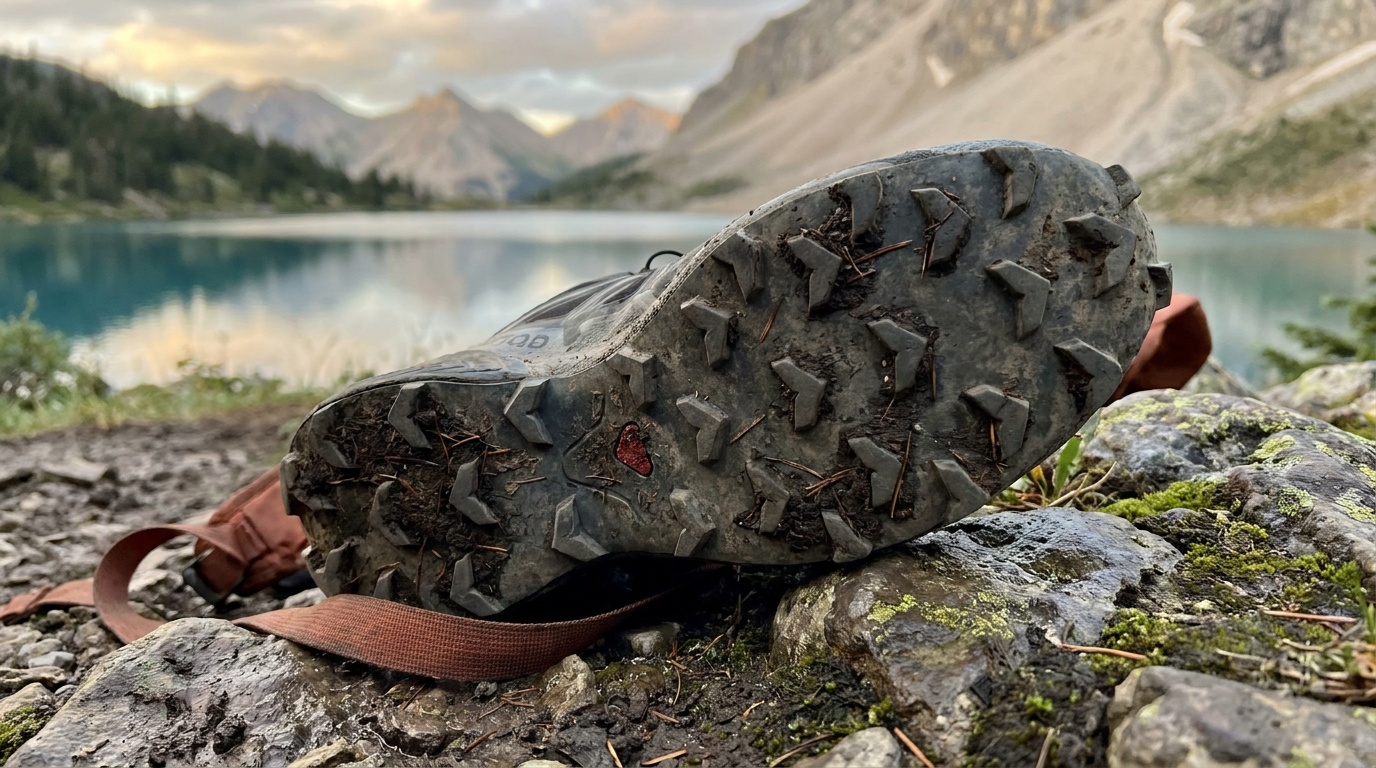
The Quicklace system is fast and secure but takes one or two runs to learn the tension you prefer. It does not accommodate aftermarket laces without modification.
The women's version has a notably lower instep and a more tapered toe box than the men's. Wide-footed runners should try the fit before committing, as the Speedcross runs narrow.
Best for: Trail runners who regularly face mud, loose dirt, wet grass, or packed snow and need a shoe that claws in where others spin out.
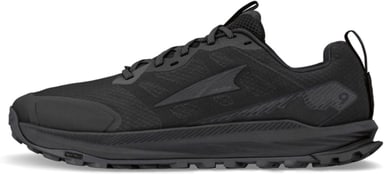
Altra Lone Peak 9
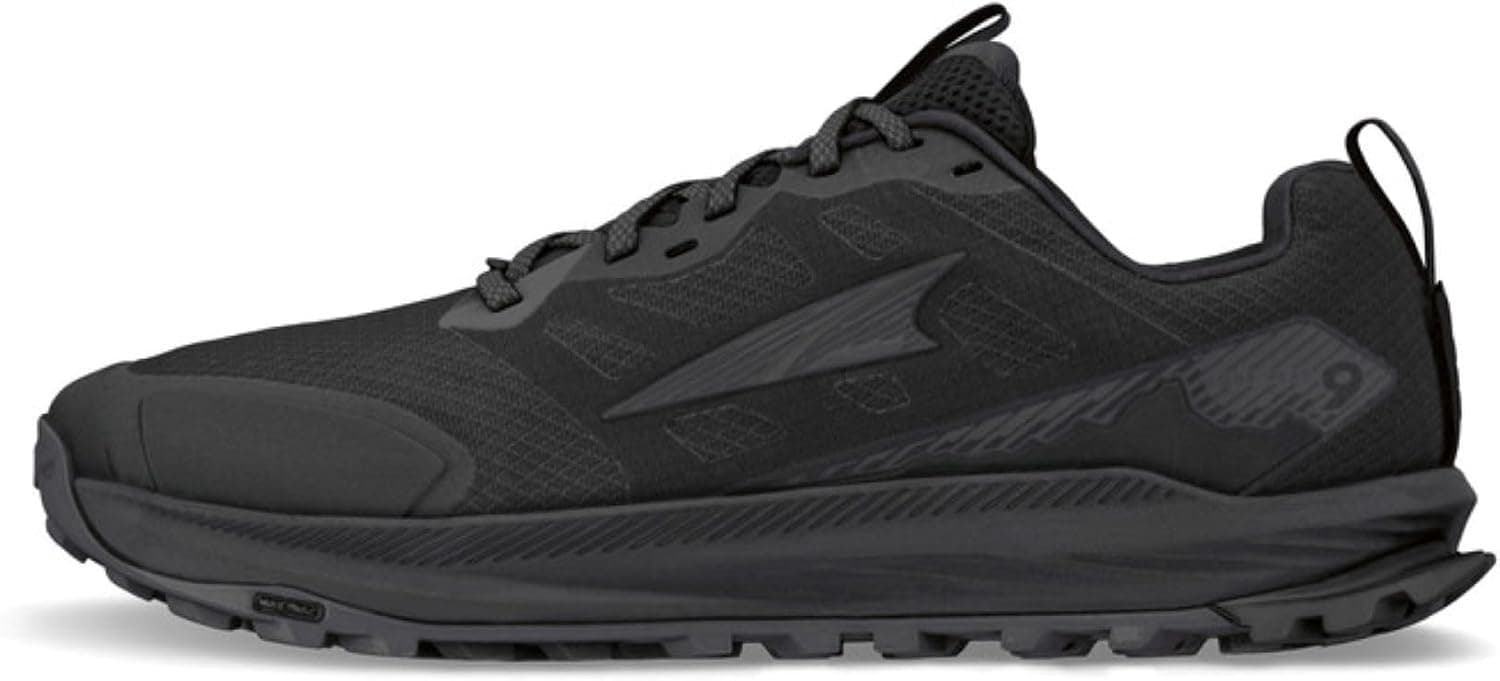
The Lone Peak is the shoe you see most often on long trails, and the reason is shape rather than spec. Altra's foot-shaped toe box lets toes splay under load instead of being funneled to a point, which is what starts to matter on week two of a thru-hike when feet have swollen a half size. The MaxTrac outsole with 4 mm TrailClaw lugs handles mixed terrain competently without specializing.
The zero-drop platform is the real decision. It moves load off the knee and onto the calf and Achilles, which many long-distance hikers prefer, but coming from a standard 8 mm drop shoe it needs several weeks of short outings to adapt to. Rushed transitions strain calves.
Best for: Hikers and runners who want natural toe splay and a zero-drop platform over long miles, and who will give the transition real time.
BEST FOR TOE ROOM
Altra Lone Peak 9
Best for: Hikers and runners who want toes to splay naturally over long miles.
- The thru-hiker favorite: roomiest toe box on the trail
- Zero drop demands an adaptation period from heel strikers
Kit Score 8.6/10 · $144.94 Price checked Oct 25, 3:41 PM CDT · how we score gear
Buy on AmazonProduct details
Hikers and runners who want toes to splay naturally over long miles. The thru-hiker favorite: roomiest toe box on the trail.
- Drop
- Zero drop
- Toe box
- FootShape, roomiest in class
- Outsole
- MaxTrac with StoneGuard
- Best use
- Thru-hiking, natural stride
More strengths
- Zero-drop platform encourages a natural stride
- Reengineered upper improves on the 8's durability complaints
Other tradeoffs
- Moderate cushion vs max-stack rivals
How to choose
Match the shoe to your terrain and stride
Know your terrain first
Soft mud and loose dirt demand deep lugs (Speedcross 6). Mixed hardpack and rock call for moderate lugs with a rock plate or thick foam underfoot (Peregrine 16). Varied alpine terrain benefits from the versatile Speedgoat grip.
Match the drop to your strike
A 4 mm listed drop (Peregrine, Speedgoat) suits midfoot and forefoot strikers.
Check the women's fit separately
Women's lasts differ in heel volume, instep height, and toe box width. The Speedcross 6 runs narrow for women; the Peregrine 16 has a slightly wider base than the 15, though RunRepeat still measures a tapered toe box.
Budget the full kit
Entry price reflects one shoe. Factor in insoles if you pronate, and a spare pair if you run five or more days per week.
Lug depth matters less than rubber compound on wet rock: a 4 mm Vibram Megagrip lug outgrips a 6 mm generic rubber lug in most real-world wet conditions.
| Product | Kit Score | Price | Best for |
|---|---|---|---|
| HOKA Speedgoat 7 | 7.8 | Check current price | Best for: Runners logging big mountain days on mixed terrain who want max cushion and reliable grip without sacrificing too much agility. Why it stands out: Vibram Megagrip with 5 mm Traction Lugs grips wet rock, loose dirt, and scree Tradeoff: Fits smaller than earlier Speedgoats, so many runners need to size up |
| Saucony Peregrine 16 | 8.2 | $149.95 Price checked Oct 25, 3:41 PM CDT | Best for: Midfoot and forefoot strikers who want a versatile all-mountain shoe with sticky grip, a rock plate, and a price that leaves room in the budget for other gear. Why it stands out: Full Vibram Megagrip outsole replaces the Peregrine 15's PWRTRAC rubber Tradeoff: RunRepeat's lab measures a tapered toe box; wide feet may want the Lone Peak |
| Salomon Speedcross 6 | 8.4 | $139.90 Price checked Oct 25, 3:41 PM CDT | Best for: Trail runners who regularly face mud, loose dirt, wet grass, or packed snow and need a shoe that claws in where others spin out. Why it stands out: Industry-leading 5.5+ mm Mud Contagrip lugs are unmatched for soft, wet, and muddy terrain Tradeoff: Deep lugs create a cleat-like, disconnected feel on hardpack and pavement |
HOKA Speedgoat 7
- Best for
- Runners logging big mountain days on mixed terrain who want max cushion and reliable grip without sacrificing too much agility.
- Why it stands out
- Vibram Megagrip with 5 mm Traction Lugs grips wet rock, loose dirt, and scree
- Tradeoff
- Fits smaller than earlier Speedgoats, so many runners need to size up
Saucony Peregrine 16
- Best for
- Midfoot and forefoot strikers who want a versatile all-mountain shoe with sticky grip, a rock plate, and a price that leaves room in the budget for other gear.
- Why it stands out
- Full Vibram Megagrip outsole replaces the Peregrine 15's PWRTRAC rubber
- Tradeoff
- RunRepeat's lab measures a tapered toe box; wide feet may want the Lone Peak
Salomon Speedcross 6
- Best for
- Trail runners who regularly face mud, loose dirt, wet grass, or packed snow and need a shoe that claws in where others spin out.
- Why it stands out
- Industry-leading 5.5+ mm Mud Contagrip lugs are unmatched for soft, wet, and muddy terrain
- Tradeoff
- Deep lugs create a cleat-like, disconnected feel on hardpack and pavement
Where these numbers come from
| Claim | Source | Checked |
|---|---|---|
| Speedgoat 7: 5 mm Vibram Megagrip lugs with Traction Lug texture, supercritical foam replaces the Speedgoat 6 midsole, redesigned upper, fits smaller than earlier versions | iRunFar, HOKA Speedgoat 7 review | 2026-09-26 |
| Speedgoat 7: 37/33 mm stack (men's), 35/31 mm (women's), 4 mm drop, 9.7 oz men's and 8.3 oz women's, $165 list | Believe in the Run, Hoka Speedgoat 7 review | 2026-09-26 |
| Speedgoat 7: 7.4 mm lab-measured drop, 0.6 mm lost in the Dremel outsole test, 85/100 overall score | RunRepeat, HOKA Speedgoat 7 | 2026-09-26 |
| Peregrine 16: 32/28 mm stack, 4 mm drop, 4 mm lugs, full Vibram Megagrip, woven forefoot rock plate, 4 mm more foam than the Peregrine 15, 9.5 oz men's 9 | iRunFar, Saucony Peregrine 16 review | 2026-09-26 |
| Peregrine 16: 4.8 mm lab-measured drop, tapered toe box | RunRepeat, Saucony Peregrine 16 | 2026-09-26 |
| Cascadia 20: 38/32 mm stack, 6 mm drop, Vibram Megagrip 4 mm lugs, DNA FLASH v2, forefoot rock plate removed, 10.3 oz men's 9, early upper wear at the inside heel | iRunFar, Brooks Cascadia 20 review | 2026-09-26 |
| Cascadia 20: 8.8 mm lab-measured drop, no rock plate, snug fit | RunRepeat, Brooks Cascadia 20 | 2026-09-26 |
| Cascadia 20: 4 mm added stack, Trail Adapt base, 3D-printed overlays and TPU toe cap | Running Warehouse, Brooks Cascadia 20 | 2026-09-26 |
Frequently asked questions
Do trail running shoes work for hiking?
Yes, with caveats. Trail running shoes are lighter and more flexible than hiking boots, which makes them comfortable on moderate trails and fast-and-light approaches. They lack ankle support and the waterproofing of most hiking boots, so they are less suitable for loaded backpacking or wet, extended off-trail travel.
What lug depth do I need for mud?
Six millimeters or deeper for soft mud and loose soil. The Salomon Speedcross 6 (6 mm chevron lugs) is the specific answer for those conditions. For mixed terrain that includes occasional mud, the 5 mm Speedgoat or 4 mm Peregrine lugs are sufficient and more versatile on hardpack.
What are the most cushioned trail running shoes?
The Hoka Speedgoat 7 is our cushion pick: 37 mm at the heel and 33 mm at the forefoot on the men's model, per Believe in the Run. Its supercritical foam suits long, fast days on rough ground.
What are the most durable trail running shoes?
The Speedgoat 7's outsole lost only 0.6 mm of rubber in RunRepeat's Dremel abrasion test. It is a recent release, so long-term mileage reports are still coming in; that lab result is a useful sign rather than a guarantee of lifespan.
Which trail running shoes have the best grip?
Grip depends on matching rubber compound and lug depth to your terrain. On wet rock and mixed hardpack, the Speedgoat 7's Vibram Megagrip compound is the benchmark: the softer rubber conforms to rock texture in a way deeper generic lugs cannot. On soft mud, loose dirt, and wet grass, the Speedcross 6's 6 mm chevron lugs bite deepest and shed mud between strides. For the most all-around traction on a budget, the Peregrine 16 puts 4 mm Vibram Megagrip lugs under the lowest list price here.
How do I choose trail running shoes?
Work through four variables in order. First, terrain: deep lugs (5–6 mm) for soft ground, moderate lugs (4 mm) plus a rock plate for rocky hardpack. Second, drop: 4 mm suits midfoot strikers, 8 mm suits heel strikers and road-to-trail converts. Third, cushion: max-stack foam for long days and heavier runners, firmer midsoles for technical terrain where ground feel matters. Fourth, fit: trail shoes should hold your heel locked while leaving a thumb's width in the toe box, because feet swell on descents. The full how-to-choose section above maps each of the five picks to these variables.
Are men's and women's trail running shoes really different?
Yes. Beyond the size range, women's lasts typically have a lower instep, narrower heel, slightly wider forefoot (in modern versions), and adjusted volume through the midfoot. Running in a men's shoe if you have a women's foot shape often causes heel slippage or hot spots. Each pick ships a women's-specific version with its own last geometry, and the best trail running shoes for women ranks those builds on their own merits.
Every trail is different and so is every runner. For more gear picks built around how far and hard you go, browse the full hike hub or read more about how we research and rate every product we cover.
Keep going
Related guides
 Complete hike loadoutDay hike kitBuild the complete kit
Our recommendations draw on manufacturer documentation, retailer listings, owner feedback, and comparisons with alternatives.
As an Amazon Associate I earn from qualifying purchases. We may earn a commission from links here, at no extra cost to you. How we research →