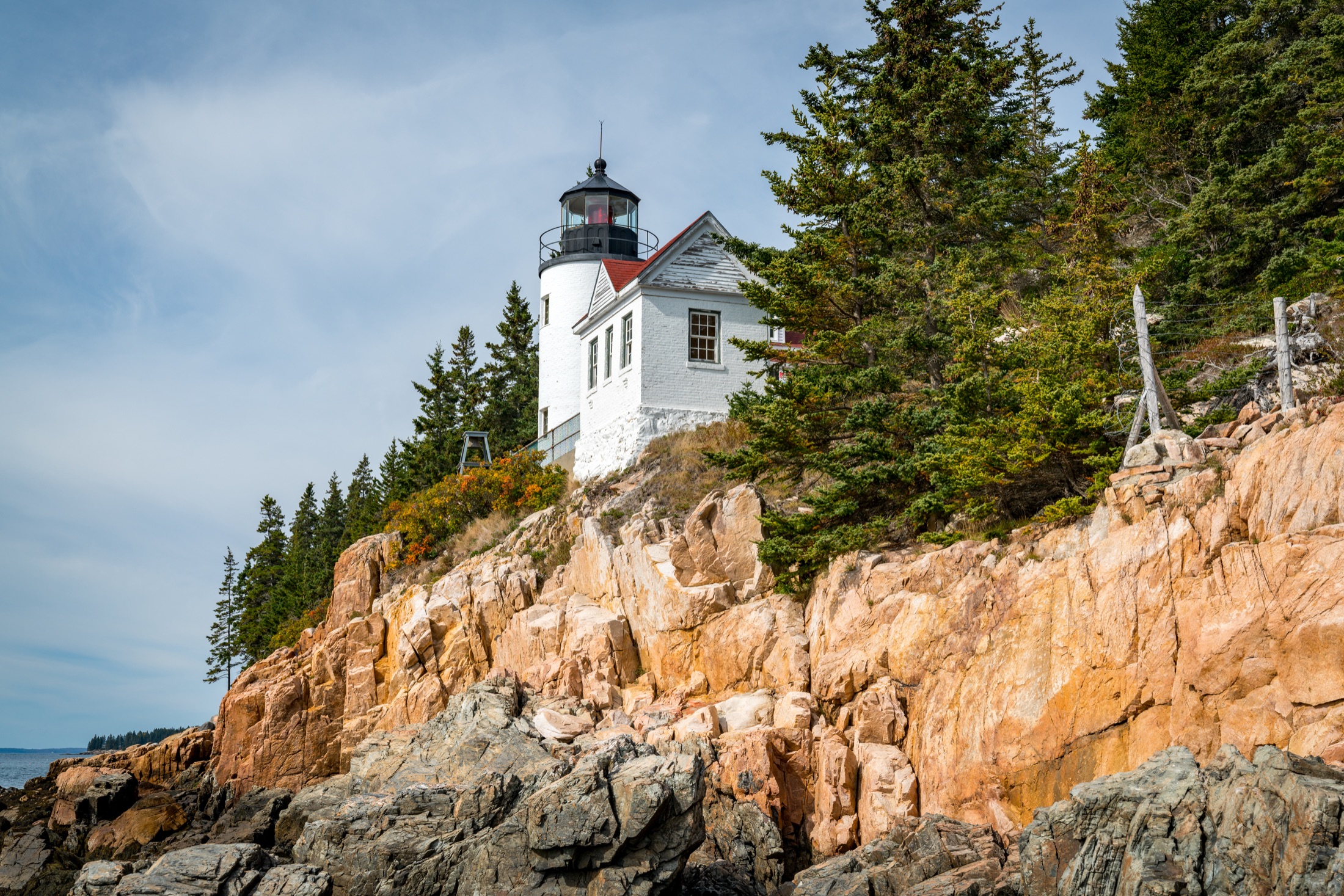
When to go
Conditions, crowds, and what each season asks you to pack.
Spring
40-60F
Highs 40-60F, cool and damp with lingering mud and patchy ice on shaded trails into May.
Pack Waterproof boots and layers for raw, wet days that swing warm to cold.
Summer
70-80F
Highs 70-80F, mild and pleasant with cool ocean breezes and occasional coastal fog.
Pack Light layers, sun protection, and a packable rain shell for fog and quick showers.
Fall
50-65F
Highs 50-65F early, dropping to 40s by November, crisp clear air and brilliant foliage.
Pack Warm midlayer plus gloves and a hat for cold sunrise summits at Cadillac.
Winter
20-35F
Highs 20-35F, snowy and icy with the Park Loop Road largely closed to cars.
Pack Traction spikes, insulation, and snowshoes or skis for the unplowed carriage roads.
Crowds by month, from NPS visit counts
Busiest: August. An average August brings about 805,000 recreation visits to Acadia, roughly 26,000 a day. Peak crowds run July to September.
Quietest: February. About 13,200 visits, 2% of the busiest month. Crowds stay low November to April.
- Low
- Moderate
- High
- Peak
Bar height is each month's average visits compared with the busiest month. Low is under 25% of that peak, Moderate 25 to 49%, High 50 to 74%, Peak 75% and up.
See the monthly numbers
| Month | Avg visits | Share of year | Crowds |
|---|---|---|---|
| January | 14,646 | <1% | Low |
| February | 13,235 | <1% | Low |
| March | 27,506 | <1% | Low |
| April | 97,764 | 2% | Low |
| May | 328,184 | 8% | Moderate |
| June | 598,961 | 15% | High |
| July | 785,338 | 20% | Peak |
| August | 804,632 | 20% | Peak |
| September | 649,698 | 16% | Peak |
| October | 554,267 | 14% | High |
| November | 71,688 | 2% | Low |
| December | 13,937 | <1% | Low |
Source: NPS Visitor Use Statistics, monthly recreation visits, averaged over 2023–2025. October and November 2025 are left out of the averages because of the federal government shutdown. Visits count entries, not unique people. NPS monthly report for Acadia · Crowd calendar for all 63 parks
Acadia weather by month
Average daily highs and lows, plus monthly precipitation, from NOAA's 1991-2020 climate normals for Mount Desert Island, at park headquarters. Shaded months are the park's best season. Tap a month to build a pack list for it.
| Month | Jan | Feb | Mar | Apr | May | Jun | Jul | Aug | Sep | Oct | Nov | Dec |
|---|---|---|---|---|---|---|---|---|---|---|---|---|
| High (F) | 33 | 35 | 42 | 53 | 65 | 74 | 79 | 78 | 71 | 59 | 48 | 38 |
| Low (F) | 15 | 18 | 25 | 35 | 45 | 54 | 60 | 60 | 53 | 43 | 33 | 22 |
| Precip (in) | 4.5 | 3.8 | 4.9 | 5.2 | 4.5 | 4.3 | 3.3 | 3.5 | 4.2 | 5.9 | 5.9 | 5.7 |
Station ACADIA NP (USC00170100), 470 ft, about 3 miles from Hulls Cove Visitor Center. Exposed summits such as Cadillac Mountain run colder and windier than the station.
Source: NOAA NCEI U.S. Climate Normals, 1991-2020 monthly averages. Averages describe a typical year, not a forecast; check current conditions and alerts before you go. Precipitation includes the water in melted snow.
Top things to do
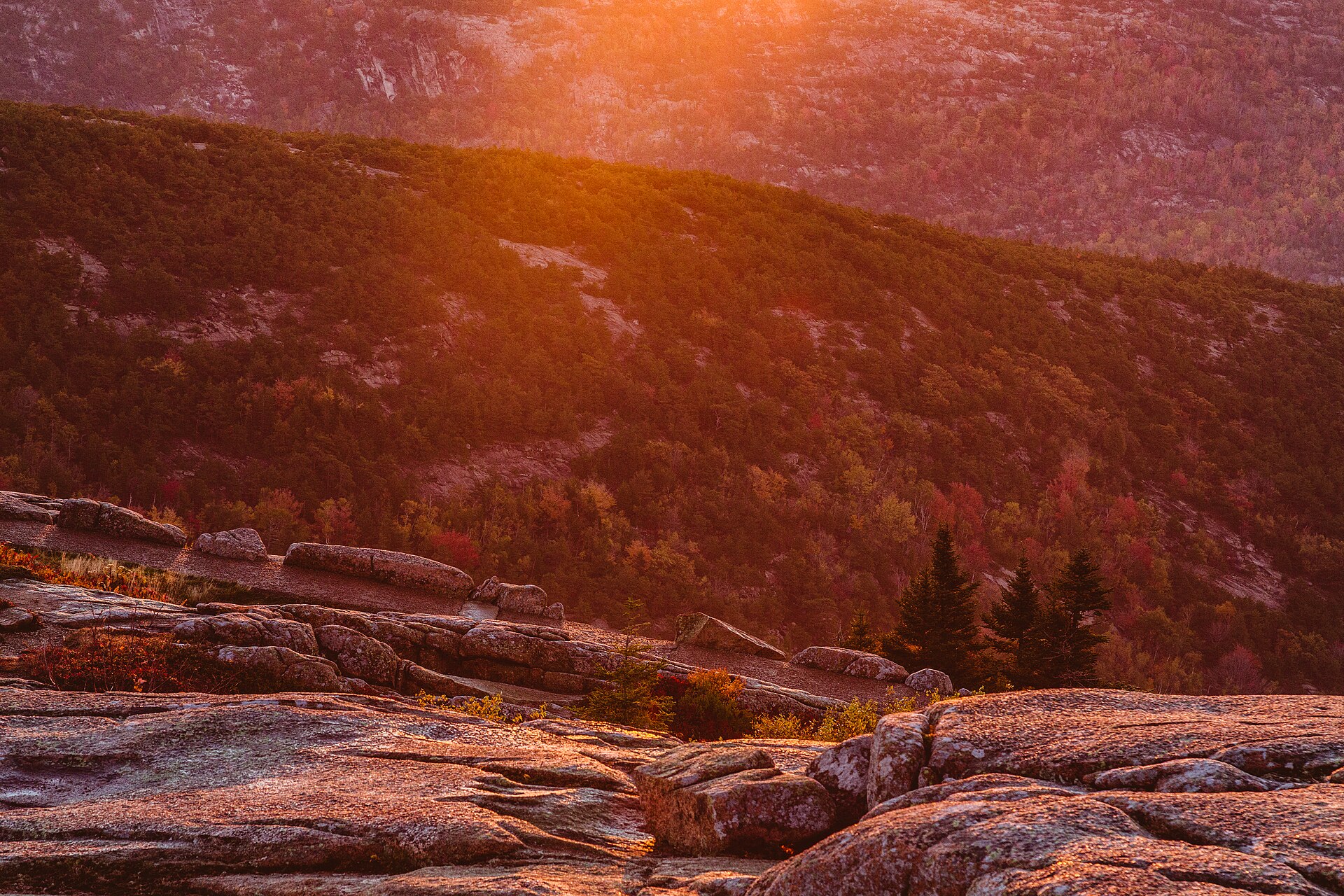
Cadillac Mountain
Drive or hike to the highest point on the U.S. Atlantic coast for one of the country's first sunrises; summit road needs a timed reservation.
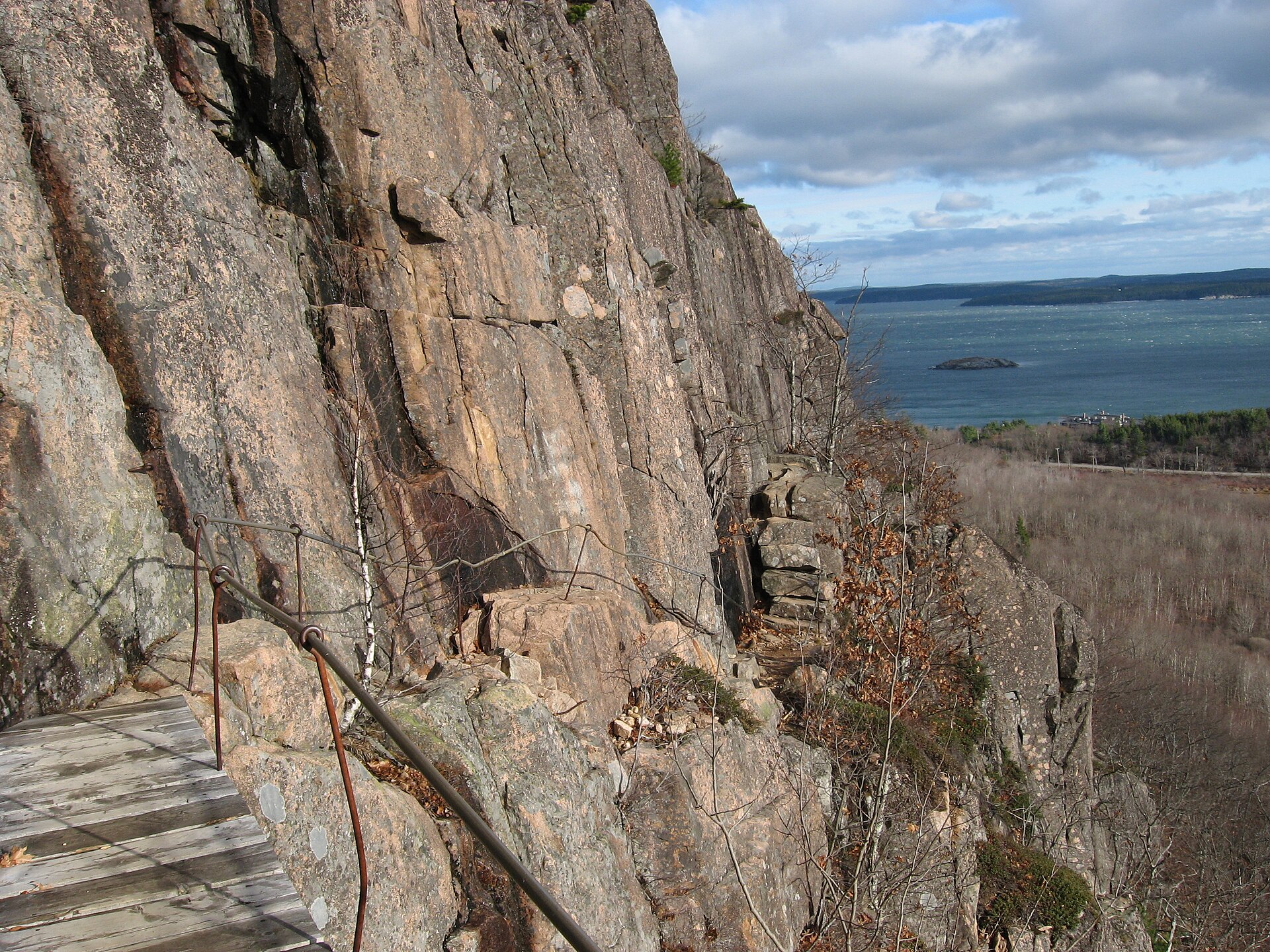
Precipice Trail
Strenuous 2.1-mile iron-rung cliff climb on Champlain Mountain; closed in spring for peregrine falcon nesting.
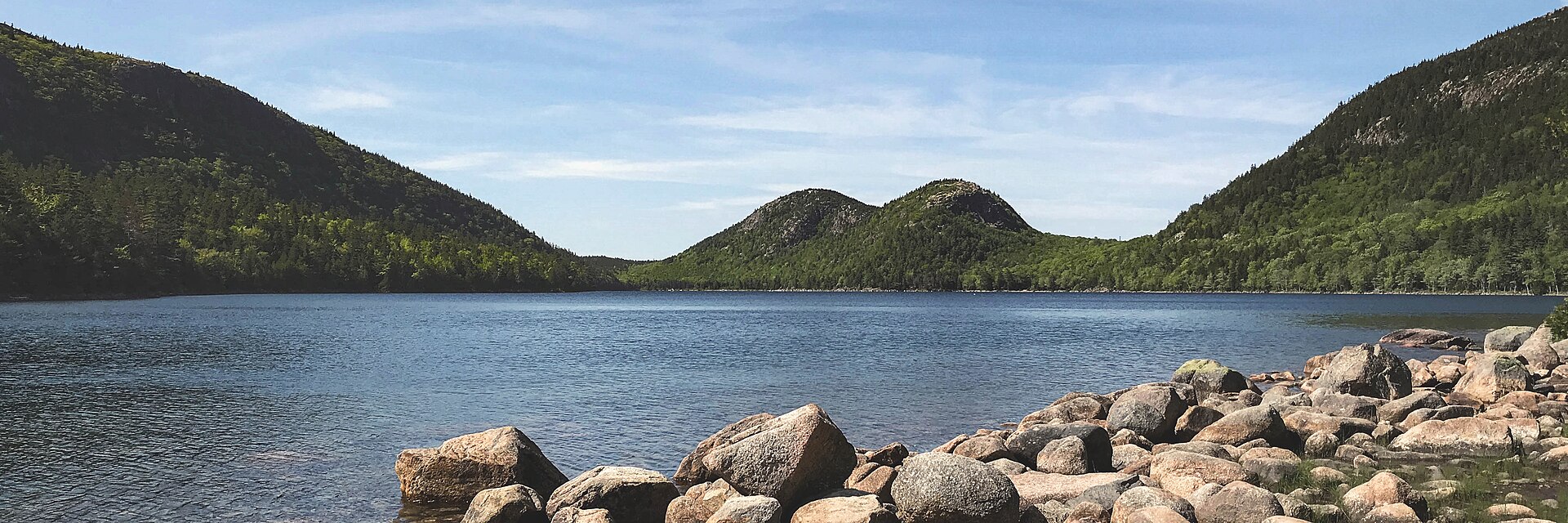
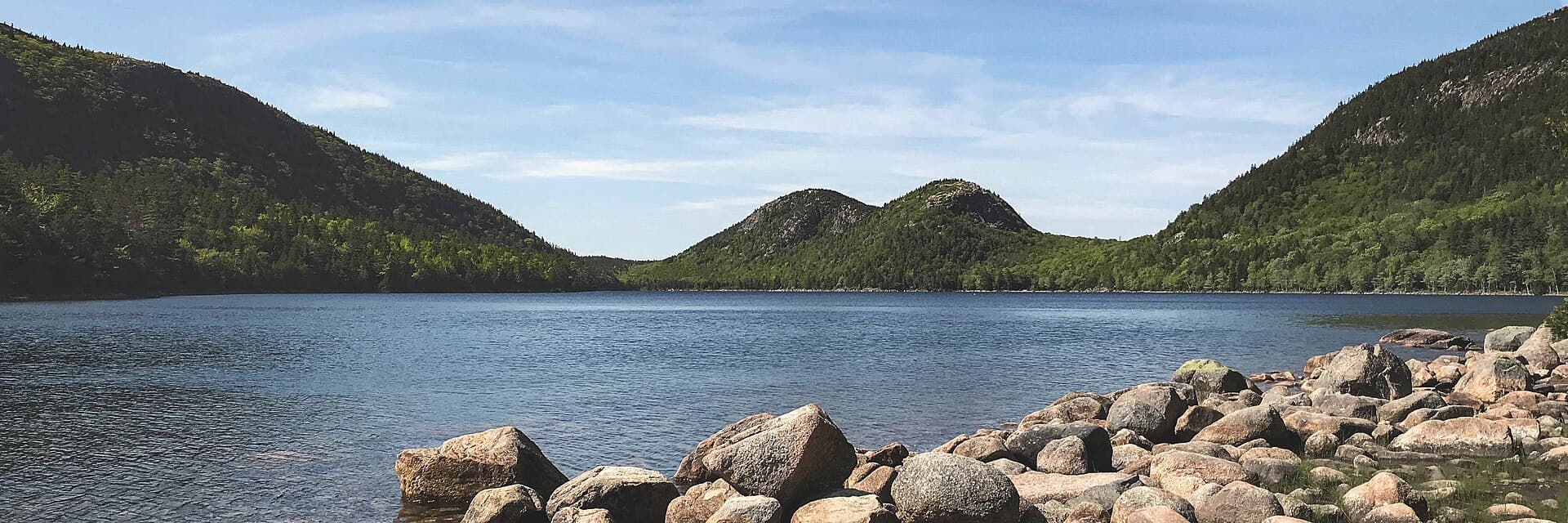
Jordan Pond Path
Easy 3.3-mile loop around a clear glacial pond facing the Bubbles, ending at the poppopovers at Jordan Pond House.
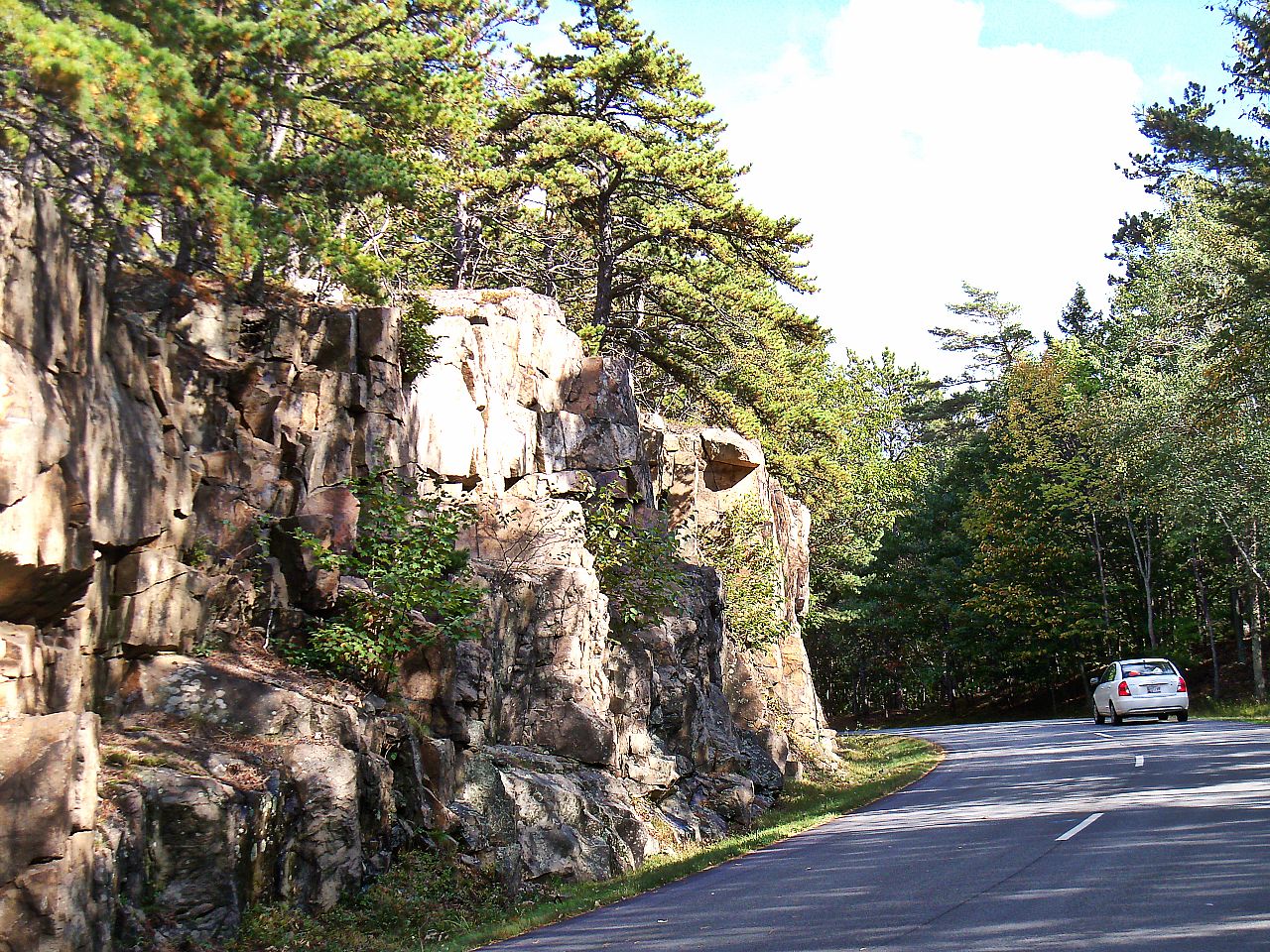
Park Loop Road
27-mile scenic drive linking Sand Beach, Thunder Hole, and Otter Cliff along the rocky shore.
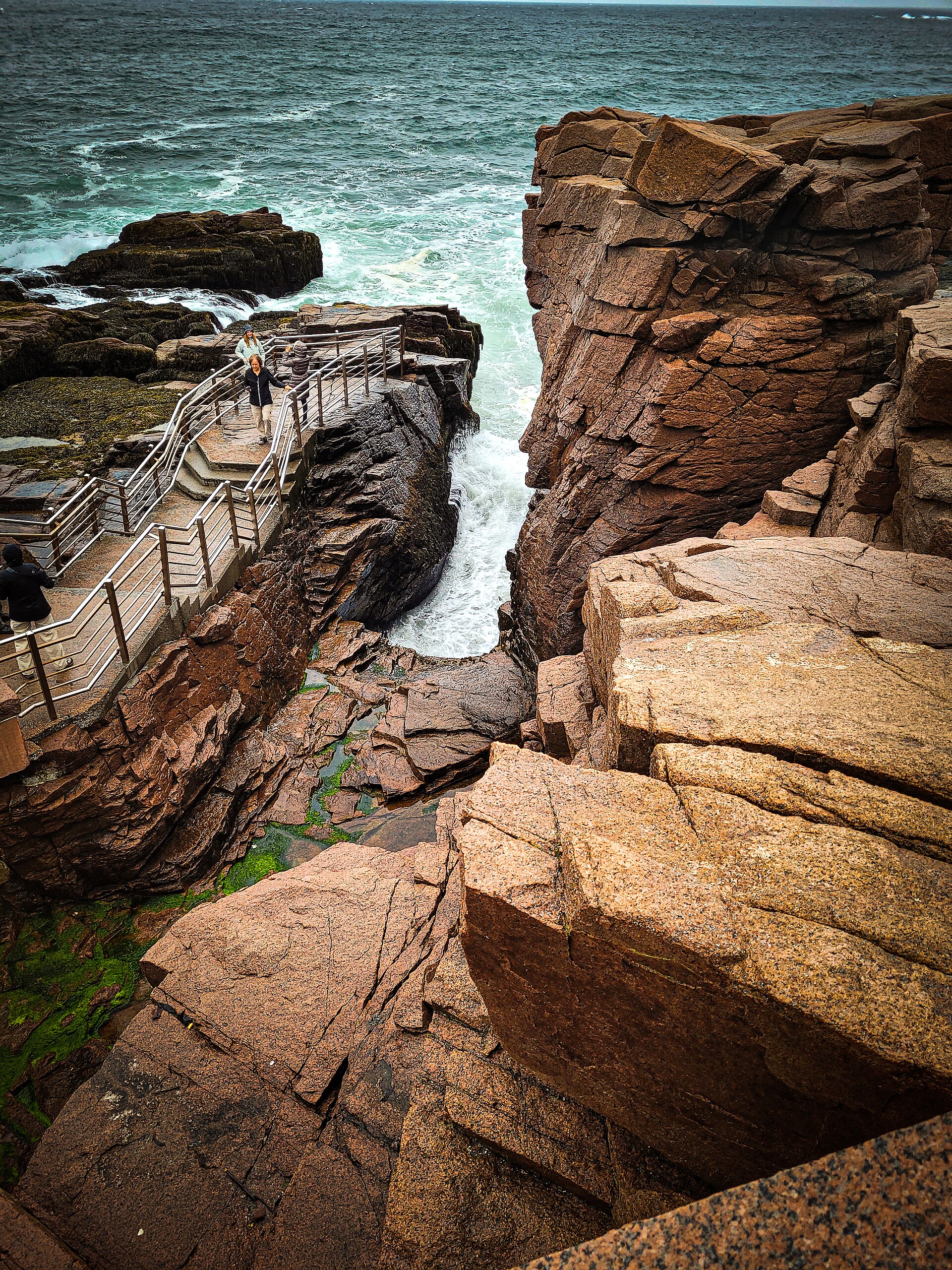
Ocean Path
Flat 2.2-mile coastal walk from Sand Beach to Otter Point with crashing surf and tide pools the whole way.
Anchor the day around Cadillac Mountain
Put the access rule first: shuttle, parking, timed-entry, or reservation windows should decide the order of the day. For one day in Acadia, make Cadillac Mountain the non-negotiable, add Precipice Trail only if the first stop runs clean, and keep Jordan Pond Path as the flexible finish.
- 1Start with Cadillac Mountain: Drive or hike to the highest point on the U.S. Atlantic coast for one of the country's first sunrises; summit road needs a timed reservation.
- 2Add Precipice Trail: Strenuous 2.1-mile iron-rung cliff climb on Champlain Mountain; closed in spring for peregrine falcon nesting.
- 3Use Jordan Pond Path as the optional finish, not as a reason to rush the whole day.
Where to stay
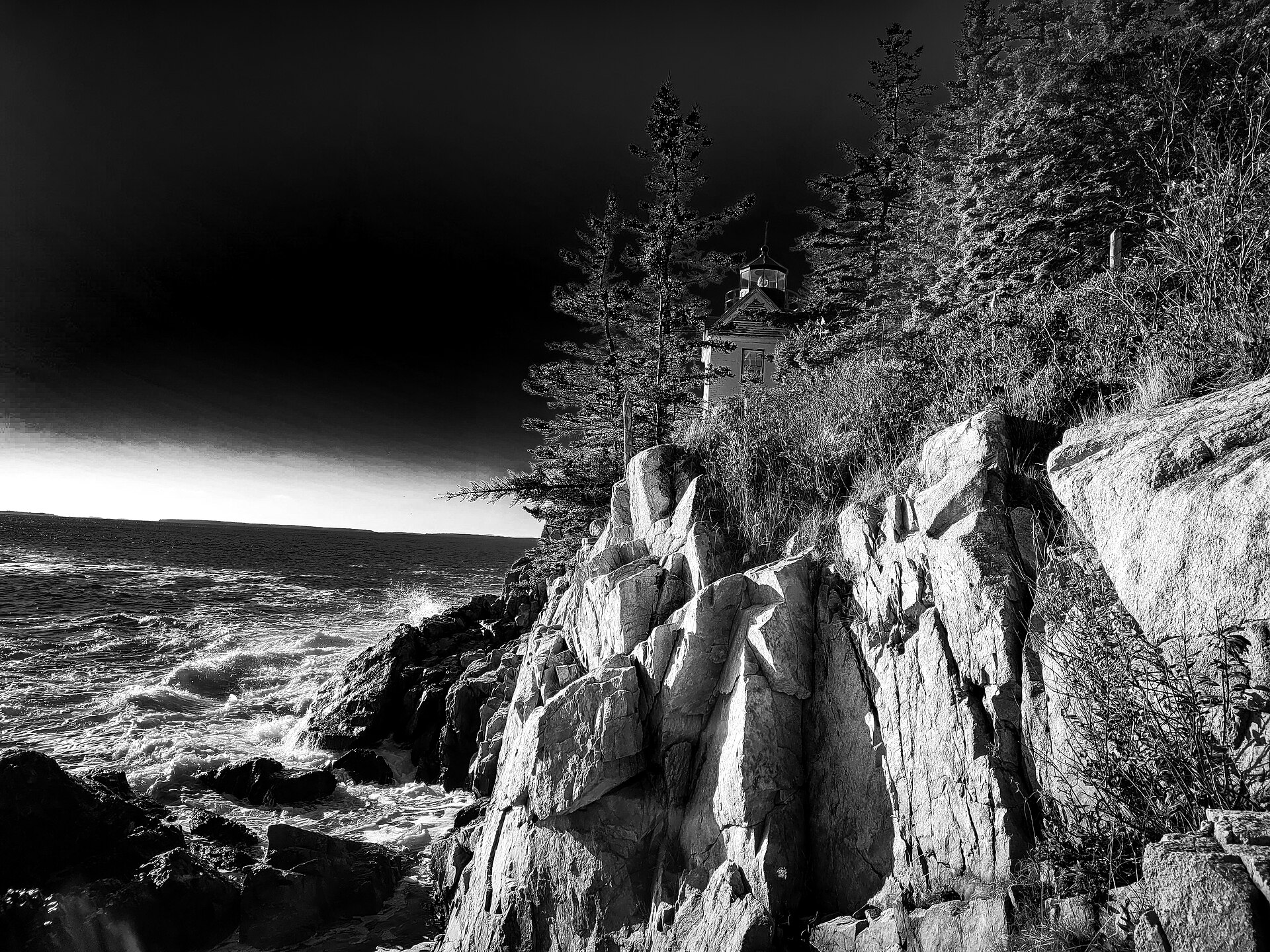
Stay strategy
Sleep where the first morning stays simple.
Stay strategy
Use Bar Harbor for the easy first trip, then move west for quiet.
Acadia lodging is mostly a Mount Desert Island decision. Bar Harbor keeps you close to the main entrance, restaurants, and Island Explorer shuttle stops. Southwest Harbor, Northeast Harbor, Seawall, and Schoodic make more sense when you want quieter mornings and can accept extra driving.
- In-park lodging
- No hotel-style lodging inside Acadia
- Campgrounds
- Blackwoods, Seawall, and Schoodic Woods reserve on Recreation.gov
- Transit
- Island Explorer links Bar Harbor, campgrounds, and trailheads in season
- Cadillac access
- Summit Road needs a timed vehicle reservation in season
Compare base options
Compare each base by the first morning: where you park, what you ride, and how many decisions happen before the trail or viewpoint.
Paid links: we may earn a commission if you book, at no extra cost to you.
- Best for
- First visits, Park Loop Road days, restaurants, and shuttle-assisted trailheads
- Tradeoff
- Highest prices and the most crowded summer evenings.
Planning detail
Choose Bar Harbor when you want the lowest-friction version of Acadia: quick access to Sand Beach, Jordan Pond, Cadillac Mountain, and the free Island Explorer system when it is running.
Quiet island base
Southwest Harbor or Northeast Harbor
- Best for
- Quieter inns, west-side sunsets, and repeat visitors who do not need Bar Harbor every night
- Tradeoff
- You trade walkable nightlife for more driving to the busiest east-side trailheads.
Planning detail
These harbor towns keep you on Mount Desert Island while giving the trip a slower rhythm. They pair well with Seawall, Bass Harbor, carriage roads, and an early start for the Park Loop Road.
- Best for
- Campers who want either main-island access or the quieter mainland Schoodic Peninsula
- Tradeoff
- Reservations fill fast for summer and foliage weekends.
Planning detail
Pick Blackwoods for the shortest Bar Harbor and Park Loop Road access, Seawall for the quieter west side, and Schoodic Woods when the mainland peninsula is the point of the trip.
Sunrise order
Book the Cadillac Summit Road reservation first if sunrise is central to the trip.
Parking relief
In peak season, favor shuttle-served starts when you are staying in Bar Harbor or a main-island campground.
Camping reservations
Camping reservations
Acadia campsites drop on the first of the month: set a 10 a.m. Eastern alarm.
Blackwoods is the classic east-side base minutes from the Park Loop Road, and every Acadia campsite is reservation-only on Recreation.gov. Most inventory releases six months ahead on the first of each month, so the booking calendar matters more than the campground choice.
Reviewed June 11, 2026
Booking window
For Blackwoods, Seawall, and Schoodic Woods, 90 percent of sites release six months ahead on the first of each month at 10 a.m. Eastern, and the remaining 10 percent release 14 days before arrival on a rolling basis; Duck Harbor's entire season releases at once on April 1.
- There are no first-come campsites, and no backcountry, roadside, or winter camping is allowed anywhere in Acadia.
- Miss the six-month drop? The 14-day rolling release and same-day cancellations on Recreation.gov are your second chance.
- Duck Harbor on Isle au Haut is mailboat-access lean-to camping and sells out almost immediately when the April 1 release opens.
- Leave firewood at home: quarantines apply, and firewood is sold locally.
Where to book or verify
Start here for the release schedule, campground details, and official reservation links.
All four park campgrounds book exclusively through Recreation.gov.
Check for federal campground, backcountry, tour, and permit inventory tied to this park.
Covers Cadillac Summit Road vehicle reservations and special use permits.
Campgrounds to know
Blackwoods Campground
Details- Booking
- 90 percent of sites release 6 months ahead on the first of the month at 10 a.m. Eastern; 10 percent release 14 days out.
- Season
- Seasonal. Check the NPS page for current open dates.
- Sites
- Wooded tent and RV sites on the east side of Mount Desert Island.
- The first choice for most visits: closest to Bar Harbor, Cadillac Mountain, and the Park Loop Road highlights.
Seawall Campground
Details- Booking
- 90 percent of sites release 6 months ahead on the first of the month at 10 a.m. Eastern; 10 percent release 14 days out.
- Season
- Seasonal. Check the NPS page for current open dates.
- Sites
- Tent, RV, and walk-in sites near the coastline on the quiet west side.
- The slower-paced alternative near Bass Harbor Head Lighthouse, a 30 to 40 minute drive from the Park Loop Road.
Schoodic Woods Campground
Details- Booking
- 90 percent of sites release 6 months ahead on the first of the month at 10 a.m. Eastern; 10 percent release 14 days out.
- Season
- Seasonal. Check the NPS page for current open dates.
- Sites
- Tent and RV sites (some with hookups) on the mainland Schoodic Peninsula.
- The least crowded corner of Acadia, an hour-plus from Bar Harbor but with its own dramatic coastline.
Duck Harbor Campground
Details- Booking
- The entire season releases at 10 a.m. on April 1.
- Season
- Seasonal, on remote Isle au Haut.
- Sites
- Five lean-to shelters, reached only by mailboat from Stonington.
- A bucket-list island trip, not a fallback: plan the boat schedule and pack-in logistics before you book.
Getting there and practical info
Plan the handoff from arrival to shuttle.
Parking, pedestrian entrances, and shuttle timing decide how calmly the first morning starts.
Getting there
Get to Acadia, then remove the first-morning friction.
- Nearest airport
- BHB (Hancock County-Bar Harbor), about 15 minutes; most fly into BGR (Bangor), about 1 hour
- Access rhythm
- Park once, ride in
- Region
- Maine
Fly in
Most visitors fly into Bangor International Airport (BGR), about an hour's drive northwest, which has more flights and rental cars; the tiny Hancock County-Bar Harbor Airport (BHB) sits about 15 minutes away with limited seasonal service.
Access note
From Bangor, take Route 1A to Route 3 onto Mount Desert Island and into Bar Harbor.
Shuttle access
In summer and fall the free Island Explorer shuttle connects Bar Harbor, campgrounds, and trailheads, easing parking pressure.
Book ahead
- Guided tours in AcadiaPaid link, Viator
Paid links: we may earn a commission if you book, at no extra cost to you.
Pair this with lodging: sleep where the park transfer is simple, especially if your route needs an early start.
Plan your trip
Build one complete pack brief from Acadia's season, activity, and trip length. Fine-tune an individual calculation only if you need it.
Fine-tune water, pack size, warmth, or stove fuel
Build around conditions
Let season, elevation, and weather set the plan.
Plan your trip
2 quick tools, already seeded for Acadia. Tune the numbers around temperature swings, footing, layers, and how much margin the route needs.
What to pack
Start with the gear decisions Acadia changes: water, footing, weather, and overnight needs. The checklist is there once your route and dates are set.
Kit Authority
Acadia packing list
0 of 15 packed. Check items as you pack, then take this list to the store, trailhead, or campsite.
Pack planning
Decide what Acadia asks of your kit before you start checking boxes.
Use this as a constraint check while you are still shaping the trip. The active checklist becomes useful once your route, dates, and sleep plan are set.
- First constraintHydration and exposureWater, hat, sunscreen, sunglasses, Navigationmap, downloaded GPS, or a GPS watch, 3 more
- Route realityFooting and tractionTrail running shoes, Hiking socks, Trekking poles
- Load choicePack and carry systemDaypack
- Season checkLayers for conditionsMoisture-wicking base layers, Rain jacket, Insulated jacket, 1 more
Checklist mode
15 items, grouped for the trip you are actually taking.
- Dates and season are set.
- Primary route, campground, or lodge is chosen.
- Water, footwear, and overnight needs are sized.
One researched pick
The first gear decision for Acadia
A stable daypack is the one purchase that organizes water, layers, food, first aid, and the small safety margin.
We may earn a commission from links on this page, at no extra cost to you. Product prices and availability are accurate as of the date/time indicated and are subject to change. Any price and availability information displayed on Amazon at the time of purchase will apply to the purchase of this product.

THE DAY-HIKE PICK
Osprey Talon 22
Best Overall
Kit Score 8.6/10
$169.95 Price checked Oct 23, 6:22 AM CDT
Best for: Hikers who want a proven all-around daypack with solid load support, plenty of adjustment, and a warranty they can actually use.
- Adjustable torso fit covers a wide range of body sizes
- At 2 lb 1 oz it runs heavier than ultralight rivals for the same volume
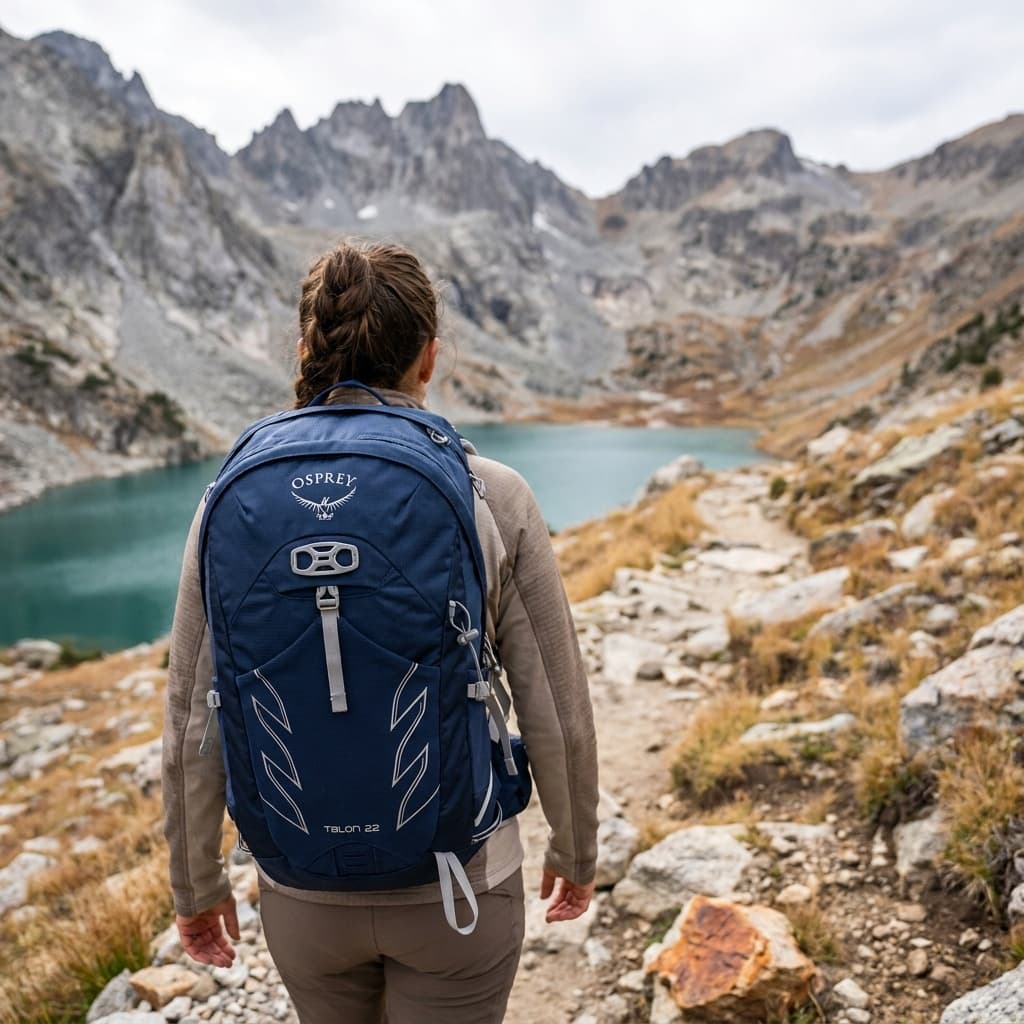
- Volume
- 22 L
- Weight
- 2 lb 1 oz (945 g)
- Back Panel
- AirScape foam with ventilation channels
- Hipbelt Pockets
- 2 zippered
- Hydration
- Compatible up to 3 L reservoir (sold separately)
- Warranty
- All Mighty Guarantee (lifetime repair or replace)
About this pick
The Talon 22 is the daypack you see on the trail more than any other for good reason: it packs in a padded hipbelt, adjustable torso harness, and dual hipbelt pockets into a 22-liter package that handles loads up to 20 lb without complaint. Owners across hundreds of Amazon ratings consistently cite its adjustability and durability as standouts.
Strengths
- Adjustable torso fit covers a wide range of body sizes
- Padded hipbelt and dual hipbelt pockets at this size are rare
- Osprey lifetime warranty backs years of hard use
Weaknesses
- At 2 lb 1 oz it runs heavier than ultralight rivals for the same volume
- AirScape back panel ventilation is functional but not class-leading compared to suspended-mesh designs
Kit Score breakdown
Gear for Acadia
The buying guides that match what Acadia asks of your kit. Each one has our current top picks across budget and use case.
Can you photograph here? Permit and drone rules
Acadia's filming and photography rules after the EXPLORE Act, plus the Cadillac Mountain sunrise reservation that every photographer hits.
- Permit
- Usually fine for personal shoots; commercial or large productions can need a permit
- Drones
- Effectively banned: launching, landing, or operating a drone within park boundaries is prohibited
- Land
- Yes for personal and editorial photography throughout the park
From our photography sister site, Aperture Authority. Verified 2026-06-28.
Frequently asked questions
Do you need a reservation to visit Acadia National Park?
You do not need a reservation to enter the park itself, just a standard entrance pass. However, driving up the Cadillac Summit Road requires a separate $6 timed-entry vehicle reservation from late May through late October, booked in advance on recreation.gov. These sunrise and daytime slots sell out quickly, so reserve as early as you can.
When is the best time to visit Acadia?
Late September through mid-October is the sweet spot for crisp weather and brilliant fall foliage, though it draws heavy crowds. July and August bring the warmest, most reliable weather and swimmable conditions but the busiest trails and parking. May and early June are quiet and green but cooler and wetter.
How many days do you need at Acadia?
Two to three days is enough to see the highlights, including the Park Loop Road, a Cadillac Mountain sunrise, and a few signature hikes like Jordan Pond and Ocean Path. A longer stay lets you explore the quieter Schoodic Peninsula and paddle the bays. The park is compact, so you can fit a lot into a short trip.
Can you see the sunrise from Cadillac Mountain?
Yes, and from early October through early March Cadillac Mountain is one of the first places in the United States to see the sunrise. You will need a timed-entry vehicle reservation for the summit road during the late May to late October season, or you can hike up year-round. Dress warmly, since summit temperatures are cold and windy even in summer.
Keep planning
Compare with another park
Nearby parks
 Shenandoah105 miles of Skyline Drive, waterfall hikes, and the famous Old Rag scramble, all about 75 minutes from D.C.
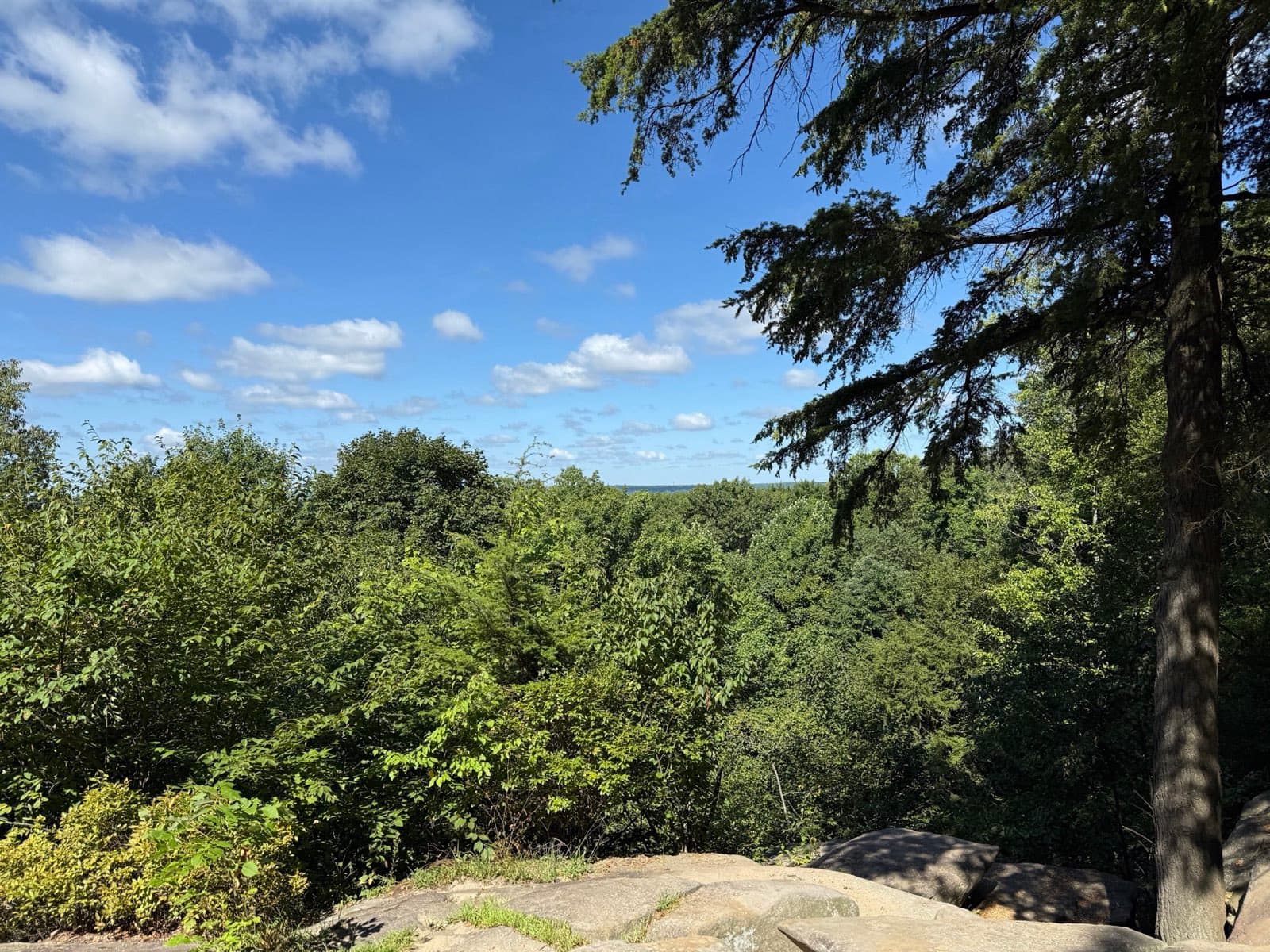 Cuyahoga ValleyA free, train-served patchwork of waterfalls, canal towpath, and Ohio forest tucked between Cleveland and Akron.
 New River GorgeA 53-mile river gorge with world-class climbing, big whitewater, and the iconic New River Gorge Bridge.