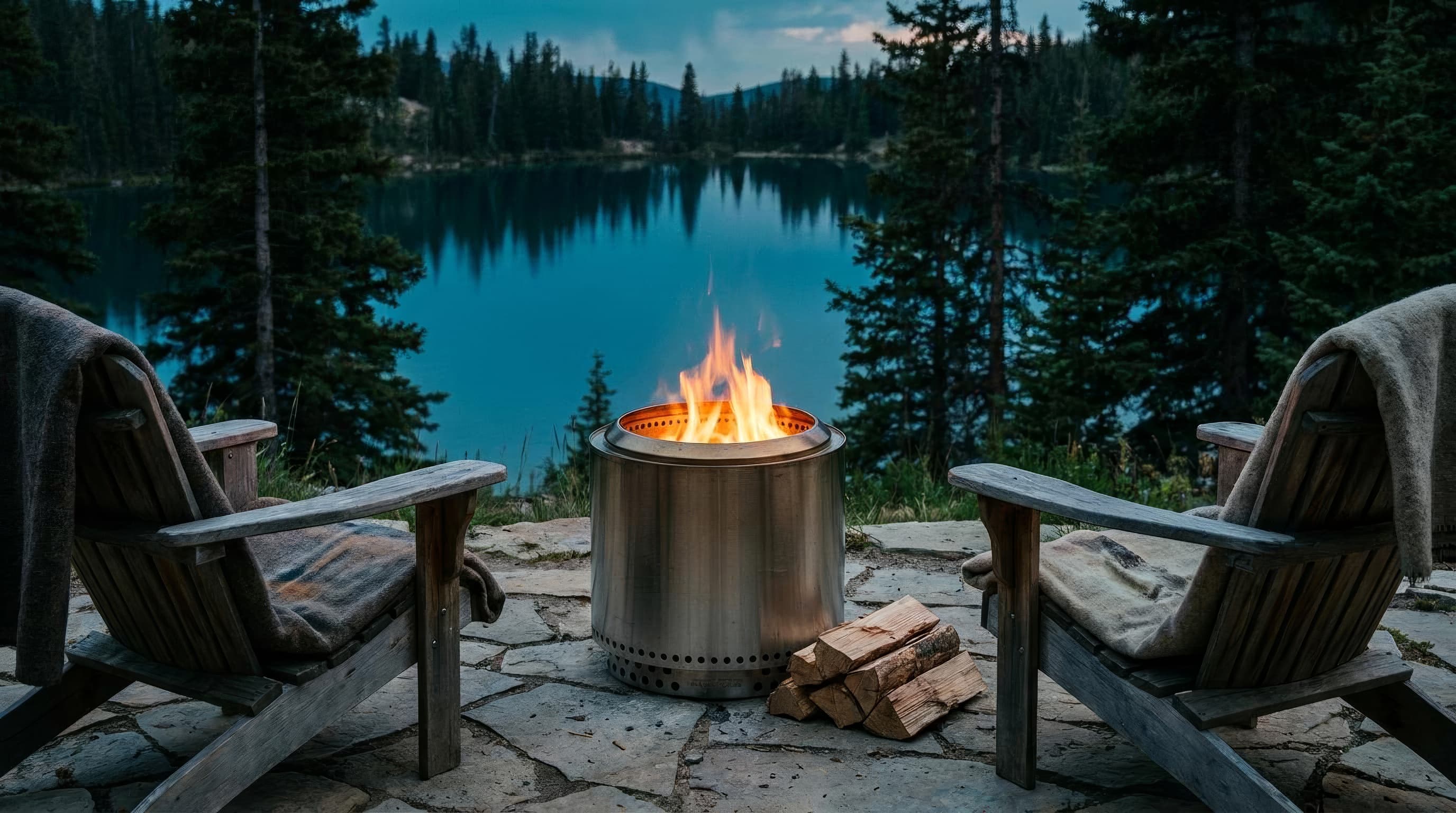
A smokeless fire pit is not smokeless. It is a double-walled bowl that pulls air up between the layers, superheats it, and feeds it back in over the flame so the smoke burns instead of escaping. Once it is up to temperature you can sit downwind and not spend the evening moving your chair. That is the whole promise, and it is worth understanding before you spend premium money on one. Fall is when these earn their keep, so this guide also covers the checks worth doing before the first cold-evening burn: local burn restrictions, clearances, and ash disposal.
Our quick picks
How we picked
Every pick is scored against the Kit Score: fit for purpose, verified owner feedback, build quality, and value at typical street price. Picks were chosen on 27 July 2026, and every listing, spec, and safety note was rechecked on 25 September 2026 against the listing and the sources in the table at the end. The Solo Stove Ranger 2.0, originally the portable pick, was removed on 7 October 2026 after its Amazon listing was discontinued. No pit was chosen on marketing claims about being smokeless.
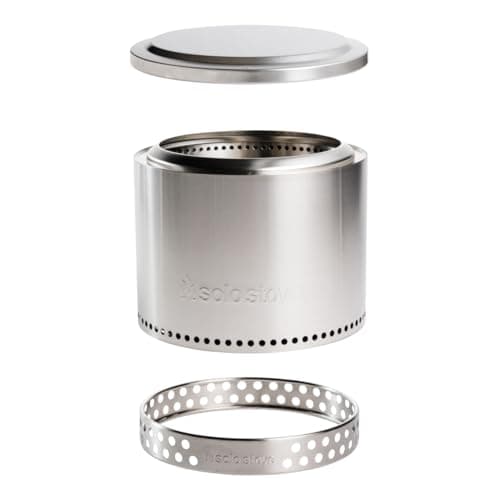
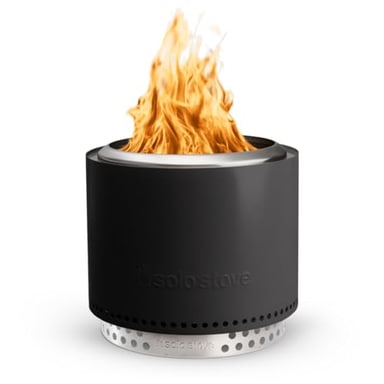
Best overall: Solo Stove Bonfire 2.0
BEST OVERALL
Solo Stove Bonfire 2.0
Best for: Anyone who wants a fire in a garden or at a drive-in campsite without smelling like a bonfire afterwards.
- Secondary burn genuinely works, so nobody has to keep moving their chair
- Expensive next to a plain steel fire ring that burns the same wood
Kit Score 8.9/10 · $322.99 Price checked Oct 26, 7:39 AM CDT · how we score gear
Buy on AmazonProduct details
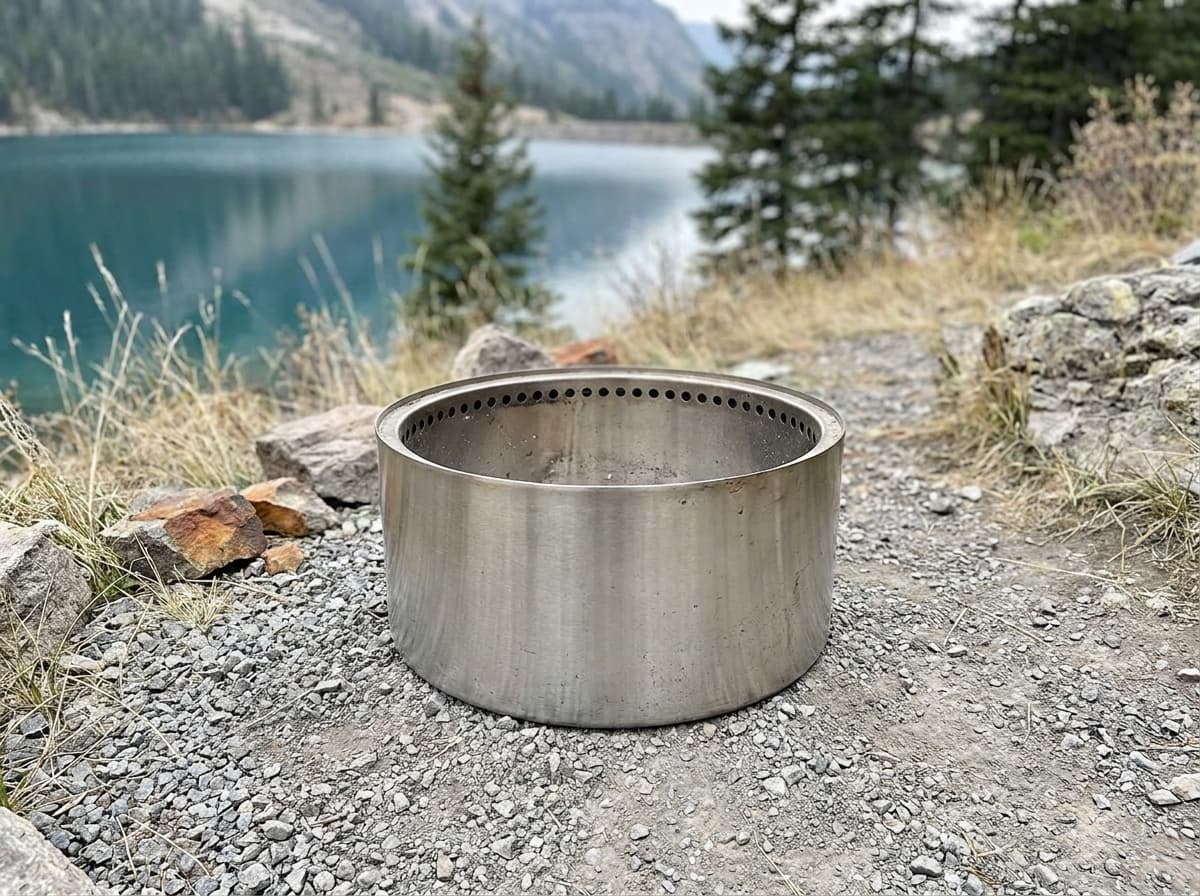
The default smokeless fire pit, and the one most people should buy. A double-wall airflow design burns the smoke off before it reaches your face, which is the entire point: you can sit downwind and keep your jumper.
- Diameter
- 19.5 in
- Weight
- About 21 lb (21.2 lb measured by OutdoorGearLab)
- Material
- 304 stainless steel
- Fuel
- Wood
- Ash removal
- Removable ash pan
- Suits
- 4 to 6 people
More strengths
- The 2.0 revision added a removable ash pan, which turns cleanup from a chore into a thirty-second job
- About 21 lb, so one person can carry it from the garden to a car boot
Other tradeoffs
- Stainless steel discolours to a bronze patina after a few burns, which some owners dislike
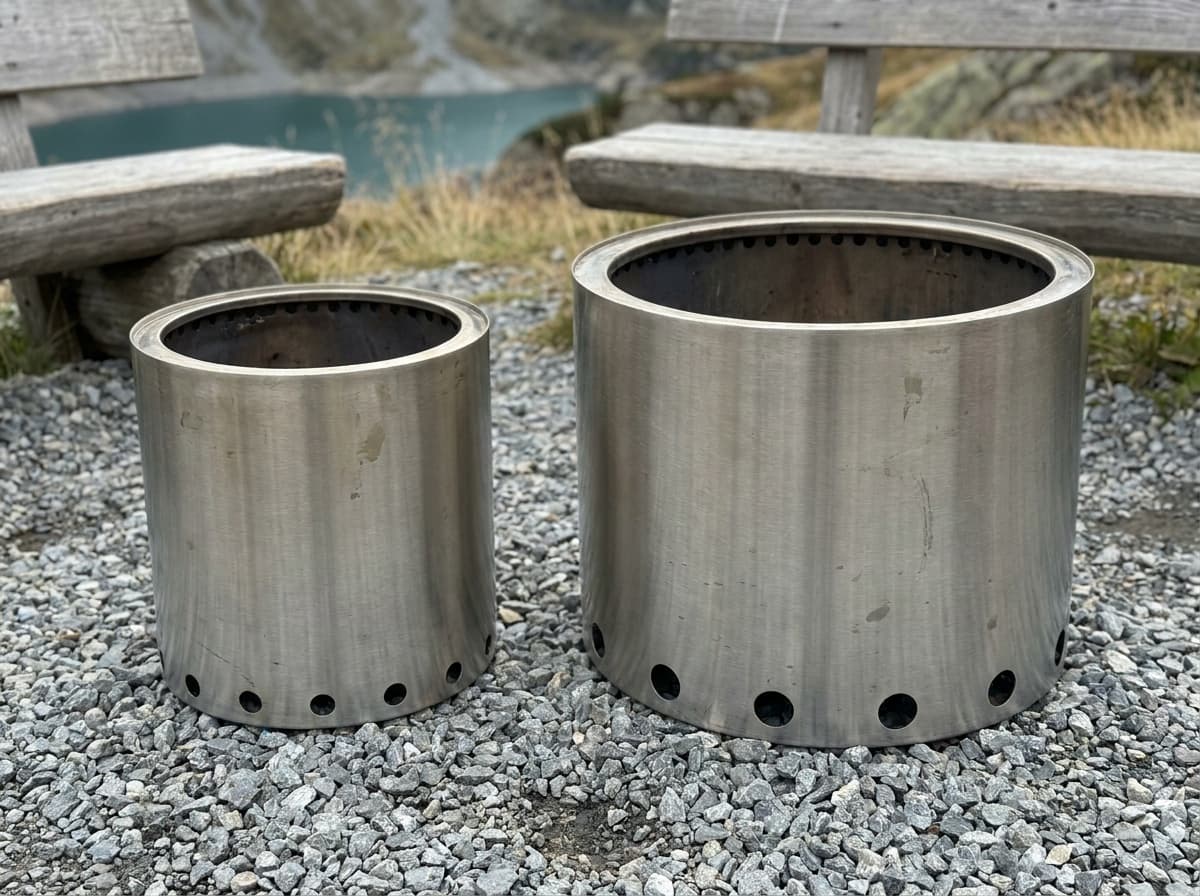
The Bonfire is the default recommendation because it is the size the job actually needs. At 19.5 inches it throws enough heat for four to six people around it, and at about 21 lb (OutdoorGearLab measured 21.2 lb), one person can carry it from a garden to a car boot without a conversation about it. The secondary burn works as advertised: give it fifteen minutes of dry wood and the smoke column largely disappears.
The 2.0 revision matters more than a point release usually does. It added a removable ash pan, which turns emptying the pit from tipping a hot bowl of ash across a lawn into a thirty-second job. If you are choosing between a used original and a new 2.0, that is the difference.
What you are paying for is refinement rather than physics. A plain steel fire ring burns the same wood for a fraction of the price. And the stainless steel discolours to a bronze patina after a few burns, which is normal and permanent, and which some owners genuinely dislike.
The plain stainless Bonfire 2.0 was out of stock on Amazon when we rechecked on September 25, 2026, so our link goes to the Essential Bundle: the same stainless 19.5 inch pit sold with its stand and lid. The stand keeps heat off a deck or patio, which you would want anyway.
Solo Stove also makes the Ranger 2.0, the same design in a smaller travel-size body. Its Amazon listing has been discontinued, so it is no longer a pick here. If you want a Solo Stove from this guide, the Bonfire is the one to buy.
Best for: Anyone who wants a fire in a garden or at a drive-in campsite without smelling like a bonfire afterwards.
Best premium: Breeo X Series 19
BEST PREMIUM
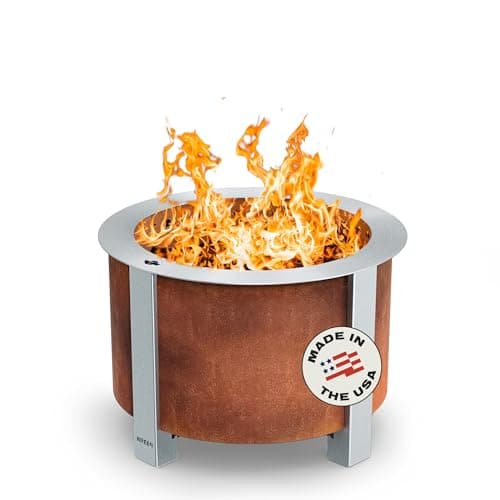
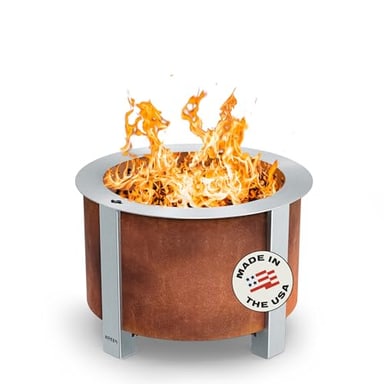
Breeo X Series 19
Best for: A permanent garden fire pit you also want to cook on.
- Corten steel is built to sit outside through winter, where stainless pits are usually put away
- The patina is rust by design, which looks wrong to anyone expecting a clean finish
Kit Score 8.7/10 · $399.00 Price checked Oct 26, 7:39 AM CDT · how we score gear
Buy on AmazonProduct details
The one to buy if the fire pit is a permanent garden fixture rather than something stored in a shed. Corten steel weathers to a stable rust patina instead of corroding, and the accessory range turns it into an outdoor cooker.
- Diameter
- 22.1 in
- Material
- Corten weathering steel
- Finish
- Develops a protective rust patina
- Cooking
- Sear Plate accessory available
- Placement
- Designed to live outdoors year round
More strengths
- The Sear Plate accessory makes it a genuine cooking surface, not just a fire
- Heaviest build here, and it feels it
Other tradeoffs
- Heavy and not meant to travel
- Most expensive pick, and the cooking accessories add to that
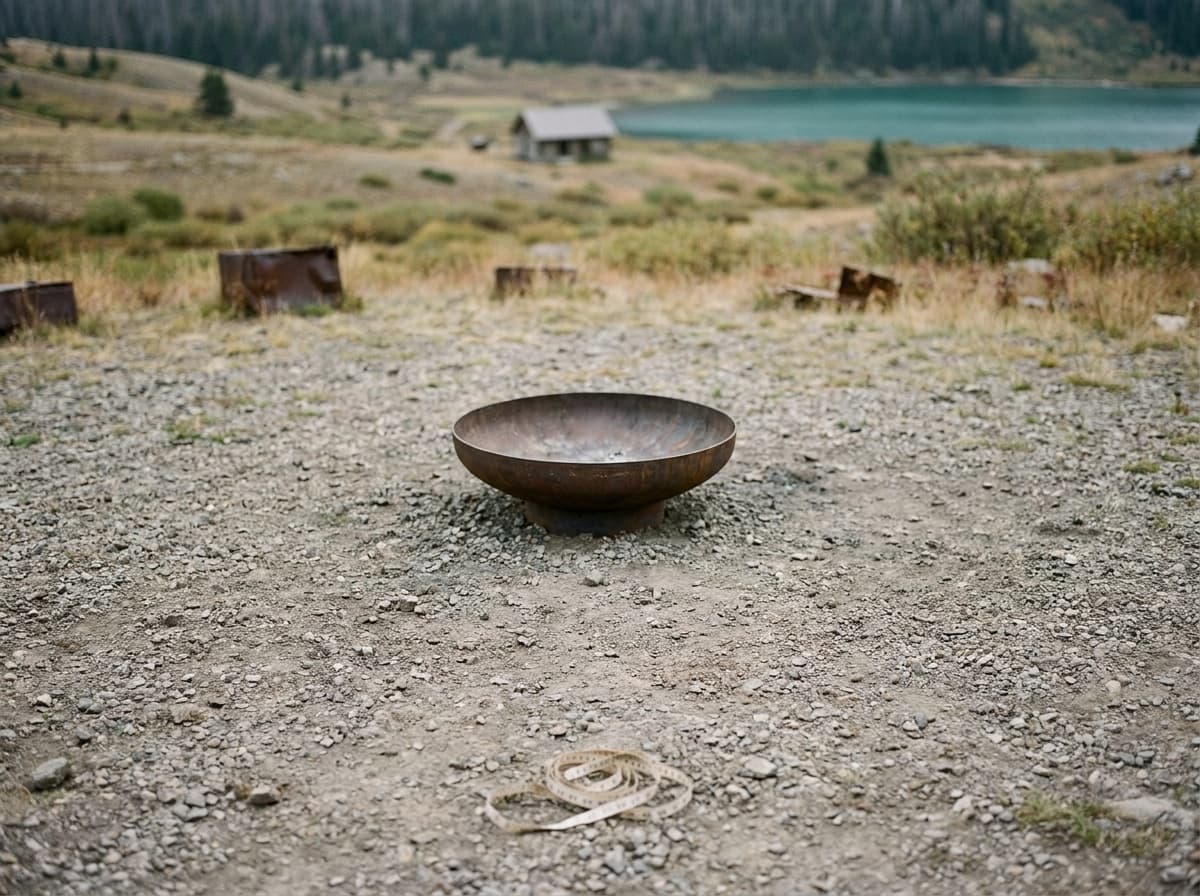
The Breeo is a different proposition from the two Solo Stoves. The version we link is corten weathering steel (Breeo also sells it in 304 stainless), the same material used for outdoor sculpture, which forms a stable rust patina rather than corroding through. It is made in Lancaster, Pennsylvania, and measures 22.1 inches across the outside of the rim. That means it is designed to live outside permanently, through winter, where the stainless pits are usually carried into a shed in October.
The second difference is cooking. The Sear Plate accessory turns the rim into a genuine cooking surface, and Breeo's range treats the pit as an outdoor kitchen rather than just a fire. If you have imagined cooking over the fire rather than near it, this is the one built for that.
Two honest caveats. The patina is rust by design, and it looks wrong to anyone expecting a clean finish, especially in the first season while it is still developing. And at about 47 lb per the listing, it is one of the two heaviest pits here and the most expensive before you have bought a single accessory.
Best for: A permanent garden fire pit you also want to cook on.
Best budget: OutVue 27 inch
BEST BUDGET
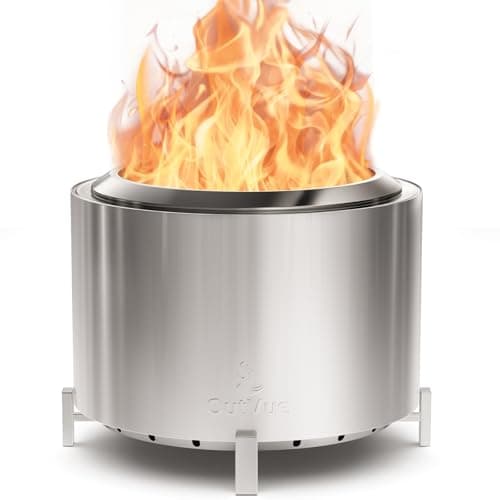
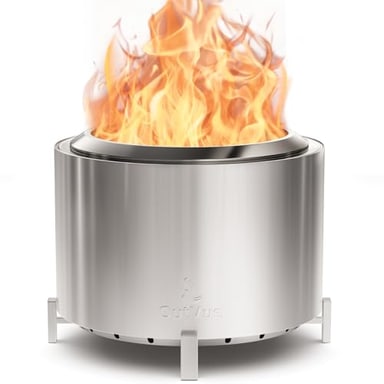
OutVue 27 inch Smokeless Fire Pit
Best for: A first fire pit, or a big fire on a budget.
- Largest bowl here at 27 inches, for well under half the price of a comparable premium pit
- Smokier during warm-up than the Solo Stove pits, which reach clean burn faster
Kit Score 8.0/10 · $153.49 Price checked Oct 26, 7:39 AM CDT · how we score gear
Buy on AmazonProduct details
Half the price of the name brands for a bigger fire. The secondary burn is less refined than Solo Stove's, so expect some smoke while it comes up to temperature, but once it is hot it does the job.
- Diameter
- 27 in
- Material
- Stainless steel
- Design
- Vertical hole secondary burn
- Fuel
- Wood
- Weight
- About 47.5 lb (listing)
- Included
- Waterproof cover and poker
More strengths
- Same double-wall principle, so it does reduce smoke once up to temperature
- The sensible way to find out whether you actually use a fire pit before buying a premium one
Other tradeoffs
- Long-term durability evidence is limited next to the established brands, and at about 47 lb it is not a travel pit
The argument here is simple: this is the biggest fire in the guide for less than half the price of the premium pits. Twenty-seven inches of bowl, the same double-wall secondary-burn principle, and a waterproof cover and poker in the box.
The trade shows up during warm-up. It is noticeably smokier than the Solo Stoves while it comes up to temperature, because the airflow design is less refined, so the first fifteen minutes are less pleasant. There is less long-term durability evidence behind the brand than behind Solo Stove or Breeo. It is also no travel pit: the listing puts it at about 47 lb, and OutVue says not to use it on grass or wooden floors.
None of which makes it a bad buy. If you are not certain you will use a fire pit often enough to justify a premium pit, this is the sensible way to find out, and you get a bigger fire while you do.
Best for: A first fire pit, or a big fire on a budget.
How to choose
Choosing a smokeless fire pit
Size it to your group, not your garden
A 15 inch pit suits two to four people, 19.5 inches covers four to six, and 27 inches is a proper crowd fire. Oversizing means burning more wood to fill a bowl nobody is sitting close enough to feel.
Decide whether it moves
Portability is the single biggest split here. If the pit lives in one spot forever, corten steel and weight are advantages. If it travels, every pound counts and a carry case matters.
Check how ash comes out
A removable ash pan is the difference between a thirty-second cleanup and tipping a heavy bowl of cold ash across your lawn. It is the most underrated feature in the category.
Burn dry, seasoned wood
The secondary burn only works once the pit is properly hot. Damp or green wood keeps it below that temperature, and then a smokeless fire pit is simply a fire pit that cost more. The EPA's guidance is wood under 20 percent moisture, seasoned at least six months.
Before the first fall burn
Cooler evenings are also dry-leaf season, and some towns restrict outdoor burning by season or on high-risk days. A few checks take five minutes and cover most of the ways a backyard fire goes wrong.
Fall fire pit checklist
Check whether you can burn tonight
The NFPA's advice is to contact your local fire department about open-burning rules first, because they differ community by community and some restrict outdoor fires to certain seasons. The EPA also suggests checking your local air quality forecast before you burn.
Give it 10 feet of clear space
NFPA's fire pit guidance is at least 10 feet from anything that can burn, and out from under eaves, overhanging branches, or rooflines. Rake leaves back from the area, since they collect around pits in fall.
Set it on a surface that cannot burn
Level patio blocks, brick, or concrete. Wooden and composite decks need a proper heat shield; see our [fire pit safety distances guide](/outdoor-living/fire-pit-safety-distances) for why a stand alone is not enough.
Keep kids and pets back
NFPA recommends keeping children and pets at least three feet from the pit, and using a spark screen on wood-burning pits.
Dispose of ash only when cold
Put the fire out completely, then move cooled ashes into a metal container with a tight-fitting lid, placed away from anything that can burn.
Frequently asked questions
Are smokeless fire pits actually smokeless?
No, and the name oversells it. They are double-walled: air is drawn up between the two layers, heated, and fed back in above the flame, which burns off most of the smoke. Once the pit is properly hot the smoke column largely disappears. During warm-up, or with damp wood, you will still get smoke.
Is the Solo Stove Bonfire worth the money?
If you use it often, yes. You are paying for a refined airflow design, a removable ash pan, and build quality rather than for a physical principle nobody else has. A plain steel fire ring burns the same wood for far less. If you are unsure how often you will light it, start with the OutVue and upgrade if it earns its place.
Breeo or Solo Stove?
Breeo if the pit stays outside permanently and you want to cook on it: corten steel is built to weather, and the accessory range is designed around cooking. Solo Stove if you want lighter stainless steel, easier ash removal, and the option to move it. Breeo is heavier, pricier, and rusts on purpose.
Can you use a smokeless fire pit on a wooden deck?
Not directly. These pits radiate significant heat downward even with a stand, and manufacturers sell separate heat shields for exactly this reason. On decking, always use a proper heat shield or a fire-resistant mat, and check your own manufacturer's clearance guidance rather than assuming the stand is enough.
What wood should you burn in a smokeless fire pit?
Dry, seasoned hardwood. Moisture is what stops the pit reaching the temperature the secondary burn needs, so green or damp wood produces exactly the smoke you paid to avoid. The EPA recommends wood under 20 percent moisture content, which a cheap moisture meter can confirm. Kiln-dried logs are the most reliable option if you cannot season your own. Our guide to what wood to burn in a fire pit goes species by species.
Do I need to check for a burn ban before using a fire pit?
Yes, especially in fall. Rules for backyard fires vary by town and state, and some areas restrict outdoor burning seasonally or on high fire-danger or poor air-quality days. The NFPA suggests contacting your local fire department to learn the requirements where you live.
Where these numbers come from
| Claim | Source | Checked |
|---|---|---|
| At least 10 ft from anything that can burn; level non-combustible surface; screen; clean, dry, seasoned hardwood; children and pets 3 ft back; cooled ashes in a lidded metal container; contact the local fire department about burning rules | NFPA, Wildfire prevention tips for fire pits and outdoor fires | Sep 2026 |
| Wood burns best under 20 percent moisture; season at least six months; check the local air quality forecast | EPA Burn Wise, Best wood-burning practices (archived program page, no longer updated) | Sep 2026 |
| Bonfire 2.0: 19.5 in diameter, 14 in tall, 21.2 lb measured | OutdoorGearLab, Solo Stove Bonfire 2.0 review | Sep 2026 |
| Bonfire 2.0 removable ash pan, 304 stainless | Solo Stove listing on Amazon, linked from the pick above (solostove.com blocks automated checks) | Sep 2026 |
| Breeo X Series 19: corten or 304 stainless, made in Lancaster, Pennsylvania | Breeo, X Series 19 | Sep 2026 |
| Breeo X Series 19: 22.1 in, about 47 lb | Breeo listing on Amazon, linked from the pick above | Sep 2026 |
| OutVue 27: 27 in, about 47.5 lb, cover and poker included, not for grass or wooden floors | OutVue listing on Amazon, linked from the pick above | Sep 2026 |
We have not burned these pits ourselves. Specs come from the brands, listings, and independent measurements named above.
For lighting once the fire dies down, see our best camping lanterns picks. If you are building out a whole evening setup, best camping chairs is the other half of it.
Keep going
Our recommendations draw on manufacturer documentation, retailer listings, owner feedback, and comparisons with alternatives.
As an Amazon Associate I earn from qualifying purchases. We may earn a commission from links here, at no extra cost to you. How we research →