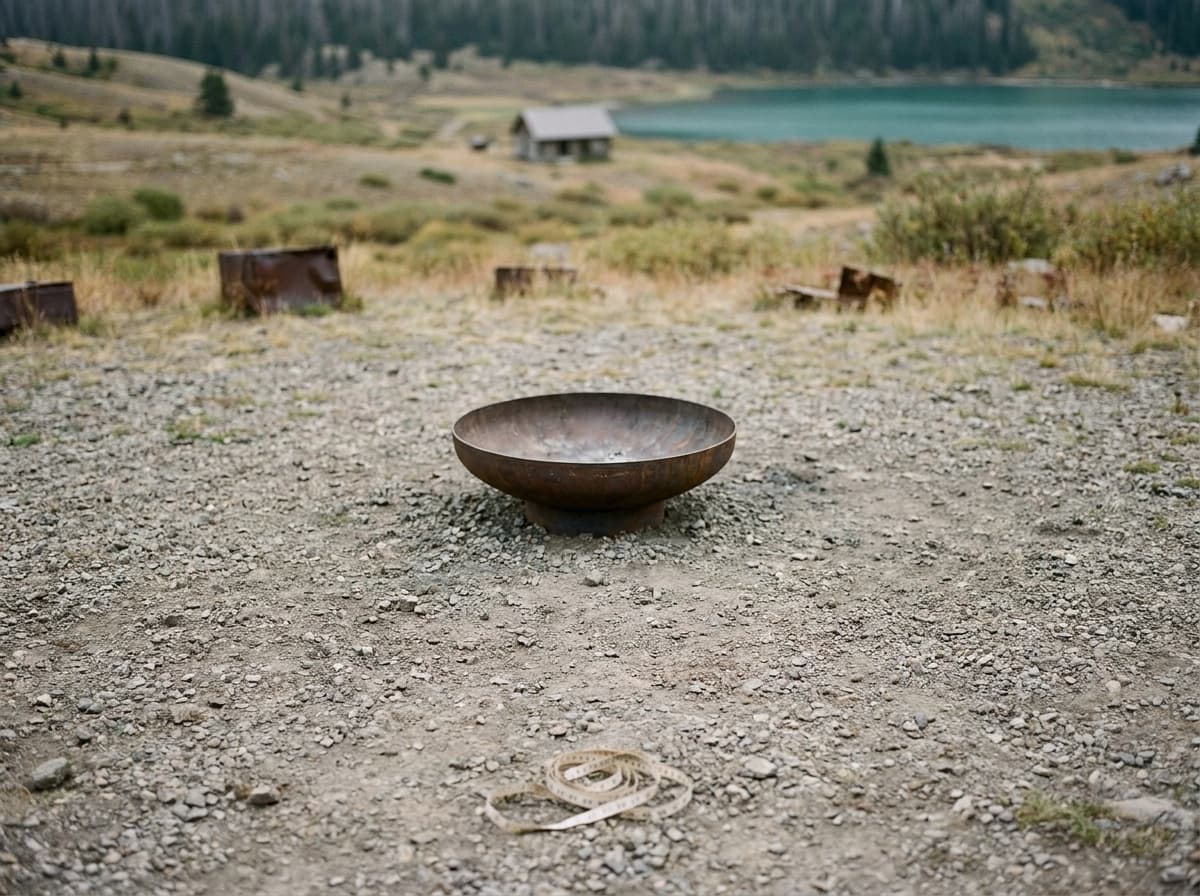
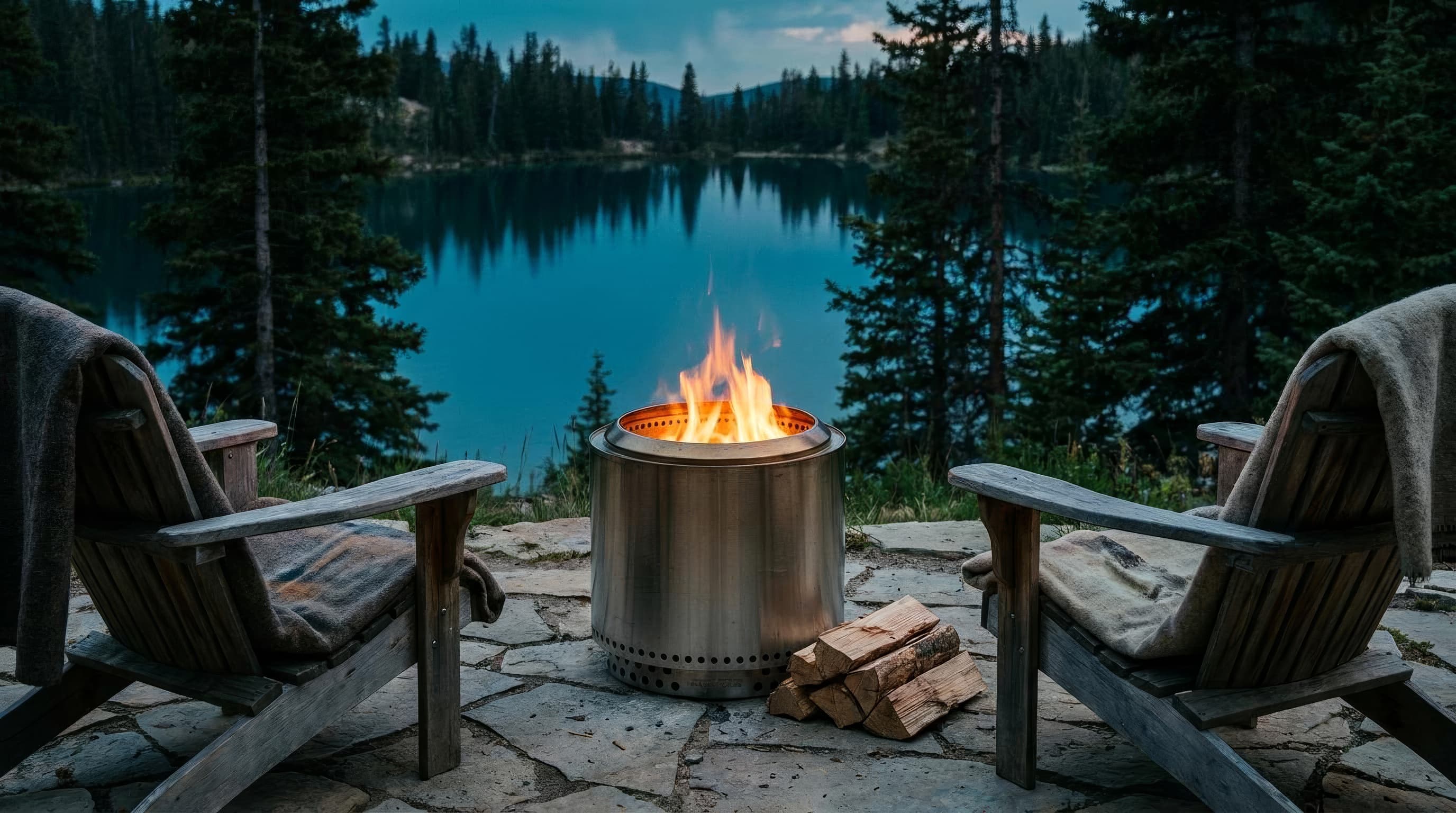
Hero image: AI-generated category illustration, not a tested product or an installation diagram.
Most fire pit accidents are not dramatic. They are scorched decking, a melted patio surface, or a fence panel that got too hot over several evenings. The prevention is boring and worth knowing before the first burn.
Clearance from structures
The commonly cited minimum is 10 feet from any structure or combustible material, and many local rules require more. That includes house walls, fences, sheds, garden furniture, and low tree branches overhead, which people forget because they are not looking up.
Local rules vary significantly and some areas restrict open burning entirely or seasonally. Check your own municipality rather than relying on a general figure, particularly during dry-season fire restrictions.
What surface it sits on
Best: stone, concrete, gravel, or bare earth. These do not care about heat.
Careful: pavers and some patio slabs. Direct sustained heat can crack certain stone, particularly if there is trapped moisture in it. A heat shield or fire-resistant mat solves this.
Do not, without protection: wooden decking, composite decking, or artificial grass. Composite decking and artificial turf can melt rather than scorch, and the damage is immediate and permanent.
The decking problem specifically
This is the most common mistake, and it is worth being precise about.
Smokeless fire pits radiate a significant amount of heat downward, more than people expect, because the base of the bowl gets extremely hot. A stand alone is not a heat shield. Stands raise the pit for airflow, which is a different job. Manufacturers sell separate heat shields for exactly this reason, and the fact that they exist is the clearest evidence that a stand is not sufficient.
If your pit is going on a deck, use a proper heat shield or a purpose-made fire-resistant mat, and follow the clearance the manufacturer specifies for that model rather than assuming.
Wind, embers, and dry conditions
Wind is the variable most people underestimate. It carries embers, and it can push a flame sideways well beyond the bowl. On a windy evening the sensible answer is not to light it.
In dry conditions, floating embers are the real risk. Avoid burning paper and cardboard, which produce lightweight embers that travel, and keep a hose or a bucket of water within reach rather than in a shed.
Putting it out
Let it burn down rather than dousing a hot pit, if you have time. Sudden cooling with water can warp thin steel and, on very hot corten or stainless, can cause damage.
If you do need to extinguish quickly, use water or sand, then confirm the ashes are cold before leaving. Ash retains heat far longer than it looks like it should, which is why ash pans emptied into a plastic bin are a recurring cause of fires.
For picks and sizing, see our best smokeless fire pits guide and what wood to burn in a fire pit.
Recommended gear
Our current top picks from the Best smokeless fire pits: 3 picks by group size and setup guide, if you are ready to buy.
SOLO STOVE
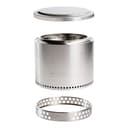
Solo Stove Bonfire 2.0
Editor's Choice
Kit Score 8.9/10
$322.99 Price checked Oct 25, 3:41 PM CDT
Best for: Anyone who wants a fire in a garden or at a drive-in campsite without smelling like a bonfire afterwards.
- Secondary burn genuinely works, so nobody has to keep moving their chair
- Expensive next to a plain steel fire ring that burns the same wood
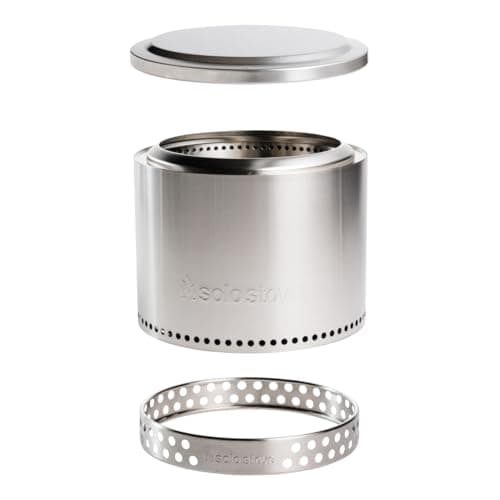
- Diameter
- 19.5 in
- Weight
- About 21 lb (21.2 lb measured by OutdoorGearLab)
- Material
- 304 stainless steel
- Fuel
- Wood
- Ash removal
- Removable ash pan
- Suits
- 4 to 6 people
About this pick
The default smokeless fire pit, and the one most people should buy. A double-wall airflow design burns the smoke off before it reaches your face, which is the entire point: you can sit downwind and keep your jumper.
Strengths
- Secondary burn genuinely works, so nobody has to keep moving their chair
- The 2.0 revision added a removable ash pan, which turns cleanup from a chore into a thirty-second job
- About 21 lb, so one person can carry it from the garden to a car boot
Weaknesses
- Expensive next to a plain steel fire ring that burns the same wood
- Stainless steel discolours to a bronze patina after a few burns, which some owners dislike
Kit Score breakdown
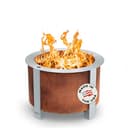
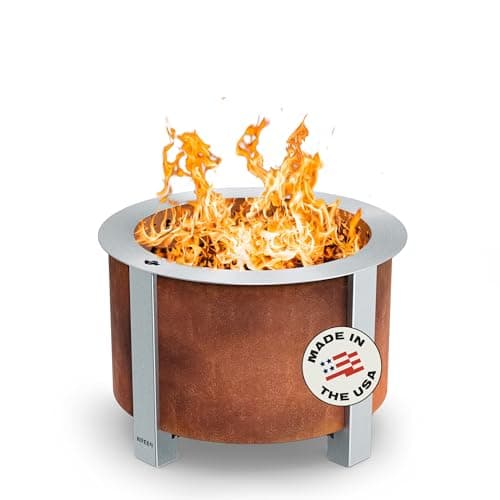
Best for: A permanent garden fire pit you also want to cook on.
- Corten steel is built to sit outside through winter, where stainless pits are usually put away
- The patina is rust by design, which looks wrong to anyone expecting a clean finish
- Diameter
- 22.1 in
- Material
- Corten weathering steel
- Finish
- Develops a protective rust patina
- Cooking
- Sear Plate accessory available
- Placement
- Designed to live outdoors year round
About this pick
The one to buy if the fire pit is a permanent garden fixture rather than something stored in a shed. Corten steel weathers to a stable rust patina instead of corroding, and the accessory range turns it into an outdoor cooker.
Strengths
- Corten steel is built to sit outside through winter, where stainless pits are usually put away
- The Sear Plate accessory makes it a genuine cooking surface, not just a fire
- Heaviest build here, and it feels it
Weaknesses
- The patina is rust by design, which looks wrong to anyone expecting a clean finish
- Heavy and not meant to travel
- Most expensive pick, and the cooking accessories add to that
Kit Score breakdown
OUTVUE
OutVue 27 inch Smokeless Fire Pit
Best Budget
Kit Score 8.0/10
$153.49 Price checked Oct 25, 3:41 PM CDT
Best for: A first fire pit, or a big fire on a budget.
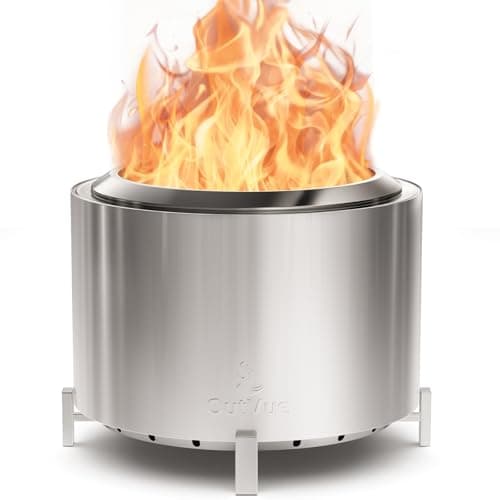
- Largest bowl here at 27 inches, for well under half the price of a comparable premium pit
- Smokier during warm-up than the Solo Stove pits, which reach clean burn faster
- Diameter
- 27 in
- Material
- Stainless steel
- Design
- Vertical hole secondary burn
- Fuel
- Wood
- Weight
- About 47.5 lb (listing)
- Included
- Waterproof cover and poker
About this pick
Half the price of the name brands for a bigger fire. The secondary burn is less refined than Solo Stove's, so expect some smoke while it comes up to temperature, but once it is hot it does the job.
Strengths
- Largest bowl here at 27 inches, for well under half the price of a comparable premium pit
- Same double-wall principle, so it does reduce smoke once up to temperature
- The sensible way to find out whether you actually use a fire pit before buying a premium one
Weaknesses
- Smokier during warm-up than the Solo Stove pits, which reach clean burn faster
- Long-term durability evidence is limited next to the established brands, and at about 47 lb it is not a travel pit
Kit Score breakdown
See all picks in Best smokeless fire pits: 3 picks by group size and setup
Keep going
Researched, not hands-on tested
Updated Jul 27, 2026Our recommendations draw on manufacturer documentation, retailer listings, owner feedback, and comparisons with alternatives.
As an Amazon Associate I earn from qualifying purchases. We may earn a commission from links here, at no extra cost to you. How we research →