What should you wear on the trail?
The forecast tells you the air temperature. Your body feels something different, shaped by effort, wind, and rain. Enter the conditions and get a layer recipe for what you will actually feel.
Feels like, on the move
Base layer
Lightweight base layer, long sleeve
Light merino or synthetic. This is the workhorse band for fall hiking.
Midlayer
Light fleece, likely carried not worn
You will want it at every stop and on the descent, rarely on the climb.
Shell
Wind shell or wind-resistant layer
A few ounces of wind shell replaces a whole fleece worth of warmth in moving air.
Dress for the working temperature, not the forecast. The number that matters is what your body feels on the move.
Carry the stop layer even on warm-forecast days at elevation: exposed summits and long breaks run far colder than the trail.
Why the forecast number misleads
Two hikers at the same 45 F trailhead can need completely different clothing. One is strolling a flat lake loop; the other is climbing 2,000 feet. Effort adds up to 20 F of perceived warmth, wind subtracts a dozen, and rain changes the rules entirely. This tool does the arithmetic the forecast leaves out, which matters most in fall, when the daily swing between a freezing start and a warm afternoon is at its widest. For the gear itself, see our base layer, down jacket, and rain shell guides.
The layer everyone forgets
Feet are a layer too, and the one where cotton fails first. A midweight merino hiking sock covers the same fall conditions this tool is built for. See all sock picks →
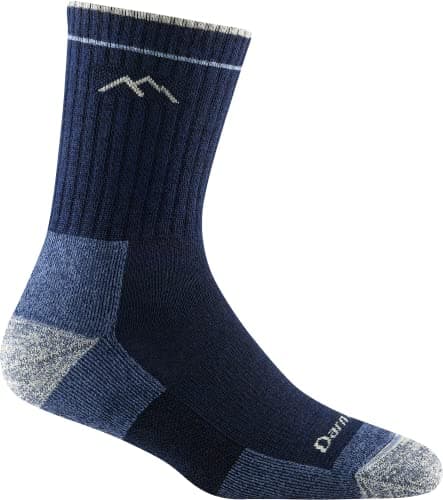
DARN TOUGH
Darn Tough Hiker Micro Crew Midweight with Cushion
- Material
- 61% merino wool, 36% nylon, 3% Lycra spandex
- Cushion
- Midweight (terry loops underfoot, targeted Achilles zone)
- Height
- Micro crew (approx. 8.5 in. from heel to cuff)
- Warranty
- Lifetime, no-questions replacement
- Sizing
- Men's XS–XXL (shoe 2.5–17); Women's Style 1903 S–L
- Origin
- Knit in Vermont, USA
The 1466 earns its reputation across tens of thousands of thru-hiker miles: a tight merino knit with just enough midweight cushion to absorb trail impact without adding volume in a snug boot. The unconditional lifetime warranty removes the durability question entirely.
- Goldilocks cushion level works for day hikes and multi-week backpacking without sizing up footwear
- Lifetime warranty with a real no-hassle replacement policy makes the per-wear cost competitive over time
- Some owners note the fit runs slightly large and recommend sizing down
Best for
Hikers who want one sock that handles everything from summer day hikes to week-long backpacking trips and expect it to last for years.
Researched, not personally tested: picks come from specs, verified-owner reviews, and expert sources, scored into the Kit Score. As an Amazon Associate I earn from qualifying purchases. We may earn a commission from links here, at no extra cost to you. How we research →
Frequently asked questions
What should I wear hiking at 40 degrees?
At 40 F with moderate effort, most hikers do well in a lightweight long-sleeve base layer with a fleece carried or worn at stops, plus a wind shell if it is breezy. Working hard, the body adds roughly 20 F of perceived warmth, so a hard climb at 40 F feels closer to 60 and heavy layers become sweat traps.
Why should you start a hike slightly cold?
Because effort warms you within minutes. Dressing to be comfortable standing at the trailhead means overheating ten minutes into the first climb, sweating through layers, and then chilling at the first stop. Start slightly cool and let the work close the gap.
What is the three layer system?
Base layer against the skin to move sweat, insulating midlayer to trap warmth, and a shell to stop wind and rain. The point of the system is not wearing all three; it is adding and shedding them as effort and weather change through the day.
Is cotton really that bad for hiking?
In cool or wet conditions, yes. Cotton absorbs sweat and rain, loses its insulation when wet, and dries slowly, which is a chilling combination at fall and winter temperatures. Merino and synthetics keep most of their warmth when damp and dry far faster.
How much colder does it feel at a summit or rest stop?
Plan on 15 to 20 F colder than the same air feels while walking, before wind. Effort stops, sweat evaporates, and exposed high points add wind on top. That is why the stop layer you carry matters as much as the layers you hike in.
More free tools


Embed this tool on your site (free)
Paste this where you want the tool to appear. It is free to use with a small credit link back to Kit Authority.
<iframe src="https://kitauthority.com/embed/layering" title="Hiking Layering Advisor" width="100%" height="640" style="border:0;width:100%;max-width:680px" loading="lazy"></iframe>
<script>window.addEventListener("message",function(e){if(e&&e.data&&e.data.type==="ka-embed-height"){var f=document.querySelector('iframe[src="https://kitauthority.com/embed/layering"]');if(f){f.style.height=e.data.height+"px";}}});</script>